


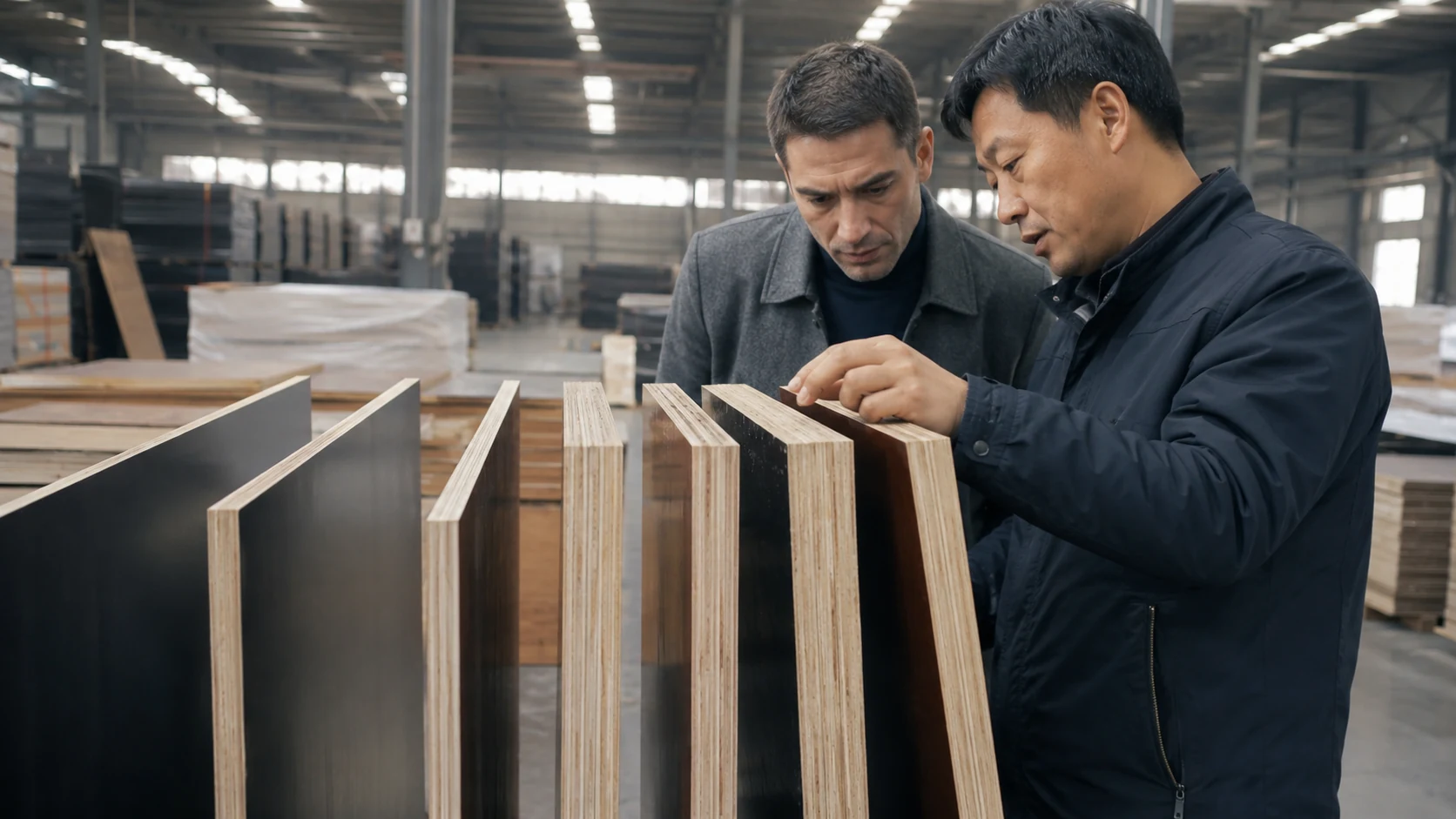
At Kosmex, we produce film faced plywood for B2B buyers who need stable thickness, reliable bonding, strong core quality, and consistent performance. For premium plywood, Kosmex uses composer machine core jointing to reduce core gap and core overlap, helping the panel perform better under load and repeated use.

What Is Film Faced Plywood?
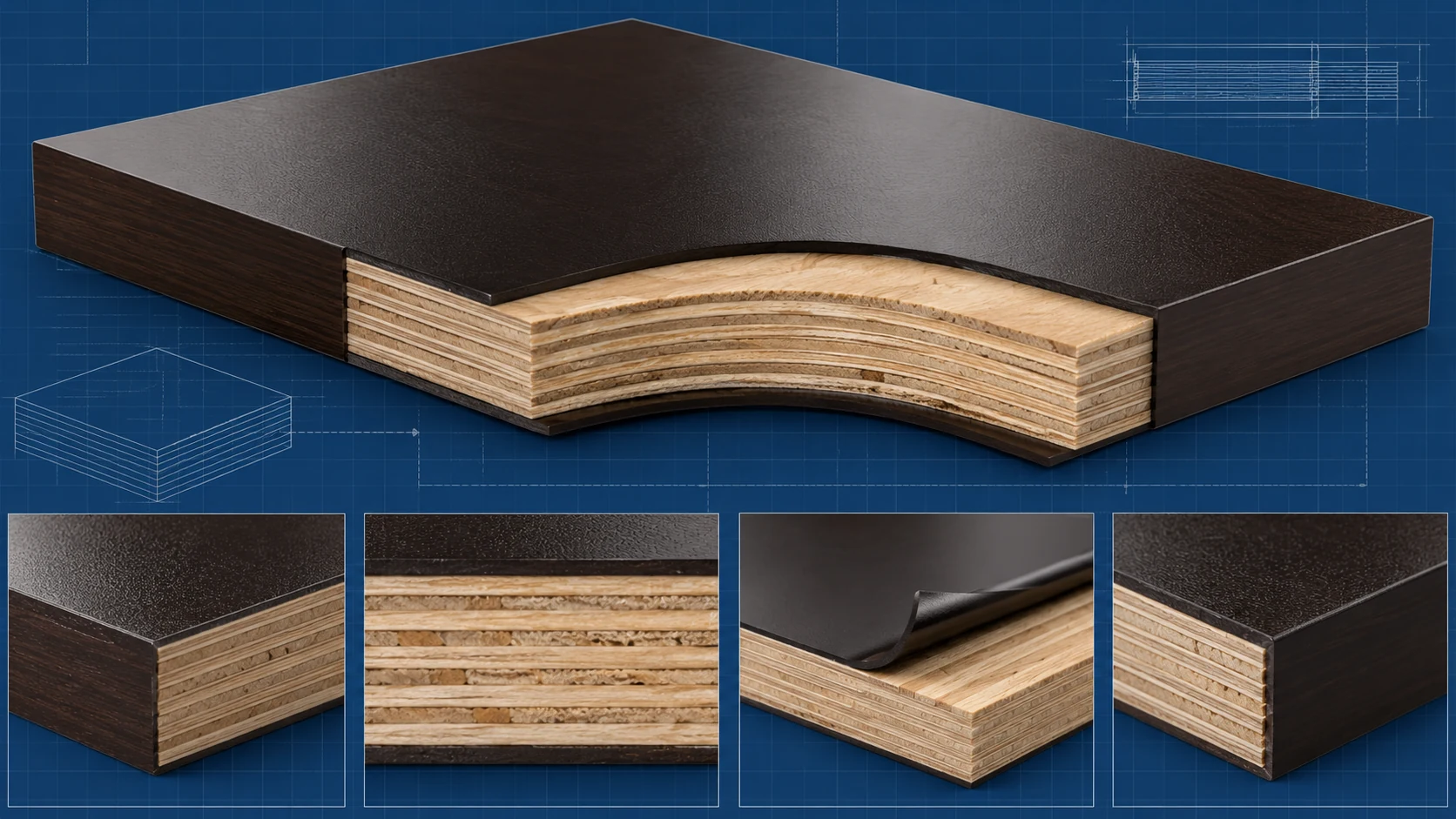
Film faced plywood is plywood coated with a resin-impregnated film, usually phenolic or melamine-based, on one or both sides. The film layer helps protect the plywood from moisture, abrasion, concrete adhesion, and general jobsite wear.
It is commonly used for:
- Concrete formwork.
- Shuttering plywood.
- Construction site panels.
- Scaffolding platforms.
- Temporary flooring.
- Trailer and truck flooring when anti-slip surface is required.
- Industrial platforms and heavy-duty panels.
For construction applications, film faced plywood thickness directly affects strength, stiffness, reuse potential, and cost. You can also read our guide on formwork plywood for a broader understanding of how this plywood is used in concrete work.
Common Film Faced Plywood Thickness Range
The common film faced plywood thickness range is usually from 9 mm to 21 mm. Some projects may require thinner or thicker panels, but these five sizes are the most common for commercial and construction use.
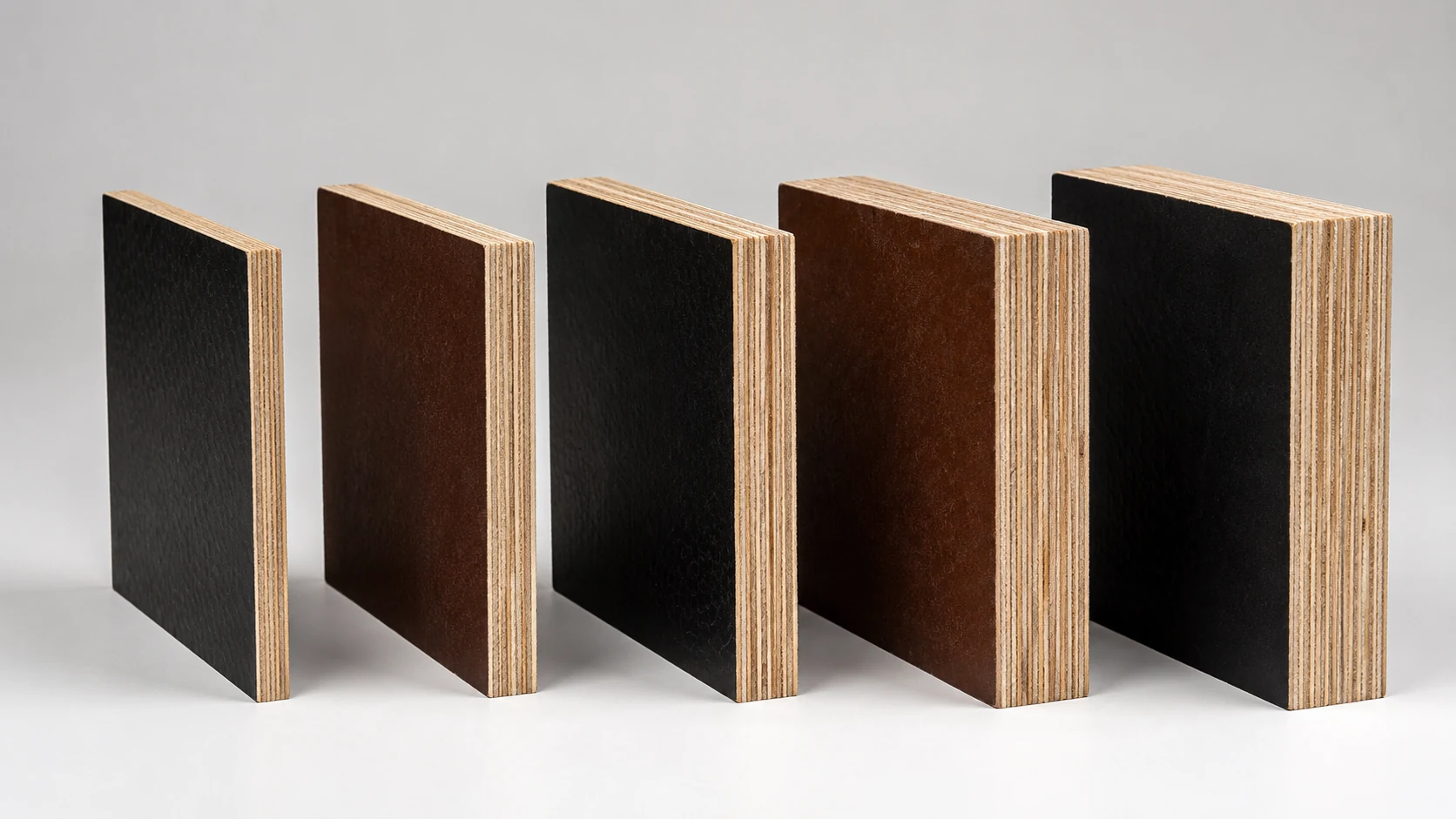
| Thickness | Common Application | Buyer Note |
|---|---|---|
| 9 mm | Lightweight panels, lining, temporary use, small formwork | Light and easy to handle, but not ideal for heavy-duty load-bearing formwork. |
| 12 mm | Light to medium formwork, partitions, temporary panels | Useful where weight saving matters, but support spacing must be controlled. |
| 15 mm | Medium-duty formwork, wall formwork, general construction | A middle option between cost, weight, and strength. |
| 18 mm | Concrete formwork, slab formwork, shuttering, general heavy-duty use | One of the most popular thicknesses for formwork because it balances strength and cost. |
| 21 mm | Heavy-duty formwork, higher load applications, trailer flooring, platforms | Provides stronger stiffness and load-bearing capacity, but is heavier and more expensive. |
9mm Film Faced Plywood
9 mm film faced plywood is a thin and lightweight option. It is easier to move, cut, and install, but it has lower stiffness compared with thicker panels.
Best Uses for 9mm Film Faced Plywood
- Temporary lining panels.
- Light-duty construction panels.
- Small formwork sections with close support spacing.
- Interior or non-structural use.
- Projects where lightweight handling is more important than heavy load capacity.
Buyers should avoid using 9 mm plywood for heavy concrete pressure or long unsupported spans. If the panel needs to support wet concrete or heavy site traffic, a thicker option is usually safer.
12mm Film Faced Plywood
12 mm film faced plywood is still relatively light but stronger than 9 mm. It can be used for light to medium-duty formwork and temporary panels where support spacing is properly designed.
Best Uses for 12mm Film Faced Plywood
- Wall formwork with proper backing support.
- Temporary barriers or partitions.
- Light-duty construction panels.
- Concrete formwork with limited pressure and close supports.
The main advantage of 12 mm plywood is its lower weight and easier handling. However, buyers should check load requirements carefully before choosing it for structural formwork.
15mm Film Faced Plywood
15 mm film faced plywood is a balanced option for medium-duty use. It is stronger than 12 mm but lighter and more cost-effective than 18 mm or 21 mm.
Best Uses for 15mm Film Faced Plywood
- Medium-duty wall formwork.
- General construction panels.
- Temporary flooring with controlled load.
- Reusable panels for moderate site conditions.
For buyers who need a balance between weight, price, and strength, 15 mm can be a practical option. However, for slab formwork or heavier pressure, 18 mm is often preferred.
18mm Film Faced Plywood
18 mm film faced plywood is one of the most common choices for construction and concrete formwork. It provides a good balance of strength, stiffness, reusability, handling weight, and cost.
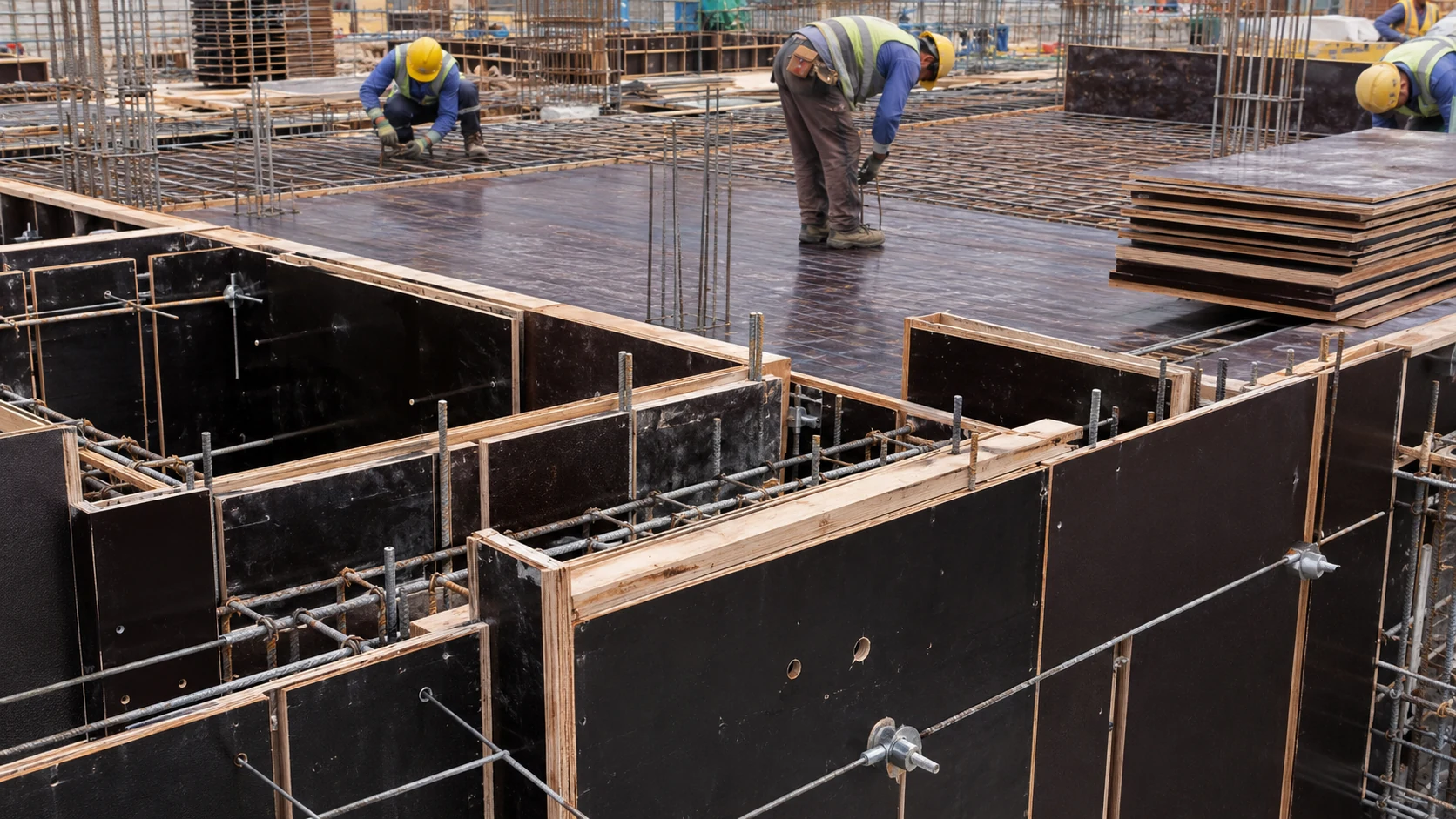
Best Uses for 18mm Film Faced Plywood
- Concrete formwork.
- Slab formwork.
- Wall formwork.
- Shuttering plywood systems.
- Reusable construction panels.
- General heavy-duty plywood applications.
For many contractors and importers, 18 mm is the standard option because it performs well in many construction scenarios without becoming too heavy or too costly.
If you are comparing material options for formwork, read our article on how to choose plywood for formwork.
21mm Film Faced Plywood
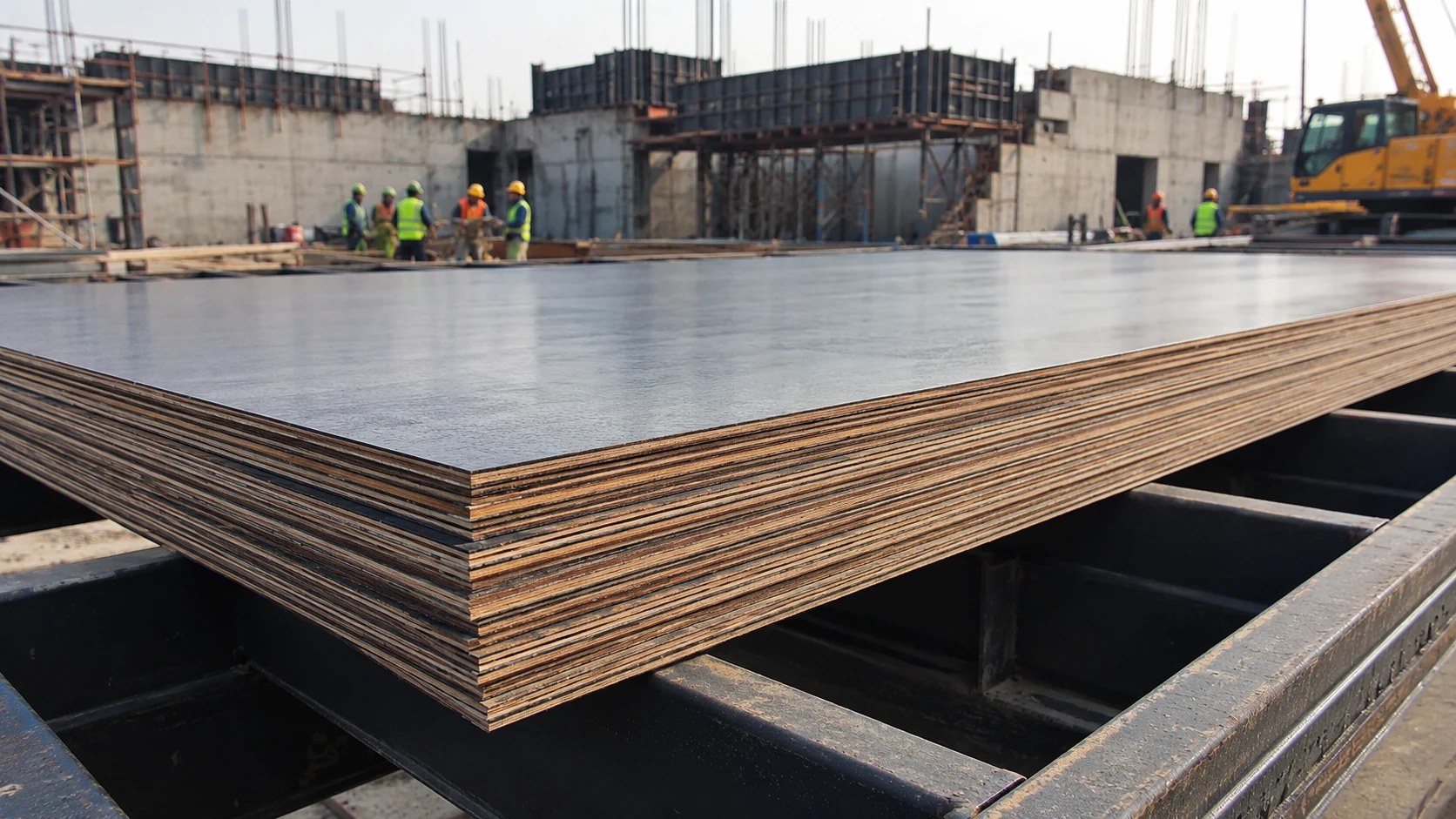
21 mm film faced plywood is a thicker and stronger option for heavy-duty applications. It has better stiffness and can handle higher pressure when supported correctly.
Best Uses for 21mm Film Faced Plywood
- Heavy-duty concrete formwork.
- Large slab formwork systems.
- Bridge or infrastructure formwork.
- Industrial platforms.
- Trailer flooring and truck flooring.
- Applications requiring higher load-bearing capacity.
Compared with 18 mm, 21 mm plywood is usually heavier and more expensive. However, it can provide better stiffness and durability when the project requires higher strength.
For flooring applications, especially transport flooring, you may also read our guide on the best plywood for trailer flooring.
Film Faced Plywood Thickness Comparison Table
| Thickness | Strength Level | Weight | Cost Level | Recommended Use |
|---|---|---|---|---|
| 9 mm | Light | Low | Lower | Light panels, lining, temporary use |
| 12 mm | Light to medium | Low to medium | Lower to medium | Light formwork, partitions, temporary panels |
| 15 mm | Medium | Medium | Medium | Medium-duty formwork and construction panels |
| 18 mm | Strong | Medium to high | Medium to high | Standard formwork, slab formwork, shuttering |
| 21 mm | Very strong | High | High | Heavy-duty formwork, platforms, trailer flooring |
How to Choose the Right Film Faced Plywood Thickness
The best film faced plywood thickness depends on the project’s load, support spacing, reuse requirement, budget, and working environment. Buyers should not select thickness by price alone.
1. Load Capacity
Thicker plywood usually provides better stiffness and load-bearing capacity. For heavy concrete pressure, large spans, or trailer flooring, 18 mm or 21 mm is often more suitable than thinner panels.
2. Span Length and Support Spacing
Span length refers to the distance between supports. Longer spans require thicker plywood to reduce bending or deflection. If support spacing is close, a thinner panel may work in some cases. If support spacing is wide, buyers should consider thicker options.
3. Reuse Cycles
Reuse potential depends on more than thickness. It also depends on film density, glue quality, core material, edge sealing, and jobsite handling. However, thicker panels generally perform better under repeated stress when the core and glue are also reliable.
4. Moisture Exposure
Film faced plywood used in formwork may contact wet concrete, rain, cleaning water, and humid jobsite conditions. Buyers should choose proper phenolic glue, WBP bonding, and edge sealing for better moisture resistance.
Kosmex can produce both melamine glue and phenolic glue plywood. For waterproof performance, phenolic glue is a stronger option. You can learn more in our article on phenolic vs melamine glue in plywood.
5. Handling and Installation
Thicker plywood is stronger but also heavier. For projects where workers need to move sheets frequently, 18 mm may be more practical than 21 mm. For heavy-duty applications, the extra weight of 21 mm may be justified.
6. Project Budget
Thicker panels usually cost more because they use more veneer, more glue, and longer production resources. However, buyers should compare cost per use instead of only the price per sheet. A better-quality panel may reduce replacement cost and quality complaints.
Thickness Is Important, But Core Quality Matters Too
Thickness alone does not guarantee performance. A thick plywood sheet with poor core quality may still fail early. Hidden defects such as core gap, core overlap, and missing veneer can reduce strength, surface stability, and durability.
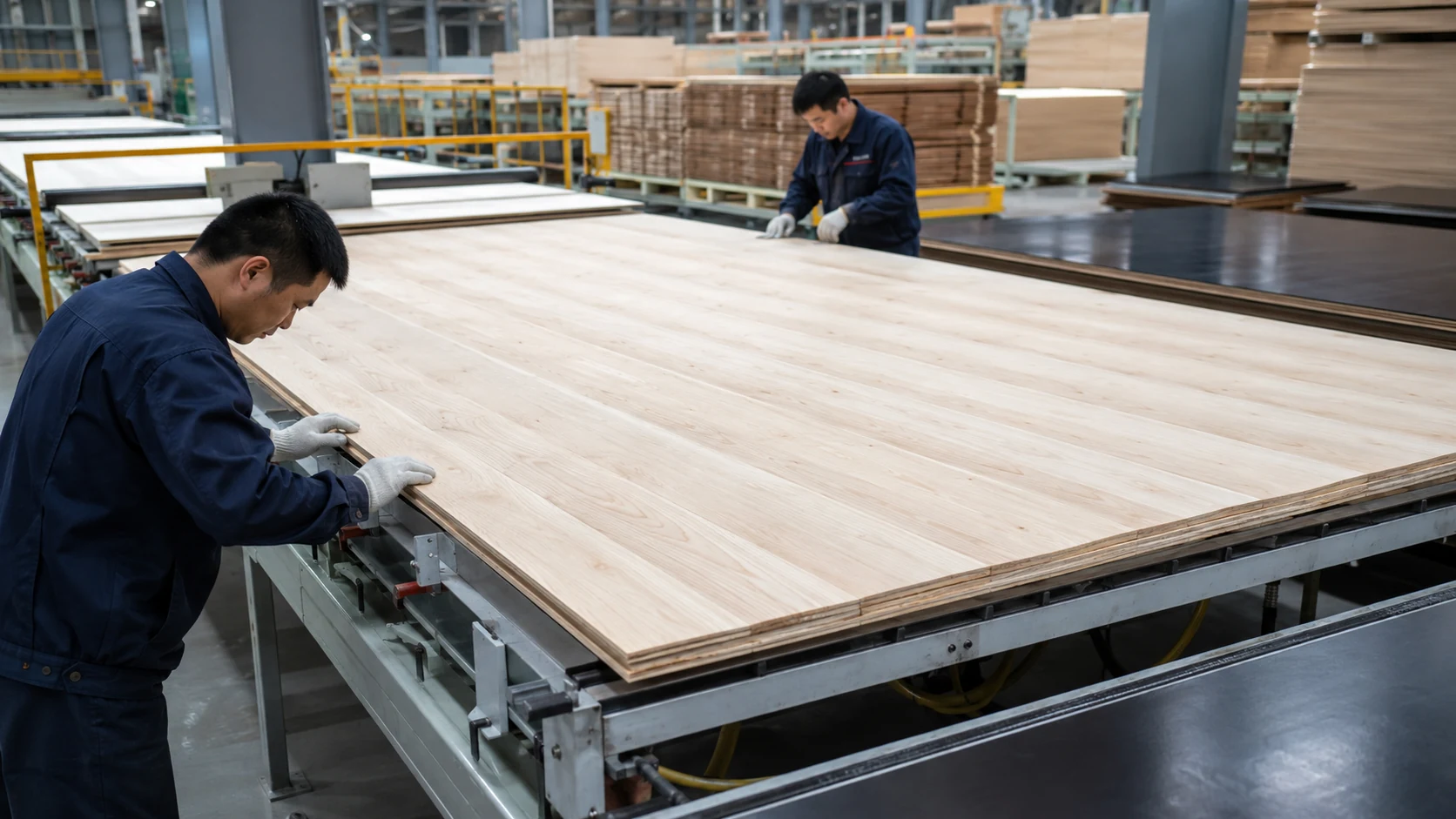
At Kosmex, premium plywood uses composer machine core jointing. This helps create a more stable internal structure with no core overlap and reduced core gap risk. A stable core structure helps the plywood perform better in formwork, flooring, cutting, and repeated-use applications.
To understand why this matters, read our article on machine core joint vs hand core joint in plywood and our guide to core gap and core overlap in plywood.
Film Weight and Thickness: What Is the Difference?
Some buyers confuse plywood thickness with film weight. They are different specifications.
| Specification | Meaning | Why It Matters |
|---|---|---|
| Plywood thickness | The total thickness of the plywood sheet, such as 18 mm or 21 mm | Affects strength, stiffness, weight, and load-bearing performance |
| Film weight | The density of the surface film, such as 120 g/m² or 185 g/m² | Affects surface protection, wear resistance, and concrete release performance |
Low-cost film faced plywood may use thin film around 90–120 g/m². Kosmex premium film faced plywood can use higher film face density around 145–185 g/m², helping protect the formwork surface better and reduce surface defects such as burning points, film dents, film overlap, and film split.
For more details, you can read our article on black vs brown film faced plywood, which explains how film color, film weight, glue type, and core quality affect performance and cost.
Recommended Film Faced Plywood Thickness by Application
| Application | Recommended Thickness | Important Specification |
|---|---|---|
| Light wall formwork | 12 mm or 15 mm | Close support spacing and proper edge sealing |
| Standard concrete formwork | 18 mm | Good balance of strength, weight, and cost |
| Heavy-duty formwork | 21 mm | Stronger stiffness, phenolic glue, stable core |
| Trailer flooring | 18 mm or 21 mm | Anti-slip surface, strong core, sealed edges |
| Scaffolding platform | 18 mm or 21 mm | Anti-slip surface and high load-bearing capacity |
| Temporary lining or panels | 9 mm or 12 mm | Lightweight handling and lower cost |
Common Mistakes When Choosing Film Faced Plywood Thickness
1. Choosing Only by Lowest Price
A lower price may mean thinner film, weaker core, poor glue, or inconsistent thickness. Buyers should compare the complete specification, not just the quoted price.
2. Using Thin Plywood for Heavy Loads
Using 9 mm or 12 mm plywood for heavy concrete pressure can increase the risk of bending or failure. Heavy-duty applications often require 18 mm or 21 mm plywood.
3. Ignoring Core Quality
A thick panel can still be weak if it has core gaps, core overlap, or poor bonding. Always check core structure and production method.
4. Ignoring Edge Sealing
Film protects the surface, but water can still enter from the edges. Poor edge sealing can cause swelling and delamination, especially in formwork and outdoor use.
5. Not Considering Cost Per Use
A cheaper panel may cost more in the long term if it fails early or has fewer reuse cycles. Buyers should evaluate cost per use, especially for reusable formwork projects.
Buyer Checklist for Film Faced Plywood Thickness
Before placing an order, buyers should confirm the following information with the supplier:
- What is the required film faced plywood thickness: 9 mm, 12 mm, 15 mm, 18 mm, or 21 mm?
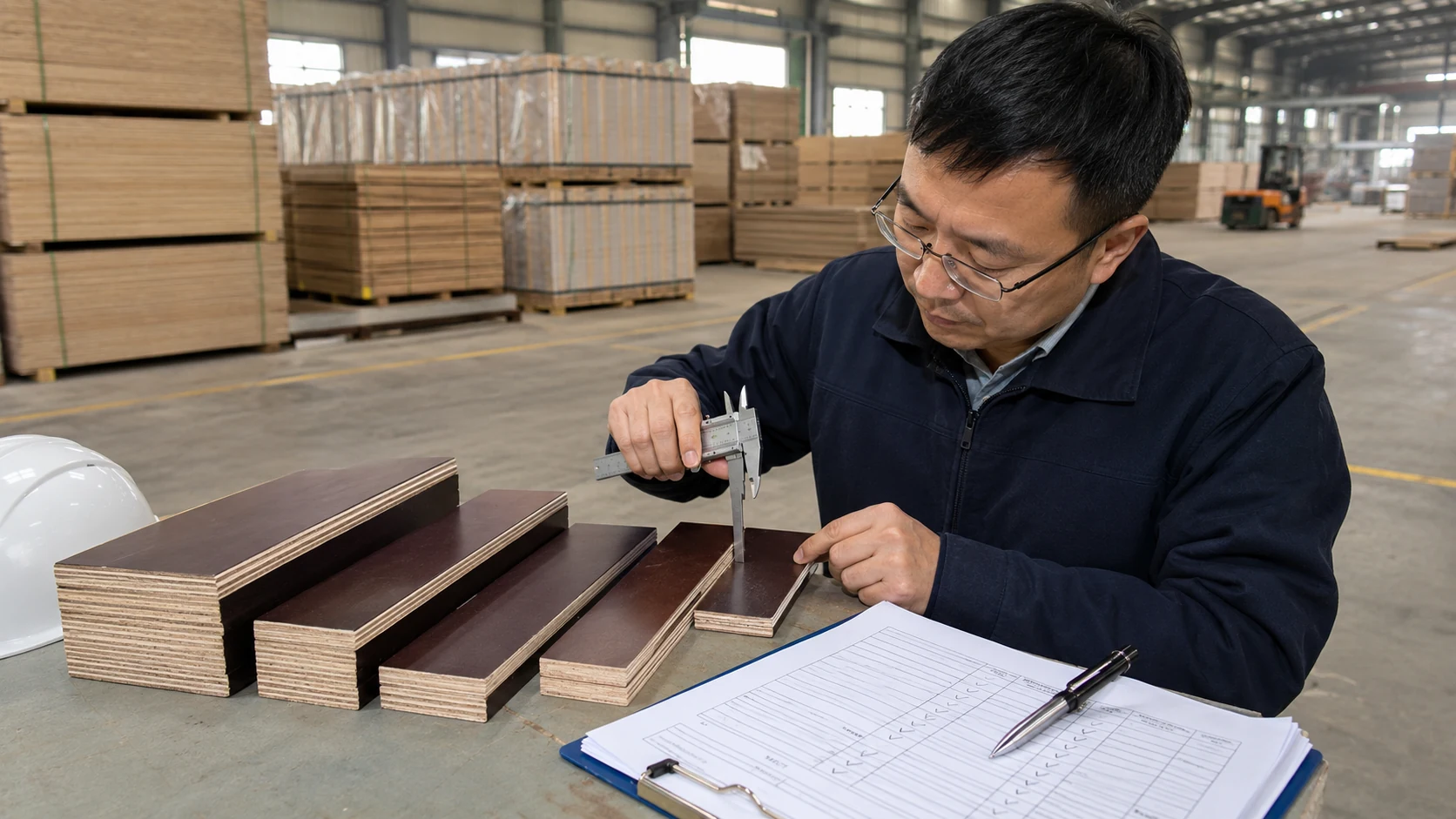
- What is the actual thickness tolerance?
- What is the core material: eucalyptus, acacia, rubber, or mixed hardwood?
- Is the core jointed by composer machine or by hand?
- What is the glue type: melamine, phenolic, or WBP?
- What is the film weight: 90–120 g/m², 145–185 g/m², or another specification?
- Are the edges properly sealed?
- What is the expected reuse requirement?
- Can the supplier provide samples, technical specifications, or test reports?
- Does the supplier have a clear QC process?
If you are evaluating suppliers, read our guide on how to evaluate a Vietnam plywood factory.
Why Choose Kosmex Film Faced Plywood?
Kosmex supplies film faced plywood for B2B buyers who need stable specifications, consistent quality, and export-ready production. We support buyers with flexible core, glue, film, and thickness options.
Kosmex Advantages
- Common thickness options such as 9 mm, 12 mm, 15 mm, 18 mm, and 21 mm.
- Composer machine core jointing for premium plywood products.
- Reduced risk of core gap and core overlap.
- Premium film density options around 145–185 g/m².
- Glue options including melamine glue and phenolic glue.
- Core options including acacia, eucalyptus, rubber, and mixed hardwood.
- Suitable products for formwork, construction, trailer flooring, and industrial applications.
You can explore our film faced plywood, anti-slip film faced plywood, and plywood QC process to learn more about our capabilities.
Conclusion: What Film Faced Plywood Thickness Should You Choose?
The best film faced plywood thickness depends on your application. For lightweight panels, 9 mm or 12 mm may be suitable. For medium-duty construction, 15 mm can be a balanced option. For standard concrete formwork, 18 mm is one of the most common choices. For heavy-duty formwork, trailer flooring, and platforms, 21 mm may provide stronger performance.
However, thickness is only one part of plywood quality. Buyers should also check core material, core jointing, glue type, film weight, edge sealing, and supplier QC. Kosmex can help buyers choose the right film faced plywood specification based on project requirements, target reuse cycles, and market needs.
Need Film Faced Plywood in the Right Thickness?
Contact Kosmex to discuss your required thickness, film weight, core type, glue type, edge sealing, and target application.
FAQs About Film Faced Plywood Thickness
What is the common thickness of film faced plywood?
Common film faced plywood thickness options include 9 mm, 12 mm, 15 mm, 18 mm, and 21 mm. Some suppliers may offer custom thicknesses depending on buyer requirements.
What thickness is best for concrete formwork?
18 mm film faced plywood is commonly used for standard concrete formwork. For heavier loads or larger spans, 21 mm film faced plywood may be more suitable.
Is thicker film faced plywood always better?
Not always. Thicker plywood is stronger but also heavier and more expensive. The best choice depends on load requirement, support spacing, reuse target, and budget.
What is the difference between plywood thickness and film weight?
Plywood thickness refers to the total panel thickness, such as 18 mm or 21 mm. Film weight refers to the density of the surface film, such as 120 g/m² or 185 g/m².
Can 12mm film faced plywood be used for formwork?
12 mm film faced plywood can be used for light-duty formwork or temporary panels with proper support. For heavier concrete pressure, 18 mm or 21 mm is usually safer.
Bình luận