


Formwork Plywood: The Complete Buyer’s Guide for Construction Projects
Formwork plywood is one of the most widely used materials in the global construction industry, yet many buyers still make costly mistakes when sourcing it. Whether you are a contractor planning a large concrete pour or a procurement manager comparing suppliers from Vietnam, China, and Europe, the decisions you make about formwork plywood directly affect your project cost, concrete surface finish, and schedule.

This guide covers everything you need to know: what formwork plywood actually is, how to read its technical specifications, how to compare grades, how many reuses you can realistically expect, and what to look for when sourcing from Vietnam.
Formwork plywood is a specialized form of film faced plywood — if you want a broader overview of film faced plywood applications and product types, that guide is a good starting point.

What Is Formwork Plywood?
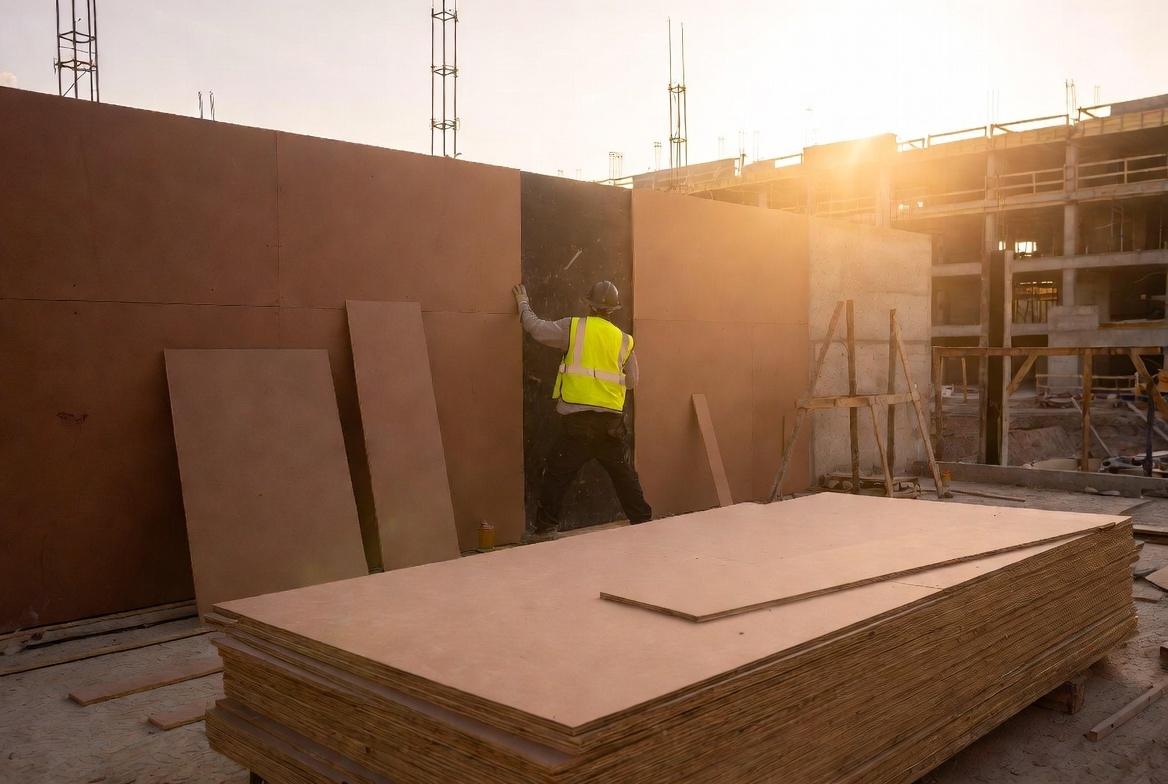
Formwork plywood, also called shuttering plywood or concrete form plywood, is a type of film faced plywood engineered specifically for use as a mold or temporary structure to hold fresh concrete in place while it sets and hardens.
Unlike standard construction plywood, formwork plywood is built to withstand the significant lateral pressure of wet concrete, repeated wetting and drying cycles, and the mechanical stress of stripping, cleaning, and re-use. Its defining characteristic is a smooth phenolic film bonded to both faces of the panel, which serves two purposes: it prevents concrete from bonding to the panel surface, and it seals the wood core against moisture absorption.
The film is typically made from phenol-formaldehyde resin and comes in two standard weights: 120 g/m2 for standard-duty applications and 220 g/m2 for heavy-duty or high-reuse applications. The heavier the film, the more reuses the panel can deliver before the surface degrades.
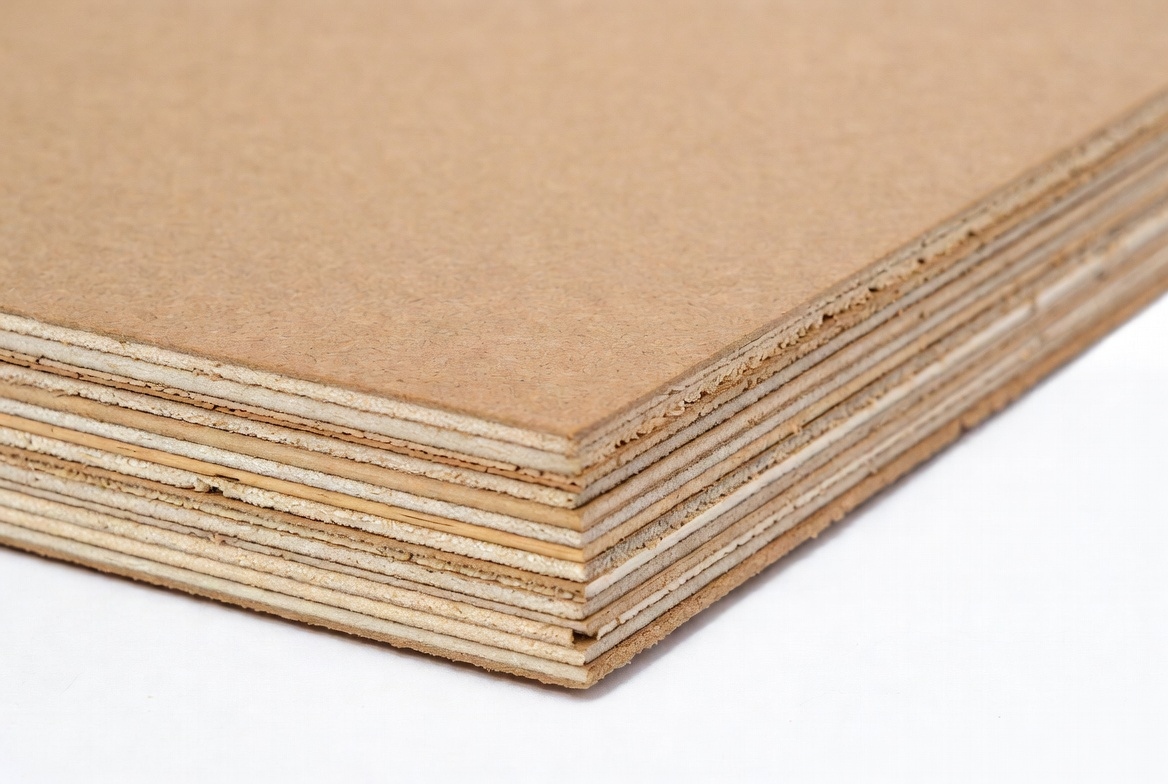
Underneath the film, the core is usually made from hardwood veneers such as eucalyptus, poplar, or a combination. The veneers are bonded with WBP (weather and boil proof) phenolic glue, which gives the panel its resistance to moisture delamination.
Why Formwork Plywood Matters for Concrete Quality
The surface finish of formed concrete is a direct reflection of the formwork surface. Contractors and architects who specify fair-faced concrete or exposed concrete finishes need formwork plywood that delivers a consistently smooth, defect-free contact face.
Poor formwork plywood can cause several problems:
Concrete bleed and staining. If the film is thin, damaged, or poorly bonded, moisture from the concrete mix can penetrate the wood and cause tannins and resins to leach back into the concrete face, leaving dark stains that are difficult to remove.
Honeycombing. When the plywood face is not perfectly flat or has gaps and depressions, air can become trapped against the form surface, creating voids in the hardened concrete. This is a structural and aesthetic defect that often requires remediation.
Panel delamination. Repeated wetting from wet concrete, rain, and cleaning, combined with the mechanical force of stripping, puts significant stress on the glue lines between veneers. Panels made with inferior glue or insufficient pressing time can delaminate after just a few uses, creating both waste and safety hazards.
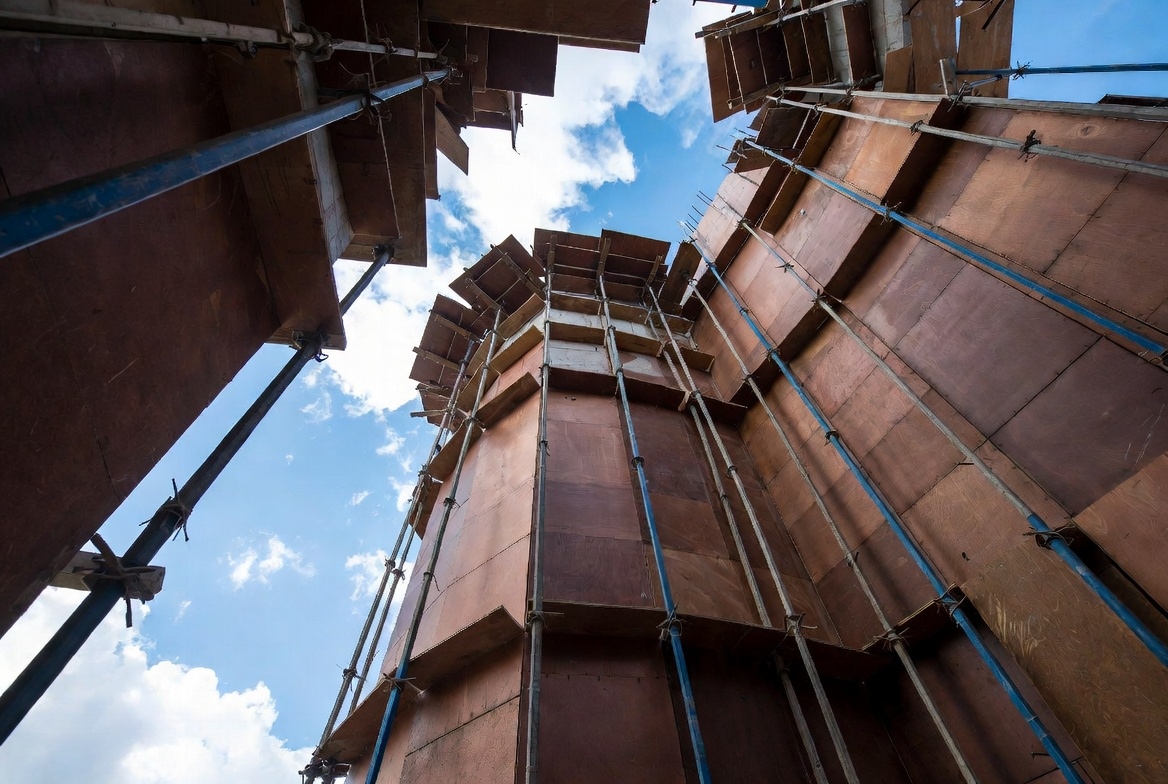
Formwork failure. In vertical formwork for walls and columns, the plywood must resist the full hydrostatic pressure of liquid concrete, which can exceed 50 kN/m2 at standard pour rates. Panels that are too thin or have inadequate core density can deflect or fail catastrophically.
Investing in quality formwork plywood is not just about getting more reuses. It is about protecting your concrete quality and avoiding expensive repairs.
Key Technical Specifications to Understand
Before ordering formwork plywood, you need to be able to read and compare technical specifications intelligently. Here are the critical parameters:
Panel Thickness
Standard formwork plywood thicknesses are 12mm, 15mm, 18mm, and 21mm. The correct thickness depends on the span between supporting studs or walers and the pour pressure.
For most standard wall and slab formwork with stud spacing of 400-600mm, 18mm is the industry default. At tighter spacings, 15mm may be sufficient. For heavy-duty applications such as bridge decks, tunnel linings, or deep foundations with high pour rates, 21mm or even laminated panels are specified.
Using undersized plywood to save cost is a false economy. Deflection under load creates bowing in the concrete face, which requires additional finishing work that far exceeds the panel cost saving.
Film Weight
As noted, 120 g/m2 and 220 g/m2 are the two standard phenolic film weights. A third option, 350 g/m2, is available for specialist applications requiring very high reuse counts.
In practice, 120 g/m2 film panels are marketed as delivering 6-10 reuses under careful site conditions. Panels with 220 g/m2 film are typically rated at 15-20 reuses or more. The actual reuse count depends heavily on site handling: how panels are stripped, cleaned, stacked, and stored between pours.
Core Composition
The veneer species used in the core affects the panel’s weight, stiffness, and moisture resistance.
Eucalyptus core panels are the most common in Vietnamese production. Eucalyptus is a dense, fast-growing hardwood with good natural moisture resistance and high bending stiffness. Panels with a full eucalyptus core are heavier than poplar alternatives but deliver superior load-bearing performance.
Poplar core panels are lighter and easier to handle on site, but they have lower bending strength and are more prone to moisture-related swelling in the core. They are commonly used for lighter-duty slab formwork.
Combi core panels use eucalyptus face veneers for strength and poplar in the interior to reduce weight. This is a good balance for most standard applications.
Glue Bond Class
All formwork plywood should be made with Class 3 (exterior) phenolic glue bond, meeting standards such as EN 314-2 Class 3. This is the minimum requirement for any application involving prolonged contact with moisture. Always ask suppliers for test reports confirming EN 314-2 Class 3 compliance.
Do not accept melamine glue (Class 2) for formwork applications. Melamine glue will degrade when panels are repeatedly wetted and dried.
Bending Strength (MOR) and Stiffness (MOE)
For structural applications, you may need to specify minimum Modulus of Rupture (MOR) and Modulus of Elasticity (MOE) values to verify that the panel can span the required distances without excessive deflection or failure.
Typical values for a quality 18mm eucalyptus formwork plywood panel:
- MOR: 40-60 N/mm2 (flatwise)
- MOE: 6,000-9,000 N/mm2 (flatwise)
Request third-party test reports rather than relying on supplier-stated values.
Standard Sizes
Formwork plywood is manufactured in standard sheet sizes that align with common modular formwork systems:
| Size | Common Markets |
|---|---|
| 1220 x 2440mm (4ft x 8ft) | North America, Asia, general export |
| 1250 x 2500mm | Europe (metric standard) |
| 1500 x 3000mm | Large-format, heavy civil applications |
| 900 x 1800mm | Smaller panels for column and beam formwork |
Custom sizes are available from most manufacturers for project-specific orders, typically with a minimum order quantity requirement.
How Many Reuses Should You Expect?
Reuse count is the metric that drives the true cost per pour of formwork plywood. A panel that costs 20% more but delivers twice as many reuses is significantly cheaper on a per-pour basis.
Theoretical reuse ratings from manufacturers are best-case figures. Site conditions typically reduce actual reuse counts. The main factors are:
Stripping method. Panels that are pried off with metal tools rather than properly released with wedges or a crane suffer edge and face damage that reduces subsequent reuses. Train site crews on proper stripping technique.
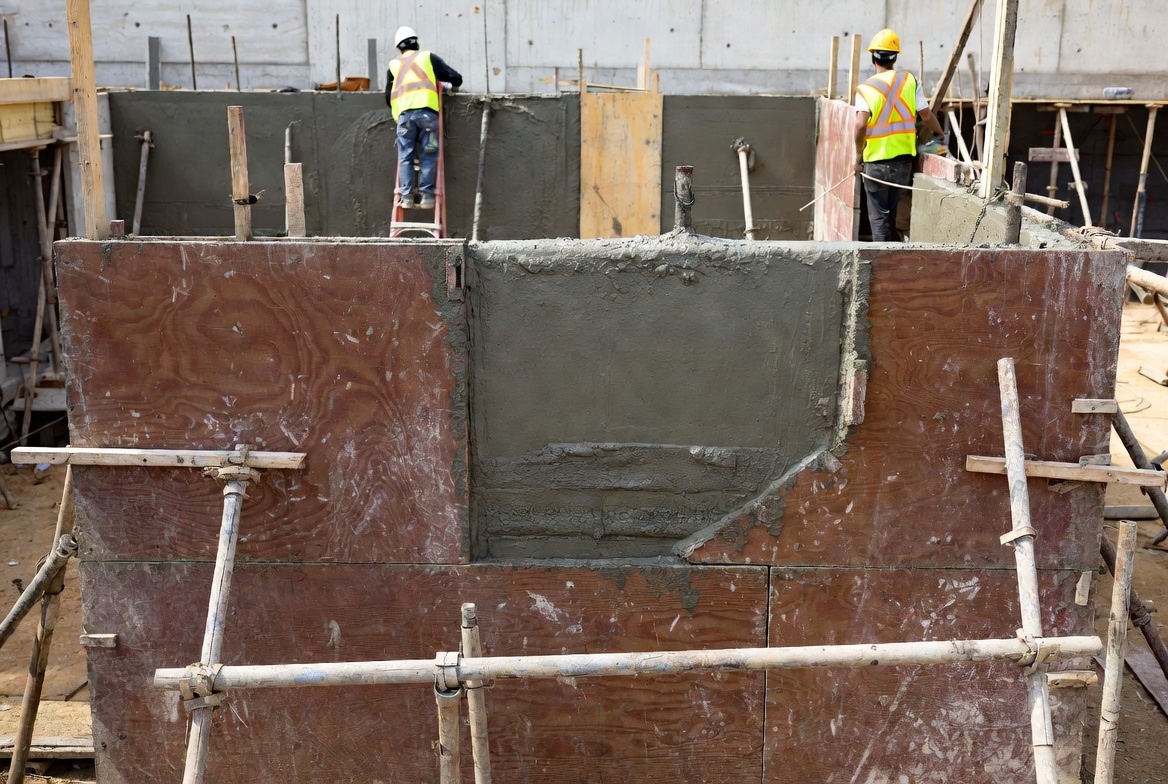
Cleaning. Concrete residue left on the panel face increases adhesion on the next pour and damages the film when stripped. Panels should be cleaned immediately after stripping while the residue is still relatively soft.
Release agent application. A thin, even coat of release agent applied before each pour extends film life significantly. Over-application is wasteful and can contaminate the concrete face.
Storage. Panels stored flat on a clean, dry surface last significantly longer than panels stored vertically or left on site exposed to sun and rain.
Edge sealing. Panel edges are the most vulnerable point for moisture ingress. Quality formwork plywood has factory-sealed edges with paint or lacquer. On site, any cut edges should be re-sealed immediately.
Under good site management conditions, a quality 18mm panel with 220 g/m2 film can realistically deliver 15 to 20 reuses before the concrete surface quality degrades to an unacceptable level.
Formwork Plywood vs. Other Formwork Systems
Formwork plywood competes with several alternative systems. Understanding the trade-offs helps you choose the right solution for each project type.
Plywood vs. Aluminum Formwork
Aluminum formwork systems offer very high reuse counts (500+ cycles) and fast installation for repetitive structures such as apartment blocks with identical floor plates. However, aluminum systems have high upfront capital cost and are not practical for non-repetitive or irregular structures.
Plywood remains the material of choice for one-off structures, irregular shapes, architectural concrete, and projects in markets where labor cost is low relative to capital cost.
Plywood vs. Plastic Formwork
Plastic (polypropylene) formwork panels offer good reuse counts and are lighter than plywood. However, they have lower stiffness, which limits span length, and they are not suitable for curved or complex forms.
Plywood vs. Steel Formwork
Steel forms are used for heavy civil infrastructure and tunnel work where extreme durability is required. They are impractical for most building construction due to weight and cost.
For the vast majority of building construction globally, film faced plywood remains the dominant formwork material due to its combination of strength, surface quality, workability, and cost.
Sourcing Formwork Plywood from Vietnam
For a comprehensive overview of how to find and vet Vietnamese plywood manufacturers, including CE certification verification and pre-shipment inspection, see our guide on plywood manufacturers in Vietnam.
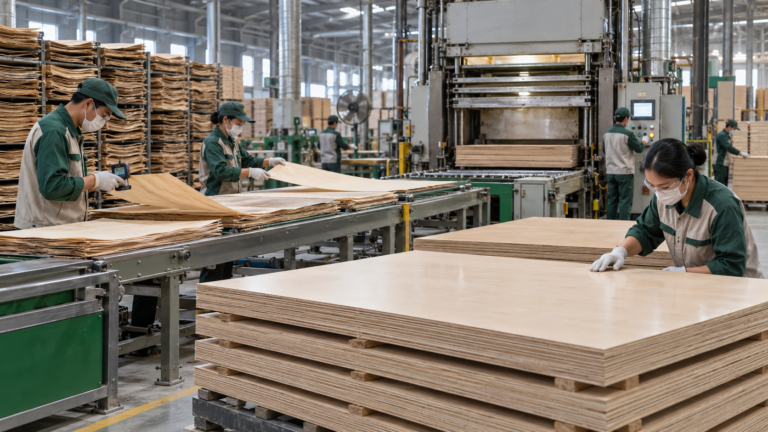
Vietnam has become one of the world’s leading exporters of formwork plywood, driven by its large plantation hardwood resource, competitive manufacturing costs, and improving quality standards. Vietnamese formwork plywood now serves markets across Europe, the Middle East, Australia, and Southeast Asia.
Why Vietnam?
The key advantages of Vietnamese formwork plywood are:
Eucalyptus supply. Vietnam has extensive eucalyptus plantations producing high-density wood that is well-suited to formwork plywood core production.
Manufacturing scale. The Vietnamese plywood industry has invested heavily in modern pressing and finishing equipment over the past decade, enabling consistent product quality at competitive prices.
CE Certification. Leading Vietnamese manufacturers now hold CE certification under EN 13986, which is required for formwork plywood sold into European Union construction projects. For a detailed explanation of what this certification requires, see our post on Vietnam plywood factory CE certificate. This certification requires third-party testing by a notified body and ongoing production monitoring.
Price competitiveness. FOB prices for Vietnamese 18mm formwork plywood are typically 10-25% lower than equivalent European-produced panels, depending on specification and market conditions.
What to Check When Buying from Vietnam
Not all Vietnamese plywood manufacturers produce to the same standard. Due diligence is essential, particularly for first-time buyers.
Request CE or FSC certificates. Legitimate certificates can be verified through the issuing certification body’s online database. Do not accept photocopied certificates without independent verification.
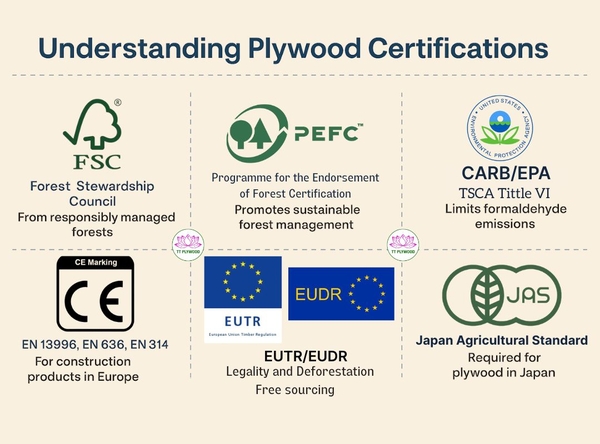
Ask for third-party test reports. EN 314-2 glue bond test reports, EN 310 bending strength reports, and formaldehyde emission test reports (E1 or E0 class) should be available from accredited third-party laboratories, not just internal factory tests.
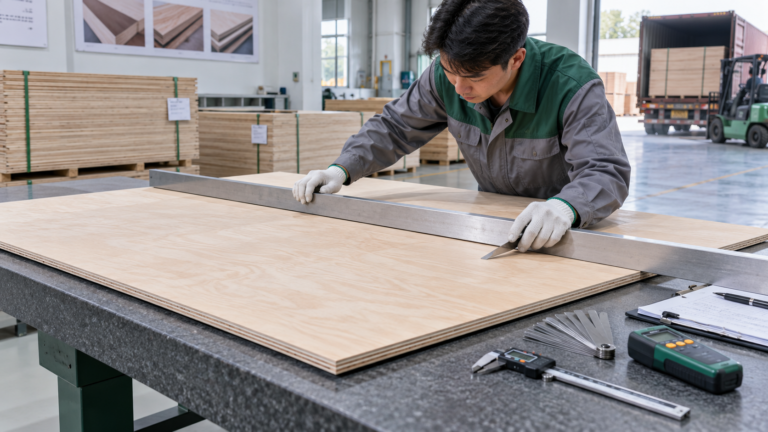
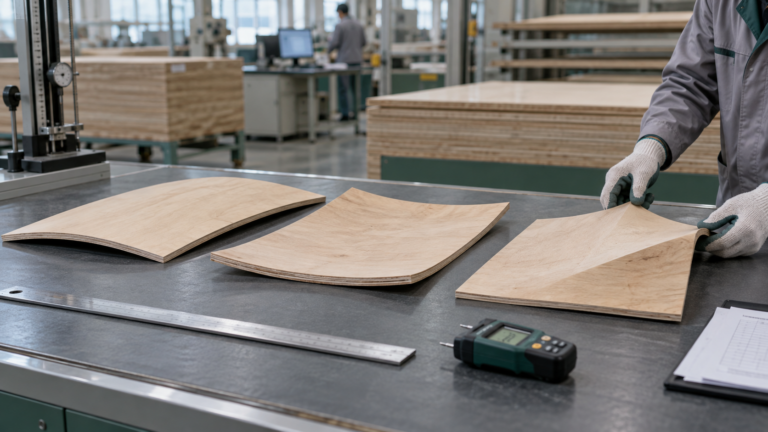
Request samples before bulk order. A standard formwork plywood sample set should include at least two full-thickness panels for inspection and ideally a cross-section sample to verify veneer thickness, core composition, and glue line quality.
Inspect the film. The phenolic film should be uniformly smooth with no bubbles, wrinkles, or bare patches. The edges of the film should be cleanly bonded to the panel face without lifting or peeling.
Check the edges. Cut a small section and examine the veneer layers. They should be uniform in thickness, tightly bonded, and free from large core voids or knot holes that could weaken the panel.
Clarify moisture content at point of shipment. Plywood shipped at high moisture content can warp or delaminate during transit. Specify a maximum moisture content of 8-12% at time of loading.
Standard Specifications for a Procurement Order
When writing a purchase specification or request for quotation for formwork plywood, include the following parameters:
- Panel size (e.g., 1220 x 2440mm or 1250 x 2500mm)
- Thickness (e.g., 18mm with tolerance +/-0.5mm)
- Number of plies (e.g., 9-ply minimum for 18mm)
- Film weight (e.g., 220 g/m2 phenolic film, both faces)
- Film color (brown/black/red as preferred)
- Core species (e.g., eucalyptus or eucalyptus/poplar combi)
- Glue bond class (EN 314-2 Class 3, WBP phenolic)
- Formaldehyde emission class (E1 maximum)
- Bending strength minimum (MOR > 40 N/mm2)
- Certifications required (CE marking, FSC if required)
- Edge sealing (factory-painted edges)
- Moisture content at shipment (8-12%)
- Tolerance on thickness, length, width, and squareness
A well-written specification protects you from receiving substandard product and gives the supplier clear parameters to quote against.
Price Factors
Formwork plywood pricing is influenced by several variables:
Raw material costs. Eucalyptus log and veneer prices fluctuate with plantation harvesting cycles, export demand, and fuel costs.
Film cost. Phenolic film is a petroleum-derived product, so its price moves with oil markets.
Shipping. Container freight rates, which were highly volatile between 2020 and 2024, continue to affect landed cost significantly for importers in Europe and other distant markets.
Order volume. Larger orders (full container loads of 20ft or 40ft) command better pricing than smaller quantities.
Specification. Higher film weight, thicker panels, and certified products all carry a price premium.
As of early 2026, FOB Vietnamese port prices for standard 18mm x 1220 x 2440mm formwork plywood with 220 g/m2 film are in the range of USD 12-18 per sheet for full container load quantities, depending on specification and supplier. For a historical view of how Vietnamese plywood prices have moved, see our Vietnam plywood price trend guide. Buyers should request current quotations as prices change with raw material and shipping cost movements.
Frequently Asked Questions
What is the difference between formwork plywood and regular plywood? Formwork plywood has a phenolic film bonded to both faces for concrete release and moisture protection, and is manufactured with WBP exterior glue. Regular construction plywood may not have these features and is not suitable for repeated contact with wet concrete.
Can formwork plywood be used for other applications? Yes. After its formwork life is complete, used formwork plywood is widely repurposed for site hoarding, temporary flooring, concrete curing blankets, and other secondary applications.
What causes the film to peel off the plywood? Film peeling is usually caused by inadequate pressing during manufacture (insufficient temperature, pressure, or pressing time), using the wrong type of adhesive between film and face veneer, or excessive mechanical damage during stripping on site.
Is brown or black film faced plywood better? The color of the phenolic film is not an indicator of quality. Brown and black films are both phenolic resin impregnated papers. The key parameter is film weight (g/m2), not color. Some manufacturers standardize on one color, and buyers sometimes develop a preference based on supplier experience rather than inherent quality difference.
What certifications should I require for formwork plywood used in EU construction? For work on EU construction projects, the relevant standard is EN 13986 for wood-based panels used in construction. Panels should carry CE marking indicating compliance with this standard. For applications requiring high glue bond durability, verify EN 314-2 Class 3 compliance with test reports from an accredited laboratory.
Summary
Formwork plywood is a technically demanding product where small differences in specification and manufacturing quality translate directly into project cost and concrete quality outcomes. The most important parameters are film weight, core species and density, and glue bond class.
Vietnam has become a competitive and capable supplier of formwork plywood for global construction markets, with leading manufacturers achieving CE certification and producing consistent quality at competitive prices. Due diligence on supplier credentials and independent product testing is essential, particularly for first-time buyers.
For construction companies and importers sourcing formwork plywood for European projects, specifying EN 314-2 Class 3 glue bond, 220 g/m2 phenolic film, and CE-marked panels from a verified manufacturer is the starting point for a reliable supply chain.
To view Kosmex’s range of CE-certified film faced plywood for formwork applications, visit our film faced plywood product page or anti-slip film faced plywood page. For sourcing questions, visit our contact page.
Bình luận