


Structural vs Non-Structural Plywood: Key Differences, Applications, and How to Choose
Structural vs non-structural plywood is one of the most practically consequential decisions in any building or joinery project. Select the wrong type and the outcome ranges from wasted money on an over-specified panel to a genuine structural failure when a load-bearing application is given board that cannot safely carry the loads placed upon it. Yet the two categories are regularly confused on job sites and in timber yards because they look similar, come from the same product families, and are often stacked next to each other on the same rack.
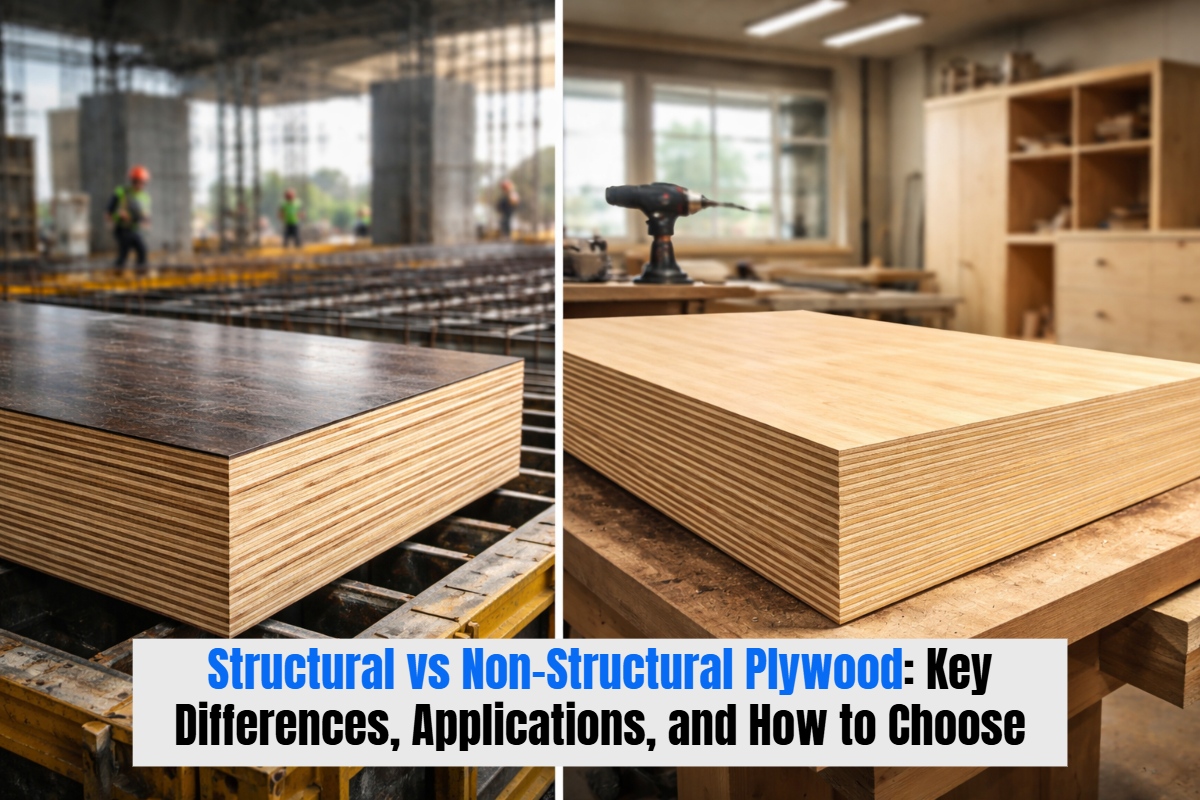
This guide gives you a complete, technically accurate understanding of what separates structural from non-structural plywood: the adhesive chemistry, the grading and certification systems, the specific applications where each is required, and a practical framework for making the right selection every time. Whether you are a builder, contractor, architect, or furniture maker, understanding this distinction is foundational to working confidently with plywood. For a broader overview of the product families involved, see our complete guide to types of plywood.
The distinction ultimately rests on three interconnected technical factors: the adhesive used to bond the veneer layers, the engineering standards the panel has been manufactured and tested to, and the veneer quality and core construction specification. These three factors collectively determine whether a sheet of plywood can be trusted as part of a building’s structural system, or whether it must be confined to non-load-bearing interior and decorative applications.

What Is Structural Plywood?
Structural plywood is engineered specifically for load-bearing applications. It forms part of a building’s primary structural system, transferring and distributing loads from the building’s occupants, contents, roof structure, and environmental forces (wind, snow, seismic activity) down through the building’s frame to its foundations. To perform this role safely and reliably across the full service life of a building, structural plywood is manufactured to strict engineering specifications and must pass third-party testing to confirm its structural performance.
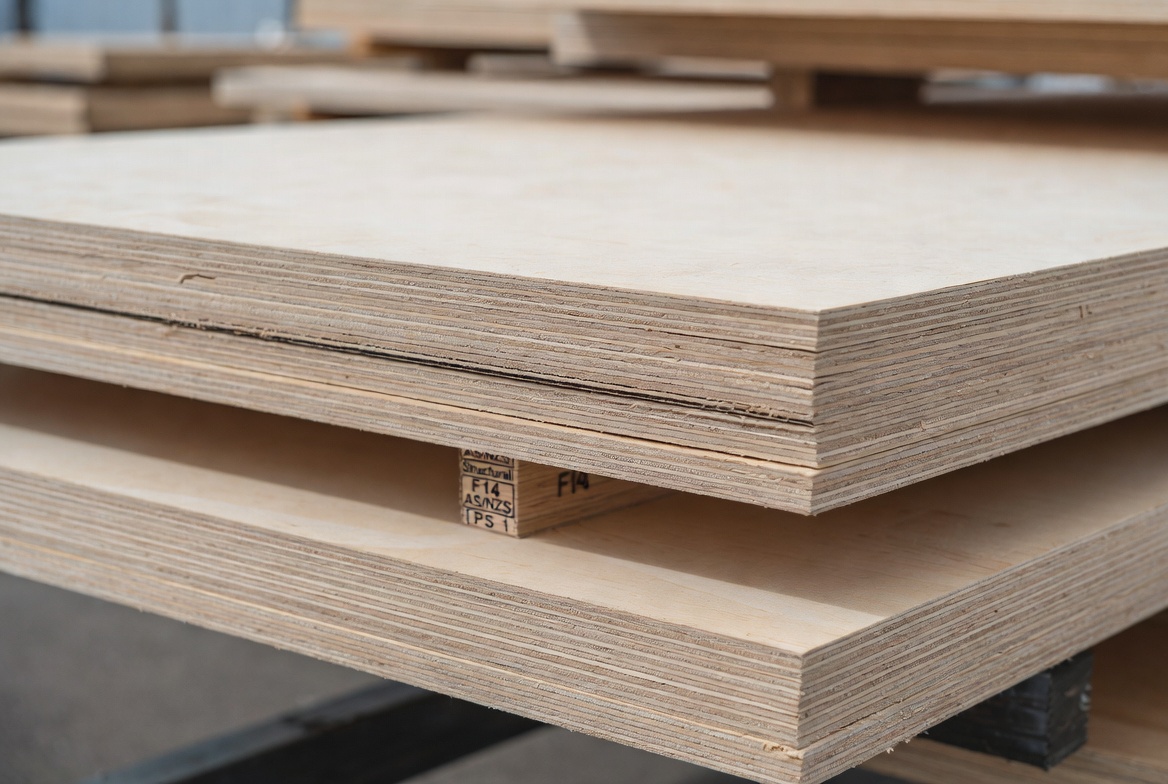
The structural classification is not a marketing term or a general quality indicator; it is a regulated technical designation backed by certification. A structural panel carries a stamp or label confirming its compliance with the applicable standard (AS/NZS 2269 in Australia, PS 1 or PS 2 in the US, EN 13986 in the UK and EU) and its verified stress grade or performance class. Understanding how that plywood making process translates into structural properties helps clarify why manufacturing controls are so critical to the final panel’s performance.
A-Bond and B-Bond Adhesive
The adhesive used to bond the veneers is the technical foundation of structural plywood’s performance. Structural panels use either A-Bond glue (phenol formaldehyde resin) or B-Bond glue (melamine-urea formaldehyde). Both create bonds that resist moisture, temperature cycling, and mechanical stress without deteriorating over the design life of the structure.
A-Bond adhesive is the stronger and more durable of the two: it is boil-proof, permanently waterproof, and appropriate for continuous exterior exposure and the most demanding structural applications. B-Bond adhesive is moisture-resistant and suitable for exterior structural use where some protection from direct weather is available, such as in structural framing, concrete formwork, and sheltered external applications. For a detailed technical comparison of these adhesive types, see our article on phenolic vs melamine glue in plywood.
Stress Grade and F-Rating
Structural plywood panels carry a verified stress grade that confirms their load-carrying capacity. In Australia and New Zealand, this is expressed as an F-rating (F8, F11, F14, or F17), where the number represents the panel’s characteristic bending strength in megapascals as confirmed by testing to AS/NZS 2269. In the US, the equivalent is the Structural 1 designation or the exposure and span rating system under PS 1 and PS 2. In the UK and EU, panels must comply with EN 13986 and carry a CE mark. Our guide on plywood grades explains how these grading systems work in detail across different markets.
Veneer Quality and Void Limitations
Structural plywood uses C-D grade face veneers as standard: both faces may contain knot holes, filled defects, and other natural timber characteristics that have no effect on structural performance but make the panel unsuitable for visible finish applications. More critically, structural plywood specifications limit the size and frequency of voids (internal gaps) in the core veneers, because large voids reduce the effective cross-section carrying the load and create stress concentrations that can trigger failure under load.
Key Applications of Structural Plywood
- Subflooring: Structural plywood panels are laid over floor joists to form the structural base for all finished flooring. For detailed guidance on this application, see our our subfloor plywood guide.
- Roof decking: Used beneath roofing membranes, tiles, or metal sheeting to form the structural deck that distributes roof loads across the rafter or truss system.
- Wall sheathing: Applied to timber-framed walls as a structural diaphragm to resist lateral forces from wind and seismic loads. For comparison of wall panel options, see our guide on what is a plywood wall.
- Concrete formwork: Structural plywood, typically B-Bond grade, is used to form the boxing into which concrete is poured. For product selection guidance, see our article on how to choose plywood for formwork.
- Structural flooring (tongue and groove): Panels machined with T&G edges are used as combined structural floor and substrate in single-layer flooring systems.
- Packing crates, transport platforms, and load-bearing pallets where sustained mechanical stress is applied during handling and use.
| Safety Warning Never Substitute in Structural Applications
If a building code, engineer’s specification, or construction standard calls for structural plywood with a specific grade or F-rating, using a non-structural panel is not acceptable. Non-structural plywood has no verified load-carrying capacity and must never be used where a structural panel is required by specification. |
What Is Non-Structural Plywood?
Non-structural plywood (also called interior plywood, furniture-grade plywood, or decorative plywood depending on the market) is manufactured for applications where surface quality and workability matter more than load-carrying capacity. It is stable, flat, and appropriate for a very wide range of interior and decorative uses, but it is not tested or graded for structural applications and must not be used where the panel is required to carry loads as part of a building’s primary structural system.
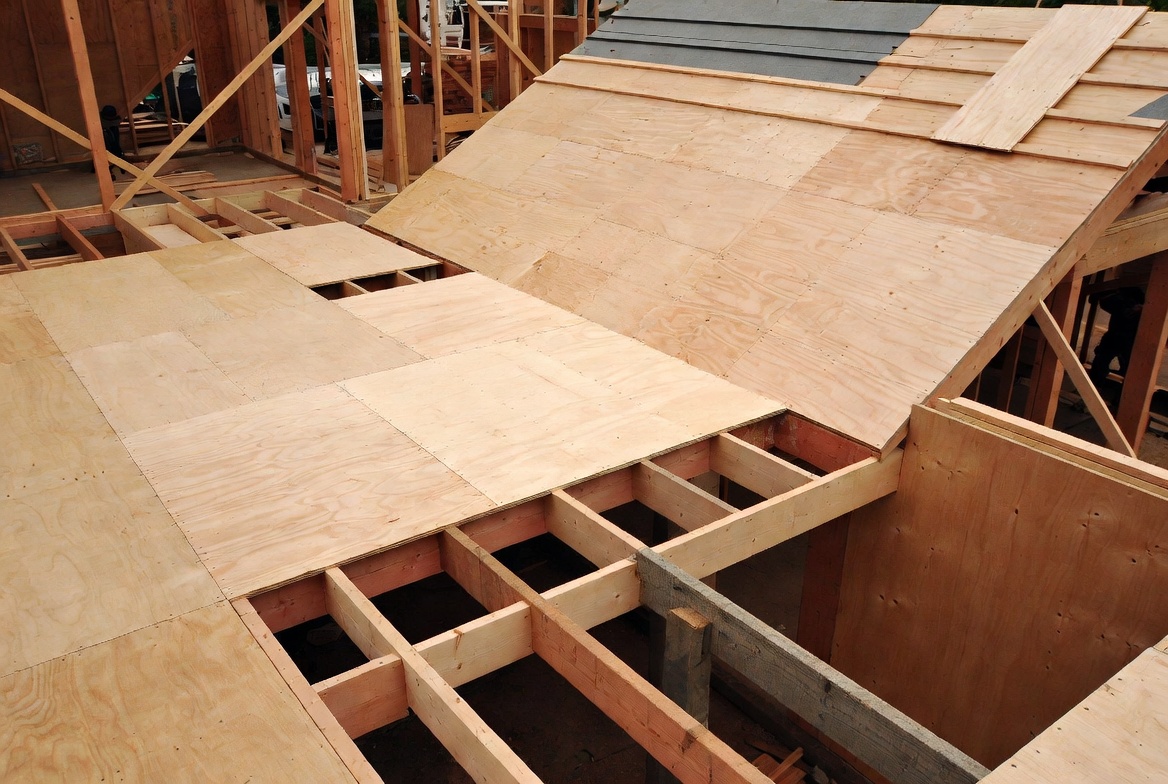
Non-structural plywood is the most commonly encountered type in furniture workshops, joinery shops, and interior fit-out projects. It is available in a wider range of species and face veneer qualities than structural plywood, with options ranging from utility-grade panels with visible core imperfections to premium decorative panels with matched, highly figured face veneers. For a comparison of how non-structural plywood performs against alternative panel materials, see our articles on particle board vs plywood and birch plywood vs MDF.
C-Bond and D-Bond Adhesive
Non-structural plywood uses C-Bond glue (urea melamine formaldehyde) or D-Bond glue (urea formaldehyde). These adhesives create bonds that are adequate for interior conditions and offer limited resistance to occasional moisture, but they degrade under sustained wet conditions and are not suitable for outdoor use or applications where the panel will experience continuous moisture exposure. C-Bond offers better humidity resistance than D-Bond and is appropriate for interiors with moderate moisture levels (well-ventilated bathrooms and kitchen areas). D-Bond is strictly for dry, protected interior environments.
Aesthetic Surface Quality
The face veneers in non-structural plywood are typically sanded smooth, free of open defects, and graded for visual consistency. This is the fundamental trade-off between the two product families: structural plywood prioritizes adhesive durability and core integrity while accepting aesthetic imperfection; non-structural plywood prioritizes surface quality for painting, staining, or finishing while accepting adhesive limitations. Non-structural panels with high-quality face veneers in species such as birch, oak, maple, and walnut are the standard substrate for high-end furniture and cabinetry. For a practical guide to surface finishing, see our article on how to finish birch plywood.
Key Applications of Non-Structural Plywood
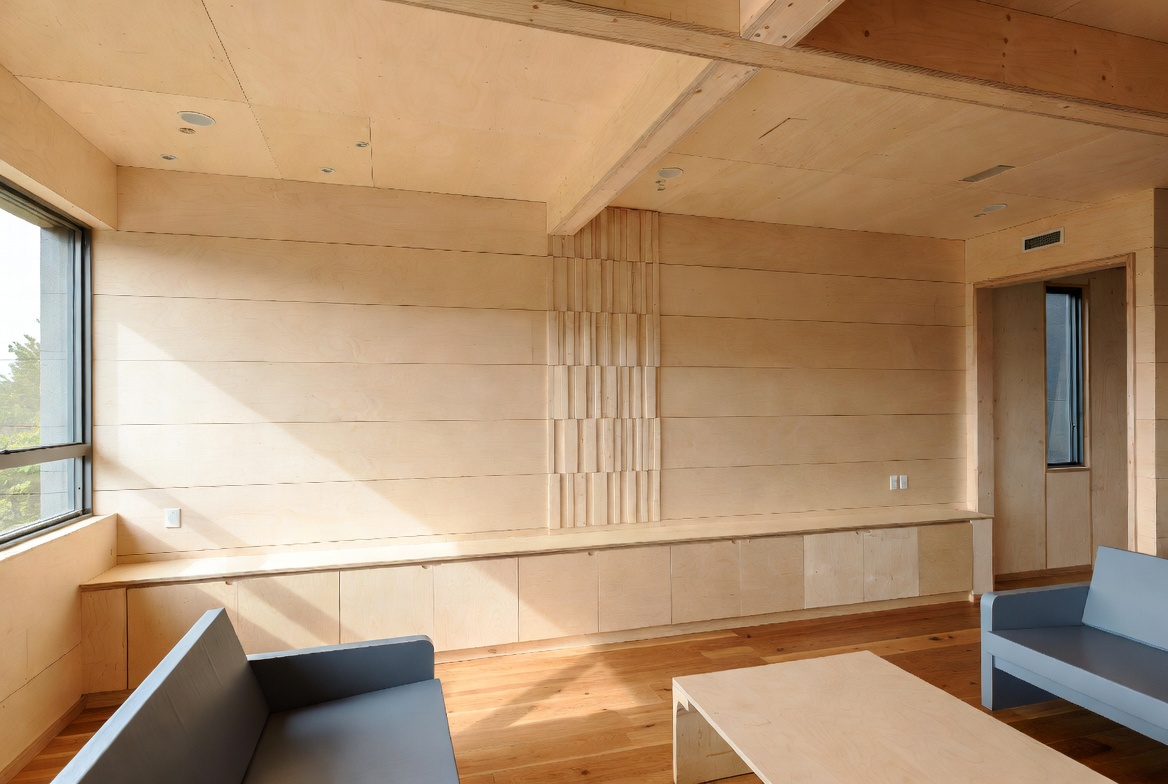
- Interior wall lining and ceiling panels: Non-structural plywood provides flat, smooth surfaces for painted or feature-finish interiors. For context on when plywood is preferred over alternative wall materials, see our drywall vs plywood comparison.
- Furniture and cabinetry: The most common application for non-structural plywood. See our guide to birch plywood furniture ideas for design inspiration and material considerations.
- Decorative panelling and feature walls: Non-structural panels provide a design-forward surface option for architects and interior designers.
- Door skins and internal door blanks: The smooth face of non-structural panels makes them ideal for interior door facings.
- DIY projects and hobby work: Low-stress decorative and functional builds where load capacity is not a design requirement.
- Shopfitting, display hoarding, and exhibition stands where appearance and ease of working are the primary criteria.
Structural vs Non-Structural Plywood: The Six Key Differences
1. Adhesive Chemistry
The glue bond is the primary technical definition of structural vs non-structural plywood. A-Bond phenol formaldehyde (used in the highest-grade structural panels) creates a cross-linked polymer network that is effectively permanent: it does not soften in hot water, does not degrade in outdoor exposure, and does not creep under sustained load. B-Bond melamine-urea formaldehyde is also moisture-resistant and suitable for structural exterior applications. By contrast, C-Bond and D-Bond urea formaldehyde adhesives are vulnerable to sustained moisture: wet conditions cause the adhesive to soften and eventually fail, leading to delamination. This chemistry difference is fundamental and cannot be overcome by increasing the thickness of a non-structural panel. For detailed technical data on bond performance in specific test conditions, see our article on birch phenolic glue plywood EN 314 test.
2. Engineering Standards and Third-Party Certification
Structural plywood must be independently tested and certified to confirm it meets the relevant engineering standard for its market: AS/NZS 2269 (Australia/NZ), PS 1 or PS 2 (US), or EN 13986 (UK/EU). These standards specify the test methods for bending strength, stiffness, shear strength, and bond quality, and require ongoing production monitoring by an accredited third-party certification body. For products supplied to the European market, CE marking is mandatory for structural plywood panels. For more on certification requirements for the EU market, see our guide on CE certification for Vietnam plywood factories.
3. Veneer Quality and Internal Voids
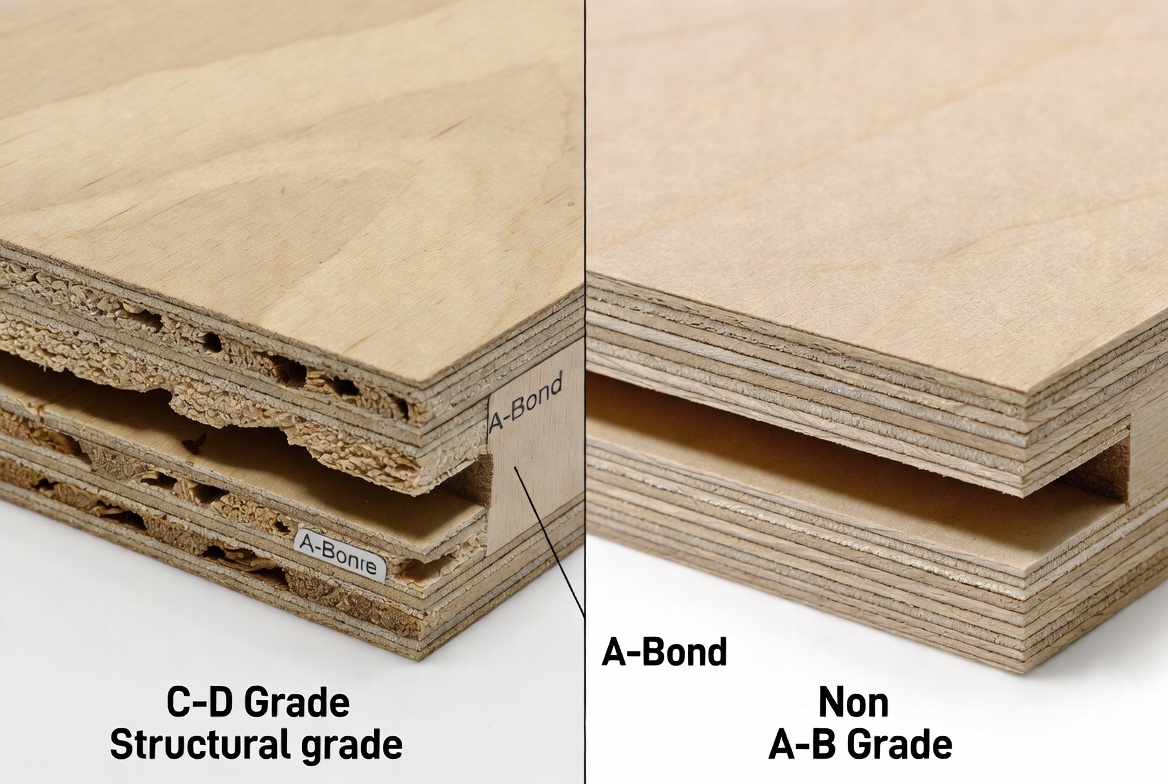
Structural plywood specifications include maximum permitted sizes and frequencies for voids in the core veneers, because internal voids reduce the load-bearing cross-section and create stress concentration points. Non-structural plywood has no equivalent void specification because it is not expected to carry loads that would exploit these weaknesses. However, for applications where internal voids would compromise machining quality (CNC routing, edging, drilling), it is worth specifying void-free or low-void panels regardless of structural grade. Common defects in plywood provides a comprehensive guide to identifying and avoiding quality issues during procurement.
4. Moisture and Durability Performance
A-Bond structural plywood is permanently waterproof and can withstand continuous exterior weather exposure without bond failure. It is the appropriate choice for any application where the panel will be permanently exposed to the elements. Non-structural plywood must be kept in protected interior conditions: C-Bond tolerates moderate humidity and occasional moisture in well-ventilated spaces; D-Bond requires strictly dry conditions. Best plywood for outdoor use provides a detailed comparison of the outdoor-rated options across panel types, including which grades are appropriate for different exposure conditions.
5. Thickness, Layer Count, and Structural Capacity
Both structural and non-structural plywood are available in a wide range of thicknesses from 3mm to 38mm and above. For structural applications, the required thickness is determined by the span between supports, the loads the panel must carry, and the panel’s F-rating or performance class. Standard plywood sizes covers the full range of commercially available dimensions across both product families. For structural applications, the relationship between panel thickness, F-rating, and span capacity is specified in manufacturer span tables and engineering calculation tools; these must be consulted for any building code-regulated application.
6. Cost
Structural plywood carries a 20 to 40% price premium over equivalent non-structural panels, reflecting the higher-quality adhesive, more rigorous manufacturing quality controls, third-party certification, and typically denser timber used in structural-grade cores. Vietnam plywood price trends provides current market pricing data for both structural and non-structural grades from one of the world’s major plywood exporting countries, which is useful context for understanding how manufacturing origin affects panel pricing.
Structural vs Non-Structural Plywood: Side-by-Side Comparison
| Structural Plywood | Non-Structural Plywood |
| Adhesive: A-Bond (phenol formaldehyde) or B-Bond (melamine-urea formaldehyde) | Adhesive: C-Bond (urea melamine) or D-Bond (urea formaldehyde) |
| Waterproof to boil-proof (A-Bond); moisture-resistant (B-Bond) | Moisture-tolerant (C-Bond) or dry interior only (D-Bond) |
| Carries F-rating: F8, F11, F14, F17 or equivalent performance class | No structural stress grade or F-rating |
| Certified to AS/NZS 2269 (AU), PS 1/2 (US), EN 13986 (EU/UK) | Graded to aesthetic/dimensional standards only |
| Face veneer: C-D grade; visible defects permitted | Face veneer: A-B grade; smooth, sanded, finishable |
| Core voids: limited by specification for structural integrity | Core voids: no structural specification |
| Typical uses: subflooring, roofing, wall sheathing, formwork | Typical uses: furniture, cabinetry, wall lining, decor |
| Cost: 20-40% premium over equivalent non-structural panels | Cost: more economical for given dimensions |
| Weight: generally heavier (denser species, more plies) | Weight: lighter; easier to handle for interior work |
Wood Species Used in Structural vs Non-Structural Plywood
The choice of timber species has a significant impact on structural performance, weight, and workability. Structural plywood is typically manufactured from denser, higher-modulus species that can deliver the required F-ratings at commercially practical thicknesses. Non-structural plywood has a wider species range because aesthetic qualities play a larger role than pure mechanical performance.
Common Species for Structural Plywood
In Australia, hoop pine and radiata pine are the most common structural species, with hoop pine panels typically achieving F11 and F14 ratings. Douglas-fir is the dominant species in North American structural plywood. Eucalyptus is increasingly important as a structural plywood species due to its high density, excellent F-rating performance, and rapid plantation growth. What is eucalyptus plywood provides a complete introduction to this species, and our eucalyptus plywood review covers real-world performance data from construction and industrial applications.
The structural performance of eucalyptus plywood is particularly notable for load-bearing furniture and construction applications, where its density translates directly into superior high bending strength. For furniture-specific applications that demand high structural performance, our guide on high bending strength plywood for furniture provides detailed specification guidance.
Common Species for Non-Structural Plywood
Non-structural plywood encompasses a much wider species range. Birch is the premium species for furniture and cabinetry, valued for its tight grain, consistent face quality, and excellent workability. Birch plywood: complete guide covers the full performance profile of this material from specification to installation. Maple is an alternative premium hardwood species; our maple vs birch plywood comparison helps you decide between the two for specific applications.
Poplar and pine are widely used in utility-grade non-structural panels where cost efficiency is the priority. Sande and Okoume are species used in face-grade decorative panels; our sande plywood vs birch plywood comparison covers the practical differences for cabinetry and furniture applications. For the structural applications of Kosmex’s own product range, our top best-selling plywood products article covers the most popular grades and their typical applications.
Choosing the Right Plywood Type by Application
Subflooring and Floor Systems
Subflooring is exclusively a structural plywood application. The panel must carry foot traffic, furniture loads, and dynamic loads from appliances without deflecting excessively between joists. An F11 or equivalent structural panel at 15mm to 19mm is the minimum specification for most residential applications, with the required thickness depending on joist spacing. Using non-structural plywood for subflooring is a building code violation in most jurisdictions and creates a safety risk over time as the adhesive degrades and the panel loses its load-carrying capacity. our subfloor plywood guide provides application-specific guidance for this critical use.
Wall Sheathing and Structural Bracing
Structural wall sheathing uses plywood as a rigid diaphragm to resist the lateral forces (wind and seismic) that try to rack or distort a timber-framed wall. The plywood must be structural grade, correctly nailed to the framing at specified intervals, and its diaphragm capacity must be verified by engineering calculation or code-approved tables. Non-structural plywood cannot be used for this application. For the comparison between plywood and the main alternative panel material in sheathing applications, see CDX plywood vs OSB, which covers the relative merits of both panel types for sheathing, roofing, and subflooring.
Roofing
Roof decking plywood must be structural grade because it carries both the permanent dead load of the roofing material and the variable live loads of maintenance personnel and snow. CDX is the standard US structural roof deck panel; our guide on what is CDX plywood explains the grade designations in detail. The exposure rating of the selected panel must be appropriate for the expected construction period before the roofing membrane or tiles are installed, because structural plywood can tolerate limited weather exposure during construction but must be covered promptly.
Concrete Formwork
Formwork requires structural plywood because the panel must resist the hydrostatic pressure of wet concrete without deflecting or failing. Film-faced formwork plywood (formply) uses a structural plywood core with a phenolic film bonded to the face that provides chemical resistance to concrete and allows multiple reuses. our formwork selection guide provides a contractor-focused specification guide including thickness selection, expected reuse cycles, and supplier evaluation.
Furniture and Cabinetry
Furniture and cabinetry are the primary applications for non-structural plywood. For most furniture applications, the loads are modest and the adhesive durability requirements are well within the capability of C-Bond interior-grade plywood. The critical selection factors are face veneer species and grade, consistent thickness (calibrated plywood is preferred for machined joinery), and void-free or low-void cores for applications involving edge treatment or fasteners close to the panel edge. Birch plywood grades explains the grading system for the most widely used furniture plywood species. For furniture pieces that will be used in rooms with elevated humidity (kitchens, bathrooms), is birch plywood waterproof provides guidance on selecting and treating panels for these environments.
Outdoor Furniture and Exterior Applications
Outdoor and exterior applications require either A-Bond structural plywood or marine plywood, depending on the level of moisture exposure involved. Standard non-structural plywood degrades rapidly in outdoor conditions as the C-Bond or D-Bond adhesive softens and the face veneers delaminate. For a comprehensive guide to outdoor plywood selection, see our outdoor plywood selection guide. For applications combining structural requirements with aesthetic surface quality (outdoor furniture, deck structures, architectural cladding), eucalyptus plywood vs birch plywood compares the relative merits of two premium structural species.
| Practical Selection Rule The One-Question Test
Ask yourself: does this panel need to carry loads, resist lateral forces, or survive exterior moisture exposure? If yes to any of these, use the appropriate structural grade. If no to all of them, non-structural plywood will do the job at lower cost and with a better surface for finishing. |
Special Types: Marine, Formply, Film-Faced, and Decorative Plywood
Marine Plywood
Marine plywood is a subcategory of structural plywood that uses A-Bond adhesive and is manufactured to the most stringent veneer quality requirements: no internal voids are permitted, all veneers must be from approved species, and face veneers must meet A or B grade standards. Marine plywood is required for permanent wet applications such as boat building, dock construction, and wet room substrates. It is significantly more expensive than standard structural plywood and is rarely necessary for mainstream construction where standard A-Bond structural panels perform adequately. our birch waterproofing guide provides context on how different panel types respond to sustained moisture.
Film-Faced Plywood (Formply)
Film-faced plywood, or formply, is a structural plywood panel with a hard phenolic resin film bonded to one or both faces. The film prevents concrete from adhering to the panel surface during casting and allows the panel to be cleaned and reused multiple times. The film also significantly enhances the panel’s moisture resistance during formwork use. Formply is a structural panel: its core must meet structural requirements because it is subject to significant hydrostatic pressure from wet concrete. Anti-slip film-faced plywood is a related product where the film surface is textured to provide grip, used in vehicle decks, scaffolding, and working platforms where safety is critical.
Decorative and Pre-Laminated Non-Structural Plywood
Decorative plywood and pre-laminated panels are non-structural products manufactured with a premium decorative face veneer (oak, walnut, ash, cherry) or a factory-applied melamine or HPL laminate surface. These panels are appropriate for the same interior applications as standard non-structural plywood but provide a ready-to-use decorative surface without further finishing. The types of eucalyptus plywood guide covers how eucalyptus is available in both structural core and decorative face configurations, illustrating how species selection interacts with structural vs non-structural classification.
Structural Plywood: Thickness and Application Guide
| Thickness | F-Rating (AU) | US Equivalent | Typical Application | Indicative Max Span |
| 7 mm / 9 mm | F8 | CDX 3/8″ | Light wall sheathing | 450 mm centres |
| 12 mm | F11 | CDX 15/32″ | Roof decking, light subfloor | 450 mm centres |
| 15 mm | F11 / F14 | CDX 19/32″ | Residential subflooring | 450-600 mm centres |
| 17 mm | F14 | Structural 1, 23/32″ | Heavy subfloor, commercial roofing | 600 mm centres |
| 19 mm | F14 / F17 | Structural 1, 3/4″ | Structural flooring, formwork | 600-900 mm centres |
| 25 mm | F17 | 1″ Structural | Heavy industrial platform, formwork | 900 mm+ centres |
Note: Span values are indicative only and apply to simply supported single-span conditions under typical residential loads. Always consult manufacturer span tables or a structural engineer for specification in building-code-regulated applications. See our eucalyptus plywood thickness guide for application-specific thickness guidance for eucalyptus structural panels.
Frequently Asked Questions
Can non-structural plywood be used for flooring?
No. Flooring requires structural plywood because the panel must carry sustained dynamic and static loads across the span between floor joists. Non-structural plywood has no verified load-carrying capacity and its adhesive will degrade under the moisture conditions typically present in floor assemblies. In most markets, using non-structural plywood for structural flooring violates building codes. For product selection guidance, see our subfloor plywood guide.
Is CDX plywood structural or non-structural?
CDX plywood is structural. The ‘C’ and ‘D’ refer to the face and back veneer grades, and the ‘X’ refers to the Exposure 1 adhesive (a moisture-resistant structural glue). CDX is certified under PS 1 for structural use and is the standard construction-grade structural panel for wall sheathing, roof decking, and subflooring in the US market. Our detailed guide on the CDX plywood guide covers the full specification, common sizes, and appropriate applications.
What is the difference between structural plywood and marine plywood?
Marine plywood is a subcategory of structural plywood with more stringent manufacturing requirements: no internal voids, A or B grade face veneers, and A-Bond waterproof adhesive. All marine plywood is structural, but not all structural plywood is marine grade. Standard structural plywood (such as CDX or F11 pine) may contain permitted core voids and uses C-D face veneers, which makes it unsuitable for marine applications but perfectly adequate for construction structural use. For applications where both waterproofing and structural performance are required, our birch plywood waterproofing guide provides guidance on waterproofing treatments and their limits.
Can I use structural plywood for furniture?
Structural plywood can be used for furniture, particularly for workshop benchtops, heavy-duty shelving, and industrial furniture where surface finish matters less than load capacity. However, the C-D face veneers of structural panels are not suitable for painted or stained finishes without extensive preparation. For decorative furniture, non-structural plywood with A-B face veneers provides a better substrate with less preparation work. Our our birch plywood furniture guide guide illustrates the full range of furniture applications for premium non-structural plywood.
How do structural and non-structural plywood compare in weight?
Structural plywood is generally heavier than non-structural plywood of equivalent dimensions because it is manufactured from denser species (radiata pine, hoop pine, Douglas-fir, eucalyptus) with more plies and tighter core specifications. For weight data across specific panel thicknesses and species, see our comprehensive guide on how much does a sheet of plywood weigh, which covers weight calculations for both structural and non-structural panels.
Are there sustainable structural plywood options?
Yes. Structural plywood from FSC-certified plantation forests is widely available and represents a responsible choice for both structural and non-structural applications. Eucalyptus in particular is a fast-growing plantation species that combines excellent structural performance with good sustainability credentials. Our is plywood sustainable guide covers the environmental profile of plywood in detail, including how to evaluate supplier certifications and adhesive emissions. For buyers in the EU market, eucalyptus plywood for the EU market covers the specific compliance requirements for European import.
What is BCX plywood and is it structural?
BCX plywood is a structural panel designation commonly used in the US market. The ‘B’ indicates a higher-quality sanded face veneer, the ‘C’ indicates the back veneer grade, and the ‘X’ confirms the Exposure 1 structural adhesive. BCX is structural and is often specified where a better face appearance is required alongside structural performance, such as in visible structural applications or where the panel will be painted. Our guide on BCX plywood meaning covers the full specification and applications of this grade in detail.
Conclusion: Choosing the Right Plywood for Every Application
The distinction between structural and non-structural plywood is not a matter of preference or general quality: it is a precise technical classification with direct safety implications in building applications. Structural plywood uses A-Bond or B-Bond adhesive, carries a verified stress grade or performance certification, and has been independently tested to confirm its load-carrying capacity. Non-structural plywood uses C-Bond or D-Bond adhesive, carries no structural certification, and is manufactured for applications where surface appearance and workability are the primary requirements.
Every project has a clear correct answer to the structural vs non-structural question. Applications that involve load-bearing, structural rigidity, exterior moisture exposure, or compliance with a building code or engineer’s specification require the appropriate structural grade. Interior, decorative, non-load-bearing applications in protected dry environments are served equally well by non-structural plywood at lower cost. Getting this decision right from the start saves money, avoids safety risks, and ensures your project meets its regulatory requirements. For sourcing the right panel for your specific application, our team at Kosmex can help you identify the optimum grade and species from our extensive range. See our guide to finding plywood suppliers near you for guidance on evaluating supplier capabilities and quality systems.
For further reading on related topics, see our comparisons of plywood vs OSB for structural sheathing applications, our guide to eucalyptus vs poplar plywood for structural and semi-structural uses, and the Kosmex product overview for structural grades available from our Vietnam manufacturing facility with European and international certification.
Bình luận