


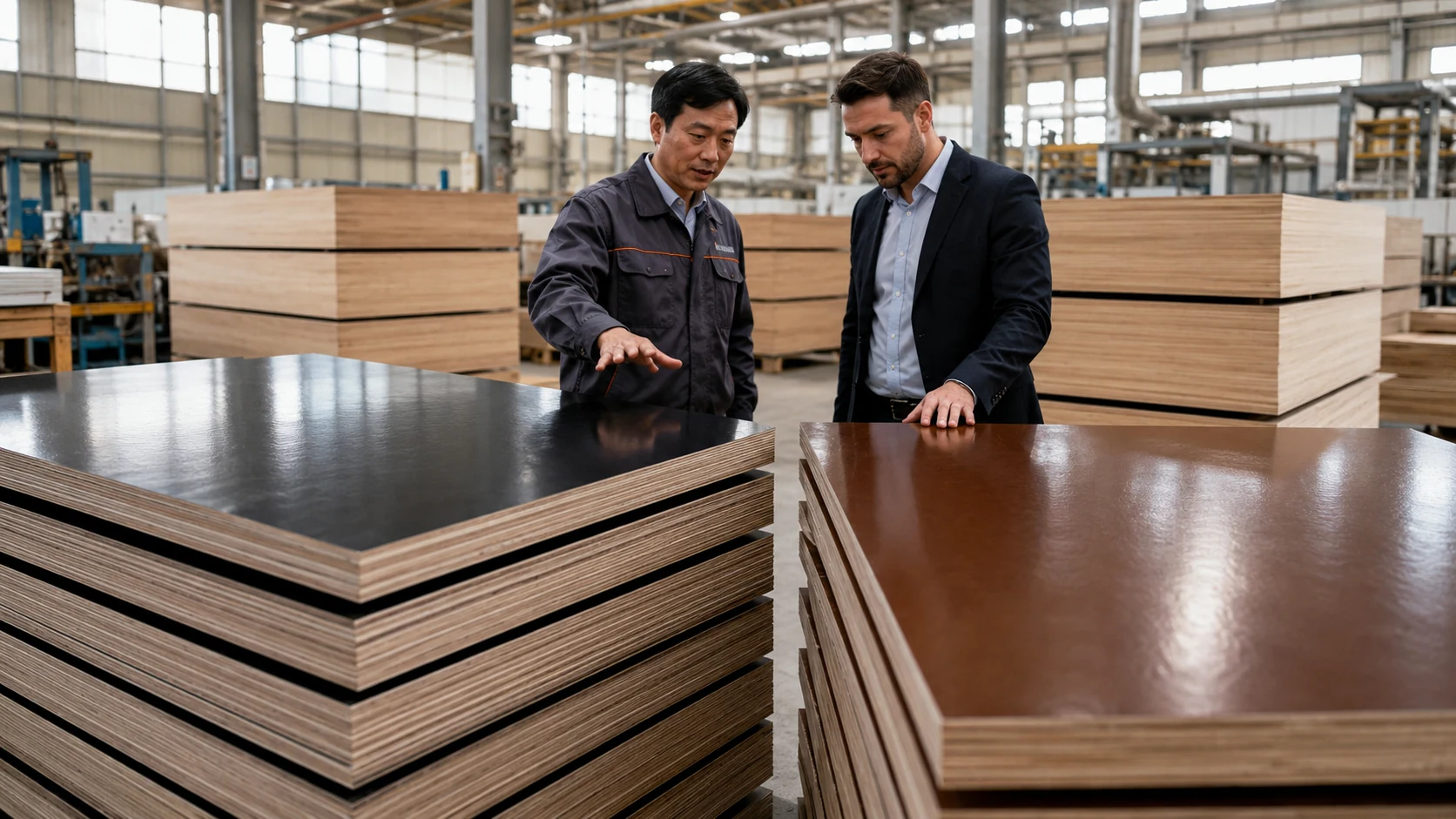
The short answer is: color can suggest certain differences, but film color alone does not guarantee plywood quality. Real performance depends on film weight, resin content, glue type, core quality, edge sealing, pressing control, and jobsite handling.
At Kosmex, we focus on producing stable film faced plywood for B2B buyers. For premium products, Kosmex uses composer machine core jointing to reduce core gap and core overlap, while offering film and glue specifications suitable for formwork, construction, and heavy-duty applications.
What Is Film Faced Plywood?
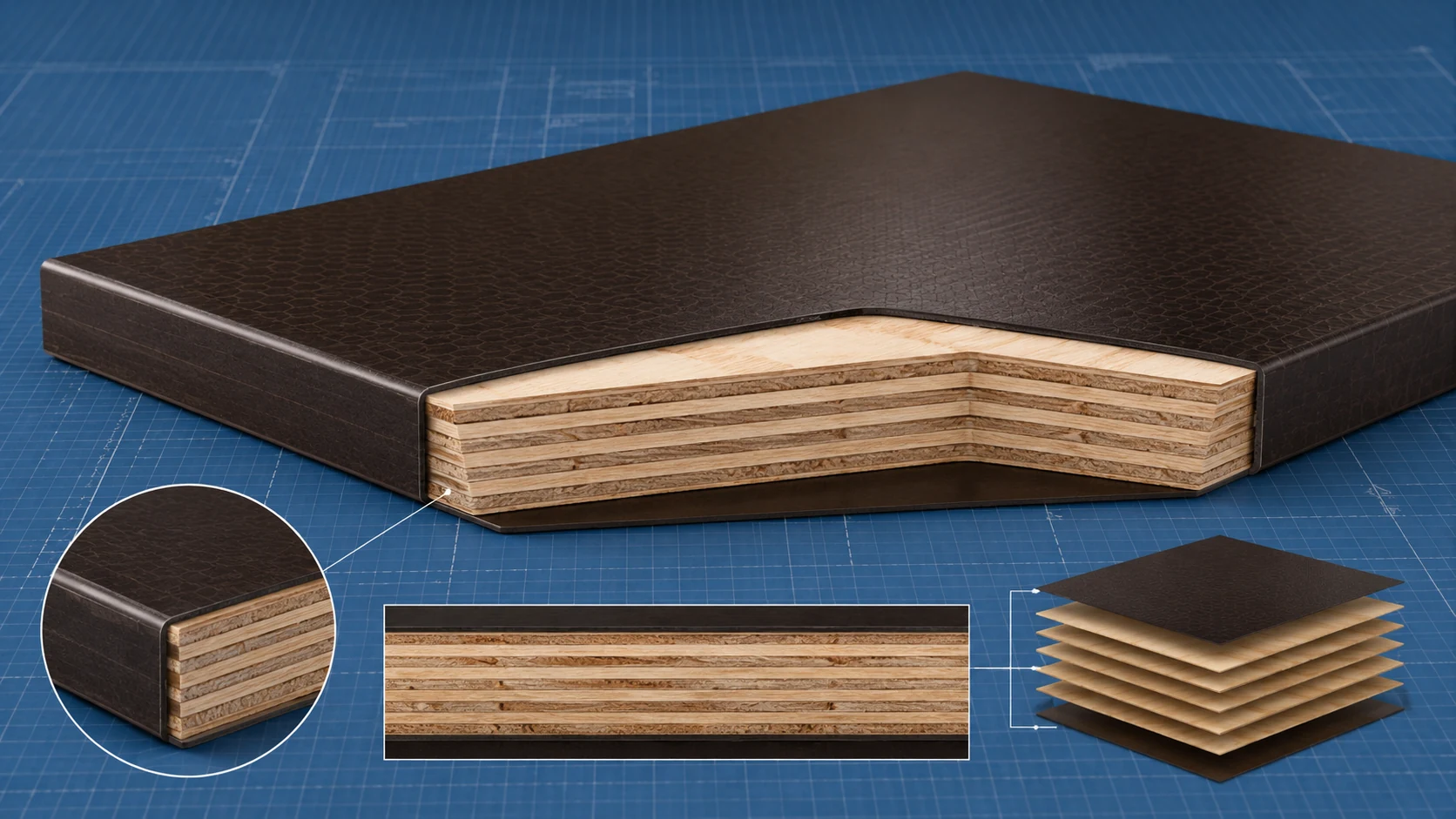
Film faced plywood is plywood coated with a resin-impregnated film on one or both sides. The film protects the plywood surface from moisture, abrasion, concrete adhesion, and site handling damage.
- Concrete formwork and shuttering systems.
- Reusable construction panels.
- Temporary site flooring.
- Trailer flooring and industrial platforms when anti-slip surface is required.
You can learn more about the product structure on our film faced plywood product page or read our guide to formwork plywood.
Black Film Faced Plywood vs Brown Film Faced Plywood: The Main Difference
The visible difference is the film color. The technical difference usually comes from the film resin formulation, film density, and the manufacturer’s production standard. In many markets, black film faced plywood is positioned as a premium or heavy-duty option, while brown film faced plywood is often selected for cost-effective formwork.
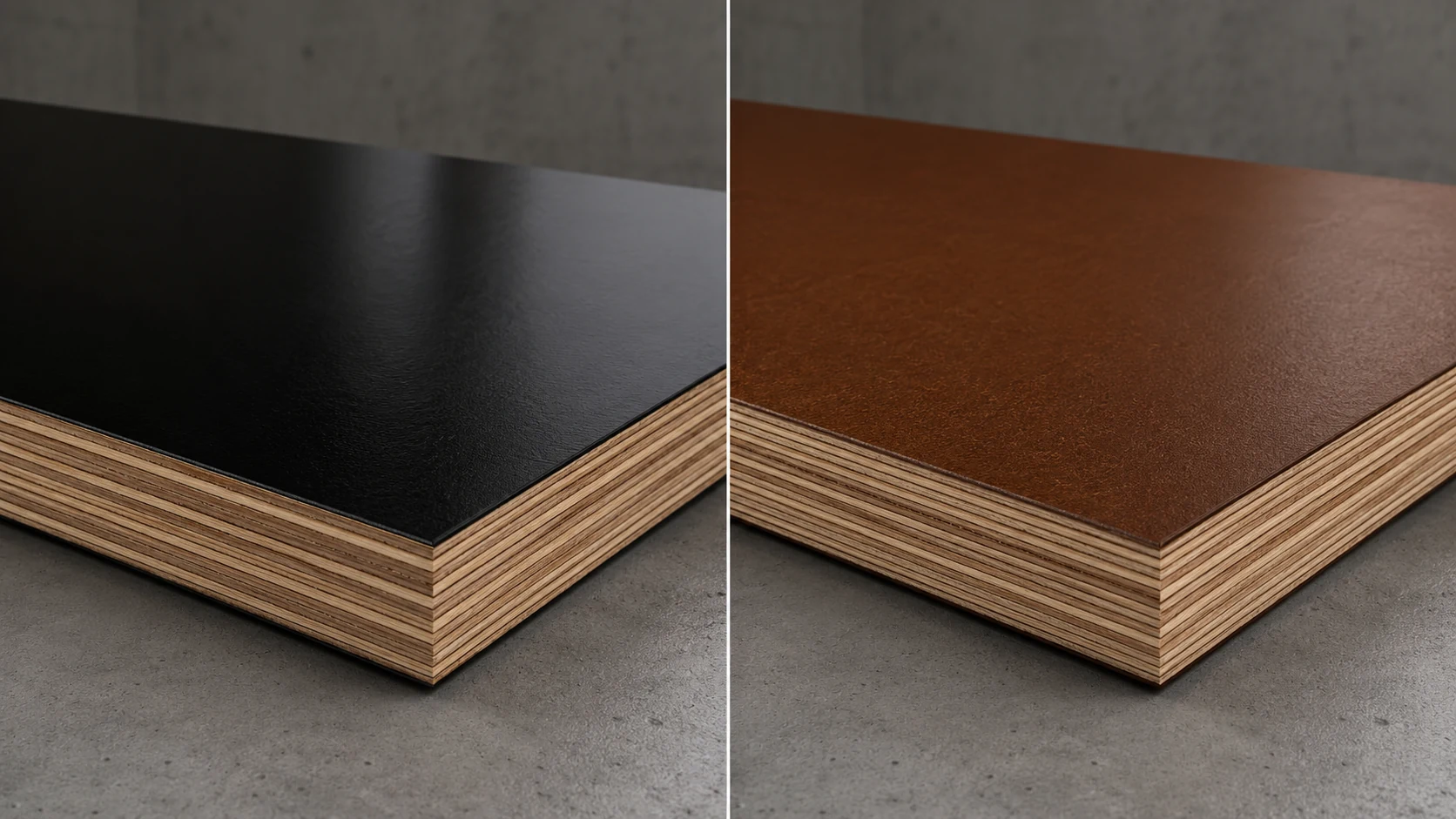
However, this is not a universal rule. A well-made brown film plywood can outperform a low-quality black film plywood if it has better core quality, glue type, pressing control, and edge sealing.
| Factor | Black Film Faced Plywood | Brown Film Faced Plywood |
|---|---|---|
| Common market positioning | Often premium or heavy-duty | Often economical or standard-duty |
| Surface appearance | Dark, glossy, professional look | Brown, natural, warm appearance |
| Typical resin impression | Often associated with higher phenolic resin content | Often associated with standard phenolic or mixed resin film |
| Common use | Heavy-duty formwork and repeated reuse | Standard formwork and cost-sensitive applications |
| Price level | Usually higher if film and resin weight are upgraded | Usually more cost-effective |
| Important note | Color alone does not determine quality. Buyers must check film weight, glue type, core material, core jointing, and edge sealing. | |
Black vs Brown Film Faced Plywood Price: What Affects the Cost?
Many buyers search for black film faced plywood vs brown film faced plywood price because the two products can look similar but quote differently. In general, black film faced plywood may cost more if it uses a heavier film, higher resin content, or stronger waterproof bonding.
Still, the final film faced plywood price depends on the full specification, not just color.
1. Film Weight
Film weight is one of the most important price factors. Low-cost plywood may use thinner film around 90–120 g/m², while premium film faced plywood can use higher film density such as 145–185 g/m².
Higher film density usually means better surface protection, stronger wear resistance, and fewer surface defects. For buyers, this can improve long-term value even if the initial sheet price is higher.
2. Glue Type
Glue type affects water resistance and bonding strength. Common options include MR glue, melamine glue, phenolic glue, and WBP glue. For formwork and outdoor construction, buyers often prefer phenolic glue or suitable WBP bonding.
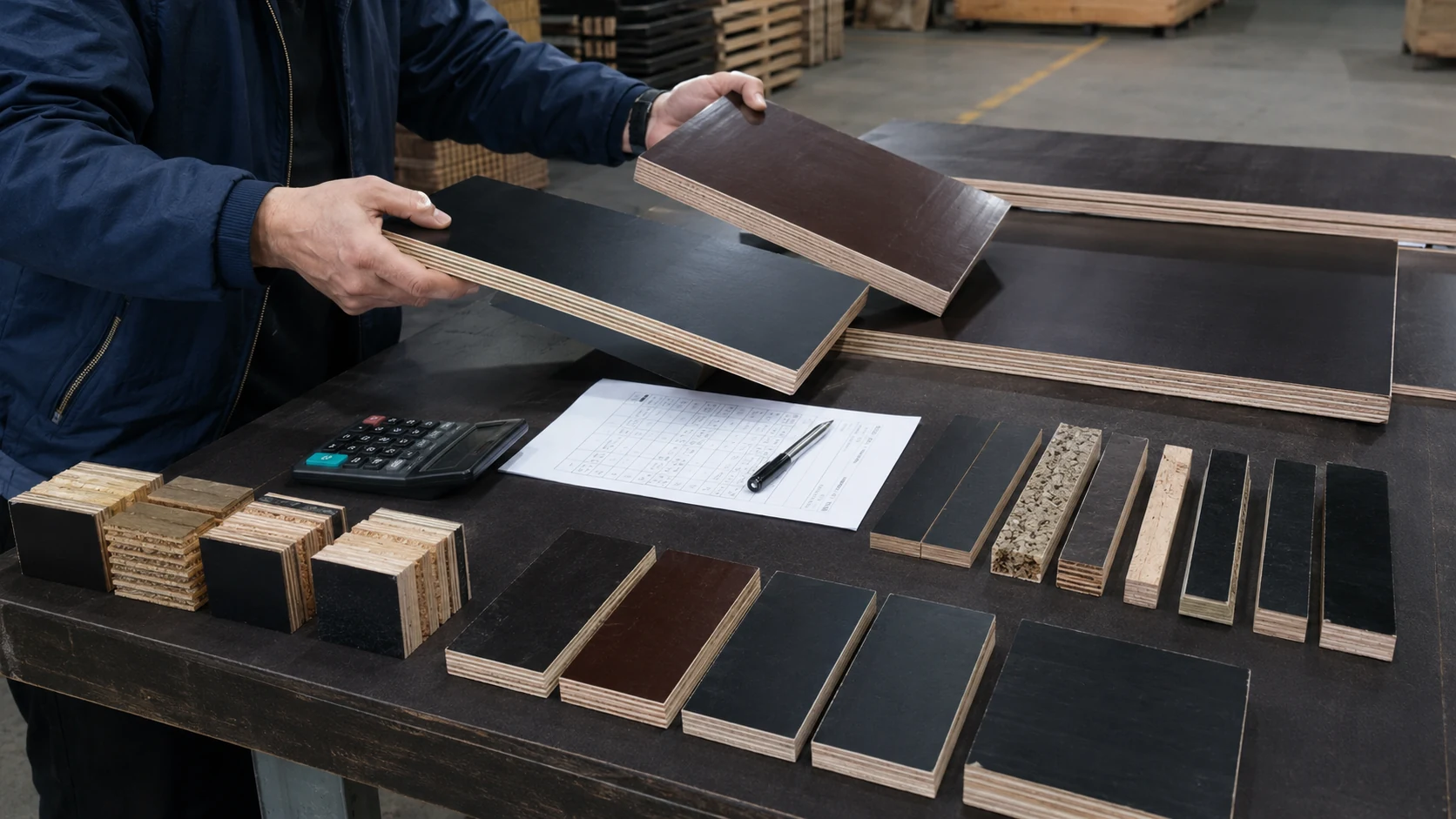
Kosmex can produce plywood with both melamine glue and phenolic glue, depending on the buyer’s requirement. For a deeper explanation, read our comparison of phenolic vs melamine glue in plywood.
3. Core Material
Core material affects strength, weight, durability, and price. Common options include eucalyptus, acacia, mixed hardwood, and rubber core. In Kosmex product comparison, acacia density can be around 540–560 kg/m³, eucalyptus can be around 600 kg/m³, and high-density rubber plywood can reach around 700 kg/m³ or above depending on specification.
To understand core options, read our guide to acacia plywood and eucalyptus plywood.
4. Core Jointing Method
Two panels may have the same color and thickness but very different internal quality. Poor core jointing can create core gap, core overlap, or missing veneer, which reduces board strength.
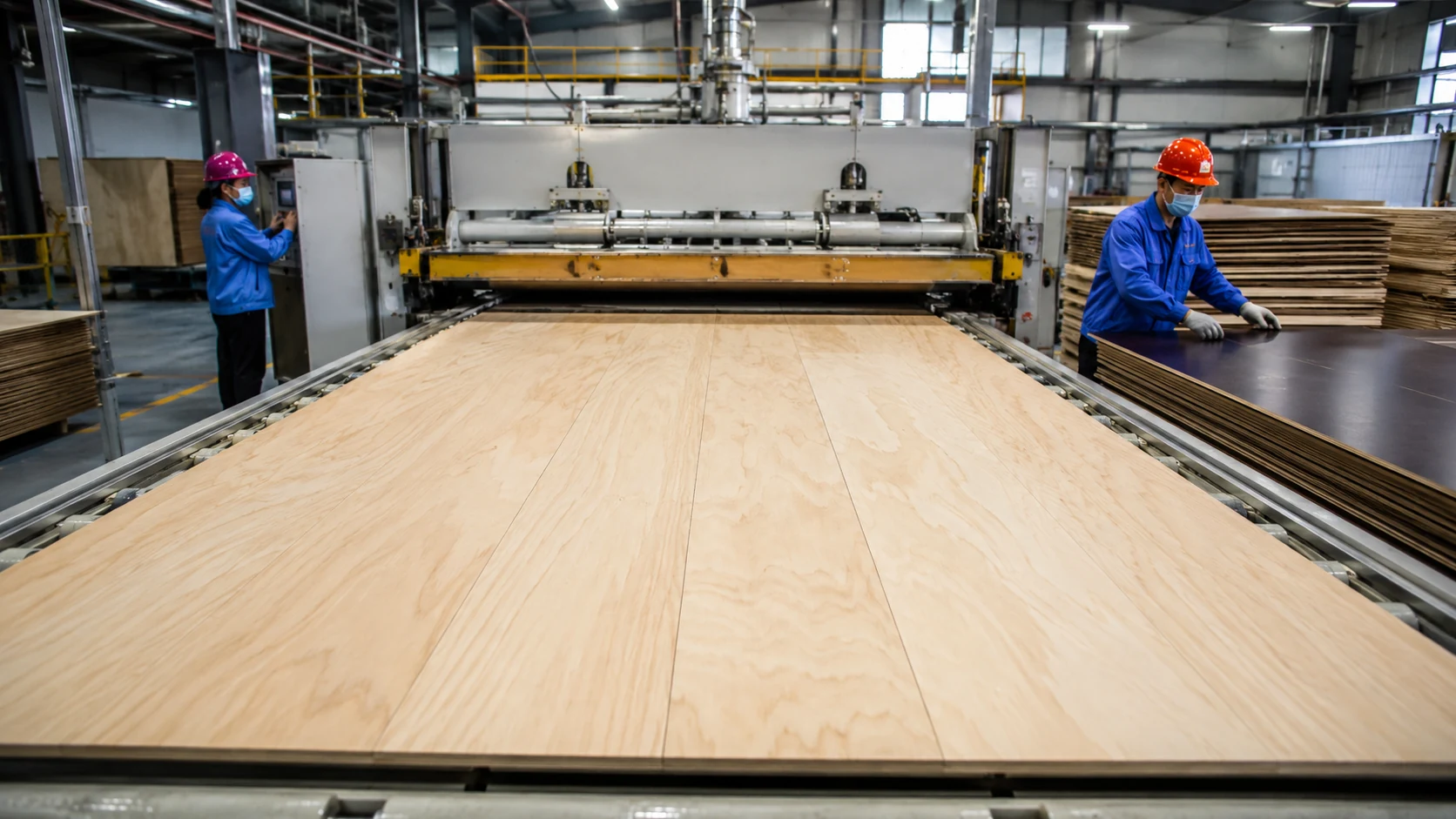
Kosmex uses composer machine core jointing for premium plywood products. This helps create a more stable core structure with no core overlap and reduced core gap risk. Learn more in our guides on machine core joint vs hand core joint in plywood and core gap and core overlap in plywood.
5. Thickness
Common thickness options for black and brown film faced plywood include 9 mm, 12 mm, 15 mm, 18 mm, and 21 mm. For concrete formwork, 18 mm and 21 mm are often selected depending on formwork design and load requirement.
6. Edge Sealing
Edge sealing affects moisture resistance and reuse life. Even if the film surface is strong, unsealed or poorly sealed edges can absorb water and cause swelling or delamination. Buyers should always check whether the edges are properly sealed, especially for repeated formwork use and outdoor projects.
Black Film Faced Plywood: Advantages and Best Uses
Black film faced plywood is often chosen for projects that need a stronger surface, premium appearance, and higher reuse potential. In many markets, black film is associated with heavier phenolic film or higher resin content.
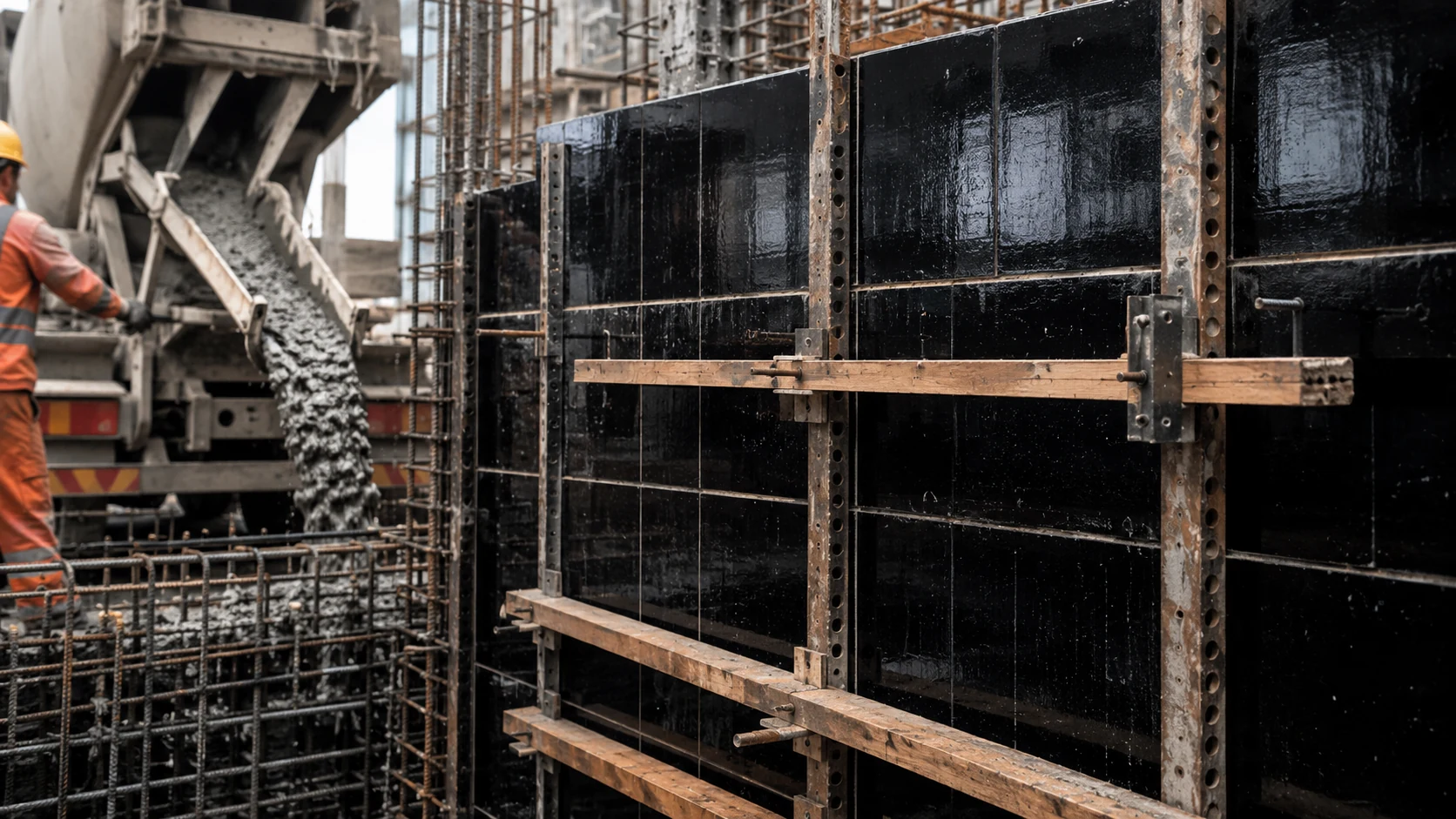
Advantages of Black Film Faced Plywood
- Often suitable for heavy-duty formwork.
- Can provide better surface wear resistance if film weight is higher.
- Dark glossy surface gives a professional appearance.
- Often preferred for repeated reuse projects.
- Can be suitable for outdoor or high-moisture jobsite conditions when bonded with phenolic glue.
Best Applications
- Large concrete formwork projects.
- High-rise or infrastructure formwork.
- Repeated-use shuttering systems.
- Heavy-duty construction panels.
- Trailer or platform applications when anti-slip surface is specified.
For heavy-duty transport flooring, buyers can also consider anti-slip film faced plywood or read our guide to the best plywood for trailer flooring.
Brown Film Faced Plywood: Advantages and Best Uses
Brown film faced plywood is often selected when buyers need reliable formwork performance at a more cost-effective price. It can provide a smooth concrete finish and good value when the core and glue specifications are correct.
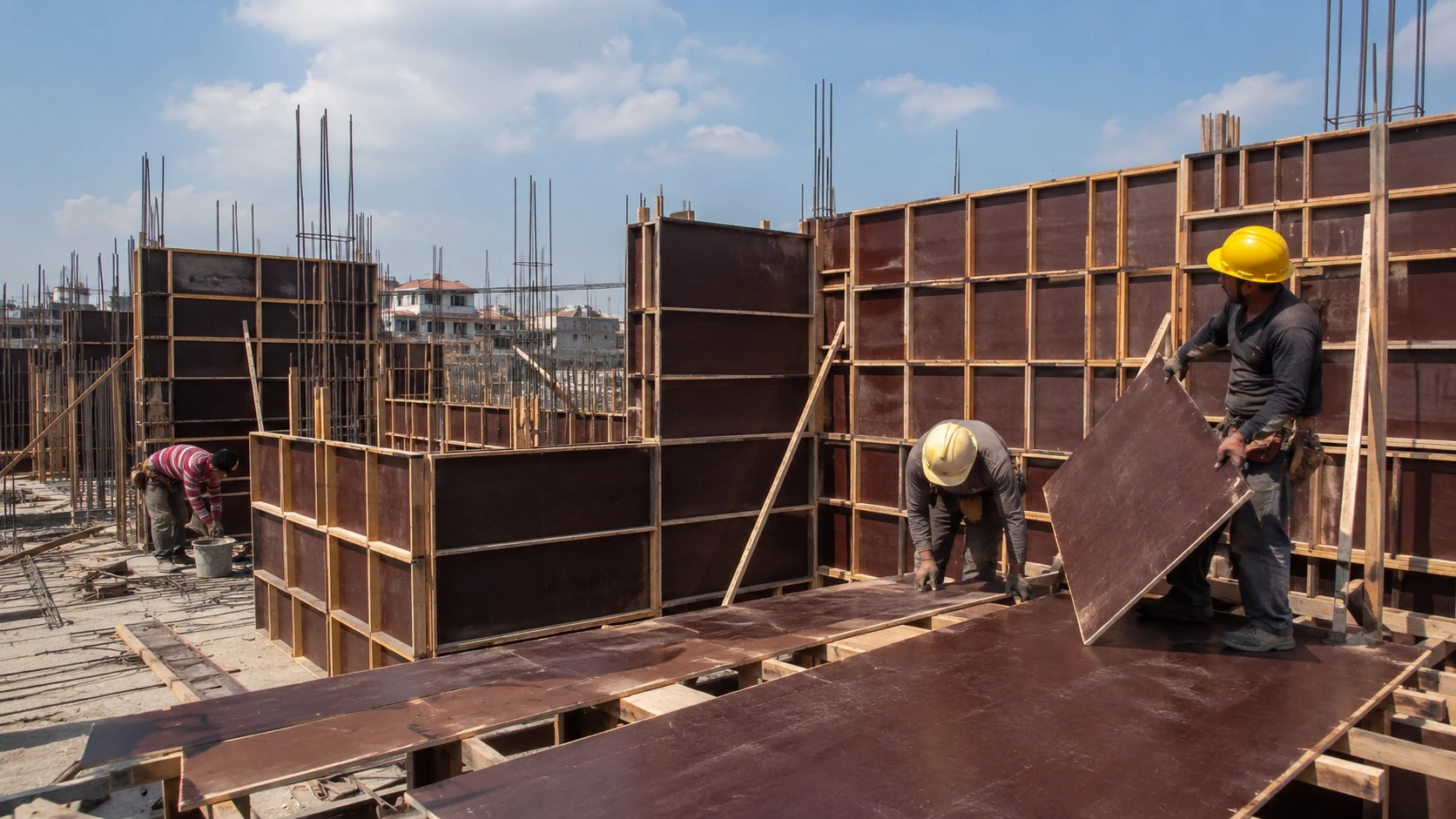
Advantages of Brown Film Faced Plywood
- Usually more cost-effective.
- Suitable for standard formwork applications.
- Can provide a smooth concrete surface.
- Good choice for moderate reuse requirements.
- Flexible option for cost-sensitive projects.
Best Applications
- Residential and low-rise formwork.
- Standard slab and wall formwork.
- Short-cycle construction projects.
- Projects where price competitiveness is important.
- Temporary construction panels.
Black vs Brown Film Faced Plywood Cost: Which Gives Better ROI?
The better value depends on how many times the panel can be reused and how demanding the project is. Buyers should compare cost per use, not only the purchase price per sheet.
| Buying Scenario | Better Option | Reason |
|---|---|---|
| Heavy-duty repeated formwork | Black film faced plywood, if higher film weight and phenolic glue are confirmed | Higher upfront cost may be justified by longer reuse life. |
| Standard slab or wall formwork | Brown film faced plywood with proper glue and core | More economical while still meeting standard project needs. |
| Budget-sensitive project | Brown film faced plywood | Lower initial cost and good value for moderate reuse. |
| Outdoor or wet conditions | Either color, but choose phenolic glue, good film weight, and sealed edges | Waterproof performance depends more on glue and edge protection than color alone. |
| Export-quality supply | Either color from a reliable supplier | Consistency, QC, and documentation matter more than color. |
A cheaper brown film plywood may be the best choice for short-cycle jobs. A premium black film plywood may deliver better ROI for contractors who reuse the board many times. The best option depends on your target reuse cycles, budget, and project intensity.
Does Black Film Faced Plywood Always Have More Reuse Cycles?
Not always. Some market comparisons describe black film faced plywood as suitable for around 20–25 reuse cycles and brown film faced plywood as suitable for around 12–18 reuse cycles. However, reuse cycles depend on the full specification and jobsite handling, not color alone.
In real projects, reuse cycles depend on:
- Core material.
- Glue type.
- Film weight.
- Edge sealing.
- Pressing quality.
- Cleaning after each pour.
- Use of formwork oil.
- Handling and storage on site.
This means a premium brown film faced plywood with strong hardwood core and WBP bonding can outperform a low-quality black film plywood with weak core and poor edge sealing.
Buyer Checklist: How to Choose Between Black and Brown Film Faced Plywood
- What is the film weight: 90–120 g/m², 145–185 g/m², or another specification?
- What is the glue type: melamine, phenolic, or WBP?
- What is the core material: eucalyptus, acacia, rubber, poplar, or mixed hardwood?
- Is the core jointed by composer machine or by hand?
- Does the board have core gap or core overlap?
- What is the thickness: 18 mm, 21 mm, or custom size?
- Are the edges properly sealed?
- Can the supplier provide samples, technical specifications, and test reports?
- Does the supplier have a clear QC process?
- What is the realistic cost per use based on your project?
If you are comparing suppliers, read our guide on how to evaluate a Vietnam plywood factory.
Why Choose Kosmex Film Faced Plywood?
Kosmex supplies film faced plywood for B2B buyers who need stable quality, flexible specifications, and export-ready production. Instead of selling based only on film color, Kosmex focuses on the technical factors that truly affect performance.
Kosmex Advantages
- Composer machine core jointing for premium plywood products.
- Reduced risk of core gap and core overlap.
- Premium film density options around 145–185 g/m².
- Glue options including melamine glue and phenolic glue.
- Core options such as acacia, eucalyptus, rubber, and mixed hardwood.
- Products suitable for formwork, construction, trailer flooring, and industrial applications.
- Internal QC control to support consistent export quality.
You can explore Kosmex film faced plywood, anti-slip film faced plywood, and plywood QC process to learn more about our production capability.
Conclusion: Black or Brown Film Faced Plywood?
When comparing black vs brown film faced plywood, buyers should not choose based on color alone. Black film is often positioned as more premium and may be suitable for heavier-duty projects, while brown film is often more economical and suitable for standard formwork.
However, the real difference depends on film weight, resin content, glue type, core quality, edge sealing, and production control. A well-made brown film plywood can perform better than a low-quality black film plywood if the technical specification is stronger.
For the best ROI, compare cost per use, not just sheet price. Kosmex can help buyers choose the right film color, film weight, core type, glue system, and thickness based on the project requirement.
Need Black or Brown Film Faced Plywood for Your Project?
Contact Kosmex to discuss your required film color, film weight, core type, glue type, thickness, target reuse cycles, and market requirements.
FAQs About Black vs Brown Film Faced Plywood
Is black film faced plywood better than brown film faced plywood?
Not always. Black film faced plywood is often positioned as more premium, but actual quality depends on film weight, glue type, core material, core jointing, and production control.
Is brown film faced plywood cheaper?
In many markets, brown film faced plywood is more cost-effective than black film faced plywood. However, the final price depends on film density, core type, glue type, thickness, and supplier quality.
Does film color affect waterproof performance?
Film color can be related to resin formulation, but waterproof performance depends more on phenolic glue, WBP bonding, film quality, edge sealing, and pressing quality.
Which is better for concrete formwork?
For heavy-duty repeated formwork, black film may be preferred if it has higher film weight and strong bonding. For standard formwork, brown film can be a cost-effective option if the core and glue specifications are reliable.
What affects film faced plywood price the most?
Important price factors include film weight, glue type, core material, thickness, edge sealing, production quality, and order volume.
Bình luận