


For many trailer and truck flooring applications, anti-slip film faced plywood is one of the most practical options. It combines a strong plywood core, a protective phenolic film surface, and a textured anti-slip pattern that improves grip during use.
At Kosmex, we supply plywood products for B2B buyers who need stable quality, reliable surface performance, and consistent core structure. For demanding uses such as trailer flooring, buyers should pay close attention to core quality, glue type, film weight, surface pattern, thickness, and edge sealing.
If you are sourcing plywood for construction, transport, flooring, or industrial applications, you can also explore our anti-slip film faced plywood and film faced plywood product lines.
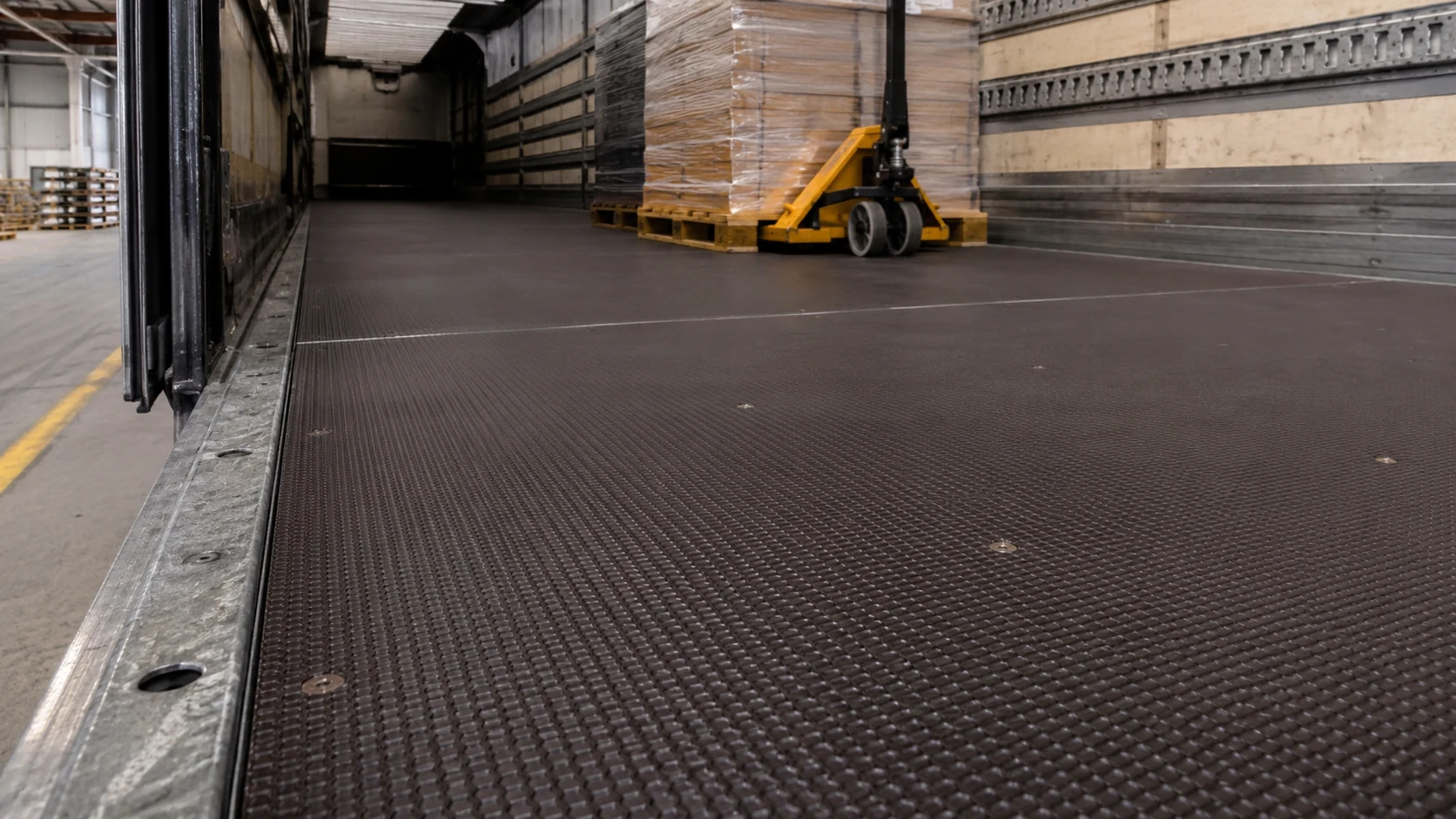
What Is Trailer Flooring Plywood?
Trailer flooring plywood is plywood used as the floor panel in trailers, trucks, vans, containers, loading platforms, and other transport-related structures. It must provide a stable walking and loading surface while resisting mechanical stress during transport.
A good trailer floor plywood should offer:
- High load-bearing capacity for goods, pallets, equipment, or machinery.
- Anti-slip surface to reduce slipping risk during loading and unloading.
- Moisture resistance for outdoor or semi-outdoor exposure.
- Strong bonding to reduce delamination risk.
- Stable core structure to support long-term use.
- Good edge protection to limit water penetration.
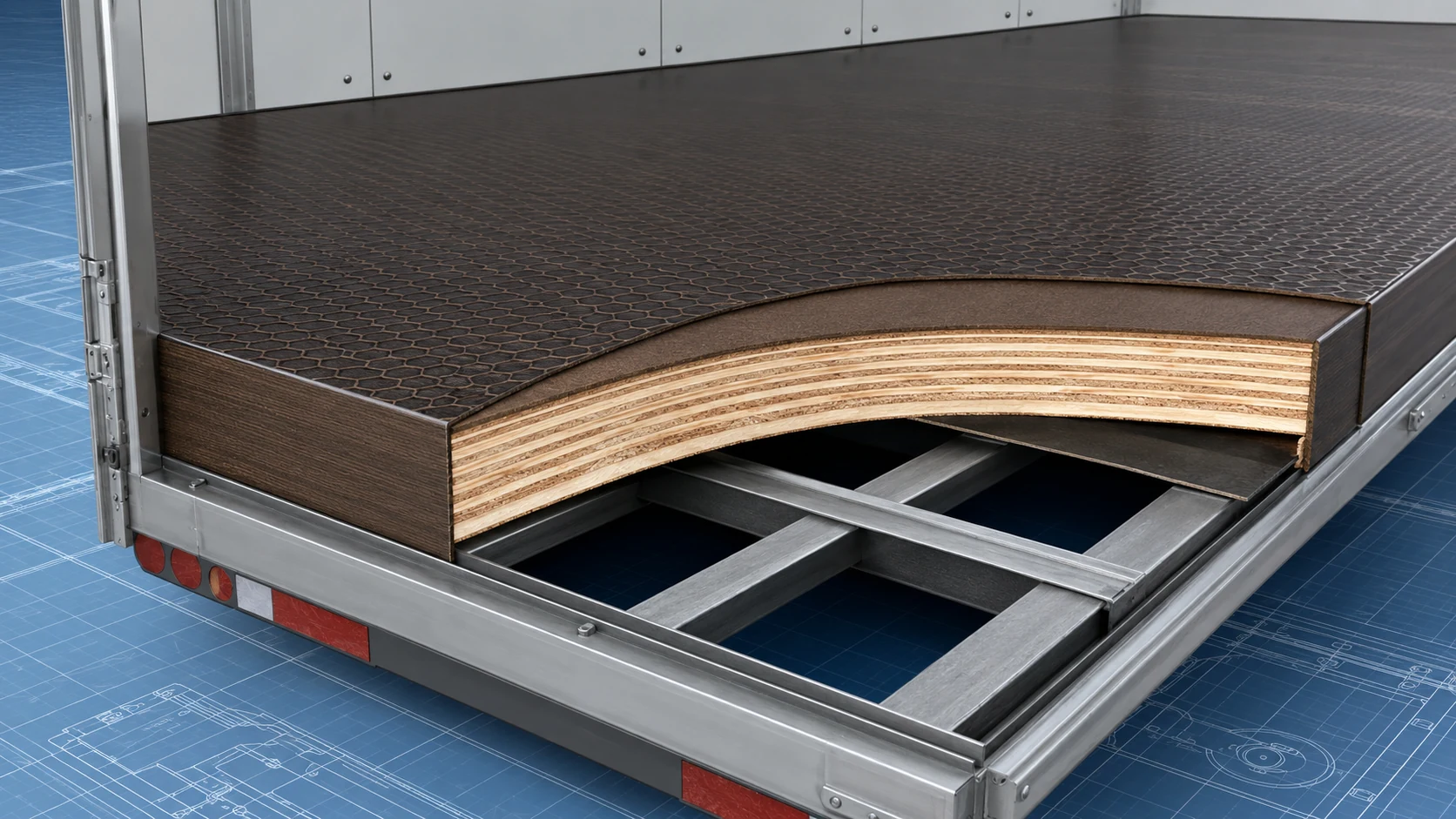
For this reason, many buyers choose anti-slip film faced plywood, also known as wire mesh plywood or anti-slip plywood board, depending on the surface pattern and market terminology.
Why Anti-slip Film Faced Plywood Is Suitable for Trailer Flooring
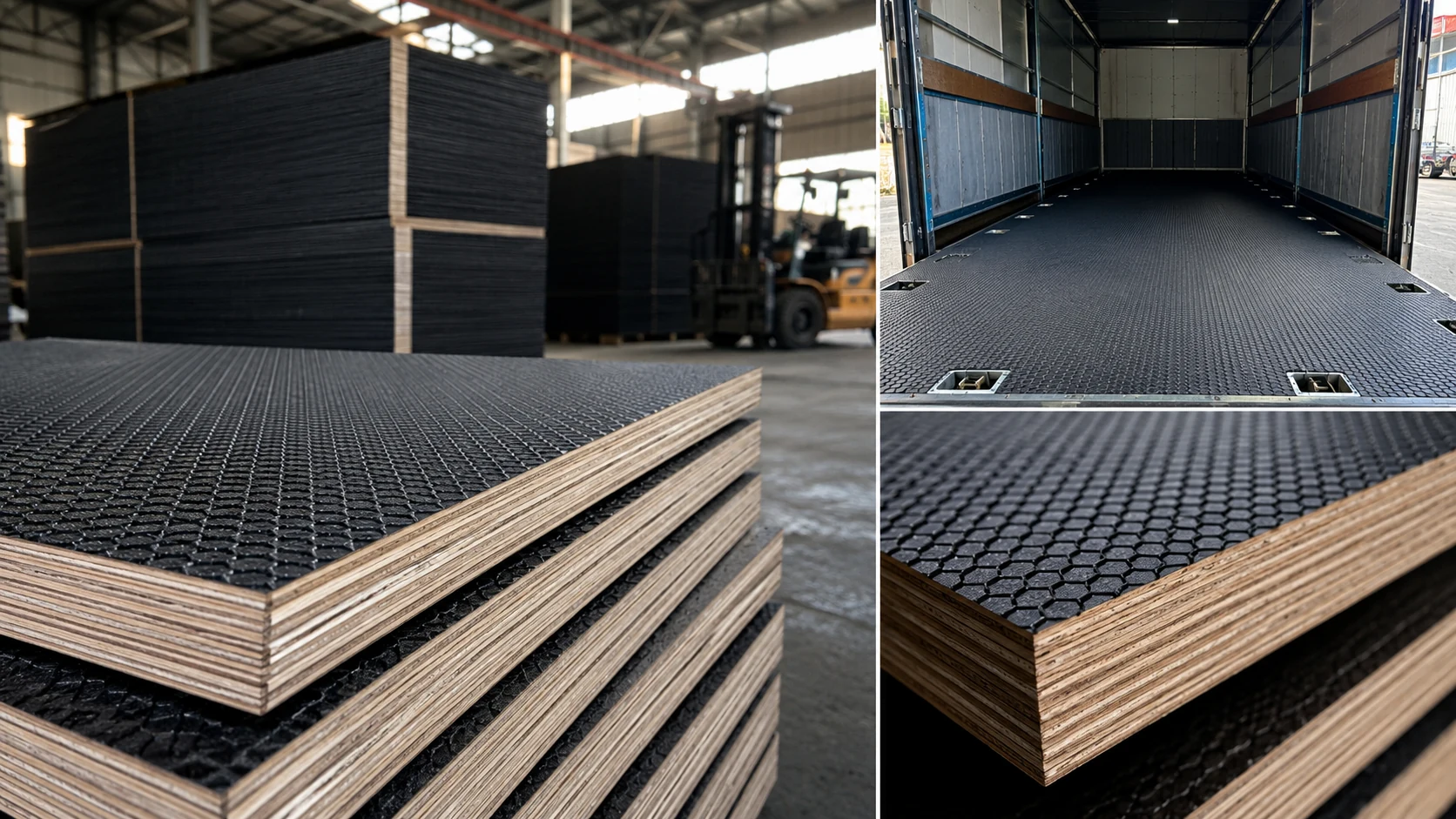
Anti-slip film faced plywood is designed with a protective film surface and a textured pattern. One side is often smooth, while the other side has an anti-slip pattern such as wire mesh or hexagon texture.
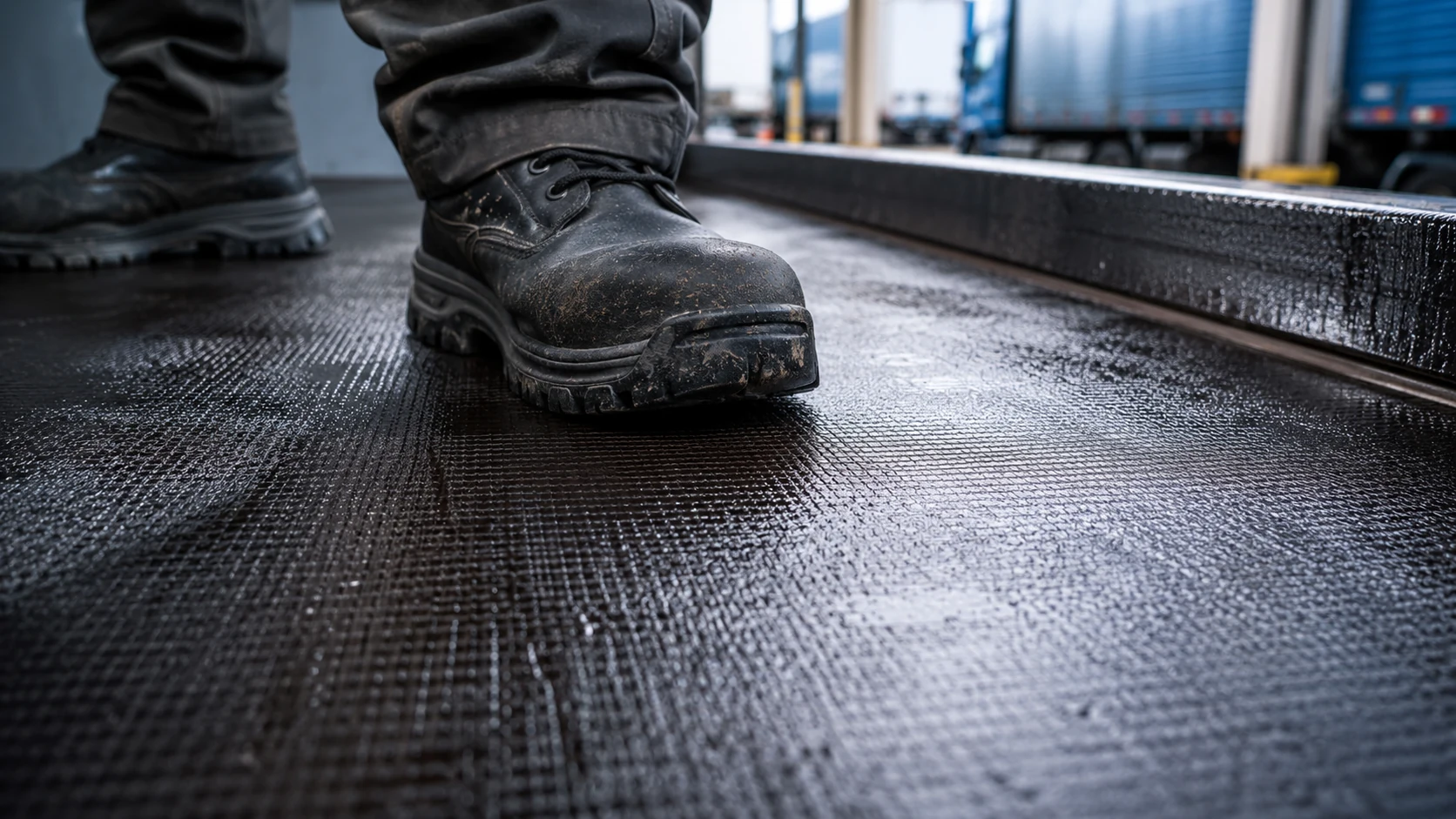
This structure makes it suitable for trailer flooring because it can provide both surface protection and better grip. The textured surface helps improve traction when workers walk, load goods, or move equipment across the trailer floor.
Main Benefits for Trailer Flooring
- Anti-slip performance: the patterned surface improves grip compared with smooth plywood.
- Better surface durability: the film layer helps protect the plywood from abrasion and moisture.
- Good dimensional stability: a stable core helps the board stay flatter under repeated use.
- Improved waterproof performance: when combined with suitable glue and edge sealing, the board can resist moisture better.
- Suitable for heavy-duty use: it can be used in trailers, trucks, platforms, ramps, and industrial flooring.
For related applications, read our guide on anti-slip film faced plywood wiremesh.
Best Plywood Type for Trailer Flooring
The best plywood for trailer flooring is usually not ordinary commercial plywood. Trailer flooring needs a stronger and more durable structure. In many cases, the recommended option is:
Anti-slip film faced plywood with a strong hardwood core, waterproof glue, anti-slip surface, and sealed edges.
This type of plywood is more suitable than standard interior plywood because trailer floors are exposed to heavier stress and harsher conditions.
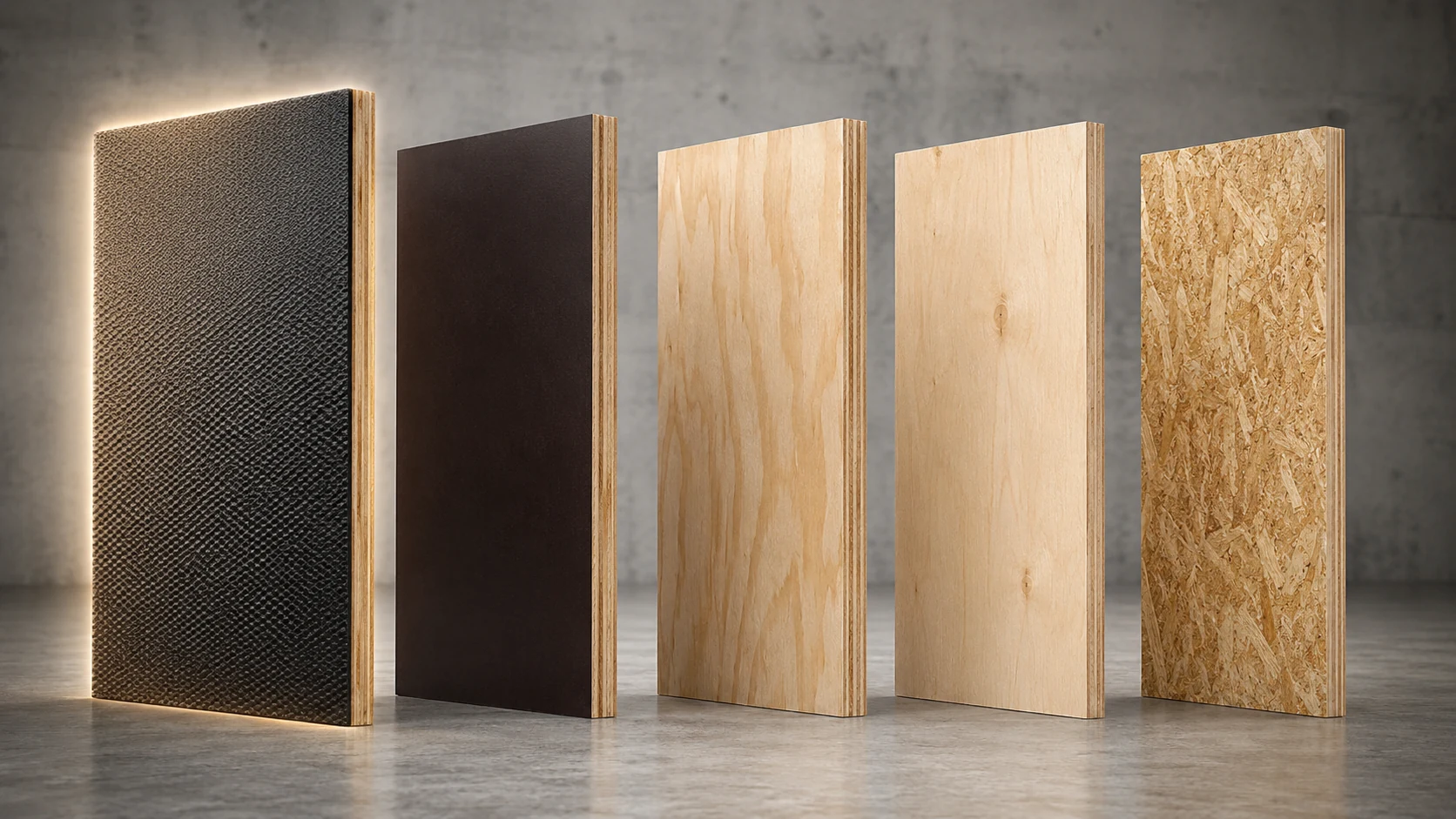
| Plywood Type | Suitability for Trailer Flooring | Reason |
|---|---|---|
| Anti-slip film faced plywood | Highly suitable | Textured surface, film protection, better grip, suitable for heavy-duty flooring. |
| Standard film faced plywood | Moderately suitable | Smooth surface may be easier to clean but can be slippery in some conditions. |
| Commercial plywood | Not ideal for heavy-duty trailer flooring | Usually designed for furniture, interior panels, cabinets, and general applications. |
| Marine plywood | Possible, but not always necessary | Good water resistance, but may not have an anti-slip surface unless specially finished. |
| OSB | Usually less suitable | May not provide the same surface durability and anti-slip performance required for trailer flooring. |
If your project involves concrete or construction use, you may also find our article about formwork plywood helpful.
Key Factors to Check When Choosing Trailer Flooring Plywood
Before ordering trailer flooring plywood, buyers should review several important specifications. A low price may look attractive, but poor core quality, weak glue, or a thin surface film can lead to faster damage.
1. Surface Type: Wire Mesh vs Smooth Film
For trailer flooring, the surface should provide enough traction. A wire mesh surface is commonly used because it creates a textured pattern that helps reduce slipping risk.
Compared with smooth film faced plywood, wire mesh plywood is usually more suitable for:
- Trailer floors.
- Truck floors.
- Loading ramps.
- Scaffolding platforms.
- Temporary work platforms.
- Industrial walkways.
Smooth film faced plywood can still be useful in some flooring or formwork applications, but for trailer flooring, a textured anti-slip surface is often preferred.
2. Core Quality
The internal core is one of the most important factors in trailer flooring plywood. A weak core can reduce load-bearing capacity and shorten the service life of the floor.
Buyers should check whether the plywood has:
- No core gap.
- No core overlap.
- Stable veneer arrangement.
- Consistent thickness.
- Good bonding between layers.
At Kosmex, premium plywood uses composer machine core jointing to improve internal core stability. This helps reduce core gaps and core overlap, creating a stronger and more durable board structure.
To understand this production advantage in more detail, read our article on machine core joint vs hand core joint in plywood.
3. Glue Type
Trailer flooring may be exposed to moisture, cleaning, rain, or changing weather conditions. Therefore, the glue type matters.
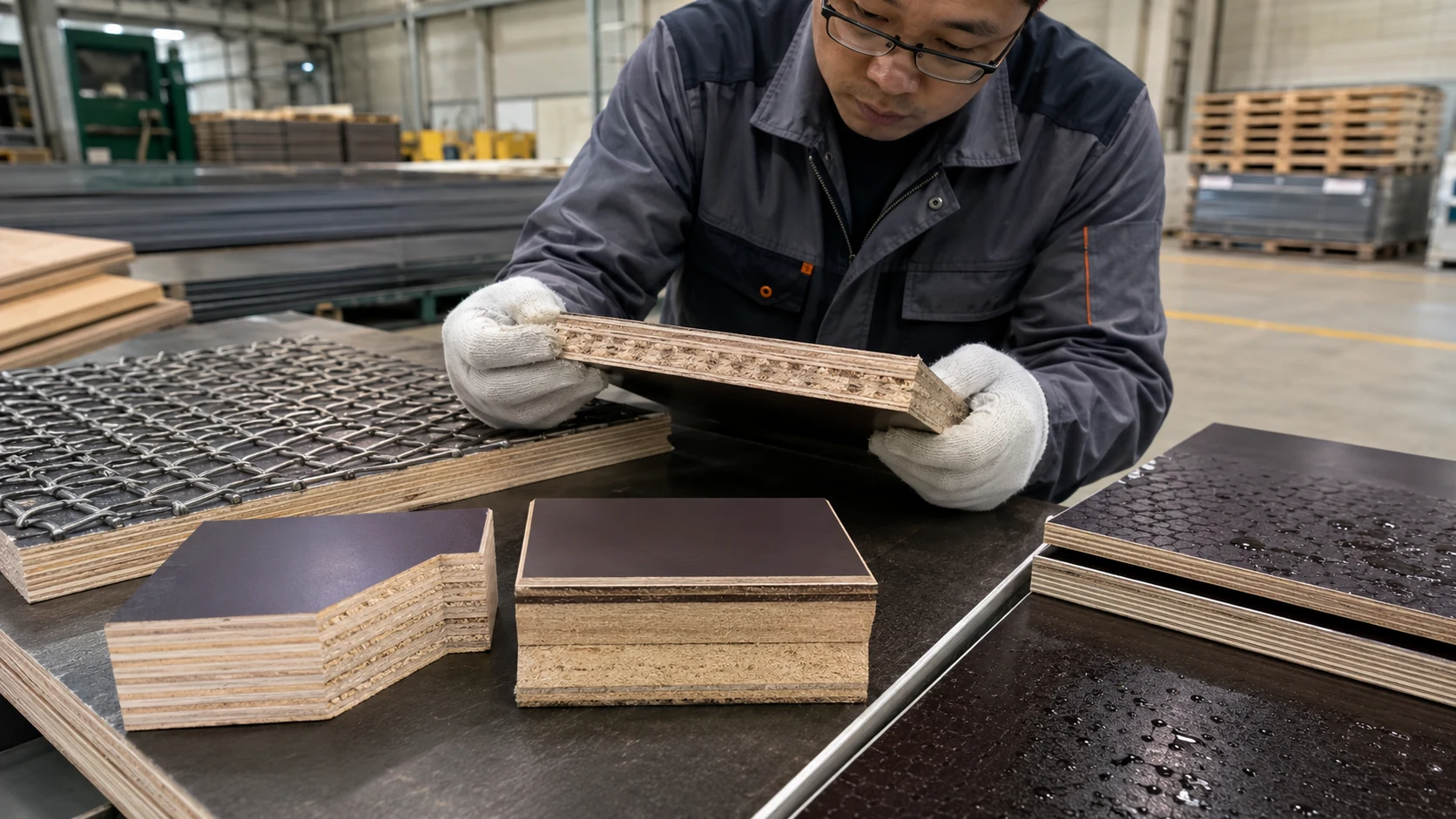
Common plywood glue types include:
- MR glue: usually used for interior or low-moisture applications.
- Melamine glue: better moisture resistance than standard interior glue.
- Phenolic glue: stronger waterproof performance and better for demanding applications.
- WBP glue: commonly used to describe water-boil-proof bonding performance.
For trailer flooring, buyers should consider phenolic glue or suitable WBP bonding, especially when the plywood is used in outdoor, transport, or heavy-duty environments.
Kosmex can produce plywood with both melamine glue and phenolic glue. For waterproof applications, phenolic glue is a stronger option and can support better resistance to delamination.
For more details, read our comparison of phenolic vs melamine glue in plywood.
4. Film Weight and Surface Protection
The film layer helps protect the plywood surface. For trailer flooring, a stronger film surface can improve abrasion resistance and help the board last longer.
Low-cost plywood may use thin film with a density around 90–120 g/m². In comparison, Kosmex premium film faced plywood can use higher film face density around 145–185 g/m², which supports a thicker and more protective surface.
Higher film quality can help reduce common surface problems such as:
- Burning points.
- Film overlap.
- Split film face.
- Film dents.
- Early surface wear.
This is especially important when the plywood floor is exposed to friction from shoes, cargo, pallets, and equipment.
5. Thickness
The right plywood thickness depends on trailer type, load requirement, support spacing, and expected working conditions. Common options include 18 mm and 21 mm, but specifications should be confirmed based on the final application.
| Thickness | Typical Use | Buyer Note |
|---|---|---|
| 12 mm | Light-duty panels or lining | Usually not ideal for heavy trailer flooring. |
| 15 mm | Medium-duty use | May work depending on support structure and load. |
| 18 mm | Common trailer flooring option | Good balance between strength and weight. |
| 21 mm | Heavy-duty flooring | Better for higher loads and tougher working conditions. |
Buyers should not choose thickness based on price alone. A thinner sheet may reduce upfront cost but may fail faster if the load requirement is high.
6. Edge Sealing
Even when the plywood surface is protected by film, the edges can still absorb moisture if they are not properly sealed. For trailer flooring, edge sealing is very important because water often enters from cut edges, screw holes, or exposed sides.
A good trailer flooring plywood should have sealed edges to help reduce:
- Edge swelling.
- Layer separation.
- Moisture penetration.
- Premature delamination.
For outdoor and semi-outdoor applications, edge protection should always be part of the buyer checklist.
Common Problems with Low-quality Trailer Flooring Plywood
Low-quality plywood can cause serious problems in trailer flooring. Some defects may appear only after installation or after several cycles of loading and unloading.
1. Slippery Surface
If the board has a smooth or low-quality surface, workers may face higher slipping risk, especially when the floor is wet, dusty, or worn.
2. Delamination
Delamination happens when plywood layers separate. This can be caused by weak glue, poor pressing, high moisture, or low-quality core arrangement.
You can learn more in our article about common defects in plywood and how to avoid them.
3. Core Gap and Core Overlap
Hidden internal defects such as core gap and core overlap can reduce load-bearing capacity. This is a major issue for trailer floors because the board must support repeated pressure from cargo and movement.
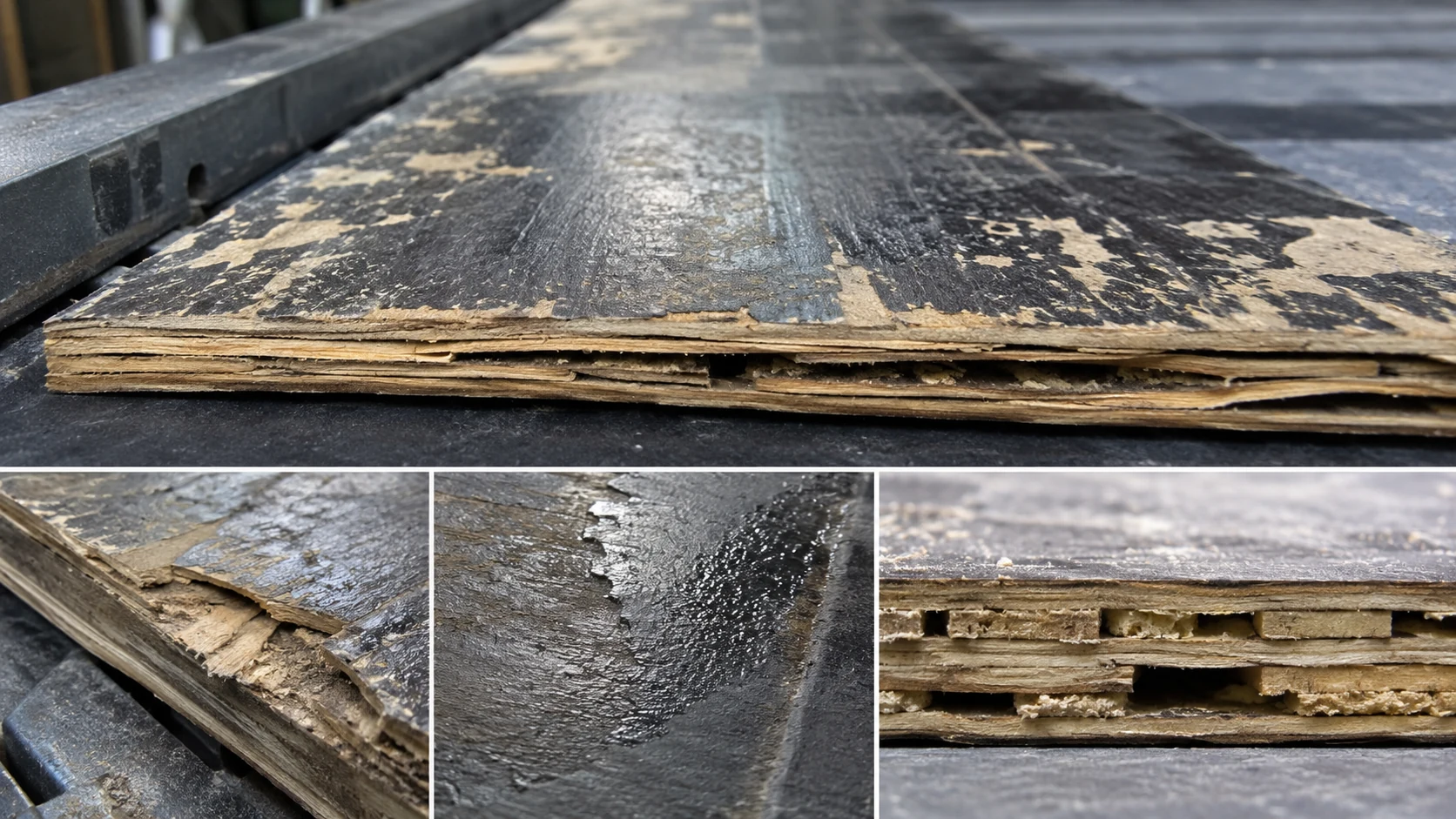
4. Surface Film Damage
Thin film or poor-quality surface film may wear out quickly. Once the surface is damaged, moisture and dirt can enter the board more easily.
5. Edge Swelling
If the board edges are not properly sealed, water can enter through the sides and cause swelling, cracking, or layer separation.
Kosmex Advantages for Trailer Flooring Plywood
Kosmex focuses on producing stable plywood quality for B2B buyers. For trailer flooring and related heavy-duty applications, our advantages include stronger control over core jointing, film quality, glue options, and production consistency.
Composer Machine Core Jointing
Kosmex premium plywood uses composer machine core jointing. This helps create a better core structure with no core overlap and reduced core gap risk. A stable core structure supports better strength and durability.
Higher Film Face Density
Kosmex can use higher film face density around 145–185 g/m² for premium film faced plywood. This supports a thicker protective surface and helps reduce surface defects.
Phenolic Glue Option
Kosmex can produce plywood with phenolic glue, which is suitable for applications requiring better waterproof performance. For demanding uses, phenolic glue can help reduce delamination risk compared with lower-performance bonding options.
Suitable Product Range
Depending on the application, Kosmex can support buyers with:
- Anti-slip film faced plywood for trailer flooring, truck flooring, ramps, and platforms.
- Film faced plywood for formwork and construction use.
- Commercial plywood for furniture, interior panels, and industrial applications.
- Customized CNC cutting service for plywood components and custom panel processing.
Buyer Checklist: How to Choose Trailer Flooring Plywood
Before placing an order, buyers should confirm the following details with the supplier:
- What is the surface type: wire mesh, hexagon, or smooth?
- What is the core material: eucalyptus, acacia, mixed hardwood, or other core?
- Is the core jointed by composer machine or by hand?
- Does the plywood have core gaps or core overlap?
- What is the glue type: melamine, phenolic, or WBP?
- What is the film weight: 120 g/m², 145 g/m², 185 g/m², or another specification?
- What is the thickness: 18 mm, 21 mm, or custom size?
- Are the edges properly sealed?
- Can the supplier provide samples, technical specifications, and test reports?
- Does the supplier have experience with export orders and B2B requirements?
If you are evaluating suppliers, you may also read our guide on how to evaluate a Vietnam plywood factory.
Recommended Specifications for Trailer Flooring Plywood
The exact specification depends on trailer type and load requirement. However, buyers can use the table below as a starting point when discussing with suppliers.
| Specification | Recommended Option | Why It Matters |
|---|---|---|
| Plywood type | Anti-slip film faced plywood | Provides better grip and surface protection. |
| Surface | Wire mesh or anti-slip texture | Helps reduce slipping risk during loading and unloading. |
| Thickness | 18 mm or 21 mm | Common options for trailer and truck flooring. |
| Glue | Phenolic glue or suitable WBP bonding | Improves moisture resistance and bonding durability. |
| Core quality | No core gap, no core overlap | Supports better load-bearing capacity and structural stability. |
| Film density | 145–185 g/m² for premium options | Provides thicker surface protection than low-density film. |
| Edge sealing | Properly sealed edges | Helps reduce water penetration and edge swelling. |
Conclusion: What Is the Best Plywood for Trailer Flooring?
The best plywood for trailer flooring is usually anti-slip film faced plywood with a strong core, reliable glue, textured surface, suitable thickness, and sealed edges.
For B2B buyers, the key is not only to find a cheap board, but to choose plywood that can perform well under heavy loads, moisture exposure, abrasion, and repeated use. Important specifications include wire mesh surface, 18 mm or 21 mm thickness, phenolic glue, higher film density, and stable core structure with no core gap and no core overlap.
Kosmex supplies anti-slip film faced plywood and related plywood products for industrial, construction, and transport applications. With composer machine core jointing, premium film quality, and flexible glue options, Kosmex can support buyers looking for stable plywood quality for trailer flooring and other demanding uses.
Need Anti-slip Plywood for Trailer Flooring?
Contact Kosmex to discuss your required thickness, surface pattern, core type, glue type, film weight, and target application.
FAQs About Trailer Flooring Plywood
What plywood is best for trailer flooring?
Anti-slip film faced plywood is often a good choice for trailer flooring because it has a textured surface, protective film layer, and better grip than smooth plywood.
Is anti-slip plywood suitable for truck flooring?
Yes. Anti-slip plywood can be used for truck flooring, trailer flooring, loading ramps, work platforms, and other applications that require better traction and surface durability.
What thickness is commonly used for trailer flooring plywood?
Common options include 18 mm and 21 mm. The right thickness depends on trailer design, support spacing, and load requirement.
Why is phenolic glue important for trailer flooring plywood?
Phenolic glue provides stronger waterproof bonding performance, which helps reduce delamination risk in demanding or moisture-exposed applications.
What is wire mesh plywood?
Wire mesh plywood is film faced plywood with a textured anti-slip surface. It is commonly used for trailer floors, truck floors, ramps, scaffolding, and industrial platforms.
Bình luận