


Maple vs Birch Plywood: Key Differences, Pros, Cons & Best Uses
Many builders and furniture manufacturers struggle to choose between maple vs birch plywood. While both are premium hardwood panels, they differ in grain appearance, hardness, weight, and cost. Choosing the wrong one can impact durability, finish quality, and project budget.
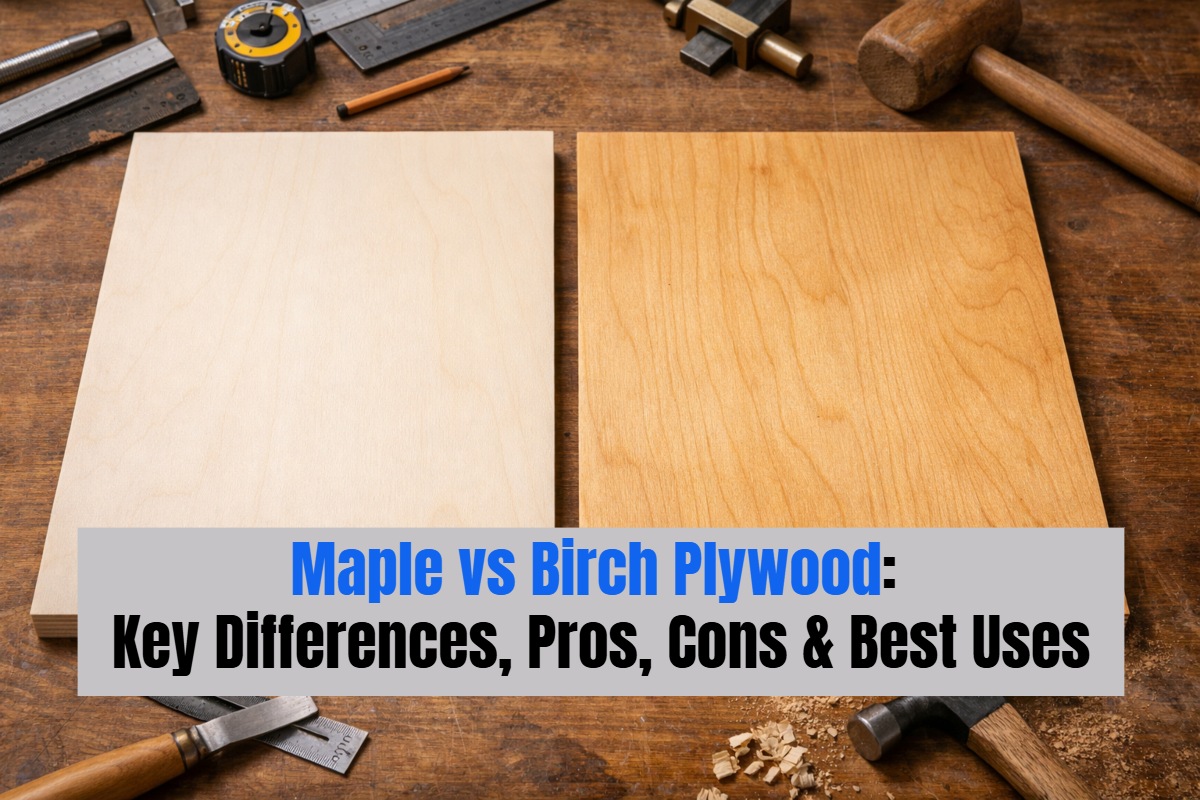
This guide compares maple and birch plywood in strength, aesthetics, price, and best uses to help you select the right material for furniture, cabinetry, and interior projects.
What Is Maple Plywood?
Maple plywood is a hardwood panel made from maple wood veneers, most commonly hard maple (Acer saccharum) sourced from North American forests. Hard maple is one of the densest and hardest domestic hardwoods in North America, which is why maple plywood occupies a premium position in the hardwood panel market.

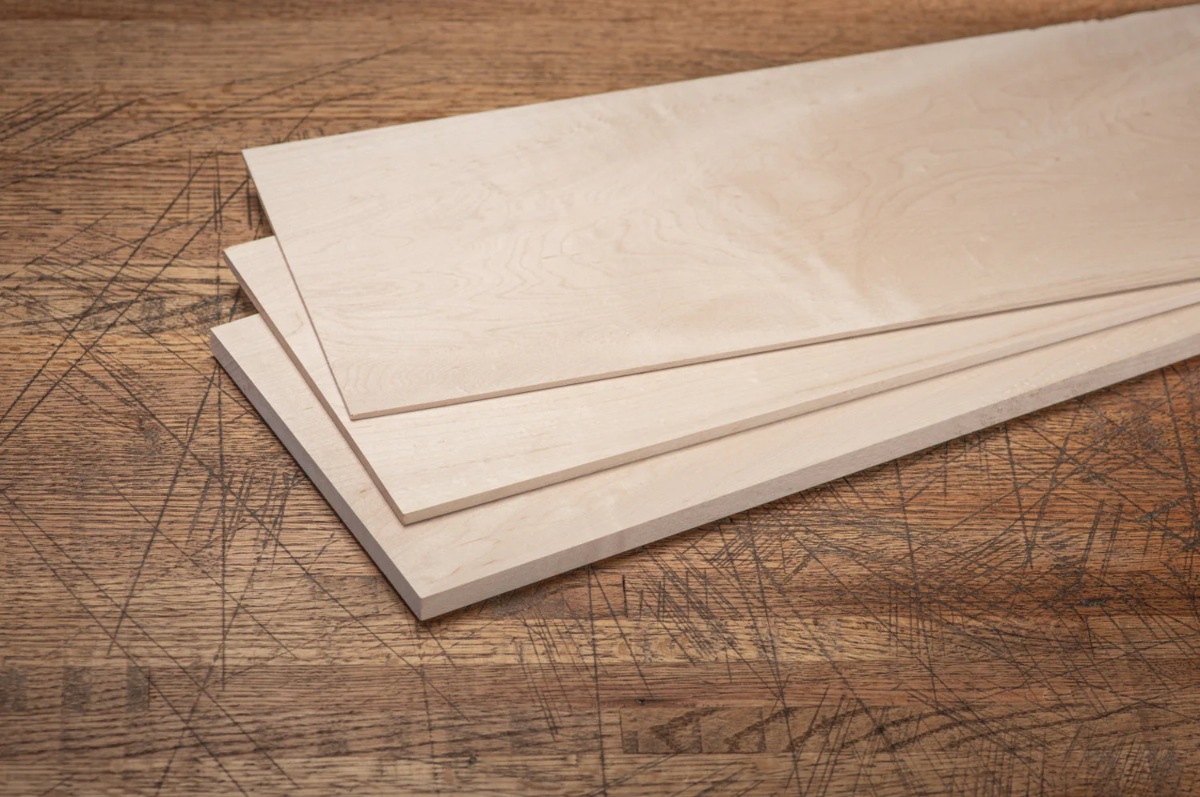
Maple plywood is distinguished by its tight, uniform grain and creamy white to light tan surface color. The grain is typically straight to slightly wavy, with very subtle figuring that creates an exceptionally clean, consistent surface appearance. This makes it particularly well suited to modern and minimalist interior design styles where a refined, seamless look is the goal.
Maple plywood is available in furniture-grade and cabinet-grade specifications, typically with a smooth, sanded face that requires minimal preparation before finishing. It is more commonly found in North American markets than European ones, where birch plywood dominates the hardwood panel supply chain.
What Is Birch Plywood?
Birch plywood is a hardwood panel manufactured from birch wood veneers, with Baltic birch, sourced primarily from Scandinavia and Russia, being the most widely available and specified variety. Baltic birch plywood is defined by its all-birch-veneer construction, high ply count, and consistent density throughout the panel. For a detailed overview of the material, see our birch plywood complete guide.
Birch plywood has a warm, pale golden-tan color with a more visible grain pattern than maple, often featuring subtle mineral streaks and gentle grain variation that gives the surface a natural, tactile character. It is slightly softer than hard maple but still a genuinely strong hardwood panel, and its all-birch-veneer core gives it outstanding screw-holding performance and structural consistency.
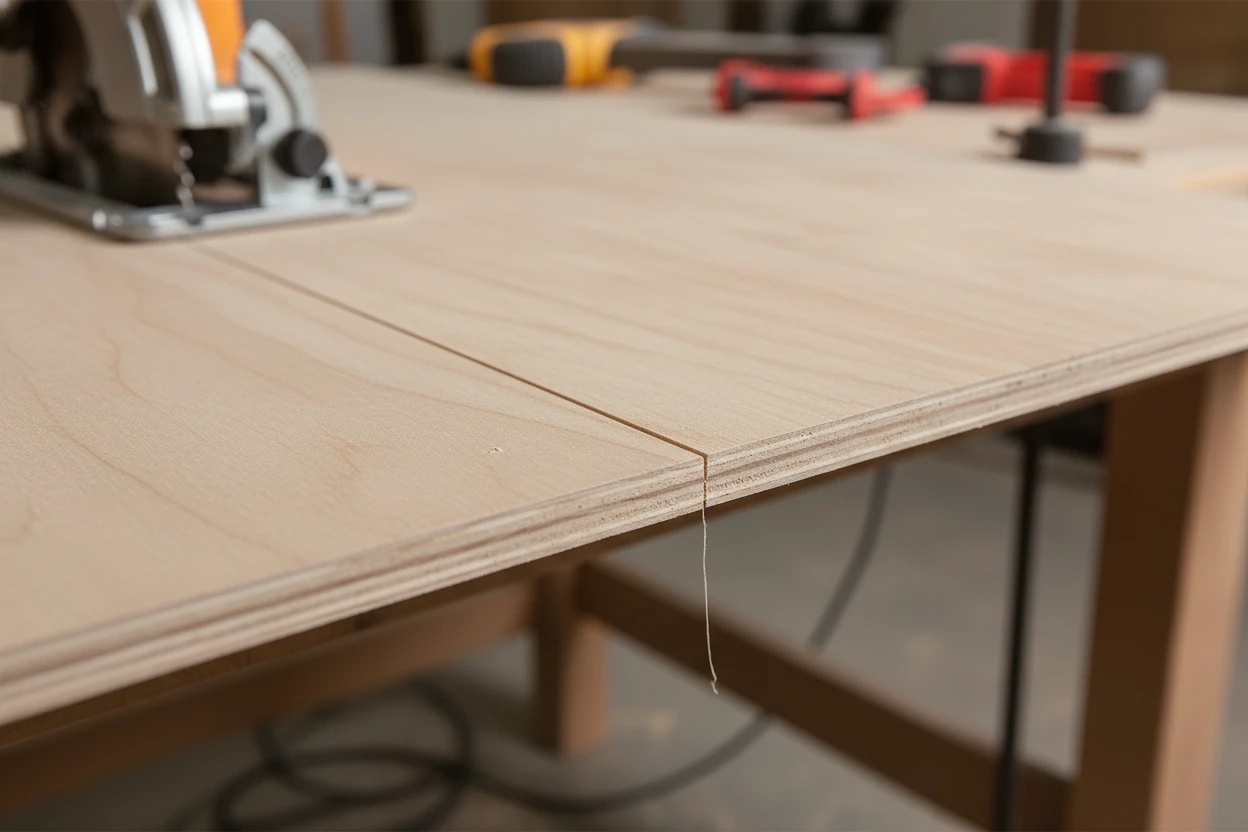
Birch plywood is the more globally available of the two materials, with strong supply in European, North American, and Asian markets. Its combination of surface quality, structural performance, and competitive pricing makes it the dominant hardwood plywood specification for furniture manufacturers, cabinetmakers, and CNC production shops worldwide. See our birch plywood grades guide for the full grading breakdown.
Maple vs Birch Plywood: Key Differences
Before diving into the individual comparisons, here is a side-by-side summary of the most important differences between maple and birch plywood:
| Feature | Maple Plywood | Birch Plywood |
| Color | Creamy white to light tan | Warm golden tan; more variation |
| Grain Pattern | Tight, uniform, subtle | More visible; slight mineral streaks |
| Janka Hardness | ~1,450 lbf (hard maple) | ~1,260 lbf (yellow birch) |
| Surface Texture | Smooth, fine-grained | Slightly coarser |
| Staining | Difficult; uneven absorption | More consistent; warmer result |
| Painting | Excellent; smooth base | Excellent; reliable result |
| Workability | Harder; requires sharper tools | Easier; lower tool wear |
| Cost | Higher | More affordable |
| Availability | Primarily North American markets | Global supply; widely available |
| Best For | High-end cabinetry, luxury interiors | Furniture, cabinets, CNC, general joinery |
Appearance and Grain: Maple vs Birch Plywood
Maple Plywood Appearance
Maple plywood’s defining visual characteristic is its uniformity. The grain is tight and consistent, with very little variation from one area of the panel to another. The color is a clean creamy white to very light tan, sometimes with a slight pinkish or reddish undertone depending on the specific growth region and veneer processing. This consistency makes maple plywood particularly well suited to modern, minimalist, and Scandinavian-influenced interior styles where a clean, uninterrupted surface is desirable.
The smooth surface texture of maple plywood allows it to take paint exceptionally well, producing a near-flawless painted finish with minimal grain show-through. For painted cabinet doors and drawer fronts where a seamless, furniture-grade result is the goal, maple plywood’s smooth surface is a genuine advantage.
Birch Plywood Appearance
Birch plywood has a warmer, more characterful appearance than maple. The base color is a pale golden tan, noticeably warmer than the cooler white of maple, with subtle grain lines and occasional mineral streaks that give the surface a natural, tactile quality. The grain is more pronounced than maple’s, which some designers value as adding visual interest and warmth to a space.
In Scandinavian and Nordic design traditions, exposed birch plywood has become an aesthetic in its own right: the pale grain, natural color variation, and honest material quality fit the design language of minimalist, nature-inspired interiors. For finished furniture where the natural birch character is part of the design intent, birch plywood can be left in a near-natural state with a light clear coat. See our how to finish birch plywood guide for practical finishing techniques.
Design note: Maple suits clean, formal, modern interiors. Birch suits warm, natural, Scandinavian-influenced or rustic-modern aesthetics. Neither is objectively better; the right choice depends on the design direction of the project.
Hardness and Durability: Birch vs Maple Plywood
Both maple and birch are genuine hardwoods, and both will outperform standard softwood plywood in terms of surface hardness, impact resistance, and screw-holding. But there is a measurable difference between them that matters in high-use applications.
Janka Hardness Comparison
Hard maple has a Janka hardness rating of approximately 1,450 lbf for the solid timber, while yellow birch comes in at approximately 1,260 lbf. This places maple about 15 percent harder than birch on the Janka scale, which means maple plywood resists surface denting and scratching more effectively under the same conditions.
In practical terms, this difference is most relevant for high-traffic cabinet doors, drawer fronts, and surfaces that see regular contact with hard objects. For most standard furniture carcass and cabinet box applications, both materials are more than adequate. For a detailed look at birch plywood’s density and hardness properties in context, see our birch plywood density guide.
Durability in Daily Use
Maple plywood’s smoother surface also means it shows scratches less readily than birch in some circumstances, because fine scratches blend into the uniform grain rather than contrasting against a more variable surface. Birch plywood’s straighter grain lines, however, also help disguise minor scratches in a different way, as the grain runs predictably and fine marks align with rather than cut across the grain direction.
Both materials are durable enough for decades of service in well-made furniture and cabinetry. The hardness advantage of maple becomes most relevant in commercial or very high-traffic residential settings where wear accumulates more quickly.
Staining and Finishing: Maple vs Birch
Finishing behavior is one of the most practically significant differences between maple and birch plywood, and it is a frequent source of frustration when either material is handled without proper preparation.
Staining Maple Plywood
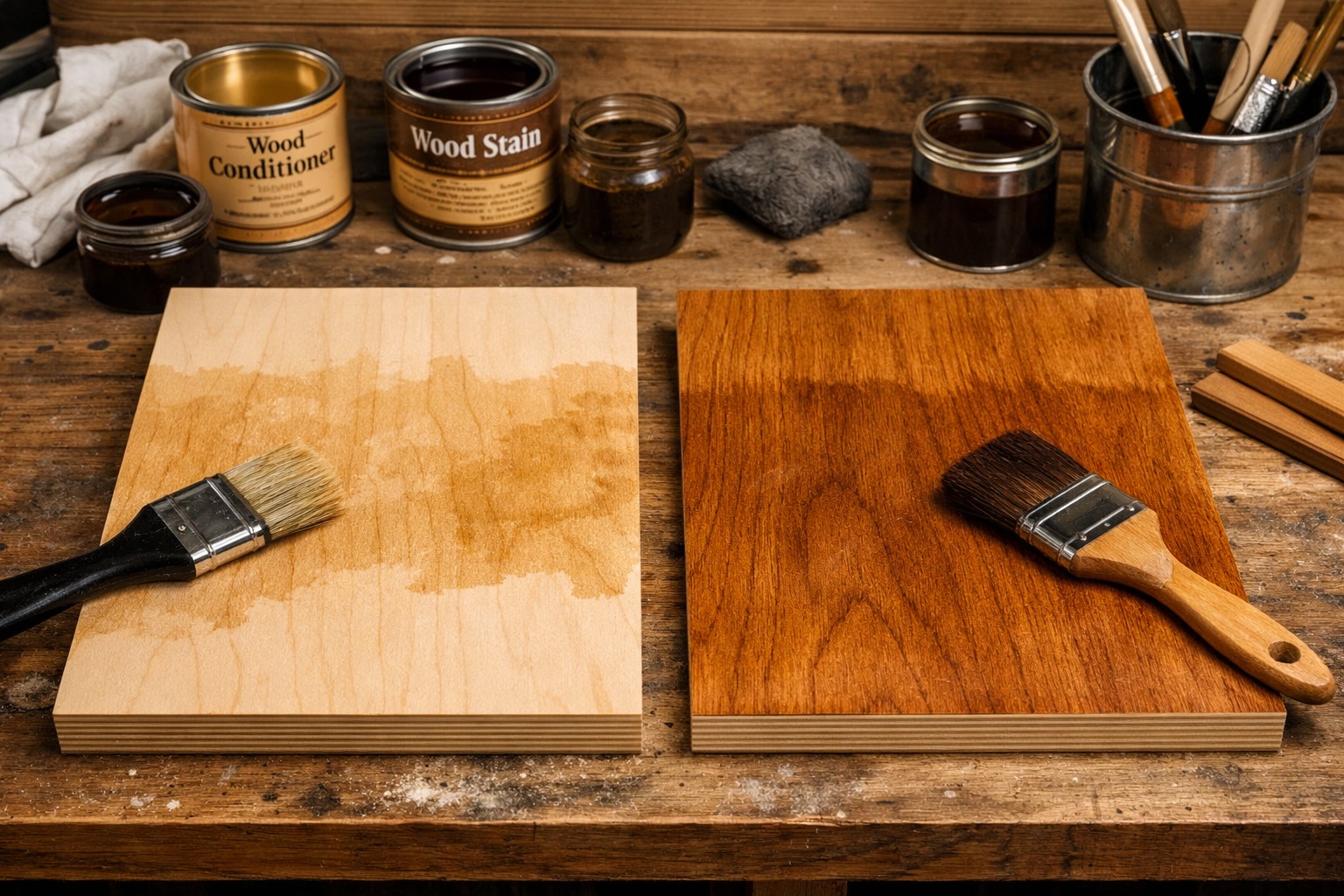
Maple plywood’s tight, dense grain creates an uneven staining surface. The dense wood cells absorb stain at different rates depending on local grain orientation and density variation, which means that without careful preparation, stained maple plywood surfaces can appear blotchy or streaky. Achieving a smooth, uniform stained finish on maple requires applying a pre-stain wood conditioner before the stain itself, which equalizes absorption and reduces blotchiness.
For this reason, maple plywood is most commonly finished with clear coats, light oils, or white and light-tinted paints that allow its natural color and smooth texture to show without the complications of deep-penetrating stain. It produces an exceptionally refined result when painted or finished clear.
Staining Birch Plywood
Birch plywood absorbs stain more evenly than maple due to its slightly more open grain structure, and it produces warmer, more natural-looking results with a wider range of stain colors. The warmer base tone of birch complements dark walnut stains, medium oak tones, and warm natural finishes particularly well.
That said, birch plywood can still exhibit some unevenness in staining, particularly at veneer joints or where grain direction changes. A pre-stain conditioner is still recommended for best results, but the risk of a badly blotched finish is lower with birch than with maple under the same conditions.
Finishing summary: For painted cabinets, both are excellent. For clear-finished cabinetry, maple produces a cleaner, more formal result. For stained natural finishes, birch is more forgiving and produces warmer tones.
Workability and Machining
The difference in hardness between maple and birch plywood has direct implications for how they behave in the workshop, particularly in high-volume production environments.
Working with Birch Plywood
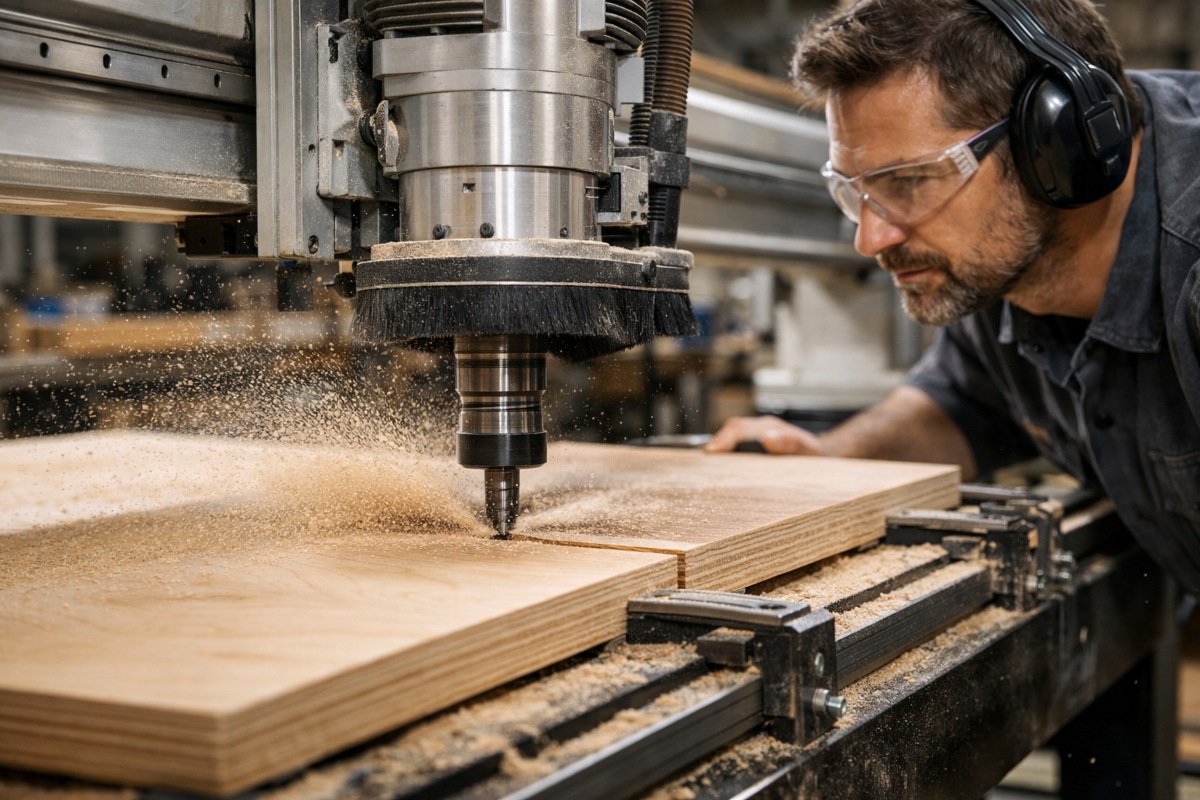
Birch plywood is widely considered one of the easiest hardwood panels to work with. It cuts cleanly with standard saw blades, routes predictably, and holds screws and fasteners reliably across the full panel thickness. Its consistent density means CNC router operations produce repeatable results with minimal tool wear, which is why Baltic birch is the default specification for high-volume CNC furniture production in many markets. For CNC-specific applications, our customized CNC cutting services process birch plywood to close tolerances for furniture and joinery applications.
Gluing and edge-banding birch plywood is also straightforward. The veneer edges take adhesive well, and the panel’s consistent density means edge banding bonds reliably without the voids and soft spots that can occur in lower-quality mixed-core panels.
Working with Maple Plywood
Maple plywood’s greater hardness means it places more demand on tooling. Saw blades and router bits dull more quickly when processing maple compared to birch, which increases tooling costs in high-volume production environments. Maple is also more prone to burn marks when router bits or saw blades are even slightly dull, which can mar the surface and require additional sanding to correct.
For custom or low-volume work where tooling cost per cut is less critical, maple’s workability challenges are manageable with good quality sharp tooling and appropriate feed rates. But for production shops processing large quantities of panels, the lower tooling wear from birch is a meaningful operational advantage.
Cost Comparison: Maple vs Birch Plywood
Cost is one of the clearest and most consistent differences between maple and birch plywood, and it affects not just material budgets but also availability and lead times.
Maple plywood is consistently more expensive than birch plywood of equivalent grade and thickness. This price difference reflects several factors: the slower growth rate of hard maple compared to birch, the more limited geographic range of maple timber supply (primarily North America), the premium veneer processing required to produce the consistent, smooth surface maple plywood is known for, and the overall position of maple as a premium cabinet species.
Birch plywood, supplied primarily from Scandinavian, Russian, and Baltic plantation forests, benefits from a larger and more competitive supply base. The fast growth rate of birch in cold-climate plantations, combined with its widespread cultivation across multiple countries, keeps prices more competitive and supply more reliable.
For large-scale cabinetry or furniture projects where material cost is a significant budget line, the price difference between maple and birch plywood is a genuine factor. Birch plywood delivers a substantial portion of maple’s performance at a lower cost per sheet, which is why it is the default hardwood panel for most commercial furniture production and fitted cabinetry work. Explore our birch plywood product for current availability.
Maple vs Birch Plywood for Cabinets
Cabinet specification is where the maple versus birch question comes up most often, and the answer depends on the type of cabinet, the finish approach, and the budget available.
When to Choose Maple Plywood for Cabinets
- High-end kitchen cabinetry where a premium, refined surface finish is the priority and the budget supports a higher material cost
- Painted cabinet doors and drawer fronts where maple’s smooth surface produces the cleanest, most furniture-grade painted result
- Commercial cabinetry in retail, hospitality, or office environments where surface hardness and wear resistance under heavy use is a primary specification criterion
- Modern or minimalist kitchen designs where the clean, consistent, near-white color of maple complements the aesthetic
- Projects where the cabinet face frames, doors, and carcasses will all be finished with a clear or light coat and the pale, uniform maple tone is part of the design intent
When to Choose Birch Plywood for Cabinets
- Cabinet carcasses and box construction for both kitchen and non-kitchen applications, where structural performance and cost efficiency are the priorities
- Painted cabinet projects at any price point, where birch’s surface quality delivers a fully adequate painted result at a lower material cost than maple
- Scandinavian-style or natural-finish cabinetry where birch’s warmer tone and visible grain character are desirable design features
- High-volume production cabinetry where material cost, tool wear, and consistent machinability across large quantities of panels matter to project economics
- Custom and mid-range fitted furniture where the combination of surface quality, structural strength, and competitive pricing that birch plywood delivers represents the best value-to-performance ratio
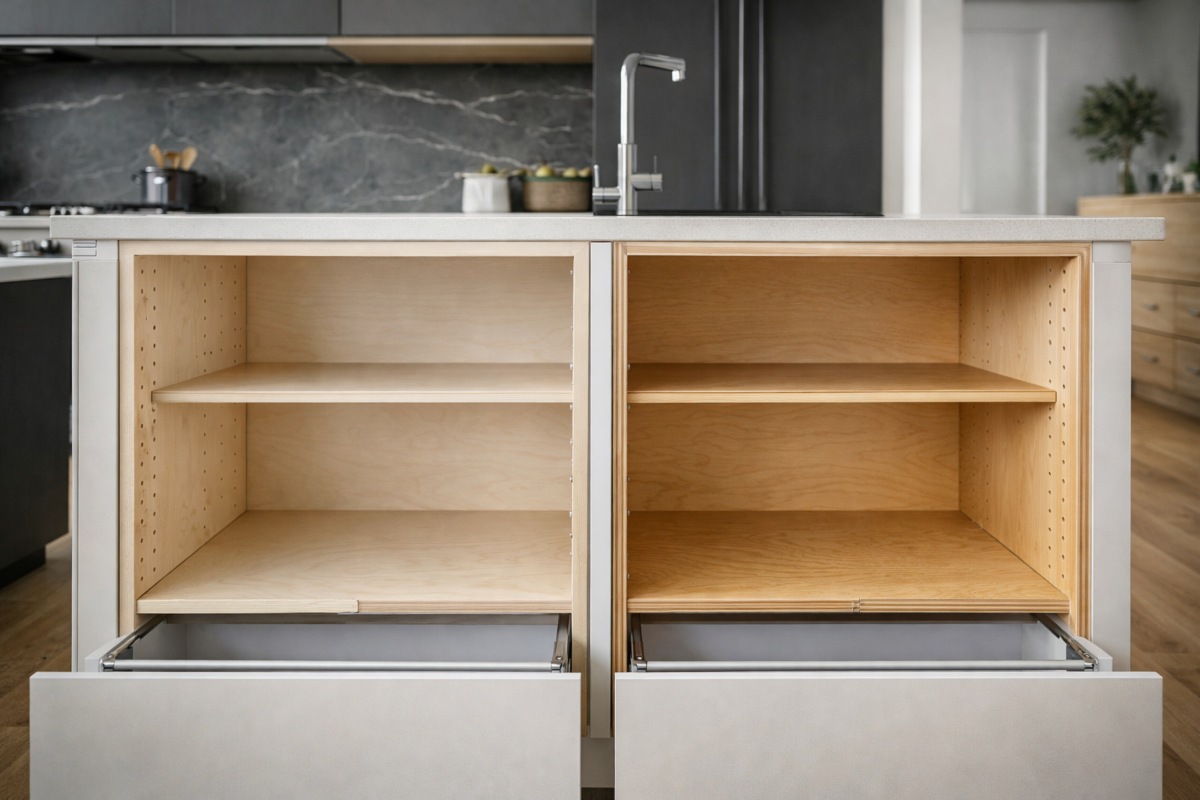
For cabinet carcasses specifically: Birch plywood is almost always the better specification. The structural box behind the cabinet door does not need maple’s premium surface; it needs rigidity, screw-holding, and dimensional stability, all of which birch plywood delivers at a lower cost.
Baltic Birch vs Maple Plywood
When buyers specify birch plywood for quality furniture or cabinetry, they are typically specifying Baltic birch plywood specifically, which is a distinct product from generic birch plywood. Understanding how Baltic birch compares to maple is useful for accurate specification.
Baltic birch plywood uses all-birch-veneer construction with no softwood core plies, a high ply count (typically 1.5 mm per ply), and void-free inner layers. This gives it structural consistency and screw-holding performance that generic mixed-core birch plywood does not match. When compared directly to maple plywood on structural grounds, Baltic birch is competitive in most categories: its density is slightly lower (650 to 700 kg/m3 versus approximately 700+ kg/m3 for maple plywood), but its all-veneer construction and high ply count compensate with excellent stiffness and consistent fastener performance.
The primary area where maple plywood maintains a genuine advantage over Baltic birch is surface hardness (Janka 1,450 lbf versus 1,260 lbf for yellow birch solid timber) and the fine, consistent surface texture that makes maple the preferred specification for painted high-end cabinet doors. For most structural furniture applications, Baltic birch plywood’s combination of performance and cost makes it the stronger specification choice. See our birch plywood grades guide for grading details specific to Baltic birch.
Environmental Considerations
Both maple and birch plywood can be sourced responsibly, but their supply chains differ in ways that affect sustainability profiles.
Birch grows faster than maple and is cultivated in large, managed plantation forests across Scandinavia, Russia, Finland, and the Baltic states. This faster growth rate means birch timber replenishes more quickly after harvest, and the plantation-based supply model generally involves high levels of forest management and certification. Baltic birch plywood is commonly available with FSC (Forest Stewardship Council) or equivalent certification, confirming responsible sourcing.
Maple is sourced primarily from North American hardwood forests, where slow growth produces the dense, fine-grained timber that defines hard maple’s qualities. Responsibly sourced North American maple is available with FSC certification, but the slower growth rate means that maple forests recover more slowly after harvest than birch plantations.
For buyers with sustainability commitments, both materials are available in certified, responsibly sourced forms. Birch plywood’s faster-growing supply base gives it a marginal advantage in overall renewable resource management.
Pros and Cons Summary
Maple Plywood: Pros
- Superior surface hardness at approximately 1,450 lbf Janka, offering better wear resistance in high-traffic applications
- Smoother, finer surface texture produces a cleaner painted and clear-finished result
- Consistent, uniform color suits modern and minimalist design aesthetics
- Premium finish quality justified in high-end cabinetry and luxury interior applications
Maple Plywood: Cons
- Higher cost than birch, particularly in markets outside North America
- More difficult to stain evenly; blotchy results without careful surface preparation
- Harder on cutting tools; higher tooling wear in production environments
- More limited availability outside North American markets
Birch Plywood: Pros
- More affordable than maple while still delivering strong hardwood plywood performance
- Easier to work with; lower tool wear in production environments, well suited to CNC routing
- More consistent staining behavior than maple; wider range of achievable stain finishes
- Widely available globally with a competitive, plantation-based supply chain
- All-birch-veneer Baltic birch construction provides excellent screw-holding and structural consistency
Birch Plywood: Cons
- Slightly lower surface hardness than hard maple
- Warmer, more variable grain pattern may not suit all design aesthetics
- Surface may require more preparation for the highest-quality painted finishes
Frequently Asked Questions
Is birch or maple plywood better?
Neither is universally better. Maple plywood is the right choice when surface hardness, a clean white color, and a premium finish result are the priorities. Birch plywood is the right choice when cost efficiency, workability, availability, and consistent structural performance are the priorities. For most furniture and cabinet carcass applications, birch plywood delivers the better value-to-performance ratio.
Is birch wood cheaper than maple?
Yes. Birch plywood is consistently less expensive than maple plywood of equivalent grade and thickness. The price difference reflects maple’s slower growth rate, more limited geographic supply, and premium market positioning. For large projects where material cost is a significant budget factor, birch plywood’s lower cost is a meaningful advantage.
Which is better for kitchen cabinets: maple or birch plywood?
For cabinet carcasses and structural boxes, birch plywood is generally the better specification: it is more cost-efficient, machines cleanly, and delivers structural performance equivalent to maple. For painted cabinet doors and drawer fronts where a premium painted surface is required, maple’s smoother texture provides a marginal advantage. For natural or stained cabinet faces, birch plywood’s warmer tone and more consistent staining behavior often produce a more appealing result.
What are the disadvantages of maple wood?
Maple’s main disadvantages are its higher cost, its tendency to stain unevenly without preparation, and the greater demand it places on cutting tools in production environments. In strong sunlight, maple can yellow or change color over time, which may affect the appearance of maple cabinet faces in rooms with significant natural light exposure.
Can I use birch plywood for cabinet doors?
Yes. Birch plywood is widely used for cabinet doors, particularly for painted finishes and natural-wood Scandinavian-style designs. For the highest-end painted cabinet doors where a completely smooth, grain-free surface is required, maple has a slight edge. For most other painted and finished door applications, birch plywood delivers a fully professional result at a more competitive cost. See our birch plywood furniture ideas for practical design applications.
Conclusion
Maple and birch plywood are both outstanding hardwood panel materials, and both will serve well in quality furniture and cabinetry when correctly specified and finished. The choice between them is not about one being definitively superior, but about matching material properties to project requirements.
Maple plywood earns its premium position through superior surface hardness, a cleaner painted finish, and a consistent, refined aesthetic. For high-end kitchen cabinetry, commercial interiors, and projects where the cabinet surface quality justifies a higher material spend, maple is the right call.
Birch plywood delivers exceptional value for a wider range of applications. Its combination of structural performance, workability, consistent surface quality, global availability, and competitive pricing makes it the right default specification for furniture carcasses, cabinet boxes, CNC production work, and any project where the goal is high-quality results at a realistic cost. Explore our birch plywood product range and commercial plywood options to find the right panel for your application.
For further reading, our sande plywood vs birch plywood comparison, birch plywood vs MDF guide, and particle board vs plywood article provide additional comparison context for buyers evaluating panel options across different application requirements.
Bình luận