


5 Key Benefits of Using Thin Wood Panels for Walls and Ceilings in Construction Projects
In the competitive construction industry, the choice of materials plays a significant role in determining the overall success of a project. From strength and durability to cost-effectiveness and aesthetic appeal, the materials you select will have a lasting impact on the performance and look of the finished structure. Among the many options available, thin wood panels stand out as one of the most popular choices, particularly for walls and ceilings in residential, commercial, and industrial buildings.
Thin wood panels, such as those offered by Kosmex Plywood, have gained traction due to their superior structure, flat surface, and resistance to bending. These features make them an ideal option for formwork in concrete construction and for use as interior cladding in a wide range of architectural designs.
In this article, we will dive deeper into the 5 key benefits of using thin wood panels for your construction projects, highlighting their versatility, cost-effectiveness, and performance under demanding conditions.
What Are Thin Wood Panels?
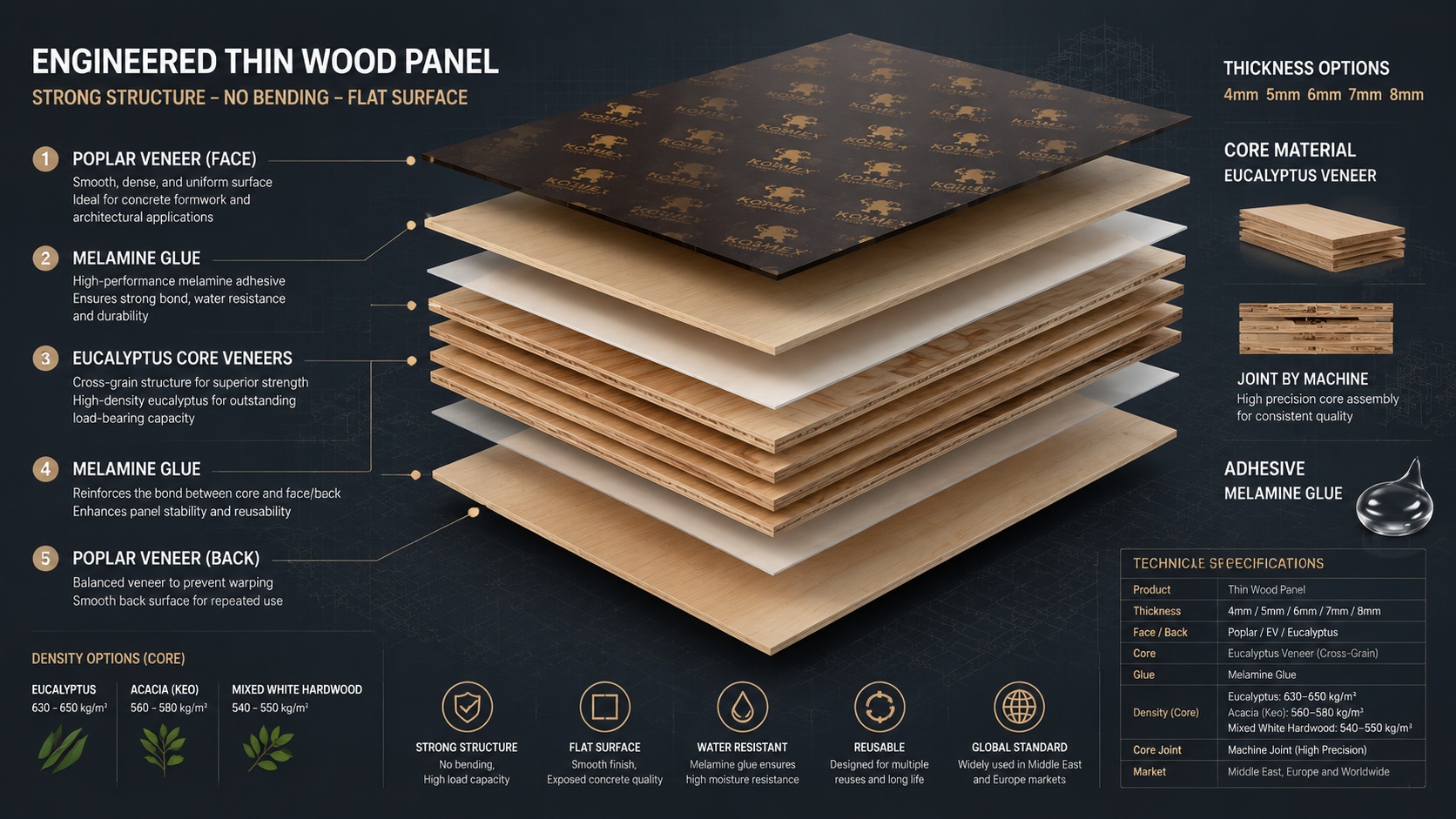
Thin wood panels are engineered wood products made from thin layers of veneer, typically bonded together with strong adhesives like melamine glue. These panels are available in a variety of thicknesses, typically ranging from 4mm to 8mm, and are commonly used in both residential and commercial construction for walls, ceilings, and concrete formwork.

Thin wood panels are produced by layering thin sheets of wood (called veneers) in a cross-grain pattern, which increases the strength and durability of the material. The surface of these panels can be smooth and flat, making them ideal for applications where an even, polished finish is required. The strength of thin panels comes from the high-density wood cores, which can include wood types like eucalyptus, poplar, and acacia. These panels are also available with different face finishes, such as EV face or film-faced plywood, offering additional features like moisture resistance and superior durability.
In addition to being lightweight, thin wood panels offer several key benefits, including cost-effectiveness, aesthetic appeal, and ease of installation, making them a preferred choice for modern construction projects. They are especially useful for projects where speed of installation and low labor costs are priorities, such as wall cladding, ceiling panels, and concrete formwork.
In construction, choosing the right materials is key to achieving not only a successful project but also one that’s cost-effective, durable, and aesthetically pleasing. One material that has gained significant traction in recent years is thin wood panels. These versatile panels are widely used for a variety of applications, especially for walls and ceilings. They offer a range of benefits that make them an ideal choice for construction projects of all sizes.
In this article, we will discuss the five key benefits of using thin wood panels in your construction projects and explain why they are the best option for walls and ceilings.
In the competitive construction industry, the choice of materials plays a significant role in determining the overall success of a project. From strength and durability to cost-effectiveness and aesthetic appeal, the materials you select will have a lasting impact on the performance and look of the finished structure. Among the many options available, thin wood panels stand out as one of the most popular choices, particularly for walls and ceilings in residential, commercial, and industrial buildings.
Thin wood panels, such as those offered by Kosmex Plywood, have gained traction due to their superior structure, flat surface, and resistance to bending. These features make them an ideal option for formwork in concrete construction and for use as interior cladding in a wide range of architectural designs.
In this article, we will dive deeper into the 5 key benefits of using thin wood panels for your construction projects, highlighting their versatility, cost-effectiveness, and performance under demanding conditions.
1. Lightweight and Easy to Handle
1.1. Efficient Handling and Installation
One of the primary advantages of thin wood panels is their lightweight nature. At 4mm to 8mm thickness, these panels are much easier to transport and install compared to thicker wood sheets or other construction materials like drywall or concrete boards. This reduced weight minimizes the risk of injury during installation and makes handling significantly easier for construction teams, even on high-rise building sites.
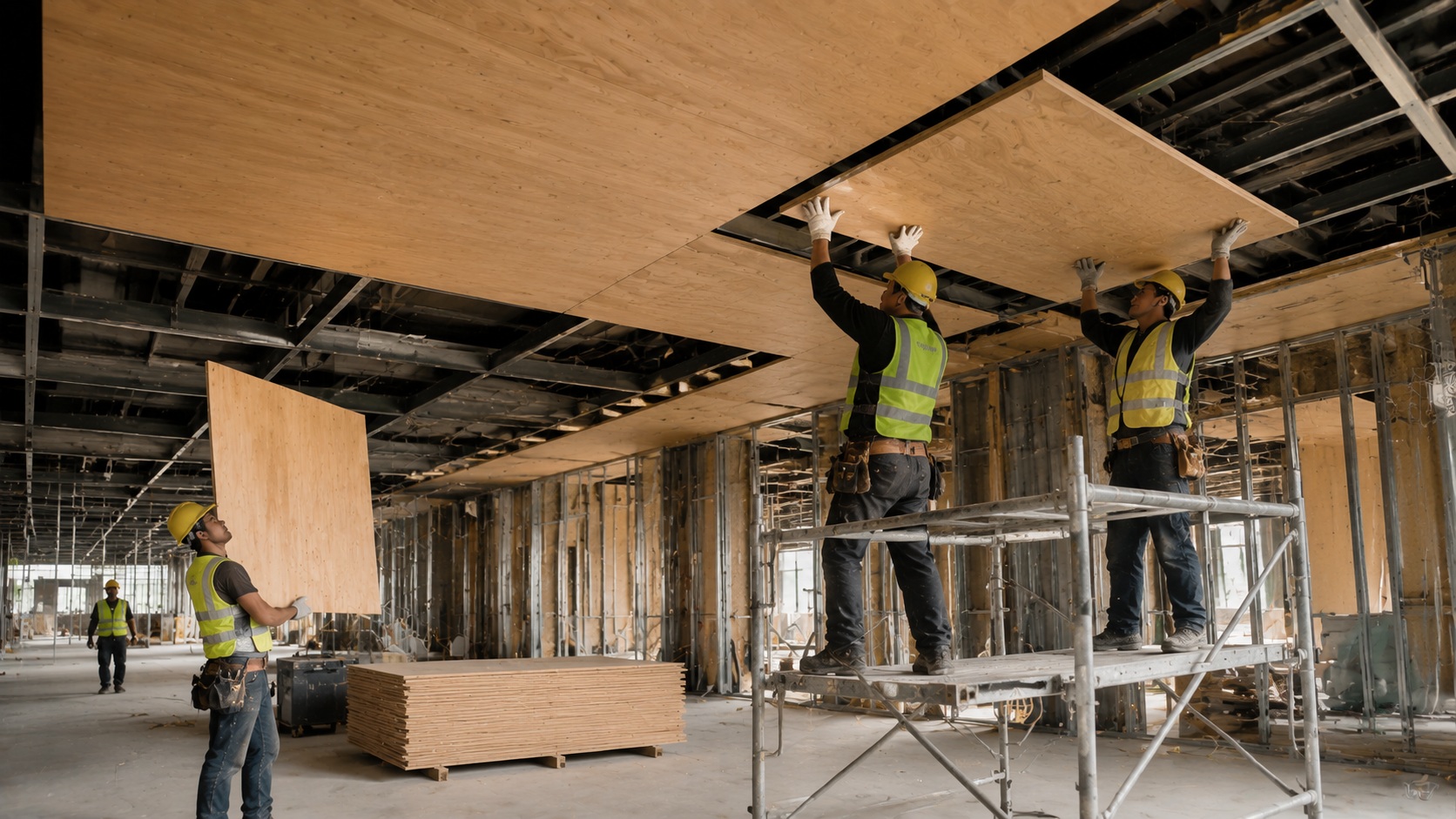
Kosmex Plywood’s thin panels, for instance, are designed to be user-friendly during the entire construction process, allowing builders to move and install them quickly and efficiently. These panels are available in a variety of sizes, allowing for flexibility in different building designs.
2. Cost-Effective and Economical
2.1. Cost Efficiency in Materials and Labor
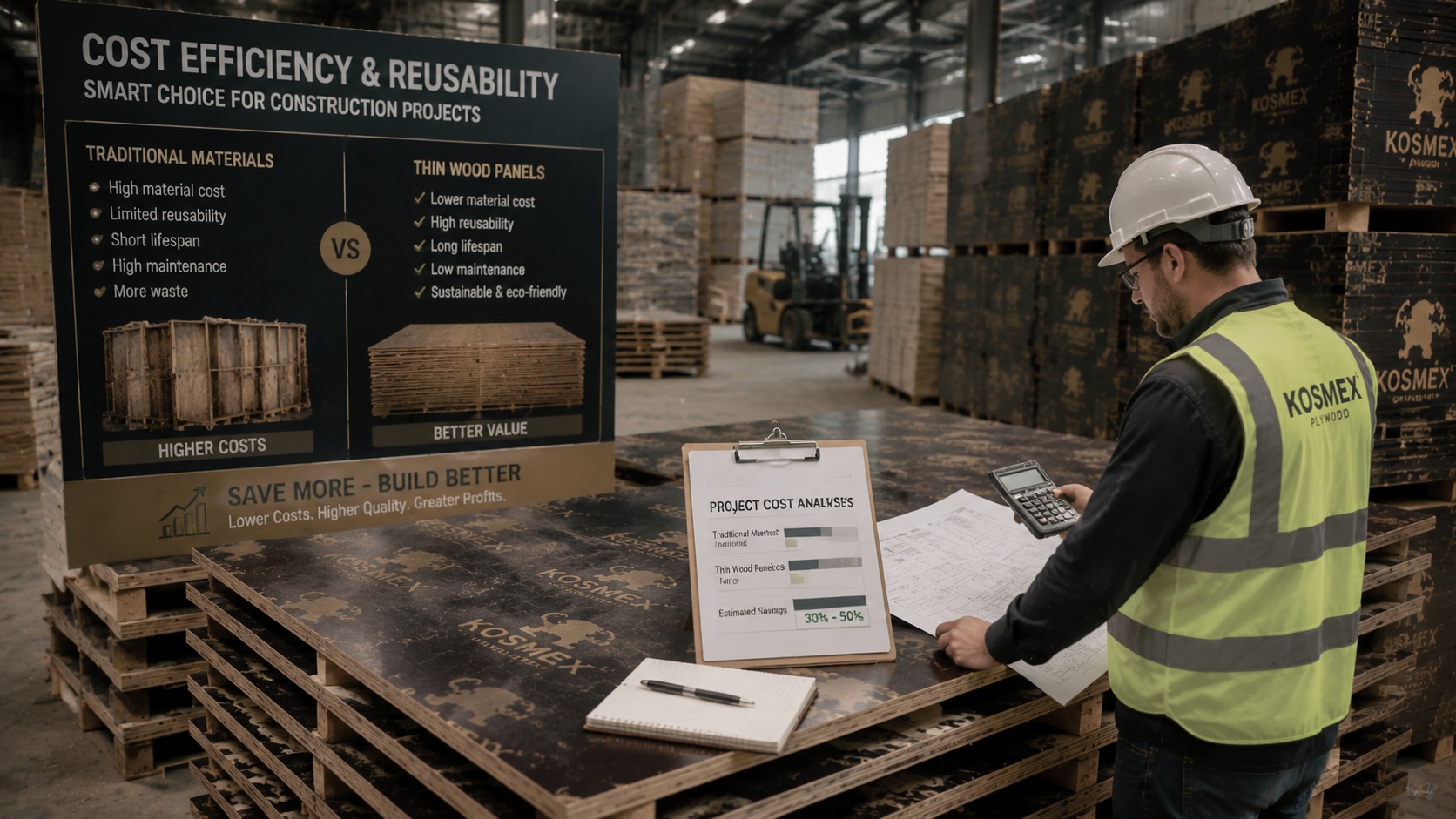
Thin wood panels are not only affordable in terms of material costs but also in labor costs. Due to their lightweight nature, thin wood panels require less manpower and time for installation. This can significantly lower the overall labor cost in large-scale projects. Moreover, Kosmex Plywood’s thin panels, made with melamine glue and machine-jointed cores, provide excellent strength and resistance to bending, making them ideal for both structural and decorative applications at a fraction of the cost of traditional materials like metal or stone.
2.2. Long-Term Savings
Another significant cost benefit is the long-term durability of thin wood panels. With their ability to resist bending and maintain a flat surface throughout the duration of a construction project, thin wood panels are a reliable investment. The ability to reuse Kosmex Plywood thin panels multiple times for concrete formwork or other applications helps builders save on material costs over time, making them an even more cost-effective solution in the long run.
3. Aesthetic Appeal and Versatility
3.1. Natural Wood Aesthetic
Wood has long been recognized for its natural beauty and timeless appeal. Thin wood panels bring the elegance and warmth of wood into the design of walls and ceilings. These panels are available in different types of wood, including poplar, eucalyptus, and EV face panels, which provide distinct aesthetic properties.
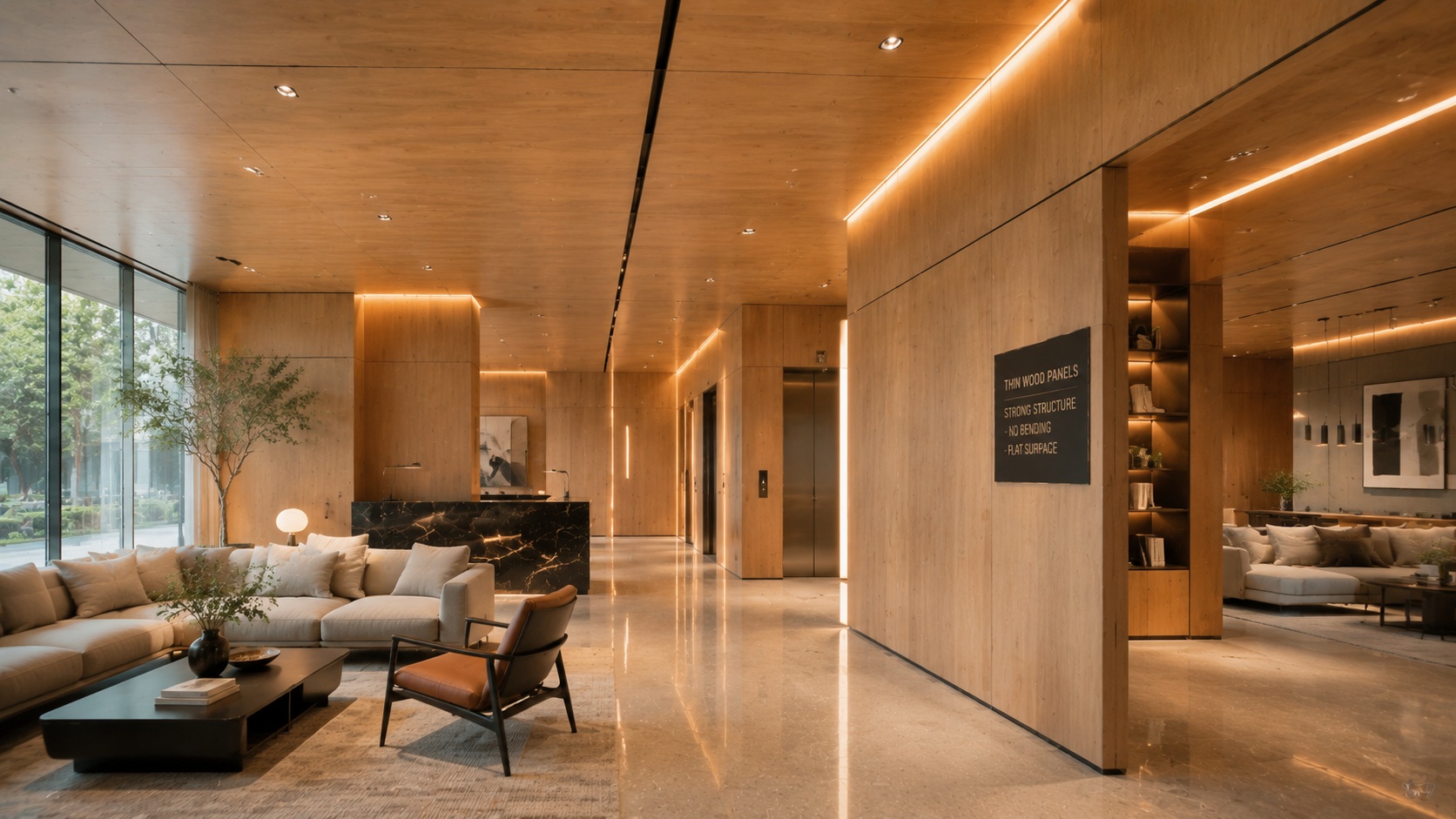
Whether you want a light, minimalist finish or a darker, richer wood tone, thin wood panels can be customized to meet a wide variety of design preferences.
3.2. Smooth, High-Quality Finish
Thanks to the superior film-faced surface of Kosmex Plywood’s thin panels, the panels provide a smooth, consistent finish. These surfaces are ideal for painting or finishing with other decorative coatings, allowing for easy customization and seamless integration into any architectural style.
4. Sustainability and Environmental Benefits
4.1. Renewable Resource
Sustainability is a growing concern in construction, and thin wood panels provide an eco-friendly alternative to traditional building materials. Kosmex Plywood sources its wood from sustainably managed forests, ensuring that the wood used in the production of their thin plywood panels comes from renewable resources.
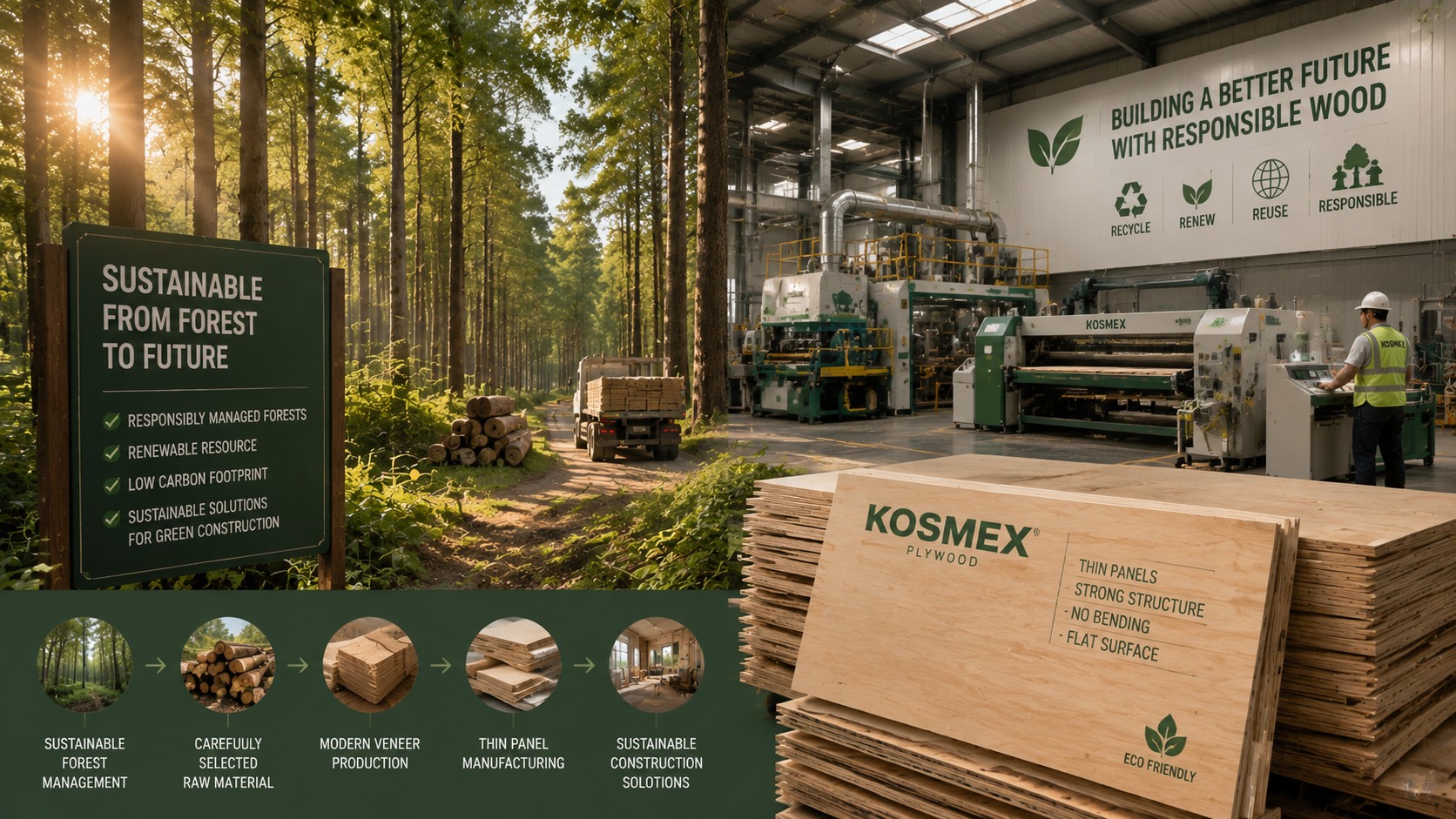
By opting for thin wood panels, contractors can reduce their environmental footprint while still obtaining high-quality, durable materials for their projects.
4.2. Lower Carbon Footprint
Wood is a carbon-neutral material that naturally absorbs CO2 during its growth, making thin wood panels an environmentally responsible choice. By choosing Kosmex Plywood, which utilizes melamine glue in its manufacturing process, contractors can also reduce the amount of harmful chemicals used in construction. The reduced waste during production and use of fewer raw materials per panel further enhances the environmental benefits.
5. Durability and Long-Term Performance
5.1. Superior Strength and Longevity
Despite their lightweight composition, thin wood panels are incredibly durable. Kosmex Plywood offers thin panels that feature high-density cores made from eucalyptus (630–650 kg/m³), acacia (560–580 kg/m³), and mixed white hardwood (540–550 kg/m³). These densities contribute to the panels’ strength, making them resilient to wear and tear even in high-traffic areas or harsh environments.
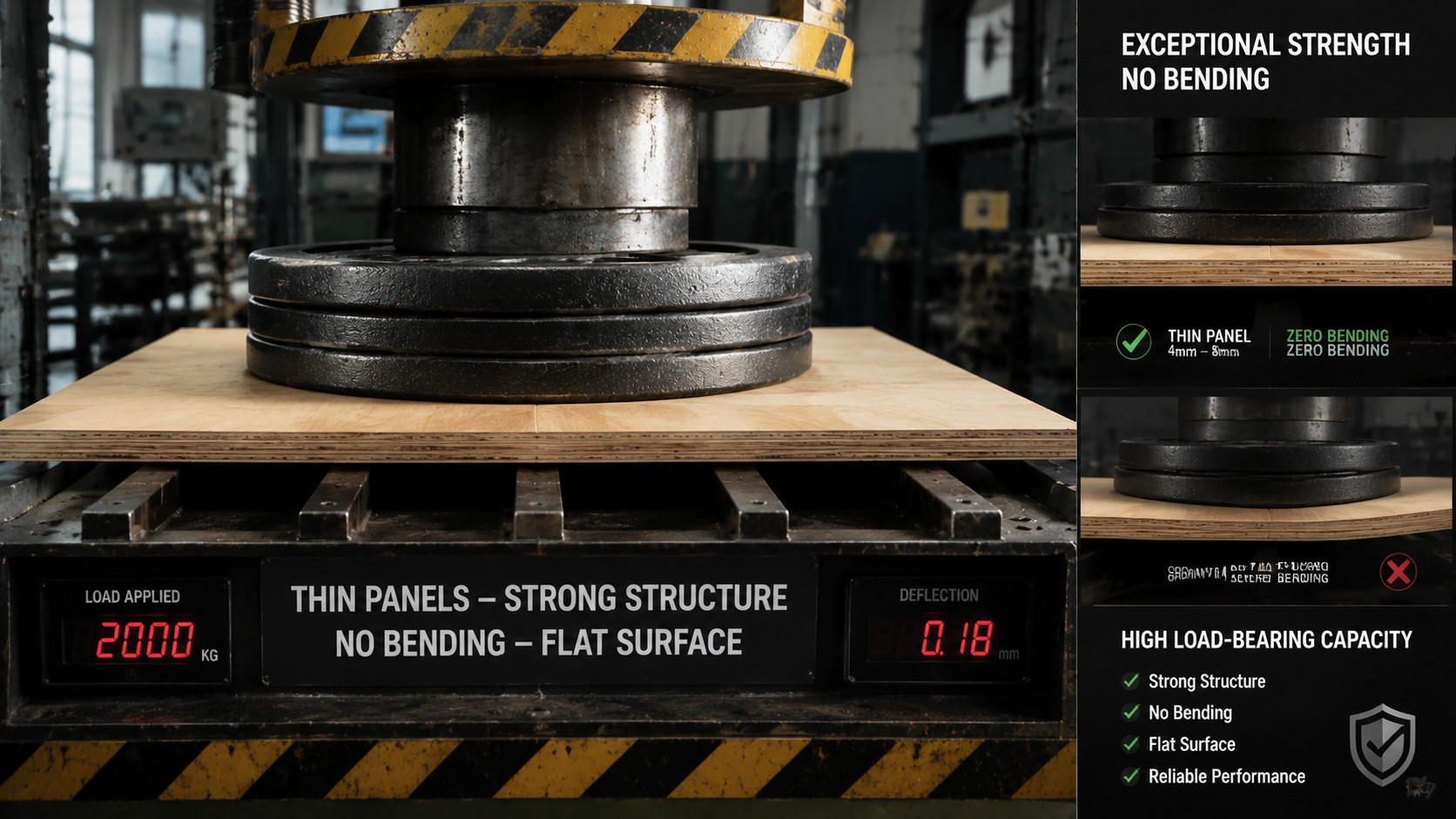
With the proper treatment, thin wood panels from Kosmex can maintain their structural integrity and flatness for years, making them an excellent investment for both short-term and long-term construction needs.
5.2. Resistant to Bending and Warping
One of the most impressive features of Kosmex Plywood’s thin panels is their resistance to bending. Thin plywood panels are designed to remain flat and stable throughout their use in concrete formwork and other applications. Unlike traditional wood products that can warp, bend, or bow under pressure, these panels are engineered for maximum bending resistance and surface stability.
6. Frequently Asked Questions (FAQs) about Thin Wood Panels
6.1. What Thickness Options Are Available for Kosmex Plywood Thin Panels?
Kosmex Plywood offers thin plywood panels in a variety of thicknesses, including 4mm, 5mm, 6mm, 7mm, and 8mm. The thickness you choose will depend on the specific needs of your project, such as load-bearing capacity and surface finish requirements.
6.2. How Do I Care for Thin Wood Panels in My Construction Projects?
To ensure the longevity and performance of your thin wood panels, it’s important to follow proper care guidelines. Kosmex Plywood panels should be cleaned after each use to remove concrete residue. Store the panels in a dry, ventilated space to prevent moisture buildup, and avoid exposing them to extreme temperatures or humidity, which can cause warping.
6.3. Can Thin Wood Panels Be Used for Both Interior and Exterior Projects?
Yes, thin wood panels are suitable for both interior and exterior projects, though they may require additional treatment for outdoor use. Kosmex Plywood’s melamine glue helps increase the panels’ resistance to moisture and ensures they maintain their strength and flatness, even in more demanding conditions.
Read more: Best Plywood for Outdoor Use (2026 Guide): 5 Types Compared & How to Choose
6.4. What Are the Key Advantages of Using Kosmex Plywood Thin Panels Over Other Materials?
Kosmex Plywood thin panels offer several advantages over other materials like drywall, plywood, and plastic:
- Stronger structure with superior bending resistance.
- Smooth, flat surfaces for a professional finish.
- Lightweight and easy to install, reducing labor and transportation costs.
- Cost-effective and durable for both short and long-term use.
- Sustainably sourced materials, reducing environmental impact.
6.5. How Many Times Can Thin Wood Panels Be Reused in Concrete Formwork?
With proper care, thin wood panels from Kosmex Plywood can be reused multiple times in concrete formwork applications, often between 20–30 uses or more. The panels’ durability and resistance to wear make them an excellent choice for projects that require repeated use.
7. Conclusion
In conclusion, thin wood panels are an excellent choice for walls and ceilings in construction projects due to their lightweight nature, cost-effectiveness, aesthetic appeal, and durability.
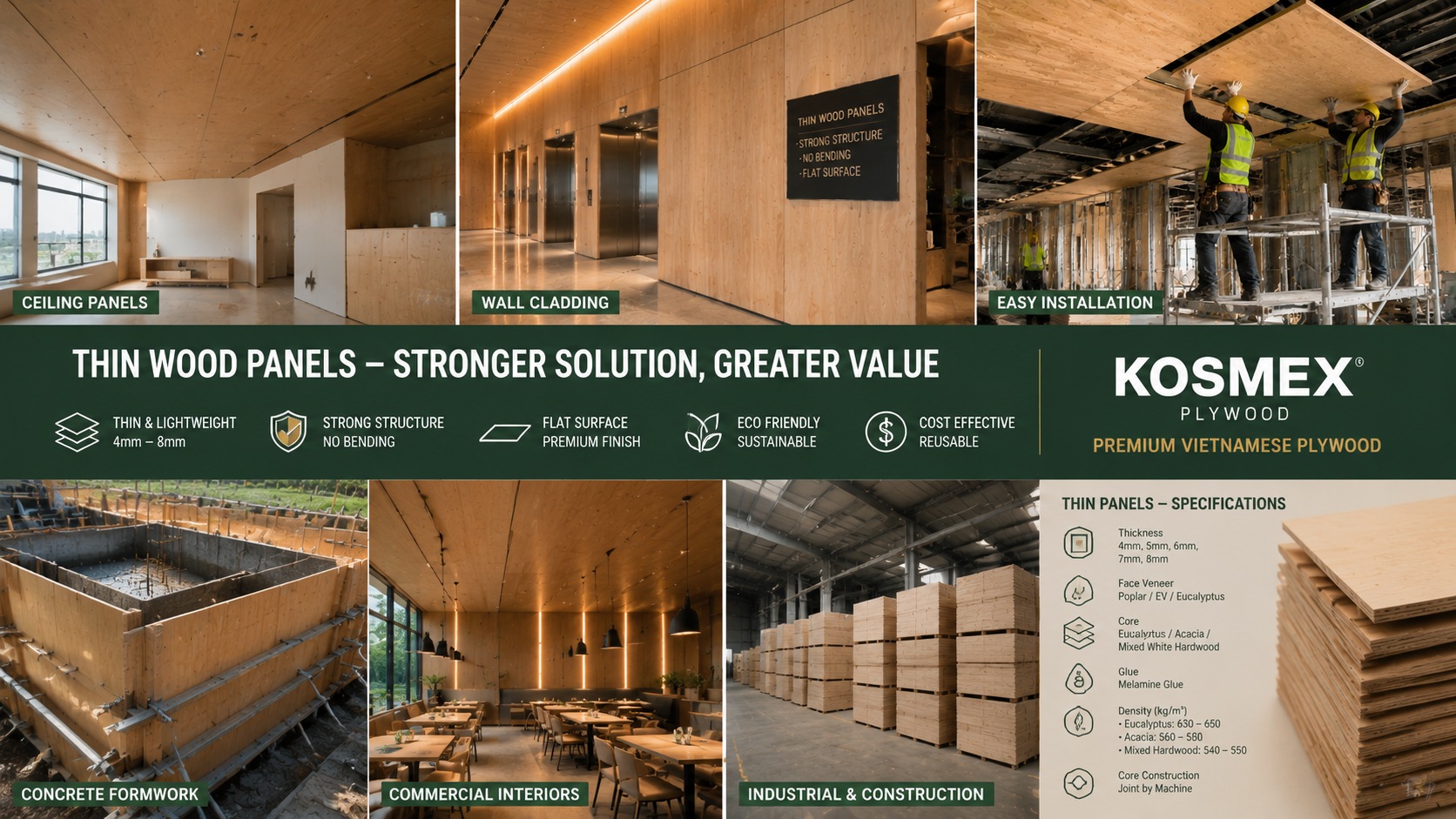
Whether you’re building a residential home, a commercial property, or industrial facilities, thin wood panels from Kosmex Plywood offer superior performance and long-lasting value. By choosing Kosmex Plywood thin panels, you are ensuring that your project benefits from premium-quality materials that are both environmentally friendly and cost-efficient.
Bình luận