


Eucalyptus vs Poplar Plywood: Full Comparison for Furniture & Construction
Choosing between eucalyptus vs poplar plywood may seem minor, but the wrong core can lead to sagging shelves, warped panels in humid conditions, or unnecessary shipping costs.
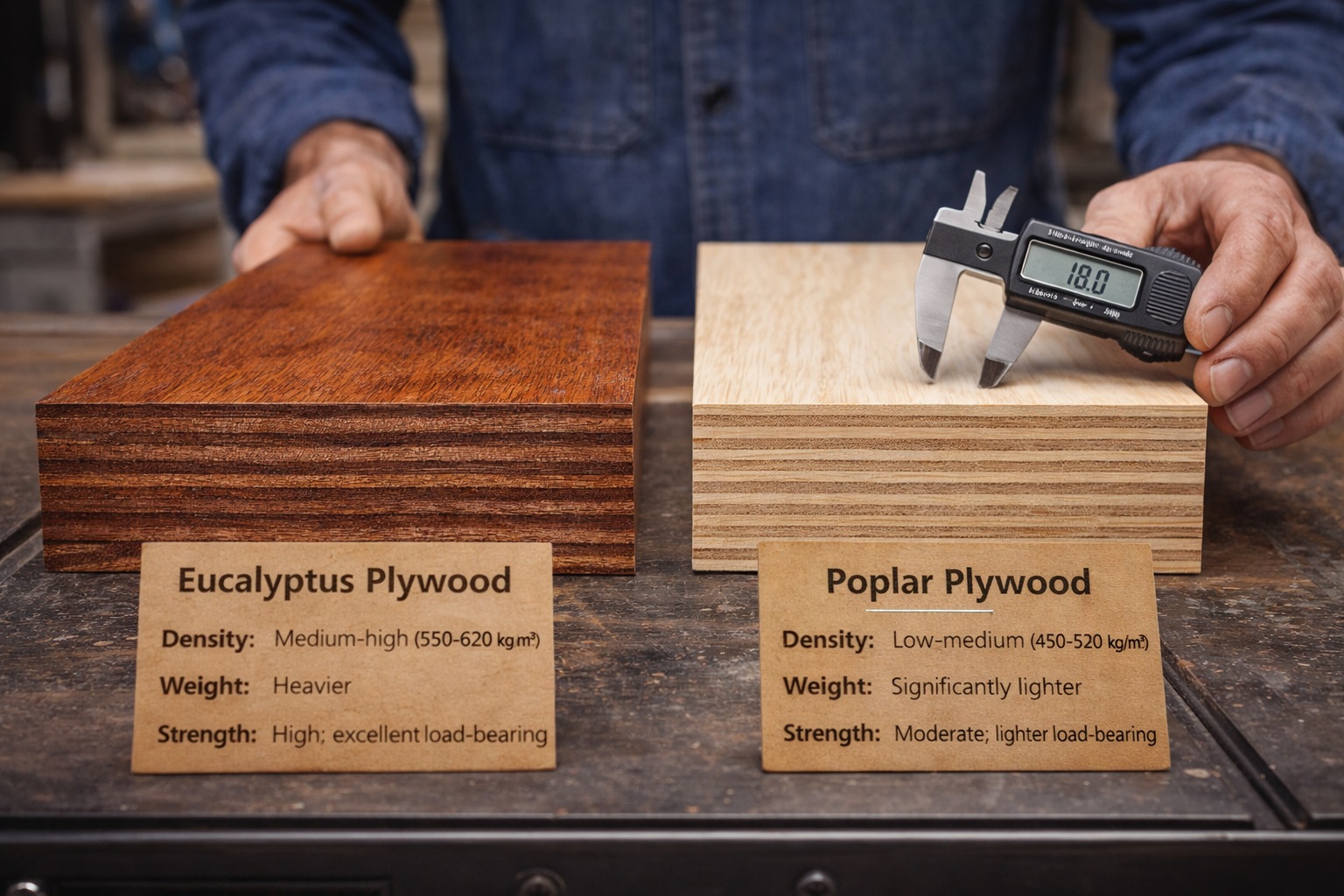
This guide compares strength, weight, moisture resistance, and cost so you can specify the right plywood for your project from the start.
Eucalyptus vs Poplar Plywood: Key Differences at a Glance
| Feature | Eucalyptus Plywood | Poplar Plywood |
| Density | 550 to 620 kg/m3 (medium-high) | 450 to 520 kg/m3 (low-medium) |
| Weight per sheet | Heavier | Significantly lighter |
| Bending Strength | High; excellent load-bearing | Moderate; suitable for light to medium loads |
| Screw Holding | Excellent | Adequate; avoid over-tightening near edges |
| Moisture Resistance | Good (natural oils) | Moderate; needs sealing in humid areas |
| Workability | Good; requires sharp tooling | Very easy; low tool wear, CNC-friendly |
| Surface for Finishing | Reddish-brown, pronounced grain | Pale cream, smooth and uniform |
| Painting | Good with preparation | Excellent; very consistent result |
| Staining | Even, consistent absorption | Takes paint and stain evenly |
| Cost | Mid-range; higher than poplar | Budget-friendly; lowest cost option |
| Sustainability | Fast-growing (5 to 7 years) | Fast-growing; widely available |
| Best For | Structural furniture, humid areas, flooring | Lightweight cabinetry, interior panels, flat-pack |
What Is Eucalyptus Plywood?
Eucalyptus plywood is a hardwood panel manufactured from eucalyptus wood veneers, cross-laminated and bonded with structural adhesive in the standard plywood construction. Eucalyptus trees are fast-growing hardwoods native to Australia and now cultivated in plantation systems across Southeast Asia, South America, and Africa. They reach harvestable maturity in 5 to 7 years, making them one of the most renewable commercial hardwood sources available.
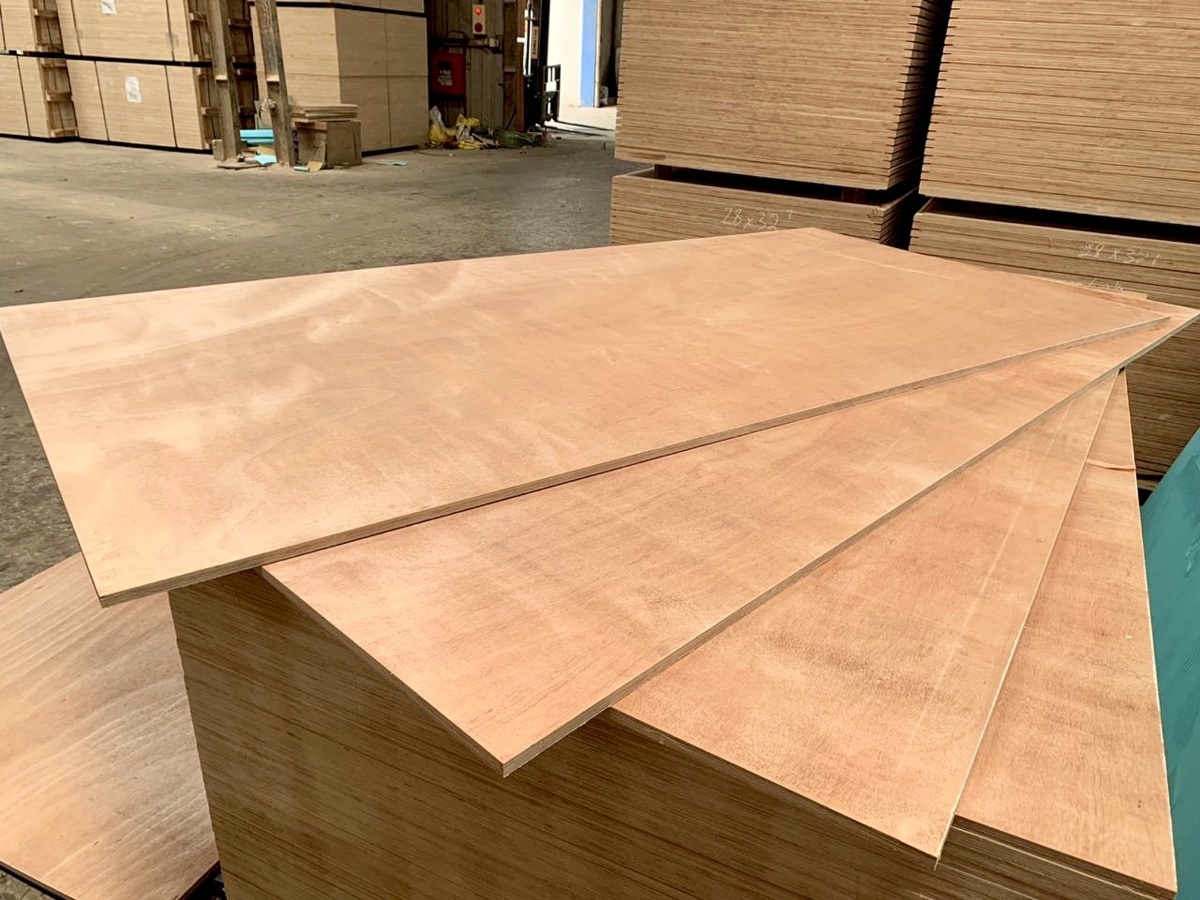
The finished panel has a density of 550 to 620 kg/m3, a warm reddish-brown grain, and natural oils that provide inherent moisture and pest resistance. It is available in a full range of thicknesses from 6 mm to 30 mm and in grades from BB/BB furniture-grade through to film-faced construction panels. Eucalyptus plywood sits in the mid-range of the hardwood plywood market in terms of cost, higher than poplar but typically 20 to 30 percent less expensive than birch plywood. Our types of eucalyptus plywood guide covers the full product range by core composition and surface treatment.
What Is Poplar Plywood?
Poplar plywood is a light-density panel made from poplar wood veneers, one of the most widely cultivated fast-growing species in the world. Poplar is grown extensively across China, Italy, North America, and other temperate regions, and its rapid growth cycle makes it a low-cost, renewable timber resource. In plywood form, poplar is the most commonly used core species for commercial furniture-grade panels globally, particularly in the mid-range and budget furniture manufacturing sectors.
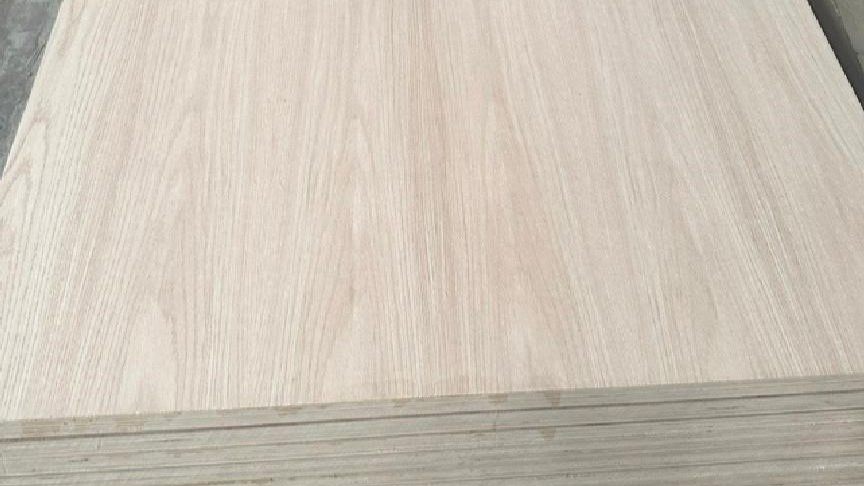
Poplar plywood has a density of 450 to 520 kg/m3, making it significantly lighter than eucalyptus. The surface is pale cream to light yellow, with a smooth, subtle grain that accepts paint and laminate finishes reliably. Its low density also makes it highly tool-friendly: poplar cuts cleanly, routes without significant tool wear, and is one of the easiest plywood materials to machine at volume. It is the default core in a large proportion of commercial plywood used for furniture manufacturing worldwide.
Density and Structural Strength: Eucalyptus vs Poplar
Eucalyptus Plywood Strength
Eucalyptus plywood’s density of 550 to 620 kg/m3 places it firmly in the medium-high range for structural plywood, approximately 20 to 30 percent denser than poplar. This density difference has direct structural consequences: eucalyptus panels resist bending under load more effectively than poplar panels of the same thickness, and they maintain their form over longer unsupported spans without deflecting.
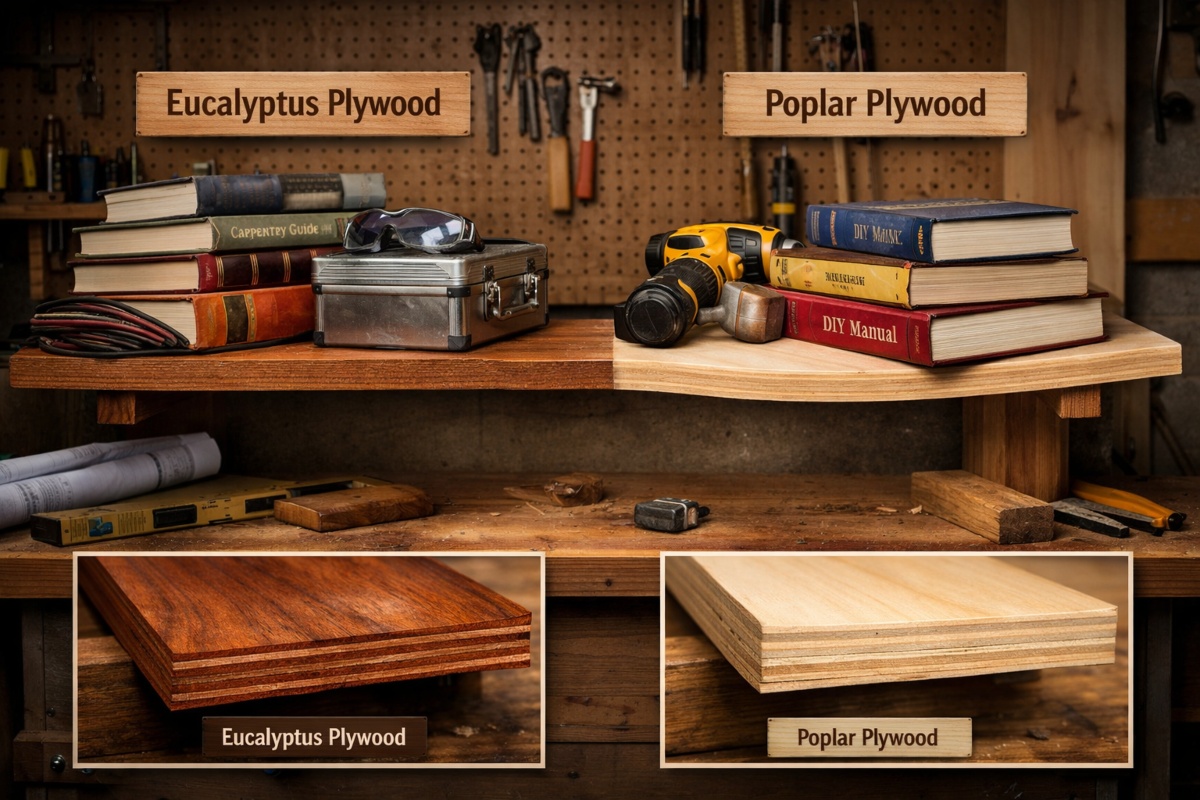
For shelving that carries sustained weight, kitchen cabinet carcasses that support heavy contents, workbench tops, and structural flooring panels, eucalyptus plywood’s density advantage over poplar is meaningful and measurable in service. A shelf made from 18 mm eucalyptus will deflect less under the same load than an 18 mm poplar shelf of equal span.
Poplar Plywood Strength
Poplar plywood provides adequate structural performance for the light to medium-load applications it is designed for. Wardrobes, flat-pack furniture, interior wall paneling, drawer components, and furniture backs are all well within poplar’s structural capability. The material should not be used for heavy-load shelving over long spans, structural flooring under regular traffic, or any application where sustained high loads will be applied.
The low density that limits poplar’s structural ceiling is also the property that makes it practical for large-scale, weight-sensitive projects. For caravans, RV interiors, ceiling panels, and flat-pack furniture where every kilogram of panel weight affects transport cost or structural load on the frame, poplar’s lightness is a genuine specification advantage.
Verdict: Eucalyptus wins on structural strength and load-bearing capacity. Poplar is adequate for light to medium-load interior furniture and delivers a meaningful weight advantage where panel weight is a practical constraint.
Screw Holding and Fastener Performance
Screw-holding performance is one of the most practically important differences between eucalyptus and poplar plywood, particularly for furniture assembly methods that rely on screw joints for structural integrity.
Eucalyptus plywood grips screws firmly across the full panel thickness. Its hardwood density means fastener threads bite into the material securely, reducing the risk of pull-out under load or loosening over time from vibration and repeated use. Hinges, drawer slides, and cabinet hardware mounted in eucalyptus plywood remain stable through years of regular use without requiring reinforcement.
Poplar plywood holds screws adequately for most standard interior furniture applications, but its lower density means screw-holding is less robust than in eucalyptus. Near panel edges and at thinner gauges, poplar is more susceptible to thread stripping if screws are over-tightened or if fasteners are repositioned repeatedly. For flat-pack furniture using cam locks, dowels, and through-bolt connections rather than direct screws into the panel, poplar’s screw-holding limitation is less relevant.
Verdict: Eucalyptus is the stronger choice where screw-holding performance matters directly, such as hinged cabinet doors, drawer slide mounting, and shelf pin holes that will be adjusted. For cam-lock flat-pack assembly, poplar is adequate.
Weight and Handling: A Practical Difference
The weight difference between eucalyptus and poplar plywood of the same thickness is significant enough to affect logistics planning, installation labor, and in some applications, the structural load the panel places on its support structure.
An 18 mm eucalyptus plywood sheet in a standard 1220 x 2440 mm format weighs approximately 30 to 33 kg, while an 18 mm poplar sheet of the same dimensions weighs approximately 24 to 26 kg. That is a consistent difference of 5 to 9 kg per sheet, which multiplies quickly across a full project: a kitchen fit-out using 40 panels involves 200 to 360 kg of additional weight if eucalyptus is used instead of poplar.
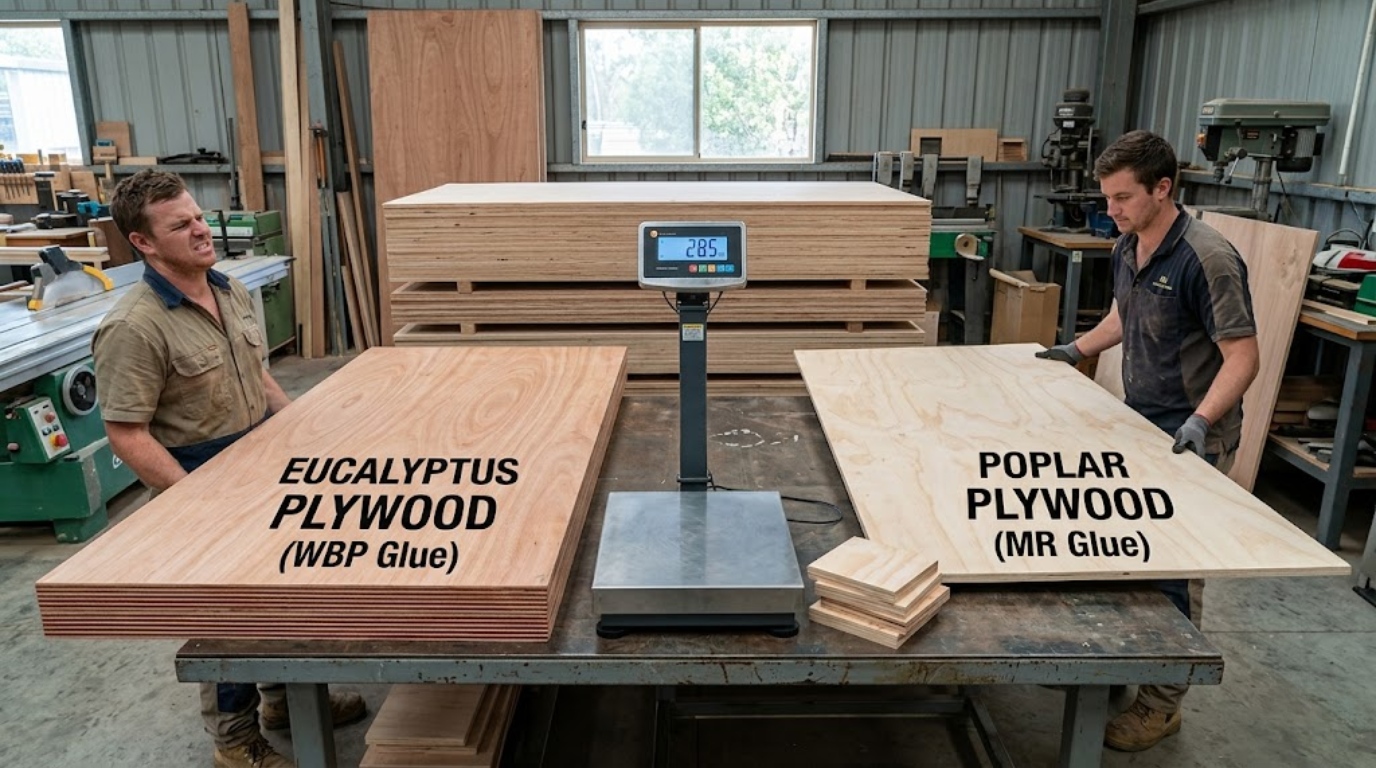
For high-volume production environments, installation teams working overhead or on ladders, and shipping calculations for export orders, the lighter weight of poplar plywood is a genuine operational advantage. For a buyer calculating landed cost of a container of panels, the weight difference between poplar and eucalyptus translates directly into shipping cost. Our standard plywood sizes guide provides standard sheet dimensions and weights for reference when planning logistics.
Verdict: Poplar wins on weight and handling ease. For large-scale production, export shipping, and applications where panel weight is constrained by structural or logistical requirements, poplar’s lighter weight is a meaningful practical advantage.
Moisture Resistance and Stability
Eucalyptus Plywood in Humid Conditions
Eucalyptus plywood’s natural oil content provides an inherent moisture barrier that most other panel species require chemical treatment or surface sealing to match. In humid interior environments such as kitchens and bathrooms, eucalyptus panels resist moisture absorption more effectively than poplar, reducing the risk of swelling, delamination, and surface degradation over time.
With WBP (Water Boiled Proof) phenolic adhesive, eucalyptus plywood is suitable for applications involving direct moisture contact and outdoor-adjacent environments. For furniture or cabinetry in high-humidity regions, or any installation where the panel may face regular moisture exposure without constant surface maintenance, eucalyptus plywood’s natural moisture resistance is a specification advantage that poplar cannot match without additional treatment.
Poplar Plywood in Humid Conditions
Poplar plywood is more reactive to humidity than eucalyptus. Its lower density and relatively open fiber structure mean it absorbs atmospheric moisture more readily, which can cause dimensional movement, surface swelling, and in sustained wet conditions, delamination or surface degradation. For dry interior applications in climate-controlled environments, poplar performs well and its stability in constant conditions is reliable.
For kitchens, bathrooms, laundry spaces, or any environment where humidity levels fluctuate or moisture contact is likely, poplar plywood requires thorough sealing and finishing on all surfaces and edges to prevent moisture-related problems. Even with sealing, poplar is a less forgiving specification in moisture-prone environments than eucalyptus. For a broader look at how moisture affects different plywood species, our plywood grades guide covers how adhesive ratings and species selection interact.
Verdict: Eucalyptus wins on moisture resistance. Its natural oils provide built-in protection that poplar requires additional treatment to approximate. For any moisture-exposed or humid-environment application, eucalyptus is the safer specification.
Workability and Machining
Working with Poplar Plywood
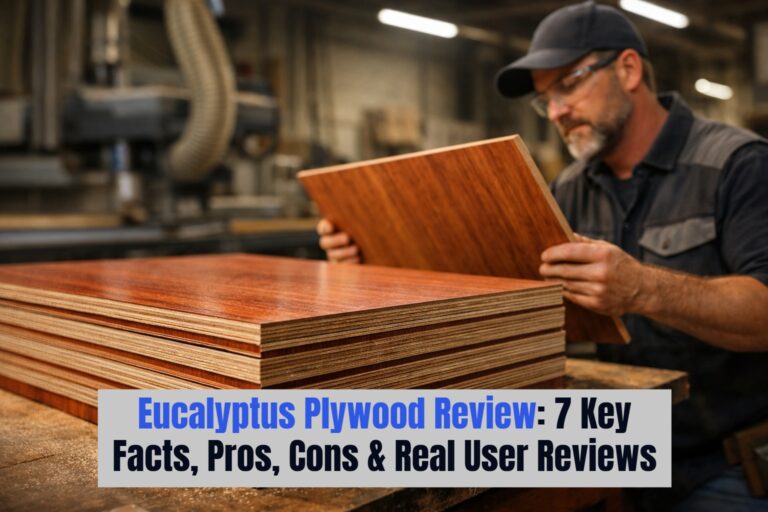
Poplar plywood is one of the most tool-friendly panel materials available. Its low density means saw blades and router bits pass through with minimal resistance, producing clean cuts with low dust and minimal tool wear. CNC routing operations on poplar plywood are fast, efficient, and produce clean edges and precise tolerances with standard tooling. For high-volume CNC furniture production where panel throughput and tool life per operation matter, poplar’s machinability is a significant advantage.
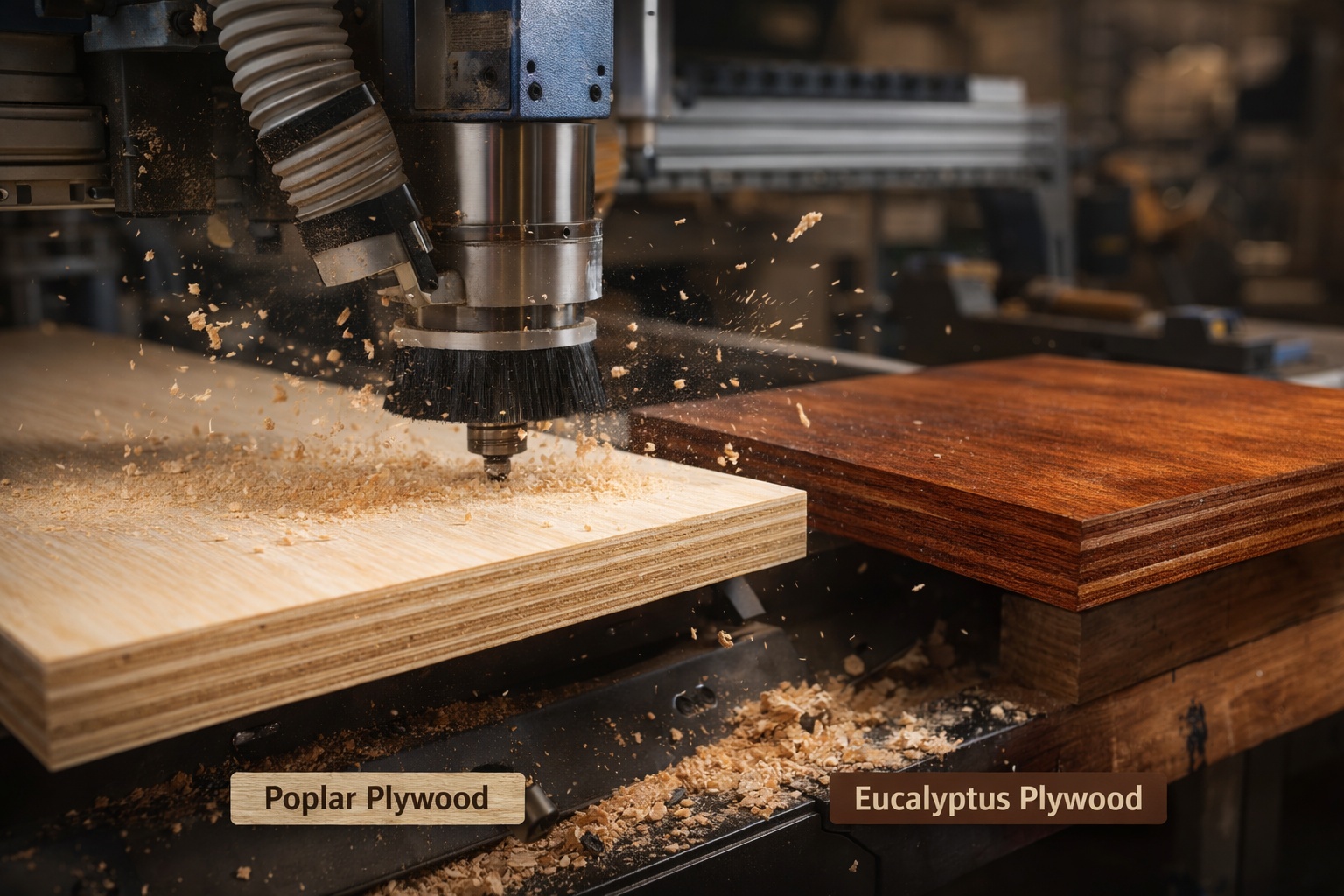
Poplar also sands smoothly, accepts glue and laminate adhesive well, and produces consistent results in edge-banding operations. For painted furniture where a perfect smooth surface is the finish goal, poplar’s fine, consistent grain is easy to prepare with minimal filling or primer coats.
Working with Eucalyptus Plywood
Eucalyptus plywood is a good workshop material that requires somewhat more attention to tooling than poplar. Its hardwood density means cutting resistance is higher, and dull blades or router bits will produce rougher cuts and more tearout than they would in poplar. Keeping tooling sharp is more important with eucalyptus than with softwood alternatives. Eucalyptus is fully suitable for CNC routing and sawing operations when sharp tooling is maintained, producing clean, precise results across standard panel operations. For CNC processing to close tolerances, our customized CNC cutting services handle eucalyptus plywood reliably.
One consideration specific to eucalyptus is that the sawdust from some eucalyptus species can cause skin or respiratory irritation in sensitive individuals. Appropriate dust extraction and personal protective equipment should be standard practice when machining eucalyptus plywood, as with any hardwood panel.
Verdict: Poplar is the more workshop-friendly material, with lower tool wear and faster processing in high-volume operations. Eucalyptus is fully capable for standard and CNC woodworking but places more demand on tooling sharpness.
Appearance and Finishing
Poplar Plywood Surface
Poplar plywood has a pale cream to light yellow surface with a smooth, fine grain and very subtle texture. This neutral, even surface is ideal for painted furniture: it requires minimal preparation, accepts primer reliably, and produces a clean painted finish without significant grain show-through. Poplar also takes laminate and veneer adhesive well, making it a common substrate for furniture panels finished with a laminated surface.
For stained natural-wood finishes, poplar’s pale color and subtle grain produce a clean result that suits light, natural tones. Deeper stain colors can produce some unevenness due to variable absorption at grain boundaries, but the risk is lower than with some harder species.
Eucalyptus Plywood Surface
Eucalyptus plywood has a warm reddish-brown surface with a more pronounced, interlocking grain pattern. As a finished natural surface, it has a distinctive, bold appearance suited to rustic, tropical, and warm contemporary design aesthetics. For furniture or cabinetry where the natural wood grain is a design feature, eucalyptus plywood’s visual character is an asset. For projects where a neutral, receding surface is required, the bold grain can be more visual presence than the design calls for.
For painted applications, eucalyptus plywood performs well with proper surface preparation. The natural oils require a light sand before priming to ensure adhesion, but the finished painted result is clean and consistent. For stained finishes, eucalyptus absorbs stain evenly, making it more forgiving than some other hardwood species. For detailed finishing guidance on similar hardwood panels, see our how to finish birch plywood guide, which covers techniques transferable to eucalyptus.
Cost Comparison: Eucalyptus vs Poplar Plywood
Poplar plywood is consistently the lower-cost option. As the dominant core species in commercial furniture plywood manufacturing, poplar benefits from the most developed global supply chain, the largest production volumes, and the most competitive pricing. For budget-sensitive projects, poplar is the natural default: it delivers adequate performance for a wide range of interior applications at the lowest material cost per sheet.
Eucalyptus plywood sits in the mid-range: more expensive than poplar, but typically 20 to 30 percent less expensive than birch plywood of equivalent grade. The additional cost over poplar reflects the higher density timber, the greater structural performance per sheet, and the natural moisture resistance that reduces the need for additional treatment. For projects where eucalyptus’s performance properties are genuinely needed, the cost premium over poplar represents good value. For projects where poplar’s performance is adequate, paying the eucalyptus premium adds cost without proportional benefit.
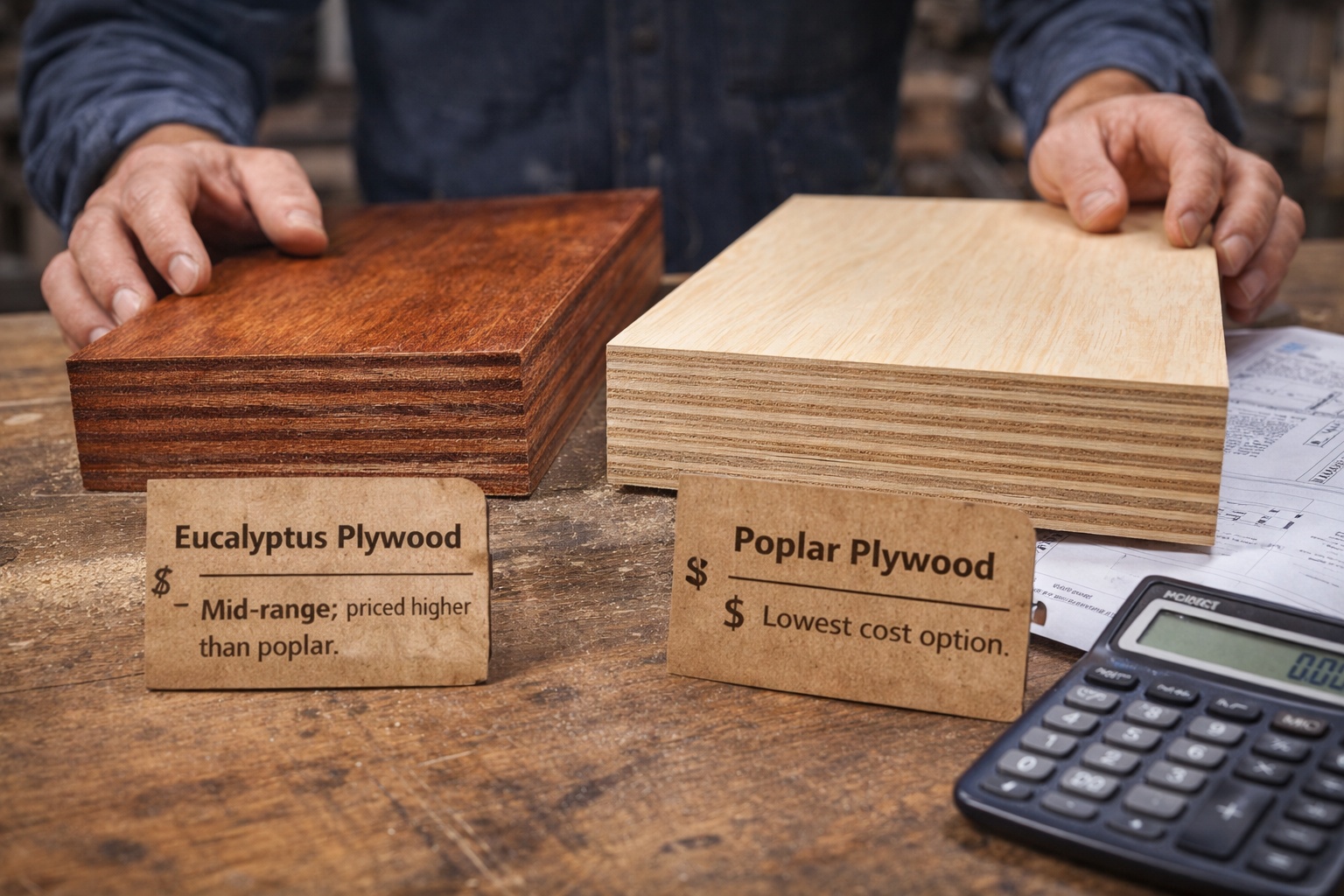
Many experienced furniture manufacturers use a mixed approach: poplar core for general interior components such as wardrobe sides, furniture backs, and secondary shelves, and eucalyptus core for high-stress areas such as kitchen cabinet carcasses, load-bearing shelves, and drawer bases in heavy-use items. This approach manages material cost while directing the structural premium where it delivers the most value. For sourcing guidance on each material, explore our plywood suppliers near me guide for regional availability context.
Verdict: Poplar wins on cost. For budget-constrained projects and applications within poplar’s structural capability, it is the most economical panel choice. Eucalyptus’s cost premium is justified when its structural performance or moisture resistance is genuinely needed.
Combi Core Plywood: The Hybrid Alternative
For buyers who need to balance the strength of eucalyptus with the weight and cost efficiency of poplar, combi core plywood, also referred to as twin-core or hybrid core plywood, offers a practical middle ground. Combi core panels alternate eucalyptus and poplar veneer layers through the panel construction: the eucalyptus layers contribute density, screw-holding strength, and structural rigidity, while the poplar layers reduce overall panel weight and cost.
The result is a panel with density and structural performance between pure poplar and pure eucalyptus, at a weight and cost point that is also intermediate between the two. Combi core plywood is particularly popular for kitchen furniture carcasses and office furniture, where the full strength premium of eucalyptus is not required but poplar alone would be underspecified for the load and usage conditions.
A further advantage of combi core construction is improved panel flatness. Eucalyptus is stiffer and more prone to movement when exposed to humidity fluctuations. The poplar layers in a combi core panel act as a buffer, absorbing some of the tension generated by the eucalyptus plies when moisture levels change, which helps the panel maintain flatness better through export shipping and installation in variable humidity conditions.
When to Choose Eucalyptus vs Poplar Plywood?
Choose Eucalyptus Plywood When:
- The application involves sustained loads: heavy shelving, kitchen cabinet carcasses, structural flooring, workbench tops, or furniture designed for commercial use
- The installation environment involves humidity, moisture contact, or outdoor-adjacent conditions such as kitchens, bathrooms, covered terraces, or high-humidity climates
- Screw-holding and hardware mounting performance matter directly, such as hinged cabinet doors, adjustable shelf pin holes, and drawer slide attachment points
- A warm, natural reddish-brown grain is acceptable or desirable as a design feature
- The project requires a mid-range material that outperforms poplar structurally without reaching the cost of birch plywood
Choose Poplar Plywood When:
- The application is light to medium-load interior furniture: wardrobes, standard cabinets, decorative panels, furniture backs, and drawer components in moderate-use environments
- Panel weight is a constraint: caravan and RV interiors, ceiling panels, large-volume flat-pack furniture, or export shipments where container weight affects freight cost
- Budget is the primary driver and the structural requirements of the application are within poplar’s capabilities
- A smooth, neutral pale surface is required for painted, laminated, or light-stained finishes
- High-volume CNC production where low tool wear and fast machining throughput reduce operating costs
- Film faced plywood or anti-slip panels are needed for construction use: these are typically eucalyptus-core, not poplar
Frequently Asked Questions
Which is better: poplar or eucalyptus plywood?
Neither is universally better. Eucalyptus plywood is better for structural applications, moisture-exposed environments, and heavy-load furniture. Poplar plywood is better for lightweight interior furniture, budget-sensitive projects, and high-volume production where tool wear and panel weight are practical constraints. The right choice depends on the specific structural and environmental demands of the project.
Is eucalyptus wood good for plywood?
Yes. Eucalyptus is an excellent plywood species. Its medium-high density delivers structural strength above softwood panels, its natural oil content provides built-in moisture resistance, and its fast plantation growth supports a renewable, cost-effective supply chain. It is increasingly used as a cost-effective alternative to birch plywood in furniture and construction applications. See our eucalyptus plywood properties overview for detailed specification data.
What are the disadvantages of eucalyptus wood?
The main disadvantages of eucalyptus plywood are its higher cost and greater weight compared to poplar plywood, the greater demand it places on cutting tooling compared to softer species, and the need to prepare the surface properly before applying oil-based adhesives or finishes due to its natural oil content. Some eucalyptus species also produce sawdust that can irritate sensitive individuals, making dust extraction equipment essential.
What are the disadvantages of poplar plywood?
Poplar plywood’s main disadvantages are its lower structural strength relative to hardwood panels, its susceptibility to moisture-related issues without adequate sealing, and its limited screw-holding capacity near edges and at thinner gauges. It is not appropriate for heavy-load applications or moisture-exposed environments where a denser, more resistant panel is needed.
Can poplar plywood be used for kitchen cabinets?
Poplar plywood can be used for kitchen cabinet carcasses in less demanding applications, but it requires thorough sealing on all surfaces and edges to manage moisture exposure, and it is not the ideal specification for kitchens with heavy contents or sustained humidity. For kitchen cabinetry where long-term dimensional stability and moisture resistance matter, eucalyptus plywood or a combi core with eucalyptus layers is a stronger specification.
What is combi core plywood?
Combi core plywood uses alternating eucalyptus and poplar veneer layers through the panel construction, balancing the structural strength and density of eucalyptus with the lighter weight and cost efficiency of poplar. It is a popular middle-ground specification for kitchen furniture, office desks, and cabinetry where full eucalyptus strength is not required but poplar alone would be underspecified.
Conclusion
Eucalyptus plywood and poplar plywood serve different points on the performance and cost spectrum, and understanding where each material belongs prevents the two most common specification mistakes: using poplar where eucalyptus’s strength or moisture resistance is genuinely needed, or paying for eucalyptus in applications where poplar would perform adequately at a lower cost and weight.
Eucalyptus plywood is the right choice for structural furniture, humid environments, and applications where load-bearing capacity and screw-holding strength are primary requirements. Poplar plywood is the right choice for lightweight interior furniture, budget-sensitive projects, and high-volume production where tool efficiency and panel weight are practical factors.
For projects that need a balance between the two, combi core plywood, and for construction applications, our range of anti-slip film faced plywood with eucalyptus cores, offer engineered solutions designed to match specific performance requirements without overpaying for properties the application does not need. Explore our types of plywood complete guide to compare the full range of panel options available for your next project.


Bình luận