


Hardwood Plywood: Complete Guide to Types, Grades, and Buying Smart
Hardwood plywood is the backbone of high-quality furniture, cabinetry, interior fit-out, and architectural millwork. But not all hardwood plywood is the same, and the differences matter enormously when you are sourcing at scale for manufacturing or construction projects.
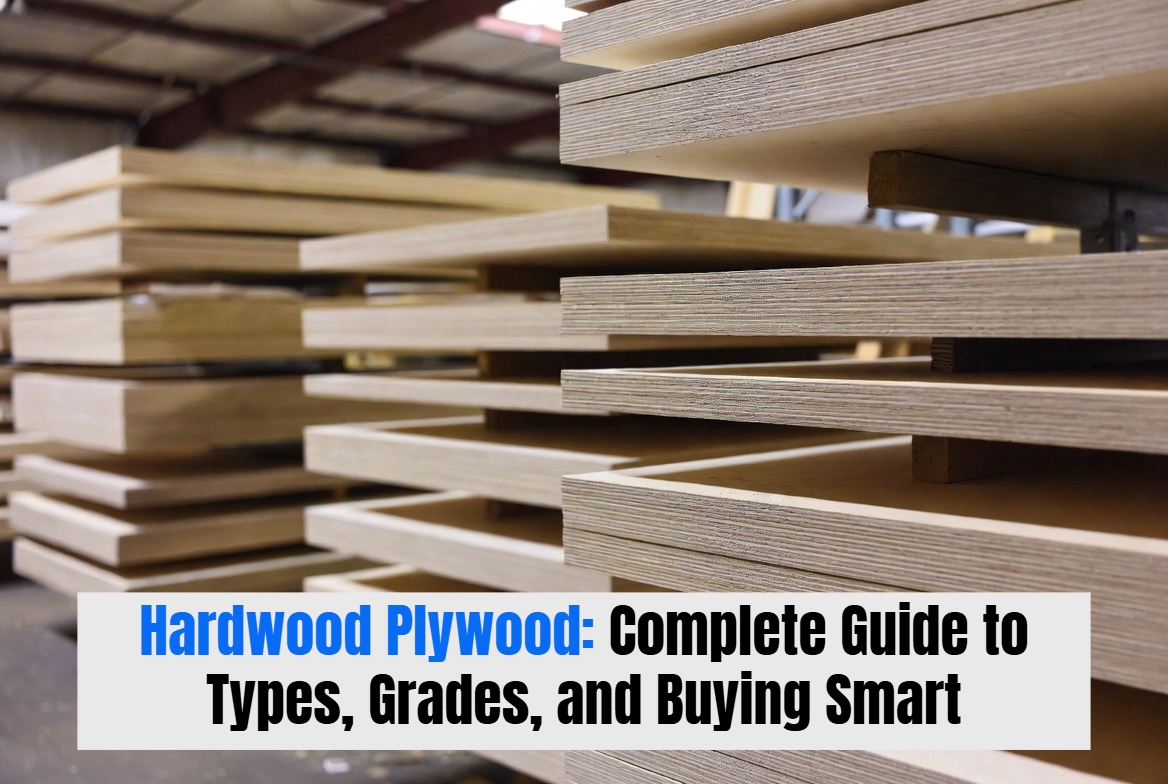
This guide explains what hardwood plywood actually is, how it differs from softwood plywood, how to read grades, which species perform best for different applications, and how to source reliably from Asia, particularly from Vietnam, where much of the world’s hardwood plywood is now manufactured.
What Is Hardwood Plywood?
Hardwood plywood is a panel product made from thin layers (veneers) of hardwood timber, bonded together with adhesive and pressed under heat and pressure. The veneers are oriented with alternating grain direction, which is the defining structural feature of all plywood, giving the panel balanced strength properties in both directions and resistance to warping.

The term “hardwood” in plywood refers primarily to the species used for the face and back veneers, which are the outermost layers visible on the finished panel. Common face veneer species include birch, oak, maple, walnut, cherry, and in Asian-produced plywood, eucalyptus, meranti, and rubberwood.
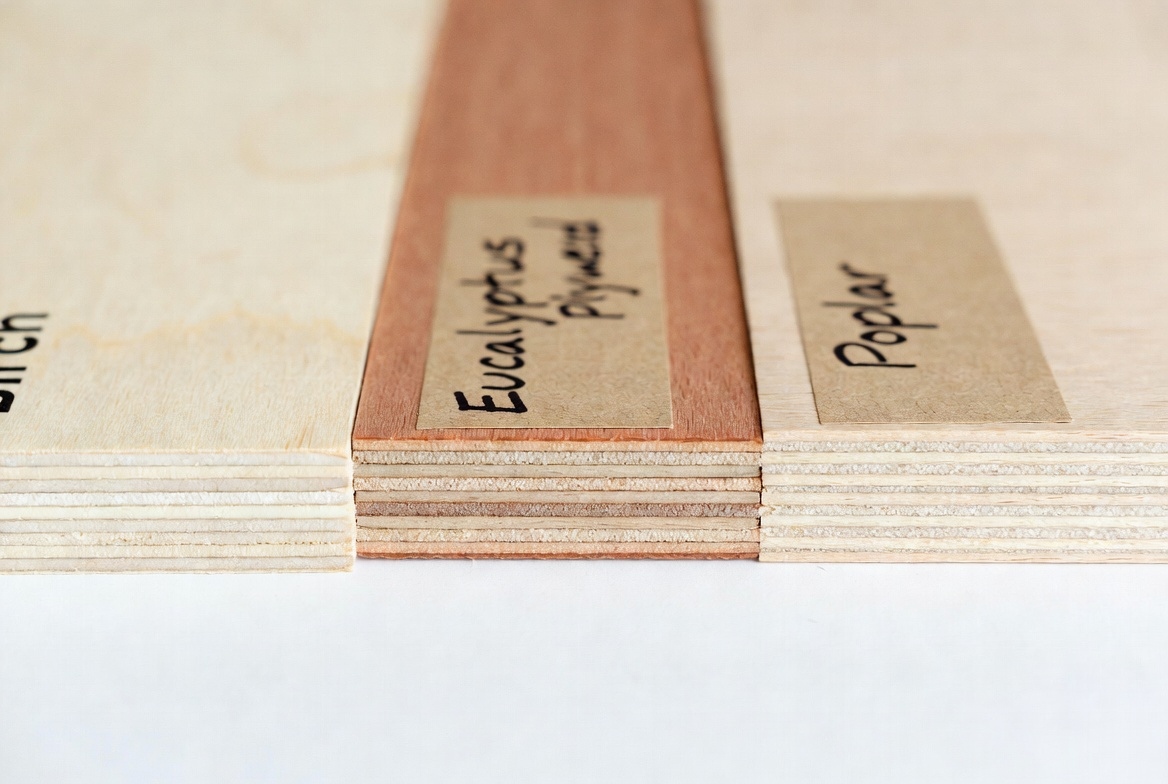
The core veneers, which make up the bulk of the panel thickness, may be the same species as the face or a different, less expensive species chosen for its dimensional stability and availability. In Vietnamese-produced hardwood plywood, the core is typically eucalyptus or poplar.
Hardwood plywood is distinguished from softwood plywood by its face species and, importantly, by its intended use. Hardwood plywood is designed for furniture, joinery, cabinetry, and decorative applications where surface appearance, paintability, and machinability are priorities. Softwood plywood, made from species such as pine and spruce, is designed primarily for structural applications such as roofing, flooring, and wall sheathing.
Hardwood Plywood vs. Softwood Plywood: Key Differences
Understanding the distinction helps you specify the right product and avoid costly substitution errors.
Surface Quality
Hardwood plywood faces are graded for appearance and are typically sanded smooth to a consistent thickness. The face veneer is selected or sorted for grain consistency, knot content, and color uniformity according to the grade specification.
Softwood plywood faces are not held to the same appearance standards. They may have filled knot holes, rough surfaces, and significant grain variation that is acceptable for structural but not decorative applications.
Machinability
Hardwood species are denser and more uniform in cell structure than most softwood species. This means hardwood plywood machines more cleanly: edges are crisper when cut on a table saw or CNC router, faces sand more smoothly, and joinery such as dadoes and rabbets hold tighter tolerances.
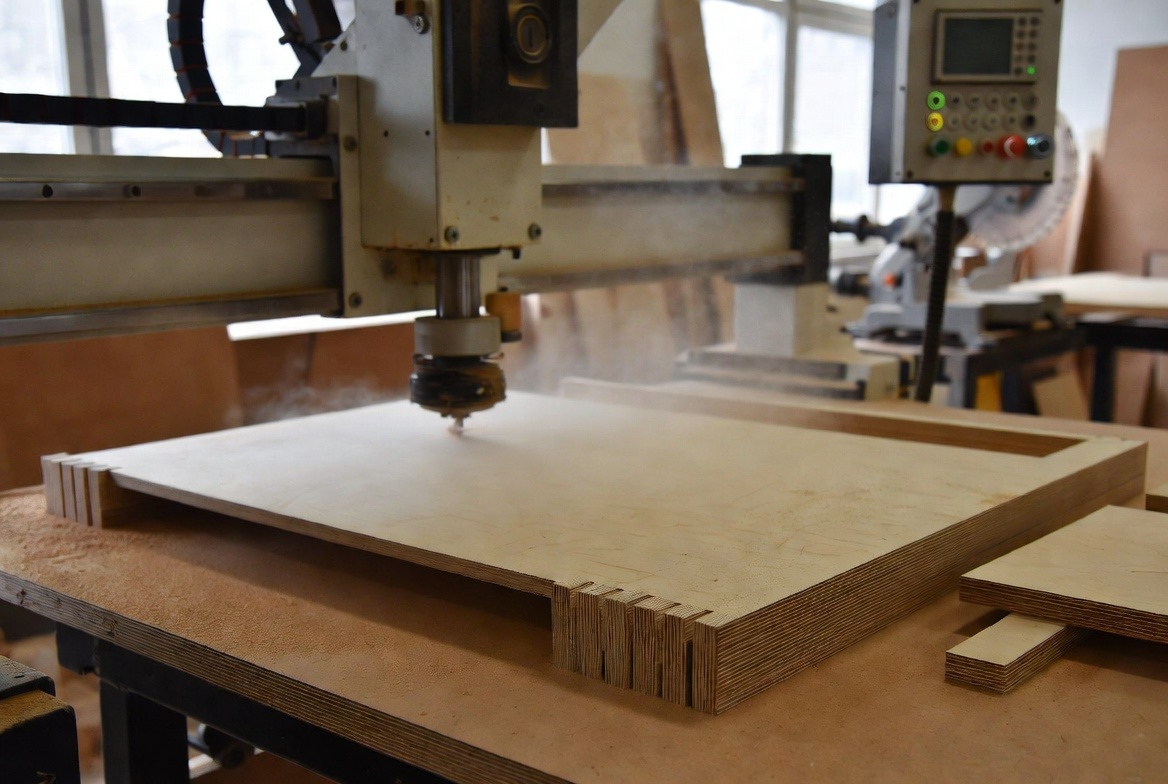
Cabinet and furniture manufacturers specify hardwood plywood precisely because it machines to a quality that softwood plywood cannot match.
Glue Specification
Hardwood plywood for interior furniture and cabinetry is typically manufactured with urea-formaldehyde (UF) or melamine-urea-formaldehyde (MUF) glue, which is classified as interior or Class 2 bond. This is acceptable for interior dry conditions but not for applications with sustained moisture exposure.
For exterior or high-humidity applications, specify hardwood plywood with WBP phenolic glue (Class 3 bond), which is the same glue used in formwork and marine plywood.
Dimensional Stability
Because hardwood veneers are denser and typically thinner than softwood structural veneers, hardwood plywood panels tend to be more dimensionally stable and less prone to cupping and warping in service.
Common Hardwood Plywood Species
Birch Plywood
Baltic birch plywood, produced primarily in Russia, Finland, and the Baltic states, is the premium standard for hardwood plywood in furniture and cabinetry. For a comprehensive overview of birch plywood properties, grades, and applications, see our complete guide to birch plywood. It is characterized by very thin, uniform veneers (typically 1.5mm), a void-free or near-void-free core, and smooth, consistent face surfaces.
Birch plywood machines exceptionally cleanly and holds screw fasteners better than most alternatives due to its high density (approximately 680 kg/m3). It is the preferred choice for CNC-routed furniture components, speaker boxes, stage flooring, and any application requiring tight tolerances and clean edges.
Russian Baltic birch has faced supply disruptions since 2022 due to trade sanctions. European and Asian alternatives, including Finnish birch and Vietnamese-manufactured birch plywood, have gained market share.
Eucalyptus Plywood
Eucalyptus is a fast-growing plantation hardwood widely grown in Vietnam, Brazil, and other tropical regions. Eucalyptus plywood has a high density (700-800 kg/m3), excellent bending strength, and good natural moisture resistance.
Vietnamese eucalyptus plywood has found strong demand in European markets as an alternative to Baltic birch for structural and semi-structural furniture applications. It is typically less expensive than birch while offering comparable or superior bending strength, making it particularly attractive for furniture that needs to bear loads such as shelving, bed slats, and table components.
Its limitation for premium cabinetry is its face veneer appearance: eucalyptus grain is less uniform than birch, which limits its use where a consistent, clean face appearance is required. For a detailed review, see our eucalyptus plywood review, eucalyptus vs poplar plywood comparison, and eucalyptus plywood vs birch plywood guide.
Oak Plywood
Oak plywood has a distinctive grain pattern that is highly valued in furniture and interior design. Face veneers are typically European or American white oak, rotary-cut or sliced to various visual effects.
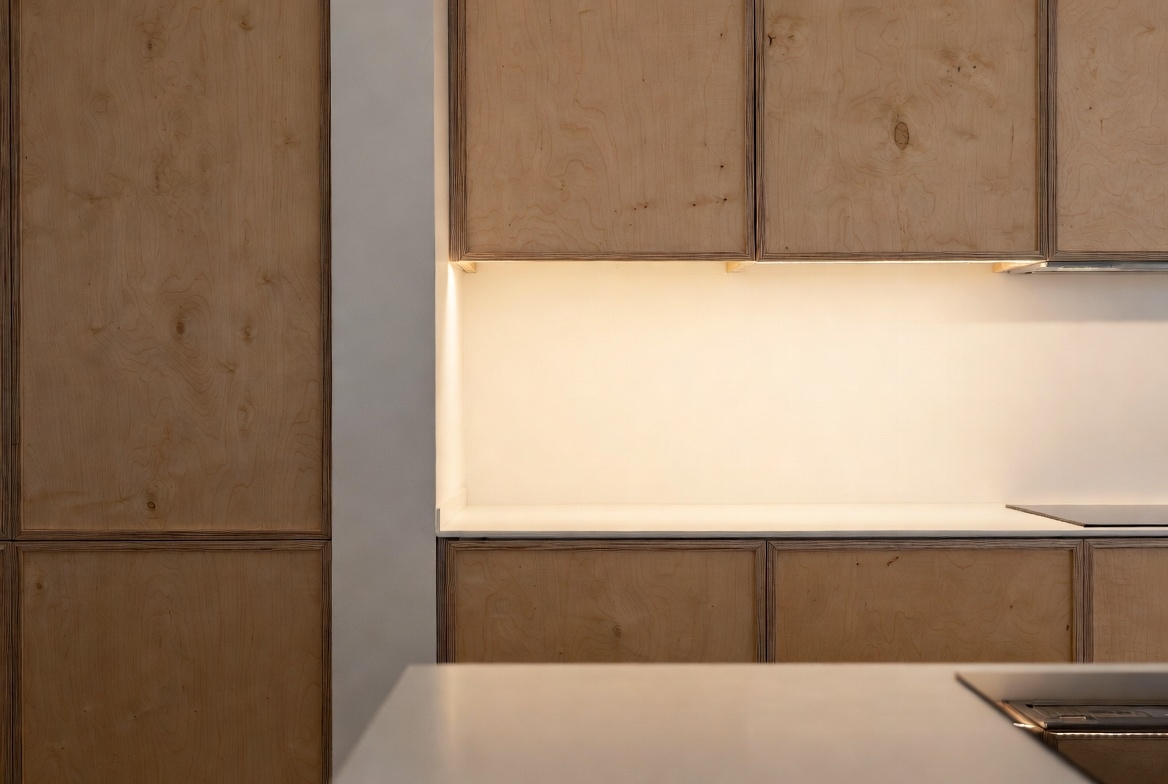
Oak plywood is primarily used where the wood grain appearance is a design feature rather than a neutral substrate, such as in high-end kitchen cabinetry, wall paneling, and architectural joinery.
Poplar Plywood
Poplar is a light, fast-growing hardwood used both as a face veneer and, more commonly, as a core species. Poplar-core plywood is significantly lighter than eucalyptus-core plywood, which makes it attractive for furniture applications where weight is a consideration, such as drawer boxes, back panels, and cabinet carcasses.
Poplar face plywood is clean and white with minimal visible grain, making it an excellent paint-grade substrate where a smooth, neutral surface is required.
Meranti / Lauan Plywood
Meranti (also sold as lauan or Philippine mahogany) is a tropical hardwood species group widely used in Asian plywood production for both face veneers and core material. It has a reddish-brown appearance and moderate density.
Meranti plywood is widely used in Southeast Asia and exported globally as a general-purpose hardwood panel for furniture, interior construction, and door manufacturing. It is less expensive than birch or oak but does not machine to the same quality level.
Hardwood Plywood Grades
Grading systems for hardwood plywood vary by region. The two most commonly encountered systems are the North American HPVA grading system and the European EN 635 system.
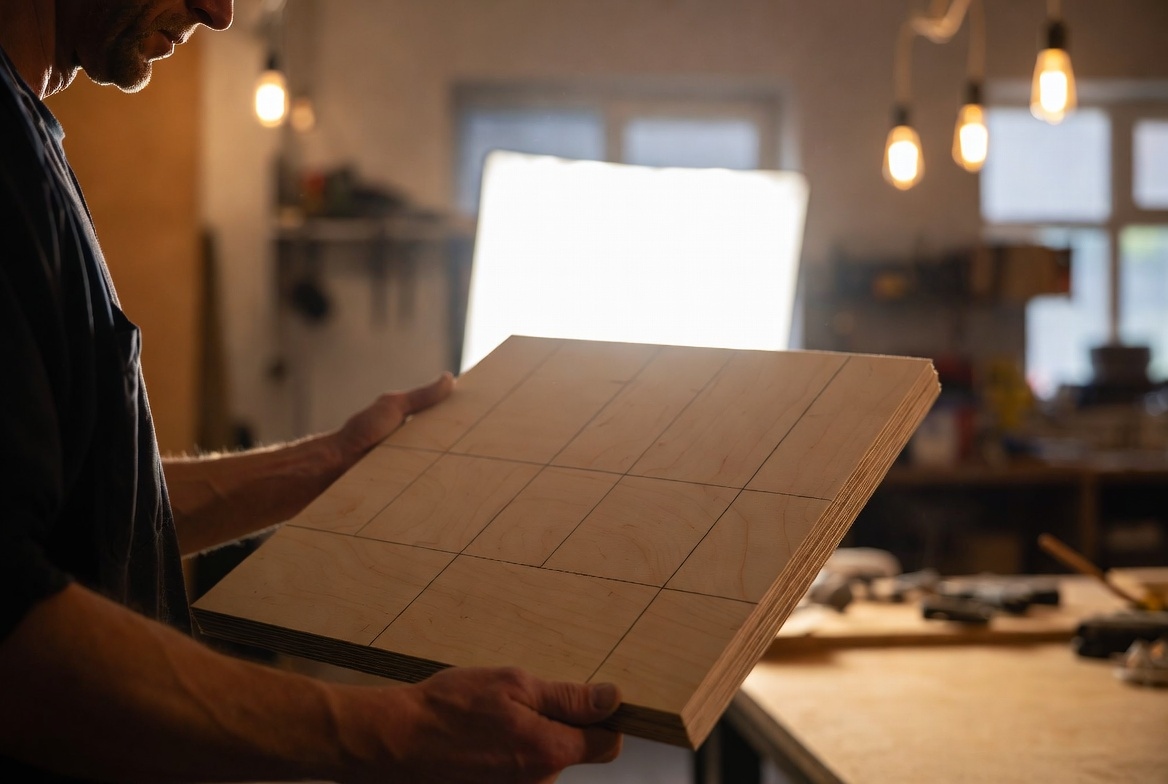
North American HPVA Grading (ANSI/HPVA HP-1)
Face and back veneers are graded separately using letters:
Grade A: Premium face, smooth rotary or plain-sliced veneer, carefully matched at joints. Suitable for clear finish or stain applications. Limited repairs permitted.
Grade B: Solid and tight face veneer. Repairs are permitted. Suitable for paint grade applications where a smooth substrate is required but grain appearance is not critical.
Grade C: Open defects permitted (small knot holes, splits). Used for back faces and concealed panels in furniture.
Grade D: Largest permitted defects. Used for concealed inner plies and back faces in lower-grade panels.
A typical hardwood plywood grade designation might be A-1 or B-2, where the first letter indicates the face grade and the second indicates the back grade.
European EN 635 Grading
European hardwood plywood is graded under EN 635, using numeric designations:
E (Elite): Best quality, for premium decorative applications I (Class 1): High quality for clear finishes II (Class 2): Good quality, limited repairs, for paint grade and veneered applications III (Class 3): Visible defects permitted, structural or concealed applications IV (Class 4): Largest defects permitted, generally for core or structural use
For furniture and cabinetry procurement, Class I/II or Grade A/B face veneers are the standard specification for visible surfaces, with Class II/III or Grade C for concealed surfaces.
Hardwood Plywood Thicknesses and Panel Sizes
Standard hardwood plywood comes in a range of thicknesses to suit different applications:
| Thickness | Typical Application |
|---|---|
| 3mm | Back panels, drawer bottoms |
| 6mm | Light-duty shelf backs, decorative panels |
| 9mm | Drawer sides, light shelving |
| 12mm | Shelving, cabinet backs, medium-duty components |
| 15mm | Cabinet sides, door cores, worktops |
| 18mm | Cabinet carcasses, table tops, furniture frames |
| 21mm / 25mm | Heavy-duty furniture, structural components |
Standard panel sizes are 1220 x 2440mm (4ft x 8ft) for the international market and 1250 x 2500mm for European metric production. Jumbo sizes of 1525 x 3050mm are available from some suppliers for applications requiring fewer joints.
Where Is Hardwood Plywood Manufactured?
Baltic Region (Russia, Finland, Estonia, Latvia)
Historically the leading source of premium birch plywood. Russian production has been significantly disrupted by sanctions since 2022. Finnish and Baltic producers continue to supply European markets but at higher price points.
China
China is the world’s largest producer and exporter of hardwood plywood. Chinese production covers a wide quality range, from commodity-grade export plywood to higher-quality products for furniture manufacturing. European buyers have traditionally required CE certification and formaldehyde emission testing (E1 or E0 class) for Chinese products.
Vietnam
Vietnam has grown rapidly as a hardwood plywood producer and exporter over the past two decades. Vietnamese manufacturers benefit from large eucalyptus plantation resources, competitive manufacturing costs, and improving quality standards.
Leading Vietnamese plywood manufacturers now hold CE certification, FSC chain-of-custody certification, and produce to European E1 formaldehyde emission standards. This has enabled Vietnamese hardwood plywood to penetrate European construction and furniture markets, particularly following supply disruptions from Russia.
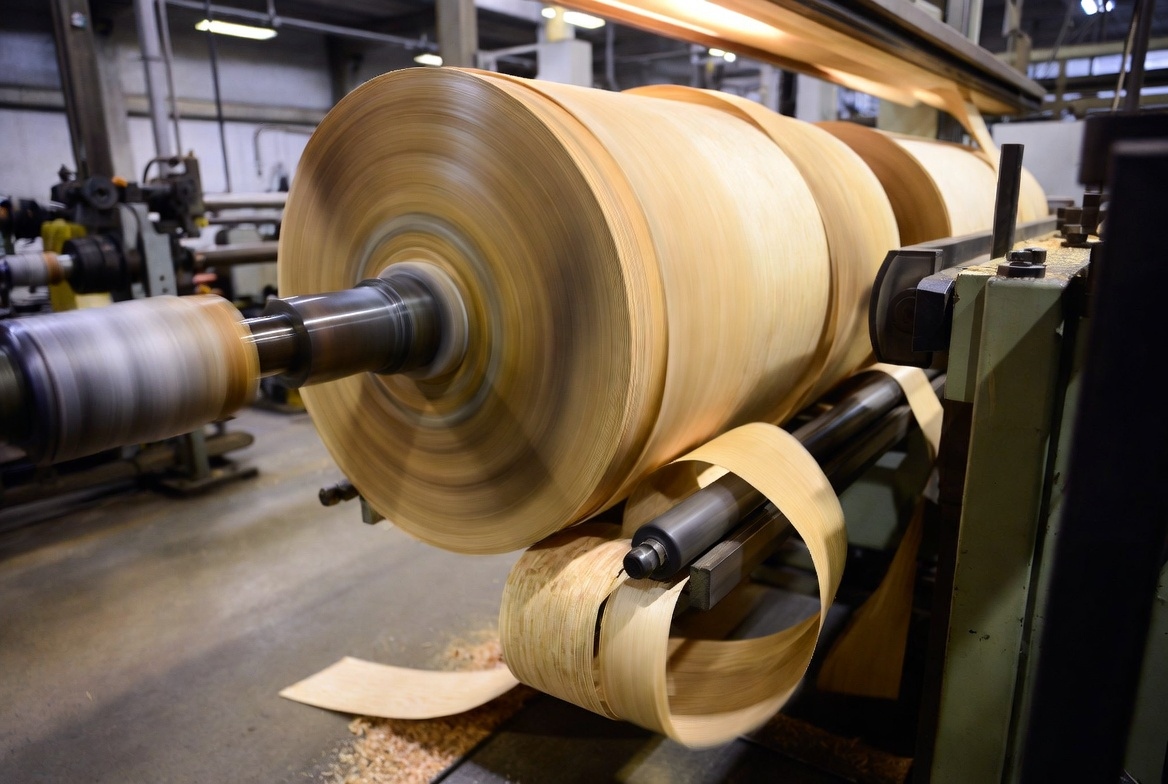
The main species produced in Vietnam are eucalyptus and poplar core panels, often with eucalyptus face veneers. Birch-faced panels are also produced in Vietnam using imported birch veneer from Europe or Russia.
Indonesia and Malaysia
These countries produce significant volumes of tropical hardwood plywood using meranti and other local species. Sustainability concerns have historically limited market access for tropical hardwood plywood in European markets, where FSC or PEFC certification is increasingly required.
How to Source Hardwood Plywood from Vietnam
Vietnam represents a compelling sourcing option for buyers in Europe, Australia, the Middle East, and Asia who want quality hardwood plywood at competitive prices.
Verify Certifications
The most important certifications to verify for Vietnamese hardwood plywood entering European markets are:
CE Marking (EN 13986): Required for panels used in EU construction applications. CE marking must be supported by an initial type test from a notified body and ongoing factory production control. Verify the certificate on the issuing notified body’s official register.
FSC or PEFC Chain of Custody: Required by many European buyers for sustainability compliance. Verify the certificate code on the FSC or PEFC public database.
Formaldehyde Emission (E1 class): European regulations (EU Construction Products Regulation) require E1 (less than 0.1 ppm formaldehyde emission) or better. Request recent test reports from accredited laboratories.
EN 314-2 Glue Bond Class: For any application with moisture exposure, specify Class 3 glue bond and request test reports confirming compliance.
Request a Sample Pack
Before committing to a container order, request a sample pack including:
- Full-size panels in the specified thickness for inspection
- Cross-section samples to verify veneer thickness uniformity and core construction
- Test reports for bending strength, glue bond, and formaldehyde emission
Reputable manufacturers will provide this without charge for genuine buyers.
Evaluate Core Construction
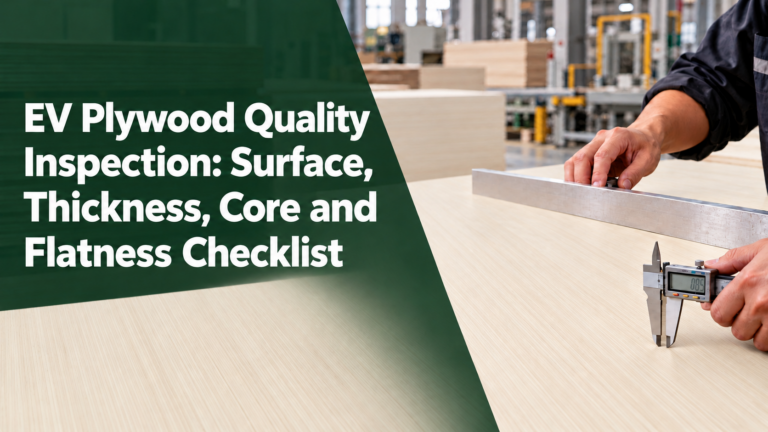
Cut a cross-section and examine the panel under good lighting. Look for:
- Consistent veneer thickness throughout the panel
- No large core gaps or voids at veneer joints
- Tight, well-bonded glue lines with no delamination
- Face veneers that are smooth, uniform, and free from surface defects
Specify Clearly
A complete purchase specification for hardwood plywood should include:
- Panel size and thickness with tolerance
- Face and back veneer species and grade
- Core species
- Number of plies (minimum)
- Glue bond class
- Formaldehyde emission class
- Surface finish (sanded, calibrated thickness tolerance)
- Certifications required
- Moisture content at shipment
Hardwood Plywood vs. MDF: When to Choose Each
Medium-density fiberboard (MDF) is the main competing substrate for hardwood plywood in furniture and cabinetry manufacturing. The choice between them depends on the application requirements.
For a detailed head-to-head comparison, see our guide on birch plywood vs MDF.
Choose hardwood plywood when:
- Screw holding strength is important (plywood holds fasteners 2-3x better than MDF)
- Weight is a concern (plywood is lighter than MDF at equivalent thickness for most species)
- Edges will be visible and machined (plywood edges can be finished with edge banding)
- Moisture resistance is important (MDF swells significantly when wet)
- The application involves bending or curved forms
Choose MDF when:
- An absolutely flat, smooth paint surface is required
- Intricate CNC routing of decorative patterns is planned (MDF machines very smoothly with no grain)
- Cost minimization is the priority for concealed components
- Panel stability is critical and moisture is not a factor
Frequently Asked Questions
What is the best hardwood plywood for cabinet making? Baltic birch is the traditional premium choice for CNC cabinet components due to its void-free core and consistent veneer thickness. Vietnamese eucalyptus plywood is an increasingly common alternative, particularly for structural cabinet components where cost is a factor.
Is hardwood plywood waterproof? Standard hardwood plywood made with Class 2 (interior) glue is not waterproof and should not be used in wet conditions. For moisture-resistant applications, specify plywood with WBP phenolic glue (Class 3 bond). Even with Class 3 glue, plywood is water-resistant rather than truly waterproof; prolonged immersion will eventually damage any wood-based panel.
How do I know if hardwood plywood is formaldehyde safe? Request a test report confirming the panel meets E1 formaldehyde emission class (less than 0.1 ppm) or better, tested to EN 717-1 or equivalent. CARB Phase 2 compliance is the equivalent standard for panels sold in the US market.
Why is hardwood plywood more expensive than softwood plywood? Hardwood species generally grow more slowly and are less abundant than plantation softwoods, increasing raw material costs. The manufacturing process for appearance-grade hardwood plywood also involves more careful veneer selection, sorting, and finishing steps.
Can I use hardwood plywood outdoors? Only if the panel is manufactured with exterior-grade (Class 3) phenolic glue bond and the face veneers are treated or protected with a suitable exterior finish. Even then, prolonged direct exposure to rain and sunlight will degrade the face veneer. For genuinely outdoor structural applications, consider film faced plywood or marine plywood.
Summary
Hardwood plywood is the material of choice for furniture, cabinetry, and interior joinery applications where surface quality, machinability, and dimensional stability matter. The key decisions are species (birch for premium applications, eucalyptus for structural value), grade (A or I for visible surfaces), and glue bond class (Class 3 for any moisture exposure).
Vietnam is a well-established and competitive source of quality hardwood plywood, particularly eucalyptus-core panels, for European and global markets. Buyers sourcing from Vietnam should verify CE certification, formaldehyde emission compliance, and glue bond class with third-party test reports before committing to supply agreements.
With clear specifications and verified suppliers, hardwood plywood from Vietnam can offer a significant cost advantage over European production without compromising on the quality parameters that matter for furniture and construction applications.
To explore Kosmex’s range of Vietnamese hardwood plywood, visit our commercial plywood page, birch plywood page, or contact us to discuss your requirements. For detailed sourcing guidance, see our guide on plywood manufacturers in Vietnam.
Bình luận