


How to Import Plywood from Vietnam to Europe: HS Codes, Duties & Logistics
Vietnam is one of the world’s leading plywood exporters, and for EU buyers it offers a compelling combination of competitive pricing, EVFTA duty advantages, and CE-compliant product availability. Yet first-time importers consistently encounter the same friction points: which HS codes apply, what duties are payable, which shipping terms make sense, and how to handle the new EUDR documentation requirements.

This guide walks through every step of importing plywood from Vietnam to Europe, from product classification to customs clearance.
Step 1: Classify Your Product Correctly (HS Codes)
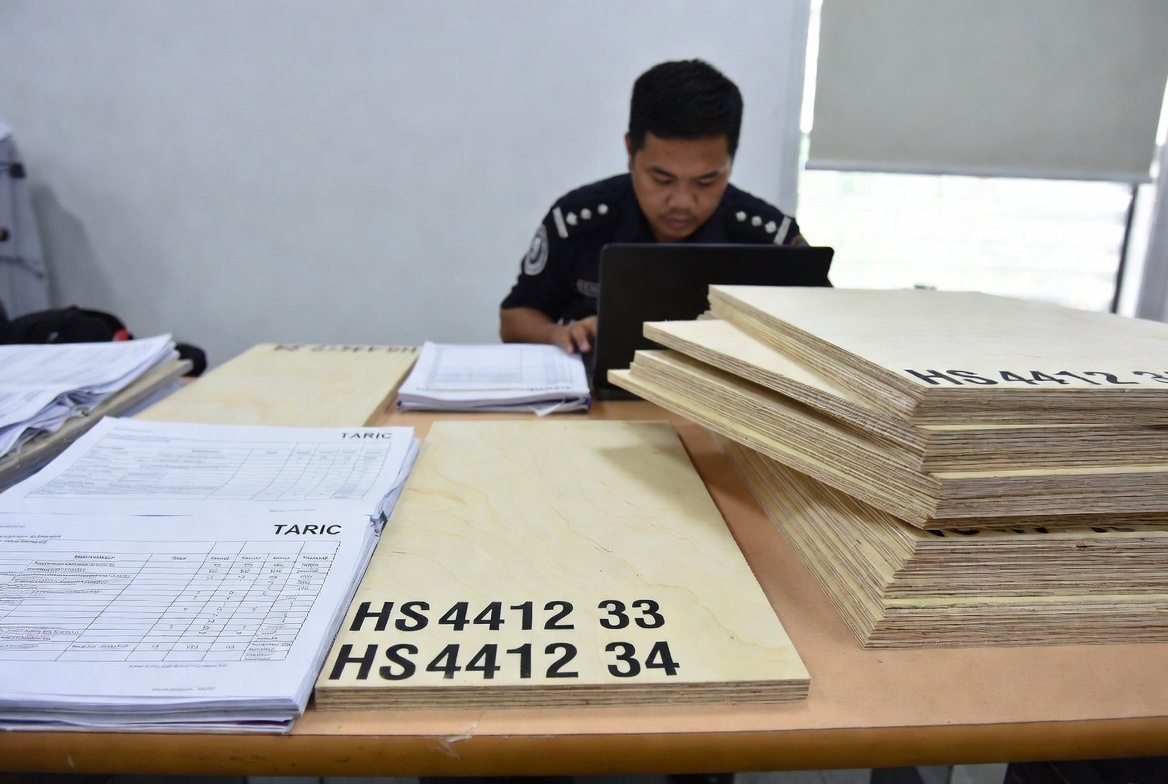
The correct HS code determines your import duty rate, anti-dumping exposure, and EUDR documentation obligations. Plywood from Vietnam falls under Chapter 44 of the Harmonized System.
Key HS Codes for Plywood
| HS Code | Product Type | Notes |
|---|---|---|
| 4412 10 | Plywood of bamboo | Separate category |
| 4412 31 | Plywood, at least one outer ply of tropical wood | Meranti, virola, obeche, etc. |
| 4412 33 | Plywood, outer ply of non-coniferous wood (non-tropical) | Birch, eucalyptus, acacia, rubber wood |
| 4412 34 | Other plywood, outer ply of non-coniferous wood | Mixed core panels |
| 4412 39 | Other plywood | Coniferous outer ply |
For Kosmex’s core products:
- Film faced plywood (eucalyptus or acacia core): typically 4412 33 or 4412 34
- Commercial plywood (rubber, acacia, eucalyptus): 4412 33
- Bed slats (rubber wood): classified as 4421 (other articles of wood) or 9404 (bedding and similar furnishing) depending on finished form
Always confirm the exact 8-digit EU TARIC code with your customs broker before the first shipment. Misclassification is the most common cause of customs delays and retroactive duty assessments.
Step 2: Calculate Your Import Duty Under EVFTA
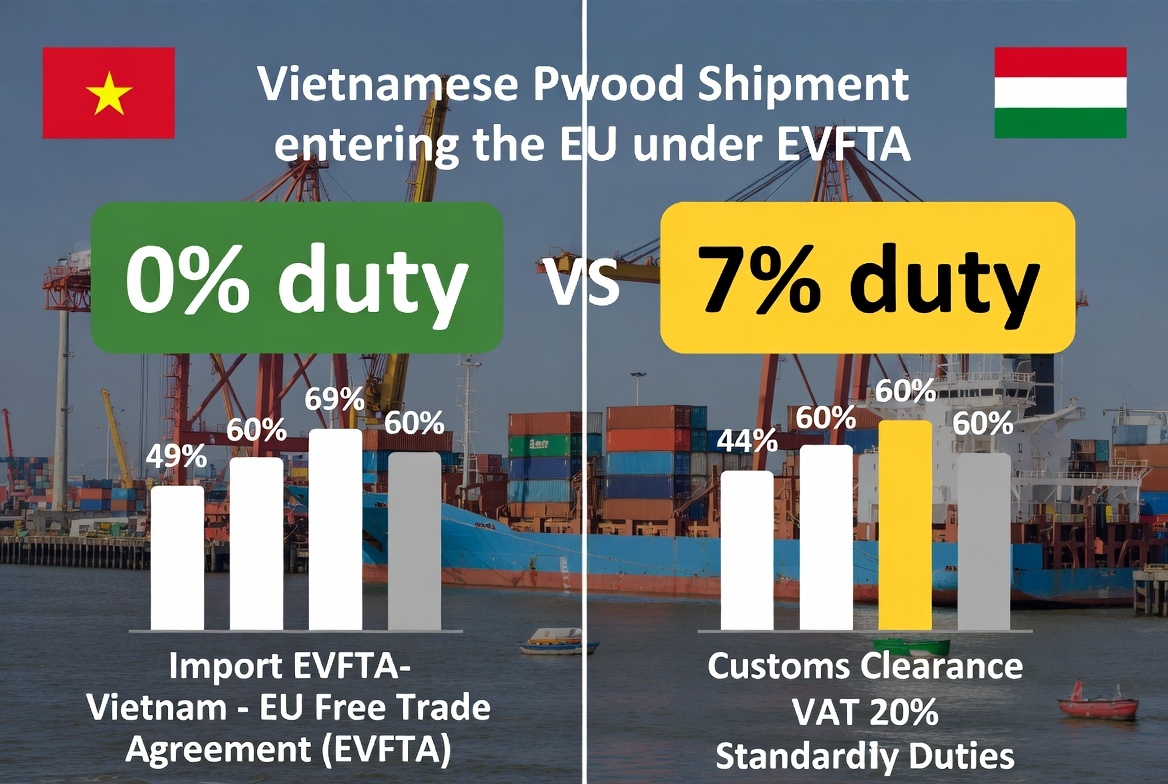
The EU-Vietnam Free Trade Agreement entered into force on 1 August 2020. Under EVFTA, most plywood HS codes qualify for 0% import duty, compared to the standard MFN rate.
EVFTA Duty Schedule for Plywood (indicative)
| HS Code | MFN Rate | EVFTA Rate (2025) |
|---|---|---|
| 4412 33 | 7% | 0% |
| 4412 34 | 7% | 0% |
| 4412 39 | 7% | 0% |
To claim EVFTA preferential duty rates, the shipment must be accompanied by a EUR.1 movement certificate or an origin declaration from an approved Vietnamese exporter. Request this document from your supplier before shipment.
Note on Chinese birch plywood: Anti-dumping duties of 6.3%–18.7% apply to Chinese birch plywood under EU Regulation 2021/1930. These do not apply to Vietnamese product. For a full comparison of landed costs, see: EU Anti-Dumping Duties on Chinese Plywood: Why Vietnam Is the Strategic Alternative
Step 3: Understand CE Marking Requirements
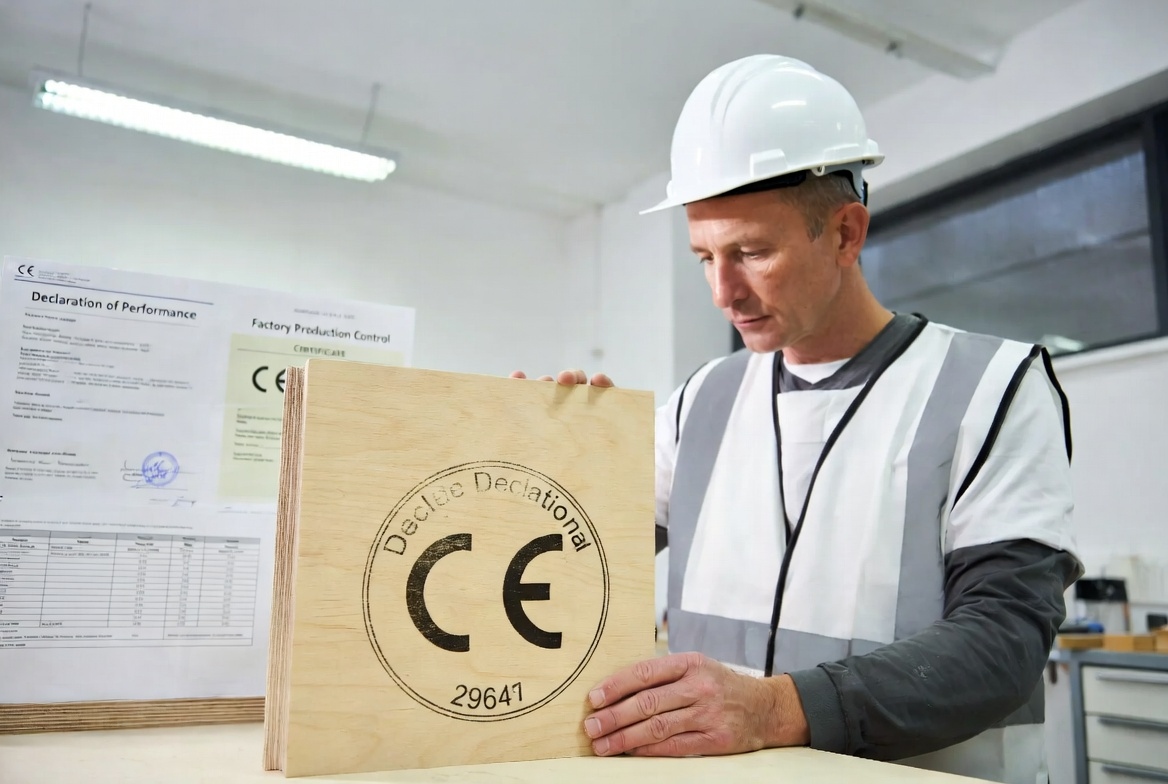
For plywood destined for construction applications in the EU, CE marking is mandatory under the Construction Products Regulation (EU) No 305/2011.
CE-marked plywood must comply with EN 13986 and be accompanied by:
- Declaration of Performance (DoP)
- Factory Production Control (FPC) certificate from an EU Notified Body
Plywood for non-construction use (furniture components, packaging, general fabrication) does not require CE marking, but buyers should still request EN 314-2 bond test reports and EN 310 bending strength data.
For a step-by-step guide to verifying CE documentation, read: How to Find a Vietnam Plywood Factory with a CE Certificate
Step 4: Prepare for EUDR Compliance
Under Regulation (EU) 2023/1115 (EU Deforestation Regulation), importers of plywood into the EU must submit a due diligence statement via the EU TRACES system before customs clearance. Enforcement for large operators begins 30 December 2025.
Your due diligence statement must demonstrate:
- The product does not originate from recently deforested land (after 31 December 2020)
- The product was produced in compliance with the laws of the country of harvest
- GPS coordinates of the plots where the timber was harvested
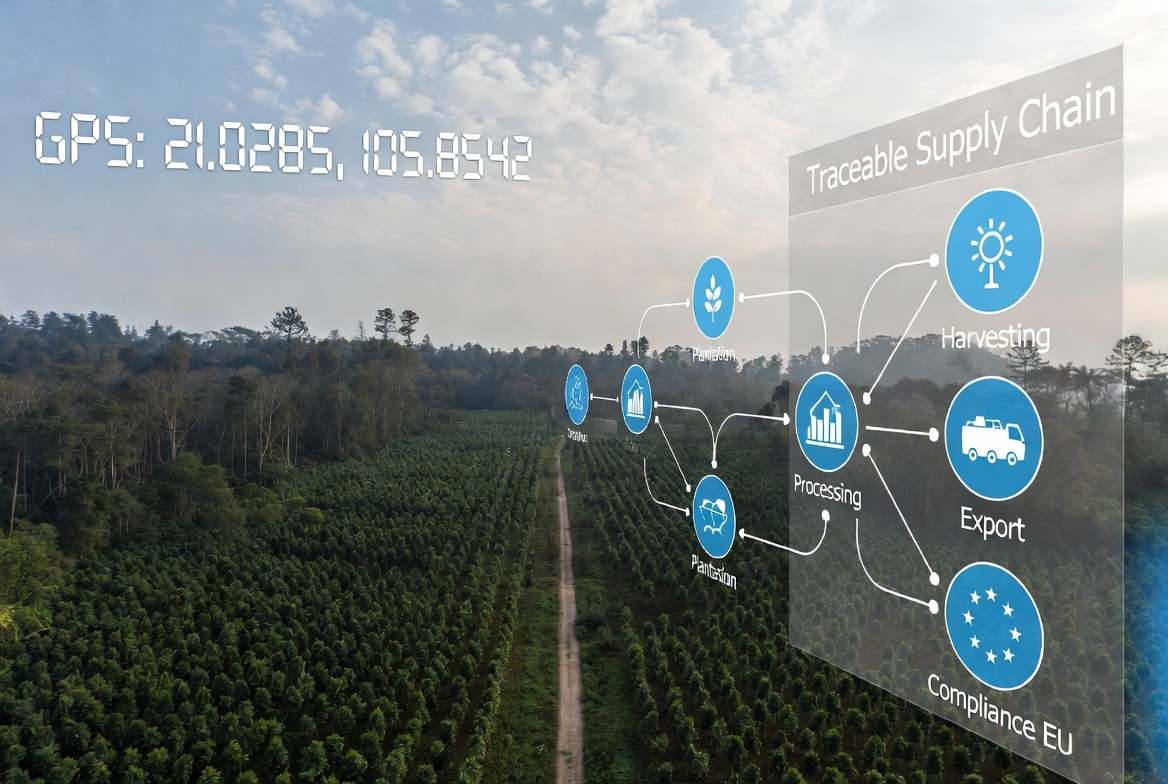
What to request from your Vietnamese supplier:
- GPS coordinates and plot boundaries of timber source areas
- Confirmation that source land was not subject to deforestation after 31 December 2020
- Species declaration (acacia, eucalyptus, rubber wood)
- Any existing FSC or PEFC Chain of Custody documentation
Vietnamese plantation species (acacia, eucalyptus, rubber wood) are grown on registered agricultural land, making this documentation straightforward to obtain from compliant factories. For a full list of required supplier documents, see: What Documents to Request from a Vietnam Plywood Supplier (EU Checklist)
Step 5: Choose Your Shipping Terms (Incoterms)
The choice of Incoterms determines who arranges freight, who pays for insurance, and where risk transfers from seller to buyer.
| Incoterm | What It Means | Best For |
|---|---|---|
| FOB (Free On Board) | Seller loads onto vessel at Vietnamese port. Buyer arranges and pays freight from that point. | Experienced importers with established freight relationships |
| CFR (Cost and Freight) | Seller pays freight to destination port. Risk transfers when goods are loaded in Vietnam. | Buyers who want cost certainty on freight |
| CIF (Cost, Insurance, Freight) | Seller pays freight and insurance to destination port. | Buyers wanting a single landed price quote |
| DDP (Delivered Duty Paid) | Seller delivers to buyer’s warehouse, all duties and freight paid. | First-time importers wanting simplicity |
Most EU buyers source on FOB or CIF terms. FOB gives the buyer control over freight selection and cost. CIF simplifies comparison when evaluating multiple suppliers.
Typical Transit Times from Vietnam to Europe
| Route | Transit Time |
|---|---|
| Ho Chi Minh City to Rotterdam | 25–32 days |
| Ho Chi Minh City to Hamburg | 28–35 days |
| Ho Chi Minh City to Antwerp | 26–33 days |
| Ho Chi Minh City to Gdansk | 30–38 days |
Allow additional time for customs clearance at destination port (typically 2–5 working days for compliant documentation).
Step 6: Minimum Order Quantities and Container Loading
Plywood is typically shipped in 20-foot or 40-foot dry containers. Standard loading volumes:
| Container | Approximate Volume | Typical Plywood Load |
|---|---|---|
| 20ft | 25–28 m³ | 25–28 m³ of plywood sheets |
| 40ft | 55–60 m³ | 55–60 m³ of plywood sheets |
| 40ft HC | 65–68 m³ | Higher volume for lightweight product |
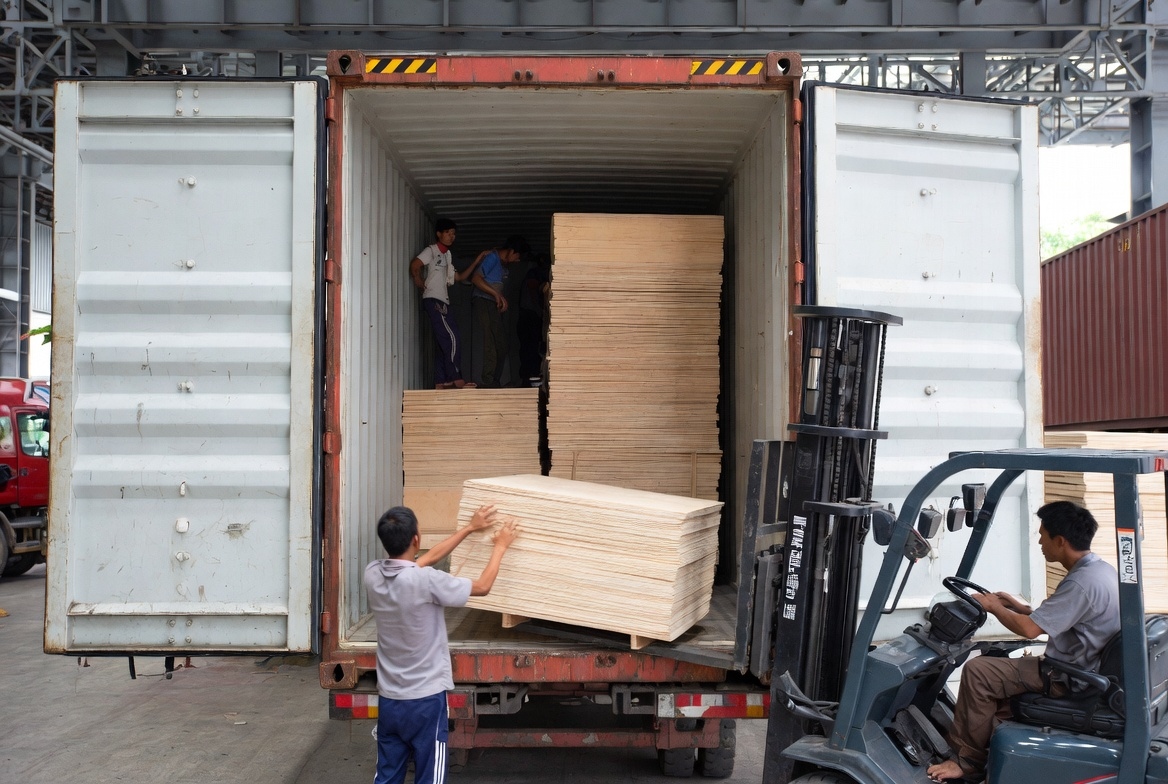
Most Vietnamese factories have a minimum order of one 20ft container per specification. Mixed-specification containers (multiple thicknesses or species) are possible but may require higher minimum quantities per line item.
Step 7: Required Shipping Documents for EU Customs Clearance
At the EU port of entry, your customs broker will require the following documents for clearance:
| Document | Purpose |
|---|---|
| Commercial Invoice | Declares value, quantity, and product description |
| Packing List | Details weight, dimensions, and package count |
| Bill of Lading (B/L) | Transport contract and title document |
| EUR.1 Certificate or Origin Declaration | Proves Vietnamese origin for EVFTA duty claim |
| CE Declaration of Performance | Required for construction-use plywood |
| Phytosanitary Certificate | Required for solid wood (bed slats, raw plywood) |
| EUDR Due Diligence Statement | Required from 30 December 2025 |
| FSC Invoice / Claim | If FSC-labelled supply is required |
For a complete breakdown of each document and what to check before accepting shipment, see: What Documents to Request from a Vietnam Plywood Supplier (EU Checklist)
Step 8: Quality Inspection Before Shipment
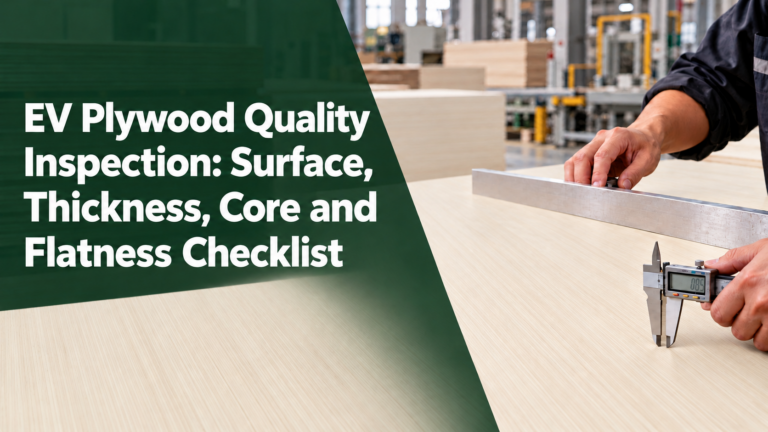
EU buyers sourcing from Vietnam for the first time should commission a pre-shipment inspection from an independent third-party inspector (SGS, Bureau Veritas, Intertek, or equivalent). A standard plywood inspection covers:
- Dimensional verification (thickness, length, width tolerance)
- Visual surface inspection (film defects, edge quality, face delamination)
- Moisture content measurement
- Glue bond spot-check (cross-section delamination test)
- Quantity and packaging verification against packing list
The cost is typically USD 200–400 per inspection and is one of the most effective risk mitigation tools available to first-time importers.
For a full framework on evaluating Vietnamese plywood factories, including what to check during a factory visit or audit, see: How to Evaluate a Vietnam Plywood Factory Before Your First Order
Kosmex Group: Export-Ready for EU Buyers
Kosmex Group is structured to support EU importers through every step of this process:
- EVFTA-compliant origin documentation (EUR.1 / origin declaration)
- CE marking package: DoP + FPC certificate (EN 13986, EN 636-2)
- FSC Chain of Custody certified
- EUDR-ready: GPS coordinates and species documentation available
- Phytosanitary certificates issued for all solid wood products
- English-language documentation as standard
- Pre-shipment inspection cooperation (SGS, Bureau Veritas, Intertek)
Products: film faced plywood (145–185 g/m² film density, phenolic WBP glue option), commercial plywood (A/B grade core, rubber/acacia/eucalyptus), bed slats (full rubber wood, density 700+ kg/m³).
Conclusion
Importing plywood from Vietnam to Europe is straightforward once the correct procedures are in place. The critical steps are accurate HS code classification, EVFTA origin certification for 0% duty, CE documentation for construction-use product, and EUDR due diligence preparation ahead of the December 2025 enforcement date.
First-time importers benefit significantly from working with a supplier who provides complete, audit-ready documentation as standard, rather than one that requires extensive back-and-forth to assemble the compliance paperwork.
Contact Kosmex Group to request a CIF price quotation, technical data sheets, and the full CE and EUDR documentation package for your product specification. Request a quote →
Bình luận