


This guide covers all three – from the chemistry of phenolic resin to real application specs, thickness tables, and a clear comparison against the alternatives most buyers are choosing between.
What Phenolic Plywood Actually Is
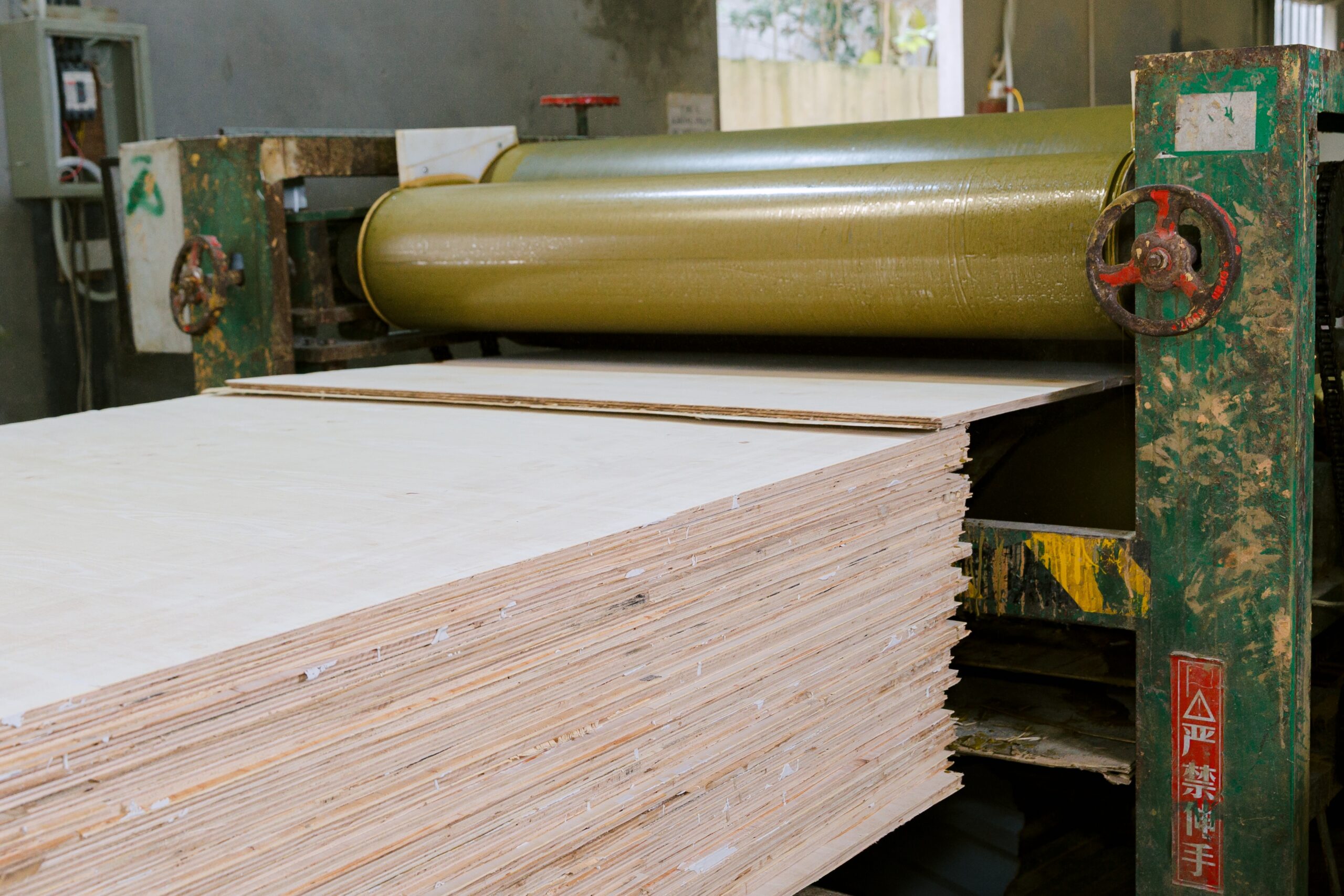
Phenolic plywood is standard structural plywood – birch, eucalyptus, or hardwood face – where the surface veneer is impregnated or overlaid with phenol-formaldehyde (PF) resin, also called phenolic resin.
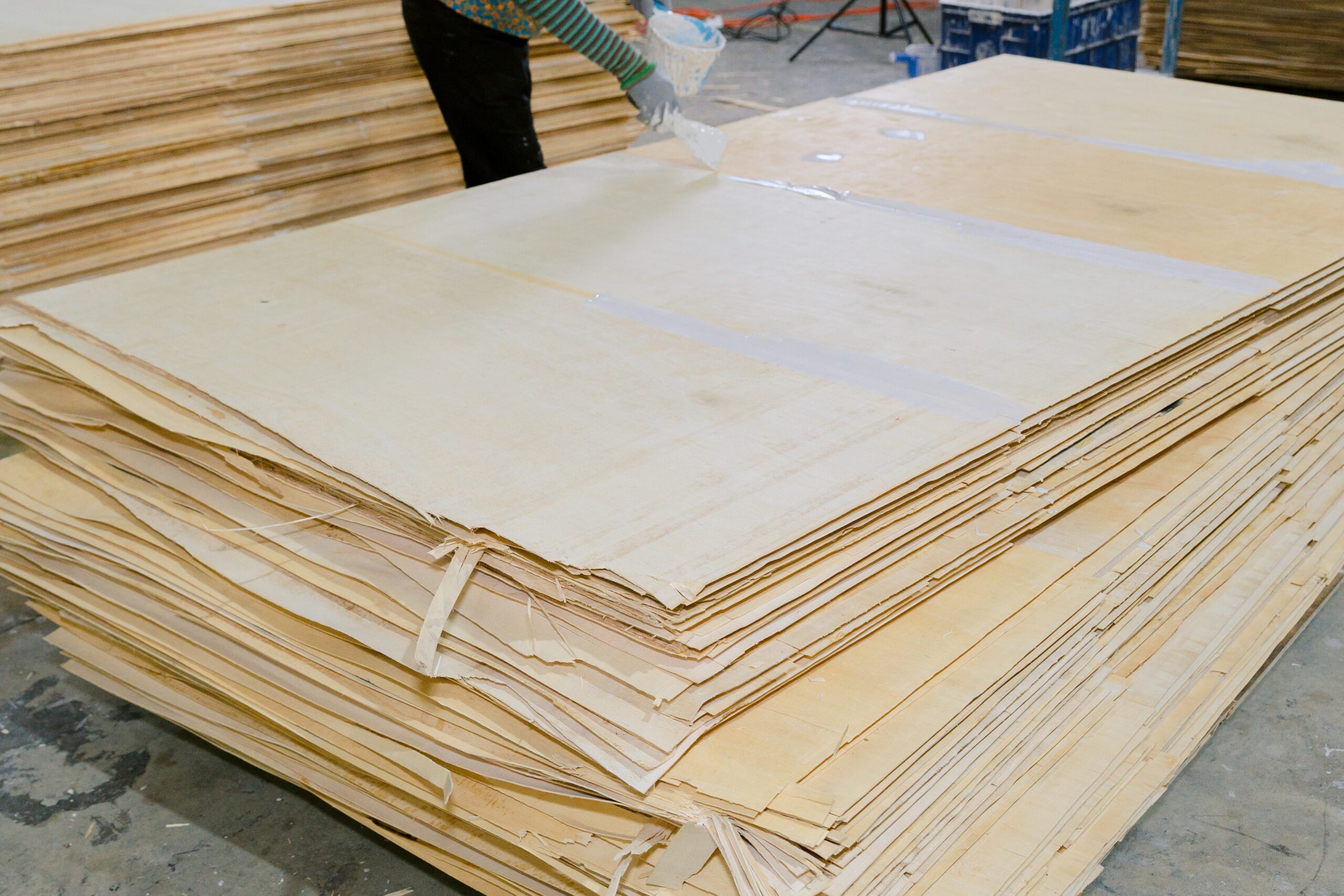
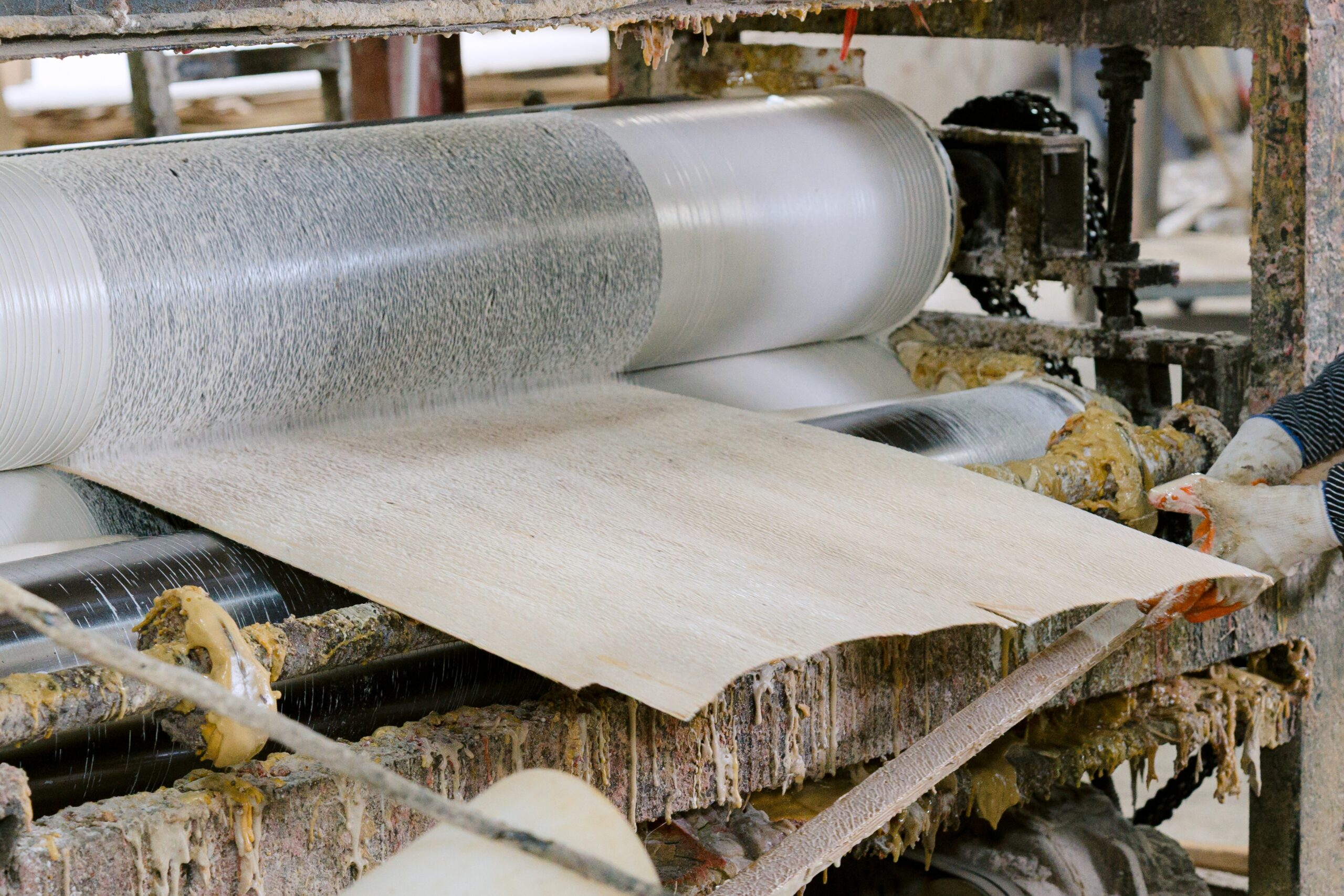
The key word is impregnated, not just coated. Unlike a paint or a thin laminate film, phenolic resin bonds chemically into the wood fibre itself during hot-pressing. The result is a surface that is:
- Hard and abrasion-resistant – pencil hardness significantly higher than untreated veneer
- Dimensionally stable – resists swelling from surface moisture
- Chemically resistant – holds up to concrete alkalinity, mild solvents, and cleaning agents
- Non-stick – concrete releases cleanly; workshop jigs don’t grab adhesives
The same phenol-formaldehyde chemistry is used in the glue layers between veneers in WBP (Weather and Boil Proof) plywood – covered in detail in our guide to phenolic vs melamine glue in plywood. In phenolic plywood, you get PF chemistry in both the core adhesive and the face treatment – which is why it performs well in wet, high-wear, and structurally demanding environments.
Birch as the preferred substrate. Most phenolic ply sold in the UK, EU, and North American markets uses Baltic or Scandinavian birch – tight grain, void-free core, and consistent density. See our birch plywood grades guide for face grade terminology (B/BB, BB/BB, B/WG) that carries over into phenolic-faced panels.
Phenolic Plywood vs Film-Faced Plywood: Are They the Same?
This is where most buyers get confused, because the terms overlap – deliberately so in some markets.
| Phenolic Plywood | Film-Faced Plywood | |
|---|---|---|
| Surface treatment | PF resin impregnated into veneer | Separate phenolic film (paper + resin) bonded onto veneer |
| Film weight | None – resin penetrates wood | 120-220 g/m² typical; 300-500 g/m² heavy-duty |
| Surface appearance | Wood grain visible, matte | Smooth, uniform – grain hidden under film |
| Typical face colour | Natural birch / light | Brown, black, grey (film colour) |
| Core adhesive | WBP phenolic (MR or WBP depending on spec) | WBP phenolic (EN 314-2 Class 3) |
| Primary use | Workshops, cabinetry, jigs, wet environments | Concrete formwork, construction hoarding, scaffolding |
| Reuse cycles (formwork) | Lower – surface wears faster | 8-50+ cycles depending on film weight |
The practical distinction: phenolic plywood is predominantly used in fabrication, furniture, and light construction where the resin surface adds durability without the bulk of a heavy film. Film-faced plywood – often called phenolic film-faced plywood – is the formwork and site hoarding standard, where the thick film takes the punishment of poured concrete across many reuse cycles.
Kosmex manufactures both. For film-faced phenolic specifications, see the film-faced plywood complete buyer’s guide.
Phenolic Plywood vs Marine Plywood
Both products use phenol-formaldehyde adhesive in the core. The differences are in void standards and certification:
| Phenolic Plywood | Marine Plywood (BS 1088) | |
|---|---|---|
| Core voids | Permitted (standard EN 314) | Zero voids required – every layer inspected |
| Species | Birch, eucalyptus, hardwood | BS 1088-specified species only |
| Certification | None required | BS 1088 third-party certification |
| Typical use | General wet/heavy-wear | Boat building, marine structures |
| FOB Vietnam price | $310-420/CBM (birch faced) | $580-750/CBM |
If your application is boat hulls, submerged marine structures, or anything where a delaminated void means structural failure – specify BS 1088 marine. If your application is wet environments where you need surface durability and WBP glue but not void-free certification – phenolic plywood delivers that at significantly lower cost.
Full breakdown in: Commercial Plywood vs Marine Plywood: Glue, Grade & When to Pay the Premium.
Phenolic Plywood vs Melamine-Faced Plywood
Both are overlaid plywood panels – the difference is in which resin is used and how it performs:
| Phenolic-Faced Plywood | Melamine-Faced Plywood | |
|---|---|---|
| Resin type | Phenol-formaldehyde (PF) | Melamine-formaldehyde (MF) |
| Moisture resistance | High – PF is inherently hydrophobic | Moderate – MF resists surface moisture, not prolonged exposure |
| Hardness | Higher | Lower – surface chips and scratches more easily |
| Temperature resistance | High – stable to 120°C+ | Moderate |
| Colour options | Limited (natural, black, brown) | Wide – white, grey, wood grain, custom |
| Typical use | Wet environments, site use, jigs | Furniture interiors, shelf panels, cabinet carcasses |
| Cost | Higher | Lower |
Rule of thumb: melamine for aesthetics and furniture interiors; phenolic for performance and wet/structural applications.
Common Specifications: Thickness, Size & Grade
Standard Thicknesses
| Thickness | Plies (typical birch) | Common application |
|---|---|---|
| 6mm | 5-ply | Drawer bottoms, thin panels |
| 9mm | 7-ply | Shelving, light carcassing |
| 12mm | 9-ply | Cabinet sides, partitions |
| 15mm | 11-ply | Flooring substrate, van lining |
| 18mm | 13-ply | Most common – worktops, site boards, formwork |
| 21mm | 15-ply | Heavy-duty flooring, truck decking |
| 24mm-25mm | 17-19-ply | Structural, heavy formwork |
3/4 inch (≈18mm) phenolic plywood is the dominant specification in North American markets – equivalent to the 18mm standard in EU/metric contexts.
Standard sheet size: 4×8 ft (1220×2440mm) in US markets; 1250×2500mm in European markets. Full 5×10 ft (1525×3050mm) sheets available from Vietnam factories for large-format fabrication.
Face Grades
Most phenolic-faced birch ply is produced in B/BB or BB/BB face grades before the phenolic treatment is applied:
- B face: Very smooth, minimal knots – used where appearance of edges matters
- BB face: Small knots and patches permitted – standard for site and structural applications
- WG (Whole Grain): Plugged and patched – economy grade, surface covered by film anyway
For detailed grade definitions, see Birch Plywood Grades Explained.
Film Weight (for phenolic film-faced variants)
| Film weight | Reuse cycles (formwork) | Typical application |
|---|---|---|
| 120 g/m² | 8-12 cycles | Light formwork, hoarding |
| 220 g/m² | 20-30 cycles | Standard construction formwork |
| 300-500 g/m² | 40-60+ cycles | Heavy-duty formwork, industrial flooring |
Where Phenolic Plywood Is Specified
Concrete Formwork
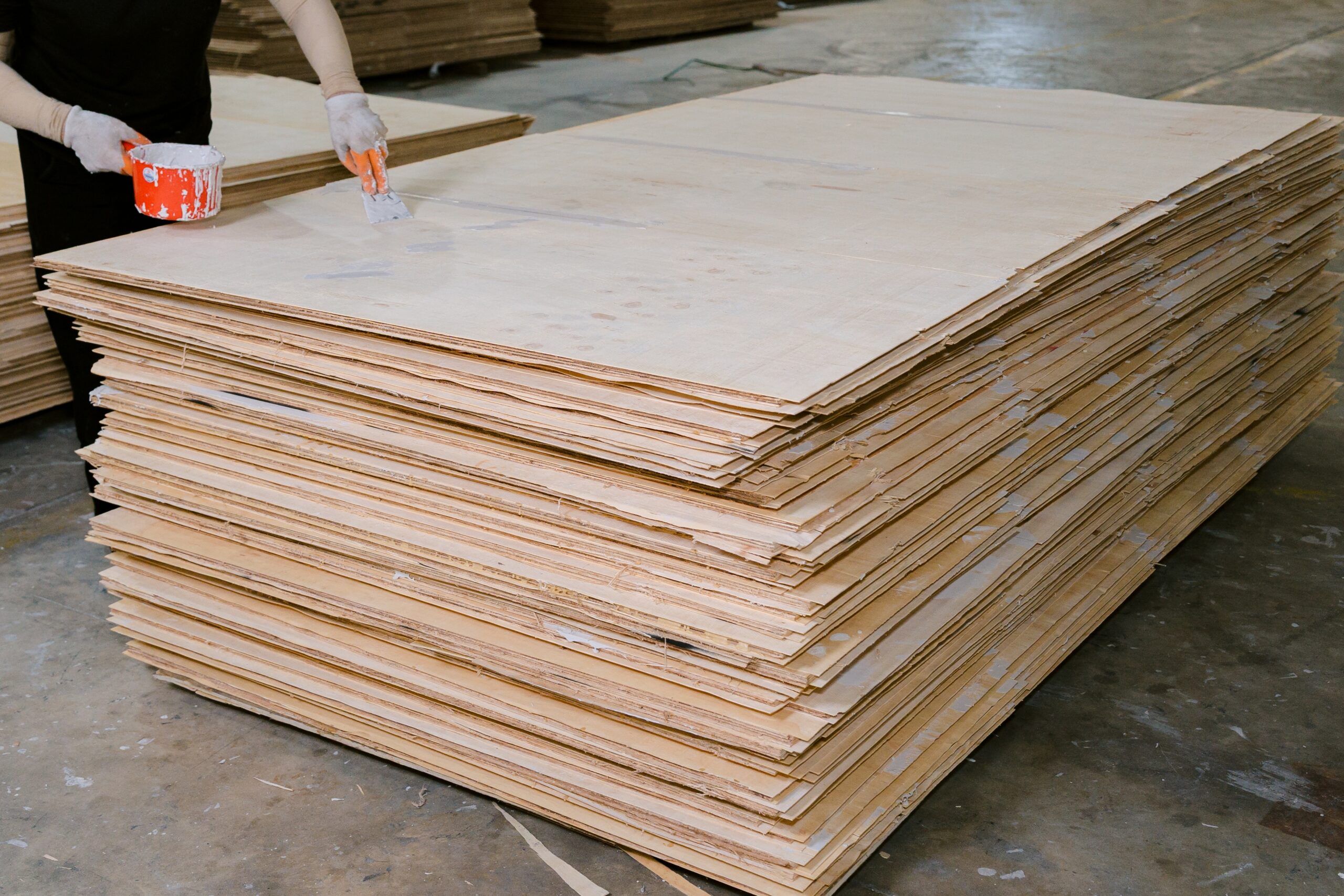
Phenolic plywood for concrete forms is one of the highest-volume applications globally. The phenolic surface:
- Prevents concrete adhesion – panels release cleanly without surface damage
- Resists the alkalinity of fresh concrete (pH 12-13)
- Maintains dimensional stability under the weight and moisture of wet pours
For single-use or light-reuse formwork, standard phenolic-faced panels work well. For 20+ cycle formwork, specify phenolic film-faced plywood with ≥220 g/m² film weight – covered in the formwork plywood buyer’s guide.
Workshop Jigs, Fixtures & Workbench Tops
Phenolic-faced birch plywood is the standard for precision woodworking fixtures because:
- The hard surface resists glue adhesion (parts release without damage)
- Dimensional stability means jigs hold tolerance over time
- The surface is easy to clean with solvents without delaminating
Important note: most standard paints and finishes do not bond well to phenolic surfaces – the resin’s low surface energy repels water-based adhesives. If bonding or painting is required, sand and prime with an epoxy primer, or specify untreated birch plywood instead.
Van Lining & Trailer Flooring
15mm and 18mm phenolic-faced ply is widely used for van floor lining and trailer decking where:
- Repeated loading/unloading causes surface wear
- Cleaning with water and chemicals is routine
- Weight matters (birch phenolic is lighter than hardwood alternatives at same thickness)
For anti-slip van floor applications, a hexagonal mesh or wire mesh phenolic surface is specified – see Anti-Slip Film-Faced Plywood: Wiremesh & EU Specs.
Marine & Wet Environments (Non-Structural)
Phenolic ply is suitable for non-structural marine interior applications – bulkheads, cabin linings, wet area partitions – where the WBP core adhesive prevents delamination from humidity. It is not a substitute for BS 1088 marine plywood in structural hull applications.
Black vs Brown Phenolic Plywood
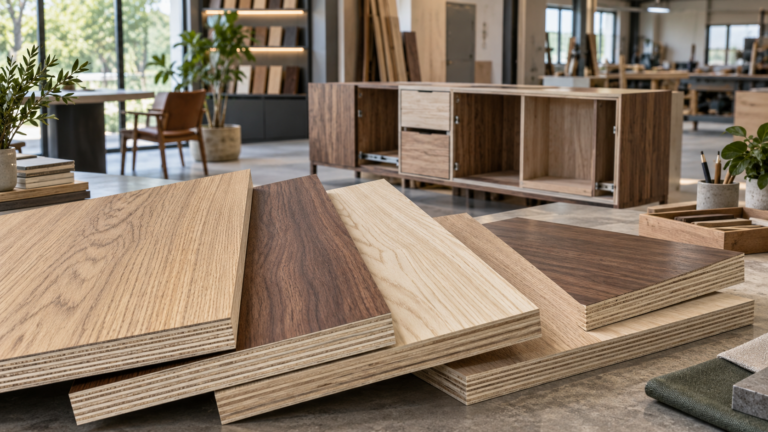
Surface colour depends on the film or resin used, not on structural performance:
| Colour | Resin / film type | Most common market |
|---|---|---|
| Brown | Standard phenolic resin / brown kraft paper film | EU, Asia, construction markets |
| Black | Carbon-pigmented phenolic film | UK, North America, van lining market |
| Grey | Grey phenolic film | EU formwork |
| Natural (wood grain) | Resin-impregnated surface veneer – no film | Cabinetry, woodworking |
Black phenolic plywood has become the de facto standard in the UK van conversion and horsebox market – primarily for aesthetic reasons (black interior lining), not performance.
How to Specify Phenolic Plywood When Ordering from Vietnam
When ordering from a Vietnam factory, vague descriptions like “phenolic plywood 18mm” leave too much open to interpretation. A complete specification should include:
Species:          Birch (Baltic-equivalent) / Eucalyptus / Hardwood
Face grade:       B/BB or BB/BB
Core construction: All-birch / Combi (birch face + poplar/eucalyptus core)
Thickness:        18mm (±0.5mm tolerance)
Sheet size:       1220×2440mm / 1250×2500mm
Core adhesive:    WBP phenolic - EN 314-2 Class 3
Surface treatment: Phenolic resin impregnated / Phenolic film-faced [specify g/m²]
Film colour:      Brown / Black / Natural
Emission class:   E1 (formaldehyde ≤8 mg/100g dry board)
Certification:    CE marked / FSC [if required]
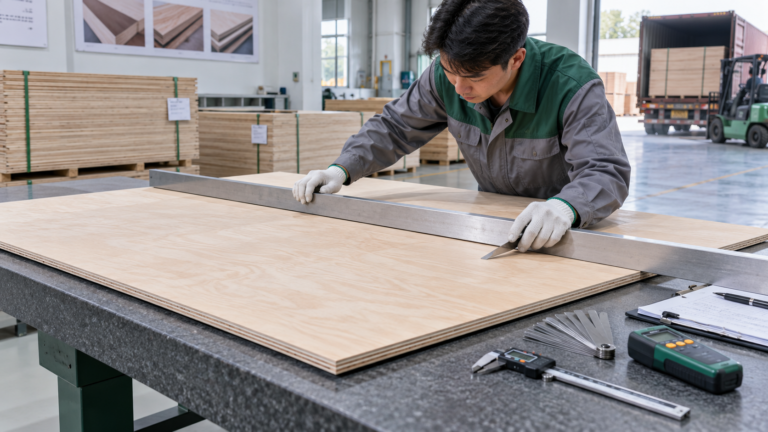
Tip: Always request a cross-section photo of the panel edge before confirming a container order. Core voids and filler layers are the most common point of quality variation between factories. See What Documents to Request from a Vietnam Plywood Supplier for the full verification checklist.
Kosmex produces phenolic-faced birch and combi-core plywood to EN 314-2 Class 3 (WBP adhesive), CE marked, with FSC certification available on request. Request a specification sheet and FOB quote →
FOB Vietnam Price Reference (2026)
| Specification | FOB Vietnam price range |
|---|---|
| Birch phenolic-faced, 18mm, B/BB, WBP | $380-430/CBM |
| Combi core (birch face + poplar core), 18mm, WBP | $310-360/CBM |
| Film-faced phenolic, 18mm, 220 g/m² brown | $290-340/CBM |
| Film-faced phenolic, 18mm, 300 g/m² black | $330-380/CBM |
| Anti-slip mesh phenolic, 18mm | $320-370/CBM |
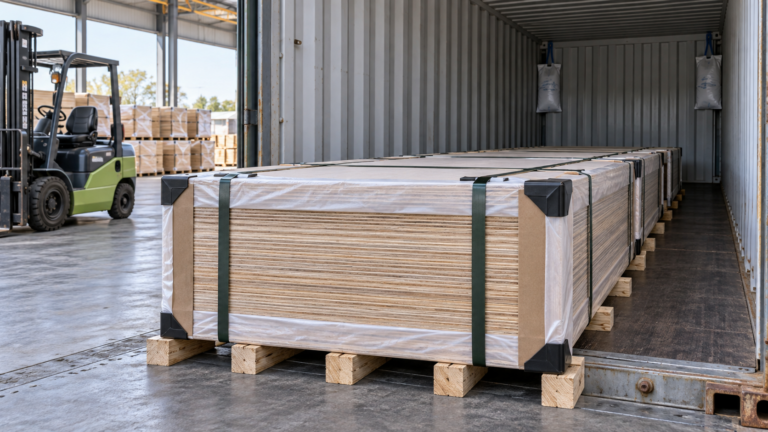
Prices are FOB Ho Chi Minh City / Hai Phong. Freight, duty, and destination surcharges are additional. Request current pricing directly – market rates fluctuate with birch veneer and resin input costs.
See: Vietnam Plywood Price Trend – FOB Monthly Updates
FAQ
Is phenolic plywood waterproof?
The surface is highly water-resistant – phenol-formaldehyde resin is hydrophobic and resists surface moisture well. The core adhesive in WBP-grade panels (EN 314-2 Class 3) also resists boiling water in test conditions. However, “waterproof” overstates it: prolonged immersion will eventually affect the core veneers if edges are unsealed. Edge-seal cut sections with epoxy or phenolic edge paint for applications involving standing water.
What is the difference between phenolic plywood and regular plywood?
Regular structural plywood typically uses MR (moisture-resistant) urea-formaldehyde adhesive between veneers and has no surface treatment. Phenolic plywood uses WBP phenol-formaldehyde adhesive throughout the core and a phenolic resin surface – giving significantly better moisture resistance, surface hardness, and chemical resistance.
Can you paint or finish phenolic plywood?
Standard water-based paints and wood finishes bond poorly to phenolic surfaces due to the resin’s low surface energy. If painting is required, sand lightly with 120-grit, clean the surface, and prime with an epoxy primer before top-coating. For untreated birch plywood that accepts standard finishes, see How to Finish Birch Plywood.
Is phenolic plywood the same as marine plywood?
No. Both may use phenolic WBP adhesive in the core, but marine plywood (BS 1088) has additional requirements: zero core voids, specific approved species, and third-party certification. Phenolic plywood allows standard void tolerances and carries no BS 1088 certification. Marine plywood is typically 40-80% more expensive.
What is phenolic baltic birch plywood?
Baltic birch plywood where the face veneer has been impregnated with phenolic resin – combining the tight, void-free core construction of true Baltic birch with a hardened, moisture-resistant surface. Favoured in precision woodworking, jig-making, and industrial applications.
What thickness of phenolic plywood is most common?
18mm (or 3/4 inch in US markets) is by far the most ordered thickness – covering formwork, van lining, worktops, and structural carcassing. 12mm and 15mm are common for cabinet panels and lighter flooring applications.
Summary
| Requirement | Best choice |
|---|---|
| Hard, moisture-resistant surface for fabrication / jigs | Phenolic plywood (birch substrate) |
| Concrete formwork – single use | Phenolic faced plywood, 18mm, 120 g/m² |
| Concrete formwork – 20+ reuse cycles | Film-faced phenolic plywood, 220-300 g/m² |
| Boat hull structural members | BS 1088 marine plywood |
| Furniture interiors – aesthetic surface | Melamine-faced plywood |
| Wet area cabinetry – no appearance requirement | Phenolic plywood or WBP commercial plywood |
| Anti-slip flooring (van, trailer, platform) | Anti-slip phenolic mesh plywood |
Bình luận