


Oak Plywood vs Birch Plywood: Strength, Cost and When to Use Each
Oak and birch are the two most common hardwood plywood species in furniture, cabinetry, and interior millwork, but they serve different purposes. Oak brings character grain and warmth; birch brings a clean, neutral surface for paint and fine finish. Choosing the wrong one does not ruin a project, but it does create unnecessary finishing work and cost.
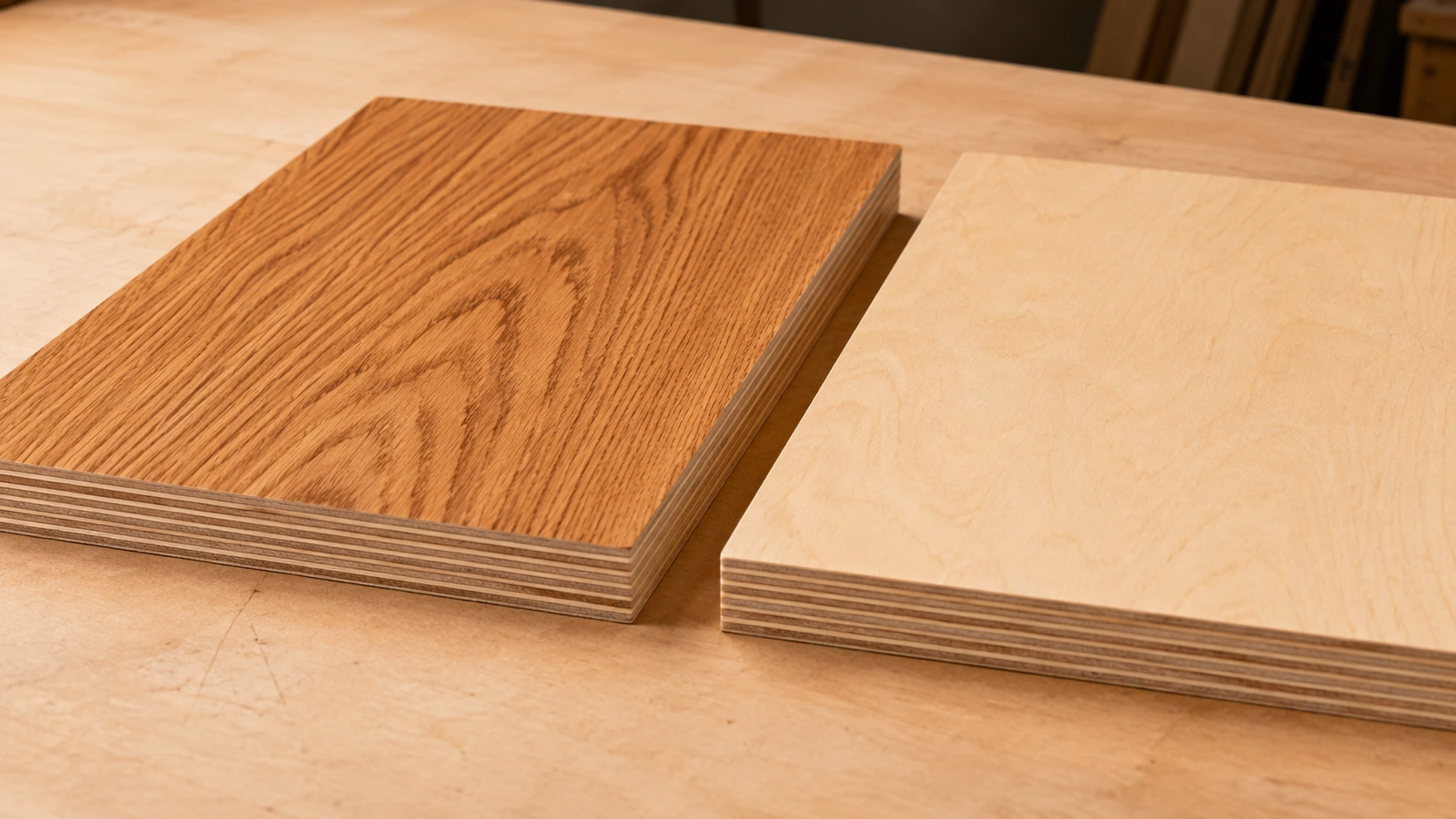
This guide compares oak and birch plywood across every specification that matters: density, strength, surface quality, workability, cost, and application fit.

Species Overview
Oak Plywood
“Oak plywood” covers two distinct species with meaningfully different characteristics:
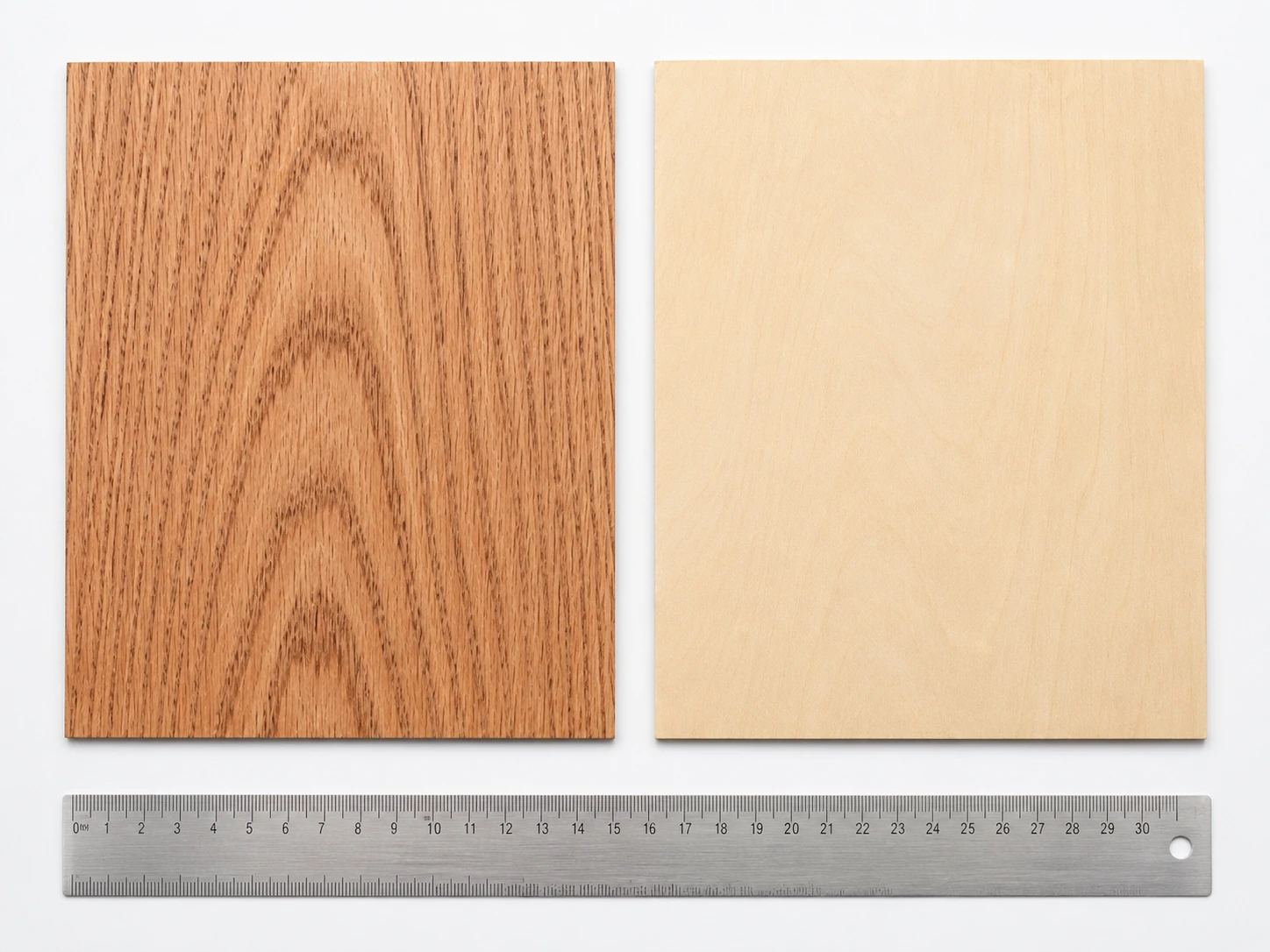
- Red oak (Quercus rubra): The most widely available oak plywood in North America. Open, pronounced grain with a reddish-pink undertone. Density 640 to 720 kg/m3. Reacts strongly with iron (causes blue-black staining) and tannins bleed through water-based finishes if not properly sealed.
- White oak (Quercus alba): Tighter, more closed grain than red oak. Warmer grey-brown tone. Better moisture resistance (tyloses in pores block water penetration, the same property that makes white oak used for wine and whisky barrels). Higher cost than red oak; increasingly specified for contemporary Scandinavian-style furniture.
Oak plywood is typically available as a rotary-cut veneer (more open, cathedral grain pattern) or rift/quarter-sawn veneer (straight, linear grain, premium appearance, higher cost).
Birch Plywood
Birch plywood is available in two core constructions:
- Combi core (commercial birch): Birch face and back over a poplar or eucalyptus inner core. The most common birch-faced plywood sold globally, lighter, lower cost, good surface quality.
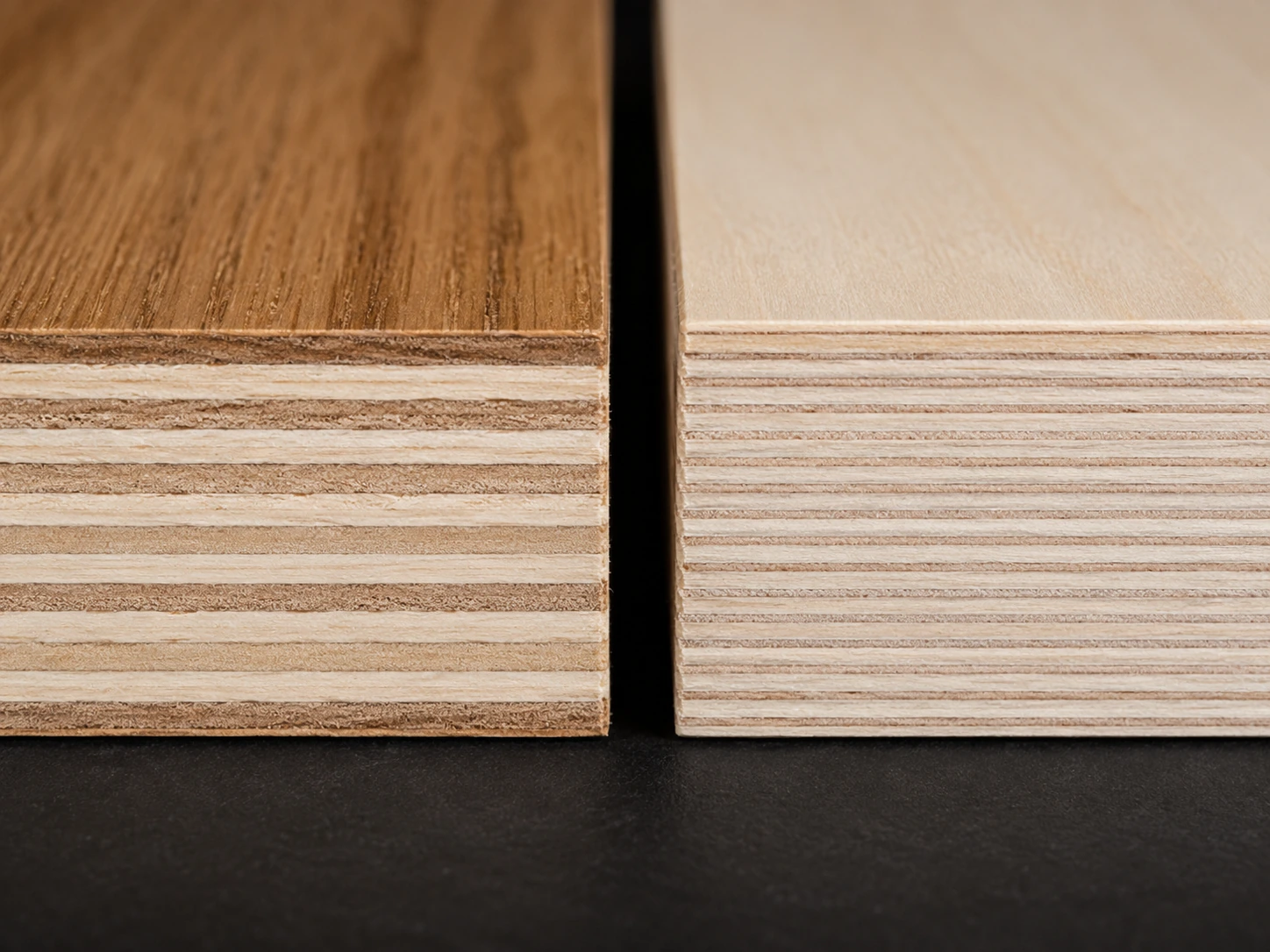
- All-birch (Baltic birch): Birch veneer throughout every layer. 13 plies at 18mm, 5x5ft sheets, void-free. Higher stiffness, better edge finish, premium screw-holding.
Birch face veneer has a fine, tight grain, pale blonde in colour, near-uniform texture. It sands smooth and paints without grain telegraphing. See Birch Plywood Grades: A, B/BB, BB/BB, C2 Explained for grade definitions.
Head-to-Head Comparison
| Property | Red Oak Plywood | White Oak Plywood | Birch Plywood (combi) | Birch Plywood (all-birch) |
|---|---|---|---|---|
| Density | 640 to 720 kg/m3 | 670 to 750 kg/m3 | 450 to 550 kg/m3 | 640 to 700 kg/m3 |
| Bending strength (MOR) | 45 to 60 N/mm2 | 50 to 65 N/mm2 | 28 to 40 N/mm2 | 40 to 55 N/mm2 |
| Stiffness (MOE) | 9,000 to 12,000 N/mm2 | 10,000 to 13,000 N/mm2 | 5,500 to 7,500 N/mm2 | 8,000 to 10,000 N/mm2 |
| Surface grain | Open, pronounced | Tighter, closed | Fine, tight | Fine, tight |
| Grain character | Strong cathedral/rift | Linear, refined | Minimal figure | Minimal figure |
| Paintability | Poor, grain telegraphs | Moderate | Excellent | Excellent |
| Stain/oil finish | Excellent | Excellent | Good, pale tone | Good, pale tone |
| Screw-holding (edge) | High | High | Moderate (combi) | High |
| Weight (18mm 4×8) | 34 to 38 kg | 36 to 40 kg | 25 to 30 kg | 36 to 40 kg |
| Moisture resistance | Moderate | Better, closed pores | MR or WBP options | WBP standard |
| Retail price (18mm 4×8) | $65 to $95 | $90 to $130 | $50 to $65 | $70 to $90 (5×5) |
| FOB Vietnam (B2B) | $320 to $420/CBM | $380 to $480/CBM | $270 to $360/CBM | $380 to $450/CBM |
Strength: Oak vs Birch
Oak plywood, particularly white oak, has higher raw bending strength and stiffness than combi-core birch. In long-grain applications such as structural beams and high-load shelving, oak outperforms standard combi birch.
However, all-birch Baltic birch is comparable to red oak in stiffness (MOE 8,000 to 10,000 vs 9,000 to 12,000 N/mm2) and meaningfully cheaper. For furniture and shelving applications where both species are in contention, the strength difference is not a practical factor. Both are more than adequate for shelf spans under 900mm and cabinet carcass loads.
Where oak has a clear strength advantage:
- Floor applications requiring high wear resistance (oak’s Janka hardness is significantly higher than birch)
- Long-span structural uses where maximum MOE matters
- Applications where the face veneer will be subject to abrasion and impact
Where birch matches or exceeds:
- Panel stability under area load, combi core birch is lighter with comparable rigidity for cabinet boxes
- Screw-holding in all-birch construction
- CNC machining consistency, all-birch has no soft-core transitions
Surface and Finishing: The Most Practical Difference
This is the decision point for most furniture and cabinet makers.
Oak: Character Grain, Difficult to Paint
Oak has a pronounced open grain with visible pores. This creates:
- Grain telegraphing under paint: open pores require grain filler before painting. Multiple coats of primer and topcoat are needed to achieve a smooth painted surface. For rustic or stained natural finishes, this is a feature, not a problem.
- Tannin reaction with water-based finishes: oak tannins can cause blotching and discolouration with water-based stains and primers. A shellac-based sealer coat is required before water-based topcoats.
- Iron staining: oak reacts with steel fasteners, leaving blue-black marks at screw holes. Use stainless or brass fasteners, or seal screw holes before finishing.
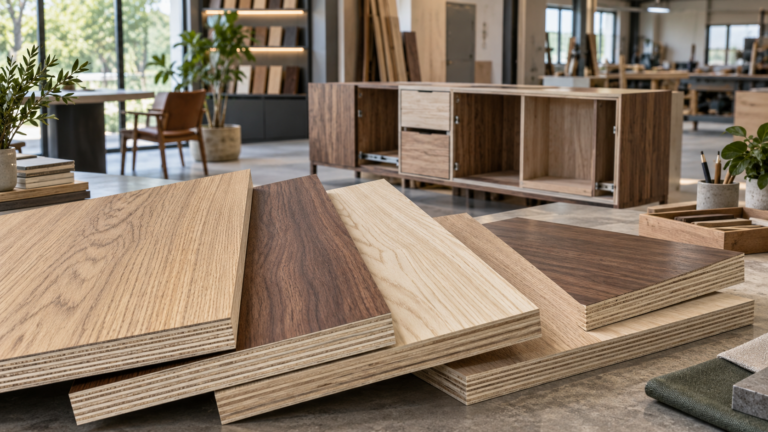
For stained natural, oiled, or wire-brushed finishes, oak plywood is the superior choice. The grain character is the design feature, and no other common species delivers it at the same price point.
Birch: Neutral, Smooth, Easy to Finish
Birch veneer has a tight, closed grain with minimal figure. It sands to a near-MDF surface quality at B/BB grade:
- Painted finishes: one coat primer, two topcoats, no grain telegraphing, no tannin issues
- Clear/stained finishes: pale blonde tone, consistent colour, no blotching, takes oil and lacquer predictably
- CNC and router work: clean cut edges, consistent machining response
For painted furniture, kitchen cabinets, and built-in millwork where a flawless surface is required, birch requires significantly less preparation than oak. Full finishing guide: How to Finish Birch Plywood: Staining, Painting and Sealing.
Application Guide: Oak or Birch?
Kitchen Cabinets
Birch for painted cabinets; oak for stained natural cabinets.
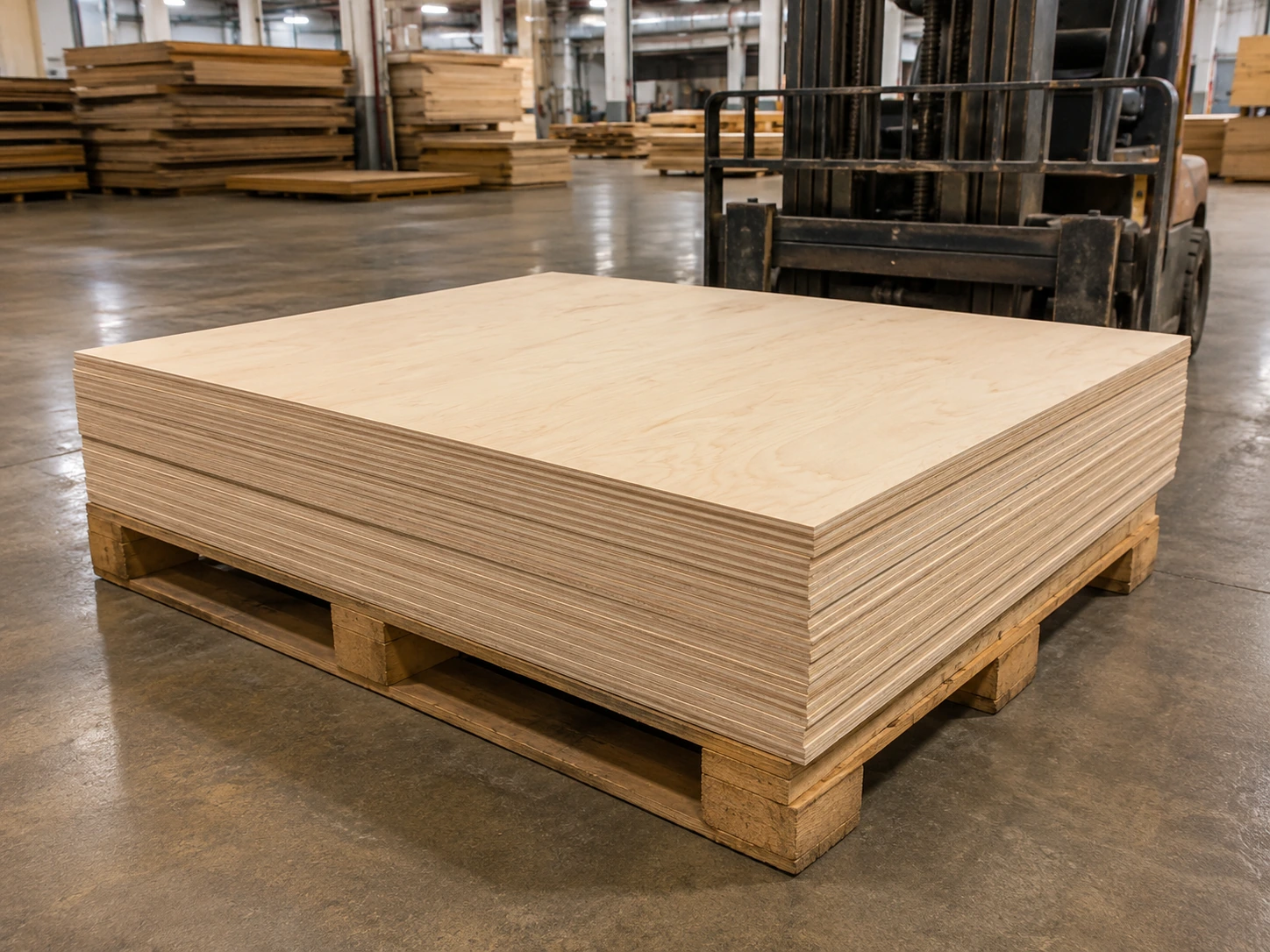
The professional default for painted kitchen cabinet boxes is birch plywood: smooth face, no grain telegraphing, lighter weight, lower cost. For a stained natural wood kitchen in oak, use oak-faced plywood for door fronts and visible surfaces; birch or MDF for internal carcass work. See: Best Plywood for Kitchen Cabinets: Grade, Core and Thickness.
Furniture Carcassing
Birch for painted and lacquered; oak for natural finish furniture.
Wardrobes, TV units, and storage furniture in a white or painted finish: birch is the correct specification. For natural wood furniture where the grain is the design feature, oak-faced panels deliver the aesthetic that clients expect from hardwood furniture.
Shelving
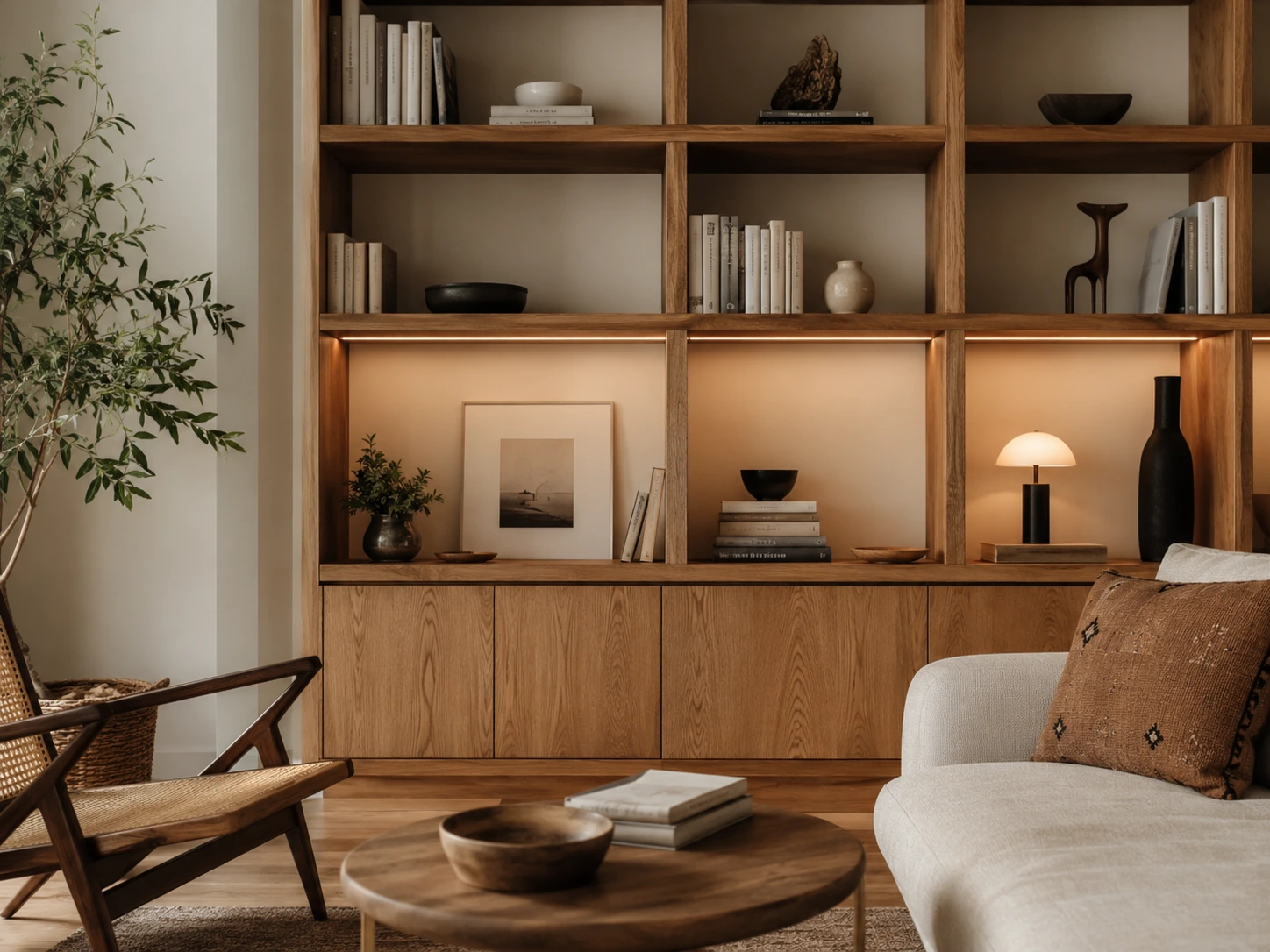
Either, specification depends on finish and span.
For spans under 900mm carrying standard loads, both species are adequate in 18 to 19mm thickness. Oak is heavier, which matters for wall-mounted shelves with concealed brackets. Birch is slightly more dimensionally stable under humidity cycling. For spans over 900mm, all-birch or oak-faced with all-hardwood core are both valid; avoid combi core at long spans under heavy load.
Flooring and High-Wear Surfaces
Oak. Oak’s significantly higher Janka hardness and aesthetic character make it the default for hardwood floor veneer applications. Birch is used for subfloor, not finished floor surfaces.
Speaker Cabinets and CNC Work
Birch (all-birch). All-birch Baltic birch is the universal specification for speaker cabinet construction and precision CNC work. See Baltic Birch vs Birch Plywood.
Red Oak vs White Oak: Which to Specify
| Factor | Red Oak | White Oak |
|---|---|---|
| Cost | Lower ($65 to $95/sheet) | Higher ($90 to $130/sheet) |
| Grain | More open, cathedral figure | Tighter, linear grain |
| Tone | Reddish-pink | Warm grey-brown |
| Moisture resistance | Lower | Higher (tyloses close pores) |
| Modern furniture trend | Traditional/transitional | Contemporary/Scandinavian |
| Availability | Widely available | Growing, but less common |
White oak is the current premium specification for contemporary furniture and Shaker-style kitchens. Its tighter grain is easier to finish and more moisture-resistant. The cost premium is 30 to 40% over red oak.
Red oak is the budget hardwood plywood for natural-finish furniture and traditional interiors. Widely available, strong, and characteristic, but requires more finishing care.
Cost Summary
| Specification | Retail (4×8 sheet) | FOB Vietnam (B2B) |
|---|---|---|
| Birch combi core, 18mm, B/BB | $50 to $65 | $270 to $360/CBM |
| Red oak-faced, 18mm | $65 to $95 | $320 to $420/CBM |
| All-birch, 18mm, 5×5 | $70 to $90 | $380 to $450/CBM |
| White oak-faced, 18mm | $90 to $130 | $380 to $480/CBM |
FAQ
Is oak plywood stronger than birch?
Red and white oak plywood have higher raw bending strength (MOR) and stiffness (MOE) than combi-core birch. However, all-birch (Baltic birch) matches red oak in most structural performance metrics at comparable cost. For furniture and cabinetry applications, both are more than adequate. The practical difference is in surface character and finishing, not structural performance.
Can you paint oak plywood?
Yes, but it requires more preparation than birch. Oak’s open grain requires a grain filler or multiple primer coats to achieve a smooth painted surface. Tannins in oak can bleed through water-based primers, so a shellac-based sealer coat is required first. For a painted finish specification, birch is the lower-effort choice.
Is white oak plywood worth the premium over red oak?
For contemporary furniture with a natural or oiled finish: yes. White oak’s tighter grain, warmer grey-brown tone, and better moisture resistance justify the 30 to 40% premium. For painted furniture or structural work, the premium is not justified.
Which is better for kitchen cabinets, oak or birch?
For painted cabinets: birch. Smoother surface, no grain telegraphing, lower cost. For stained natural-wood cabinets: oak-faced panels for visible surfaces. Cabinet box interiors are typically birch or MDF regardless of the door species.
What is the difference between birch and oak plywood edges?
All-birch Baltic birch shows clean, consistent lamination lines on exposed edges, a design feature in modern furniture. Oak plywood typically has a mixed core; the edge shows the face veneer over a different core species. For edge-exposed design details, all-birch is the cleaner specification.
Summary: Oak or Birch?
| Application | Oak | Birch |
|---|---|---|
| Painted kitchen cabinets | Not recommended, grain telegraphs | Smooth, standard spec |
| Natural-finish furniture | Character grain | Neutral, depends on aesthetic |
| Contemporary white oak aesthetic | White oak spec | Wrong species |
| CNC / precision joinery | Variable machining | All-birch, consistent |
| Speaker cabinets | Not standard | All-birch, void-free |
| Heavy-load shelving over 900mm | High MOE | All-birch comparable |
| Painted built-in furniture | Preparation intensive | One primer coat |
Related Reading
- Maple vs Birch Plywood: Differences, Pros, Cons and Best Uses
- Birch Plywood Grades: A, B/BB, BB/BB, C2 Explained
- Baltic Birch vs Birch Plywood: What’s Actually Different
- How to Finish Birch Plywood: Staining, Painting and Sealing
- Best Plywood for Kitchen Cabinets
- Pine Plywood vs Birch Plywood: Strength, Cost and Uses
Bình luận