


Plywood vs Solid Wood: Which Material Is Better for Cabinets, Furniture, and Interior Projects?
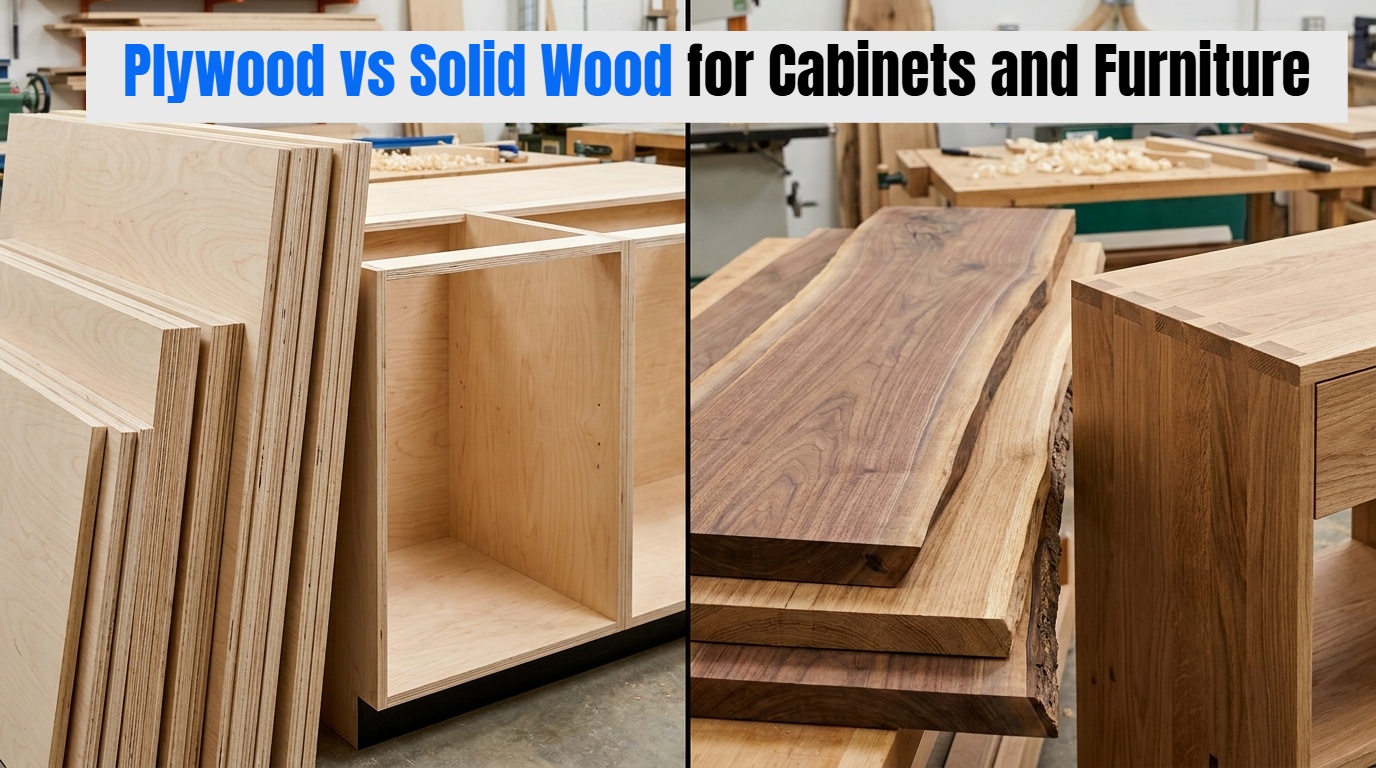 This guide gives a practical comparison of plywood vs solid wood for cabinets, kitchen cabinets, drawers, furniture, beds, table tops, and export projects. It is written for buyers who need reliable material decisions rather than generic advice.
Quick Answer: Should You Choose Plywood or Solid Wood?
Choose plywood when the project needs large flat panels, stable dimensions, efficient cutting, consistent quality, and better cost control. Choose solid wood when the project needs visible natural grain, carving, premium appearance, deep refinishing, or traditional craftsmanship.
In many professional projects, the smartest solution is not choosing only one material. A cabinet can use plywood for the carcass and solid wood for the doors or face frame. A bed can use plywood for the platform and solid wood for exposed rails or legs. A table can use a stable plywood substrate with veneer or laminate, or a solid wood top for a premium natural look.
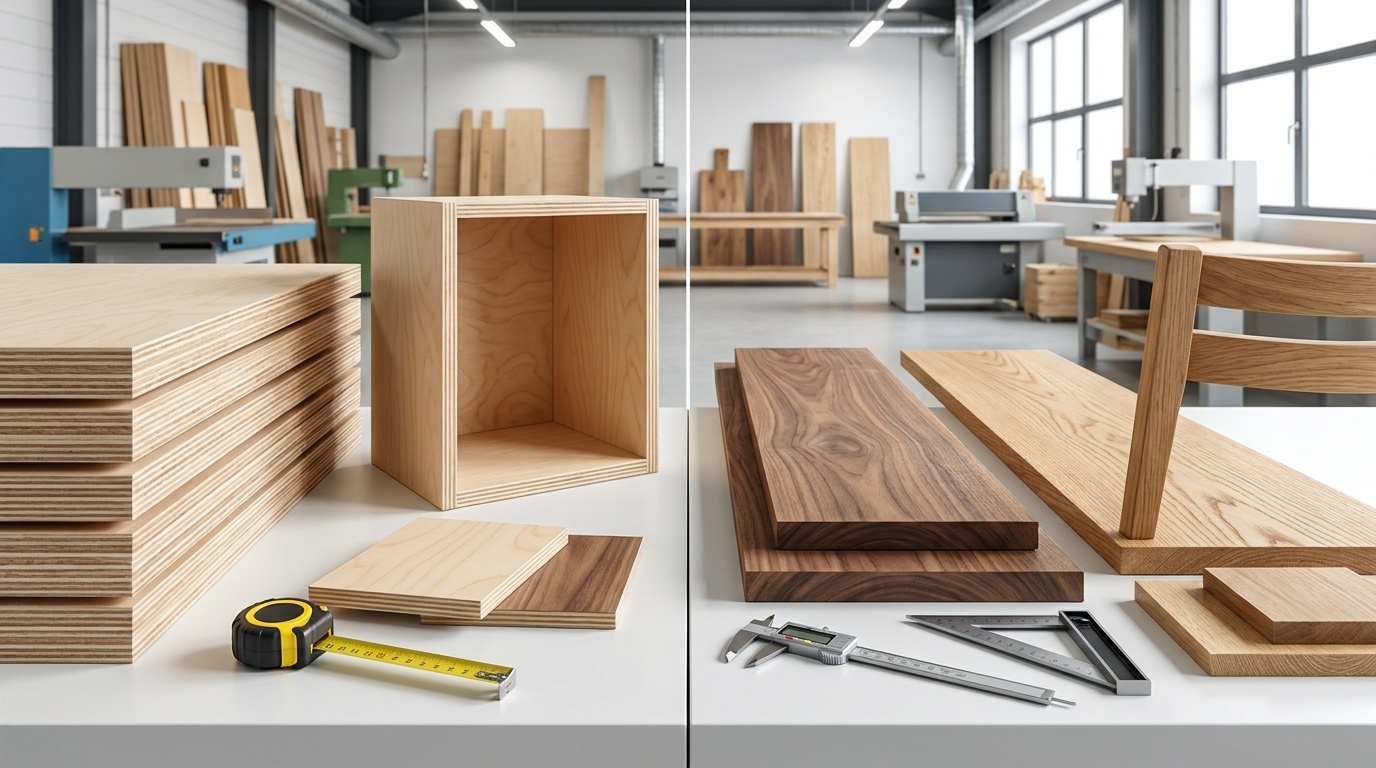
For buyers comparing solid wood vs plywood, the correct question is: where should each material be used? Plywood is usually stronger as a stable sheet material, while solid wood is stronger as a natural visible component with long-term repair value.
What Is Plywood?
Plywood is an engineered wood panel made by bonding multiple thin layers of wood veneer under heat and pressure. The grain direction of each layer is usually arranged crosswise, helping the panel resist splitting, reduce movement, and remain flatter than many solid boards.
This layered structure gives plywood a strong strength-to-weight ratio. It is widely used for cabinet boxes, shelves, backs, partitions, drawer bottoms, wall panels, furniture frames, packaging, and interior structures. Buyers who want to understand the manufacturing logic can learn more from Kosmex’s guide to the plywood making process.
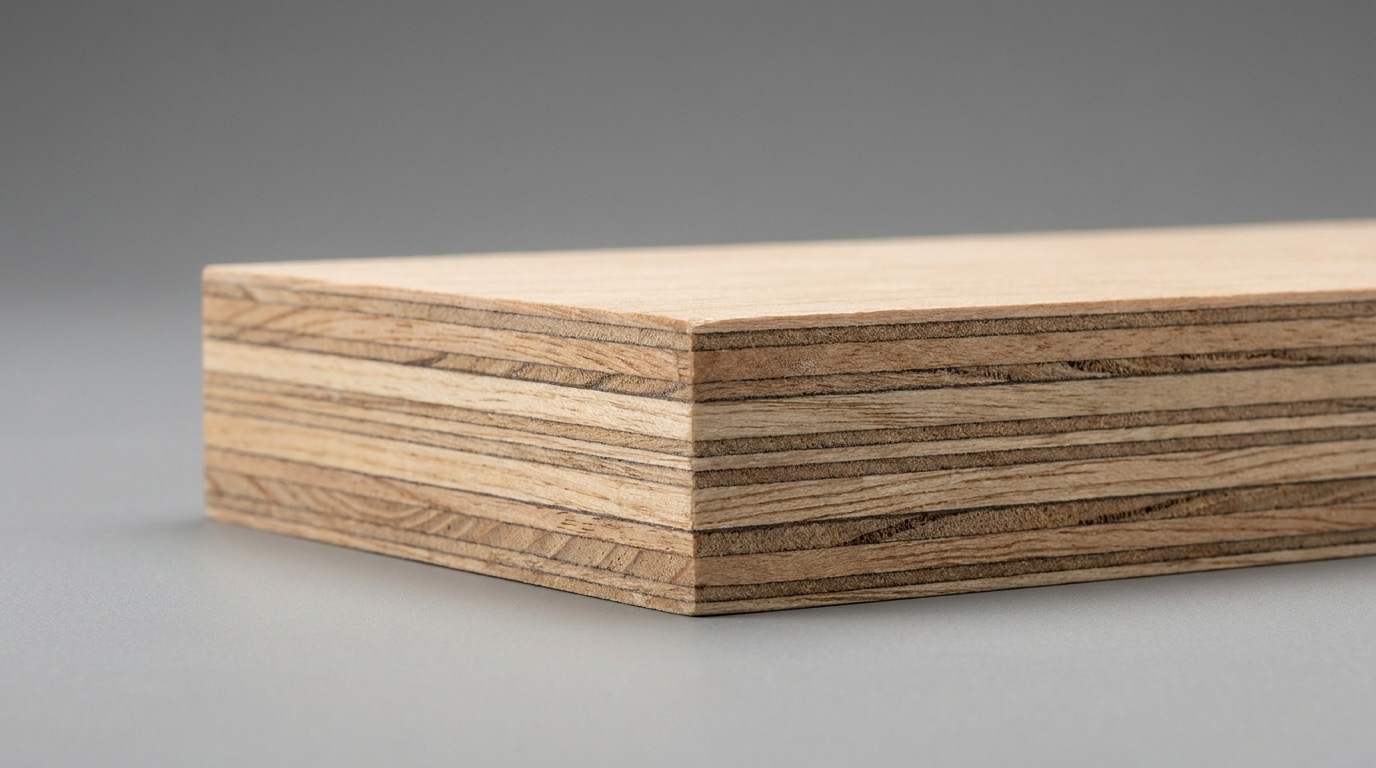
However, not all plywood is equal. Quality depends on veneer species, core construction, glue type, pressing control, moisture content, sanding, thickness tolerance, face grade, and packing. For a broader overview of plywood categories, refer to this complete guide to types of plywood.
Kosmex Plywood supplies different panel options for B2B buyers, including thin panels from 4mm to 8mm. These panels are designed for strong structure, flat surface, and reduced bending risk. Available face choices can include Poplar face, EV face, and Eucalyptus face, with melamine glue available for improved bonding performance.
What Is Solid Wood?
Solid wood is timber cut directly from a tree and processed into boards, planks, rails, stiles, frames, legs, table tops, doors, and decorative furniture parts. Each piece has its own grain, color, knots, texture, and natural character. This uniqueness is why consumers often associate solid wood with premium furniture and long-lasting craftsmanship.
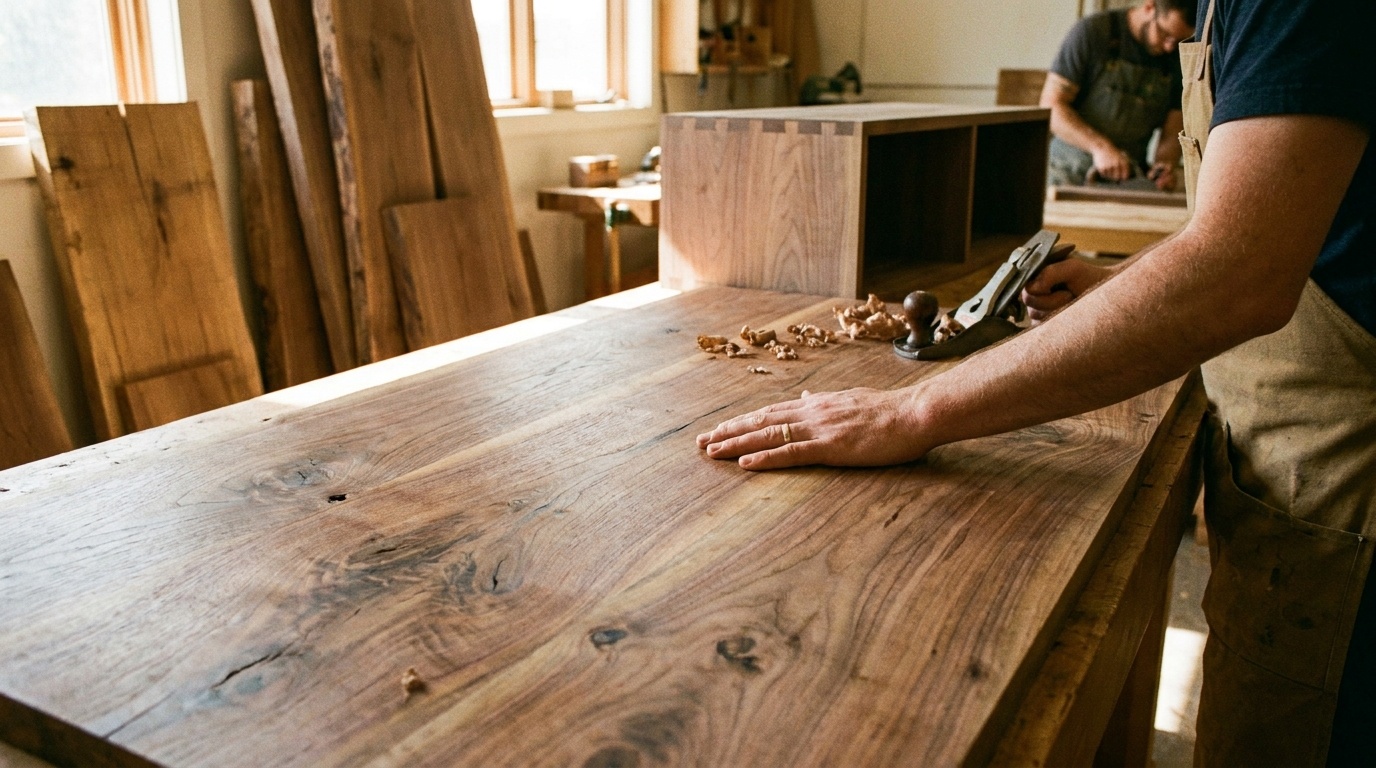
At the same time, solid wood is a natural material that reacts to humidity and temperature. It expands and contracts, especially across the grain. If the wood is not properly dried, machined, sealed, and designed, it may cup, twist, crack, or open at the joints. Solid wood can last for generations, but it requires correct selection, production, finishing, and maintenance.
Key Differences Between Plywood and Solid Wood
Structure and Dimensional Stability
The most important technical difference is structure. Plywood is built from multiple veneer layers bonded together, while solid wood is one continuous natural piece of timber. Because plywood layers are cross-laminated, movement is distributed through the panel. This is why plywood is commonly used where flatness and dimensional stability matter.
Solid wood has continuous natural fibers. This gives it beauty and directional strength, but it also means the board moves with moisture changes. A wide solid wood panel may expand, shrink, cup, or twist if the environment changes. This matters in export projects because products may move from factory to container to warehouse to final installation.
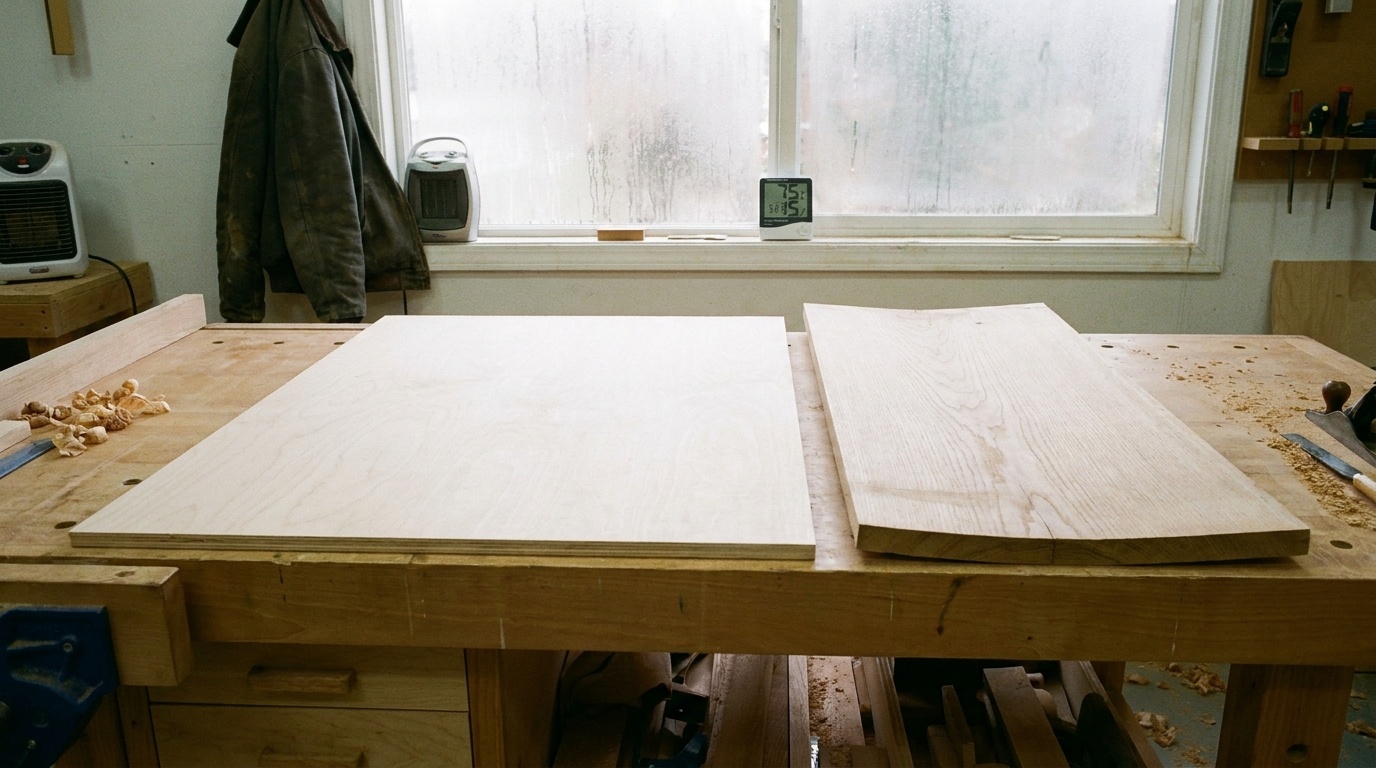
For cabinet sides, shelves, drawer bottoms, backs, bed platforms, and interior wall panels, plywood often gives a more predictable result. For thin wall applications, Kosmex has also covered the benefits of using thin wood panels for walls.
Appearance and Design Value
Solid wood wins when the priority is natural beauty. Its grain, color depth, texture, and tactile warmth are difficult to copy perfectly. For premium furniture, visible solid wood can increase perceived value immediately.
Plywood has a more technical appearance, especially at the edge where layers can be visible. In many projects, the edge is covered with veneer tape, solid wood lipping, paint, laminate, or other decorative materials. The surface of plywood can also be upgraded with natural veneer, engineered veneer, melamine paper, HPL, paint, or other finishes.
Strength, Durability, and Load Direction
Many buyers search for plywood strength vs solid wood because they want one simple answer. In reality, strength depends on species, density, thickness, grain direction, glue quality, panel construction, and load direction.
Solid wood is often stronger along the grain. This makes it excellent for legs, rails, frames, beams, stretchers, and other linear load-bearing parts. Plywood performs very well as a panel because its layers distribute stress across the sheet and reduce splitting. For shelves, cabinet sides, partitions, backs, and drawer bottoms, the engineered structure of plywood can be highly practical.
Another common search is plywood vs solid wood strength. The better answer is that solid wood offers directional strength and long-term repairability, while plywood offers stable sheet performance and resistance to panel movement. For more technical reading, see Kosmex’s article on high bending strength plywood for furniture.
Cost, Price, and Production Efficiency
One major reason buyers compare plywood vs solid wood cost is that material choice affects the entire project budget. Plywood is usually more cost-efficient because it uses veneer layers efficiently and comes in standard sheet sizes that are easy to cut for mass production. Factories can optimize cutting plans and reduce waste.
Solid wood usually costs more because the yield is lower. Boards must be dried, graded, defect-cut, jointed, machined, and finished. Knots, cracks, color variation, and warping can reduce usable volume. Large clear boards are harder to source and normally cost more.
When people search for plywood vs solid wood price, they often focus only on material price. B2B buyers should also consider labor, cutting yield, rejects, finishing work, shipping weight, stability, warranty risk, and customer expectations. A cheaper material can become expensive if it creates installation problems or claims.
Workability, Machining, and Finishing
When comparing mdf vs plywood vs solid wood, MDF is usually chosen for smooth painted surfaces, plywood for stable structural panels, and solid wood for visible premium parts. MDF is smooth but generally weaker in screw holding and less suitable for moisture exposure unless properly specified. For related material comparisons, Kosmex has a separate guide on particle board vs plywood.
Moisture Resistance and Maintenance
No wood-based material should be exposed to uncontrolled water for a long time unless it is specifically designed for that environment. Still, plywood can be more stable than solid wood under humidity changes because of its cross-laminated structure. The glue type also matters. Melamine glue or phenolic glue can improve bonding performance compared with basic interior glue specifications.
Solid wood can perform well when it is properly dried and finished, but it needs maintenance. Sealing, polishing, oiling, or refinishing may be required depending on the product and environment. Plywood maintenance depends on face quality, edge sealing, glue quality, and application. For bonding options, see this article on phenolic vs melamine glue in plywood.
Application Comparison: Cabinets, Kitchens, Drawers, and Furniture
Cabinets
Cabinet projects are where plywood and solid wood are most frequently compared. The keyword plywood vs solid wood cabinets usually comes from buyers who want to know which material should be used for the cabinet box, doors, shelves, and drawers.
For the cabinet carcass, plywood is often the better choice because it stays flat, supports hardware, holds shelves, and helps keep the cabinet square. For visible doors, rails, stiles, trims, or face frames, solid wood may be preferred because it looks premium and can be shaped beautifully.
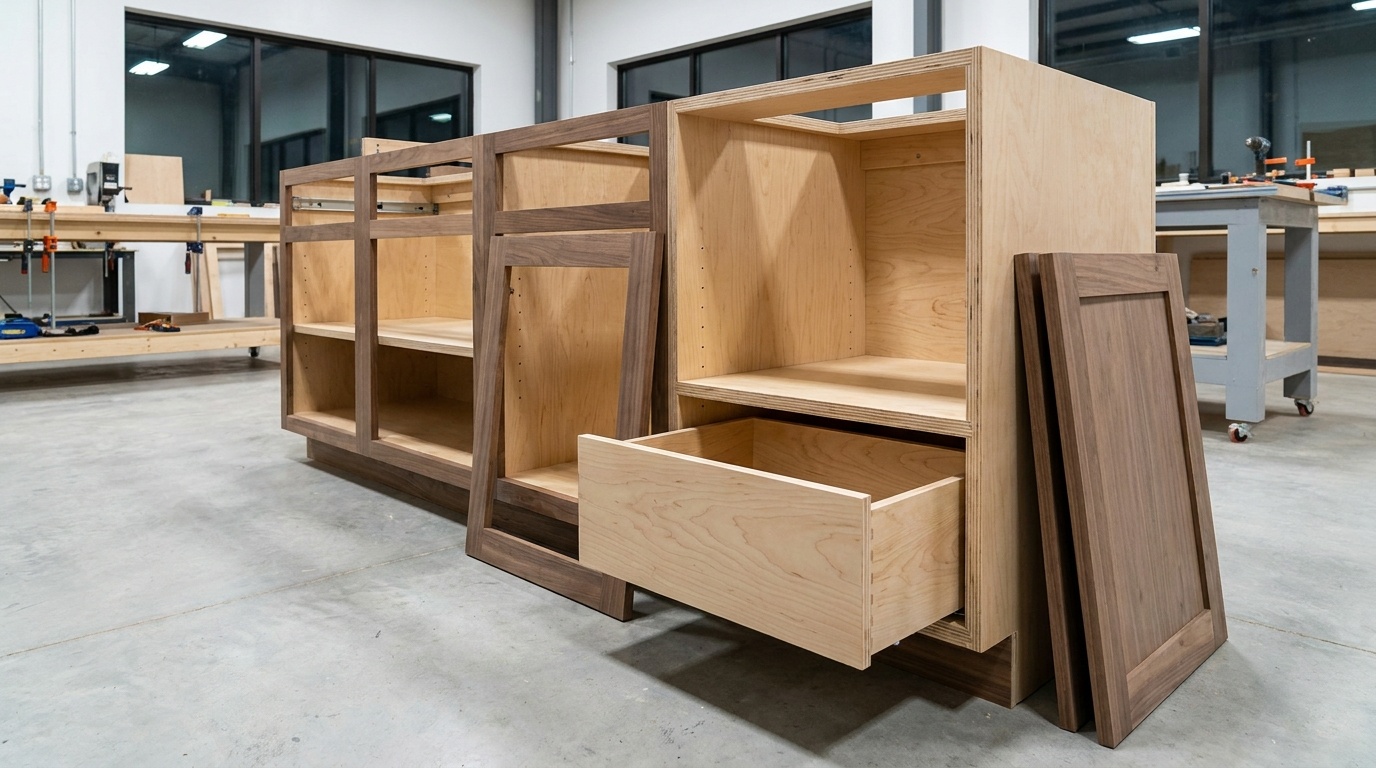
When comparing solid wood cabinets vs plywood, the practical question is not which material is superior in every way. The better question is where each material belongs. Solid wood can make a cabinet look valuable, while plywood can make the cabinet structure more stable and production-friendly.
From another angle, plywood cabinets vs solid wood is a decision between consistency and natural character. Plywood offers repeatable panels. Solid wood offers individual beauty. Many high-quality cabinet systems combine both.
Searches for solid wood vs plywood cabinets often come from buyers worried about quality. A plywood cabinet is not automatically low-end, and a solid wood cabinet is not automatically better. Quality depends on panel grade, species, glue, joinery, hardware, finishing, packing, and manufacturing control.
Kitchen Cabinets
Kitchen cabinets face humidity, heat, steam, cleaning chemicals, heavy storage, and constant use. That is why kitchen cabinets plywood vs solid wood is such an important comparison for homeowners, contractors, and importers.
For cabinet boxes, plywood is usually a safe technical choice. It gives stable sides, backs, shelves, and bottoms. It also supports hinges, drawer slides, and fasteners well when the panel is well made. For premium visible parts, solid wood can still be excellent.
In solid wood vs plywood for kitchen cabinets, the best specification is often plywood for the internal structure and solid wood or veneered components for visible areas. This approach gives both performance and appearance.
For plywood vs solid wood kitchen cabinets, importers should request clear technical details: panel thickness, core species, face veneer, glue type, moisture content, sanding quality, thickness tolerance, packing method, and loading condition. Kosmex’s guide on documents to request from a Vietnam plywood supplier can help buyers prepare before placing an order.
Drawers
Drawers need to remain square after thousands of opening and closing cycles. They must hold screws, connect to slides, support stored items, and avoid swelling or distortion.
The phrase plywood vs solid wood drawers reflects a real performance question. Plywood is often used for drawer bottoms, sides, and backs because it is stable, light, and consistent. It can support the drawer structure without adding unnecessary weight.
Traditional solid wood drawers can be beautiful, especially with dovetail joints. However, solid wood must be correctly dried and machined. In humid climates, drawer sides may expand and affect smooth movement.
For solid wood vs plywood drawers, choose solid wood when the drawer side is visible and the product is premium. Choose plywood when the priority is stability, weight control, production efficiency, and consistent fit.
Furniture, Beds, and Table Tops
The comparison becomes broader in furniture because each furniture item contains different parts. A wardrobe, cabinet, bookshelf, sofa frame, bed, dining table, and office desk all require different performance.
For plywood vs solid wood furniture, plywood is strong for large panels, hidden frames, backs, shelves, partitions, and flat structures. Solid wood is ideal for exposed legs, arms, rails, decorative frames, and premium visible details.
In solid wood vs plywood furniture, the best manufacturers usually combine the two. They use the engineered stability of plywood where movement control matters, then add the warmth of solid wood where customers see and touch the product.
For plywood vs solid wood bed, a good specification can use plywood for the platform, slats, storage base, or headboard panel, while solid wood is used for legs, rails, and visible frame components.
For plywood vs solid wood table top, solid wood offers natural grain and refinishing value, while plywood offers flatness and stability when covered with veneer, laminate, HPL, paint, or other decorative surfaces.
How to Decide Which Material to Use
A simple way to decide when to use plywood vs solid wood is to look at the function of each component. If the part must stay flat, be cut efficiently, support hardware, and remain stable across climate changes, plywood is often the better choice. If the part is visible, decorative, carved, touched frequently, or expected to show natural grain, solid wood may be the better choice.
Use plywood for large flat panels, cabinet carcasses, drawer bottoms, shelves, partitions, backing boards, bed platforms, furniture frames, wall panels, ceiling panels, and hidden structural parts. Use solid wood for visible legs, rails, door frames, table edges, carved details, moldings, exposed furniture parts, and premium surfaces.
Sustainability and Material Efficiency
Plywood can be resource-efficient because it uses thin veneers and allows manufacturers to create large panels from smaller logs. This can improve yield compared with using only large clear solid boards. However, sustainability still depends on legal wood sourcing, responsible forestry, glue systems, factory control, and waste management.
Buying Checklist for B2B Importers
Before placing a bulk order, buyers should confirm the application first. Is the panel used for furniture, cabinets, drawers, wall panels, flooring underlayment, packaging, or construction? Each use requires a different specification. Buyers can also compare structural vs non-structural plywood when the project has load-bearing requirements.
Second, confirm thickness and tolerance. Thin panels must remain flat and stable, especially in 4mm, 5mm, 6mm, 7mm, and 8mm options. If weight affects the project, this guide on how much a sheet of plywood weighs can help with planning.
Third, confirm the face and core. Poplar face, EV face, and eucalyptus face can serve different markets and finishing needs. Eucalyptus core may offer higher density, acacia core can provide balanced performance, and mixed white hardwood can be a cost-effective option. For eucalyptus-based products, see Kosmex’s eucalyptus plywood review and eucalyptus vs poplar plywood comparison.
Fourth, check defects, packing, and logistics. Export panels must be packed to reduce moisture changes, corner damage, and surface scratches during transport. Buyers can use this guide to understand common defects in plywood and how to avoid them.
Finally, evaluate the supplier carefully. A strong supplier should provide stable quality, clear specifications, proper documentation, transparent communication, and export experience. Kosmex’s article on how to evaluate a Vietnam plywood factory is useful for importers comparing manufacturers.
Why Choose Kosmex Plywood for Panel Projects?
Kosmex Plywood focuses on practical plywood solutions for furniture, interior, construction, and export markets. For thin panels, Kosmex can produce 4mm, 5mm, 6mm, 7mm, and 8mm products with strong structure, flat surface, and reduced bending risk. Buyers can also learn more from Kosmex’s dedicated page on understanding thin plywood panels.
Kosmex can support Poplar face, EV face, and Eucalyptus face options, with melamine glue available based on buyer requirements. Depending on the application, buyers can consider eucalyptus, acacia, or mixed white hardwood core options. For hardwood-based panel information, read the hardwood plywood complete guide.
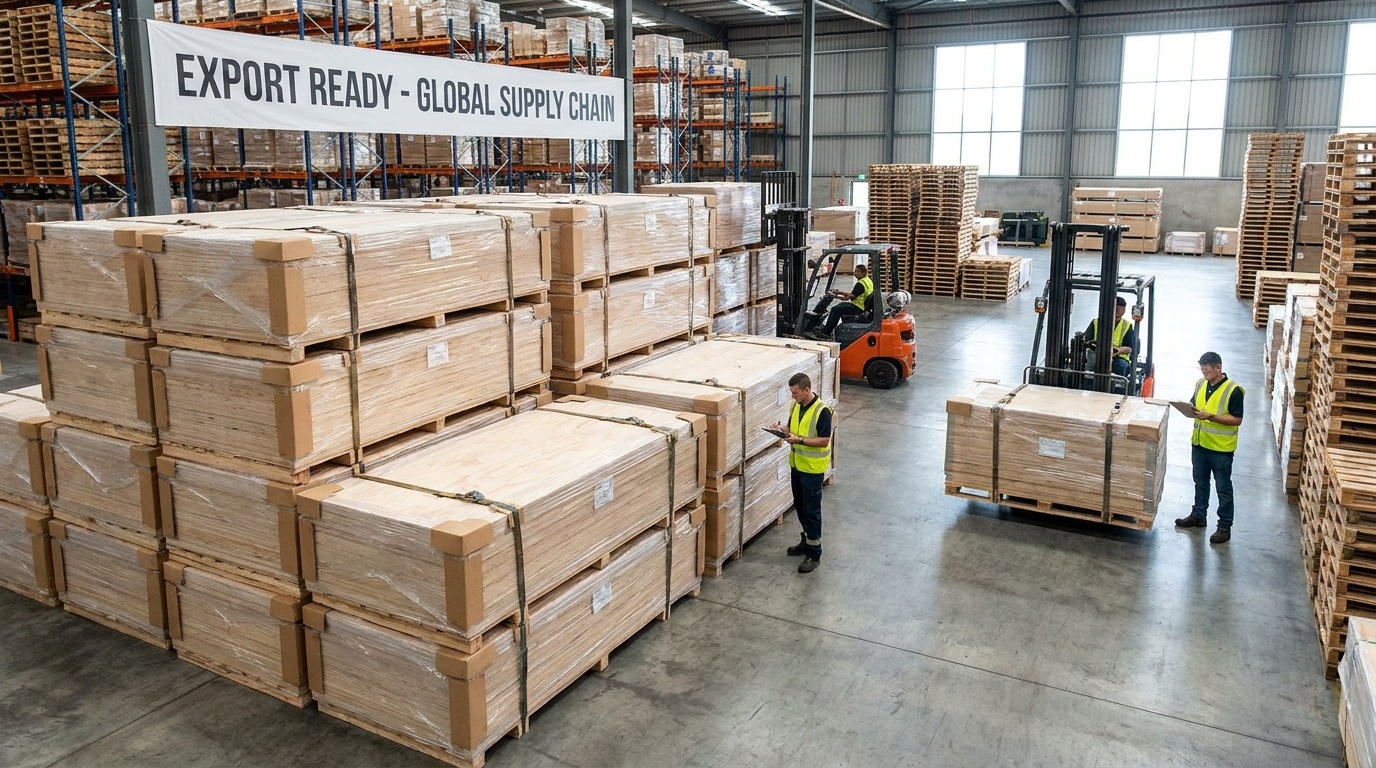
Kosmex also understands that different markets require different specifications. Middle East buyers may focus on stable supply, competitive pricing, and reliable packing. European buyers may care strongly about surface quality, panel flatness, density, formal documentation, and consistent machining performance. For European sourcing, Kosmex has additional resources on how to import plywood from Vietnam to Europe and Vietnam plywood vs China plywood for EU buyers.
Conclusion
There is no universal winner between plywood and solid wood. Solid wood is beautiful, natural, repairable, and premium. Plywood is stable, efficient, cost-effective, and highly suitable for large panel applications. For cabinets, drawers, furniture, beds, kitchen systems, and table tops, the best material depends on the component, not just the product name.
For many commercial projects, plywood is the smart choice for structure, flatness, and production efficiency, while solid wood is best reserved for visible details and premium design value. If your project requires stable plywood panels, thin panels, or export-ready specifications, Kosmex Plywood can support you with suitable thicknesses, face options, core choices, glue options, and production guidance.





Bình luận