


This guide explains how film faced plywood pricing works for importers, contractors and distributors. It does not publish a permanent price list because resin, veneer, freight and exchange conditions change. Instead, it shows how to obtain a comparable quotation and identify where an apparently cheaper offer may be based on a different product.
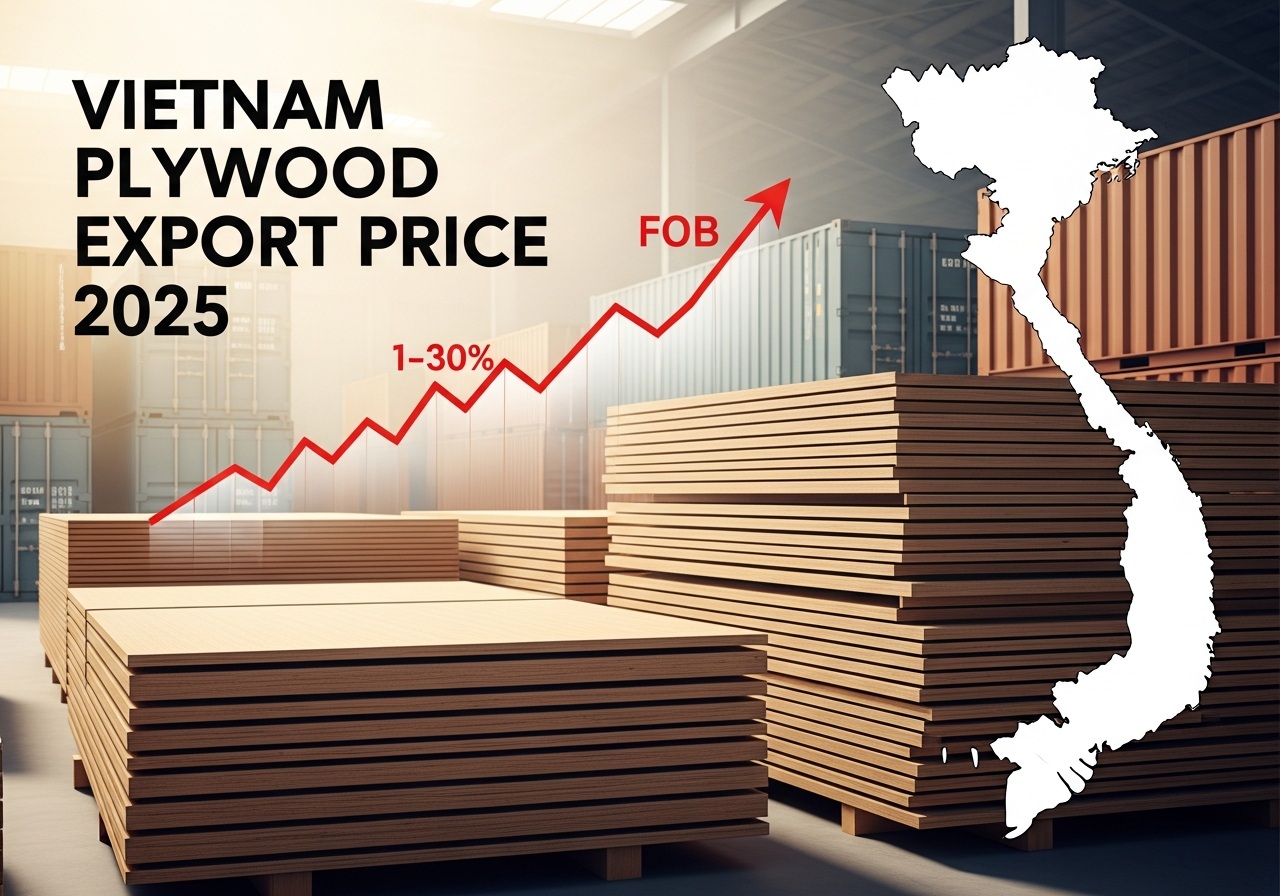
Film Faced Plywood Price: The Short Answer
The correct price depends on the panel you are actually buying. A useful quote should identify at least the panel size, nominal and actual thickness, core species and construction, adhesive system, film type and weight, surface finish, edge treatment, quantity, packing, delivery term and destination.
If those details are absent, a price per sheet or per cubic meter is only a starting number. It cannot be compared reliably with another supplier’s offer. For example, an 18 mm panel made with a consistent hardwood core, controlled bond system and heavier film is not equivalent to an 18 mm panel with large internal gaps, unclear adhesive and a thin surface film. The outside can look similar while the performance and rejection risk are very different.
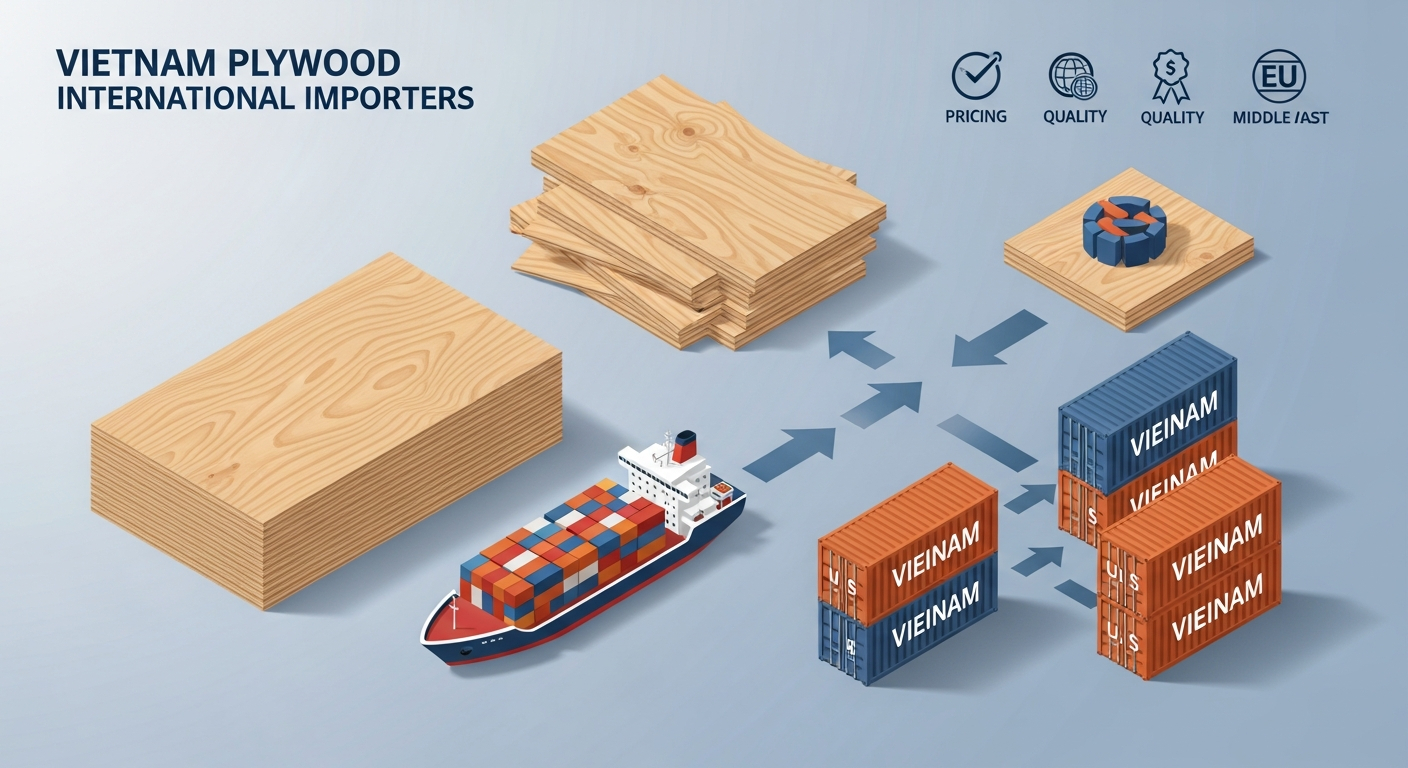
Eight Factors That Change Film Faced Plywood Prices
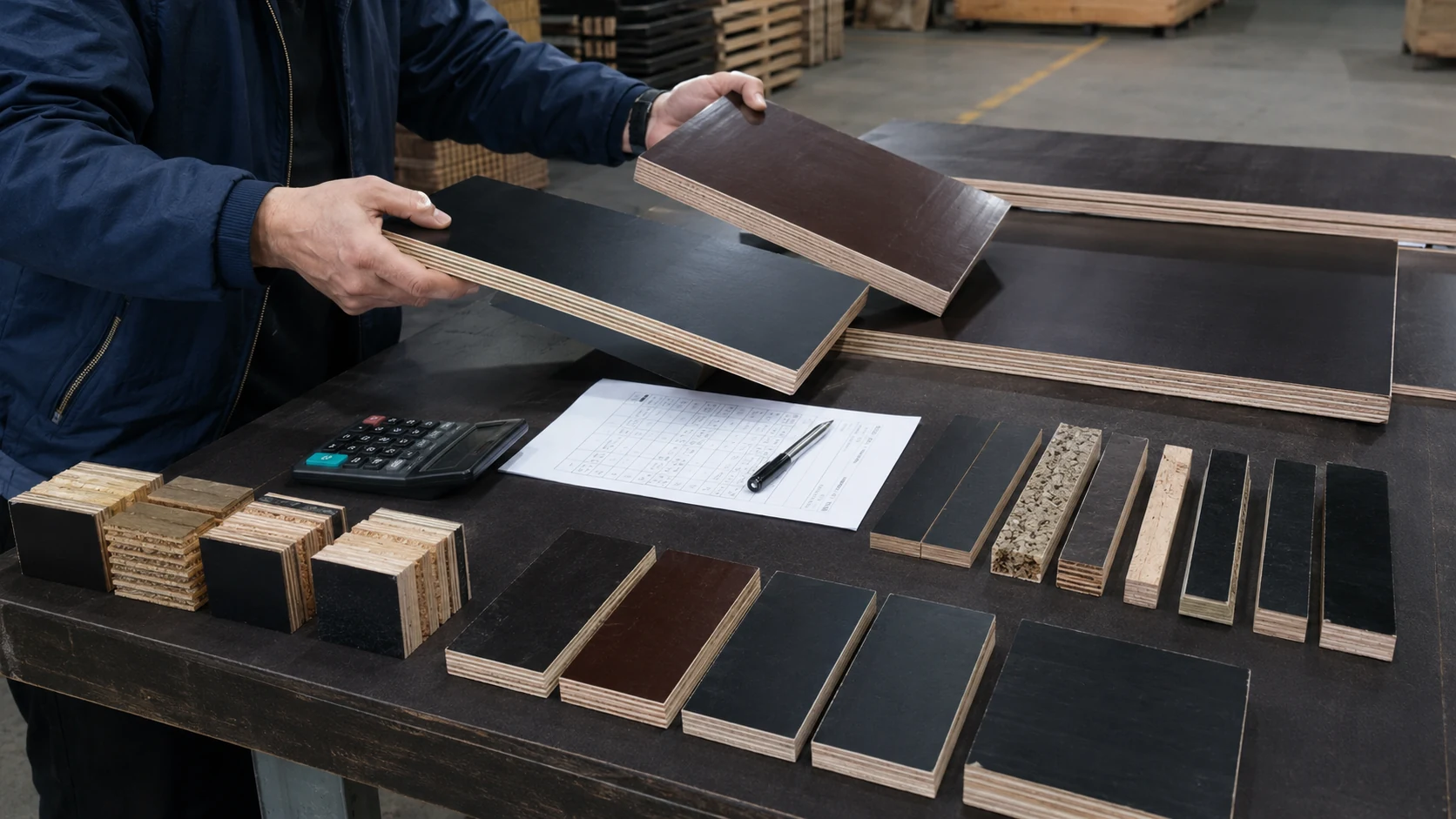
1. Core species and core construction
The core provides most of the panel’s stiffness and internal integrity. Eucalyptus, acacia, mixed hardwood, poplar and birch do not have the same density, cost or performance profile. Species names alone are not enough, either. Veneer quality, number of plies, gaps, overlaps, scarf or finger joints and moisture control can matter as much as the species.
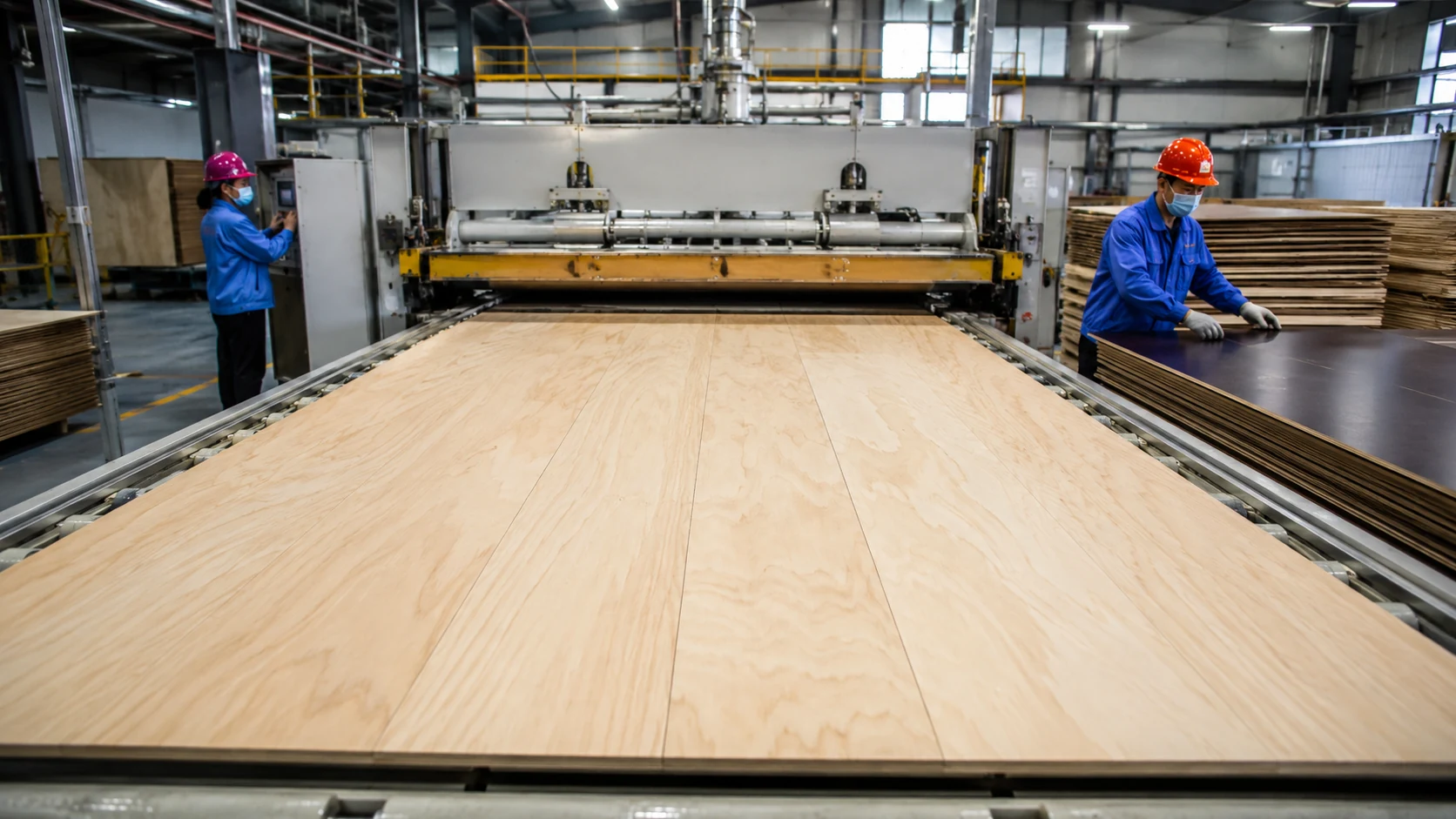
A machine-composed core usually requires more controlled preparation than a loosely hand-jointed core. That may raise production cost, but it can also reduce voids and weak spots. Ask for a cross-section sample and a clear core description rather than accepting “hardwood core” as a complete specification. The composer-machine versus hand-jointed core guide explains how the two processes differ.
2. Adhesive and bond performance
Manufacturers may offer melamine-modified or phenolic adhesive systems for different exposure and budget requirements. The words “WBP” are widely used in trade, but they should not replace a named test, classification or technical data sheet. A buyer should ask what adhesive is used, what bond performance has been verified and whether the report applies to the exact product being supplied. See the Kosmex comparison of phenolic and melamine glue in plywood for additional buying context.
Phenolic systems are normally associated with demanding wet-use bonding, but the finished panel still depends on veneer quality, pressing and protected edges. Paying for a stronger adhesive does not correct a poorly built core.
3. Film type, resin and grammage
The overlay protects the face from abrasion, moisture and contact with fresh concrete. Film weight is commonly expressed in grams per square meter. A heavier film can cost more, but grammage is not the only quality variable. Resin formulation, paper quality, curing, adhesion and surface uniformity also affect performance.
Black and brown films should not be priced as different grades solely because of color. When comparing them, hold the film weight, resin system, core, glue and pressing quality constant. The existing black versus brown film faced plywood guide explains why the specification behind the color matters more than the color itself.
4. Thickness and dimensional tolerance
Thicker panels require more wood and adhesive, so the price per sheet rises. However, nominal thickness is not enough. Excessive variation across a panel or between sheets can create misaligned joints, inconsistent concrete surfaces and difficulty fitting a formwork system.
Specify the permitted thickness range, measurement method and sampling plan in the purchase order. The film faced plywood thickness guide can help establish the available size range, while the approved formwork design should determine the panel required for the project.
5. Pressing, calibration and surface preparation
Cold pressing, hot pressing, panel calibration, sanding, surface repair and film lamination all consume time, energy and labor. More controlled processing usually produces flatter panels, better bonding and more uniform film adhesion. A quote that includes only “one press” or “two presses” is still incomplete because temperature, pressure, time, moisture and process control determine the result.
6. Edge sealing, machining and customization
Factory edge paint helps limit moisture entering exposed veneer edges. Custom cutting, drilling, logo printing, special sizes, anti-slip patterns and additional edge treatment add operations and may increase waste. They should be listed separately so the buyer can see what is included.
7. Order quantity, packing and loading plan
MOQ, bundle size, pallet material, protective wrapping, corner protection and container utilization affect the delivered unit cost. A larger order does not always reduce total cost if the selected sizes load inefficiently or create slow-moving inventory. Ask for both the sheet count and net cubic meters per container, along with a packing diagram for the quoted specification.
8. Documentation, inspection and market requirements
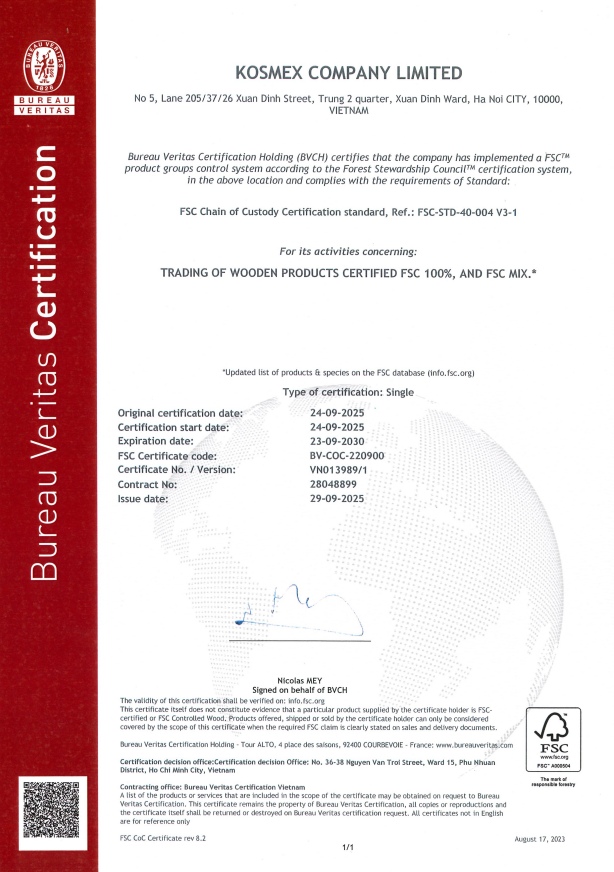
Third-party inspection, chain-of-custody documentation, product testing, special marking and destination-specific paperwork involve real cost. The supplier should state which documents are included and whether they cover the exact factory, product, thickness and production period. A logo or general company certificate is not automatically evidence for every panel. Use the Vietnam plywood supplier document checklist to define the required evidence before requesting prices.
Price per Sheet vs Price per Cubic Meter
International plywood quotations are often expressed per cubic meter, while distributors and contractors think in sheets. Converting between the units is straightforward when the dimensions are fixed:
Panel volume in m³ = length in meters × width in meters × thickness in meters
Indicative sheet price = quoted price per m³ × panel volume
A 1220 × 2440 × 18 mm panel has a nominal volume of approximately 0.0536 m³. Multiply that volume by the quoted cubic-meter price to estimate the base sheet price. This is a unit conversion, not a landed cost.
Before using the calculation, confirm whether the supplier invoices on nominal or measured dimensions, how quantity is rounded and whether packaging or local transport is included. For a fair comparison, use the same calculation method for every offer.
| Quote item | What to confirm |
|---|---|
| Panel dimensions | Length, width, nominal thickness and tolerance |
| Price unit | Per sheet, per m³ or per container |
| Quantity basis | Sheets and net m³ in each bundle or container |
| Included services | Packing, inspection, documentation and inland haulage |
| Currency and validity | Currency, exchange assumptions and expiry date |
FOB, CFR, CIF and Landed Cost
A factory or port quotation is not necessarily the cost of getting usable sheets to the jobsite. The delivery term must be stated using the agreed Incoterm and named place or port. Commercial teams should also confirm the current Incoterms edition used in the contract.
- Factory or ex-works cost: the product at the stated point, before many export and transport costs.
- FOB-related quote: typically covers the goods and agreed export-side delivery to the named port under the contract.
- CFR or CIF-related quote: adds ocean freight, and for CIF, the contracted insurance component, but destination expenses may remain.
- Landed cost: adds all costs required to make the shipment available at the buyer’s chosen destination.
A landed-cost worksheet may include the product, packing, inspection, export documents, inland haulage, terminal charges, ocean freight, insurance, duties, taxes, customs brokerage, destination handling, storage, local delivery, financing and bank fees. Duty and tax depend on product classification and destination rules, so verify the HS code and current local requirements with a qualified customs professional.
Calculate Cost per Usable Pour
Purchase price alone can reward a panel that is cheap to buy but expensive to use. A more useful metric is the cost per acceptable pour:
Material cost per usable pour = landed panel cost ÷ number of acceptable pours achieved
A complete project calculation can also add cleaning, repair, handling, storage and concrete surface rework. “Acceptable” matters because a sheet may remain physically intact but no longer produce the finish required for exposed concrete. It may be downgraded to less demanding work rather than counted as equivalent reuse.
Do not rely on a generic promise that a panel can be reused a fixed number of times. Use a defined product specification and record conditions after each pour. The existing formwork plywood buyer guide explains why site handling and the complete panel build affect cost per pour.
How to Compare Film Faced Plywood Quotations
Create one reference specification and ask every shortlisted supplier to complete the same table. Do not let each supplier choose a different construction and then compare only the totals.
| Comparison field | Supplier A | Supplier B | Required specification |
|---|---|---|---|
| Size and thickness tolerance | |||
| Core species and construction | |||
| Adhesive and verified bond class | |||
| Film type, weight and color | |||
| Edge sealing | |||
| Documents and test reports | |||
| Packing and container quantity | |||
| Incoterm, named port and validity | |||
| Landed cost per sheet | |||
| Estimated cost per acceptable pour |
Request a representative sample, cross-section images and current documents before a commercial order. For large or repeat purchases, define pre-shipment inspection and non-conformance handling in the purchase agreement. Review the existing guide to common plywood defects and attach measurable acceptance limits to the order.
Film Faced Plywood RFQ Template
Send enough information in the first request to receive a usable quote:
Please quote film faced plywood for [application and project]. Required panel size: [length × width], nominal thickness: [mm], quantity: [sheets or m³]. Please state actual thickness tolerance, core species and construction, adhesive system and relevant bond evidence, film type/weight/color, surface finish and edge sealing.
Target concrete finish: [requirement]. Intended reuse target: [planning target, not warranty]. Required documents: [list]. Packing: [requirement]. Please quote [Incoterm] [named port/place], state container quantity, production lead time, price validity, payment terms and sample availability. Please identify any deviation from this specification.
For current Kosmex constructions, use the film faced plywood product page and the broader film faced plywood guide as starting points, then ask the export team to confirm the exact build, evidence and commercial terms available for your order.
Frequently Asked Questions
Why do film faced plywood prices vary so much?
Quotes can reflect different cores, adhesive systems, film weights, thickness tolerances, pressing controls, packing, documentation and delivery terms. Similar color and nominal size do not make two panels equivalent.
Is price per cubic meter better than price per sheet?
Neither unit is inherently better. Cubic-meter pricing helps compare material volume, while sheet pricing matches purchasing and site use. Convert both offers to the same dimensions and commercial basis.
Does a heavier film always justify a higher price?
A heavier film can improve surface protection, but performance also depends on resin quality, lamination, core, adhesive and handling. Evaluate the complete construction.
Should I choose the lowest FOB price?
Not before calculating landed cost and checking the specification. A lower FOB quote can be offset by poor container utilization, missing documentation, higher rejection risk or fewer acceptable pours.
How often should a price guide be updated?
Any numeric market range should display a checked date and reference specification. Buyers should still request a current quotation because veneer, resin, freight and currency conditions can change.
Request a Specification-Based Quote
A useful quotation starts with the required application and panel build. Contact Kosmex with your size, thickness, core, adhesive, film, documentation, quantity and destination so the team can confirm an available specification rather than provide an ambiguous headline price.
Bình luận