


Understanding Thin Plywood Panels: Why They’re the Best Choice for Concrete Formwork
In the world of construction, especially when it comes to concrete formwork, selecting the right materials can make all the difference between a successful project and one that faces unnecessary challenges. Thin plywood panels have become a popular choice among contractors and builders for their superior strength, versatility, and ease of use in concrete formwork. These panels not only help create durable and precise molds for pouring concrete but also offer cost-effectiveness and long-lasting reliability, even under harsh jobsite conditions.

In this article, we’ll explore why thin plywood panels are the best choice for concrete formwork, focusing on their advantages, applications, and key features that make them stand out from other materials.
What Are Thin Plywood Panels?
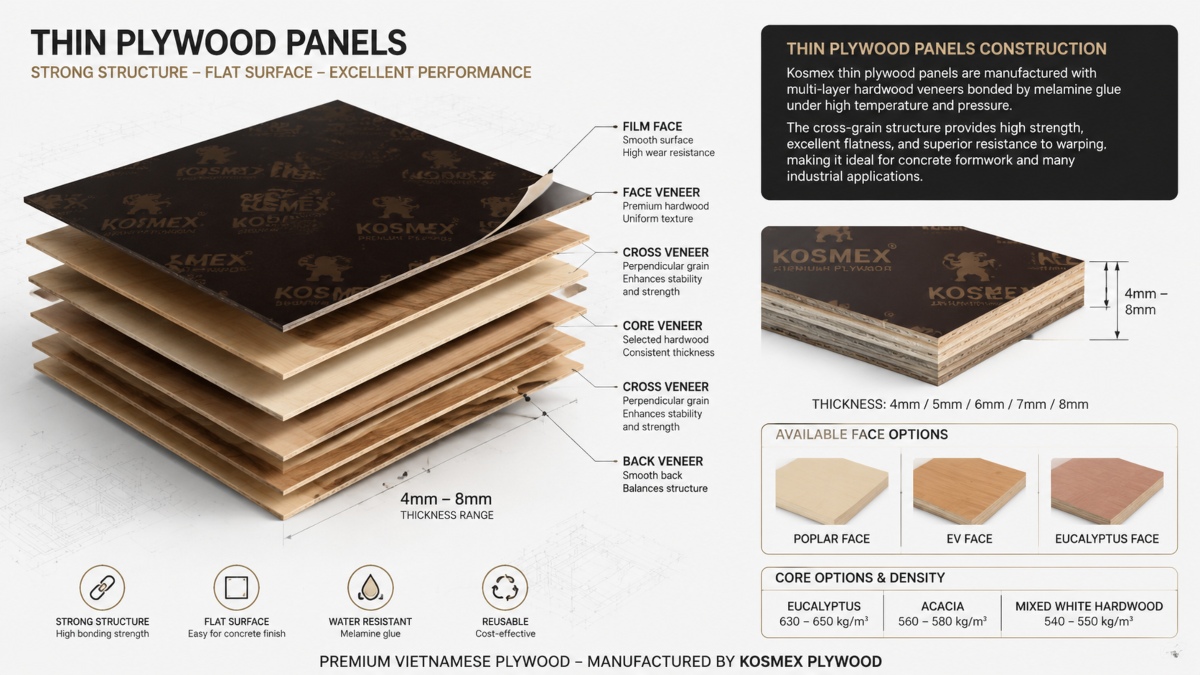
Thin plywood panels are specially engineered wood panels made from thin layers of veneer bonded together with strong adhesive. These panels are available in various thicknesses, typically ranging from 4mm to 8mm, depending on the specific requirements of the project. Unlike traditional plywood, thin plywood panels are lighter and more flexible, which makes them easier to handle during construction.

When used for concrete formwork, thin plywood panels serve as molds for casting concrete into specific shapes. The smooth surface and high strength of the panels ensure that the final concrete structure has the necessary dimensional precision and surface finish.
Understanding the types of plywood available helps contractors make informed decisions about which panels work best for specific formwork applications. While thin panels excel in certain scenarios, knowing the full spectrum of plywood classifications ensures optimal material selection.
Key Advantages of Using Thin Plywood Panels for Concrete Formwork
Superior Strength and Durability
One of the primary reasons thin plywood panels are chosen for concrete formwork is their structural strength. These panels are made using high-quality veneer layers that are bonded with strong adhesives, such as melamine glue, making them capable of withstanding the heavy pressure exerted by liquid concrete. The robust construction of the panels ensures that they maintain their shape even under intense pressure, helping formwork to stay intact throughout the entire curing process.

The choice between phenolic vs melamine glue significantly impacts panel performance in demanding formwork conditions. Understanding adhesive properties helps contractors specify materials that will survive multiple pours and harsh site conditions.
Moreover, thin plywood panels are engineered to resist bending and warping, which are common issues with other types of wood. This resistance to deformation is essential for creating accurate and stable molds for poured concrete.
For contractors requiring verified structural performance, birch phenolic glue plywood with EN 314 test certification provides documented proof of adhesive bond strength and moisture resistance, critical factors for formwork applications.
Flat Surface and Easy Handling
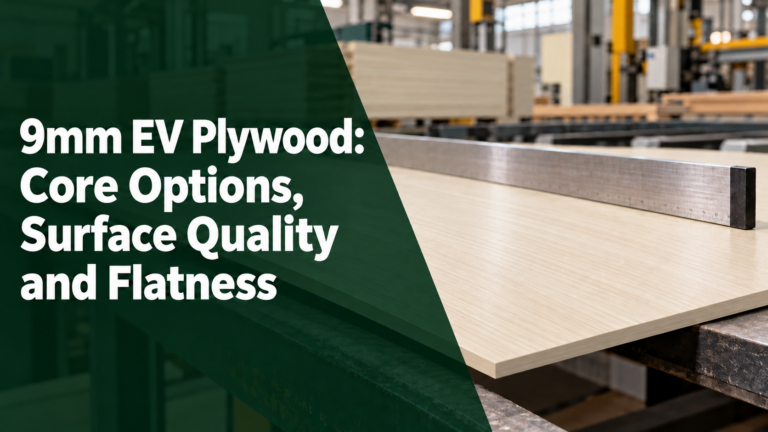
For concrete formwork, the surface finish is crucial. Thin plywood panels provide an exceptionally smooth and flat surface that allows concrete to be poured evenly, reducing the chances of imperfections in the final structure. The flatness of the panels ensures that they align properly, creating uniform concrete walls, floors, and columns.

Furthermore, thin plywood panels are lightweight, making them easier to handle and transport to and from the jobsite. This ease of use can significantly improve the efficiency of construction crews, saving both time and labor costs.
When projects demand maximum surface quality, film faced plywood offers a phenolic-coated surface that releases cleanly from cured concrete, producing architectural-grade finishes with minimal cleanup.
Cost-Effectiveness and Reusability
Another compelling reason to choose thin plywood panels for concrete formwork is their cost-effectiveness. Although they may come at a slightly higher upfront cost compared to other materials, the durability and reusability of these panels make them a wise investment in the long run. Thin plywood panels can be reused multiple times, with proper maintenance, which lowers the overall cost of construction projects over time.

Since these panels are lightweight and easy to store, contractors can reassign them to different projects as needed. This versatility makes them an excellent choice for large-scale projects where formwork needs to be set up and dismantled frequently.
Understanding standard plywood sizes helps contractors optimize material usage, reducing waste and maximizing the number of reuses per panel. Proper sizing ensures efficient cutting patterns and minimizes offcut waste.
Types of Thin Plywood Panels Used in Concrete Formwork
Poplar Face Thin Plywood Panels
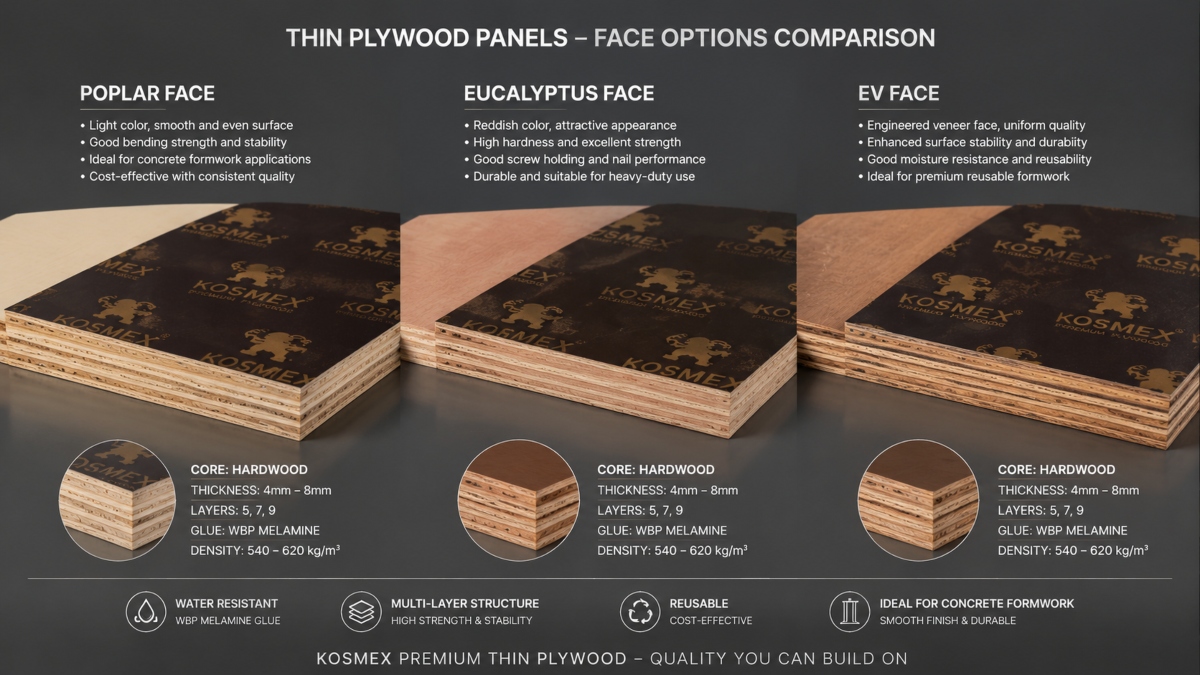
Poplar face thin plywood panels are commonly used in concrete formwork due to their strength and smooth surface. The poplar wood face provides a consistent texture, which is important for ensuring that the concrete forms well and does not adhere to the panel surface.
Poplar plywood represents one of many hardwood plywood options available for formwork. Each wood species offers distinct characteristics in terms of density, surface texture, and adhesive compatibility that affect concrete release and panel longevity.
Eucalyptus Face Thin Plywood Panels
Eucalyptus face thin plywood panels are another excellent option for formwork. Eucalyptus wood is known for its durability and resistance to moisture, which makes it ideal for use in outdoor construction projects. These panels can withstand the elements while providing a smooth, stable surface for casting concrete.
For European Union buyers, eucalyptus plywood for EU market meets stringent CE certification requirements and provides competitive alternatives to traditional formwork materials at lower costs than birch plywood.
Contractors working in tropical or high-humidity environments should explore what is eucalyptus plywood to understand its natural moisture resistance and dimensional stability advantages over softwood alternatives.
EV Face Thin Plywood Panels
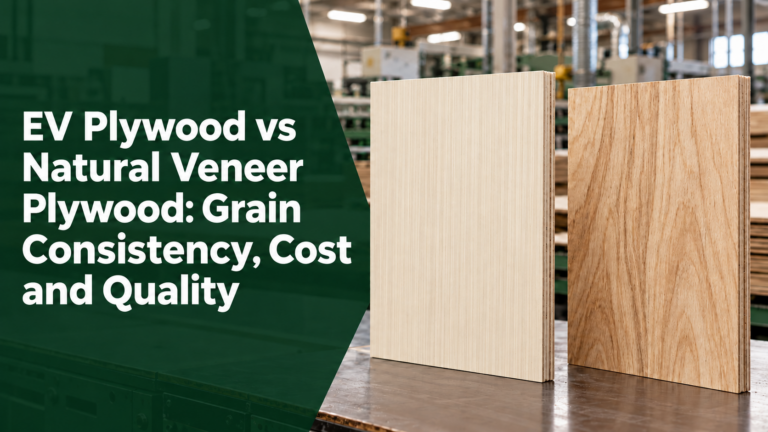
EV face thin plywood panels offer enhanced resistance to wear and tear. They are particularly well-suited for high-demand construction environments, such as large-scale commercial projects, where durability and stability are paramount.
When comparing material options, understanding the eucalyptus vs poplar plywood trade-offs helps contractors balance initial cost against expected service life and reuse cycles.
Applications of Thin Plywood Panels in Concrete Formwork
Wall and Column Formwork
Thin plywood panels are widely used for forming walls and columns in concrete construction. Their strength and flexibility make them ideal for creating the vertical molds needed for casting concrete walls. The flat surface ensures that the final structure is smooth and consistent.
For projects requiring structural certification, understanding whether plywood is structural or non-structural is critical. Formwork panels must meet minimum strength requirements to safely support wet concrete loads.
Slab and Floor Formwork
For floor and slab applications, thin plywood panels provide the necessary rigidity and stability to support the weight of the poured concrete. They are an excellent choice for projects requiring precision and strength, such as multi-story buildings or industrial complexes.
When specifying materials for subfloor or slab formwork, contractors can reference subfloor plywood guidelines to understand thickness requirements, span ratings, and load capacity specifications.
Architectural Concrete
When creating decorative concrete elements, thin plywood panels offer a high-quality surface finish that is essential for achieving the desired aesthetic. The smoothness of the panels allows for detailed and intricate designs in the concrete, making them perfect for architectural projects.

For premium architectural applications, anti-slip film faced plywood with wiremesh pattern provides both functional slip resistance and decorative surface texture that transfers to concrete finishes.
How to Maintain Thin Plywood Panels for Concrete Formwork
To maximize the lifespan of thin plywood panels and maintain their performance, it’s important to follow proper care and maintenance practices. Here are a few tips:
Clean the panels regularly: After each use, clean the panels to remove any concrete residue, dust, or dirt. This prevents buildup that could affect their surface quality.
Store the panels properly: Store thin plywood panels in a dry, cool place to avoid moisture absorption, which could lead to warping or damage. Ensure they are stacked properly to maintain their flatness.
Proper storage practices align with general guidance on plywood sustainability, which emphasizes protecting materials from environmental degradation to extend service life and reduce waste.

Use form release agents: Applying a form release agent to the surface of the panels before use helps prevent the concrete from sticking to the panels, making them easier to clean and reuse.
Understand moisture limitations: While film-faced plywood resists moisture better than bare panels, understanding plywood waterproofing principles helps contractors select appropriate grades and apply protective treatments when panels will be exposed to weather during construction delays.
Inspect for defects: Regular inspection prevents using damaged panels that could compromise concrete quality. Learn about common defects in plywood and how to avoid them to implement quality control checkpoints during receiving and before each reuse.
Choosing the Right Thin Plywood Panel Supplier
When sourcing thin plywood panels for formwork applications, supplier selection directly impacts project success. Consider these factors:
Quality documentation: Reputable suppliers provide test reports and certificates documenting mechanical properties, adhesive performance, and regulatory compliance.
Factory capabilities: Understanding how to evaluate a Vietnam plywood factory helps buyers assess manufacturing quality, consistency, and capacity to meet large orders.
Required documentation: European buyers should verify that suppliers can provide the documents to request from Vietnam plywood supplier, including CE certificates, Declarations of Performance, and EUDR compliance documentation.
Import compliance: For European contractors, understanding how to import plywood from Vietnam to Europe ensures smooth customs clearance and regulatory compliance.
Market positioning: Analyzing Vietnam plywood vs China plywood for EU buyers reveals pricing advantages, anti-dumping duty considerations, and quality differences that impact total cost of ownership.
Kosemex: Your Reliable Partner for Formwork Plywood
Kosemex manufactures premium thin plywood panels specifically engineered for concrete formwork applications. Our panels combine Vietnamese manufacturing efficiency with international quality standards.
Product range: Explore our complete formwork plywood product line featuring film-faced panels in multiple thicknesses, densities, and reuse ratings.
Quality assurance: All Kosemex formwork panels undergo rigorous testing. View our CE certificates and test reports documenting compliance with EN 13986 and EN 314-2 standards.
Technical support: Our team provides guidance on how to choose plywood for formwork, including thickness selection, reuse expectations, and maintenance recommendations.
Competitive pricing: Understanding Vietnam plywood price trends helps buyers time purchases and negotiate effectively. Kosemex offers transparent pricing with no hidden costs.
EU market expertise: We understand top EU markets importing Vietnam plywood and maintain stock ready for shipment to Poland, Germany, Netherlands, Belgium, and Bulgaria.
Conclusion: Why Thin Plywood Panels are the Best Choice for Concrete Formwork
In conclusion, thin plywood panels offer numerous advantages that make them the best choice for concrete formwork. Their superior strength, flatness, and resistance to bending make them ideal for creating precise and durable molds for concrete. Furthermore, their cost-effectiveness and reusability ensure that they are a wise investment for any construction project.
Whether you’re building residential, commercial, or industrial structures, choosing thin plywood panels for your formwork needs will help ensure the success of your project. Their proven reliability and versatility make them an essential tool for contractors and builders around the world.
For projects requiring specialized solutions, explore related materials like birch plywood for premium furniture-grade applications, or CDX plywood for general construction sheathing where formwork-grade specifications aren’t required.
Ready to source quality formwork plywood? Contact Kosemex for technical specifications, pricing, and sample requests. Download our complete product catalogue to compare specifications across our full range of thin panel options.
Frequently Asked Questions (FAQs) about Thin Plywood Panels
1. What is the ideal thickness of thin plywood panels for concrete formwork?
The ideal thickness of thin plywood panels for concrete formwork typically ranges from 4mm to 8mm. The choice of thickness depends on the size and scale of the project, as well as the pressure exerted by the poured concrete. Thicker panels are generally used for larger or more demanding formwork applications, while thinner panels are suitable for smaller forms and less pressure.
2. How many times can thin plywood panels be reused in concrete formwork?
With proper care and maintenance, thin plywood panels can be reused multiple times, often up to 20-30 uses or more. Regular cleaning and using form release agents will help extend their lifespan and ensure they remain flat and free from damage.
3. Are thin plywood panels waterproof?
While thin plywood panels are not fully waterproof, they are water-resistant and designed to withstand the moisture from concrete pours. However, prolonged exposure to water or harsh weather conditions can affect their performance. It’s essential to store and maintain the panels in a dry environment when not in use.
4. How do thin plywood panels compare to other materials like plastic or metal for formwork?
Thin plywood panels offer several advantages over plastic and metal formwork materials. They are lightweight, cost-effective, and versatile. Unlike plastic, thin plywood panels provide a smoother finish for concrete surfaces. Compared to metal, they are less expensive and easier to handle, making them an excellent choice for projects where cost and efficiency are a priority.
5. Can thin plywood panels be used for architectural concrete?
Yes, thin plywood panels are commonly used for architectural concrete because of their smooth surface finish. They help create detailed and intricate designs in concrete, making them ideal for decorative concrete elements like walls, floors, and columns.
6. How do I store thin plywood panels to ensure they stay in good condition?
To maintain the quality and durability of thin plywood panels, store them in a dry, well-ventilated area. Ensure they are stacked properly, with no heavy objects on top that could cause them to warp. It is also important to protect them from excessive moisture, which can cause damage and reduce their lifespan.
7. Are thin plywood panels suitable for outdoor use?
While thin plywood panels can be used for outdoor projects, it is crucial to use them in conditions where they are protected from direct exposure to rain and moisture. For exterior applications, consider using panels with a higher level of water resistance or those with phenolic coatings that are specifically designed for outdoor use.


Bình luận