


Instead of buying a headline promise, define the product specification, track every panel and calculate the cost per acceptable pour. This guide shows how.
Film Faced Plywood Reuse Cycles: The Short Answer
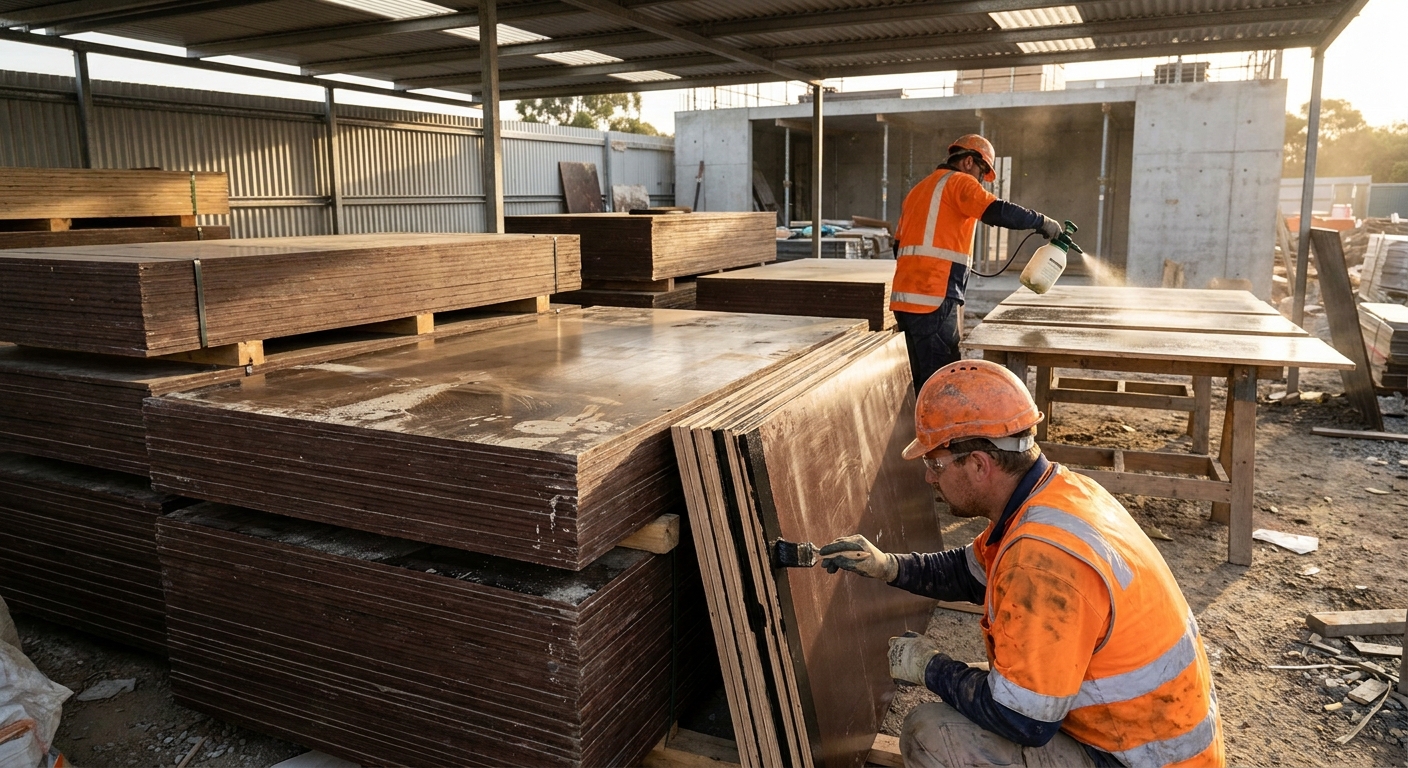
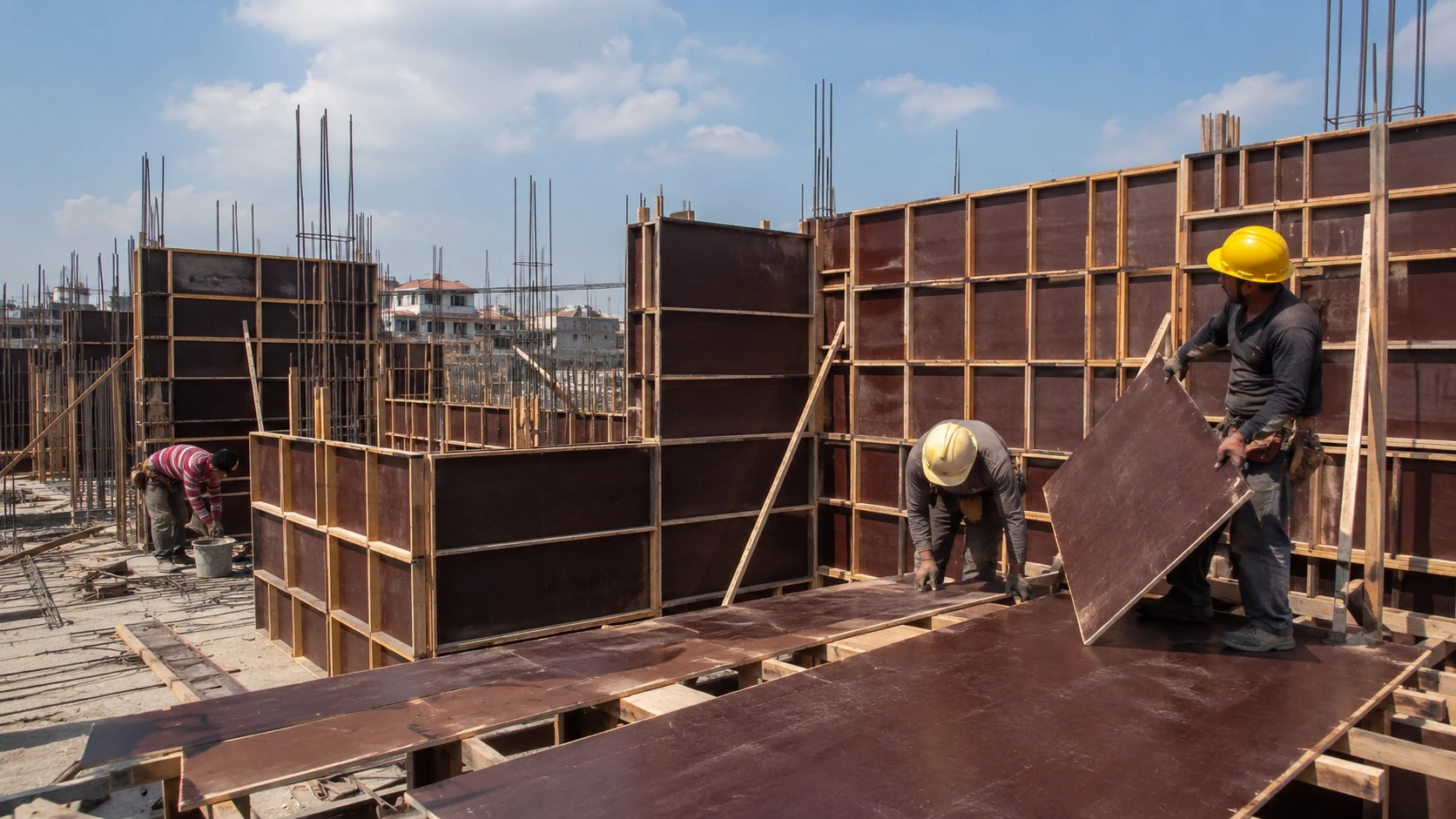
Published supplier estimates vary widely because they describe different products and conditions. Some refer to economy panels, while others refer to birch or dense hardwood cores, heavy phenolic film and carefully managed system formwork. The existing film faced plywood guide explains the construction variables behind the category. A reuse number is meaningful only when it identifies:
- core species, construction and veneer quality;
- adhesive and verified bond performance;
- film paper, resin, weight and lamination;
- panel thickness and application;
- concrete finish required;
- release agent, stripping and cleaning practice;
- weather, storage and repair conditions;
- the rule used to decide whether a pour was acceptable.
Without those details, a claim of “20 reuses” is not comparable with another claim and should not be treated as a warranty.

What Counts as One Reuse Cycle?
For practical tracking, one cycle should mean that a specific panel:
- was installed in an identified formwork location;
- received a concrete pour;
- was stripped without disqualifying damage;
- was cleaned and inspected;
- produced concrete acceptable for the stated finish requirement;
- remained suitable for an approved next use.
Not all cycles impose the same demand. A flat slab soffit, vertical wall, narrow beam and complex column use the sheet differently. Form geometry affects cutting, fasteners and stripping. Concrete mix, placement and vibration can affect surface contact. A panel moved between exposed and concealed work should have its use classification recorded.
Acceptable pour vs physical survival
Counting only whether a sheet survives inflates reuse performance. A scratched, patched panel may still support a concealed pour but leave unacceptable marks on fair-faced concrete. Procurement teams should define at least two service levels:
- Finish serviceability: the face remains suitable for the required concrete appearance.
- Structural and handling serviceability: the panel still meets the approved strength, stiffness, integrity and safety criteria for its next location.
A panel should be downgraded when it no longer meets the higher finish class, and retired when it fails the structural, bond, dimensional or safety criteria.
Panel Factors That Affect Reuse
Core quality
A consistent core distributes load and supports the surface film. Large gaps, overlapping veneers, poorly joined strips and excessive filler create local weakness. These defects can appear as soft spots, uneven deflection, crushed areas or early film damage. Ask for a clear core specification, cross-section samples and receiving-inspection criteria. Review the guides to core gaps and overlaps and composer versus hand core jointing.
Veneer moisture and pressing
Veneers that are too wet or unevenly dried can affect adhesive cure and dimensional stability. Controlled lay-up, pre-pressing, hot pressing, calibration and cooling all influence flatness and bond. A quality film cannot correct an unstable substrate.
Adhesive system
Repeated wet-dry cycles place stress on glue lines. Specify the required bond performance and request evidence under a named test or classification. “WBP” alone does not show that two suppliers use the same formulation or achieve the same result. See Phenolic vs Melamine Glue in Plywood for the main bond-system differences.
Film construction
The overlay is the wear surface. Film weight can influence the amount of protective material, while resin quality, paper, curing and adhesion determine how that material performs. Inspect pinholes, bubbles, lifting, burn-through and gloss or texture consistency. Color is not a performance grade; the black versus brown film faced plywood guide explains why.
Thickness and panel design
Thickness affects stiffness, but service life also depends on span, orientation, supports and loading. An overloaded premium panel can fail sooner than a correctly designed standard panel. Use the exact declared properties in the formwork design. Treat the film faced plywood thickness guide as a procurement reference, not a universal span table.
Factory edge sealing
Continuous edge coating reduces moisture entry before the panel is cut. Thin, missed or damaged areas can become early failure points. Edge paint should protect a sound core, not conceal open glue lines.
Jobsite Factors That Often Decide the Actual Reuse Count
Cutting and drilling
Every cut and hole exposes the core. Use sharp tools, reduce splintering and reseal exposed areas promptly. Repetitive small offcuts may be economical for one pour but reduce the ability to reuse sheets efficiently on the next floor.
Release agent
A compatible release agent reduces concrete adhesion and stripping force. Apply a thin, even coat according to the product instructions. Excess material can pool, stain concrete and collect contamination. Used oil or an unapproved chemical may damage the surface or create finish and environmental problems.
Concrete placement
Follow the designed pour sequence and loading limits. Uncontrolled concrete accumulation or dropped materials can overload and impact the panel. Leakage through poorly supported joints can damage edges and increase cleaning.
Stripping
Premature stripping, sharp bars and forced removal can tear film and crush corners. Use the approved sequence and tools. Lower and stack sheets instead of dropping them. Protect panels from nail and screw damage during disassembly.
Cleaning
Remove residue before it fully hardens. Use plastic, wood or other approved non-damaging tools. Metal blades, aggressive grinding and uncontrolled pressure washing can shorten panel life quickly. The existing formwork plywood guide covers cleaning, stripping and storage principles.
Weather and storage
Standing water, uncovered storage, direct sun and uneven supports can cause swelling, warping and film stress. Store sheets flat on aligned bearers, off the ground, covered from weather and ventilated. Do not trap wet panels inside airtight wrapping. See the outdoor plywood guide for a broader explanation of moisture routes and edge protection.
Crew consistency
A documented procedure matters only when crews follow it. Train teams to recognize film damage, reseal cuts, use compatible chemicals, clean promptly and record panel condition. Assign responsibility for inspection rather than leaving reuse decisions to whoever picks up the next sheet.
Concrete Finish Quality vs Structural Serviceability
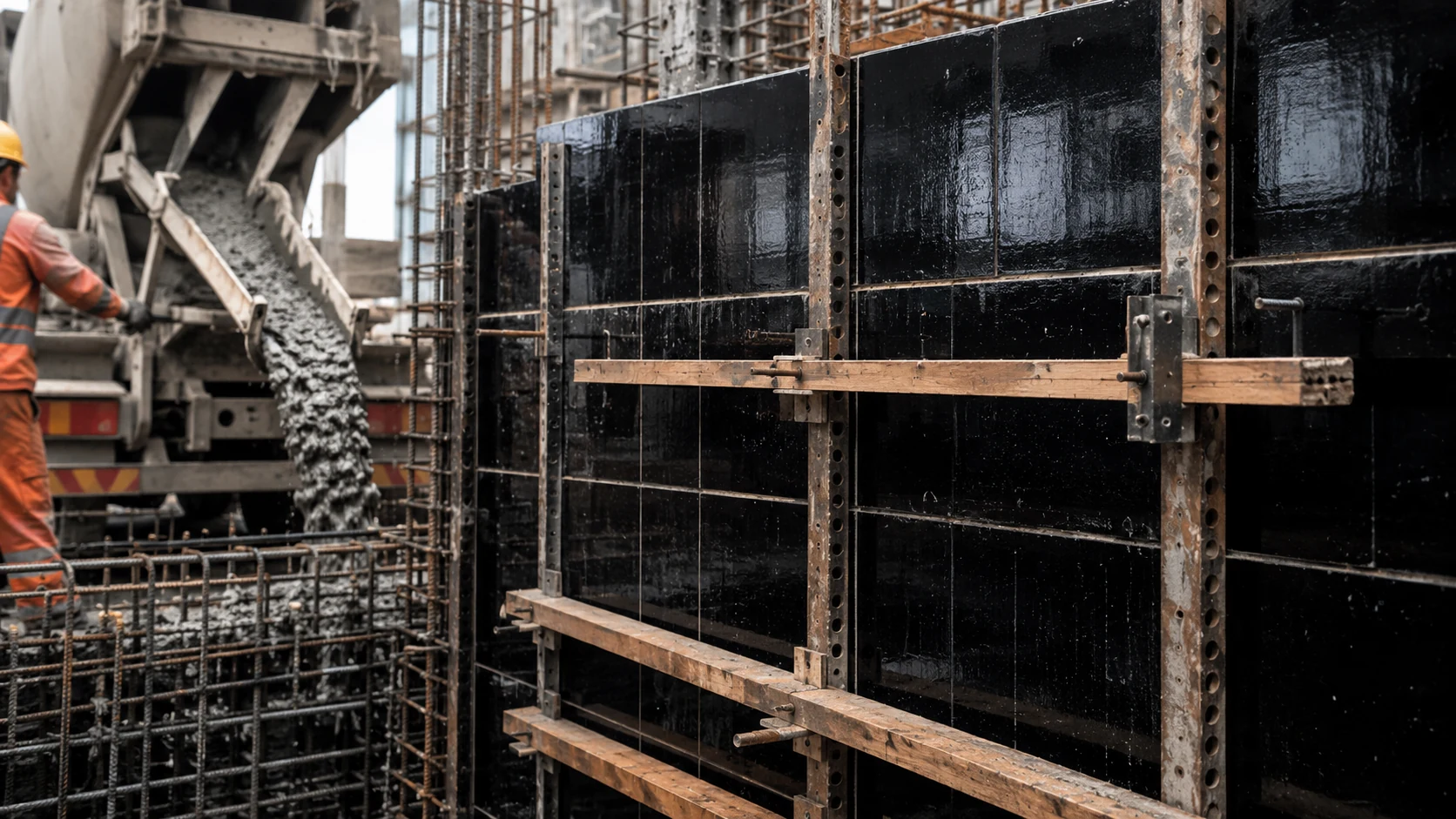
Panel condition should be matched to the next pour. A simple classification system can prevent high-quality locations from receiving worn sheets:
| Panel class | Typical condition | Possible next use, subject to approval |
|---|---|---|
| A | Uniform film, flat panel, sealed edges, no finish-affecting repairs | Exposed or high-finish concrete |
| B | Minor wear or approved small repairs, sound core and bond | Standard visible or concealed work |
| C | Noticeable surface wear but structurally accepted for limited use | Concealed or low-finish work |
| Hold | Uncertain damage, swelling, soft spot, distortion or document mismatch | No use until assessed |
| Retire | Outside structural, bond, dimensional or safety criteria | Remove from formwork service |
This is an operational example, not a universal standard. The project team should define measurable criteria and who is authorized to classify a sheet.
When to Repair, Downgrade or Retire a Panel
Possible repair candidates
- fresh field cuts needing edge sealer;
- approved tie-hole repairs;
- localized surface damage within the repair-system limits;
- minor edge-coating loss where the underlying core remains sound.
Use compatible materials and follow preparation and cure instructions. A repair can change the concrete finish, so record its location and new panel class.
Reasons to quarantine or retire
- progressive delamination or open glue lines;
- significant edge swelling or core exposure;
- major loss of flatness;
- crushed core, split veneers or large soft areas;
- deep film loss over a critical area;
- unexplained reduction in stiffness;
- contamination that cannot be removed safely;
- missing identity where traceability is required.
Do not paint over damage and count the panel as restored. The responsible formwork professional should decide whether it can be downgraded, repurposed or removed.
Calculate Cost per Acceptable Pour
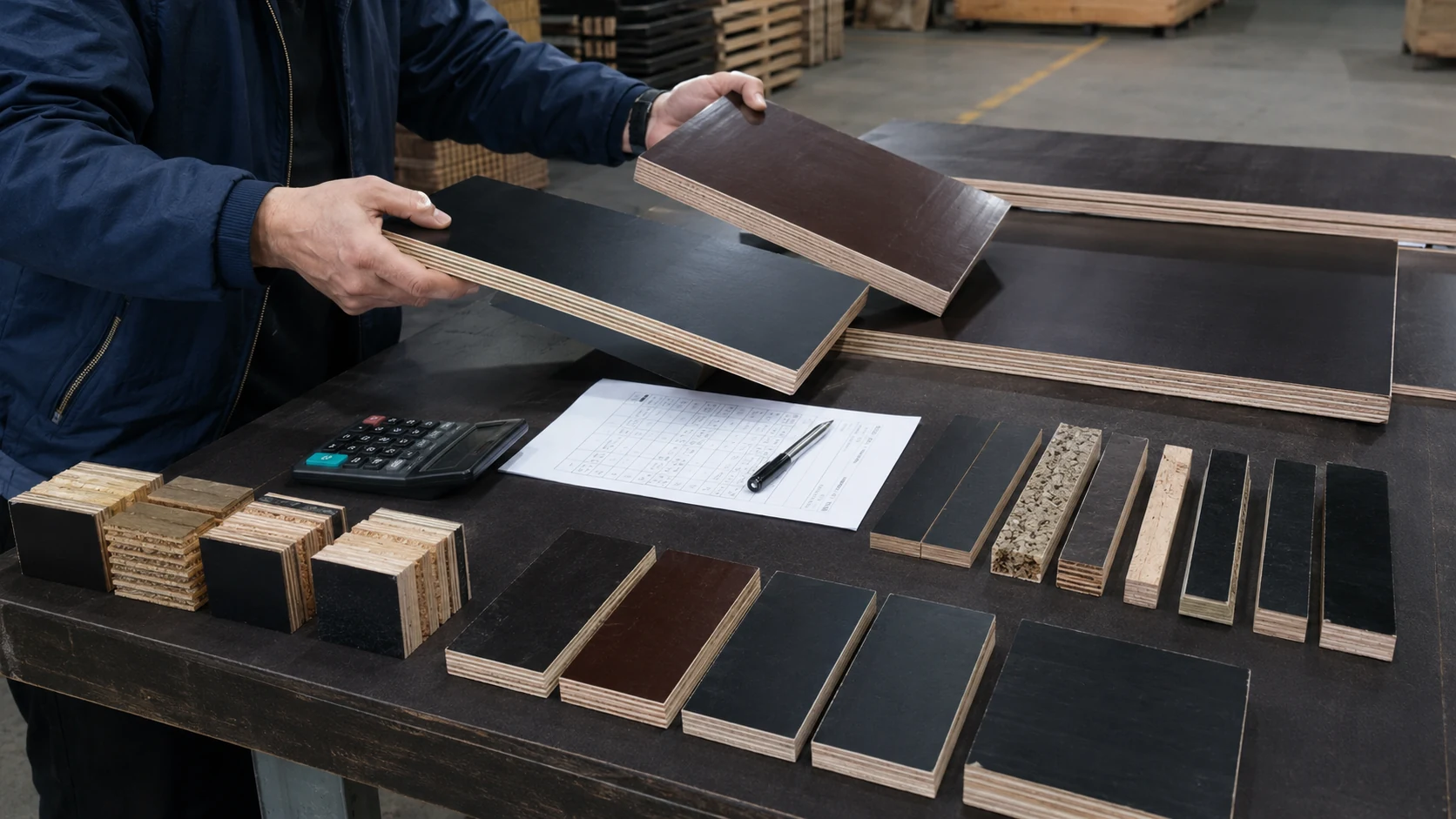
The simplest material calculation is:
Landed panel cost ÷ acceptable pours achieved = material cost per acceptable pour
A more realistic project calculation is:
(Landed panel cost + cleaning + repairs + attributable handling + concrete rework) ÷ acceptable pours achieved
Use the same scope when comparing two products. If one estimate includes local delivery and another stops at the port, the result is distorted. If one count includes downgraded concealed uses and another counts only architectural pours, it is also not comparable.
Illustrative comparison
Assume Panel A costs more initially but maintains the required finish for more recorded cycles. Panel B is cheaper but needs more repairs and is downgraded earlier. Even without publishing market prices, the calculation can show which panel produced the lower cost per acceptable finish. Replace assumptions with actual project records after every floor or pour sequence.
The existing Vietnam plywood price guide provides broader context for normalizing sheet, cubic-meter and export quotations before using them in this formula.
Film Faced Plywood Reuse Log
Assign a durable panel ID or track by bundle and mapped location when individual marking is impractical. Record enough detail to connect performance to the product and site procedure.
| Field | What to record |
|---|---|
| Panel identity | ID, bundle, batch, supplier and product specification |
| Use | Date, project, slab/wall/column and location |
| Finish requirement | Exposed, standard visible, concealed or other approved class |
| Preparation | Release agent, cuts, holes and edge sealing |
| Stripping | Method, unusual force or impact damage |
| Condition | Film, edges, core, flatness, bond and contamination |
| Action | Clean, repair, reseal, downgrade, hold or retire |
| Next class | Approved future application and inspector |
Aggregate the data by product batch and specification. This lets procurement compare actual cost per pour, identify recurring defects and discuss evidence with the supplier. Photographs should show the panel ID, damage scale and pour number.
How to Evaluate a Supplier’s Reuse Claim
- Ask which exact panel construction achieved the result.
- Request application, finish requirement and support conditions.
- Ask how one reuse was counted and what retirement rule was used.
- Check who recorded the result and whether photos or site reports exist.
- Confirm release agent, cleaning, repair and storage practices.
- Treat the example as reference data, not a guaranteed result for a different project.
- Run a controlled trial or first shipment with agreed inspection before scaling.
For receiving checks, use the existing guide to common plywood defects. Reuse potential begins with the delivered product, but it is realized or lost on site.
Frequently Asked Questions
Can film faced plywood be reused 20 times?
Some exact products may achieve high cycle counts under controlled conditions, but 20 uses should not be assumed for every panel or project. Ask for the full specification and conditions behind the claim.
Does black film last longer than brown film?
Not because of color alone. Compare film paper, resin, grammage, lamination, core, bond and handling under like-for-like conditions.
Does thicker plywood have more reuse cycles?
Thickness can improve stiffness in an approved design, but reuse also depends on core, film, bond, edges and site practice. A thicker poor-quality panel can still fail early.
Can a scratched panel be reused?
It depends on scratch depth, location, moisture exposure, finish requirement and repair procedure. Inspect and reclassify it before use.
What is the best way to increase reuse?
Start with a suitable documented panel, then control cutting, edge sealing, release agent, stripping, immediate cleaning, repairs, flat storage and panel tracking.
Specify and Track Performance
Kosmex can provide available film faced plywood constructions for different formwork and budget requirements. Ask for the complete specification and supporting documents, then use a project reuse log to measure actual cost per acceptable pour.





Bình luận