


The EU’s Packaging and Packaging Waste Regulation now applies generally. For plywood crates, cases and transport packaging, the real work is to classify the package, identify the responsible operator and build evidence for the finished design, not to search for a one-line “PPWR certificate.”
What is PPWR 2026?
The PPWR is the EU’s directly applicable framework for packaging and packaging waste. It replaces most of the former Packaging and Packaging Waste Directive and covers packaging regardless of material or country of origin. Its objectives include preventing unnecessary packaging, making packaging recyclable, increasing reuse for selected formats and improving information and extended producer responsibility.
The controlling text is Regulation (EU) 2025/40. The European Commission’s packaging-waste overview confirms the entry-into-force and general application dates. The Commission also published a PPWR guidance notice in June 2026 addressing difficult questions such as economic-operator roles, international transport packaging and individually designed packaging.
For plywood users, the important shift is from broad “essential requirements” toward a more documented product-compliance approach. Material composition, packaging design, traceability, conformity assessment, end-of-life performance and the operator’s role all need to connect.

When does plywood become packaging?
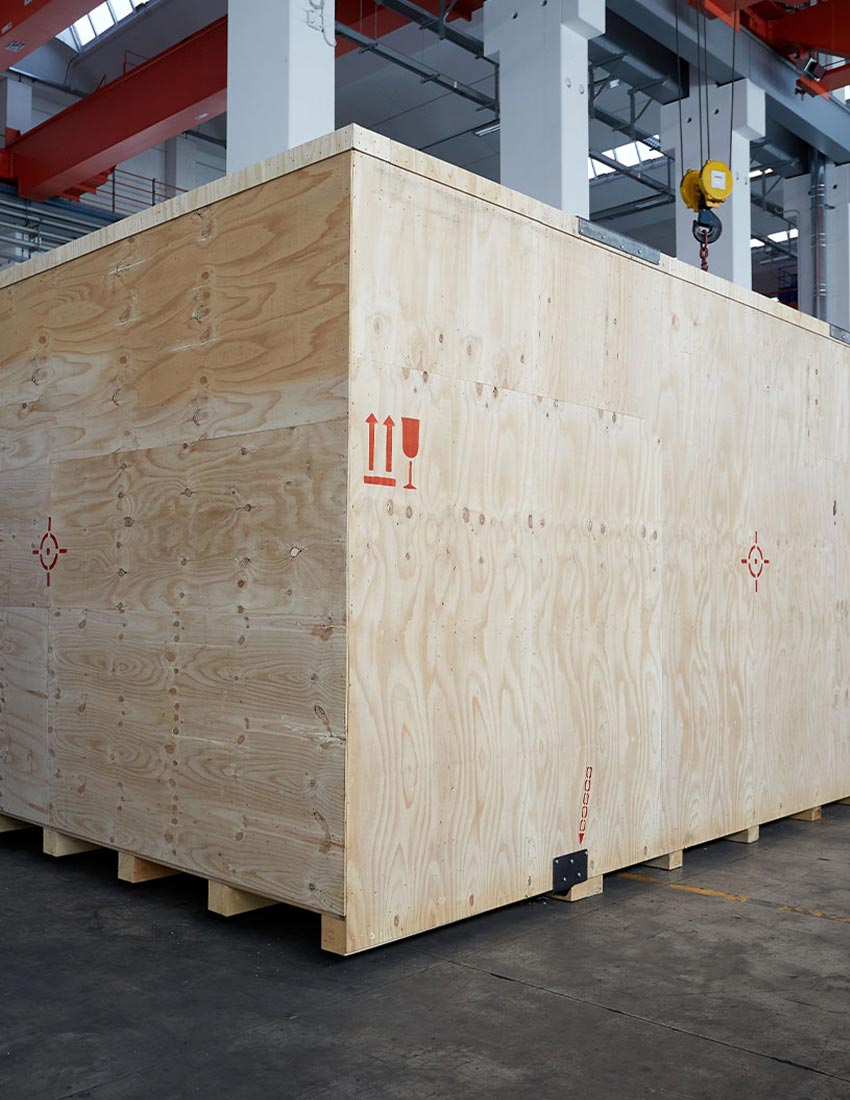
PPWR regulates packaging, not plywood as a material category. A 15 mm plywood panel sold for furniture, construction or industrial fabrication is a product. When the same panel is converted into a case that contains, protects, handles, delivers or presents goods, it performs a packaging function.
| Scenario | Likely PPWR position | Key question |
|---|---|---|
| Loose plywood sheets imported for building work | The sheets themselves are products, not packaging; their wrapping, straps and pallets are packaging. | What is being placed on the market as the product? |
| Plywood case built around an industrial machine | The case is transport packaging, including its packaging components. | Who designed or manufactured the finished case? |
| Plywood deck fixed to a transport pallet | The deck can be a component of the finished pallet packaging. | Has the complete pallet been assessed? |
| Returnable plywood sleeve and pallet system | Reusable packaging only if designed for multiple rotations and operated within a reuse system. | Is return, inspection, repair and redistribution actually organised? |
| Custom one-off case for oversized equipment | Still packaging; it may qualify for a specific reuse-target exemption if the Article 29 conditions are met. | Is the crate genuinely custom-designed for the individual order and large-scale item? |
| Plywood crate with sawn-timber base and blocking | One package with different compliance questions for different components. | Do raw solid-wood parts also meet phytosanitary rules? |
Origin does not remove the package from scope. A plywood case assembled in Vietnam and imported around machinery can enter the EU supply chain as packaging. The responsible EU and non-EU parties must therefore agree before shipment who supplies material evidence, who controls the final design, and who performs each regulatory role.

PPWR timeline for plywood packaging: 2025 to 2038
The phrase “PPWR 2026” can be misleading when it is used as if every target began on the same day. This is the practical timeline procurement teams should use.
| Date | What it means for plywood packaging | Recommended evidence |
|---|---|---|
| 11 February 2025 | PPWR entered into force. | Compliance roadmap and role mapping. |
| 6 August 2026 | The separate REACH formaldehyde restriction begins for covered articles. Furniture and wood-based articles must not exceed 0.062 mg/m³ under the Appendix 14 test conditions, subject to the listed exemptions. | Product-specific emission test report and confirmation of the tested construction. |
| 12 August 2026 | PPWR applies generally. Composition restrictions, economic-operator duties, conformity assessment and documentation become central. Food-contact packaging is also subject to PPWR PFAS limits. | Bill of materials, Article 5 evidence, traceability, Annex VII technical documentation and the appropriate EU Declaration of Conformity. |
| From 2028, subject to the implementing-act timing | Harmonised sorting labels begin for packaging covered by Article 12(1). General transport packaging other than e-commerce packaging is excluded from that particular label. | Classification of packaging type and labelling applicability. |
| From 2030, subject to the Regulation’s timing formulas | Design-for-recycling grades, packaging minimisation, a maximum empty-space ratio for relevant packaging and transport-packaging reuse targets begin to apply. | Design calculations, recovery-route evidence, empty-space rationale and reuse-system records where applicable. |
| From 2035 | Packaging must also be recycled at scale under the PPWR framework. | Updated EU collection, sorting and recycling evidence for the applicable material category. |
| From 2038 | Recyclability performance grade C is no longer enough for placing packaging on the market. | Updated assessment against the applicable delegated criteria. |
What requirements matter from 12 August 2026?
1. Restricted substances in packaging
Article 5 retains a maximum combined concentration of 100 mg/kg for lead, cadmium, mercury and hexavalent chromium in packaging or packaging components. A plywood declaration should state the product identity, covered production site or batch, test or supplier-data basis, date and authorised signatory. Coatings, printed markings and metal fittings need their own supporting evidence where relevant.
PPWR also introduces PFAS thresholds for food-contact packaging from 12 August 2026. A typical industrial machinery crate is not food-contact packaging, so those limits are not automatically its main issue. If plywood or a coating is intended to contact food, the business should classify the use and arrange specialist chemical and food-contact review instead of relying on a generic plywood statement.
2. REACH formaldehyde emission: 0.062 mg/m³ maximum
PPWR is not the only EU rule relevant to a plywood purchasing specification. Commission Regulation (EU) 2023/1464 added a formaldehyde restriction to REACH Annex XVII. From 6 August 2026, covered furniture and wood-based articles must not be placed on the EU market when formaldehyde released under the test conditions in Appendix 14 exceeds 0.062 mg/m³. The entry contains exemptions, including defined articles exclusively intended for outdoor use, so the intended and foreseeable use of a packaging article should be classified rather than assumed.
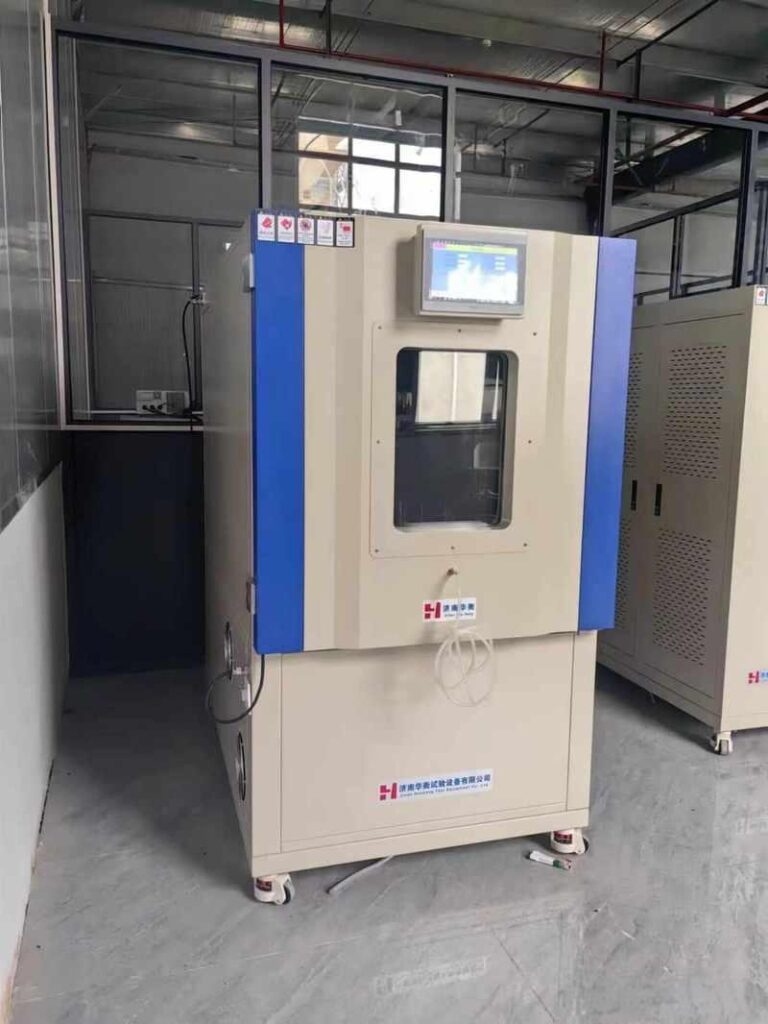
The legal Appendix 14 reference conditions draw on chamber-testing principles used for wood-based panels. Buyers should compare the measured value, unit, loading factor and test conditions, not substitute a formaldehyde-content result or a different classification without a documented correlation.
3. Identification and traceability
The packaging manufacturer must be identifiable, and the packaging needs a type, batch, serial number or another element allowing identification where feasible. For made-to-order crates, a practical record can connect the crate drawing, order number, plywood batch, coating system, hardware and packing date. The identifier is useful only if it leads back to controlled records.
4. Conformity assessment and Declaration of Conformity
Before placing packaging on the market, the operator acting as manufacturer must assess the finished packaging, compile the technical documentation described in Annex VII and draw up the EU Declaration of Conformity described in Article 39 and Annex VIII. Records are retained for five years for single-use packaging and ten years for reusable packaging.
A mill’s declaration can support the assessment of a plywood component. It does not, by itself, establish conformity of the assembled crate, because the finished package also contains a design, joints, fasteners, coatings, labels, straps and sometimes cushioning or solid wood.
The Declaration of Conformity is a PPWR document. It is not CE marking, and the crate should not receive a CE mark merely because a PPWR conformity assessment was completed.
5. Extended producer responsibility
Packaging producers can face registration, reporting and EPR financing obligations in the Member State where they first make packaged products or packaging available. The operational system remains country-specific. A Vietnamese exporter, its EU importer and downstream distributor should therefore map the sales route and Incoterms rather than assume the plywood supplier owns the EPR account.
Recyclability, minimum packaging and empty space
Recyclability is a finished-design question
PPWR aims for all packaging to be recyclable under its criteria from 2030. Recyclability performance grades are based on the percentage by weight that is recyclable: grade A is at least 95%, grade B is 80 to 94%, and grade C is 70 to 79%. From 2038, grade C packaging can no longer be placed on the market.
That does not mean every uncoated plywood crate is already “grade A.” Actual classification depends on the delegated design-for-recycling criteria, material combinations, separability and the collection and recycling infrastructure recognised by the Regulation. Good preparation includes:
- avoiding coatings or laminates that lack a defined recovery route;
- making straps, foam, metalwork and other non-wood parts easy to remove where this does not compromise safety;
- recording component weights and material types;
- using repairable panels and standard fasteners in genuinely reusable designs; and
- checking how the destination market accepts used plywood packaging.
The recycled-content percentages in Article 7 target plastic packaging. They do not create a mandatory recycled-fibre or recycled-wood percentage for plywood. Plastic films, straps or cushioning in the complete packaging system may need a separate Article 7 analysis.
Minimum necessary weight and volume
From 2030, packaging must be designed so that its weight and volume are reduced to the minimum necessary while preserving functionality. “Minimum” does not mean unsafe. Protection of a high-value machine, load restraint, handling by forklift, stacking, weather exposure and worker safety are legitimate performance constraints when they are documented.
For relevant grouped, transport and e-commerce packaging, Article 24 also sets a maximum 50% empty-space ratio from 2030 or three years after the relevant implementing act, whichever is later. Void fill counts as empty space. Clearance needed for shock isolation, blocking, bracing, lifting or safe unpacking should be justified in the design record rather than treated as an undocumented margin.
Using the right panel size and cutting plan can reduce both packaging mass and factory waste. Kosmex’s guides to standard plywood sizes and common plywood defects can support the specification stage.
Reuse targets and the custom plywood crate exemption
From 2030, Article 29 sets reuse targets for specified transport and sales packaging used within the EU. A headline target is at least 40% reusable transport packaging in a reuse system for covered formats, with additional 100% obligations in defined same-company and same-Member-State transport situations. The exact obligation depends on the format, operator and route.
A crate is not “reusable” simply because plywood is durable. It must be conceived and designed for multiple rotations and used within a reuse system. A credible system defines ownership, return logistics, inspection, cleaning, repair, rejection criteria, rotation records and the point at which the crate becomes waste.
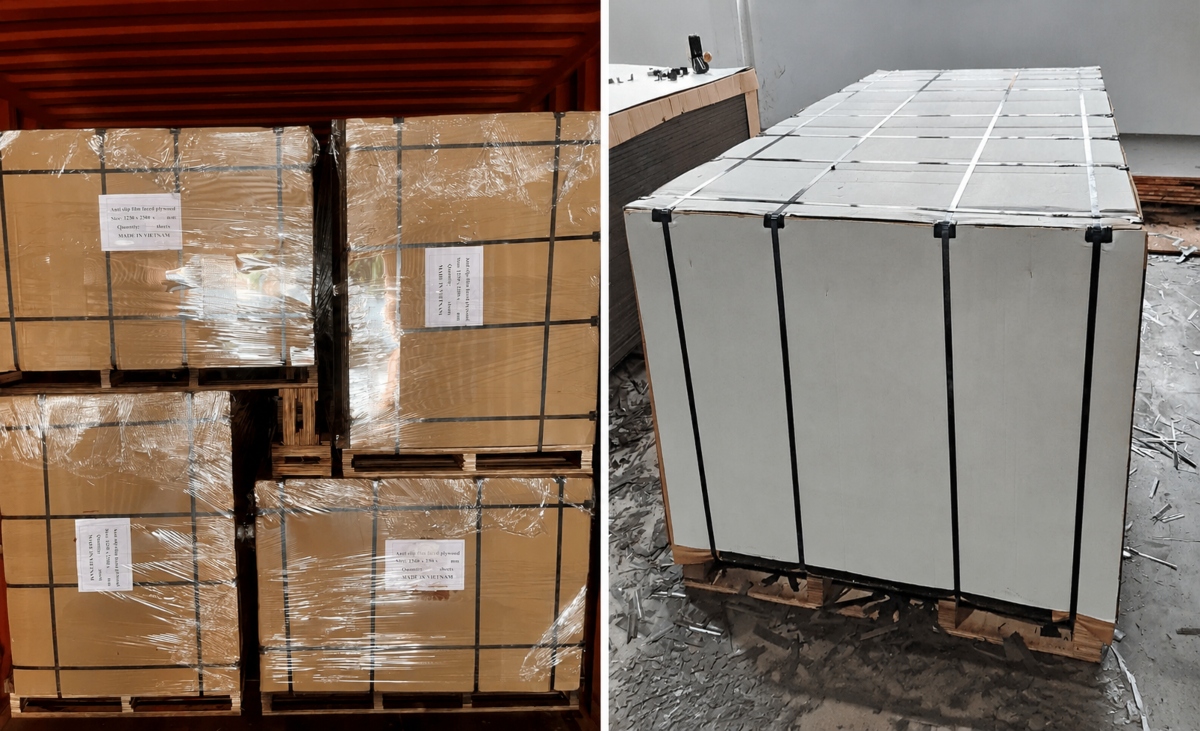
To support the exemption, retain the customer’s order, equipment dimensions and weight, engineered crate drawing, load and handling assumptions, and an explanation of why a standard reusable format was not suitable. A stock plywood box selected from a catalogue is not necessarily custom-designed merely because one customer used it.
For international trade, the Commission’s June 2026 guidance indicates that the reuse target is assessed after the imported goods reach the first warehouse or temporary storage facility in the EU and the packaging is then used for further transport within the Union. This guidance is useful but is not legally binding; operators should confirm their specific route and Member State practice.
Who is responsible for a plywood crate?
PPWR responsibility follows the economic role, not just the invoice description. One company can hold more than one role, and contract manufacturing does not automatically transfer the legal role. The Commission guidance should be used for difficult private-label and import scenarios.
| Party | Typical contribution | What it should control or provide |
|---|---|---|
| Plywood mill or panel supplier | Packaging material or component | Product specification, material identity, traceability and substantiated composition data. Notify customers of controlled changes. |
| Crate converter or finished-packaging manufacturer | Creates the packaging design and/or manufactures the final crate | Finished bill of materials, design assessment, Annex VII file, identification and Declaration of Conformity where it acts as manufacturer. |
| Packer or exporter | Selects and uses the packaging for a product and transport route | Functional requirements, empty-space rationale, packing instructions, route data and confirmation that the supplied package matches the assessed design. |
| EU importer | Places third-country packaging or a packed product on the EU market | Verify the manufacturer’s conformity assessment, documentation, identification and required contact information before placing it on the market. |
| EPR producer in the destination country | First makes packaging or packed products available under the national producer definition | Registration, material/weight reporting, fee payment and authorised-representative arrangements where required. |
| Distributor or logistics operator | Makes packaging available or uses it for onward transport | Due care, storage/transport controls, applicable reuse duties and escalation of suspected non-conformity. |
PPWR technical-file checklist for plywood packaging
A usable file is specific enough to reconstruct the assessed package. It should not be a folder of unrelated certificates. Depending on the design and role, include:
- Package identity: drawing number, version, intended application, external/internal dimensions and rated load.
- Complete bill of materials: plywood species/core, thickness, density or mass, adhesive class, coating, ink, metal fasteners, straps, foam, films, labels and solid-wood parts.
- Supplier evidence: specifications, batch traceability and Article 5 restricted-substance declarations or test evidence for relevant components. Where the REACH restriction applies, include a formaldehyde-emission report supporting the agreed maximum of 0.062 mg/m³ for the specified plywood construction.
- Design and performance evidence: load, stacking, lifting, impact, vibration, moisture and fastening assumptions appropriate to the route.
- Packaging minimisation: why the chosen thickness, reinforcement and clearances are necessary; alternatives considered.
- Recyclability information: component weights, separability, coatings and intended collection/sorting/recycling route, updated when delegated criteria are adopted.
- Reuse evidence, if claimed: intended rotations, return system, inspection and repair process, trip history and retirement rules.
- Custom-design exemption evidence, if used: individual order, large-scale item description, engineered fit and rationale.
- Identification and labels: batch/order identifier, manufacturer/importer details and the applicability assessment for Article 12 and other rules.
- Conformity and control: Annex VII technical documentation, Annex VIII Declaration of Conformity, approval, retention period and change-control procedure.
For a broader supplier file, see the Kosmex checklist of documents to request from a Vietnam plywood supplier and the guide to evaluating a Vietnam plywood factory.
PPWR vs REACH, EUDR, ISPM 15 and CE marking
These regimes can apply to the same shipment, but they answer different questions.
| Rule | Main question | Plywood packaging implication |
|---|---|---|
| PPWR | Is the packaging designed, documented, used and managed according to EU packaging rules? | Covers the plywood crate as packaging and its complete system. |
| REACH formaldehyde restriction | Does a covered article release formaldehyde above the permitted chamber concentration? | For covered furniture and wood-based articles, the maximum is 0.062 mg/m³ from 6 August 2026, subject to exemptions. A product-specific test report supports this assessment. |
| EUDR | Does a relevant wood product require deforestation due diligence? | Standalone wood packaging products and packaging used solely to support/protect another product can be classified differently. Perform a separate product and customs analysis. |
| ISPM 15 | Does raw wood packaging pose a phytosanitary pest risk? | The IPPC lists plywood as processed wood normally excluded from ISPM 15. Raw solid-wood skids, cleats, blocks and dunnage may still need approved treatment and an IPPC mark. |
| CE or sector product law | Does the packed product, or a separate regulated product, meet its EU product rules? | A PPWR Declaration of Conformity is not a CE declaration and does not authorise CE marking of the crate. |

For supply-chain context, read our guide to importing plywood from Vietnam to Europe. Environmental claims should also remain evidence-based; our overview of plywood sustainability explains the wider sourcing and life-cycle questions.
Ten actions for EU buyers and plywood-packaging exporters
- Map each packaging configuration. List crates, cases, pallet decks, collars, dunnage, films, straps and cushioning rather than using one generic “wood packaging” category.
- Identify the economic operators. Record who designs, manufactures, imports, distributes and fulfils EPR duties for each sales route.
- Freeze a controlled bill of materials. Connect the plywood grade, thickness, adhesive, coating and hardware to a drawing revision.
- Request substantiated chemical data. Obtain Article 5 evidence and, where applicable, a REACH formaldehyde-emission report supporting ≤0.062 mg/m³ for the ordered plywood construction. A two-line “eco-friendly” statement is not a technical basis.
- Assess the complete crate. Do not attach the plywood mill’s declaration to an unassessed finished package and rename it a Declaration of Conformity.
- Document functionality. Explain panel thickness, bracing, clearance and void-fill choices using cargo value, mass, centre of gravity, handling and route risks.
- Separate PPWR from ISPM 15. Identify every raw solid-wood component and arrange compliant treatment/marking where required.
- Validate any reuse claim or exemption. Build the return system, or retain order-specific evidence for a qualifying custom large-scale package.
- Confirm Member State EPR. Determine the producer, registration and reporting rules in every destination market.
- Set change control and review dates. A change to coating, core construction, fasteners or dimensions can affect the assessment. Review again when EU design-for-recycling and labelling acts are published.
Common PPWR mistakes in plywood packaging
- “Everything was due in August 2026.” False. PPWR applies generally then, but major performance and reuse milestones are phased.
- “A bespoke crate is outside PPWR.” False. A qualifying crate may be outside specified reuse targets, not outside the Regulation.
- “Plywood is recyclable, so the whole crate is compliant.” Incomplete. The finished combination and the applicable EU assessment criteria matter.
- “PPWR requires recycled plywood content.” False. The Regulation’s minimum recycled-content targets are for plastic packaging.
- “The mill signs for the whole crate.” Usually wrong. The material supplier supports the file; the finished-packaging manufacturer must control the complete assessment.
- “Plywood means no ISPM 15 issue anywhere.” Incomplete. Solid-wood runners, cleats or dunnage can remain in scope.
- “Every transport crate needs the sorting label now.” False. The timing is later, and general transport packaging is excluded from the Article 12(1) material label.
Frequently asked questions
Does PPWR apply to plywood crates imported into the EU?
Yes. When plywood is used as a crate, case, pallet component, divider or other packaging, the finished packaging can fall within PPWR even if it was made outside the EU. A plywood sheet sold as a product is not packaging solely because it could later be converted into a crate.
Are custom plywood machinery crates exempt from PPWR?
No. Certain packaging custom-designed for large-scale machinery, equipment or commodities may be exempt from specified Article 29 reuse targets. The package remains subject to the other applicable PPWR requirements.
Does plywood packaging need ISPM 15 treatment?
Plywood is processed wood and is normally excluded from ISPM 15. Raw solid-wood skids, cleats, blocks or dunnage used in the same package may still require treatment and marking. Check the complete assembly and destination requirements.
Does every plywood crate need a new PPWR label in 2026?
No. The harmonised material-sorting label does not generally start in 2026, and transport packaging other than e-commerce packaging is excluded from the Article 12(1) material-composition label. Reusable-package information, identification or national requirements must be assessed separately.
Who signs the PPWR EU Declaration of Conformity for a plywood crate?
The operator acting as manufacturer of the finished packaging must determine conformity and draw up the required declaration. A plywood mill should provide controlled material evidence, but that evidence alone does not normally cover the complete crate.
Can a supplier issue one PPWR certificate for every plywood order?
A supplier can issue product-specific technical declarations and evidence for defined plywood. PPWR conformity of the final packaging depends on the finished design, components, intended use and economic-operator roles. Ask what product, site, period and requirements a document actually covers.
Can Kosmex supply plywood with formaldehyde emissions no higher than 0.062 mg/m³?
Yes. Kosmex can manufacture plywood to an agreed maximum formaldehyde-emission specification of 0.062 mg/m³ and provide a corresponding test report for the specified product. Buyers should state the construction, thickness, glue system, intended use and required report scope in the RFQ. This supports REACH assessment but does not replace the finished package’s PPWR technical file or Declaration of Conformity.
Build a traceable plywood specification for EU packaging
Kosmex can discuss panel construction, thickness, dimensions, surface options, batch documentation and supplier evidence for your plywood packaging application. For an agreed specification, Kosmex can also manufacture plywood with formaldehyde emissions of 0.062 mg/m³ maximum and provide the corresponding test report. The finished-crate manufacturer and EU economic operators should use that material information within their complete PPWR assessment.

Bình luận