


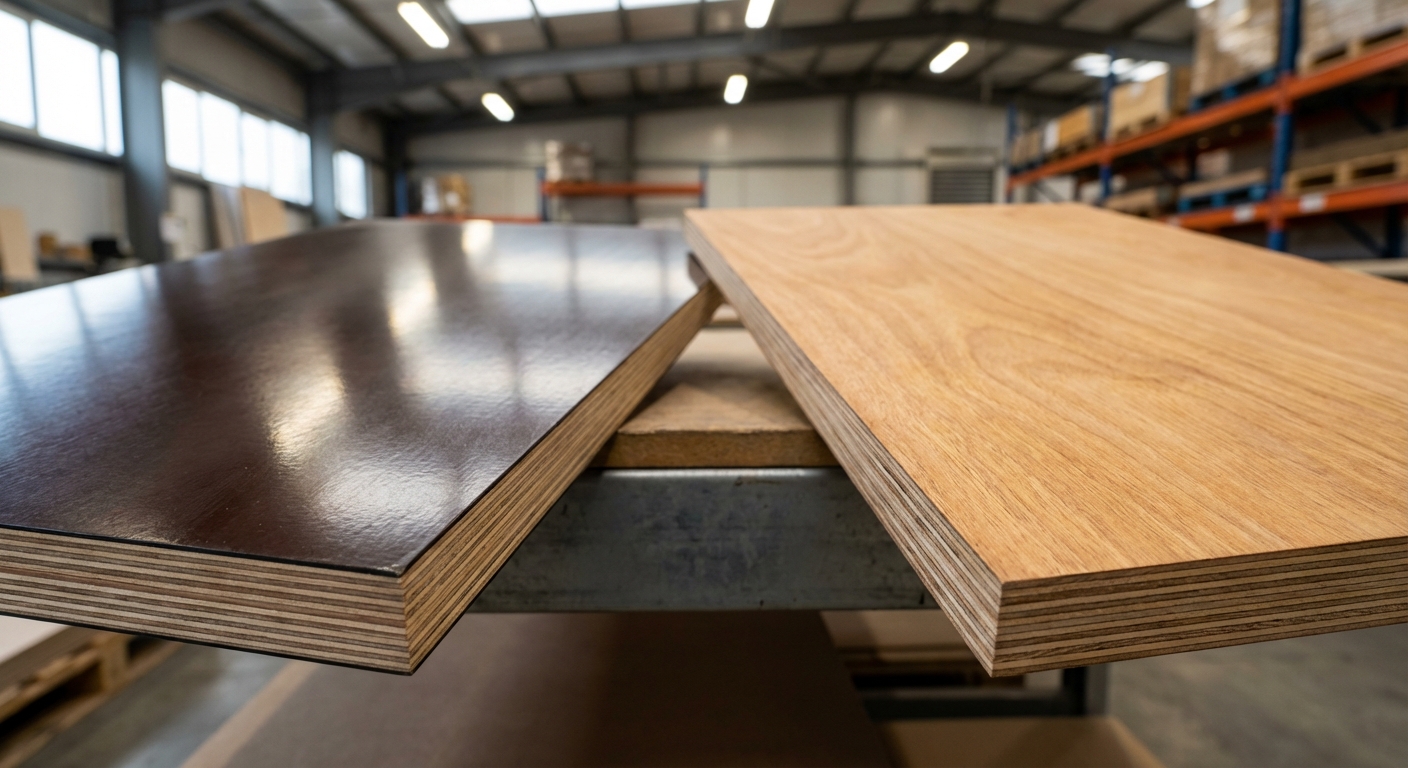
Film Faced Plywood vs Marine Plywood: Quick Verdict
- Choose film faced plywood for concrete formwork, shuttering and applications that benefit from a smooth, wear-resistant, cleanable resin-film surface.
- Choose properly specified marine plywood for boatbuilding and applications where the project requires a recognized marine grade, high core integrity and durable bonding under prolonged moisture exposure.
- Do not select either product by name alone. Confirm the exact standard, bond, core, thickness, face and documentation required for the job.
A high-quality panel in one category is not automatically suitable for the other’s intended use. Film faced plywood may use moisture-durable adhesive, but the film is designed principally to protect the face and support clean release from concrete. Marine plywood may have an excellent core and bond, but it usually lacks the factory-applied forming film that controls concrete release and surface finish.
What Is Film Faced Plywood?
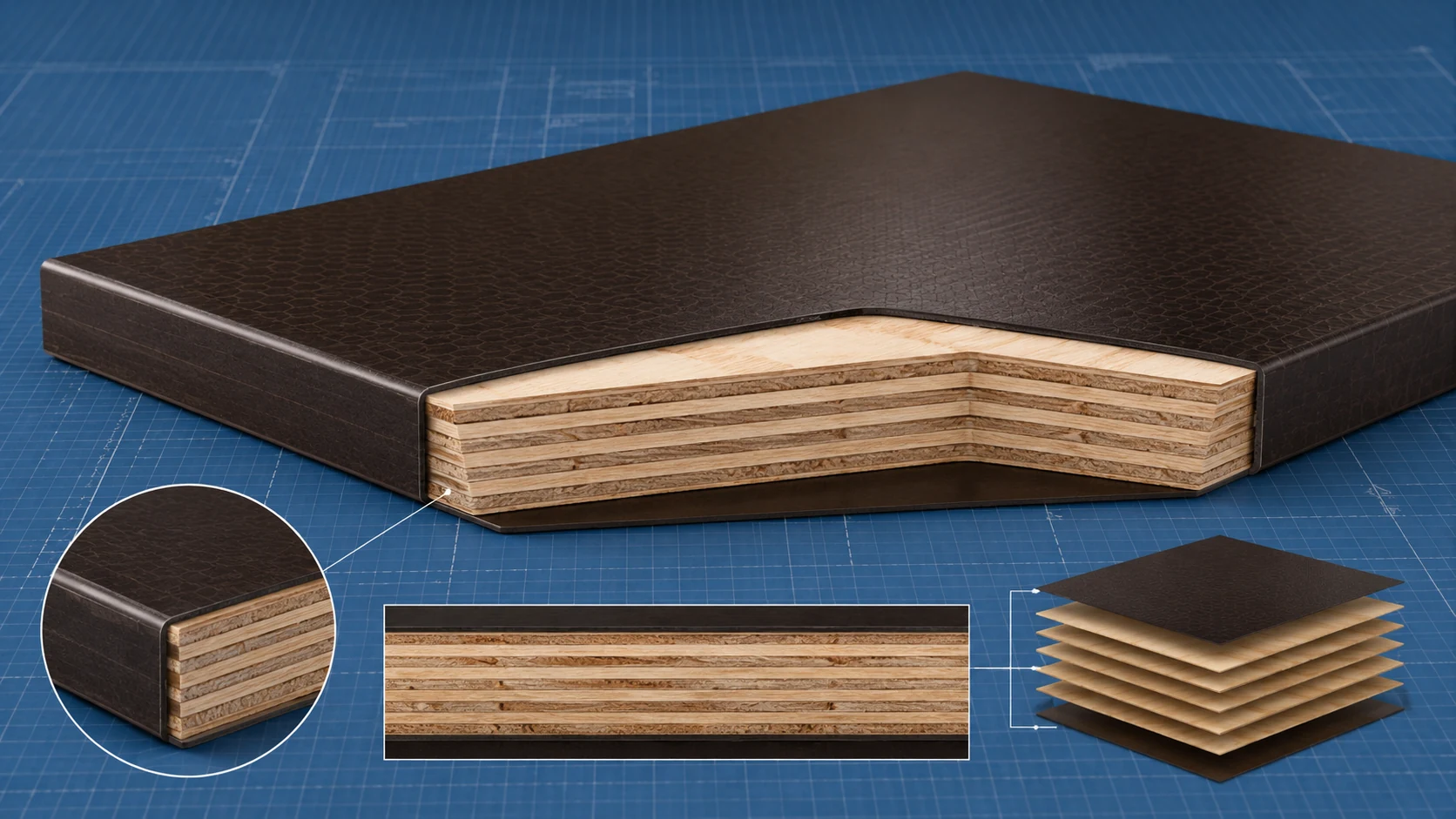
Film faced plywood is a layered wood panel with a resin-impregnated overlay bonded to one or both faces. In formwork products, the overlay is commonly phenolic or another construction-grade film. It creates a smooth, low-absorption surface that resists abrasion, limits concrete adhesion and can be cleaned for further use.
The panel is a system with four important parts:

- Core veneers provide stiffness, strength and fastener holding.
- Glue lines hold the plies together during moisture and load cycles.
- Face film protects the surfaces and affects concrete release and finish.
- Sealed edges reduce water entry into exposed veneer end grain.
The current Kosmex film faced plywood range lists acacia, eucalyptus or mixed-hardwood cores, several adhesive options, brown or black phenolic film, multiple film weights and common construction thicknesses. The exact build and supporting documents should be confirmed for every order. The film faced plywood guide provides broader product and application context.
What Is Marine Plywood?
Marine plywood is plywood manufactured to a marine-grade requirement or a clearly defined specification for prolonged moisture exposure. Depending on the target market, the applicable standard can regulate veneer species or durability, face quality, core gaps, bond performance, panel construction, dimensions and marking.
The word “marine” is also used loosely in online listings. A product described as marine plywood may be a genuine certified grade, a panel made with moisture-durable glue, or simply a seller’s name for dark film faced plywood. Those are not equivalent claims. A buyer should ask which standard the product meets, who verified it and whether the certificate or test report covers the exact supplied panel. Kosmex’s existing commercial plywood versus marine plywood comparison explains why glue terminology alone does not establish a marine grade.
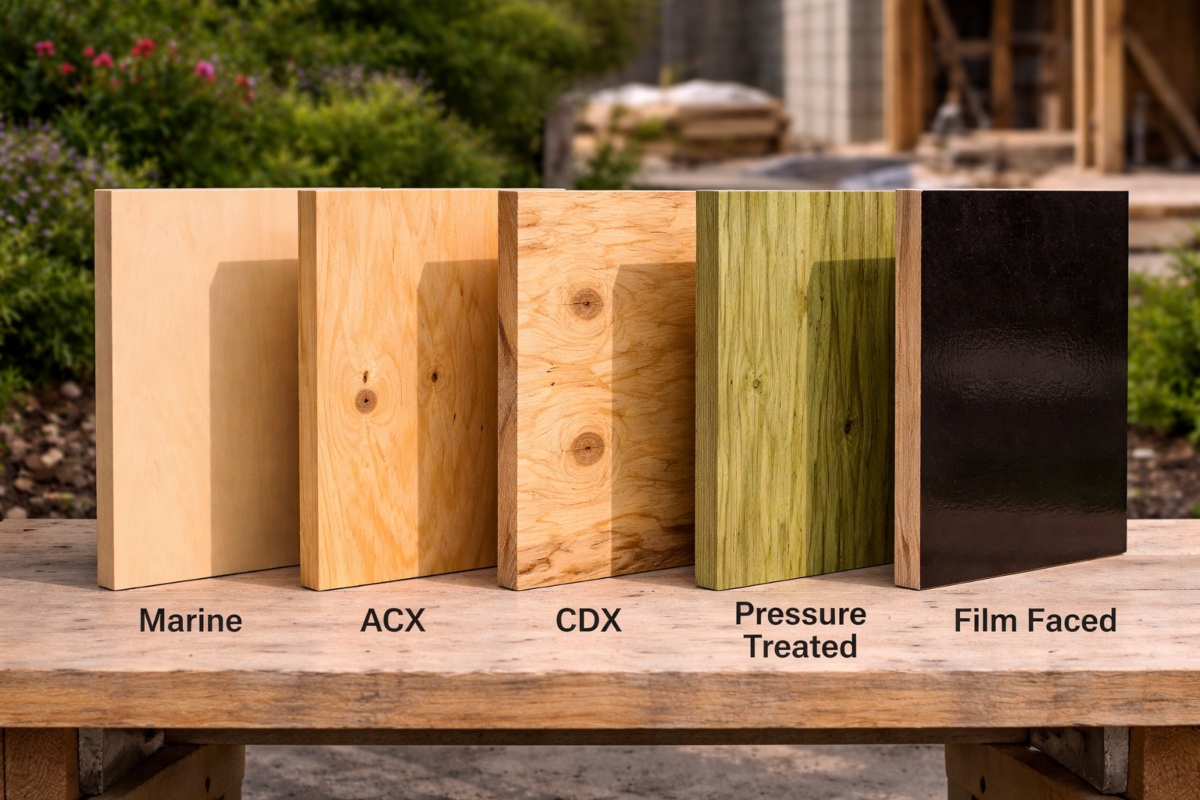
Film Faced Plywood vs Marine Plywood: Side-by-Side
| Factor | Film faced plywood | Marine plywood |
|---|---|---|
| Primary purpose | Concrete formwork, shuttering and wear-resistant panel applications | Marine and persistently wet applications defined by the project specification |
| Face | Resin-impregnated film, often smooth; anti-slip versions also exist | Usually a graded wood veneer face, ready for the specified coating or finish |
| Concrete release | Film surface is designed to reduce adhesion and support a cleaner finish | Not normally supplied with a dedicated concrete-release film |
| Core requirement | Varies by grade and supplier; low gaps and uniform veneers improve performance | Controlled by the named marine specification; core quality is a central requirement |
| Bond | Depends on product build; request the actual bond classification or test evidence | Must match the recognized marine standard or project requirement being claimed |
| Water exposure | Well suited to repeated wet construction cycles when faces and edges remain protected | Selected for more demanding moisture service when the specified grade supports it |
| Edge condition | Factory edges are normally sealed; every cut or hole needs renewed protection | Edges still require the finishing and sealing system specified for the end use |
| Typical buying evidence | Technical data, core and film specification, bond tests, dimensional checks and formwork-related documentation | Marine-grade certificate or test evidence, veneer and core requirements, bond data and traceability |
Surface and concrete finish
The most visible difference is the face. Film faced plywood arrives with a cured overlay that separates the timber core from fresh concrete. With a compatible release agent and careful handling, it can produce a consistent off-form surface and reduce cleaning effort.
A marine plywood face is selected for veneer quality and marine-grade construction, not for repeated contact with alkaline concrete. It may be coated or overlaid for a particular use, but untreated marine plywood should not be assumed to provide the same release or abrasion behavior as a purpose-made forming panel.
Core quality and internal gaps
Core integrity matters in both products. Large gaps and overlaps create uneven load paths, weak fastener zones and routes for moisture. Marine standards often place explicit limits on defects and core construction. Film faced quality varies across the market, so importers should add their own acceptance criteria for core gaps, thickness, flatness and bond performance.
Cost and value
Marine plywood may cost more because of veneer selection, core requirements and certification. Using it for routine formwork can mean paying for marine-specific properties while still missing the forming overlay. Conversely, using basic film faced plywood in a marine application can save money initially but create exposure, compliance and finish risks that the product was not designed to control.
Compare total application cost, not price per sheet alone. For formwork, calculate cost per acceptable pour and possible concrete rework. For marine work, include finishing, inspection, replacement access and consequences of moisture-related failure.
Water Resistance Is Not One Property
Marketing descriptions often compress several different properties into the word “waterproof.” A sound comparison separates them:
- Face resistance: Can the finished surface limit liquid water entering the face veneer?
- Bond durability: Do the glue lines remain intact under the exposure defined by the test or standard?
- Core integrity: Are veneers, joints and void limits suitable for the intended service?
- Edge and penetration protection: Are cuts, corners, screw holes and tie holes sealed?
- Exposure duration: Is the panel exposed to a short concrete pour, recurring wet-dry cycles, weather, standing water or continuous immersion?
A film can protect the broad faces while an unsealed saw cut absorbs water. A durable glue line can resist delamination while wood fibers at a damaged edge still swell. Marine-grade construction can improve moisture performance, but the completed component still requires correct detailing, coatings and maintenance.
For a broader exposure comparison, read the existing guide to the best plywood for outdoor use.

Standards and Documents to Request
There is no single document that makes a panel suitable everywhere. Project location, end use and structural role determine the applicable requirements. The purchase order should name the required standard and edition, not merely “marine,” “WBP” or “formwork grade.”
For film faced plywood
- Technical data sheet showing size, tolerance, core, adhesive, film and intended use.
- Bond and panel classification evidence relevant to the target market.
- Mechanical test data when the panel has a structural role.
- Film and edge-seal specification.
- Batch identification and pre-shipment inspection records.
For marine plywood
- The exact marine standard required by the designer, buyer or authority.
- Evidence that the manufacturer and supplied product fall within the certification scope.
- Veneer species, face grade, core construction and gap limits required by that standard.
- Bond performance and relevant test records.
- Panel marks, batch traceability and chain-of-custody documents where required.
General company certificates, unrelated thickness reports and screenshots of standard logos are not substitutes for product-level evidence. Confirm the current standard and amendments through the relevant standards body or project professional. The supplier-document checklist helps buyers connect test reports and certificates to the ordered product.
Can Marine Plywood Be Used for Concrete Formwork?
Marine plywood can be physically strong and moisture durable, but that does not make it the most efficient forming surface. Without a suitable overlay, concrete can adhere to the face, cleaning may be harder and the finished concrete may not match the specified surface. If a project proposes marine plywood as formwork, the formwork designer should approve the panel, facing treatment, release agent and support layout.
Can Film Faced Plywood Be Used for Boats?
Do not assume so. A film-faced panel may resist construction moisture but lack the recognized marine grade, veneer durability, core construction or documented performance required for boatbuilding. Its slippery or resin-coated face may also be unsuitable for bonding and finishing without special preparation.
Use film faced plywood in a marine application only when the exact product is explicitly accepted by the designer and supported by the required standard and technical evidence. The label “marine film plywood” on a marketplace listing is not enough.
Can Both Be Used Outdoors?
Outdoor suitability depends on the complete construction, surface protection, edges, drainage, ultraviolet exposure, fastening and maintenance. Neither name is a guarantee of indefinite exposed service. Film faced panels used temporarily on construction sites should be cleaned, resealed and stored correctly. Marine plywood in permanent outdoor service requires the coating and detailing specified for the assembly.

How to Specify the Right Panel
Start with the application, not the product name.
- Define the exposure. State contact with wet concrete, rain, repeated wet-dry cycles, humidity, saltwater or immersion.
- Define the functional surface. State concrete finish, release, paint, coating or bonding requirements.
- Define the structural role. Use the engineer’s loads, span and support design. Do not substitute a nominal thickness for structural verification.
- Name the standard. Include the current standard, grade, edition and required certification.
- Describe the panel. State core, veneers, adhesive, film or face, dimensions, tolerances and edge treatment.
- Require evidence. List test reports, certificates, panel markings, sampling and inspection.
- Control changes. Require written approval before the supplier changes core species, glue, film or factory.
For concrete-forming procurement, continue with the Kosmex guide to choosing plywood for formwork. For shipment acceptance, use the existing guide to common plywood defects and receiving checks.
Frequently Asked Questions
Is film faced plywood the same as marine plywood?
No. Film faced plywood is defined mainly by its resin-coated surface and common formwork use. Marine plywood is defined by a marine-grade construction or named marine specification. Some individual products may share durable adhesives, but the categories are not identical.
Which plywood is more water resistant?
The answer depends on the exact products and exposure. Film faced plywood has highly protected broad faces but vulnerable cuts and damage. Proper marine plywood is constructed for demanding moisture service, but it also needs correct sealing and finishing in the final assembly.
Is WBP plywood automatically marine grade?
No. WBP is commonly used to describe weather- and boil-resistant bonding, but marine grades also control other aspects of panel construction. Ask for the exact standard and product evidence.
Which panel gives a smoother concrete finish?
Purpose-made smooth film faced plywood normally provides the more suitable contact surface for concrete. Results still depend on film condition, joints, release agent, formwork alignment and stripping practice.
Which is cheaper?
Prices vary by specification and market. Compare the correct grade for the intended use rather than buying the cheaper name. An unsuitable sheet can add rework, maintenance and replacement costs.
Discuss Your Required Film Faced Plywood Specification
Kosmex can help buyers translate formwork application, thickness, film, core, bond and documentation requirements into a quotation. Marine applications should be presented separately so the team can confirm whether an appropriate, documented product is available.

Bình luận