


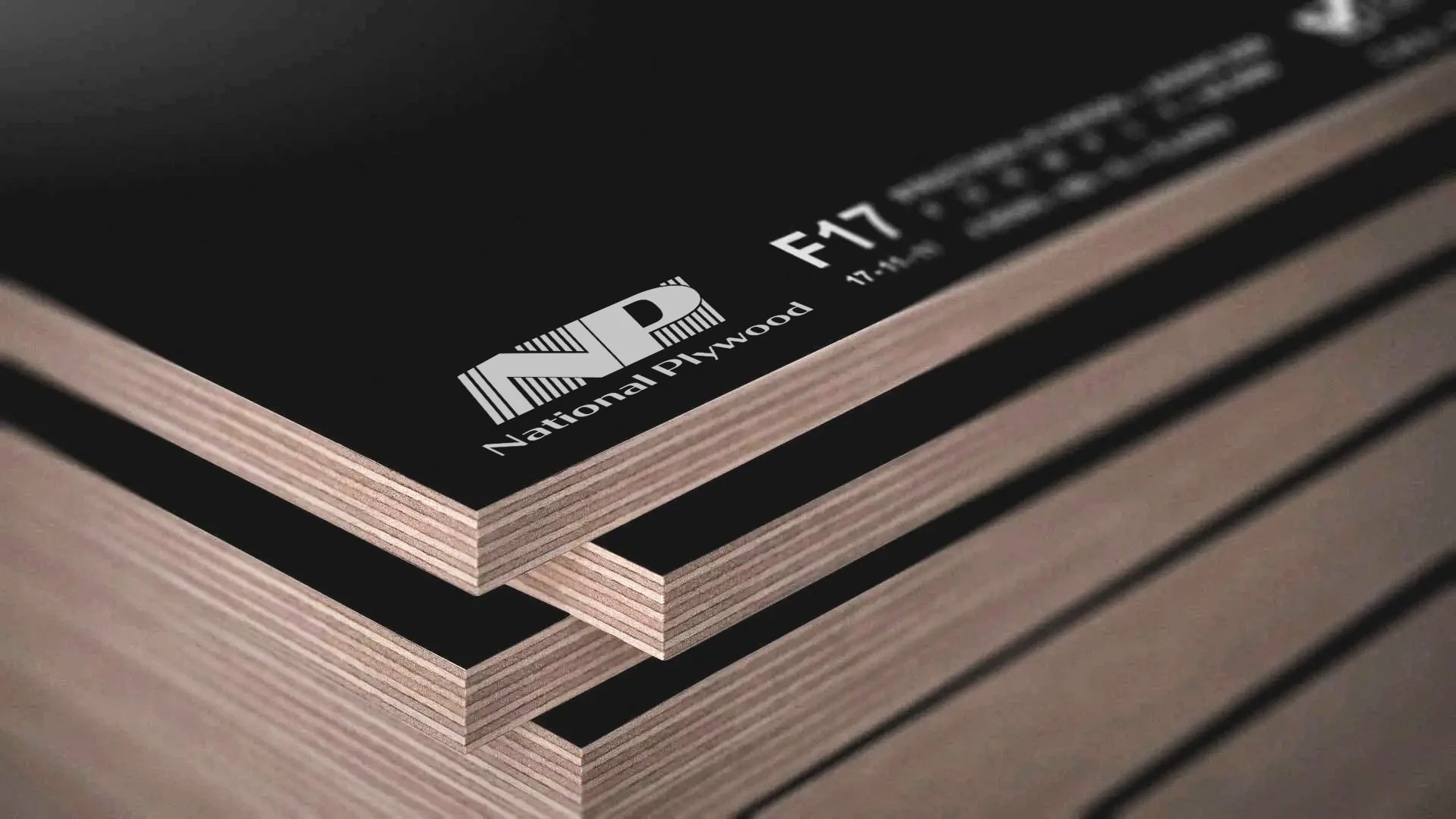
Film Faced Plywood vs Formply: Quick Answer
Film faced plywood describes plywood with a resin-impregnated film bonded to its surface. The term covers many cores, adhesives, thicknesses and quality levels. It is widely used for shuttering and concrete forms, but the name itself does not establish a structural grade or compliance with a local Formply standard.
Formply is a formwork-facing panel. In Australia, it is associated with requirements for plywood used in concrete formwork, including manufacture, grading, overlay and product identification. Stress grades such as F-grades may be specified where the panel performs structurally. Products sold as non-structural or economy Formply also exist in the market, so the word still needs qualification.

Therefore, some Formply is film faced plywood, but not every film faced plywood sheet can be treated as compliant Formply.
What Film Faced Plywood Means Globally
Film faced plywood is a construction category found in Europe, Asia, the Middle East, Africa and the Americas. Manufacturers laminate resin-treated paper to a plywood substrate to create a smooth or patterned surface. Smooth panels are commonly used as concrete contact faces. Textured panels are used for platforms, trailer floors and other applications where grip is required.
The description does not tell a buyer:
- whether the core is eucalyptus, acacia, mixed hardwood, poplar or birch;
- whether the veneers are continuous, machine-jointed or made with lower-grade jointed material;
- which adhesive and verified bond classification are used;
- whether the panel has a recognized structural stress grade;
- which film resin, paper and grammage are applied;
- how flatness, thickness, squareness, core gaps and edge sealing are controlled;
- whether a certificate applies to the actual product and production site.
Film faced plywood can be an economical, reliable forming material when those variables match the project. It becomes risky when the category name is used in place of a full specification. Start with the existing film faced plywood guide and translate the category into project-specific requirements.
What Formply Means in Australia and New Zealand
In Australasian construction, Formply is commonly understood as plywood designed for use as the face of concrete formwork. Australian industry sources describe compliant Formply in relation to AS 6669, while structural plywood properties and concrete surface-finish requirements may involve other related standards and project documents. The exact combination must be checked for the project and current regulatory context.
A compliant product is more than film over plywood. The applicable requirements may address overlay durability, bond, veneer construction, panel quality, stress grade, finish class, marking and third-party certification. Formply is therefore a performance and documentation decision, not merely a color or surface decision.

Why the terminology causes confusion
Outside Australia and New Zealand, suppliers may use “formply,” “formwork plywood,” “shuttering plywood,” “concrete form plywood,” “phenolic board” and “film faced plywood” as near-synonyms. That can be acceptable in a general product conversation, but it is not sufficient in a purchase order. A buyer importing into a regulated market should translate the common name into measurable and documentable requirements.
Film Faced Plywood vs Formply: Detailed Comparison
| Question | General film faced plywood | Specified Formply |
|---|---|---|
| What does the name describe? | A plywood panel with a resin-film overlay | A panel intended and specified for concrete formwork |
| Is a structural grade automatic? | No | No; the required stress grade must be stated and verified |
| Is the surface black or brown? | Often, but other colors and textures exist | Color is secondary to overlay performance and specification |
| Does it meet AS 6669? | Not unless documented for the exact product | Only when valid evidence and marking show compliance |
| Can it be used for formwork? | Often, if the design and required performance allow it | Yes, within the grade, finish, design and installation conditions specified |
| What should the buyer verify? | Core, bond, film, dimensions, tests and intended use | All panel details plus stress grade, standard, certification and traceable markings |

Overlay and concrete finish
The film provides the contact surface. Its resin content, paper, adhesion, surface condition and resistance to wear affect concrete release and appearance. Australian Formply requirements are concerned with more than whether a film exists; the overlay must support the intended formwork finish and remain fit for the declared use.
Never infer finish class from color. A glossy black surface can still have pinholes, burn-through, weak adhesion or an unsuitable substrate. Review the project finish requirement, approved sample and permitted defects.
Core and bond
The overlay cannot compensate for a weak core. Voids, overlaps, excessive moisture, thin face veneers and poor glue spread can cause localized crushing, uneven deflection or delamination. For structural Formply, the panel’s declared stress grade and associated evidence are essential. For general film faced plywood, buyers should still define core and bond acceptance criteria based on the application.
Dimensions and thickness
Formply dimensions commonly reflect regional construction practices and system compatibility. General export film faced plywood is frequently offered in metric sizes such as 1220 × 2440 mm or 1250 × 2500 mm, with a range of thicknesses. Do not assume that a close size is an acceptable substitute. Sheet layout, support spacing, joints, handling and formwork design must be coordinated.
Structural vs Non-Structural Formply
The word Formply is sometimes applied to both stress-graded structural panels and economy panels intended for limited or non-structural forming. That distinction must be visible in the product documentation and purchase order. Review structural versus non-structural plywood before treating a trade name as a design property.
A structural grade indicates declared mechanical properties within the referenced grading system. It does not eliminate the need for a formwork design. The designer must still consider concrete pressure or dead load, construction live load, panel direction, support spacing, joists, bearers, shores, connections, openings, pour sequence and stripping time.
A non-structural panel may be suitable only where the designed system provides support and the product is accepted for that limited use. It should never be substituted for stress-graded Formply when the design or local rules require structural material.
Standards, Product Marks and Certificates
Before ordering Formply for Australia or New Zealand, verify the current standard title, edition and amendments through an authoritative source. Then ask the supplier for evidence that connects the proposed product to that requirement.
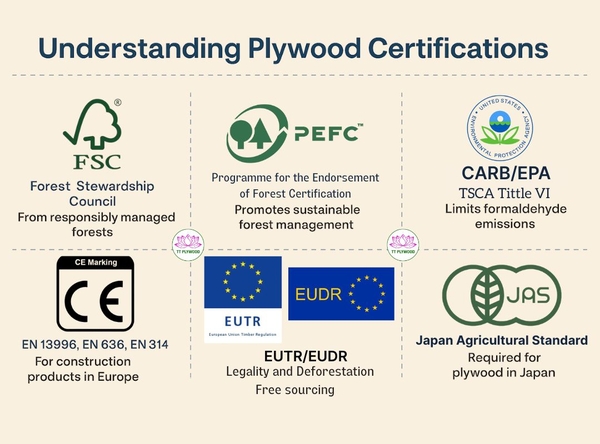
What to request
- Certificate number, issuing body, validity and exact scope.
- Manufacturer and production-site identity.
- Product name, construction, thicknesses and stress grades covered.
- Applicable standard and edition.
- Required panel marking or stamp and an explanation of each element.
- Test reports referenced by the certificate.
- Batch or bundle traceability from the documents to delivered goods.
Evidence that is not enough
- A supplier saying the panel is “F17 quality” without valid grading evidence.
- A photograph of a mark that cannot be connected to the shipped batch.
- A company certificate for a different product, thickness or factory.
- A laboratory report with no sample identity or outdated scope.
- A dark film surface or the use of an A-bond adhesive by itself.
Australian safety authorities have warned about non-compliant plywood sold for formwork use. That is why document review and delivery inspection should occur before the panels are installed, not after a discrepancy appears on site. Kosmex’s guides to reading plywood certificates and requesting supplier documents provide a useful evidence workflow, although the project may require different regional standards.

How to Check a Formply Delivery
- Match the order. Confirm product name, dimensions, quantity, stress grade, standard, certificate and marking against the approved purchase order.
- Check bundle identity. Record labels, batch numbers and packaging before opening bundles.
- Sample across the shipment. Do not inspect only the top sheets. Use the agreed sampling plan.
- Measure dimensions. Check thickness at defined locations, length, width, diagonals and flatness using calibrated tools.
- Inspect the film. Look for bubbles, pinholes, burn marks, scratches, film lifting and inconsistent surface.
- Inspect edges and core. Check seal coverage, crushed corners, open glue lines, gaps and overlaps.
- Quarantine discrepancies. Keep suspect bundles identifiable and do not use them until the supplier and responsible project professional resolve the issue.
The existing guide to common plywood defects provides practical cross-section, thickness, moisture and document checks for pre-shipment and receiving inspection.
How to Write a Film Faced Plywood or Formply Specification
A strong purchase specification should make deviations obvious. Include:
- application and whether the panel is structural in the temporary works design;
- required standard, edition, grade, stress grade and certification;
- panel dimensions, orientation and tolerances;
- core species, veneer construction and defect limits;
- adhesive and verified bond requirement;
- overlay type, film weight, surface and concrete-finish requirement;
- factory and field edge-sealing requirements;
- marking, test reports, traceability and document language;
- pre-production sample, inspection plan and non-conformance procedure;
- packing, moisture protection and delivery terms.
If Kosmex does not hold current evidence for the exact Formply grade required, the product should be offered as film faced plywood to a separately approved specification, not presented as certified Formply. The buyer, designer and authority must decide whether that product is acceptable for the project. The existing formwork plywood selection guide can help convert the application into a detailed RFQ.
Frequently Asked Questions
Is Formply just another name for film faced plywood?
In casual trade language, the terms may overlap. In a regulated formwork specification, Formply can carry defined grading, overlay, marking and certification requirements. Do not treat the words as universally interchangeable.
Does black film faced plywood meet Formply standards?
Color does not establish compliance. The exact panel needs valid evidence for the required standard, grade, production site and scope.
What does F17 mean?
F17 is a stress-grade designation used in Australian structural timber products. It should appear only when supported by the applicable grading and certification evidence. It is not a synonym for 17 mm thickness.
Can non-structural film faced plywood be used for slabs?
Only when the engineered formwork design, responsible project professionals and local requirements accept it. Slab formwork carries significant loads, so a generic product recommendation is not sufficient.
What is the most important buying document?
No single document replaces the full evidence set. Start with the project specification, then verify the product certificate, technical data, markings, test scope and batch traceability against it.
Confirm the Required Market Specification
Kosmex supplies film faced plywood in multiple constructions. Send the destination market, project standard, structural requirement, panel dimensions, surface-finish target and required evidence so the export team can confirm whether a matching product is available.
Bình luận