


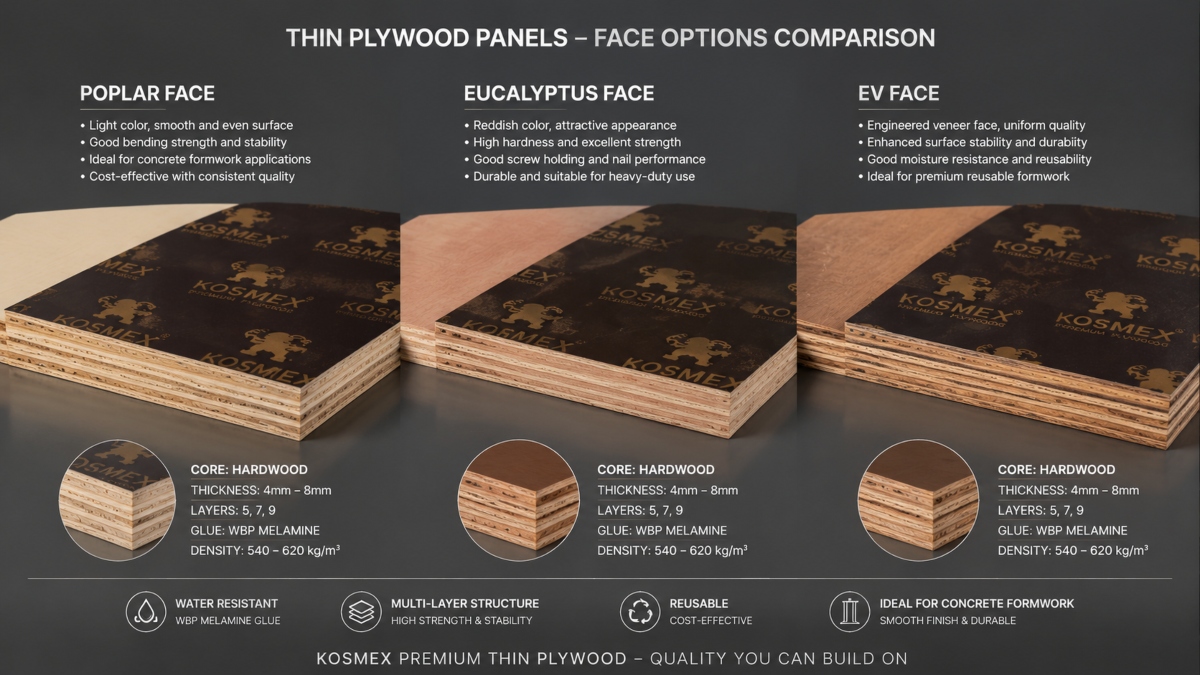
Engineered veneer plywood combines a repeatable decorative wood appearance with a plywood substrate. The critical buying point is that EV usually describes the face veneer. Core species and panel construction determine most of the weight, stiffness, machining and flatness behaviour.
What engineered veneer plywood actually means
Engineered veneer is also called reconstructed or reconstituted veneer. Manufacturers process wood veneer, often by dyeing, laminating and re-slicing it, to create a planned grain and colour. The resulting veneer can imitate familiar species or create a consistent contemporary pattern.
When that decorative layer is bonded to plywood, the product is engineered veneer plywood, often shortened to EV plywood. EV describes the visible face system. It does not automatically tell the buyer whether the core is eucalyptus, poplar, pine, mixed hardwood or another construction.
This distinction closes a common sourcing gap. A buyer may approve a beautiful EV sample and later discover that production weight, screw holding, edge quality or flatness differs because the core was not fixed. A complete RFQ lists face, back and core separately.

EV veneer vs natural veneer
| Factor | Engineered veneer | Natural veneer |
|---|---|---|
| Pattern | Designed for controlled repeatability | Unique variation from each log |
| Colour | Can be produced within an approved range | Natural variation and ageing are prominent |
| Matching | Useful for repeated furniture programmes | Requires log and flitch matching decisions |
| Character | Consistent visual language | Natural figure, marks and individuality |
| Approval risk | Dye lot and pattern reference must be controlled | Variation limits and matching sequence must be controlled |
Neither is universally better. Natural veneer is valuable when authentic variation is part of the design. EV is valuable when a programme needs repeatable panels across rooms, stores or production runs. Both need an approved master sample and a defined range of acceptable variation.

How engineered veneer is produced
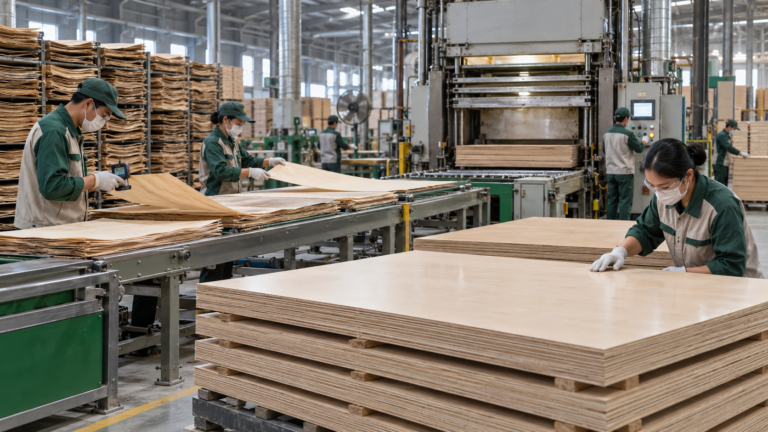
Exact processes vary, but a typical sequence starts with selected wood veneer. Veneers are sorted, treated or dyed to the intended colour, arranged into a designed lay-up, bonded into a block and sliced again. The cutting direction and block design create straight grain, crown, figured or custom visual effects.
The thin decorative veneer is then bonded to a substrate. For furniture panels, that substrate may be plywood selected for weight, stiffness, machining and dimensional stability. Sanding, colour control and optional UV or other surface finishing follow according to the product.
Because the face is real wood, it still has grain, pores and a moisture response. “Engineered” means controlled construction and appearance, not plastic or movement-free.
The core determines most panel behaviour
Eucalyptus core
Eucalyptus plywood is generally selected when buyers want a denser, firm panel with good machining potential. It can suit furniture frames, cabinet parts and components where edge quality and strength matter. Higher density also affects sheet weight and freight. See what eucalyptus plywood is and Kosmex’s eucalyptus plywood thickness guide.
Poplar core
Poplar core is valued for lower weight and easy machining in many interior applications. It can be attractive for large panels, mobile furniture and projects where handling weight matters. Buyers should still specify veneer grade, core gaps, density or weight range and hardware tests. More detail is available in the poplar core plywood guide.
Pine or combination core
Pine and combination constructions can offer useful cost, availability and machining choices. The word “combi” is not a full specification. Name permitted species and positions, and approve the proposed construction. A change in core schedule can alter weight, screw holding, edge appearance and flatness.

Flatness: balance the decorative system
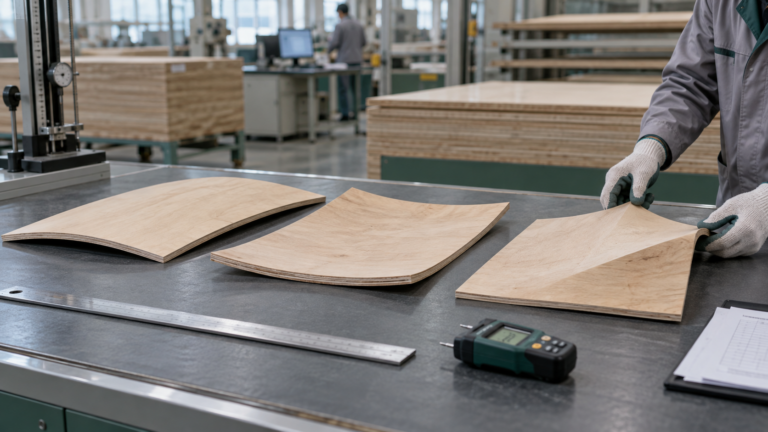
An EV face can change panel balance because species, veneer thickness, adhesive and finishing affect moisture movement and stress. The reverse face does not always need the same visual grade, but it should provide a compatible balancing construction.
Flatness control includes matched veneer moisture, balanced lay-up, even glue spread, suitable pressing, post-press conditioning, calibrated sanding and supported packing. When UV coating, paint or laminate is applied, test the full face and back schedule. One-face sealing can create a moisture gradient.
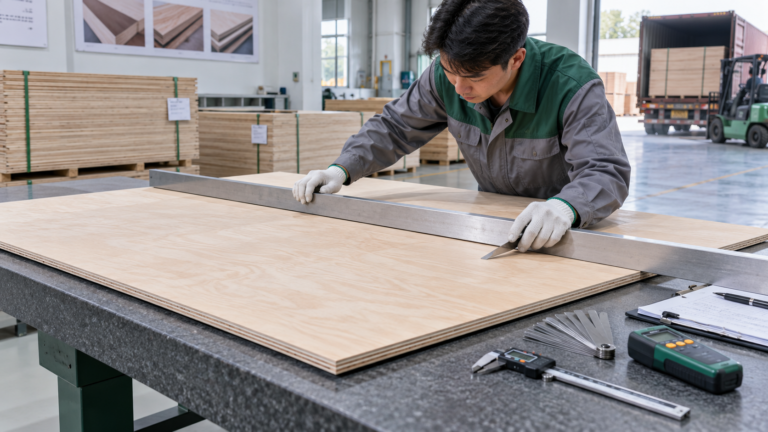
Kosmex can produce panels designed to resist bowing, cupping and twisting within an agreed inspection method and limit. No responsible supplier should promise that a wood product can never bend or warp in every climate or support condition. Learn how the process is controlled in plywood flatness control.
Choosing 6mm, 8mm or 9mm EV plywood
6mm EV plywood can work for supported cabinet backs, decorative liners, inserts and lightweight components. 8mm offers a useful middle thickness for furniture parts and fit-out panels where more handling stiffness is wanted. 9mm can suit firmer cabinet components, partitions and supported furniture elements.
These are application examples, not structural ratings. Panel size, span, load, fixing, hardware and service humidity govern the decision. If a decorative part is large or free standing, prototype it. Kosmex’s 6mm, 8mm and 9mm plywood guide provides a detailed selection matrix.
Finished thickness deserves attention. EV veneer, glue, sanding and coating contribute to the final dimension. If the panel must fit a groove or CNC programme, define the finished range after the specified surface process.
Surface quality and colour approval
Approve a labelled master sample that identifies pattern code, colour, cut, sheen, substrate, finish and date. Because visual judgement changes with lighting, define the review light source and viewing distance for critical programmes. A small swatch cannot represent full-sheet pattern repeat, joint visibility or colour distribution, so approve a full panel where the project risk justifies it.
Set limits for open defects, repairs, stains, sanding marks, glue bleed, veneer joints and edge damage. Decide whether the face will be clear coated, stained or painted. A raw veneer sample may darken or change contrast after finishing.
Production control should compare each batch with the approved range, not only one ideal master. If two production lots will be installed side by side, require lot coordination or pre-sorting.
Machining and assembly tests
Run tests that represent the furniture factory. CNC route edges and small radii, drill shelf-pin and hinge holes, cut grooves, drive the intended screws and apply edge banding. Check breakout, edge voids, fastener performance, glue compatibility and surface damage.
The EV layer is thin, so aggressive sanding can cut through it. Define sanding allowance and train operators to recognise the face. Where edges remain visible, the core appearance and void limits become part of the design. Where edges are banded, test adhesive and press temperature on the real surface.
For shelves and loaded parts, verify span and deflection with the proposed construction. Do not infer structural capacity from an attractive face or nominal thickness. Kosmex discusses related choices in the plywood shelving guide and the furniture plywood thickness and joinery guide.
Glue, emissions and destination documents
State the service condition and required bond performance. Furniture for a dry interior, a humid kitchen and a transport interior may need different systems. Request the declared glue type or bond class and the applicable test report.
Formaldehyde emission requirements depend on destination, product scope and customer programme. Define the required limit and test method in the RFQ. The report should match the proposed panel construction, not a vaguely similar product. Other documents may include legality or chain-of-custody evidence, technical data, origin documentation and destination declarations.
Do not describe a test report as a universal certificate. Record the laboratory, method, specimen, date and result. Kosmex’s supplier document checklist helps buyers organise evidence.
EV plywood RFQ checklist
| Specification area | What to state |
|---|---|
| Decorative face | EV pattern code, colour range, cut, veneer thickness, joint and repair limits |
| Back | Balancing veneer, visual grade and planned finish |
| Core | Species, construction, joint quality, permitted gaps and overlaps |
| Dimensions | Finished thickness, length, width, squareness and tolerances |
| Performance | Bond, moisture, flatness, machining and hardware requirements |
| Finish | Raw, sanded, stained, UV coated or other system, with sheen and colour approval |
| Compliance | Emission limit, test method, legality and customer-specific documents |
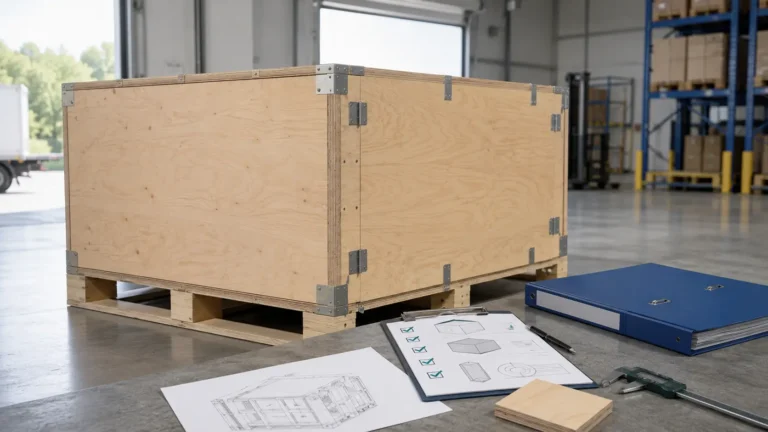
| Packing | Interleaf, face protection, supports, wrap, straps, labels and container plan |
Sample approval sequence
- Approve digital or small references only for early pattern screening.
- Request a physical sample made on the proposed core.
- Approve a full sheet for pattern, flatness and yield when commercial risk is high.
- Apply the real finish and edge-banding process.
- Machine representative parts and install the intended hardware.
- Condition and inspect the prototype in the expected service environment.
- Seal and label the final master sample and controlled specification.
- Define production sampling, batch matching and change approval.
Common EV plywood buying mistakes
- Specifying only the EV colour. The core, back, glue and finished thickness remain open.
- Approving a screen image. Screens cannot prove colour, texture, sheen or full-sheet pattern.
- Calling EV a core species. This hides the substrate that controls much of the performance.
- Finishing one face without a balance trial. The completed panel may curve after processing.
- Expecting zero visual variation. EV improves repeatability but is still a real wood product.
- Skipping machining tests. Face quality cannot predict edge voids or screw performance.
- Using “no warp” without a method. Agree conditioning, support, measurement and limit.
- Ignoring lot continuity. Adjacent panels from different runs may show a visible range.
How Kosmex can develop an EV plywood programme
Kosmex can review the visual target, suggest EV pattern options and pair them with eucalyptus, poplar or other agreed core constructions. Development should move from pattern screening to a physical sample, full production specification, machining trial and controlled master.
For a repeat furniture programme, include forecast volume, sheet optimisation, component sizes, surface finish and destination documents. That information helps align veneer lot planning, core construction, QC and packing. If flatness is critical, define bow, cup and twist methods before quotation and follow the pre-shipment flatness inspection guide.
EV plywood is most valuable when its repeatable appearance is supported by an equally controlled substrate. Specify the complete panel, approve it in the real furniture process and preserve it through storage and shipment.
Frequently asked questions
What is engineered veneer plywood?
It is plywood faced with engineered, reconstructed or reconstituted wood veneer designed to provide a controlled decorative pattern and colour. The core remains a separate specification.
Is engineered veneer the same as laminate?
No. Engineered veneer is made from real wood veneer that has been processed and reconstructed. Decorative laminate is a different material system.
Does an EV face make plywood flat?
Not by itself. Flatness depends on a balanced face and back, core construction, moisture, bonding, pressing, conditioning, finishing, storage and support.
Which core is best for EV plywood furniture?
Eucalyptus, poplar, combination and other cores offer different weight, stiffness, machining and cost. The best core depends on the component, span, hardware, finish and target market.
Bình luận