


The practical comparison is not “which acronym is best?” It is which exact panel provides the required concrete finish, structural properties, bond, surface durability, edge protection, documentation and cost per acceptable use.

MDO vs HDO vs Film Faced Plywood: Quick Comparison
| Factor | MDO plywood | HDO plywood | Film faced plywood |
|---|---|---|---|
| Name | Medium Density Overlay | High Density Overlay | Plywood faced with resin-impregnated film |
| General surface concept | Resin-treated fiber overlay with a controlled, paintable or forming surface depending on grade | Higher-resin overlay with a harder, more impervious surface | Resin-treated paper film, often phenolic, smooth or patterned |
| Concrete-form versions | Available in concrete-form grades | Available in concrete-form grades | Widely offered for concrete formwork, but grade varies |
| Paintability | A common strength of suitable general MDO products | Possible only within the manufacturer’s finishing instructions | Film is normally selected for release and wear, not conventional paint adhesion |
| Surface durability | Depends on grade and overlay | Generally higher than MDO at comparable recognized grades | Depends on film paper, resin, grammage, lamination and handling |
| Market language | Common in North America | Common in North America | Common across Europe, Asia, the Middle East and global export markets |
| Buying requirement | Specify grade, overlay, substrate, bond and standard | Specify grade, overlay, substrate, bond and standard | Specify core, glue, film, dimensions, tests and intended use |
The table describes categories, not interchangeable grades. A concrete-form MDO panel should not be confused with general sign-grade MDO, and a premium film faced sheet should not be assumed equivalent to a certified HDO forming panel without comparable evidence.
What Is MDO Plywood?
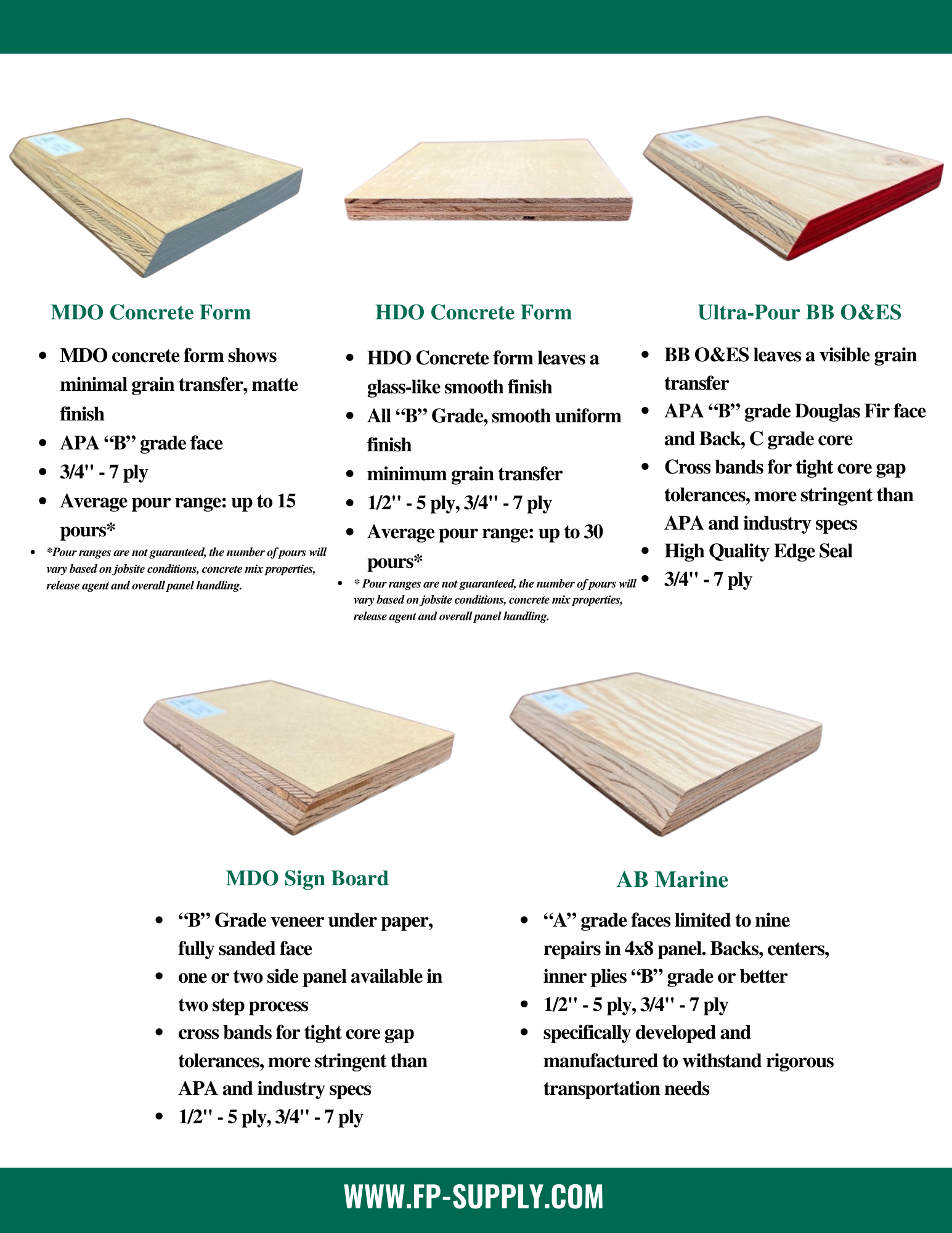
MDO stands for Medium Density Overlay. The overlay is a resin-treated fiber sheet bonded to plywood. According to APA, The Engineered Wood Association, MDO is manufactured with less resin than HDO and is available in concrete-form and general grades. For terminology used in global trade, compare this with Kosmex’s guide to phenolic plywood and resin-treated surfaces.

MDO is valued for a smooth, uniform surface. In general applications, suitable MDO can provide a stable paint base for signs, siding and exterior components when specified and finished correctly. Concrete-form MDO is manufactured for forming use and should be evaluated under its declared grade rather than assumed to have the same construction as general MDO.
When MDO can make sense for concrete
- The project specification names an approved MDO concrete-form panel.
- The required surface finish matches the selected overlay.
- The panel’s structural rating, bond and support design are documented.
- The expected number of uses and maintenance plan justify the cost.
Do not buy MDO solely because the overlay feels smooth. Request the product grade, allowable use, span information and forming recommendations from the manufacturer.
What Is HDO Plywood?
HDO stands for High Density Overlay. APA describes HDO as containing more resin than MDO. The additional resin produces a harder, more water- and wear-resistant surface when compared within the recognized HDO/MDO system.
HDO is available in concrete-form and industrial grades. Concrete-form HDO is often considered when repeated forming, demanding surface durability or a controlled concrete finish justifies the higher initial cost. The exact result still depends on the plywood substrate, panel grade, edge protection, release agent and jobsite handling.
HDO is not simply “heavy film”
HDO overlay density and film grammage are different product descriptions. A supplier should not claim that an imported film faced panel is HDO merely because it has a high stated GSM. Compare the overlay construction, recognized grade, resin system, substrate, test method and intended use.
What Is Film Faced Plywood?
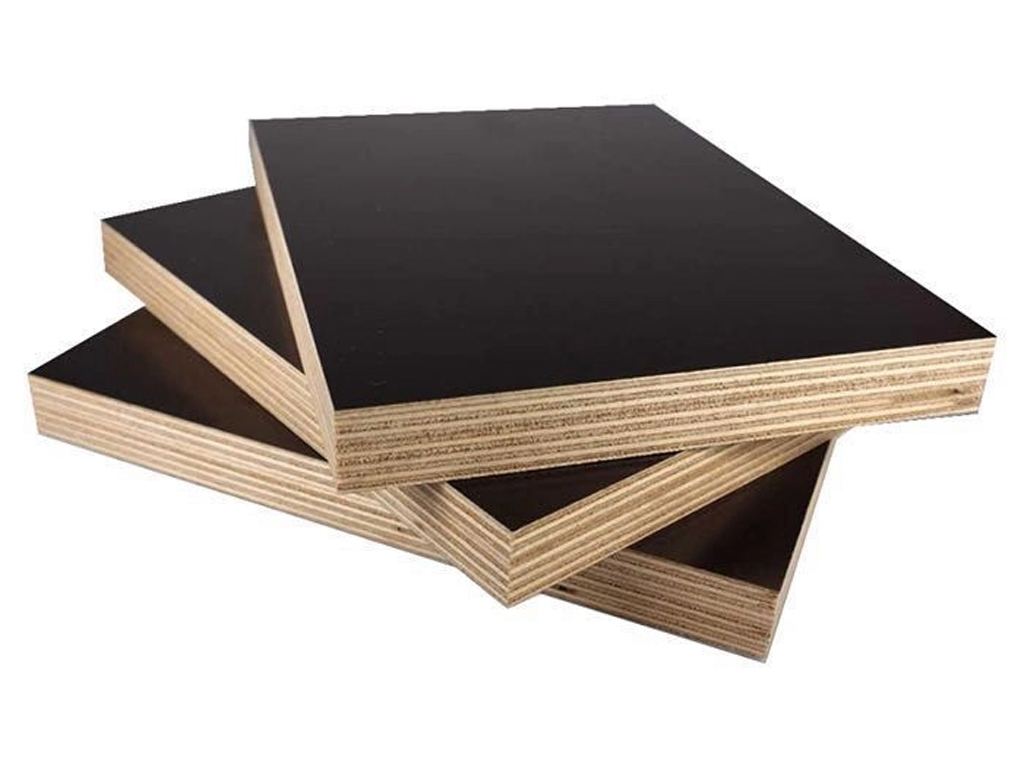
Film faced plywood uses resin-impregnated paper bonded to a plywood panel under heat and pressure. Smooth phenolic film is common in concrete formwork because it limits moisture absorption through the face, supports release and provides a consistent contact surface. Patterned film creates grip for flooring and platform applications.
Film faced plywood is a broad category. The name alone does not define:
- the core species or density;
- the number, thickness or quality of veneers;
- the presence of core gaps and overlaps;
- the adhesive system or verified bond class;
- the film paper, resin or grammage;
- the structural grade or allowable span;
- the standard or certificate required in a particular market.
The current Kosmex film faced plywood page lists several cores, adhesive options, film weights, colors and construction thicknesses. Buyers should request the exact specification and documents for the product offered. The broader film faced plywood guide covers product structure and applications.
Performance Differences That Matter in Formwork
Concrete surface finish
The forming surface transfers its texture, joints and defects to the concrete. A harder, more uniform overlay can maintain a consistent finish across repeated use, but workmanship remains critical. Panel alignment, joint treatment, release-agent application, concrete mix, vibration, stripping and cleaning all influence the result.
Obtain an approved sample pour when the finish is architecturally important. Do not promise a finish class from the product name alone.
Concrete release
MDO concrete-form, HDO concrete-form and film faced panels can all be designed to release concrete. Follow the manufacturer’s recommendation for release agent. More is not necessarily better. Uneven puddles can stain concrete and collect dirt, while an incompatible chemical can damage the overlay.
Water resistance
The overlay protects the broad faces, but cuts, holes and damaged edges remain important entry points. Bond durability must be evaluated separately from surface resistance. All three panel categories need proper edge treatment and storage.
Abrasion and impact
HDO’s higher resin content generally provides a harder surface than MDO within comparable product families. Film faced durability varies with film construction and lamination. Any overlay can be damaged by metal scraping, dragging materials, poor lifting and rough stripping.
Core and structural behavior
The face is only the visible layer. Panel stiffness, strength and fastener holding depend heavily on the substrate. Compare declared structural properties, veneer construction, orientation and thickness. The formwork designer should determine spans and supports for the exact panel, not a generic category.
Repair and finishing
MDO is often chosen for paintable applications, while HDO and phenolic film surfaces can be difficult to coat without manufacturer-approved preparation. Formwork repairs must be compatible with the overlay and required concrete finish. Filling over a delaminated or swollen area does not restore structural integrity.

Regional Terminology Can Change the Buying Conversation
North American project documents may call for B-B Plyform, MDO concrete-form or HDO concrete-form panels under recognized APA or product-standard categories. Australian projects may specify stress-graded Formply and local formwork requirements. European and international procurement often uses film faced plywood, phenolic plywood or shuttering plywood alongside EN classifications.
These terms should not be translated by appearance. Convert the project requirement into properties and evidence:
- Intended application and structural role.
- Required standard, grade and edition.
- Declared strength, stiffness or span information used by the design.
- Core, veneer and bond construction.
- Overlay material, surface and finish expectation.
- Dimensions, tolerances and panel direction.
- Edge protection and field-repair procedure.
- Certification, testing, marking and batch traceability.
If an exporter offers film faced plywood as an alternative to MDO or HDO, the buyer and designer should approve it based on comparable technical information. A lower price and similar-looking brown face are not evidence of equivalence. The guide to structural versus non-structural plywood explains why the intended role and evidence must be explicit.
Reuse and Cost per Pour
Articles often assign a fixed reuse range to each category, but those numbers can be misleading. Service life changes with panel grade, concrete geometry, finish requirement, load, release agent, stripping, cleaning, repair, storage and crew practice.
Use a project-specific calculation:
Cost per acceptable pour = (landed panel cost + cleaning and repair cost + attributable rework) ÷ acceptable pours achieved
“Acceptable” should reflect the next use. A panel that is still intact may no longer be suitable for exposed architectural concrete but may be approved for a concealed surface. Record this downgrade instead of counting every physical reuse as equal.
For procurement, ask each supplier to provide product-specific examples with the full construction and site conditions. Treat expected cycles as a planning input, not a guarantee, unless the commercial agreement explicitly defines the performance commitment.
The existing formwork plywood buyer guide explains how panel construction and jobsite handling affect reuse, while the Vietnam plywood price guide provides broader sourcing context.
Which Panel Should You Choose?
| Project need | Selection approach |
|---|---|
| North American specification names MDO concrete-form | Use an approved MDO forming product or obtain formal approval for a documented alternative |
| North American specification names HDO concrete-form | Match the HDO grade, substrate, surface and evidence; do not substitute by GSM alone |
| International project specifies film faced plywood | Define core, bond, film, structural requirement, dimensions, tests and finish |
| High-value exposed concrete | Prioritize approved sample finish, surface uniformity, panel flatness and controlled site practice |
| Many repetitive pours | Compare cost per acceptable pour using product-specific evidence and a maintenance plan |
| Painted signs or exterior components | Use the MDO or other product grade specifically intended for paint, following finishing instructions |
How to Convert an MDO or HDO Requirement into an RFQ
If you are asking an international supplier for an alternative, send the original project requirement and request a point-by-point response:
Required application: [concrete slab, wall, column or other]. Original specified panel: [MDO/HDO grade and standard]. Required concrete finish: [description]. Structural properties and panel span are based on: [approved design information].
Please propose a panel and state substrate species and construction, structural grade or declared properties, adhesive and bond evidence, overlay material and weight, surface finish, dimensions and tolerances, edge treatment, relevant test reports, certification, marking, sample availability and all deviations from the original requirement.
The substitution should be reviewed by the responsible designer before purchase or use. For a film faced option, use the Kosmex formwork plywood selection guide to define the complete specification.
Frequently Asked Questions
Is HDO always better than MDO?
No. HDO has a higher-resin overlay and is selected for demanding surface durability, but MDO may be more suitable where paintability or a particular approved forming grade is required. Choose by application and specification.
Is film faced plywood the same as HDO?
No. Both are overlaid plywood products, but the overlay construction and grading language differ. A high film GSM does not automatically make a panel HDO.
Can MDO be used for concrete forms?
Yes, when it is a concrete-form grade accepted by the design and used within the manufacturer’s recommendations. General MDO made for signs or siding should not be assumed suitable.
Which panel lasts the longest?
There is no universal winner without comparing exact products. Overlay, substrate, bond, form geometry, handling, cleaning and finish requirements determine service life.
Which option is cheapest?
Compare landed cost per acceptable pour. A higher initial price can be economical if the panel maintains the required finish for more cycles and reduces rework.
Compare Specifications, Not Acronyms
Kosmex can provide available film faced plywood specifications for comparison with an MDO or HDO project requirement. Send the original grade, standard, surface, structural data and evidence list so any proposed alternative can be reviewed properly.


Bình luận