


What Is Eucalyptus Plywood? Properties, Uses, Pros & Cons
Eucalyptus plywood is one of the more underrated materials in the engineered wood world. While birch plywood and commercial plywood dominate most woodworking and construction conversations, eucalyptus plywood quietly delivers a combination of density, durability, and sustainability that few other panels can match.
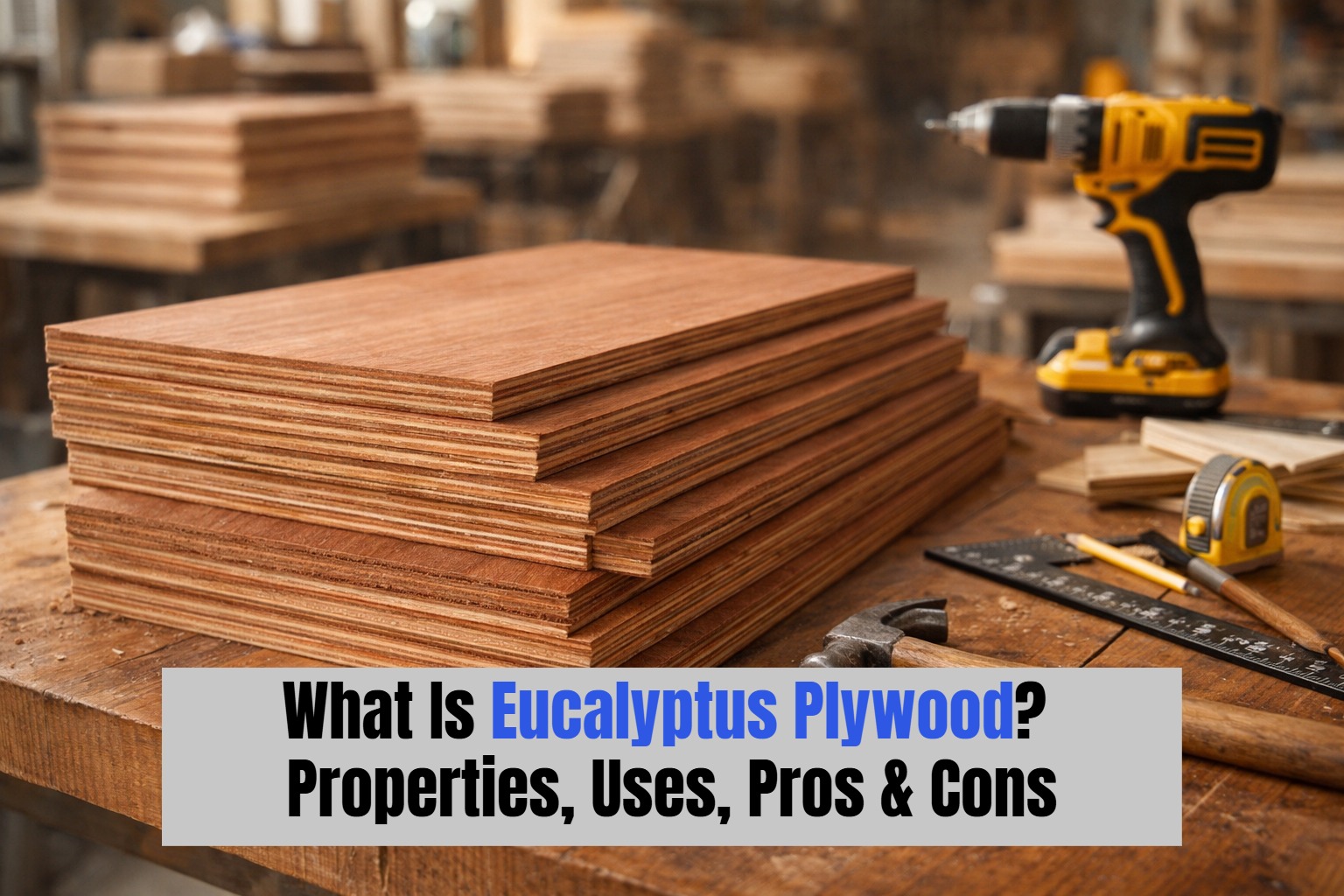
This guide covers everything you need to know about eucalyptus plywood: what it is, how it is made, its key properties, where it excels, and how it compares to alternatives like birch plywood. Whether you are a trade professional or a DIY enthusiast, this overview will help you make a more informed material choice.
What is Eucalyptus Plywood?
Eucalyptus plywood is a hardwood plywood panel manufactured by bonding together multiple layers of eucalyptus wood veneer using strong structural adhesives. Like all plywood, the veneers are laid with the grain of each layer running perpendicular to the one above and below it, creating a cross-laminated structure that enhances strength and reduces the risk of warping.
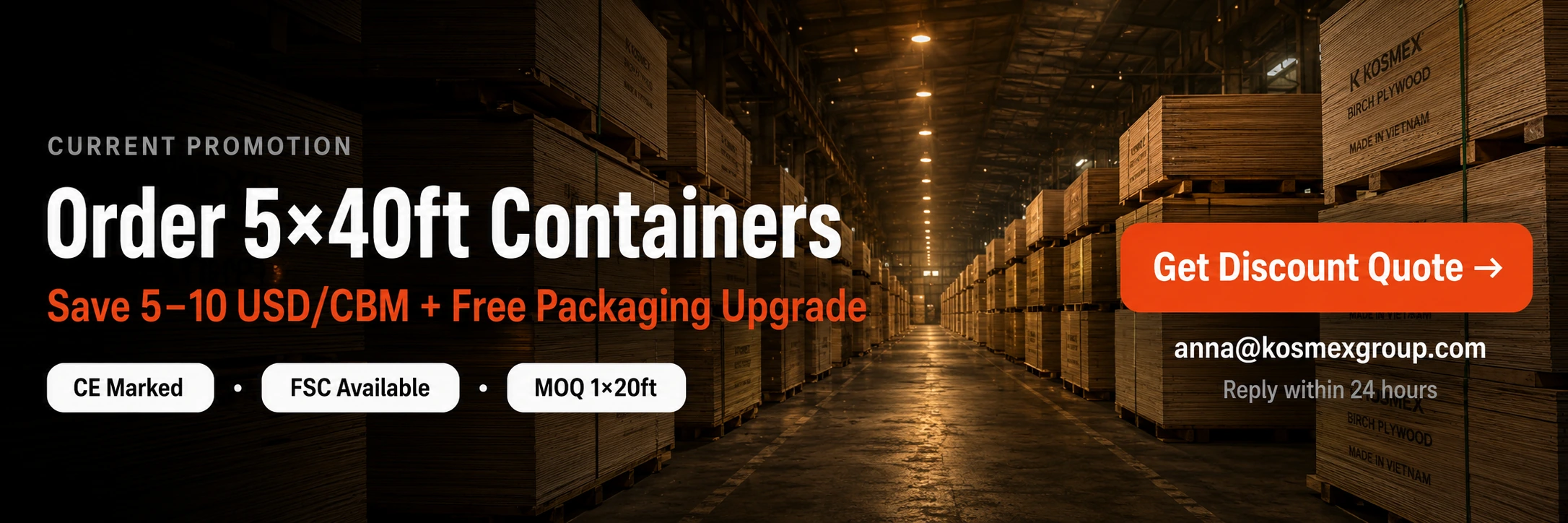
The eucalyptus tree is native to Australia but is now widely cultivated across Southeast Asia, South America, and Africa in managed plantation systems. One of its most important characteristics as a timber species is its rapid growth rate: eucalyptus trees reach harvestable size significantly faster than most traditional hardwood species, making the material both more renewable and more cost-accessible than old-growth hardwoods.
Eucalyptus plywood is often described as a high-performance alternative to birch plywood, particularly for applications where moisture resistance and panel density are priorities. It is available in a range of grades (typically B, C, and C+) and standard thicknesses from 6 mm to 30 mm, and is commonly offered in both raw sanded (S2S) finishes and white melamine coated surfaces ready for cabinetry and shopfitting applications.
How Is Eucalyptus Plywood Made?
The manufacturing process for eucalyptus plywood follows the same fundamental steps as other hardwood plywood, but the properties of the eucalyptus species give the finished product a distinct set of characteristics.
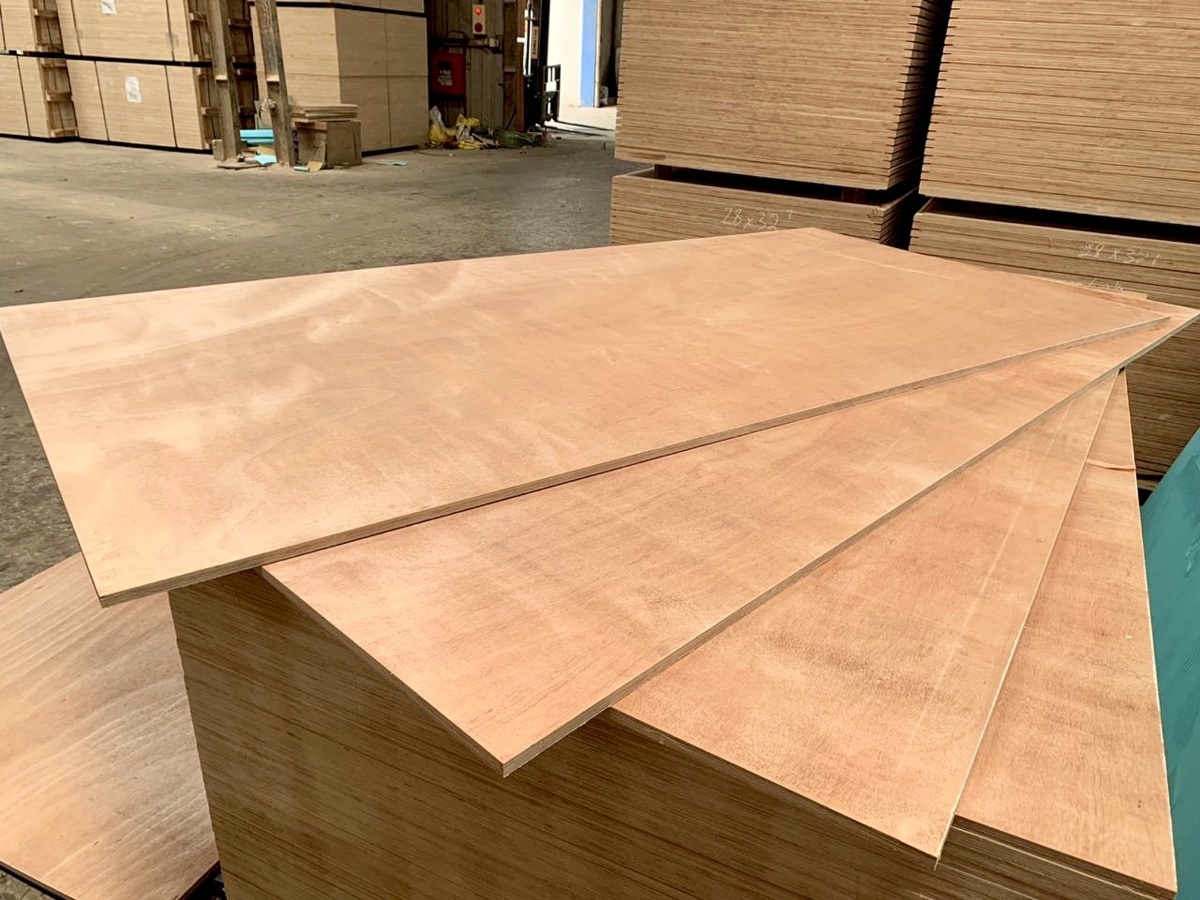
The process begins with harvesting eucalyptus logs from plantation forests. The logs are peeled into thin veneers using a rotary cutting method. These veneers are then dried to bring the moisture content within the target range of 6 to 10 percent, which is a tighter tolerance than many softwood plywoods and contributes significantly to the panel’s dimensional stability in service.
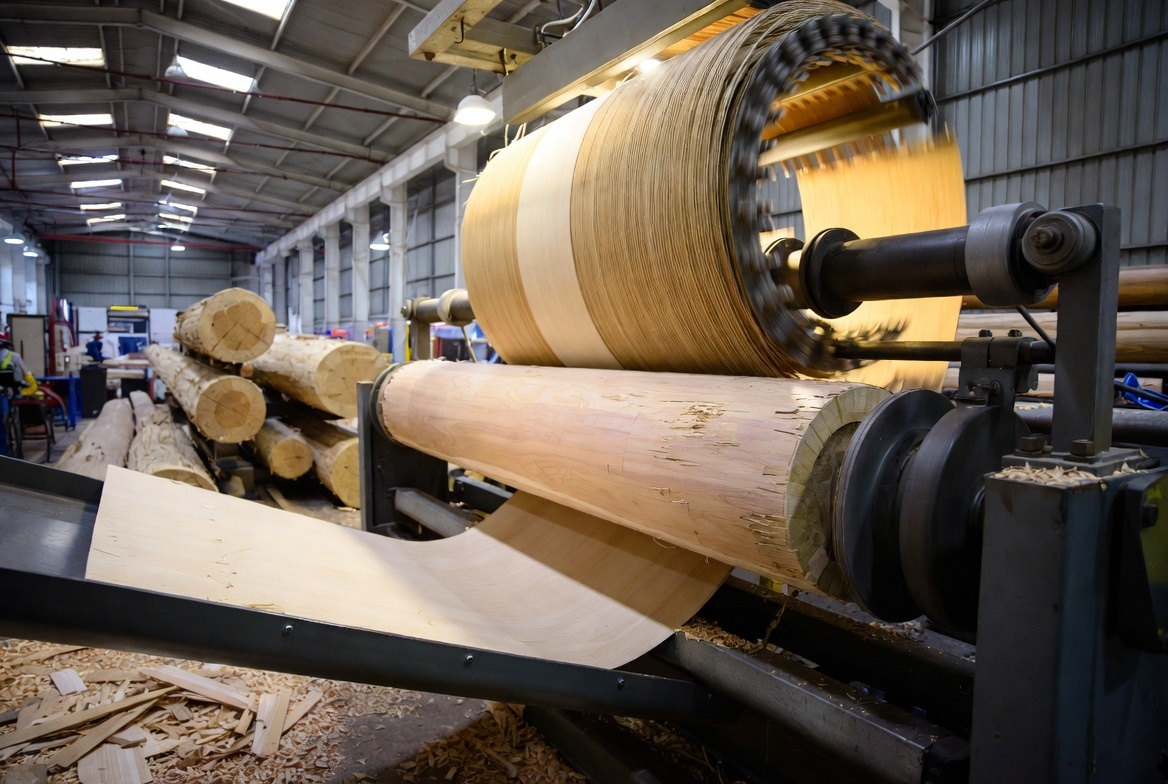
The dried veneers are laid up in alternating grain directions and bonded together using structural adhesives under heat and pressure. The number of plies determines the final panel thickness, and the pressing process ensures a uniform, void-free bond between layers. Once pressed, panels are sanded to achieve a smooth, consistent surface ready for finishing or further processing.
The natural oils present in eucalyptus wood are preserved through this manufacturing process and continue to provide moisture-resistant and pest-deterrent properties in the finished panel.
Key Properties of Eucalyptus Plywood
Eucalyptus plywood earns its reputation through a combination of physical properties that set it apart from many other hardwood and softwood panels.
Density and Hardness
Eucalyptus is a genuinely dense hardwood. Eucalyptus plywood typically achieves a panel density of 550 to 620 kg/m3, placing it firmly in the high-density range for structural plywood. This density translates directly into resistance to surface denting, strong screw and nail holding power, and a solid feel that distinguishes it from lighter engineered panels.
In terms of hardness, solid eucalyptus timber has a Janka hardness rating of approximately 1,125 lbf. While plywood panels are not rated by the Janka scale directly, the underlying density of the eucalyptus veneer contributes to a panel that holds up well under load and resists surface damage in demanding applications.
Moisture Resistance
One of eucalyptus plywood’s most commercially significant properties is its natural moisture resistance. Eucalyptus wood contains inherent oils that act as a built-in barrier against moisture absorption. This means eucalyptus plywood performs better than many other hardwood panels when exposed to humidity fluctuations, and is suitable for applications where standard plywood would require additional sealing or moisture treatment.
This characteristic makes it suitable for kitchen cabinetry, bathroom joinery, and other interior environments where occasional moisture contact is expected. It is not a substitute for marine-grade panels in truly wet conditions, but for indoor applications with incidental moisture exposure, its natural oil content provides a meaningful performance advantage.
Dimensional Stability
The combination of high density, low manufacturing moisture content (6 to 10 percent), and cross-laminated veneer structure gives eucalyptus plywood excellent dimensional stability. It is less prone to warping, cupping, or twisting than lower-density panels, and maintains its flatness reliably across changes in ambient humidity.
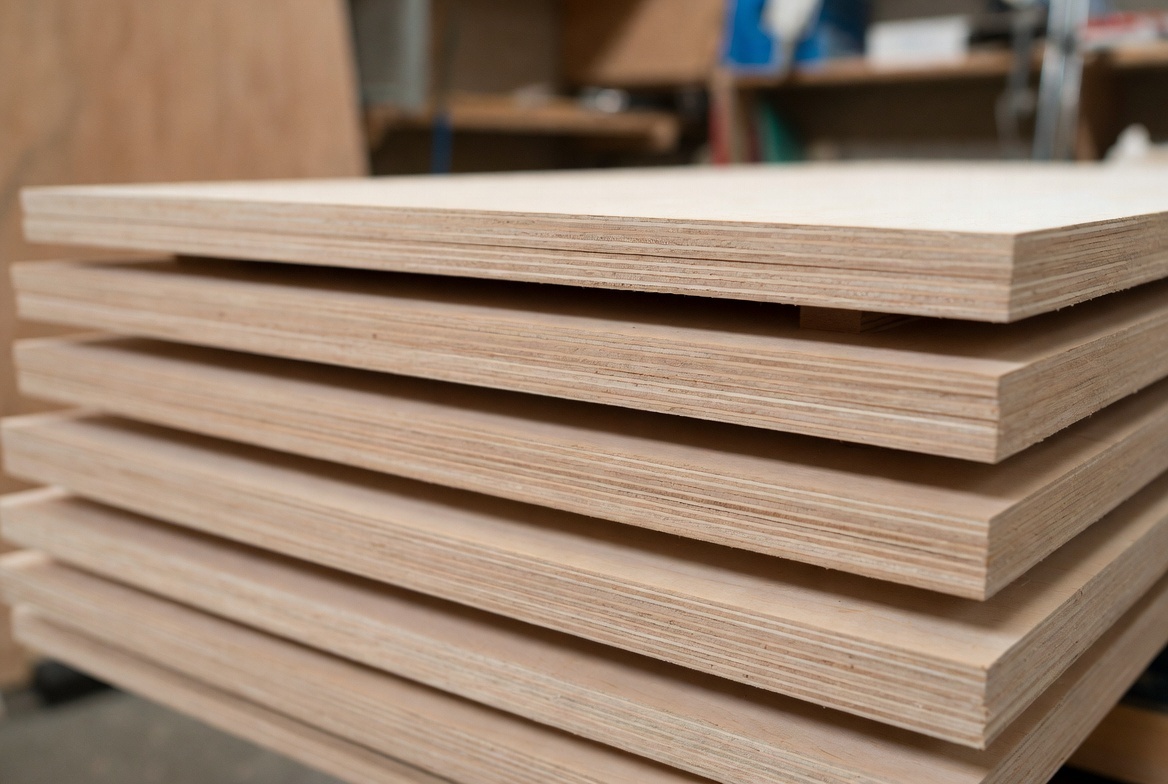
This is a particularly valuable property for cabinet boxes, shelving, and furniture components that need to stay true over the life of the piece.
Surface Quality and Grain Appearance
Eucalyptus plywood has a pronounced and visually distinctive grain pattern. The grain lines tend to be straight to interlocking, with a warm reddish-brown coloration that varies subtly across growth rings. This gives eucalyptus plywood a bold, rich appearance that is quite different from the pale, neutral surface of birch plywood.
The surface accepts stains and clear finishes well, making it easy to achieve a consistent, attractive result. For furniture and cabinetry work where a natural wood finish is the goal, eucalyptus plywood’s staining behavior is a practical advantage over panels that absorb finish unevenly.
Sustainability
Eucalyptus is one of the fastest-growing commercial timber species in the world. Plantation-grown eucalyptus reaches harvestable maturity in a fraction of the time required by most hardwood species, reducing pressure on natural forests and making it a highly renewable raw material. For manufacturers and buyers with sustainability commitments, eucalyptus plywood offers a credible, high-performance option from a well-managed and renewable supply chain.
5 Uses of Eucalyptus Plywood
Eucalyptus plywood’s combination of strength, stability, surface quality, and moisture resistance makes it a versatile material across a wide range of applications.
Eucalyptus Plywood for Furniture
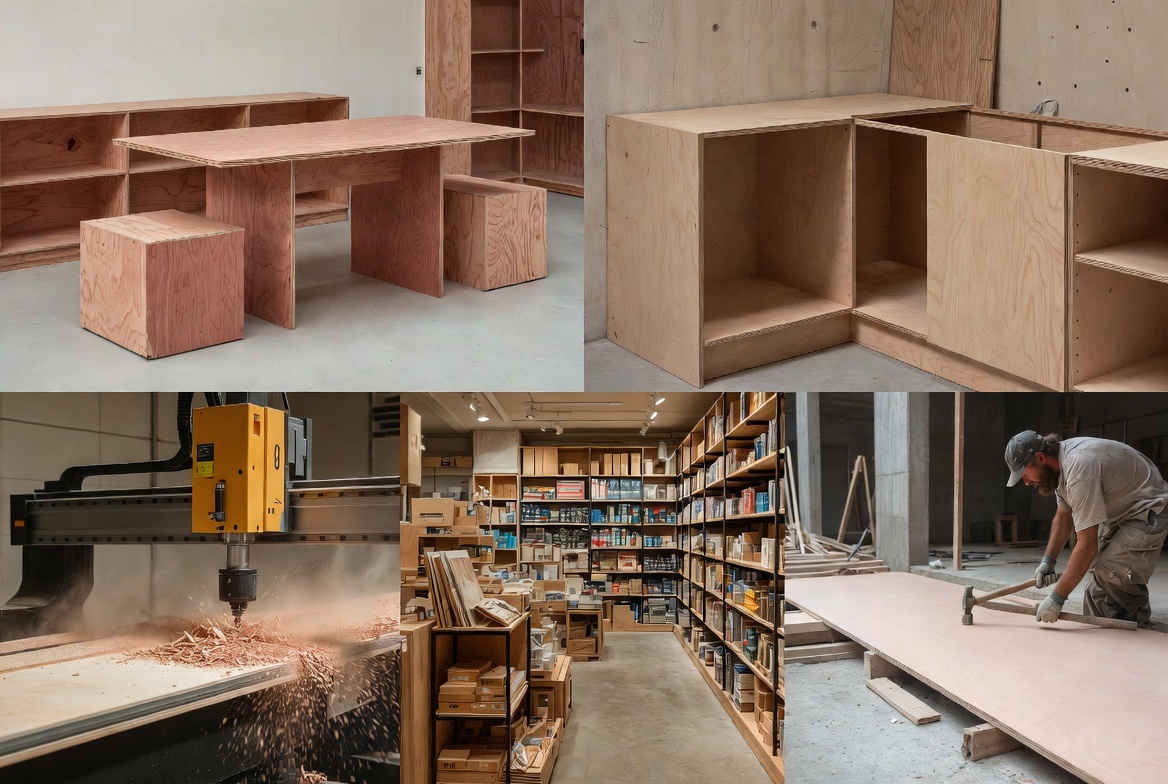
Furniture making is one of the primary applications for eucalyptus plywood. Its high density and surface quality make it well suited for structural furniture components such as table tops, bed frames, shelving units, and storage boxes. The panel holds screws and dowels securely, resists surface dents, and finishes smoothly with stain or clear coat. For furniture makers looking for an alternative to birch plywood that offers stronger moisture resistance and a warmer visual character, eucalyptus plywood is a compelling option.
Read more: Birch Plywood Furniture Ideas: 10+ Usages of Birch Plywood You Should Know
Eucalyptus Plywood for Cabinets and Kitchen Applications
Eucalyptus plywood is well suited for cabinet carcasses, kitchen cabinetry, and fitted joinery. Its moisture resistance makes it more forgiving in kitchen and bathroom environments than standard hardwood plywood, and its dimensional stability ensures cabinet boxes and drawer boxes stay flat and square over time. When processed through customized CNC cutting services, eucalyptus plywood can be cut to precise tolerances for kitchen installations, wardrobe systems, and shopfitting projects.
CNC Routing and Laser Cutting
Eucalyptus plywood is suitable for CNC routing and laser cutting applications. Its consistent density and void-free structure mean it machines cleanly and predictably, with crisp edges and minimal tearout. This makes it a reliable choice for decorative panels, cut components, and custom joinery pieces produced through CNC and cutting services.
Interior Joinery and Shopfitting
Display units, retail shelving, wall paneling, and fitted furniture in commercial interior spaces are all suitable applications for eucalyptus plywood. Its surface quality, structural performance, and attractive grain pattern make it appropriate for both the visible and structural elements of joinery work.
Construction and Structural Applications
Eucalyptus plywood’s high density and structural strength make it suitable for certain construction applications including flooring substrates, wall sheathing, and formwork. For buyers sourcing structural panels for construction projects, it is worth comparing eucalyptus plywood alongside commercial plywood and film faced plywood depending on the specific structural and surface requirements of the job.
Pros and Cons of Eucalyptus Plywood
Advantages
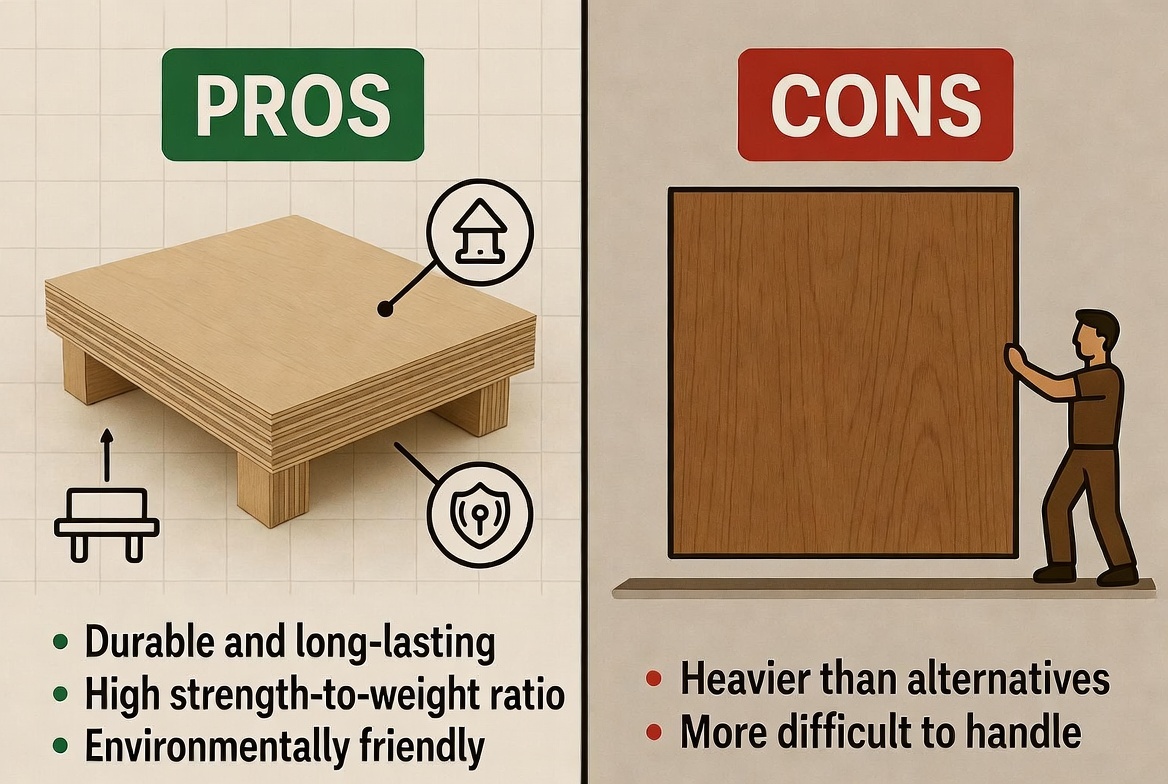
- High density (550 to 620 kg/m3) delivers superior screw-holding, surface hardness, and load-bearing performance compared to lower-density panels
- Natural oil content provides built-in moisture resistance, reducing the need for additional sealing in most indoor applications
- Excellent dimensional stability with a low manufacturing moisture content of 6 to 10 percent, reducing the risk of warping and movement over time
- Distinctive reddish-brown grain pattern adds visual warmth and character that many standard plywood panels cannot match
- Takes stain and clear finishes evenly and consistently, making it straightforward to achieve a polished result in furniture and cabinetry work
- Sourced from fast-growing plantation species, making it a more sustainable and renewable choice compared to slow-growing hardwoods
- Suitable for CNC routing and precision cutting with clean, predictable results due to its consistent density and void-free structure
Disadvantages
- Higher cost than standard structural plywood and softwood panels, reflecting its density and hardwood classification
- Less widely available than birch plywood or commercial plywood in many markets, which can affect lead times and sourcing flexibility
- The pronounced grain pattern, while visually attractive, may not suit applications requiring a neutral or subtle surface appearance
- Heavier than lower-density panels due to its high density, adding to handling effort and shipping weight
- Not a true waterproof material: while naturally moisture resistant, proper sealing is required for applications with sustained water exposure
- The natural oils that provide moisture resistance can sometimes interfere with certain adhesives and finishes if the surface is not properly prepared beforehand
Eucalyptus Plywood vs Birch Plywood
Eucalyptus plywood is most frequently compared to birch plywood, as both are hardwood panels used for furniture, cabinetry, and interior joinery. They share a reputation for surface quality and dimensional consistency, but they perform differently across a number of important areas.
| Feature | Eucalyptus Plywood | Birch Plywood |
| Density | 550 to 620 kg/m3 (high) | Moderate to high |
| Janka hardness (solid timber) | ~1,125 lbf | ~1,470 lbf |
| Moisture Resistance | Excellent (natural oils) | Moderate; more susceptible |
| Pest Resistance | Good (density and natural oils) | Lower; larger pores |
| Grain Appearance | Bold, reddish-brown | Fine, pale yellow-brown |
| Staining | Even, consistent absorption | Can be blotchy; needs conditioner |
| Sustainability | Fast-growing plantations | Moderate; slower-growing |
| Availability | Less common in some markets | Widely available globally |
| Best For | Moisture-exposed areas, furniture | Furniture, cabinetry, interiors |
Birch plywood has a slightly higher Janka hardness for the solid timber form (approximately 1,470 lbf versus eucalyptus at 1,125 lbf), which reflects birch’s edge in raw surface hardness. However, eucalyptus plywood compensates with its natural moisture resistance and pest-deterrent oils, which birch does not possess. For applications where the panel will face humidity or incidental moisture, eucalyptus plywood generally outperforms birch without additional treatment.
For a detailed look at birch plywood grades and applications, see our birch plywood grades guide and birch plywood vs MDF comparison.
Eucalyptus Plywood vs Other Panel Types
Beyond birch plywood, eucalyptus plywood is worth comparing to other panel materials that serve similar applications. Our complete guide to types of plywood covers the full range of structural and decorative plywood categories.
Eucalyptus Plywood vs Commercial Plywood
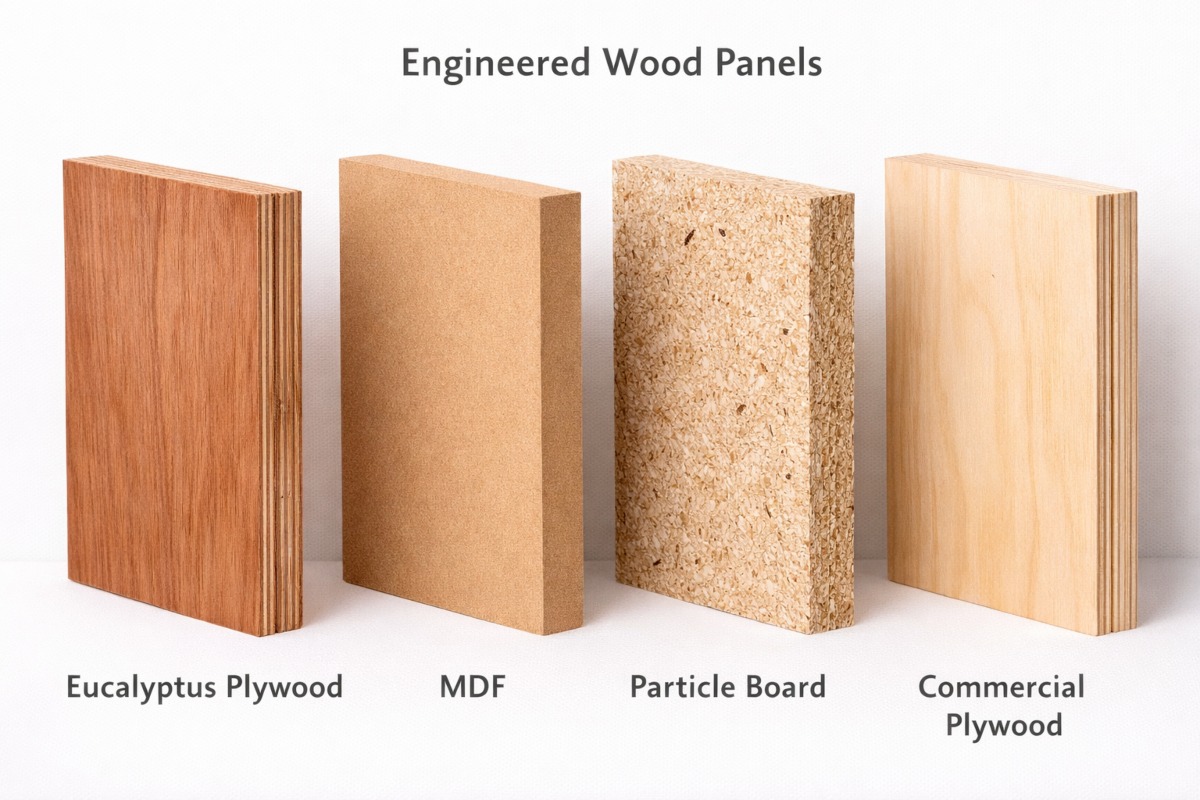
Commercial plywood is a broad category covering panels made from various timber species for general construction and furniture use. Eucalyptus plywood, as a species-specific hardwood panel, generally offers higher density and better moisture resistance than standard commercial plywood. However, commercial plywood is more widely available and typically priced lower, making it the practical default for high-volume or budget-sensitive applications where the premium properties of eucalyptus are not required.
Eucalyptus Plywood vs Particle Board and MDF
Compared to particle board and MDF, eucalyptus plywood is significantly stronger, more moisture resistant, and better at holding fasteners. The particle board vs plywood comparison covers this in detail. In summary: where structural integrity, edge strength, and moisture tolerance matter, eucalyptus plywood is a superior choice. MDF and particle board remain relevant for flat painted surfaces and cost-sensitive projects where strength is not the primary concern.
Eucalyptus Plywood vs Film Faced Plywood
Film faced plywood is engineered specifically for concrete formwork and heavy construction applications, with a resin-impregnated film providing a highly durable, water-resistant surface. Eucalyptus plywood and film faced plywood serve quite different primary purposes: eucalyptus is a premium interior and furniture panel, while film faced plywood is a workhorse construction product.
Some eucalyptus plywood panels are available with film facing for structural applications, combining the species’ density with the surface protection of a phenolic film.
Eucalyptus Plywood Grades and Specifications
Like other hardwood plywoods, eucalyptus plywood is graded according to surface quality. Understanding the grading system helps in selecting the right panel for each application. Our plywood grades guide provides a full overview of how plywood grading works across different species and panel types.
Grade B
Grade B is the highest surface quality typically available in eucalyptus plywood, featuring a smooth, sanded face with minimal defects. It is suitable for furniture, cabinetry, and any application where the panel surface will be visible and needs to accept a clear or stained finish with a high-quality result.
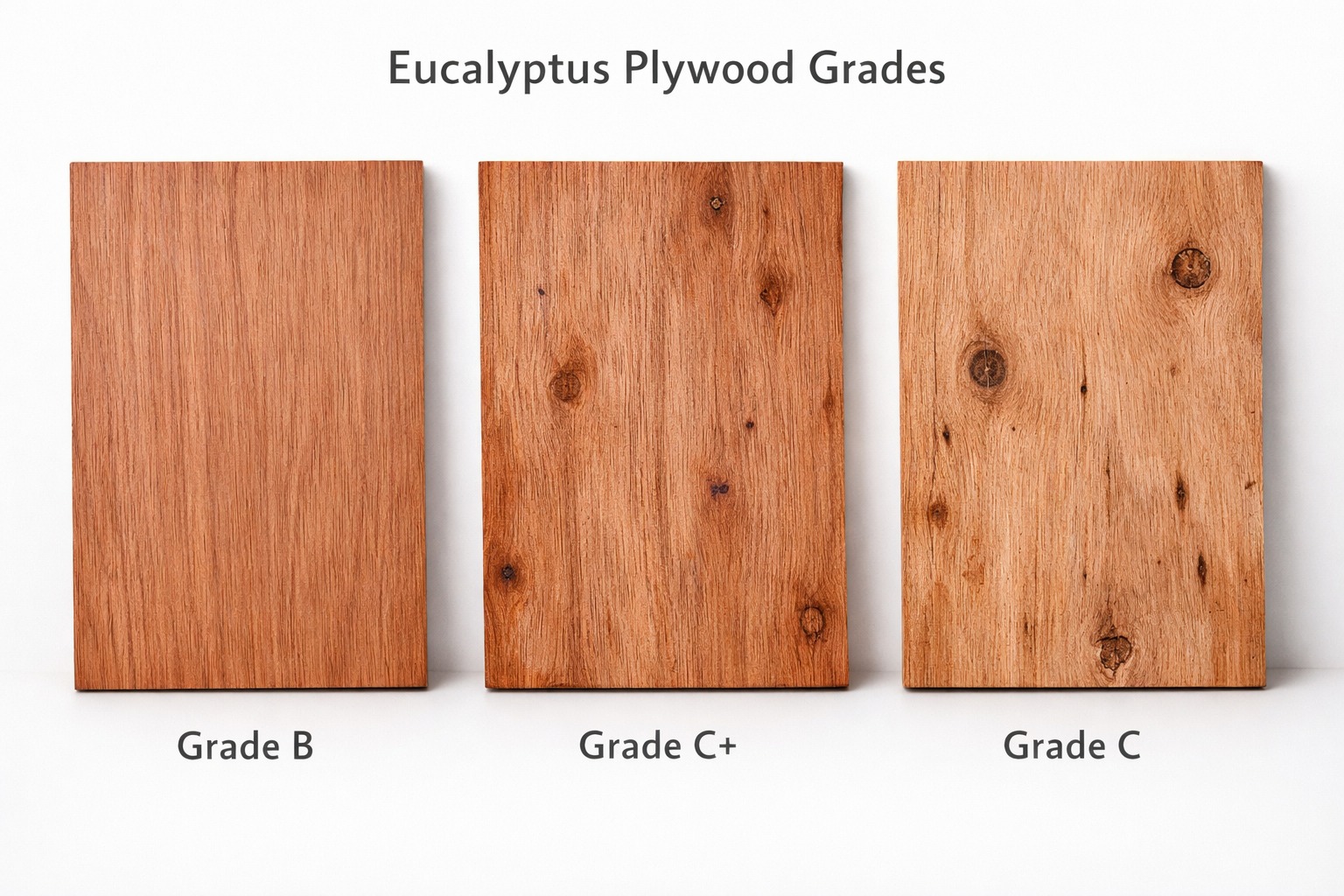
Grade C+
Grade C+ represents a mid-range surface quality. The face may contain minor defects such as small knots or slight grain irregularities, but the overall surface remains suitable for painted finishes and for applications where the panel face will be covered by laminate, veneer, or paint.
Grade C
Grade C panels have a more utilitarian surface quality with visible defects and a rougher finish. Grade C eucalyptus plywood is typically used for structural applications, packaging, and situations where surface appearance is secondary to structural performance.
Available Thicknesses
Eucalyptus plywood is available in a range of standard thicknesses from 6 mm to 30 mm, covering the full range of furniture, cabinetry, and structural applications. Common sizes include 6 mm, 9 mm, 12 mm, 15 mm, 18 mm, and 25 mm, with 18 mm being one of the most frequently specified thicknesses for cabinet carcasses and furniture panels.
Is Eucalyptus Wood Good for Plywood?
Yes, eucalyptus is an excellent species for plywood production. Its fast growth rate makes sustainable, plantation-based supply chains both practical and economically viable. Its natural density and oil content translate into a panel with genuine structural performance and built-in moisture resistance, without requiring the same level of chemical treatment that lower-density species need. And its consistent grain structure means it peels into uniform veneers, producing a stable, predictable panel.
The main limitation is availability. Eucalyptus plywood is not yet as widely stocked as birch or standard commercial plywood in many markets, which means lead times and pricing can vary more than for mainstream panel products. As demand for sustainable, high-performance hardwood panels grows, eucalyptus plywood’s market presence is expanding.
For buyers who prioritize performance, sustainability, and surface quality and are willing to source from specialist suppliers, eucalyptus plywood delivers on its reputation as a high-value hardwood panel.
Frequently Asked Questions about Eucalyptus plywood
What is eucalyptus plywood used for?
Eucalyptus plywood is used for furniture making, kitchen and bathroom cabinetry, interior joinery, shopfitting, CNC-cut decorative panels, and structural applications such as flooring substrates and wall sheathing. Its combination of density, moisture resistance, and surface quality makes it suitable for both structural and decorative purposes.
Is eucalyptus wood good for plywood?
Yes. Eucalyptus is an excellent timber for plywood production. Its high density gives the panel structural strength and surface hardness, its natural oils provide moisture resistance, and its fast growth rate supports sustainable sourcing. It is increasingly recognized as a high-performance alternative to slower-growing hardwood species.
What are the disadvantages of eucalyptus wood?
The main disadvantages are higher cost compared to standard softwood panels, lower availability than mainstream alternatives like birch plywood, and greater weight due to its high density. The natural oils that provide moisture resistance can also require surface preparation before certain adhesives and finishes are applied to ensure proper bonding.
How does eucalyptus plywood compare to birch plywood?
Eucalyptus plywood offers stronger moisture resistance and natural pest deterrence thanks to its inherent oils, while birch plywood has a slightly higher solid-timber hardness rating and is more widely available in most markets. Eucalyptus plywood is better suited for moisture-exposed environments, while birch plywood remains the standard choice for a broad range of furniture and cabinetry applications.
Is eucalyptus plywood waterproof?
Eucalyptus plywood is moisture resistant, not waterproof. Its natural oils provide a significant advantage over untreated hardwood panels in humid environments or with incidental moisture contact, but it should not be used as a substitute for marine-grade panels in continuously wet conditions. Sealing with an appropriate finish improves water resistance further for demanding applications.
What thickness is eucalyptus plywood available in?
Eucalyptus plywood is commonly available in thicknesses ranging from 6 mm to 30 mm. The most frequently used thickness for cabinet and furniture applications is 18 mm, while thinner sheets such as 6 mm and 9 mm are used for drawer bases, backing panels, and decorative applications.
Conclusion
Eucalyptus plywood is a high-performing, sustainable hardwood panel that deserves more attention than it typically receives. Its density, natural moisture resistance, dimensional stability, and distinctive grain appearance make it a genuine alternative to mainstream hardwood panels for furniture, cabinetry, joinery, and structural applications.
For buyers primarily working with furniture and cabinetry, eucalyptus plywood offers properties that standard commercial plywood does not match, particularly in moisture-exposed environments. For those comparing it to birch plywood, eucalyptus plywood provides stronger moisture resistance and a warmer visual character, while birch retains its edge in availability and surface neutrality.
If you are considering eucalyptus plywood for a current project, Kosmex Group can assist with sourcing guidance and customized CNC cutting services to process panels to your exact specifications. Explore our plywood grades guide and standard plywood sizes reference to help refine your panel specification before ordering.
Bình luận