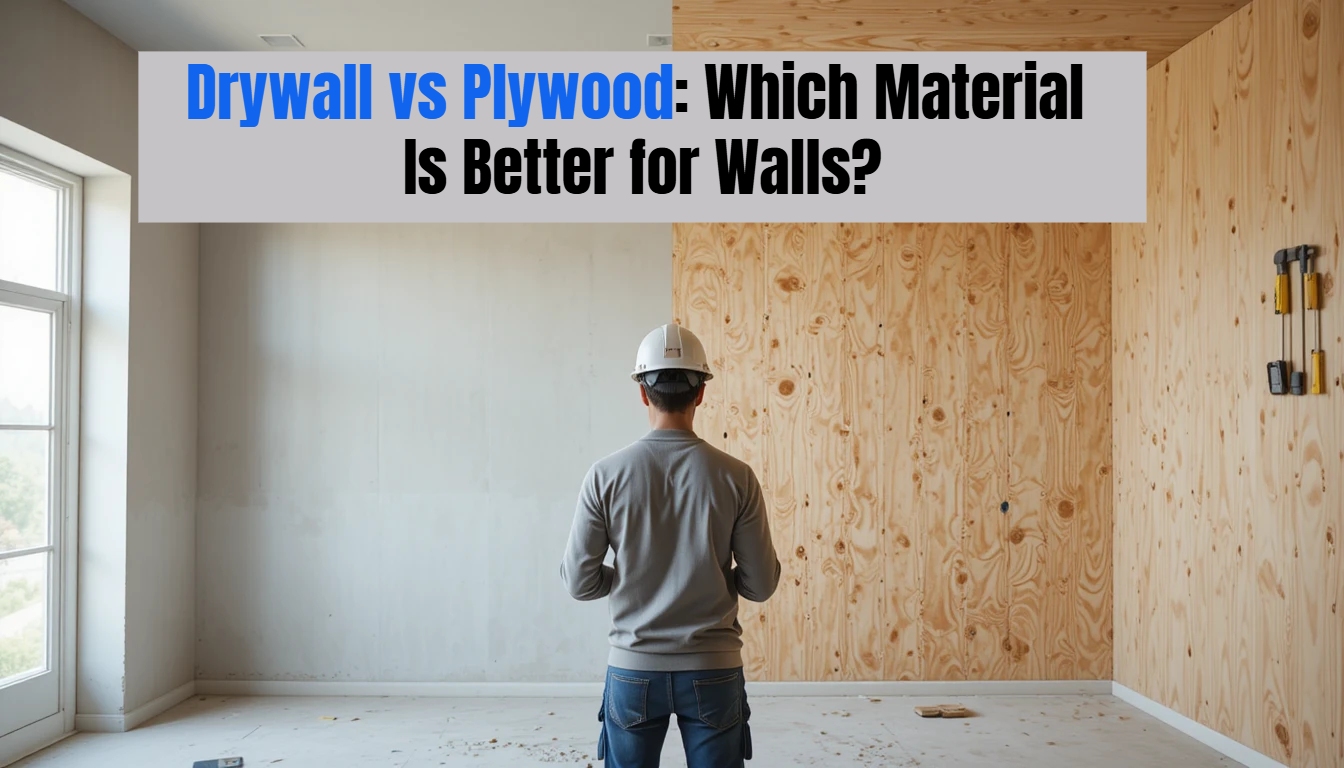
Drywall vs Plywood: Which Material Is Better for Walls?
Henry Le9 March, 2026712 lượt xem
Choosing the wrong wall material can lead to higher costs, frequent repairs, or safety issues. If you’re comparing drywall vs plywood for interior walls, garages, or workshops, understanding the differences in cost, durability, fire resistance, and soundproofing will help you make the right decision for your project.
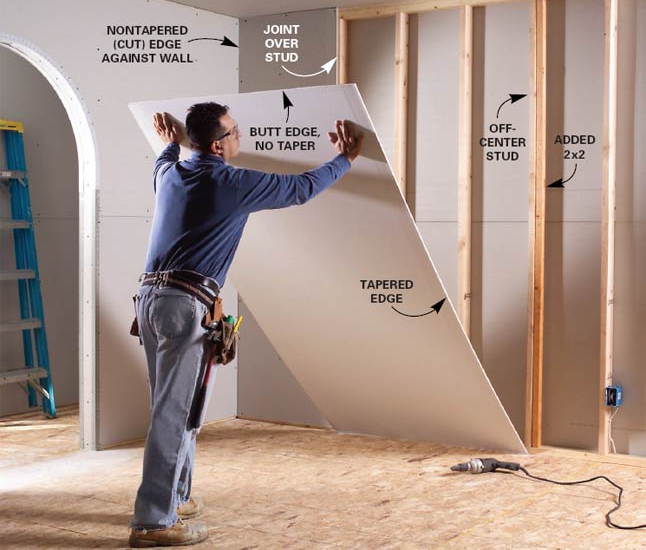
Drywall, also known as gypsum board, plasterboard, or sheetrock, is a panel material made from a gypsum plaster core sandwiched between two layers of thick paper. It is lightweight, easy to cut with basic tools, and simple to finish with tape, joint compound, and paint.
Drywall is the dominant wall material in modern residential construction. It comes in standard thicknesses of 1/2 inch and 5/8 inch, with 1/2 inch being the most common for interior walls and ceilings. Specialty variants include moisture-resistant (green board) for bathrooms and kitchens, and Type X fire-rated panels for garage walls and other code-sensitive applications.
Advantages of Drywall
Lower material cost compared to plywood, making it the budget-friendly default for large-scale interior projects
Fire resistant by nature: the gypsum core contains water molecules that convert to steam when exposed to heat, slowing the spread of flames and helping meet building code requirements
Smooth, seamless surface that accepts paint, texture, and wallpaper without additional preparation
Better soundproofing performance, especially in multi-layer systems used in residential walls and ceilings
Easier and cheaper to repair: small holes and dents can be patched with joint compound without replacing the entire panel
Lighter weight than plywood, making handling and overhead installation more manageable
Disadvantages of Drywall
Easily dented, scratched, and cracked under impact, making it unsuitable for high-traffic or high-abuse environments
Cannot reliably hold heavy screws or anchors without locating a stud behind the panel
Sensitive to moisture: sustained exposure leads to softening, mold growth, and structural failure unless moisture-resistant variants are used
Less durable than plywood over the long term in demanding spaces like garages and workshops
What Is Plywood?
Plywood is an engineered wood panel made by bonding together thin layers of wood veneer with the grain of each layer running perpendicular to the one above and below it. This cross-laminated structure gives plywood its exceptional strength, rigidity, and resistance to warping. For a deeper overview, see our complete guide to types of plywood.
For wall applications, several plywood types are commonly used. Birch plywood is valued for its smooth surface and clean finish, making it suitable for interior accent walls and cabinetry. Commercial plywood and structural plywood are used in garages, workshops, and utility spaces where strength and load capacity matter most.
Advantages of Plywood
High durability and impact resistance, standing up to knocks, scrapes, and the demands of busy workshop or garage environments
Exceptional load-bearing capacity: screws and nails can be driven into plywood at any point without needing to locate a stud behind the wall
Versatile surface that can be stained, painted, or left natural to showcase the wood grain
Slightly better thermal insulation than drywall due to its wood composition
Moisture-resistant variants and proper sealing make it a reliable option in utility spaces prone to humidity
Long service life in demanding conditions, often outlasting drywall in garages and sheds without replacement
Disadvantages of Plywood
Higher material cost than drywall, and the price gap widens when premium grades such as birch or hardwood plywood are used
Less fire resistant: plywood is a combustible wood product and does not meet fire-rated wall requirements without additional fire-rated materials
Achieving a smooth, paint-ready surface requires sanding, filling, and sometimes skim-coating, adding labor time and cost
Requires sealing or treatment in moisture-prone areas to prevent warping or delamination over time
Drywall vs Plywood: Key Differences
While both materials serve as wall surfaces, they differ fundamentally in composition, performance, and ideal application. Here is a side-by-side comparison of the most important factors:
Feature
Drywall
Plywood
Cost
Lower (budget-friendly)
Higher (especially premium grades)
Durability
Low to moderate
Very high
Fire Resistance
Excellent (gypsum core)
Poor (combustible wood)
Installation
Easy; requires taping and mudding
Moderate; requires cutting and sanding
Soundproofing
Better for noise reduction
Less effective without added layers
Load Capacity
Low; needs studs for heavy items
Very high; screw anywhere
Thermal Insulation
Low R-value
Slightly higher R-value
Moisture Resistance
Poor (unless green board)
Good when sealed or treated
Best For
Residential interiors
Garages, workshops, utility spaces
Drywall vs Plywood Cost Comparison
Cost is one of the most common reasons homeowners and contractors choose drywall over plywood for standard residential interiors. The price gap is real and consistent, though the full picture involves more than just the material itself.
Material Cost
Drywall is significantly cheaper per sheet than plywood. A standard drywall panel costs a fraction of a comparable plywood sheet. Plywood pricing varies considerably by species, grade, and thickness: basic structural plywood will already cost more than drywall, and premium grades such as birch plywood can cost considerably more. For large interior projects such as finishing an entire floor of a home, drywall’s lower material cost makes a substantial difference to the overall budget.
Installation Cost
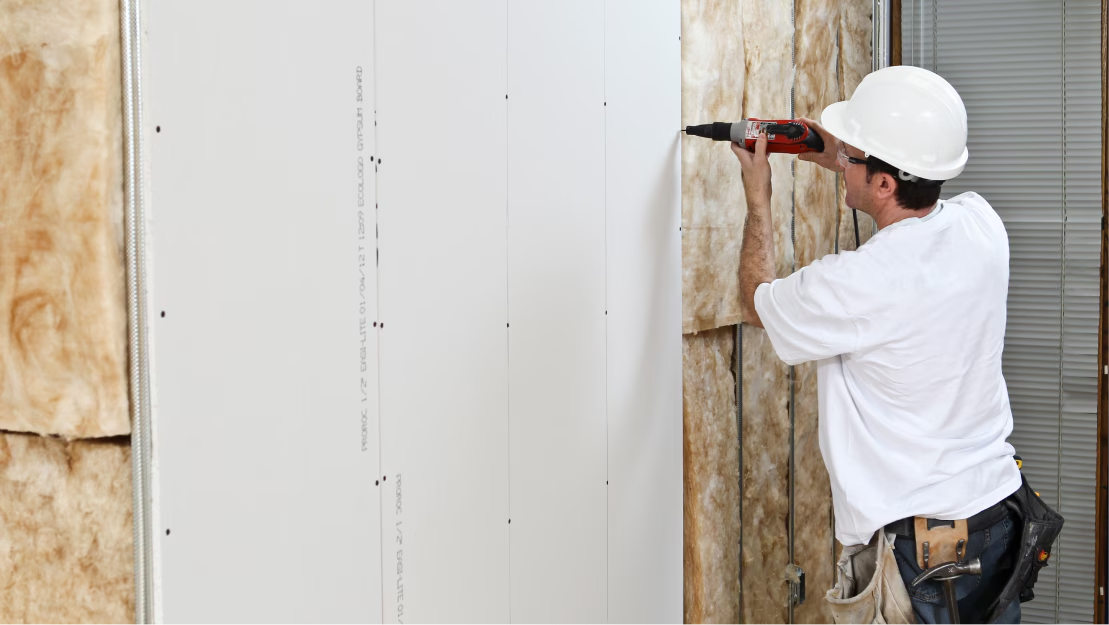
Drywall installation is generally faster and more straightforward. Panels are measured, cut with a utility knife, screwed to studs, and then finished with taping, mudding, and sanding. The finishing steps require skill and time, but the process is well-established and widely understood by contractors.
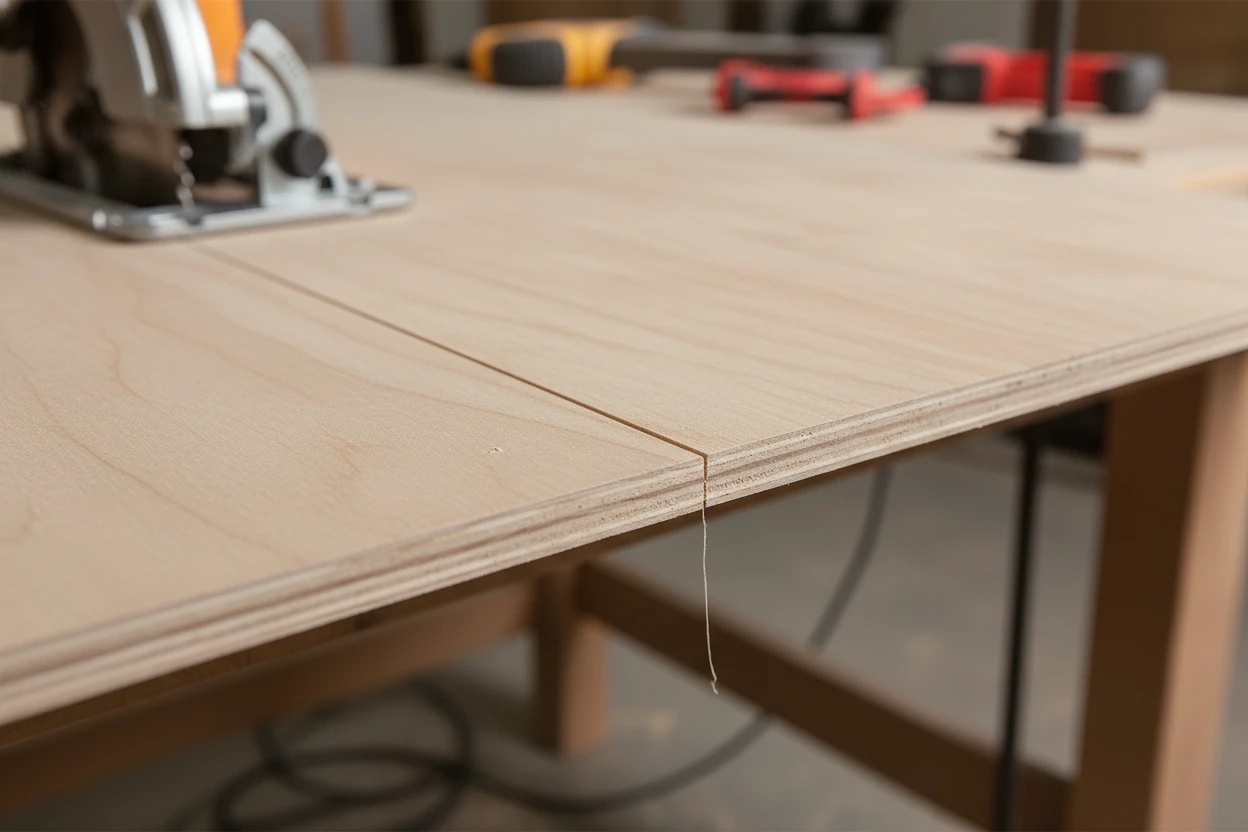
Plywood installation involves measuring, cutting with a circular saw, and securing panels with screws or nails. If a smooth, paintable surface is required, additional sanding and skim-coating add labor hours and cost. For wall applications where a raw or natural wood look is acceptable, installation is simpler and faster.
Maintenance Cost
Drywall is cheaper and easier to repair. Small holes and dents can be patched with joint compound and a few basic tools, often as a DIY fix. Larger damage requires cutting out a section and patching with a new piece.
Plywood is more durable and less likely to be damaged in the first place, but when repairs are needed, they often require replacing a full panel section to maintain a consistent appearance. In a garage or workshop setting, minor wear is typically left alone.
Durability and Strength: Plywood vs Drywall
Plywood is significantly more durable than drywall in virtually every practical sense. This difference becomes most apparent in spaces where walls are regularly exposed to impact, tools, heavy equipment, or physical contact.
Impact Resistance
Drywall is fragile under impact. A misplaced elbow, a falling tool, or contact with a heavy object can leave holes, dents, or cracks. In a workshop, garage, or mudroom, this level of fragility is a genuine liability.
Plywood, by contrast, is highly resistant to impact and wear. Its cross-laminated structure distributes force across the panel rather than concentrating it at a single point, making it far more likely to survive the bumps and knocks of daily use in demanding environments.
Load-Bearing Capacity
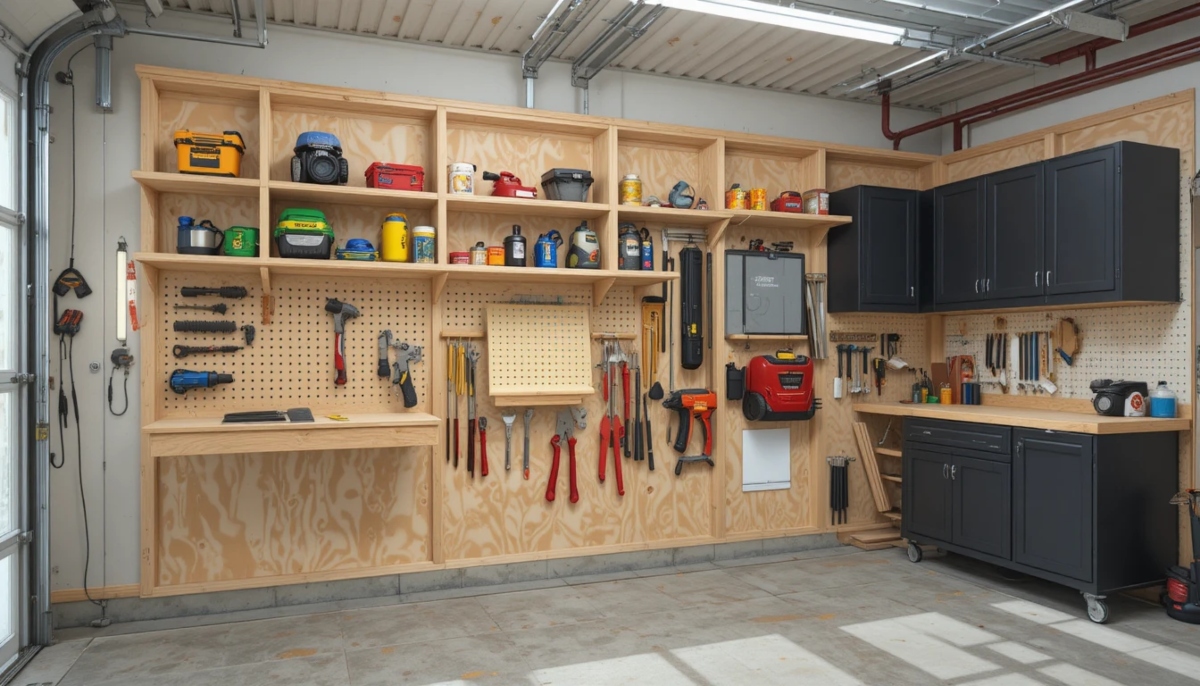
One of plywood’s most practical advantages as a wall material is its ability to hold screws and fasteners at any point across the panel, without needing to locate a stud behind it. This makes mounting shelves, cabinets, tool racks, and workbenches straightforward and flexible.
Drywall has very limited load-bearing capacity on its own. Hanging anything heavier than a small picture frame requires finding and fastening into a stud, or using specialized wall anchors with their own weight limits. For garage and workshop walls where mounting tools and storage systems is the primary purpose, this is a significant limitation.
Fire Resistance: Drywall vs Plywood
Fire resistance is one of the clearest and most consequential differences between drywall and plywood, with direct implications for building code compliance.
Drywall’s gypsum core contains chemically bound water molecules that convert to steam when exposed to heat. This process absorbs thermal energy and slows the spread of flames, giving occupants and emergency responders more time to respond. Type X fire-rated drywall (5/8 inch thick) is specifically engineered to meet fire-resistance standards required by building codes, particularly for walls separating a garage from the home’s living space.
Plywood, as a wood product, is combustible. It will ignite and burn when exposed to fire and offers no inherent fire-resistant properties. Using untreated plywood on walls required by code to be fire-rated is not permitted in most jurisdictions.
Important: In most U.S. and international building codes, the wall between a garage and a habitable room must be fire-rated, typically requiring Type X drywall. Always check your local code requirements before selecting your wall material for garage-to-home separation walls.
Insulation and Soundproofing
Neither drywall nor plywood functions as a primary insulation material. Both perform best when combined with dedicated insulation products such as fiberglass batts, rigid foam, or mineral wool. However, they do differ meaningfully in their thermal and acoustic properties.
R-Value Comparison (Thermal Insulation)
R-value measures a material’s resistance to heat flow, with higher values indicating better thermal insulation. Both drywall and plywood have low R-values on their own. A standard 1/2-inch drywall panel achieves an R-value of approximately 0.45, while a comparable thickness of plywood achieves a slightly higher value due to its wood composition.
In practice, neither material provides meaningful insulation on its own. The primary insulation layer in a wall assembly comes from what is installed between the studs. The contribution of the wall surface material is minor by comparison. That said, plywood does offer a marginal thermal advantage over drywall of the same thickness, which can matter in extremely cold climates.
Soundproofing Performance
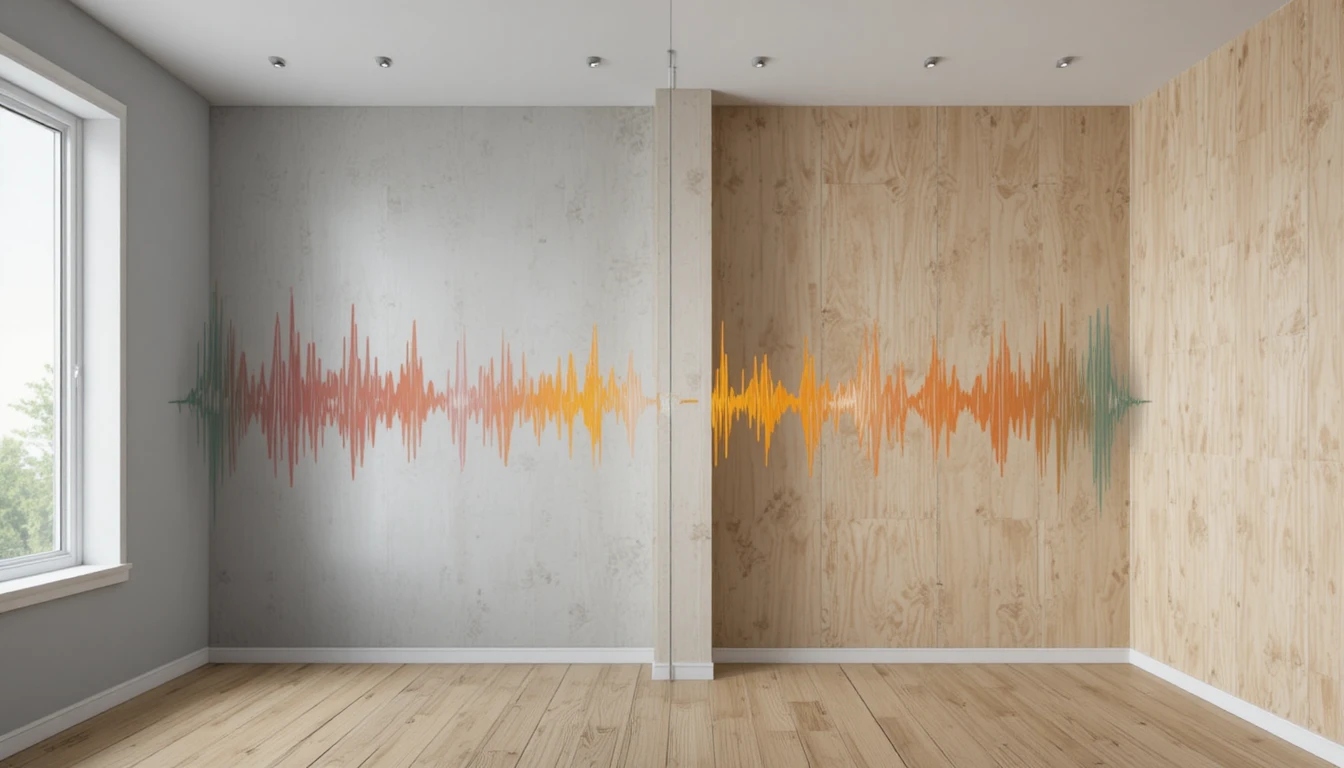
For sound control, drywall outperforms plywood. Gypsum board, particularly when installed in multiple layers or combined with resilient channels and acoustic sealant, is effective at reducing sound transmission through walls. This is why drywall is the standard choice for residential bedrooms, home offices, and media rooms where noise reduction matters.
Plywood transmits sound more readily than drywall and is less effective as an acoustic barrier on its own. It can be improved by adding acoustic insulation behind it, but as a standalone wall surface it does not match drywall’s soundproofing performance.
Drywall or Plywood for Garage Walls?
The garage wall question is one of the most common reasons people compare these materials, and the answer depends heavily on how the garage is used and whether it shares a wall with the home’s living space.
When to Use Drywall in a Garage
When the garage shares a wall with the home’s interior: building codes in most jurisdictions require fire-rated drywall (Type X, 5/8 inch) on this wall to slow fire spread between the garage and living space
When a clean, finished appearance is the priority, such as for a finished living area, home office, or guest suite adjacent to the garage
When budget is a primary concern, since drywall materials and labor are consistently cheaper than plywood for the same coverage area
When to Use Plywood in a Garage
Workshop or hobby garage where tools, cabinets, pegboards, and shelving systems will be mounted directly to the walls
High-traffic utility spaces where walls will regularly be bumped, scraped, or contacted by equipment, bicycles, or vehicles
Spaces where a fire-rated separation wall is not required, allowing more flexibility in material choice
Situations where the long-term durability advantage of plywood justifies the higher upfront cost
Pro tip: Many builders use a hybrid approach in garages: fire-rated Type X drywall on the wall adjoining the home to meet code requirements, and plywood on the remaining garage walls where tool storage and durability matter most.
Plywood Ceiling vs Drywall
For ceiling applications, drywall is the standard choice in residential construction. It is lighter than plywood, easier to finish to a smooth and seamless look, and more cost-effective for large ceiling areas.
Plywood ceilings have their own appeal in workshops, sheds, and spaces with a rustic or industrial aesthetic. Exposed plywood ceilings, especially in species with attractive grain patterns such as birch plywood, can add warmth and character that drywall cannot replicate. However, plywood is heavier than drywall of comparable thickness, making overhead installation more physically demanding and typically requiring more crew or mechanical assistance.
From a cost perspective, drywall remains the more economical option for ceilings. Plywood ceilings are a deliberate design or functional choice rather than a budget default.
Can You Use Plywood Instead of Drywall?
Yes, plywood can replace drywall in many applications, but it is not a universal substitute. Whether it is appropriate depends on the space, the local building code requirements, and the finish expectations.
Scenarios where plywood works well as a drywall alternative:
Garages and workshops where load-bearing wall strength and impact resistance are more important than a polished finish
Sheds and outbuildings not subject to the same fire code requirements as attached garages
Basements and utility rooms where mounting flexibility and durability matter more than aesthetics
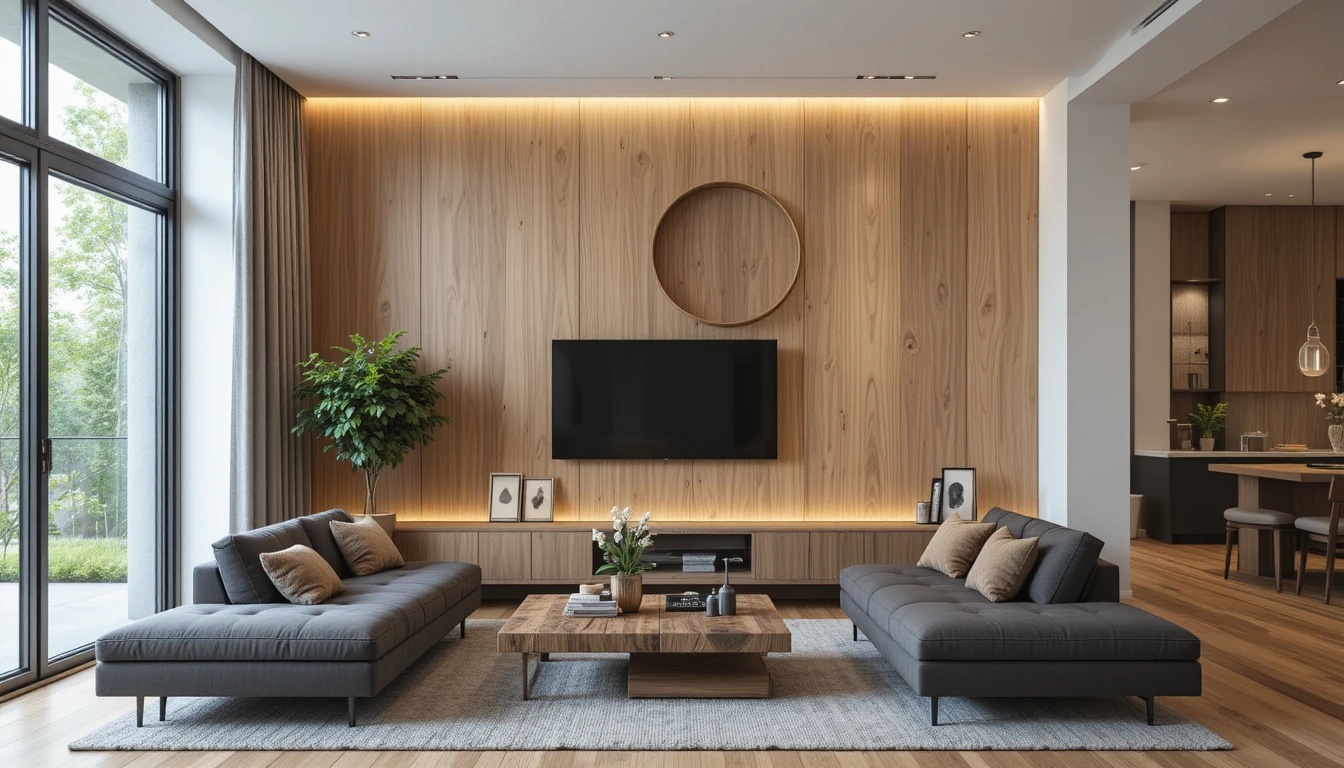
Accent walls and feature surfaces in living spaces, where the natural wood grain of species like birch plywood creates a warm, design-forward look that drywall cannot achieve
Scenarios where plywood is NOT a suitable replacement:
Any wall required by building code to be fire-rated, particularly garage-to-home separation walls
Residential bedrooms, living rooms, and other interior spaces where fire safety compliance and smooth painted finishes are standard
Large-scale interior finishing where the cost difference between plywood and drywall is a significant budget factor
When Should You Choose Plywood vs Drywall?
Choose Drywall If:
You are finishing a standard residential interior: bedrooms, living rooms, hallways, and most ceilings
Fire-rated wall construction is required by code, particularly between a garage and living space
A smooth, seamless painted or textured wall finish is the goal
Budget is a primary constraint and the project covers a large surface area
Soundproofing and acoustic control between rooms is a priority
Choose Plywood If:
You are finishing a garage, workshop, shed, or utility room where mounting heavy tools and storage directly to the wall is a priority
The space will experience regular impact and physical contact that would quickly damage drywall
You want a natural wood wall surface for aesthetic purposes, such as a feature wall using quality birch plywood for interior design applications
You are sourcing commercial plywood or structural panels where both strength and surface finish matter for your application
Maximum durability and longevity in a demanding environment outweigh the higher upfront material cost
Frequently Asked Questions
Is plywood cheaper than drywall?
No, in most cases drywall is the more affordable option. Drywall sheets cost significantly less per panel than plywood of equivalent size, and installation is generally faster, reducing labor costs as well. For large-scale residential interior projects, drywall’s cost advantage is substantial.
Is plywood stronger than drywall?
Yes. Plywood is far stronger and more impact resistant than drywall. Its cross-laminated wood veneer structure gives it excellent rigidity and load-bearing capacity. Drywall, while adequate for standard interior walls, is fragile under impact and cannot reliably support heavy wall-mounted fixtures without fastening into studs.
Which is better for soundproofing: drywall or plywood?
Drywall performs better for soundproofing. Gypsum board, especially when installed in multiple layers or combined with acoustic sealant and resilient channels, significantly reduces sound transmission. Plywood transmits sound more readily and is not recommended as a primary acoustic wall material.
Can plywood replace drywall in interior walls?
In many cases yes, but not where fire-rated wall construction is required by code. Plywood is an effective and durable wall material for garages, workshops, and utility spaces. For residential interiors requiring fire code compliance, smooth painted finishes, or soundproofing, drywall remains the more appropriate choice.
What is the R-value of drywall vs plywood?
Both materials have low R-values on their own. A 1/2-inch drywall panel achieves an R-value of approximately 0.45. Plywood of similar thickness achieves a slightly higher value due to its wood composition. In practice, neither material provides meaningful insulation alone, and both require dedicated insulation products between the wall studs to achieve adequate thermal performance.
Conclusion
Drywall and plywood each have clear strengths that suit them to specific applications. The right choice comes down to understanding what your walls need to do.
Drywall is the practical default for most residential interiors. It is affordable, fire resistant, finishes smoothly, and meets building code requirements for living spaces. For any standard interior room where the goal is a polished, painted surface at a reasonable cost, drywall is the logical choice.
Plywood is the right tool when durability, load capacity, and impact resistance matter more than finish quality. Garages, workshops, sheds, and utility rooms all benefit from plywood walls that can take a beating, hold screws anywhere, and outlast drywall by years in demanding conditions.




Bình luận