


CDX Plywood vs OSB: Key Differences, Pros, Cons & Best Uses
Choosing the right sheathing material can make or break a construction project. Use the wrong panel in the wrong environment and you may face warped subfloors, a leaking roof, or costly repairs just a few years down the line.
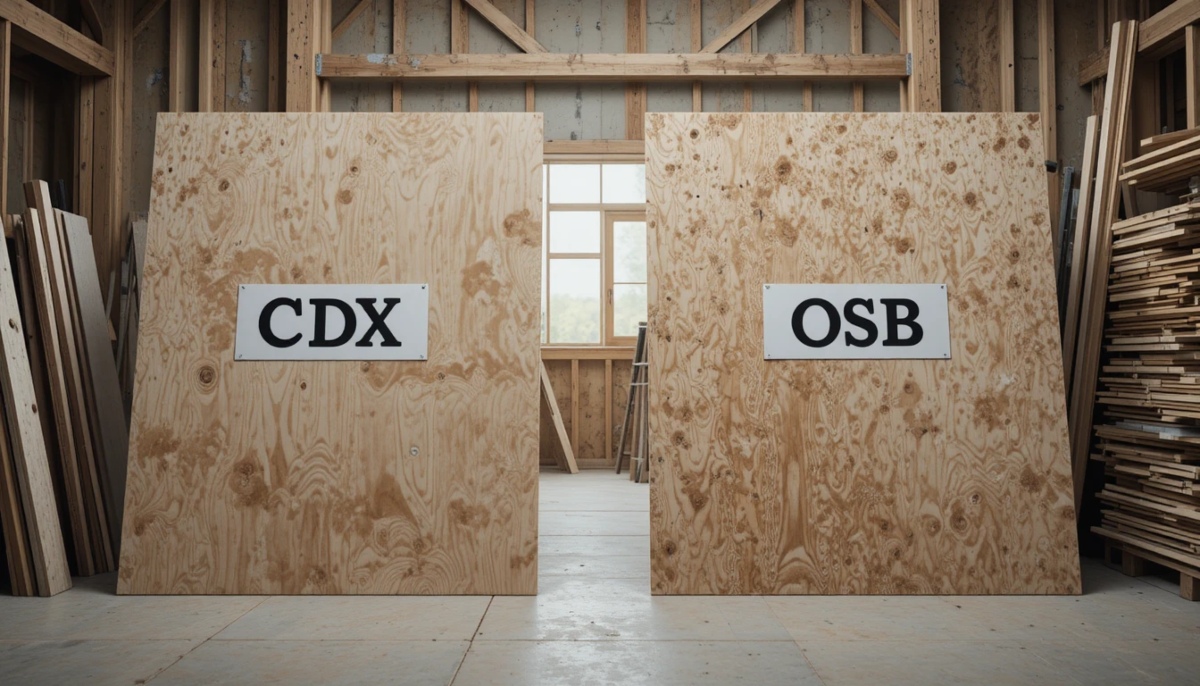
Both CDX plywood vs OSB (Oriented Strand Board) are classified as structural panels and share many of the same applications: roof decking, wall sheathing, and subflooring. They are sold side by side at lumber yards and look nearly identical at a glance. But beneath the surface, they are built differently and behave very differently, especially when moisture is involved.
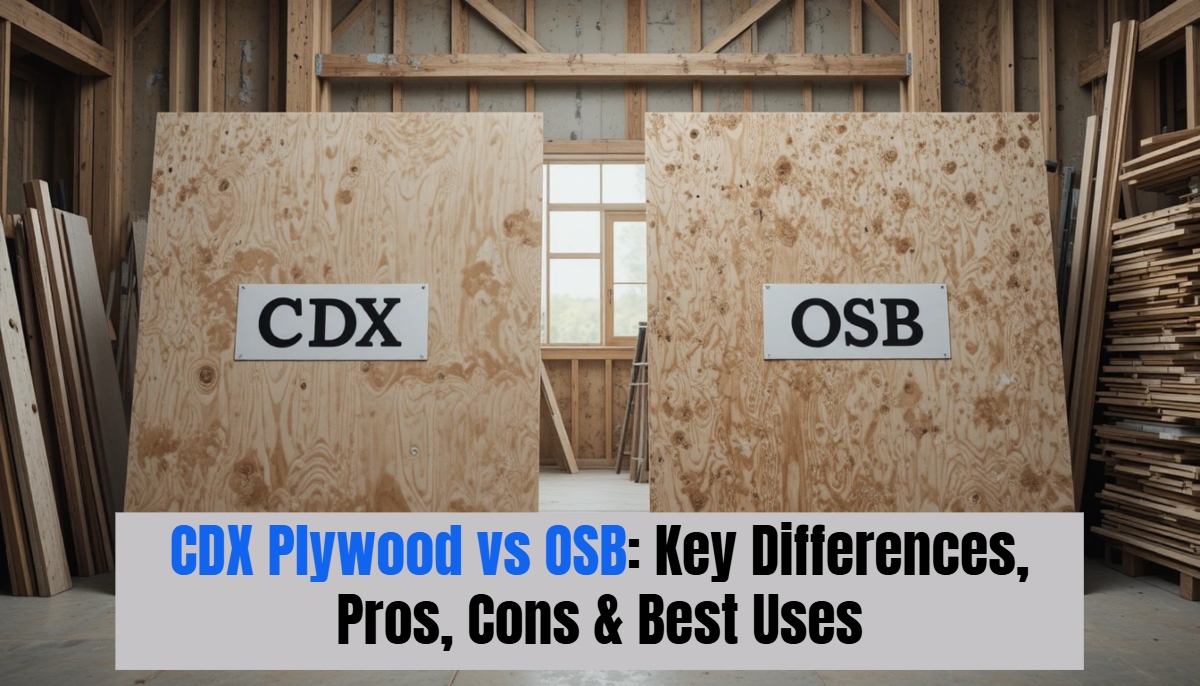
The short version: CDX plywood offers better moisture recovery and higher rigidity, while OSB is more affordable and features a consistent, uniform structure. Understanding exactly when each one excels is the key to making the right call for your project.

What Is CDX Plywood?
Meaning of CDX in Plywood
The name CDX is not arbitrary. Each letter carries specific meaning about the panel’s grade and intended use. The “C” refers to the veneer grade of the front face, while the “D” refers to the veneer grade of the back face. Grade C is unsanded and may contain small knots and defects; Grade D allows for slightly larger imperfections.
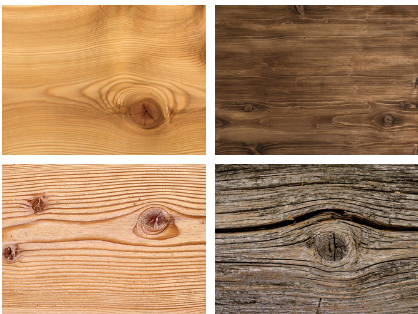
The “X” stands for Exposure, indicating that the panel uses an exterior-rated, moisture-resistant adhesive in its bonding layers. This does not make CDX waterproof, but it means it can tolerate short-term moisture exposure without delaminating.
How CDX Plywood Is Manufactured
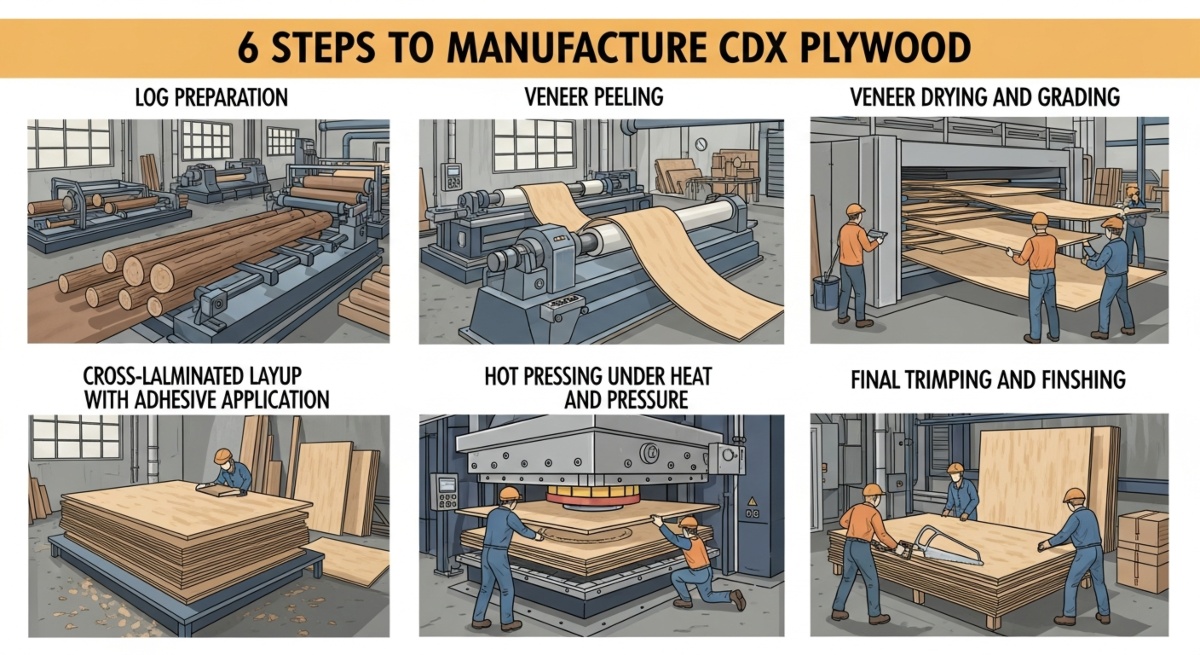
CDX plywood is produced by gluing together thin layers of wood veneer, typically softwoods such as pine, Douglas fir, or spruce, with the grain of each layer running perpendicular to the one above and below it. This cross-lamination technique gives plywood its characteristic strength and dimensional stability. The layers are bonded under heat and pressure using exterior-grade adhesive.
Typical Applications of CDX Plywood
- Roof decking, especially in climates with regular rain or snowfall
- Subflooring in residential and light commercial construction
- Exterior wall sheathing where extra rigidity is required
- Concrete formwork, thanks to its smooth and stable surface
What Is OSB (Oriented Strand Board)?
OSB Manufacturing Process
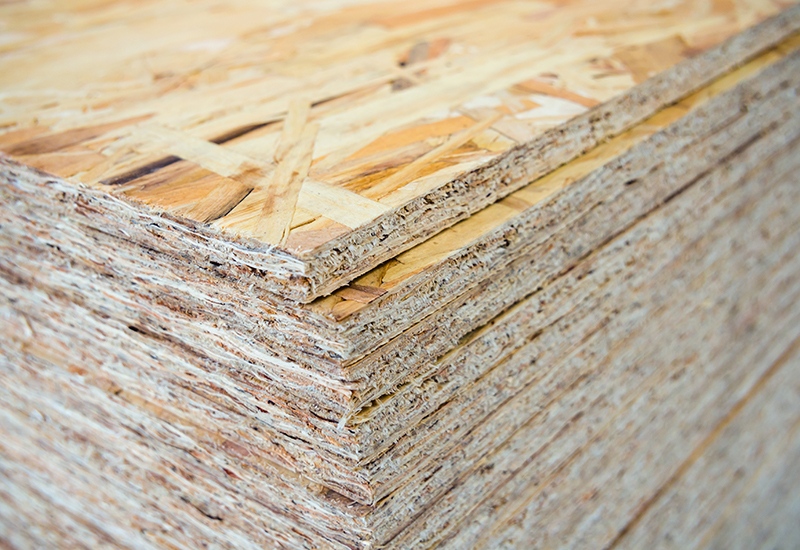
OSB is an engineered wood panel made from wood strands or chips mixed with resins and adhesives, then compressed under extreme heat and pressure. The strands in the outer layers are aligned along the panel’s strength axis, while the inner-layer strands run perpendicular to them. This cross-oriented layering mimics the structural logic of plywood but uses a fundamentally different raw material.
Structural Characteristics of OSB
- No internal voids or gaps, giving the panel uniform strength distribution across the entire sheet
- Free of natural wood defects such as knots, ensuring consistent panel performance
- Made from fast-growing, smaller-diameter trees, making it a more sustainable and material-efficient option than traditional plywood
Common Uses of OSB
- Roof and wall sheathing in residential construction
- Subflooring in dry climates and interior applications
- Structural components including rim boards and headers
CDX vs OSB: Key Differences Explained
1. Material Composition
CDX plywood is built from layered wood veneers glued together with alternating grain direction. OSB is manufactured from compressed wood strands bonded with waterproof resins and adhesives. This difference in composition drives almost every other distinction between the two materials.
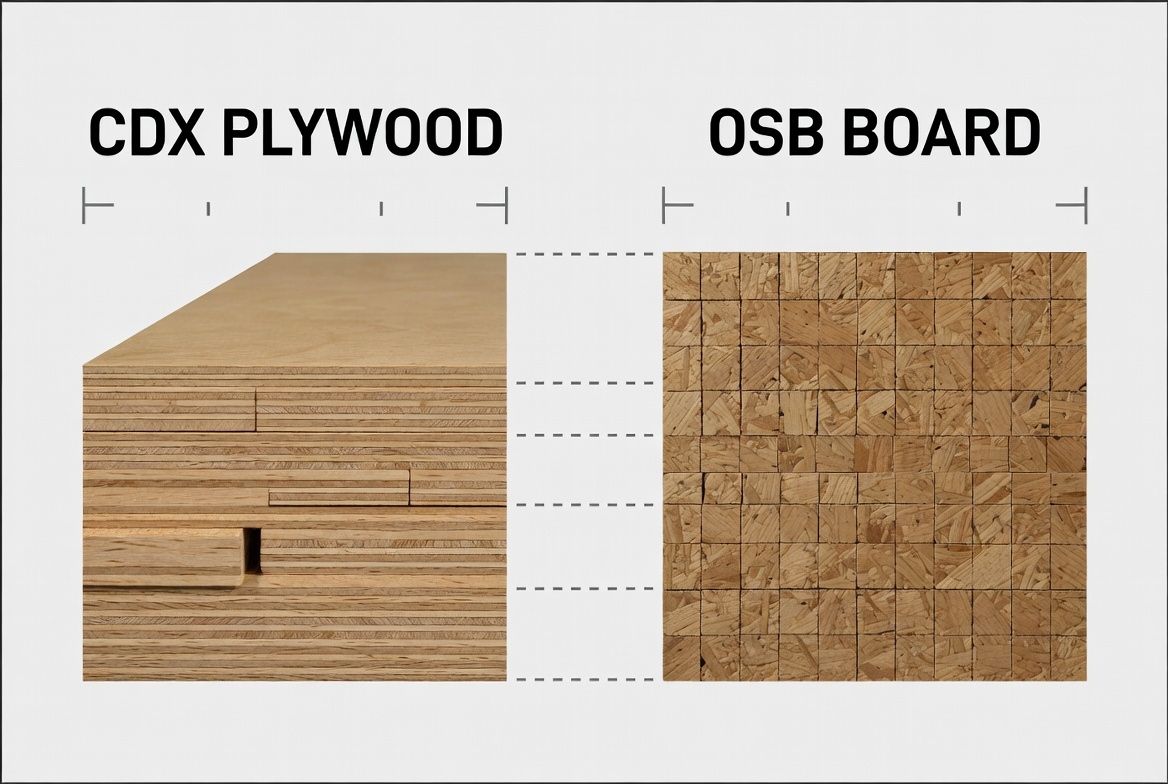
2. Strength and Structural Performance
CDX plywood is approximately 10% stiffer than a comparable OSB panel, owing to its cross-laminated veneer construction. It also holds screws and nails more securely over time, which matters for roofing applications subject to high wind.
OSB, while slightly less rigid, offers genuinely uniform strength across the entire panel surface. Unlike plywood, it contains no internal gaps or knots that could create weak points under load.
3. Moisture Resistance
This is the most critical difference for most applications. CDX plywood absorbs moisture relatively quickly, but it also releases it quickly, drying out and returning close to its original dimensions. OSB initially repels water due to its resin-sealed surfaces, but once fully saturated, it retains moisture far longer and is far more vulnerable to permanent swelling.
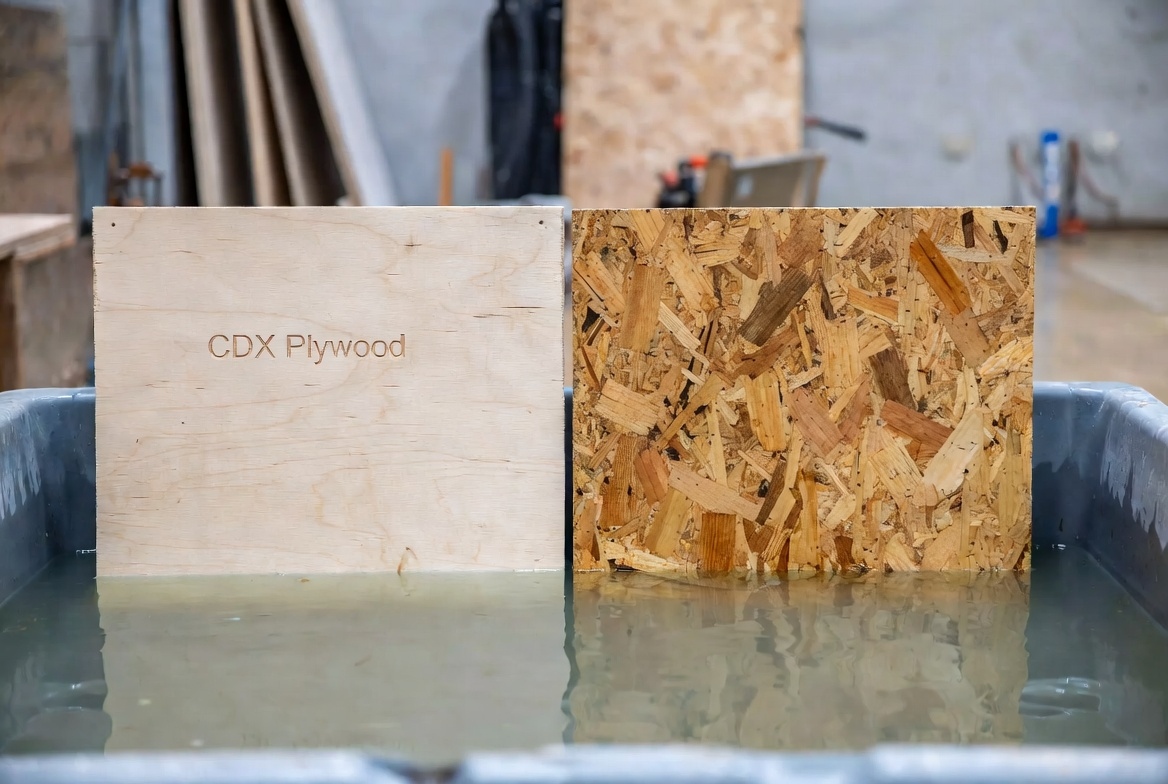
After soaking, CDX swells moderately in thickness, and most of that swelling reverses once the panel dries. OSB, after repeated wet-dry cycles, can swell substantially and that swelling is often permanent, because moisture breaks down the bonds between strands, preventing them from returning to their compressed state.
4. Strength Retention After Wet-Dry Cycles
CDX retains a significantly higher proportion of its original structural strength after repeated moisture exposure compared to OSB. For roofing and subflooring applications in humid climates, this difference can be decisive over the lifespan of a structure.
5. Weight and Handling
CDX plywood is approximately 15 to 19 percent lighter than comparable OSB panels. A standard 23/32-inch 4×8-foot CDX sheet weighs roughly 67 pounds, while an equivalent OSB sheet weighs around 78 pounds. That difference adds up significantly when carrying materials up ladders or positioning sheets on rafters. For roofing crews working at height, the lighter CDX panels translate directly into safer, faster installation.
6. Cost Comparison
OSB is consistently 10 to 20 percent cheaper than CDX plywood. The exact price varies by region, grade, and market conditions, but the gap is reliable enough that on a standard home build, choosing OSB over CDX can represent meaningful savings on material alone. However, in humid climates where OSB’s susceptibility to permanent swelling becomes a long-term factor, the total cost of ownership often favors CDX.
7. Environmental Sustainability
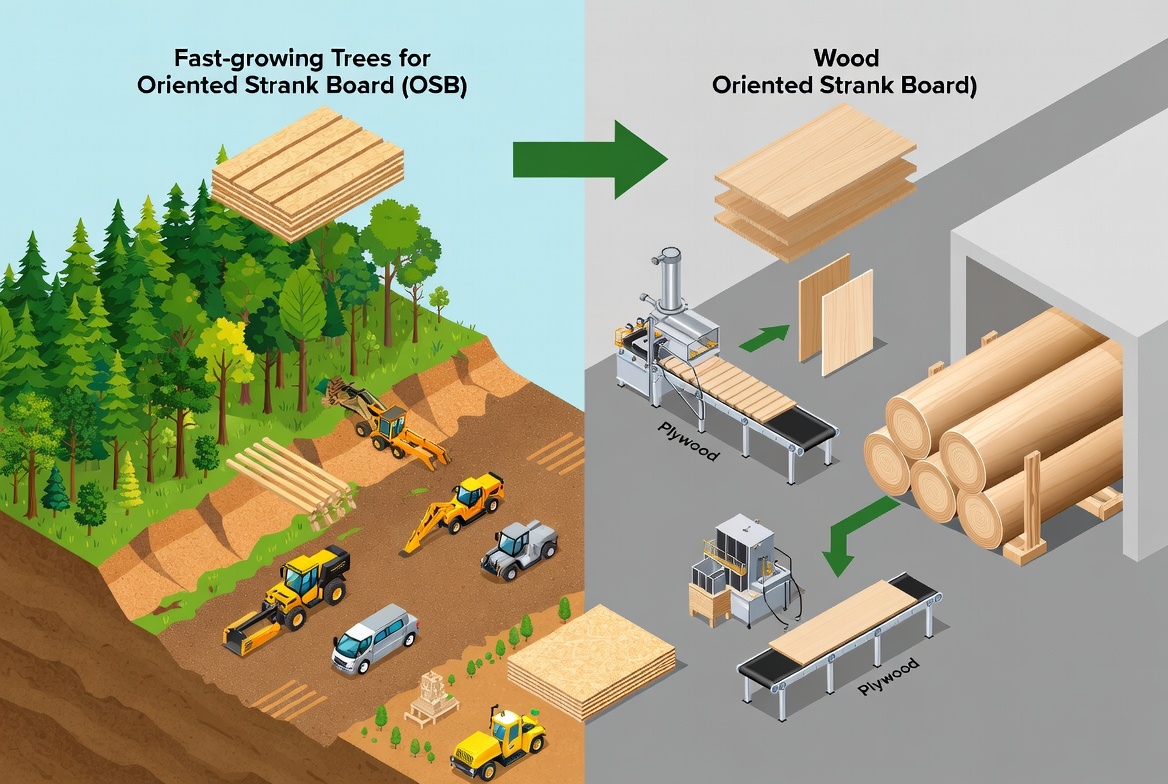
OSB has an advantage in sustainability. It is manufactured from fast-growing, smaller-diameter trees and uses virtually the entire tree during milling, including material that would be discarded in traditional plywood production. CDX requires larger-diameter logs and generates more waste. For projects with a green building focus, OSB is generally the more environmentally responsible choice.
CDX vs OSB: Comparison Table
| Feature | CDX Plywood | OSB |
| Composition | Cross-laminated wood veneers | Compressed wood strands + resin |
| Weight (23/32″ 4×8 sheet) | ~67 lbs (lighter) | ~78 lbs (heavier) |
| Structural Stiffness | ~10% stiffer | Uniform strength, no voids |
| Moisture Absorption | Absorbs quickly, dries quickly | Repels initially; slow to dry once saturated |
| Swelling After Wetting | Moderate; largely reversible | Can be severe and largely permanent |
| Cost | Higher | 10-20% cheaper |
| Sustainability | Requires larger logs | Uses fast-growing trees |
| Best For | Roofing, subfloor in wet climates | Walls, sheathing in dry climates |
When to Use CDX Plywood
CDX plywood is the right choice when moisture exposure, structural longevity, or handling ease are top priorities. Consider CDX for:
- Roof decking in regions with significant rainfall, snow, or humidity
- Subflooring in bathrooms, kitchens, or basements where moisture intrusion is possible
- Any application requiring maximum structural stiffness, such as high-span roof sections or load-bearing floor systems
- Projects where faster installation matters, since the lighter panels are easier to maneuver and position
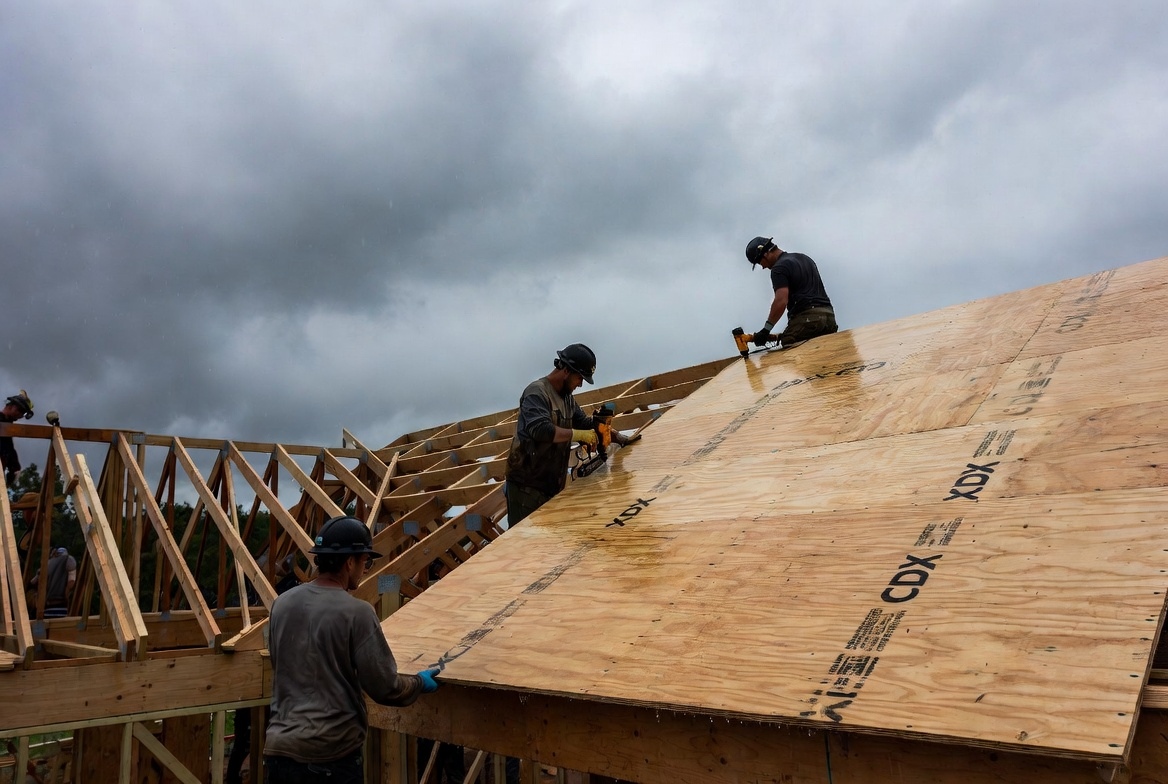
Pro tip: Builders in wet climates consistently prefer CDX because even after seasonal moisture exposure, it dries out and holds its structural integrity. OSB cannot reliably do the same over the long term.
When to Use OSB
OSB is the economical, practical choice for large-scale projects in stable, dry conditions. It performs well in:
- Wall sheathing, where panels are quickly covered by weather barriers and siding, limiting moisture exposure
- Subflooring and roof sheathing in dry climates where prolonged water exposure is not a concern
- Budget-sensitive projects, where the cost saving per sheet adds up significantly across a full build
- Large residential developments, where consistent panel quality and predictable performance matter
Industry insight: Approximately 75% of structural sheathing in U.S. residential construction today uses OSB, driven primarily by its lower cost and consistent quality.
Pros and Cons of CDX Plywood
Advantages
- Superior nail and screw holding power, which helps roofing materials stay securely fastened over time
- Higher rigidity (approximately 10% stiffer than OSB), reducing flex in roof and floor systems
- Faster drying after moisture exposure, with largely reversible swelling
- Lighter panels (15 to 19 percent lighter than OSB) for easier, safer on-site handling
- Better long-term strength retention after wet-dry cycling
Disadvantages
- Higher upfront material cost, typically 10 to 20 percent more expensive than OSB
- Natural wood defects such as knots can create minor inconsistencies in the panel
- Not waterproof; sustained exposure to standing water will still cause damage
Pros and Cons of OSB
Advantages
- Lower cost, typically 10 to 20 percent cheaper than CDX per sheet
- Consistent, uniform panel quality with no knots, voids, or internal defects
- More sustainable sourcing, manufactured from fast-growing trees using nearly the entire log
- No internal gaps, providing uniform load distribution across the entire sheet
Disadvantages
- Heavier sheets, adding approximately 11 pounds per sheet compared to CDX
- Edge swelling risk when cut edges are exposed to moisture without sealing
- Slow drying after saturation; swelling from prolonged moisture exposure is often permanent
- Reduced strength retention after repeated wet-dry cycling compared to CDX
Which Is Better: CDX Plywood or OSB?
There is no single correct answer. The right choice depends entirely on the conditions of your specific project. As a general guide:
| Your Situation | Better Choice |
| Wet or humid climate | CDX Plywood |
| Dry climate with budget constraints | OSB |
| Roof decking in rainfall-prone areas | CDX Plywood |
| Wall sheathing (covered quickly) | OSB |
| Maximum structural stiffness required | CDX Plywood |
| Large-scale residential development | OSB |
If durability and moisture resilience are your priorities, CDX is the better investment even at a higher upfront cost.
If budget is your primary constraint and the panels will be quickly protected from the elements, OSB is a practical and widely proven choice.
Frequently Asked Questions
Is CDX stronger than OSB?
Yes, in most practical terms. CDX plywood is approximately 10% stiffer than OSB and holds nails and screws more securely. It also retains significantly more of its original structural strength after repeated wet-dry cycling. That said, OSB offers uniform strength distribution across the panel with no internal gaps, which CDX cannot always match.
Why do builders use OSB instead of plywood?
Cost is the primary driver. OSB is typically 10 to 20 percent less expensive per sheet than CDX plywood. In dry climates or wall sheathing applications where moisture exposure is limited, it also performs comparably. The consistent, defect-free quality of OSB further appeals to builders working at scale.
Is CDX plywood waterproof?
No. The “X” in CDX refers to an exposure-rated adhesive, meaning the panel can tolerate short-term moisture exposure without delaminating. It is moisture-resistant, not waterproof. Prolonged exposure to standing water will cause damage, though CDX dries and recovers far better than OSB once moisture is removed.
Does OSB swell when wet?
Yes, and this is OSB’s most significant limitation. While the resin-sealed surfaces initially repel water, once a panel becomes fully saturated it can swell significantly through repeated wet-dry cycles. Unlike CDX, this swelling is often permanent, because moisture breaks down the bonds between strands and prevents the panel from returning to its original dimensions.
What are the disadvantages of CDX plywood?
CDX plywood’s main drawbacks are its higher cost and the presence of natural wood defects such as knots that can create minor inconsistencies in the panel. It is also not waterproof; sustained moisture exposure without adequate protection will still cause damage over time.
Conclusion
CDX plywood and OSB are both proven, widely used structural panels, and it is nearly impossible to build a modern home without encountering both. The decision between them comes down to three core factors: the local climate, the specific application, and the project budget.
CDX plywood earns its higher price with superior moisture recovery, better stiffness, and stronger long-term structural performance, making it the right choice for wet climates, roof decking, and applications where panels may face periodic moisture before being sealed. OSB delivers reliable performance at a meaningfully lower price point, making it the dominant choice for wall sheathing, dry-climate builds, and budget-conscious projects.
Whatever you choose, proper installation matters as much as the material itself. Ensure adequate spacing between panels, use appropriate fasteners, and protect exposed edges from moisture intrusion, particularly with OSB. When in doubt, consult a local roofing or construction professional who understands how your regional climate affects building materials over time.
Bình luận