


Birch Plywood vs MDF: Which Material is Right for You?
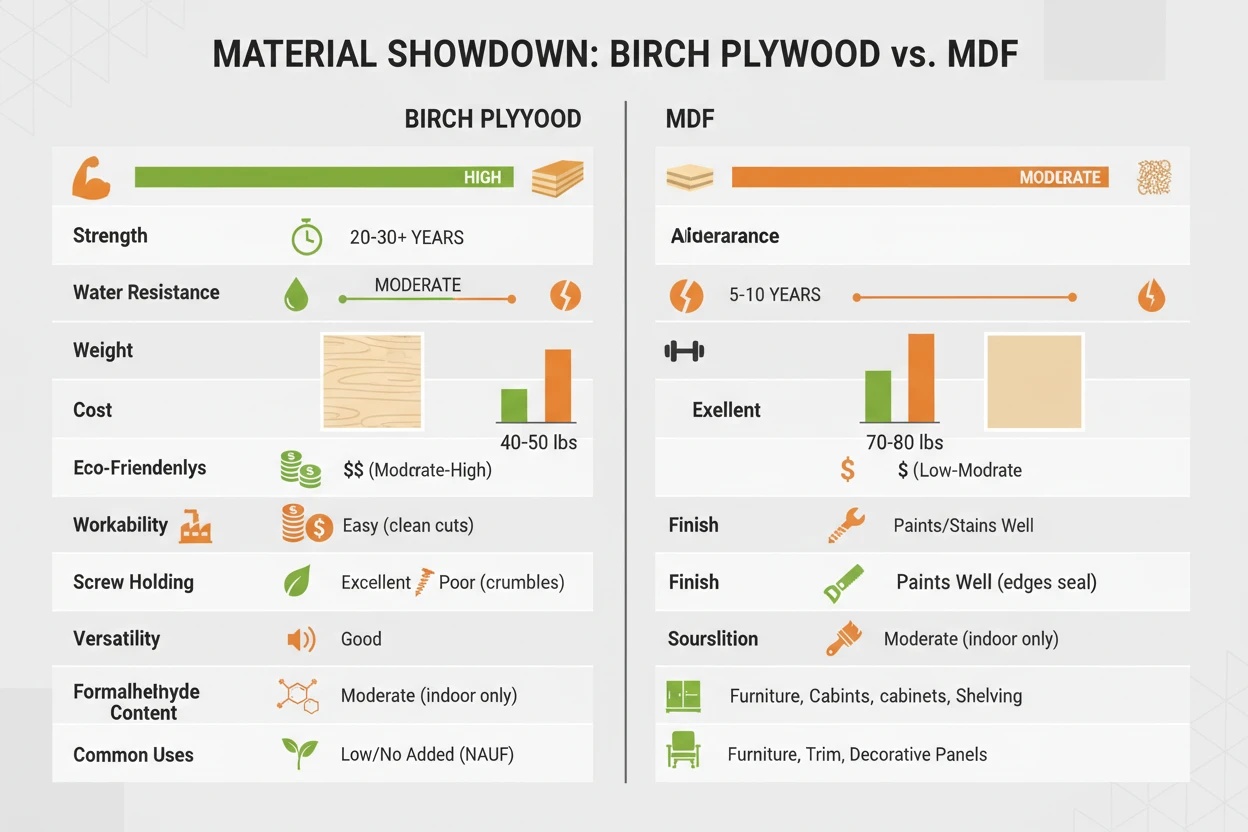
Both birch plywood and MDF are popular engineered wood products used in furniture, cabinetry, and audio applications. However, they differ significantly in composition, strength, cost, and performance. Understanding these differences is essential for selecting the right material for your specific project.
This comprehensive guide compares birch plywood and MDF across all important dimensions: from structural strength to cost to specialized applications like speaker boxes. Whether you’re building kitchen cabinets, creating furniture, or constructing audio equipment, this comparison helps you make an informed decision based on your actual project requirements.
What Is Birch Plywood?
Birch plywood is an engineered wood product made by bonding multiple thin layers of birch wood veneer together with adhesive, arranged in alternating grain directions. This cross-laminated construction provides superior strength and stability compared to solid wood.

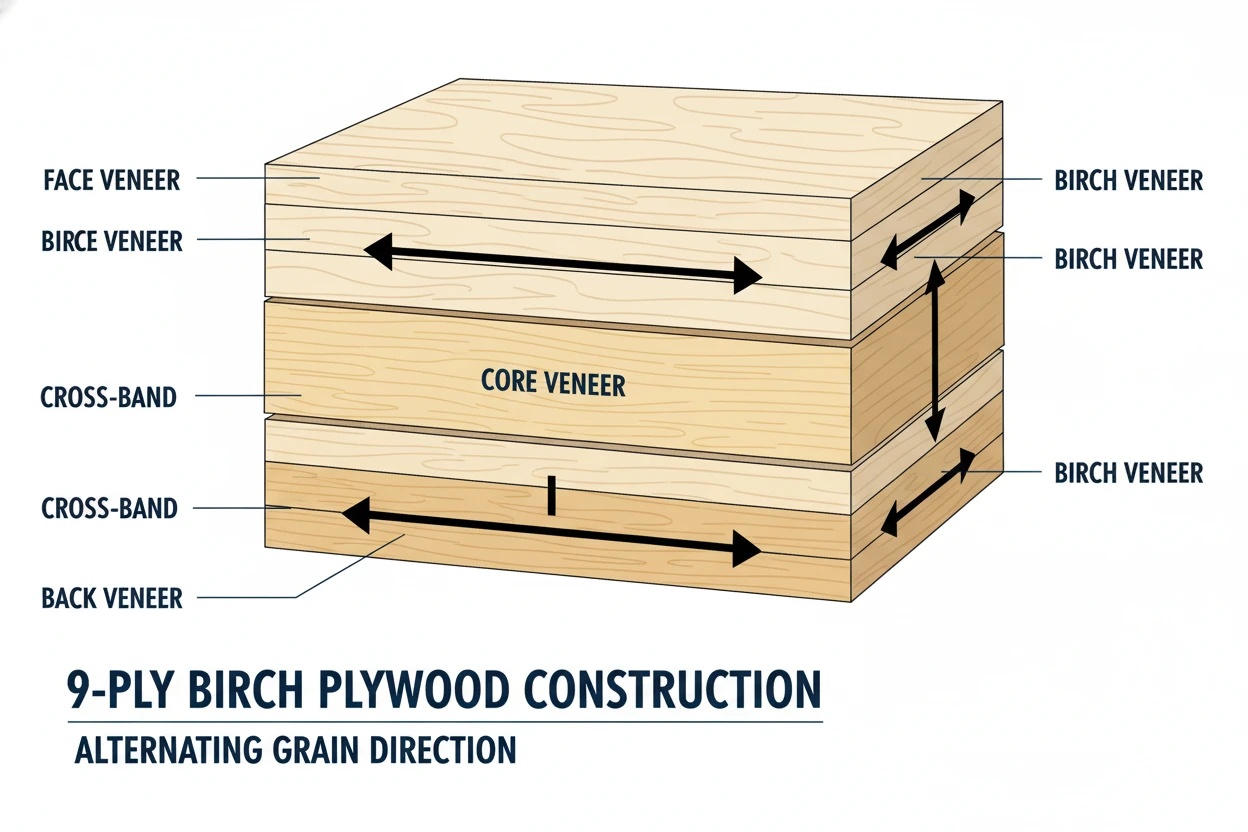
Birch plywood’s core can be all-birch veneers (premium grades) or mixed with other hardwoods for economical versions. Ply count variations like 7-ply and 9-ply construction affect strength and stability. The material is available in grades A, B/BB, and C2, reflecting surface quality. Birch plywood features a natural wood appearance with visible grain patterns, making it suitable for projects where aesthetics matter.
For comprehensive understanding of birch plywood properties, explore our complete birch plywood guide.
What Is MDF?
MDF (Medium Density Fiberboard) is manufactured by breaking down hardwood or softwood residuals into wood fibers, combining them with resin adhesive, and compressing the mixture under high heat and pressure. This process creates a uniform, grain-free material with consistent properties throughout.
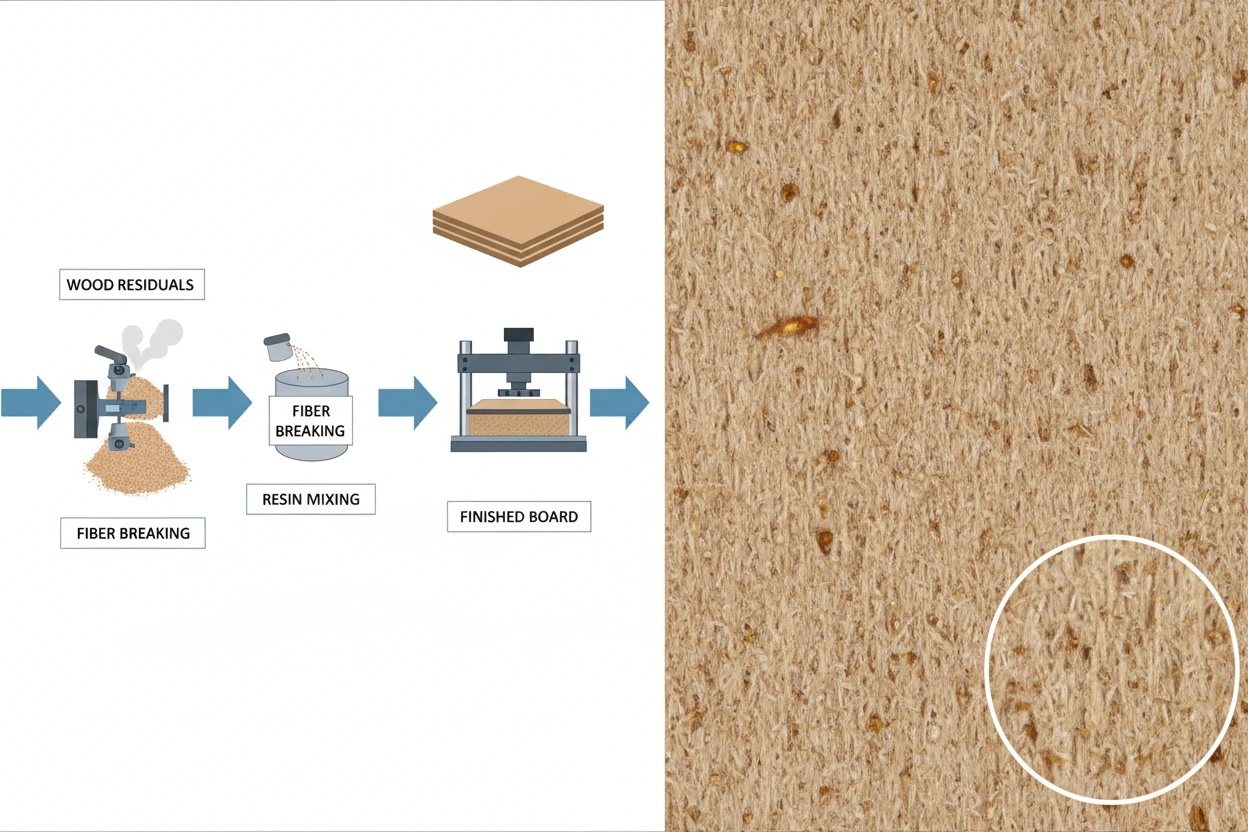
MDF has a density of 700-800 kg/m³, falling between plywood and solid wood. The manufacturing process produces an exceptionally smooth surface ideal for paint finishes and veneer application. MDF comes in various thicknesses and offers consistency that solid wood cannot match. However, MDF is more susceptible to moisture absorption than plywood and requires careful handling in humid environments.
Birch Plywood vs MDF: Strength and Durability
Strength Comparison
Birch plywood offers superior strength compared to MDF due to its engineered layered construction and hardwood composition. The alternating grain directions in plywood create balanced internal stress distribution, resulting in excellent bending strength and load-bearing capacity.
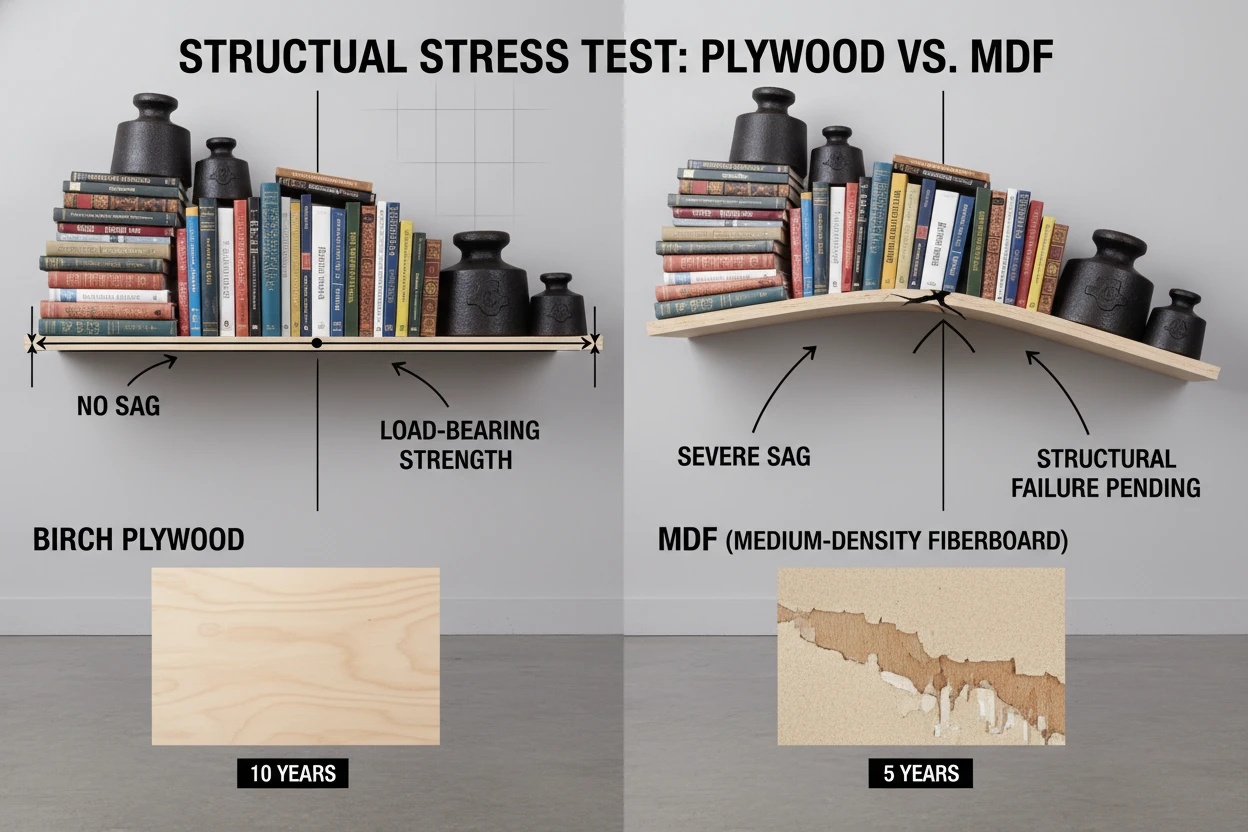
MDF is weaker than birch plywood, particularly under stress and impact. Its fiberboard composition provides uniform strength in all directions but lacks the directional strength advantages of layered plywood. Birch plywood can span longer distances without sagging and holds screws more reliably, especially near edges.
Durability Over Time
Birch plywood demonstrates superior long-term durability, maintaining structural integrity for decades when properly finished. The material resists warping and delamination better than MDF when protected from moisture.
MDF’s durability is significantly shorter. The material degrades faster in humid environments and is prone to swelling when exposed to moisture. MDF typically lasts 5-10 years in normal interior conditions, while birch plywood lasts 20-30+ years with proper maintenance.
Is Birch Plywood Stronger Than MDF?
Yes, birch plywood is definitively stronger than MDF. Birch plywood’s bending strength is approximately 2-3 times greater than MDF. For load-bearing applications like shelving supporting books or heavy items, birch plywood is the superior choice. MDF works adequately for decorative shelves or light-load applications but cannot match birch plywood’s structural performance.
Birch Plywood vs MDF Comparison Table
| Property | Birch Plywood | MDF |
|---|---|---|
| Strength | High (2-3x stronger than MDF) | Moderate |
| Durability | 20-30+ years | 5-10 years |
| Water Resistance | Moderate (needs sealing) | Poor (very susceptible) |
| Weight (3/4″ sheet) | 40-50 lbs | 70-80 lbs |
| Cost per Sheet | $50-120 | $30-70 |
| Appearance | Natural wood grain visible | Uniform, grain-free |
| Surface Finish | Good for stain/varnish | Excellent for paint/veneer |
| Workability | Good (easy to cut/machine) | Very good (smooth cuts) |
| Screw Holding | Excellent | Fair (pulls out easily) |
| Edge Treatment | Many options | Requires edge banding |
| Moisture Absorption | Moderate | Very High |
| Formaldehyde Emissions | Low-Moderate | Moderate-High |
| Environmental Impact | Renewable if FSC certified | Recycled wood fibers |
| Best Applications | Furniture, cabinets, speakers | Decorative, painted surfaces |
Weight Comparison: Birch Plywood vs MDF Weight
MDF is significantly heavier than birch plywood, which impacts handling, transportation, and installation. A 3/4-inch birch plywood sheet weighs approximately 40-50 pounds, while the same thickness MDF weighs 70-80 pounds – roughly 50% more.

This weight difference matters practically. Heavier MDF requires more equipment and labor for installation, increasing project costs. For large projects covering significant square footage, weight differences compound substantially. Birch plywood’s lighter weight reduces shipping costs, installation difficulty, and structural support requirements. For applications like wall paneling or ceiling work, the weight advantage of birch plywood is significant.
However, MDF’s weight can be an advantage in some audio applications where mass increases sound dampening and resonance control.
Cost Analysis: Birch Plywood vs MDF Cost
Price Comparison
MDF is initially less expensive than birch plywood. Standard MDF sheets typically cost $30-70, while comparable birch plywood sheets range from $50-120. MDF offers 30-40% cost savings on material alone, making it attractive for budget-conscious projects.
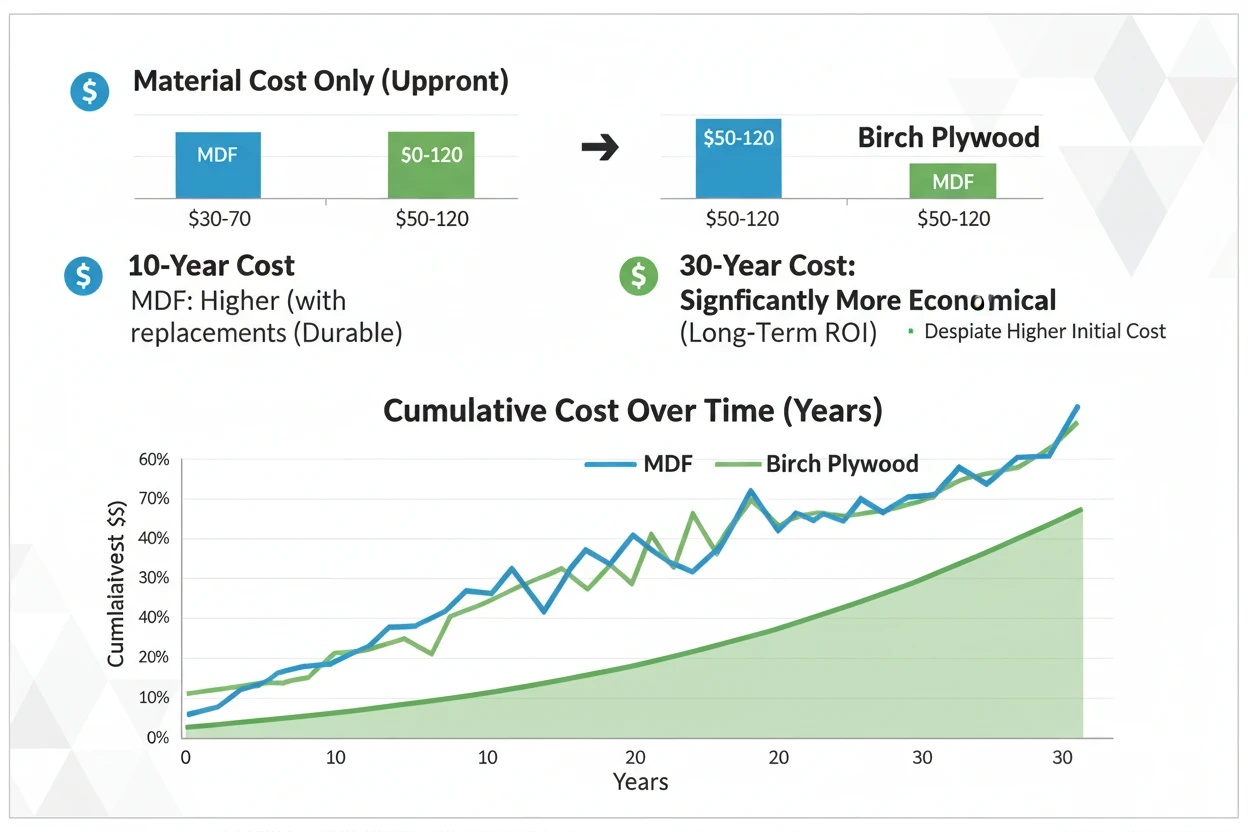
However, cost varies by grade and thickness. Birch plywood’s B/BB grade (mid-range quality) costs $50-80 per sheet, while lower C2 grade starts around $40. Premium A grade birch or Baltic birch exceeds $120. MDF pricing is more consistent regardless of application, though specialty formulations (fire-rated, moisture-resistant) cost more.
Cost of Ownership
Total project cost often favors birch plywood despite higher material costs. MDF’s weaker strength frequently requires additional reinforcement or thicker material, negating cost savings. Birch plywood’s superior workability reduces labor time and waste. MDF’s susceptibility to moisture damage necessitates replacement more frequently; critical for kitchens and bathrooms.
For long-term cost analysis, birch plywood’s 20-30 year lifespan versus MDF’s 5-10 years means birch plywood requires less frequent replacement. In cabinetry, birch plywood maintains value and functionality longer. Over 30 years, birch plywood often costs less per year of use despite higher initial investment.
Appearance and Aesthetics
Birch Plywood Aesthetic Properties
Birch plywood features natural wood character with visible grain patterns and subtle color variations from light cream to pale yellow-brown. This authentic appearance appeals to customers seeking real wood furniture and cabinetry. Birch plywood accepts stain beautifully, allowing rich color development that enhances the wood’s natural character.
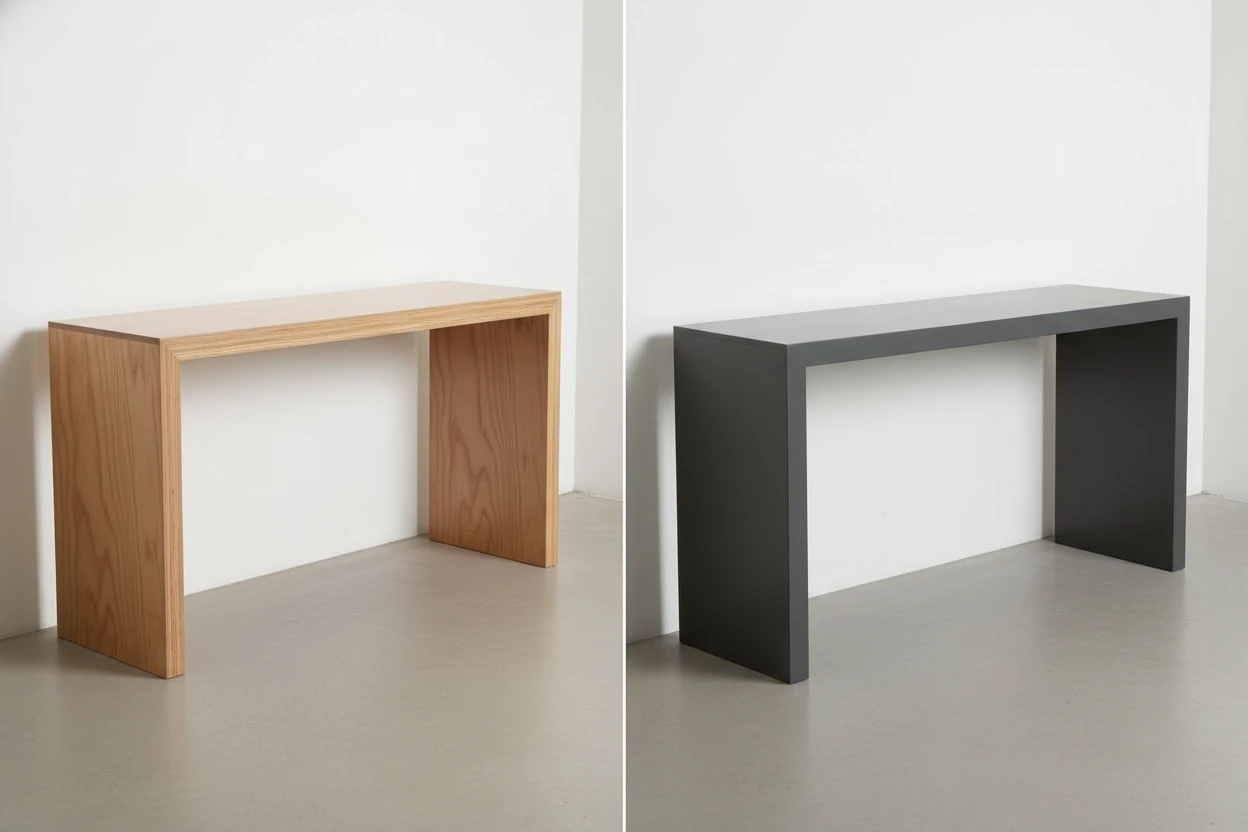
The material suits Scandinavian, modern, and traditional design styles. Clear varnish finishes showcase the grain, while painted finishes provide endless color options. Birch plywood’s visual warmth and sophistication elevate furniture and cabinetry projects aesthetically.
MDF Aesthetic Properties
MDF offers exceptional uniformity with completely grain-free surfaces and consistent color throughout. This uniformity makes MDF ideal for painted finishes, as the surface accepts paint evenly without grain telegraphing. Veneer application to MDF creates seamless surfaces impossible with birch plywood’s visible grain.
MDF’s smooth surface provides a contemporary, industrial aesthetic when painted. However, the material cannot replicate authentic wood appearance; viewers recognize MDF as engineered product rather than genuine wood.
Which Looks Better?
Aesthetic preference depends on design goals. Birch plywood excels when authentic wood character is desired. For contemporary, painted, or minimalist designs, MDF’s uniformity may be preferable. Budget-conscious buyers may accept MDF’s appearance, while quality-conscious customers expect birch plywood’s authentic wood look.
Workability and Machinability
Birch plywood offers excellent workability with fine grain that machines cleanly, producing crisp edges without tearout when proper cutting techniques are used. The material sands easily to fine smoothness and accepts stain evenly. Screw-holding capacity is excellent, particularly near edges and panel surfaces – essential for durable joinery.
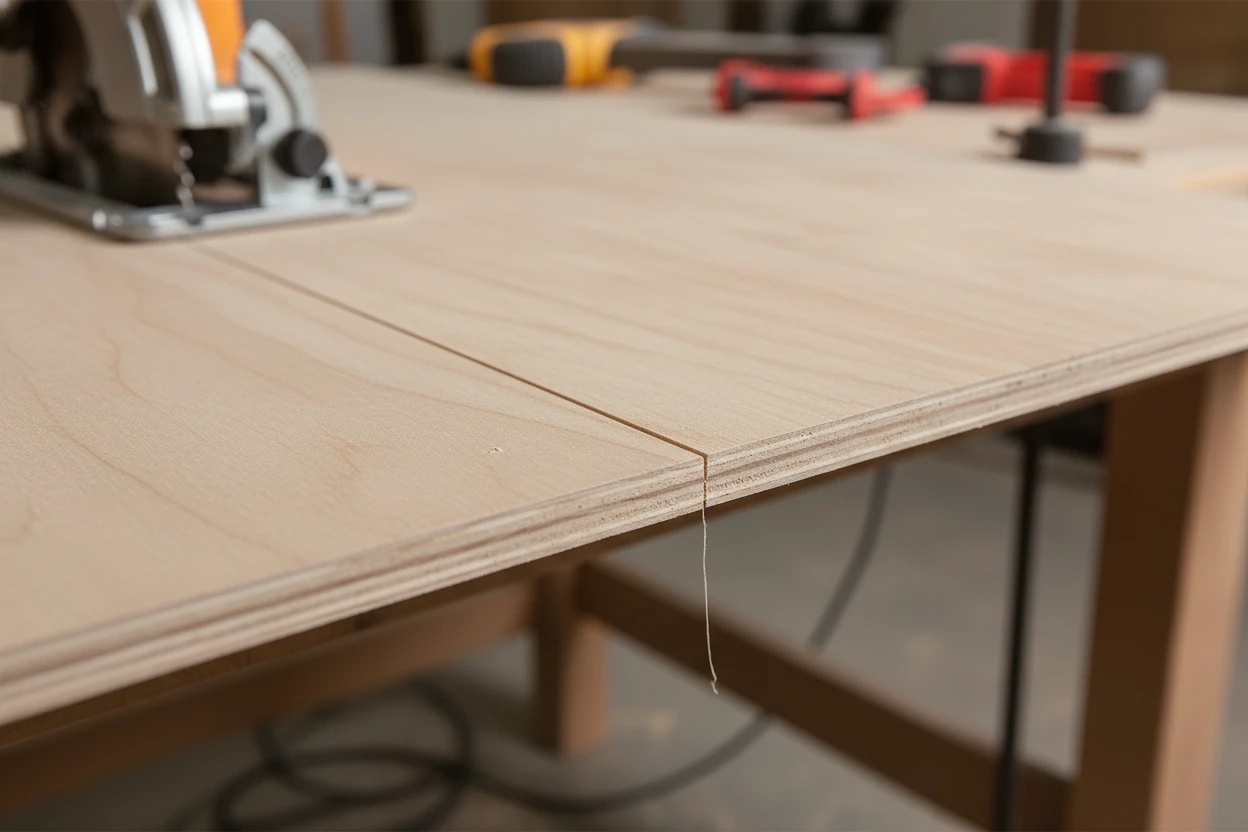
MDF provides superior surface smoothness but is more fragile during cutting, producing fine dust and requiring cleanup. MDF edges require edge banding treatment, as exposed edges appear unfinished and raw. Screw-holding is weak: fasteners pull out easily, requiring reinforcement through inserts or larger fasteners.
Both materials work well with power tools. Birch plywood provides better overall craftsmanship results due to superior strength and workability characteristics.
Water Resistance and Moisture Properties
Birch Plywood Water Resistance
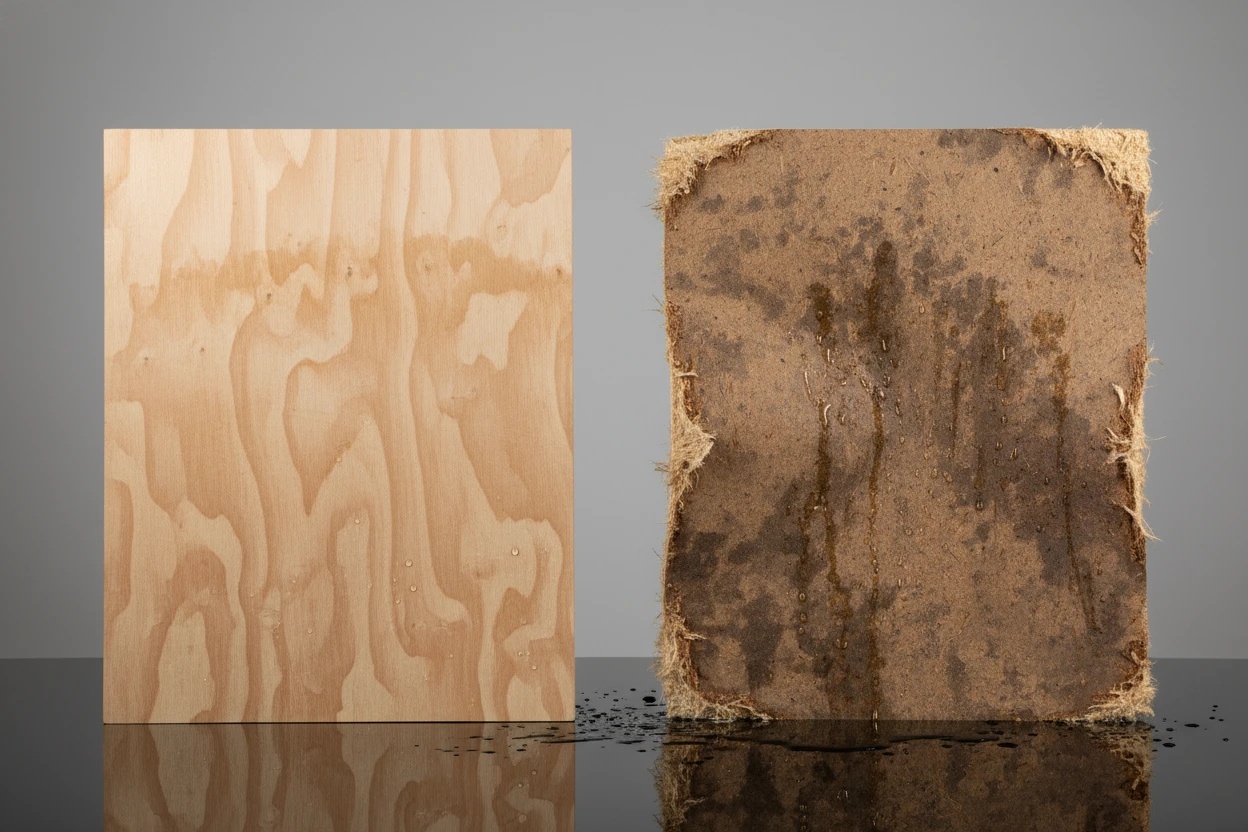
Birch plywood exhibits moderate water resistance without finishing but absorbs moisture over time with extended exposure. The engineered construction provides better resistance than solid wood, though edges remain vulnerable. Proper waterproofing with sealants and topcoats creates effective moisture barriers suitable for kitchens and bathrooms.
MDF Water Resistance
MDF is extremely susceptible to moisture, swelling visibly with brief water exposure. The fiberboard composition absorbs water like a sponge, expanding and losing structural integrity. MDF should never be used in high-moisture environments without extensive waterproofing, and even sealed MDF is unreliable in wet conditions.
Moisture Resistance Comparison
Birch plywood is far superior for moisture-prone applications. For kitchens, bathrooms, and covered outdoor spaces, birch plywood’s inherent water resistance and successful waterproofing make it appropriate. MDF requires complete protection and cannot be relied upon in genuinely wet environments. For any project with sustained moisture exposure, birch plywood is the clear choice.
Specific Applications Comparison
Birch Plywood vs MDF for Cabinets
Birch plywood is superior for quality cabinetry. Kitchen cabinets made from birch plywood resist humidity better, accept finishes beautifully, and provide durability lasting decades. The material’s strength supports heavy loads from dishes and appliances without sagging or warping.
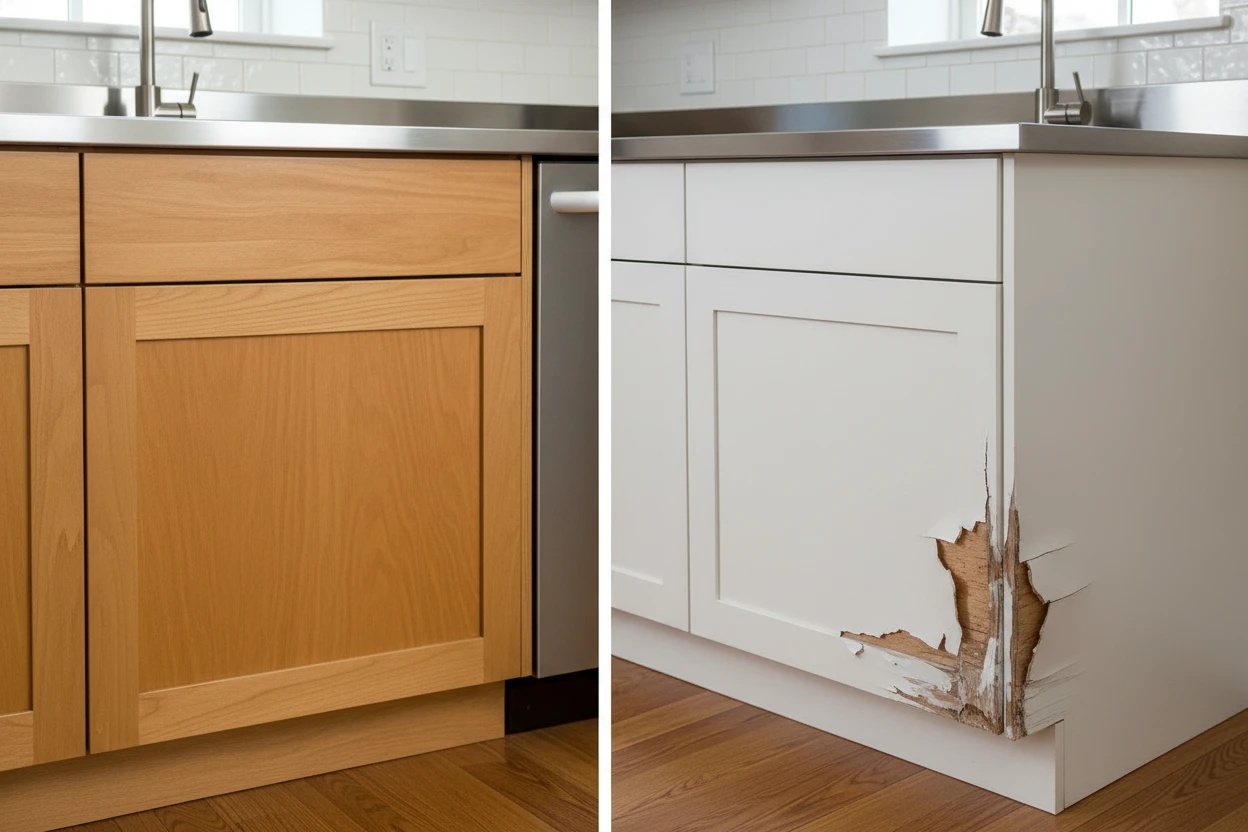
MDF works for basic, budget cabinets in dry environments. The uniform surface accepts paint well, but moisture from kitchen steam and sink splashes causes swelling. Professional cabinetmakers specify birch plywood for lasting quality.
Birch Plywood vs MDF for Speakers
Professional audio builders overwhelmingly prefer birch plywood for speaker construction. The material’s strength prevents resonance and cabinet vibration that colors sound. Birch plywood’s acoustic properties deliver neutral, accurate sound reproduction critical for quality audio.
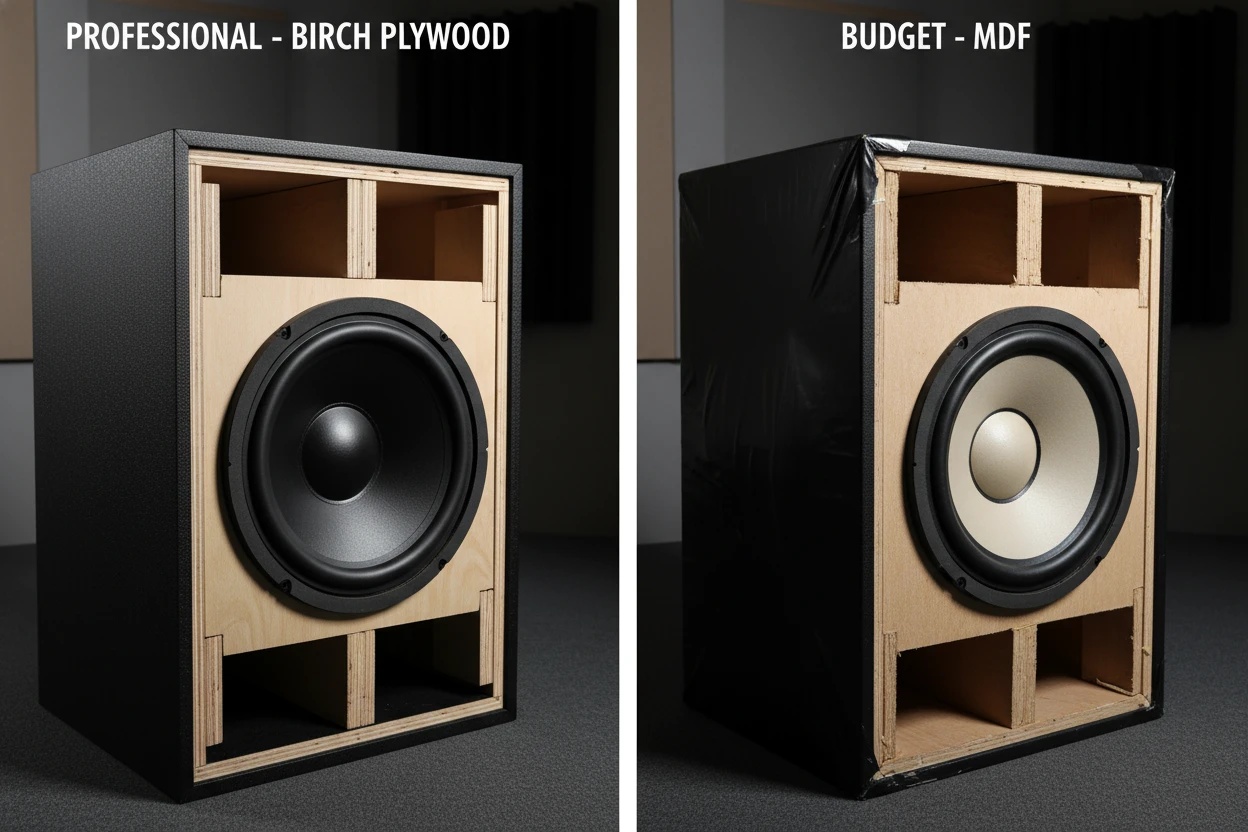
MDF’s mass can provide some acoustic damping, but the material’s weakness limits cabinet rigidity. Serious audiophiles and professional speaker manufacturers choose birch plywood for superior sound quality.
MDF vs Birch Sub Box (Subwoofer Applications)
Birch plywood is the preferred choice for subwoofer boxes. High-intensity bass frequencies require structural rigidity that birch plywood provides. The material’s strength prevents cabinet flexing that would reduce bass clarity and efficiency.
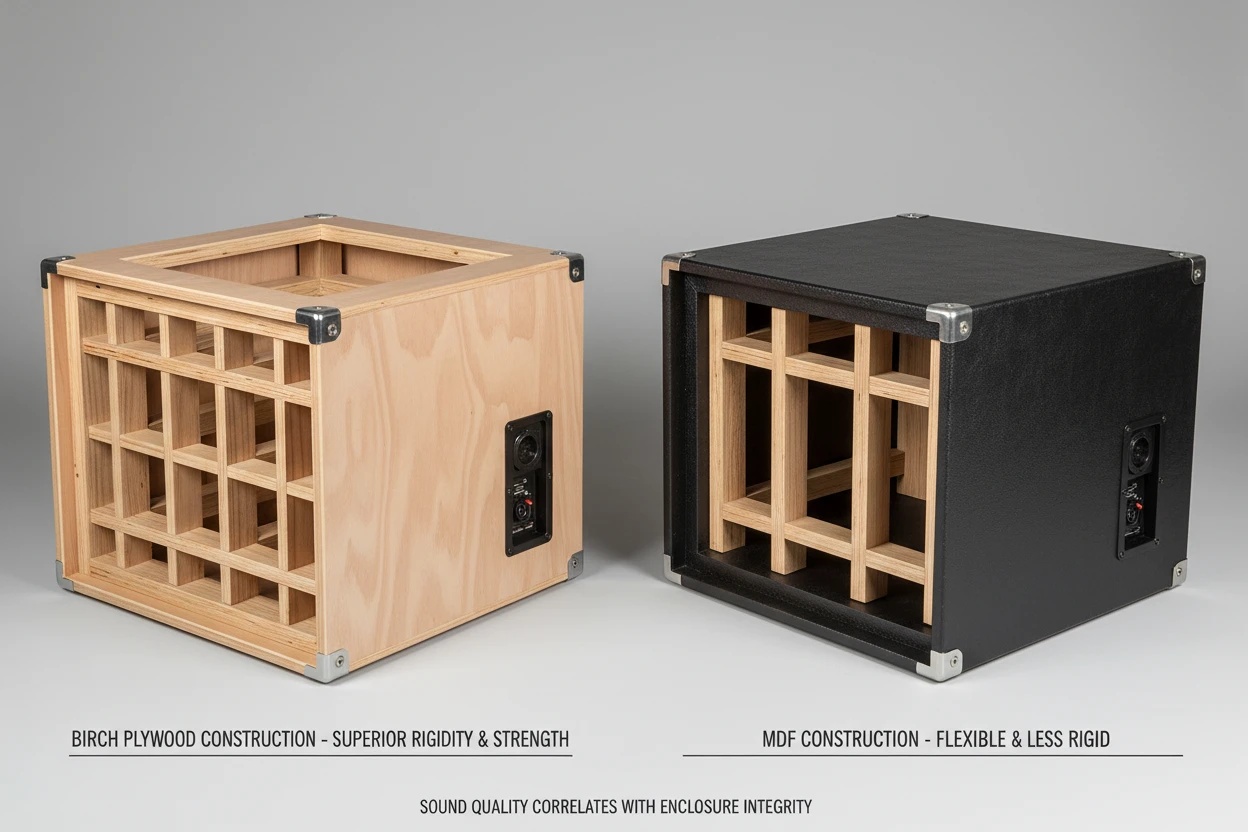
While some budget subwoofer manufacturers use MDF, performance suffers. Enthusiasts building custom subwoofer boxes choose birch plywood for superior bass response and durability.
Baltic Birch Plywood vs MDF
Baltic birch plywood is significantly superior to MDF. The premium construction, higher ply count, and superior veneers provide unmatched strength and durability. Baltic birch’s precision manufacturing makes it ideal for demanding audio and furniture applications where performance matters most.
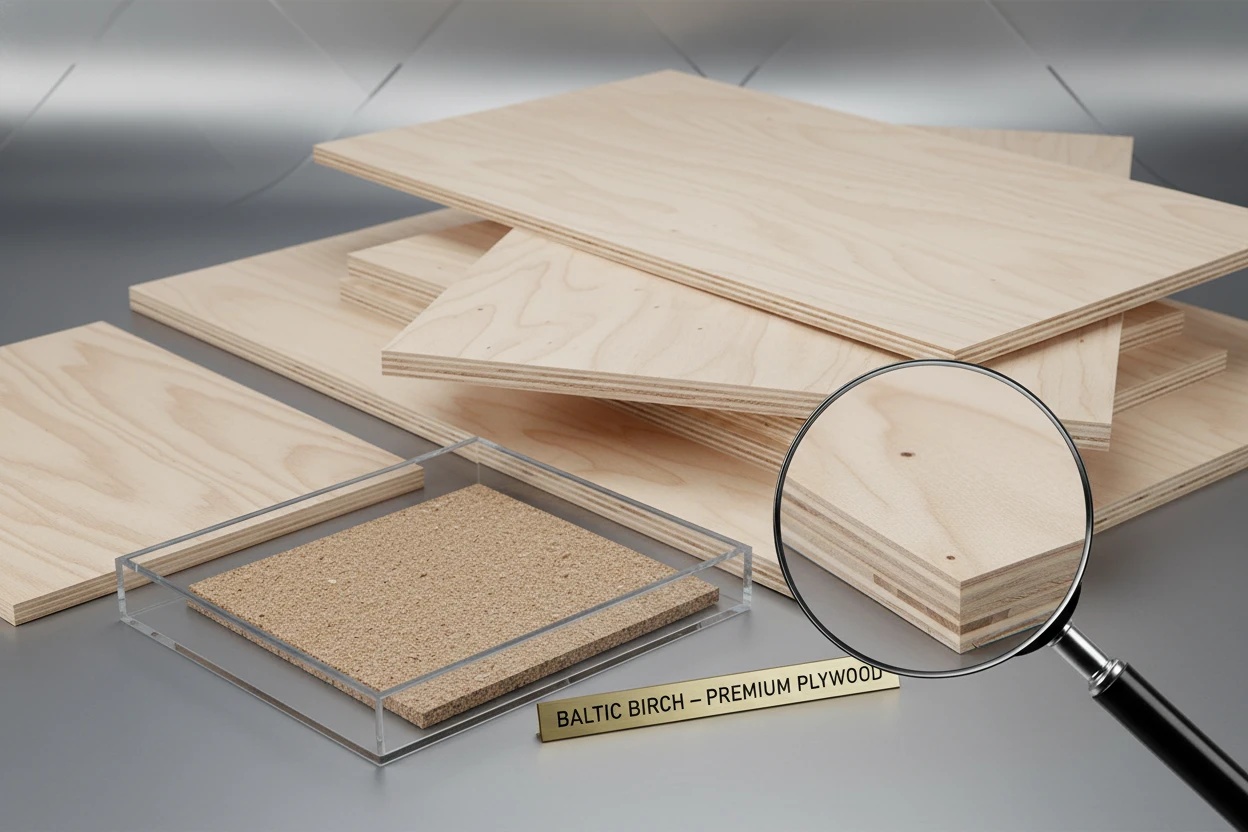
MDF cannot compete with Baltic birch in any performance metric, though MDF costs less initially.
Environmental and Health Considerations
Birch plywood sourcing varies; sustainably harvested birch from certified forests is eco-friendly, while unsustainably harvested material has environmental concerns. FSC-certified birch plywood ensures responsible forestry practices.
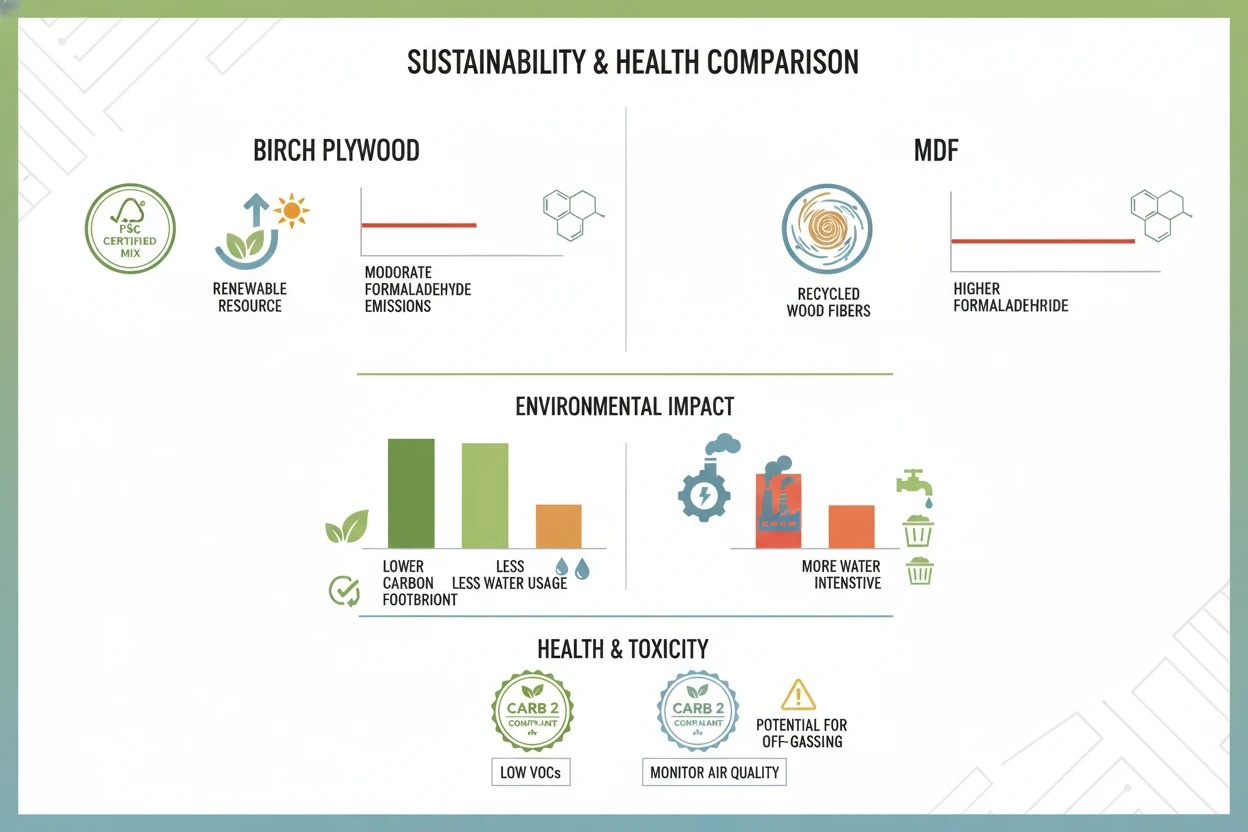
MDF uses recycled wood fibers, reducing waste, though the manufacturing process requires significant energy. Both materials may contain formaldehyde in adhesives, though low-VOC and formaldehyde-free options exist for both. MDF typically has higher formaldehyde emissions than birch plywood. Choose CARB Phase 2 compliant materials for health-safe indoor use.
For environmentally conscious projects, FSC-certified birch plywood offers sustainability assurance that MDF cannot match.
Birch Plywood or MDF: How to Choose
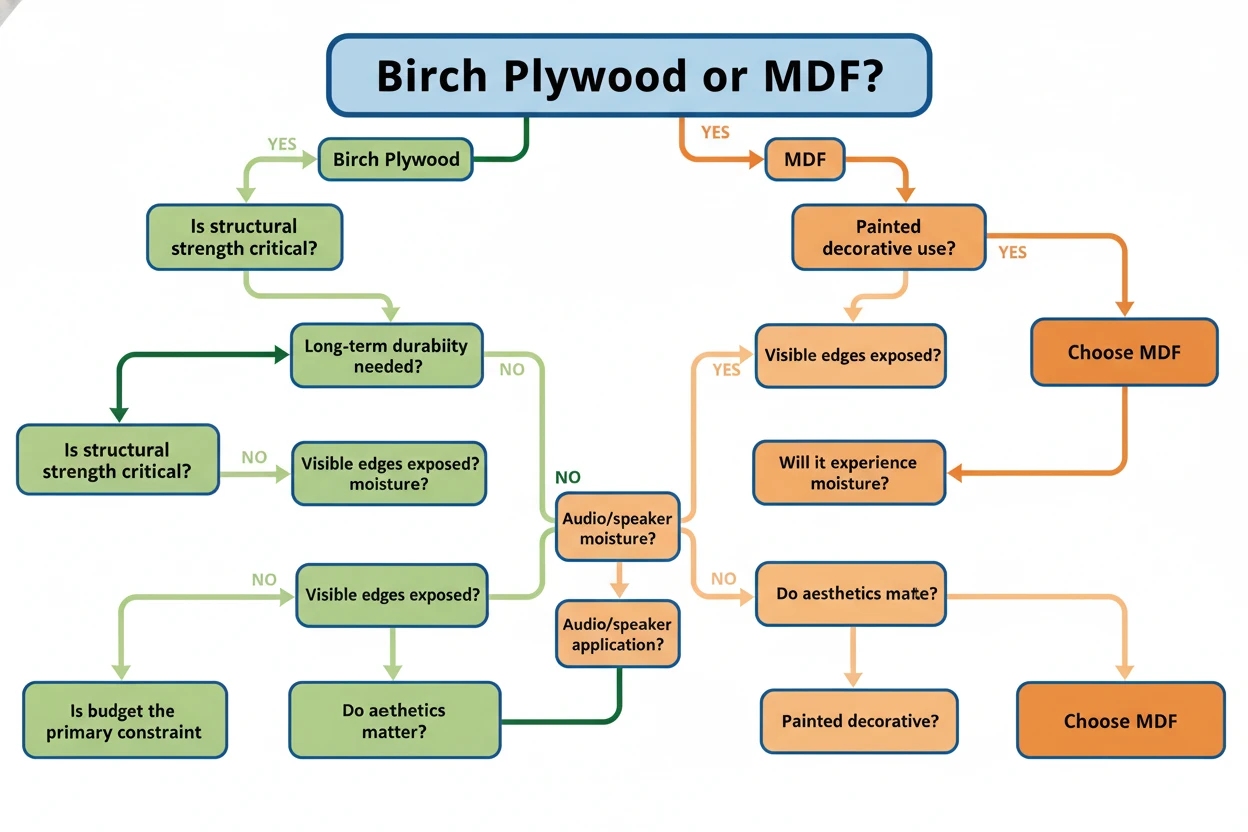
Decision Framework
Ask yourself these questions:
- Is structural strength critical? → Birch plywood
- Will the material experience moisture? → Birch plywood
- Do aesthetics matter? → Depends (birch for real wood look, MDF for uniform paint)
- Is budget the primary constraint? → MDF
- How long must the project last? → Birch plywood for 20+ years, MDF for 5-10
- Will visible edges be exposed? → Birch plywood (MDF edges look unfinished)
- Is this for audio/speakers? → Birch plywood
- Is this a painted, decorative piece? → Either works, choose based on strength needs
Birch Plywood Best For
Choose birch plywood for:
- Kitchen and bathroom cabinetry
- Quality furniture requiring durability
- Speaker and audio enclosures
- Load-bearing shelving
- Visible edge treatments
- Any project lasting 20+ years
- Moisture-exposed applications
- Projects where strength matters
MDF Best For
Choose MDF for:
- Budget-conscious projects
- Completely painted surfaces
- Decorative, non-structural applications
- Interior walls and trim (dry environments only)
- Smooth, uniform finishes
- Short-term furnishings
- Projects where cost is the primary concern
- Hidden/structural components requiring uniformity
Comparison by Use Case
Cabinets and Kitchen Applications
Birch plywood wins decisively. Kitchen humidity, water splashes, and heavy loads require birch plywood’s superior moisture resistance and strength. Professional kitchens and high-end cabinetry universally use birch or marine-grade plywood. MDF simply cannot withstand kitchen environments reliably.
Furniture Building
Birch plywood is preferred for furniture intended to last years or decades. The material’s workability, strength, and appearance suit diverse furniture styles. For budget furniture with short lifespan, MDF works adequately.
Shelving and Storage
Birch plywood handles heavy shelving loads without sagging. Load-bearing requirements favor birch plywood decisively. MDF works for light decorative shelving in dry environments only.
Audio/Speaker Applications
Birch plywood is the professional standard. Speaker boxes, subwoofer enclosures, and audio equipment require structural integrity and acoustic properties that birch plywood provides. Serious audiophiles and professional manufacturers specify birch plywood exclusively.
Decorative and Trim Work
Either material works, depending on finishing preferences. Painted trim benefits from MDF’s smooth surface, while stained trim showcases birch plywood’s natural beauty.
Birch Plywood vs MDF: 5 Common Mistakes
Mistake #1: Choosing MDF for load-bearing applications. MDF’s weakness causes sagging and failure. Always use birch plywood for shelving supporting significant weight.
Mistake #2: Using MDF in kitchens or bathrooms. Moisture destroys MDF. Birch plywood is essential for any moisture-exposed environment.
Mistake #3: Cost-only decision making. Initial MDF savings evaporate when frequent replacement is necessary. Total cost of ownership usually favors birch plywood.

Mistake #4: Underestimating edge visibility. MDF’s exposed edges look unfinished and cheap. Birch plywood’s edges can be stained or varnished attractively.
Mistake #5: Using MDF for audio equipment. Sound quality suffers dramatically with MDF cabinets. Birch plywood is mandatory for serious audio projects.
Kosemex Birch Plywood: Premium Quality Option
Kosemex birch plywood represents premium quality engineered wood sourced and manufactured in Vietnam. The material undergoes strict quality control ensuring consistent strength, smooth surfaces, and reliable performance across all sheets.
Kosemex birch plywood is available in multiple grades and thicknesses, suitable for cabinetry, furniture, audio equipment, and architectural applications. The company’s commitment to low formaldehyde emissions and sustainable sourcing ensures health-safe materials for residential and commercial projects.
For sourcing quality birch plywood superior to standard alternatives, explore Kosemex’s product catalogue or contact their team to discuss your specific application requirements. Review certified test reports and quality certificates verifying performance standards.
Birch Plywood vs MDF FAQs
Is Birch Plywood Better Than MDF?
Yes, birch plywood is better than MDF for most applications due to superior strength, durability, water resistance, and appearance. MDF is only preferable when budget is the sole concern and the project is temporary, painted, and in dry environments. For anything requiring longevity, strength, or moisture resistance, birch plywood is the superior choice.
Is Birch Plywood Stronger Than MDF?
Birch plywood is 2-3 times stronger than MDF. Bending strength, load-bearing capacity, and screw-holding ability all favor birch plywood dramatically. For any load-bearing application, birch plywood is non-negotiable.
What’s the Difference Between Birch Plywood and MDF?
Manufacturing: Birch plywood uses laminated veneers; MDF uses compressed wood fibers. Strength: Birch is 2-3x stronger. Durability: Birch lasts 20-30+ years; MDF lasts 5-10 years. Water resistance: Birch resists moisture; MDF absorbs it. Appearance: Birch shows natural grain; MDF is uniform. Cost: MDF is initially cheaper. Best use: Birch for quality projects; MDF for budget painting projects.
Birch Plywood vs MDF for Cabinets: Which Should I Choose?
Choose birch plywood for all kitchen and bathroom cabinets. The material’s superior moisture resistance, strength, and appearance justify the higher cost for cabinetry lasting decades. MDF cabinets will swell and fail within 5-10 years in moisture-prone kitchen environments.
Is Birch Plywood Better Than MDF for Speakers/Subwoofers?
Birch plywood is absolutely superior for speakers and subwoofers. Professional audio equipment universally uses birch plywood for its acoustic properties and structural rigidity. MDF degrades sound quality and cabinet performance. For any serious audio project, birch plywood is the only acceptable choice.
How Much Does Birch Plywood Cost vs MDF?
MDF costs 30-40% less initially: MDF typically $30-70 per sheet vs. birch plywood $50-120 per sheet. However, total project cost often favors birch plywood due to superior durability and reduced replacement frequency. For a 30-year lifespan, birch plywood frequently proves more economical despite higher upfront cost.
Can You Use MDF Where Birch Plywood Is Specified?
Generally no. If a specification calls for birch plywood (particularly for audio equipment or structural applications), MDF substitution will compromise performance. MDF’s inferior strength and moisture sensitivity make it unsuitable where birch plywood is specified. Professional standards exist for good reasons.
Which Material Should I Use for My Project?
Use the decision framework above: If strength, durability, or moisture resistance matters, choose birch plywood. If budget is the only concern and the project is temporary and painted, MDF suffices. For most serious projects, birch plywood is the appropriate choice.
Conclusion
Birch plywood and MDF serve different purposes. Birch plywood excels in strength, durability, water resistance, and appearance, making it suitable for quality furniture, cabinetry, and audio equipment. MDF offers cost savings for temporary, painted projects in dry environments but cannot match birch plywood’s performance.
The choice is application-dependent: Ask whether strength, durability, aesthetics, or moisture resistance matter for your project. If any of these are priorities, birch plywood is the superior choice despite higher initial cost. For budget-conscious, temporary, painted projects in dry environments, MDF is acceptable.
Quality and longevity almost always justify birch plywood’s higher cost. Total cost of ownership over 20-30 years typically favors birch plywood. For cabinetry, furniture, shelving, and audio equipment, birch plywood delivers results that exceed cost considerations.
For comprehensive understanding of birch plywood properties and applications, explore our complete birch plywood guide, waterproofing guide, and furniture design ideas.
To source premium quality birch plywood for your next project, visit Kosemex Group or explore their product selection today.
Bình luận