


Is Birch Plywood Waterproof? 5 Truths About Water Resistance & Outdoor Use
Birch plywood has become a popular choice for furniture, cabinetry, and interior construction due to its strength and aesthetic appeal. However, many builders and designers wonder: is birch plywood waterproof? The answer is not as straightforward as a simple yes or no. This comprehensive guide explains birch plywood’s water resistance properties, waterproofing methods, and suitable applications through five essential truths that every builder and designer should understand.
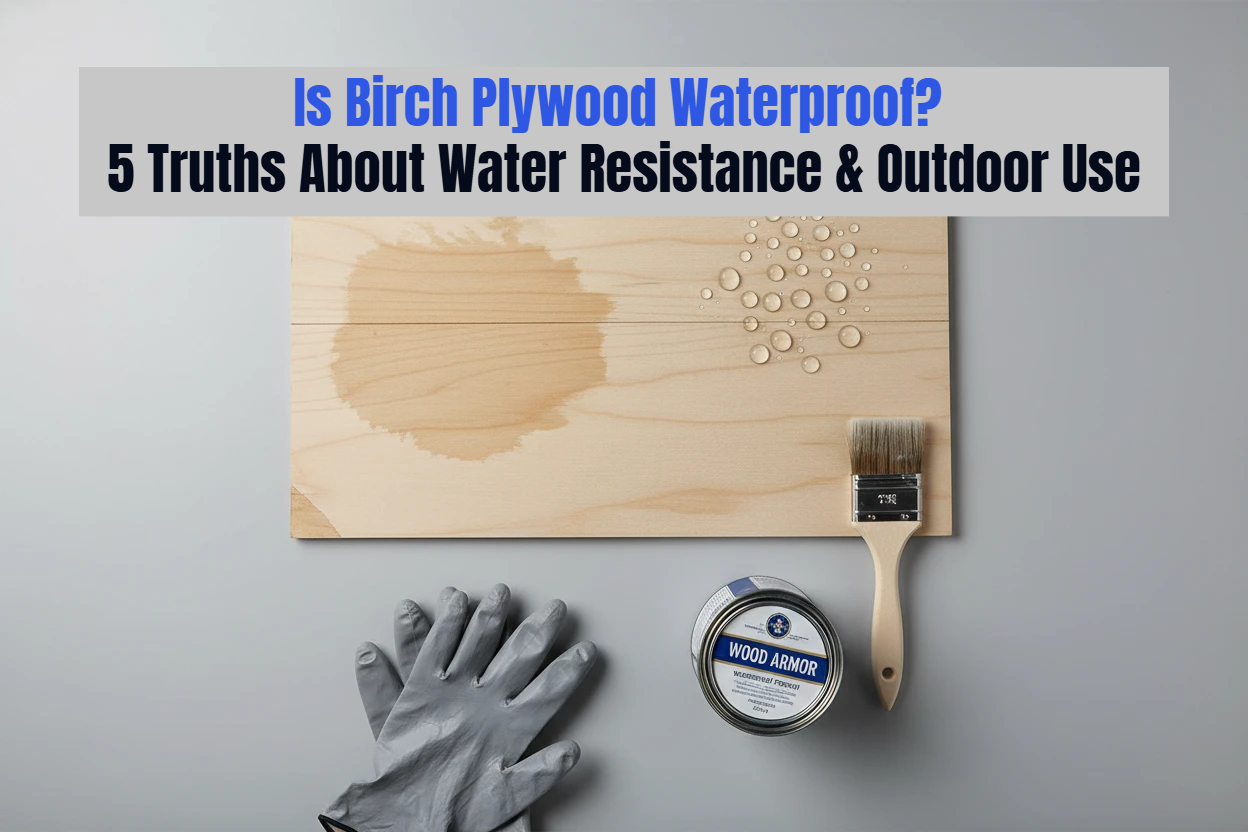
Understanding whether birch plywood can withstand moisture exposure is critical for projects involving kitchens, bathrooms, outdoor furniture, and marine applications. This guide provides practical insights to help you make informed decisions about material selection and waterproofing strategies.
What Is Birch Plywood?
Birch plywood is an engineered wood product made by bonding multiple thin layers of birch wood veneer together with adhesive, arranged in alternating grain directions. This cross-laminated construction significantly improves structural stability compared to solid wood, making it ideal for various applications.

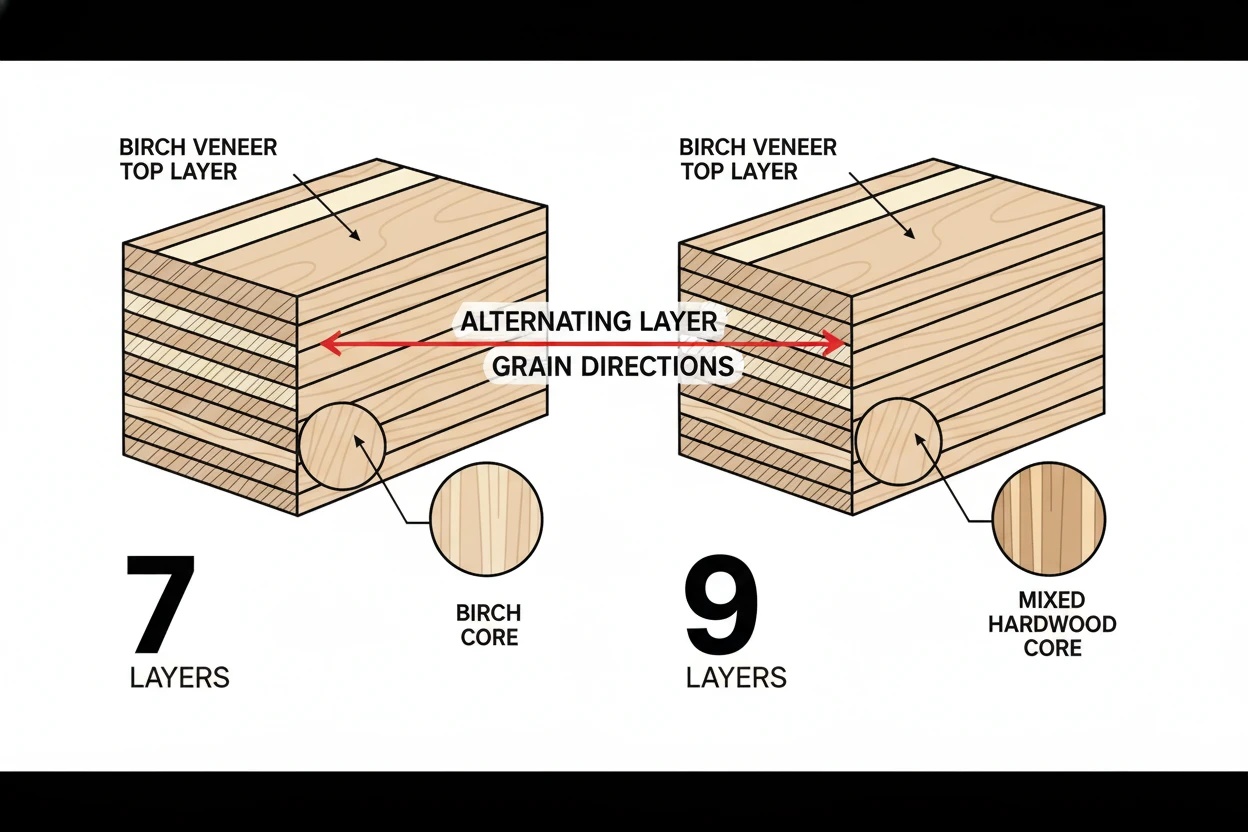
Birch plywood construction varies based on ply count, which refers to the number of veneer layers. Common configurations include 7-ply birch plywood and 9-ply birch plywood, each offering different performance characteristics. A 7-ply construction provides good balance between strength and cost, while 9-ply birch plywood delivers superior stability and load-bearing capacity for demanding applications.
The core of birch plywood can consist entirely of birch veneers for premium grades, or incorporate other hardwood species like acacia or eucalyptus for more economical versions. Compared to other hardwood plywood such as oak or maple, birch plywood offers excellent workability, consistent density, and a refined appearance, making it particularly suitable for furniture and cabinetry. For understanding different grades and their specific characteristics, explore our complete birch plywood guide.
Is Birch Plywood Waterproof?
The direct answer is no, birch plywood is not naturally waterproof. While birch plywood exhibits better water resistance than softwood plywood, it will absorb moisture when exposed to standing water or high humidity over extended periods.
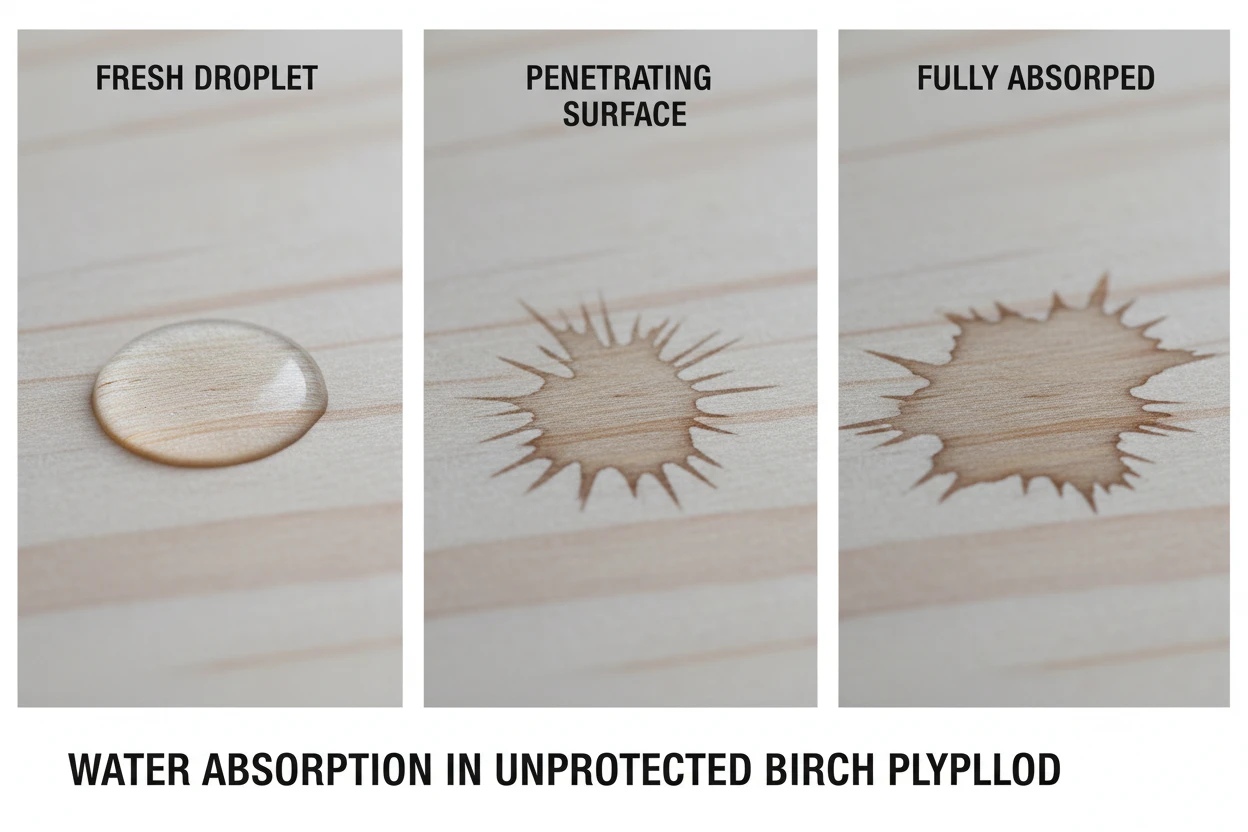
Birch plywood’s veneer and core layers are susceptible to water absorption, which can cause swelling, warping, and delamination. The edges are particularly vulnerable, as they expose the end grain and core materials directly to moisture infiltration. Without protective sealants or topcoats, standard birch plywood should not be used in applications with direct or prolonged water exposure.
However, this does not mean birch plywood cannot be protected through proper waterproofing methods. With appropriate sealers, topcoats, and maintenance, birch plywood can perform reliably in moisture-prone environments.
Is Birch Plywood Water Resistant?
Water resistance differs from waterproofing in important ways. Water-resistant materials can tolerate brief exposure to moisture without immediate damage, while waterproof materials prevent water penetration entirely. Birch plywood is moderately water-resistant, meaning it can withstand occasional moisture exposure for short periods.
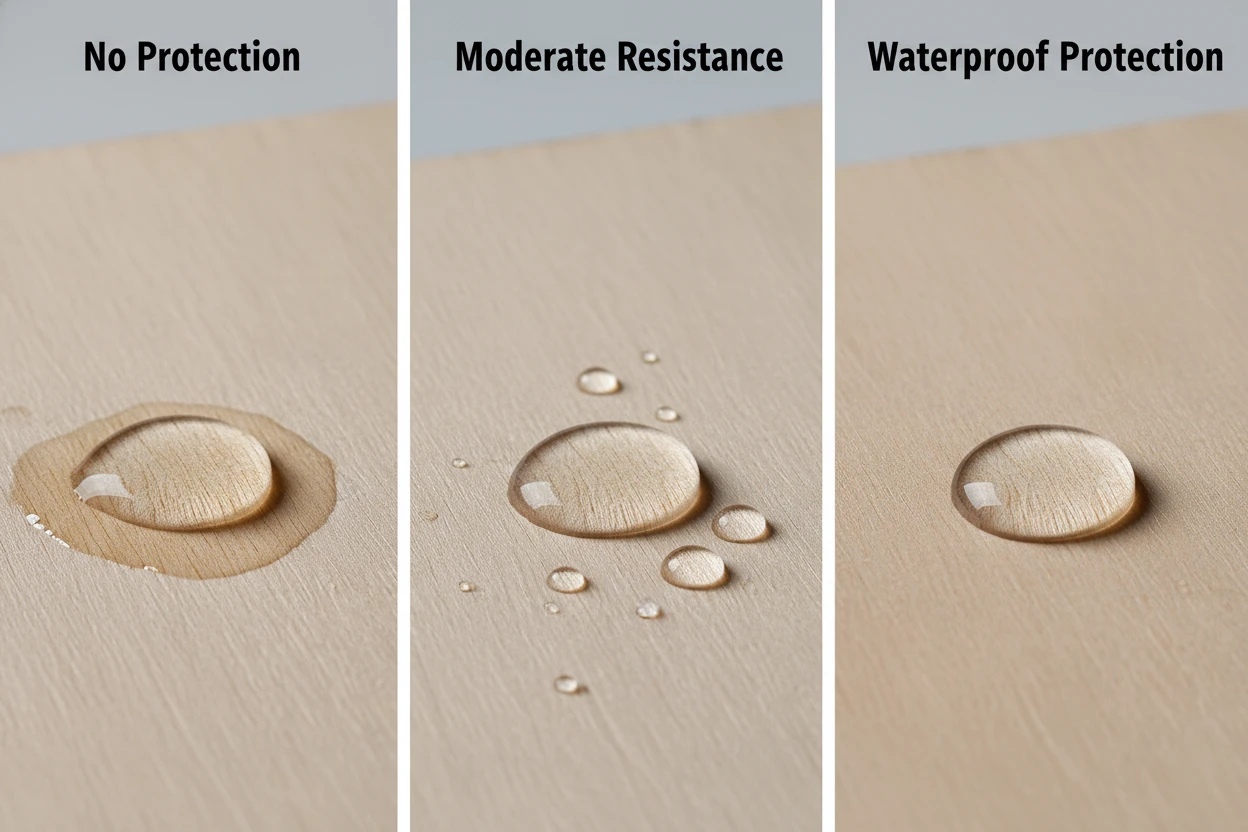
Factors affecting birch plywood’s water resistance include the type of adhesive used (phenolic glue provides better moisture resistance than urea-formaldehyde), the quality of the veneers, and the overall construction. Some birch plywood products offer enhanced water resistance due to superior glue formulations, though these are not truly waterproof without additional sealant application.
The difference between standard interior birch plywood and exterior or marine-grade options lies primarily in the adhesive system. Standard birch plywood may tolerate brief exposure to moisture, but prolonged contact will eventually cause damage.
Can Birch Plywood Get Wet?
Yes, birch plywood can absorb water and sustain damage when exposed to wet conditions. The extent of damage depends on exposure duration, water temperature, and the plywood’s protective coating.
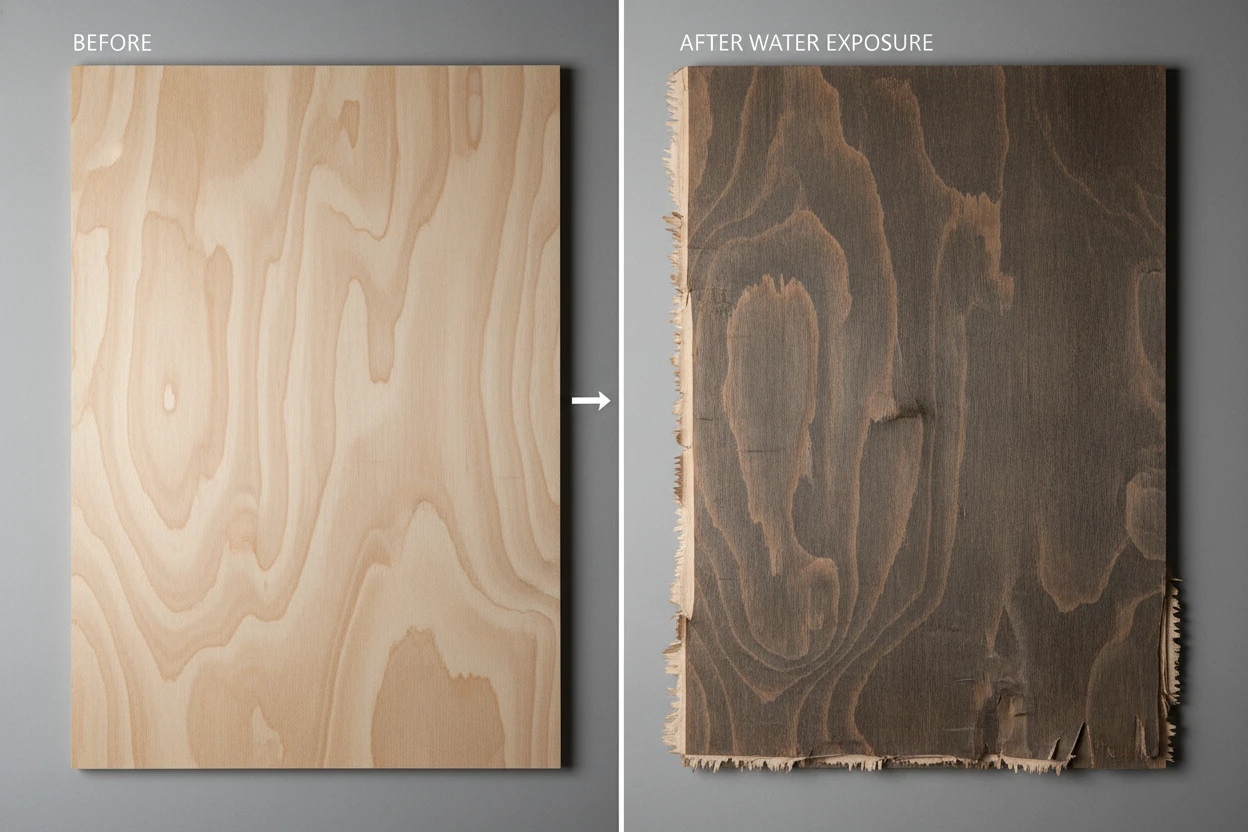
Brief exposure (minutes to a few hours) to splashes or light moisture typically causes no permanent damage, especially if the water is wiped away promptly. However, sustained exposure over hours or days allows water to penetrate the veneer and begin swelling the core. This causes the plywood to warp, with the surface veneer potentially separating from the underlying layers—a process known as delamination.
The edge grain is especially vulnerable because exposed end grain absorbs water rapidly. Even sealed face veneers cannot prevent water damage if the edges remain unprotected. Submerging birch plywood in water or exposing it to standing moisture for extended periods will cause irreversible damage, including rot and structural failure.
How to Waterproof Birch Plywood
Waterproofing Methods Overview
Waterproofing birch plywood requires a multi-layer approach to achieve maximum protection. The most effective method combines edge sealing, multiple topcoat applications, and proper maintenance. Sealing must occur before assembly when possible, as this prevents water from entering joints and fastener holes.
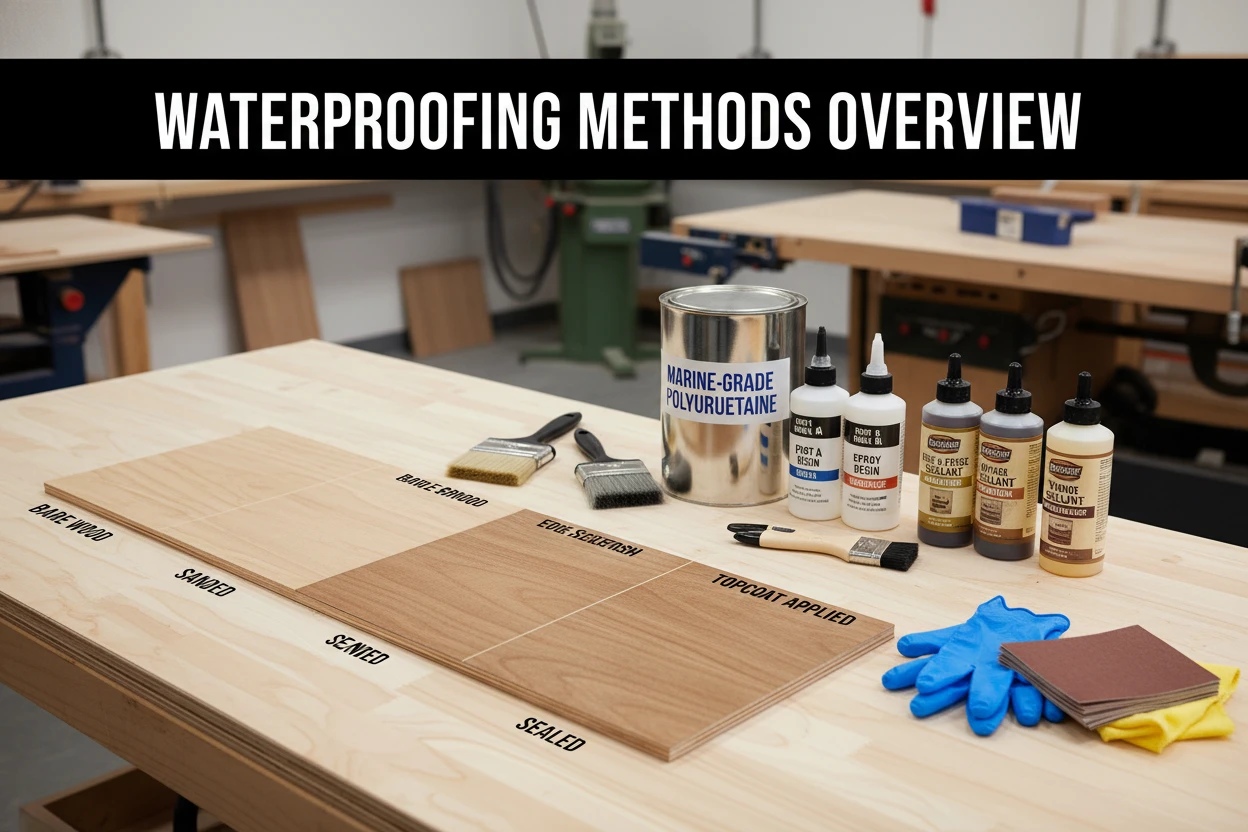
The strategy involves creating a complete moisture barrier that prevents water from reaching the core material. This typically includes sealant application, topcoat finishing, and edge protection.
Best Waterproofing Products for Birch Plywood
Marine-grade polyurethane sealers offer excellent waterproofing for birch plywood, providing flexibility and adhesion superior to standard lacquers. These products specifically formulate to resist moisture penetration while allowing the wood to breathe, preventing moisture trapping that can cause delamination.
Epoxy resin waterproofing provides the highest level of protection and is ideal for marine applications and fully exposed surfaces. Two-part epoxy creates a hard, impermeable barrier that prevents any water penetration. Water-based polyurethane topcoats offer good protection with easier cleanup and lower VOC emissions, though oil-based versions provide slightly greater durability.
Specialized wood sealers designed for outdoor use combine UV protection with water resistance, making them suitable for exterior applications. These products often include fungicides to prevent mold and mildew growth in moisture-rich environments.
Step-by-Step Waterproofing Process
Begin by thoroughly sanding the plywood with 150-220 grit sandpaper to create a smooth surface that accepts sealant evenly. Pay special attention to edges, as they require additional protection.
Apply edge sealer first, using a brush or applicator to saturate all exposed edge grain. Allow adequate drying time (typically 4-12 hours depending on product) before proceeding. This prevents water from entering through the vulnerable end grain while you apply face seals.
Apply the waterproof topcoat in thin, even coats using a brush, roller, or sprayer. Two to three coats provide adequate protection for most applications, with sanding between coats using fine-grit paper (220-320 grit) to improve adhesion. Allow each coat to cure fully before applying the next layer. After the final topcoat, allow the plywood to cure for 7-14 days before exposing it to moisture.
For extended protection, reapply sealer or topcoat annually or as needed when protective coating shows signs of degradation.
Waterproofing for Different Birch Plywood Thicknesses
3/4 inch birch plywood requires standard waterproofing protocols with particular attention to edge sealing. The additional thickness provides better resistance to moisture penetration, though edges remain vulnerable. Standard sealant application suffices for most applications.
1/2 inch plywood offers less barrier against moisture and benefits from slightly thicker sealant coats. Ensure complete coverage and consider additional topcoat applications for extended protection in high-moisture environments.
1/4 inch plywood is the most susceptible to water damage due to its thinness and should receive extra protection. Apply sealant more generously and consider additional coats. Use in moisture-prone applications only with robust waterproofing systems.
Birch Plywood for Outdoor Use
Birch plywood is not ideal for outdoor applications without significant protection. Standard birch plywood experiences color fading and grain visibility loss from UV exposure, particularly in sunlight. Surface degradation becomes apparent within months of outdoor exposure.
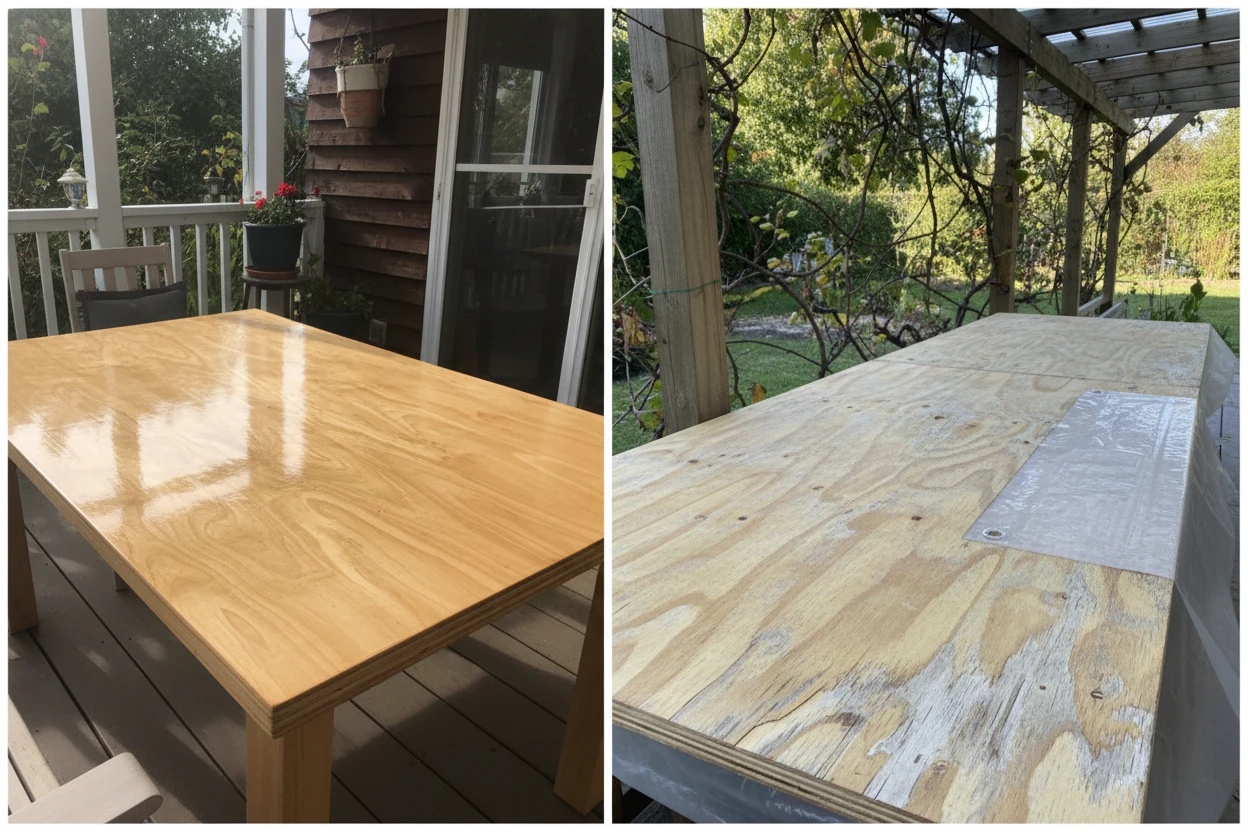
Outdoor applications require both waterproofing and UV protection. Even with these protections, birch plywood requires more maintenance than purpose-built exterior materials. Exposed plywood edges must be protected from water infiltration, which means ongoing edge sealing and maintenance.
Birch plywood works better for covered outdoor spaces (porches, pavilions, overhangs) where it receives some weather protection. In these semi-outdoor environments, with proper sealant application and regular maintenance, birch plywood can provide several years of service.
Is Birch Plywood Good for Outdoors?
No, birch plywood is generally not recommended for primary outdoor exposure without extensive protection measures. The material is engineered for interior use and lacks the durability characteristics of truly outdoor materials.
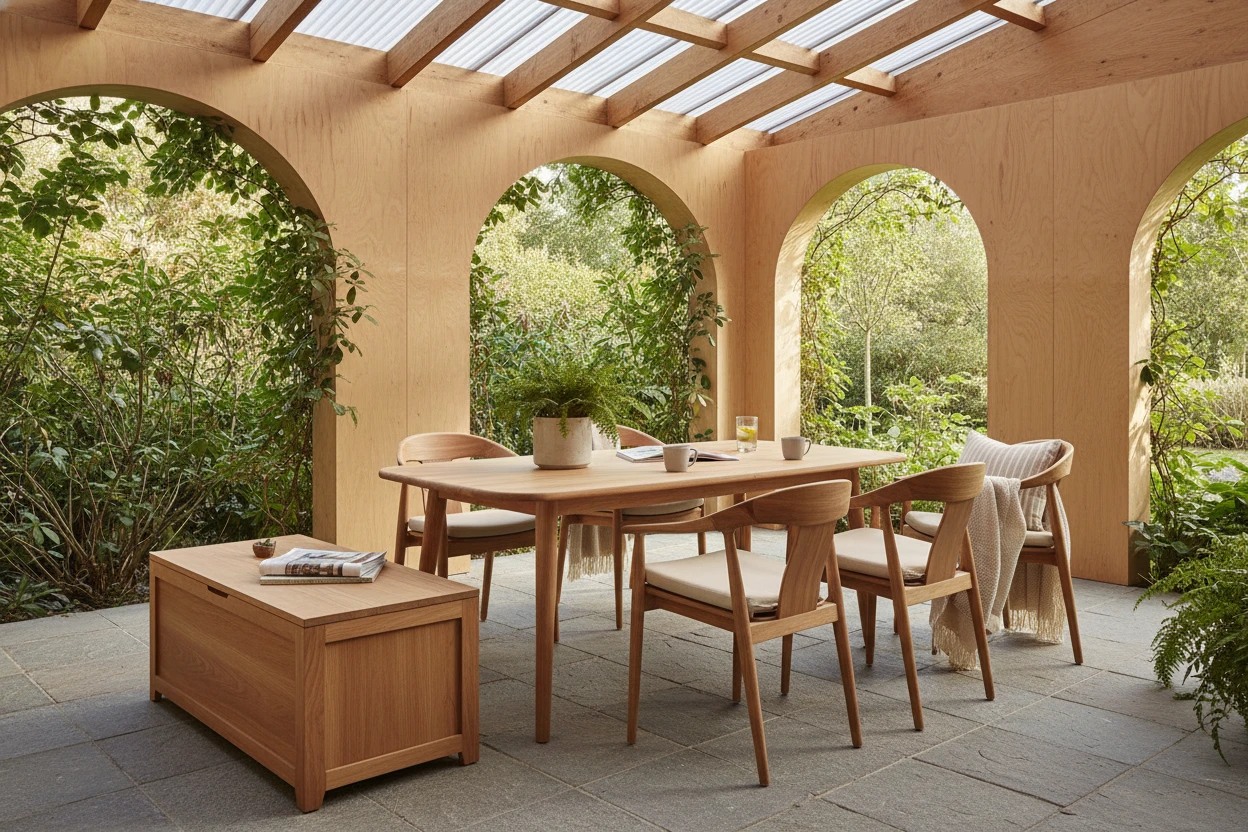
However, birch plywood can perform adequately for outdoor furniture, planters, and decorative elements when properly sealed and maintained. With waterproofing and UV protection, it provides reasonable durability for 3-5 years before significant degradation becomes apparent. After this period, protective coatings require renewal.
For true long-term outdoor performance, specialized exterior plywood, marine plywood, or composite materials outperform waterproofed birch plywood. These alternatives require less maintenance and provide superior longevity.
UV Birch Plywood and UV Resistance
Birch plywood offers minimal UV resistance without specialized treatment. Standard birch plywood’s light color and fine grain deteriorate quickly when exposed to direct sunlight, causing the surface to gray and become rough.
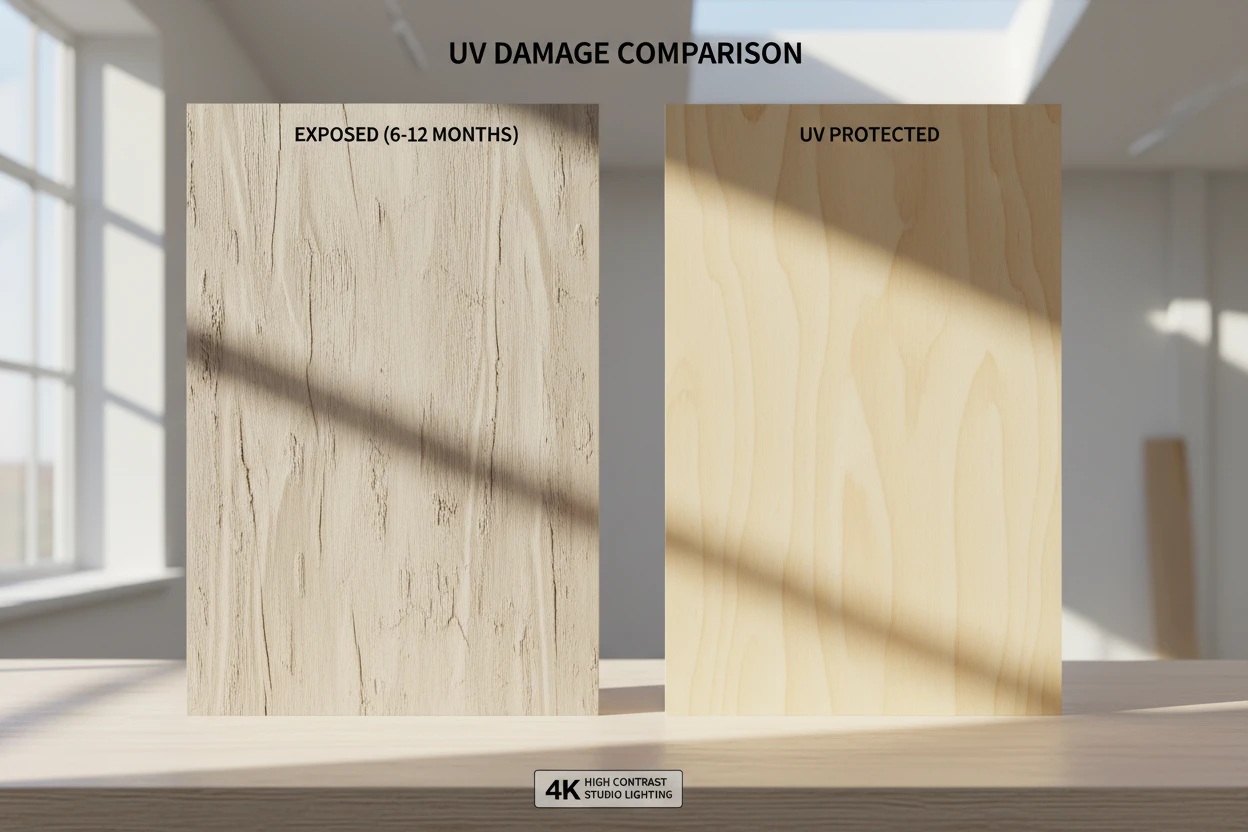
UV-protective sealers and topcoats contain ingredients that absorb or reflect UV radiation, protecting the wood from photodegradation. These products are essential for any outdoor birch plywood application. Combining UV protection with waterproofing creates a comprehensive barrier against both moisture and light damage.
Specialized UV-resistant finishes typically require reapplication every 1-2 years to maintain effectiveness. Annual inspection and maintenance ensure protective coatings remain intact and provide continued UV protection.
Birch Plywood Dimensions and Water Resistance
1 Birch Plywood 4×8 Specifications
The standard 4×8 sheet size is the most common format for birch plywood projects. A 4×8 birch plywood sheet offers approximately 32 square feet of material, making it economical for large-scale applications like cabinetry, shelving, and built-in furniture.
Water resistance of a 4×8 sheet depends entirely on its protective coatings. Unfinished sheets have no water resistance and require immediate protection. The large surface area makes complete waterproofing more time-intensive but equally important for moisture protection.
4×4 Birch Plywood Uses and Water Properties
4×4 birch plywood sheets offer versatility for specialized applications, providing the same material characteristics as larger sheets in a more manageable size. This smaller format works well for decorative panels, accent pieces, and applications where the entire surface will be visible.
Water resistance of 4×4 sheets remains nil without protective coatings, though the smaller surface area may require less sealant material. These sheets work reasonably well for semi-outdoor applications like covered porch décor when properly waterproofed.
7 Ply Birch Plywood Construction and Water Resistance
7-ply birch plywood features seven alternating veneer layers, providing excellent balance between strength and material cost. The 7-ply construction delivers superior stability compared to thinner options, reducing warping and delamination risks—particularly important in moisture-prone environments.
The increased number of layers provides more barrier against water penetration, though protection without sealants remains minimal. 7-ply construction offers the structural integrity necessary for applications requiring strength and durability. When properly waterproofed, 7-ply birch plywood performs reliably in bathrooms, kitchens, and covered outdoor spaces.
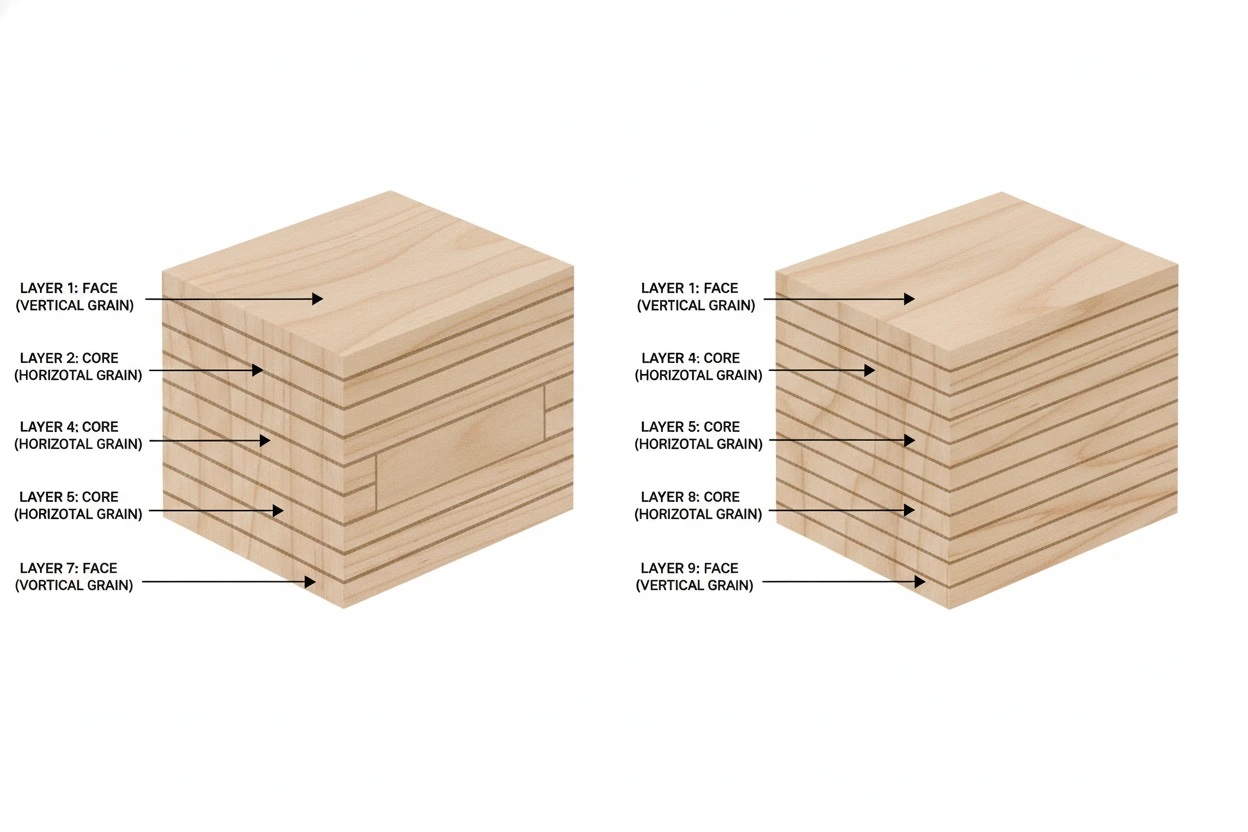
7-ply birch plywood is particularly good for furniture and cabinetry where stability and refined appearance matter equally. The multiple layers minimize warping even when moisture levels fluctuate, essential for drawer-bearing furniture and cabinet doors.
9 Ply Birch Plywood: Maximum Water Resistance
9-ply birch plywood represents the premium option for demanding applications requiring maximum stability and water resistance. The nine alternating layers provide the most comprehensive internal stress distribution, resulting in minimal warping even under temperature and humidity fluctuations.
While 9-ply construction does not eliminate the need for waterproofing, the additional layers provide superior baseline protection against moisture penetration. The denser core and greater number of barriers slow water ingress compared to thinner options.
9-ply birch plywood is ideal for applications where long-term stability and performance are critical priorities. Marine applications, high-moisture cabinetry, and structural shelving benefit significantly from the enhanced durability. The material is more expensive than 7-ply or lower options but justifies the cost through superior performance and longevity.
Baltic Birch Plywood Waterproof Properties
Baltic birch plywood differs from standard birch plywood primarily in construction and veneer quality. Baltic birch typically features 7, 9, or even 13-ply construction using superior-grade veneers and formaldehyde-free adhesives. This results in denser, more stable material with inherently superior water resistance.
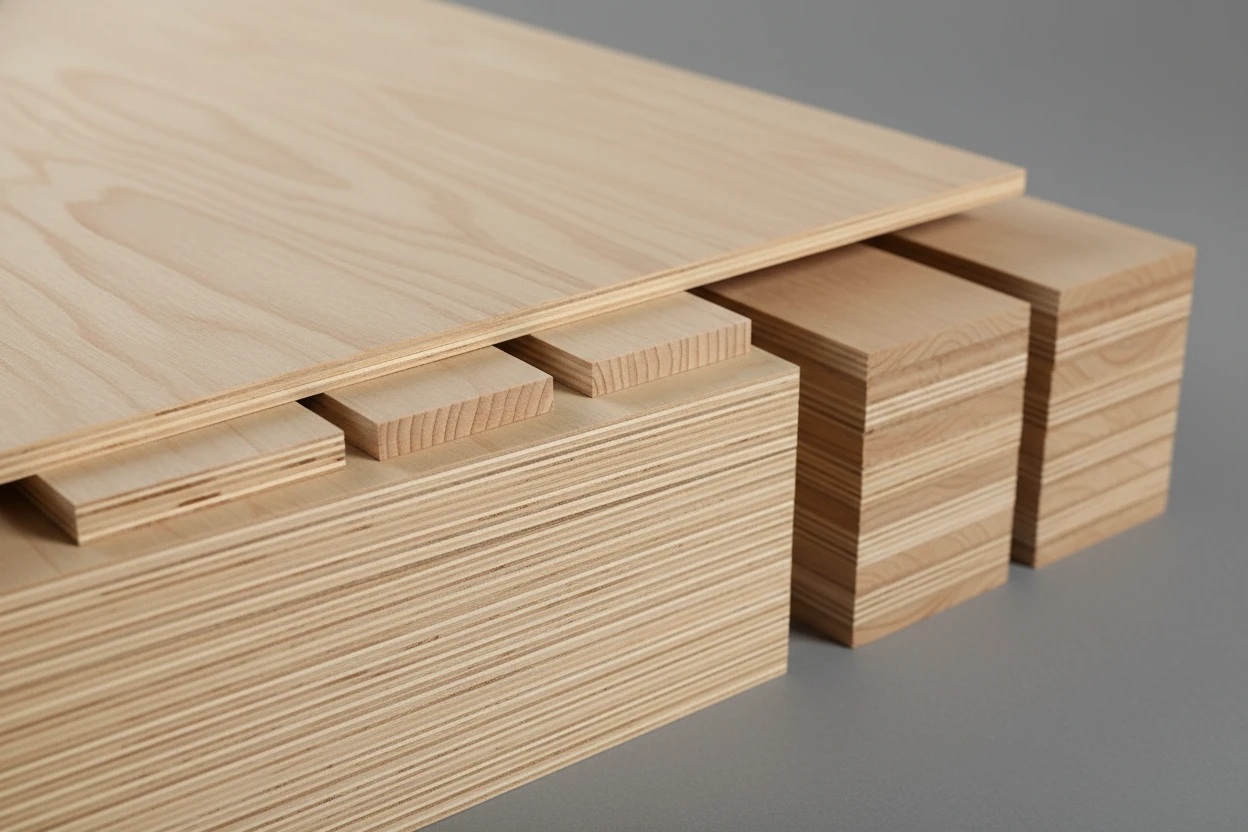
The higher-quality adhesives used in Baltic birch plywood provide moderate water-resistant properties superior to standard birch. However, Baltic birch remains susceptible to water damage and requires waterproofing for moisture-exposed applications.
Baltic birch plywood’s superior construction makes it an excellent choice for cabinetry and furniture applications where performance and appearance matter. For true waterproofing, the same sealant and topcoat approaches apply to Baltic birch as standard birch.
Birch Plywood for Marine Applications
Standard birch plywood is not suitable for marine use. Marine environments combine continuous moisture exposure, salt water corrosion, and constant movement stresses that standard birch plywood cannot withstand.
Specialized marine-grade plywood exists for boatbuilding and marine applications, typically featuring superior adhesives (often epoxy or phenolic), higher-quality veneers, and enhanced water resistance. True marine plywood undergoes specific testing and certification for marine use.
Birch can be used as face veneer in some marine plywood products, though the core and construction differ significantly from standard birch plywood. If marine applications are planned, specify certified marine-grade materials rather than attempting to waterproof standard birch plywood.
Edge protection is absolutely critical for marine applications, as constant water exposure quickly degrades any unprotected edges. Professional marine construction uses multiple edge seals and periodic resealing protocols.
Birch Plywood vs. Other Waterproof Plywood Options
Birch Plywood vs. Marine Plywood
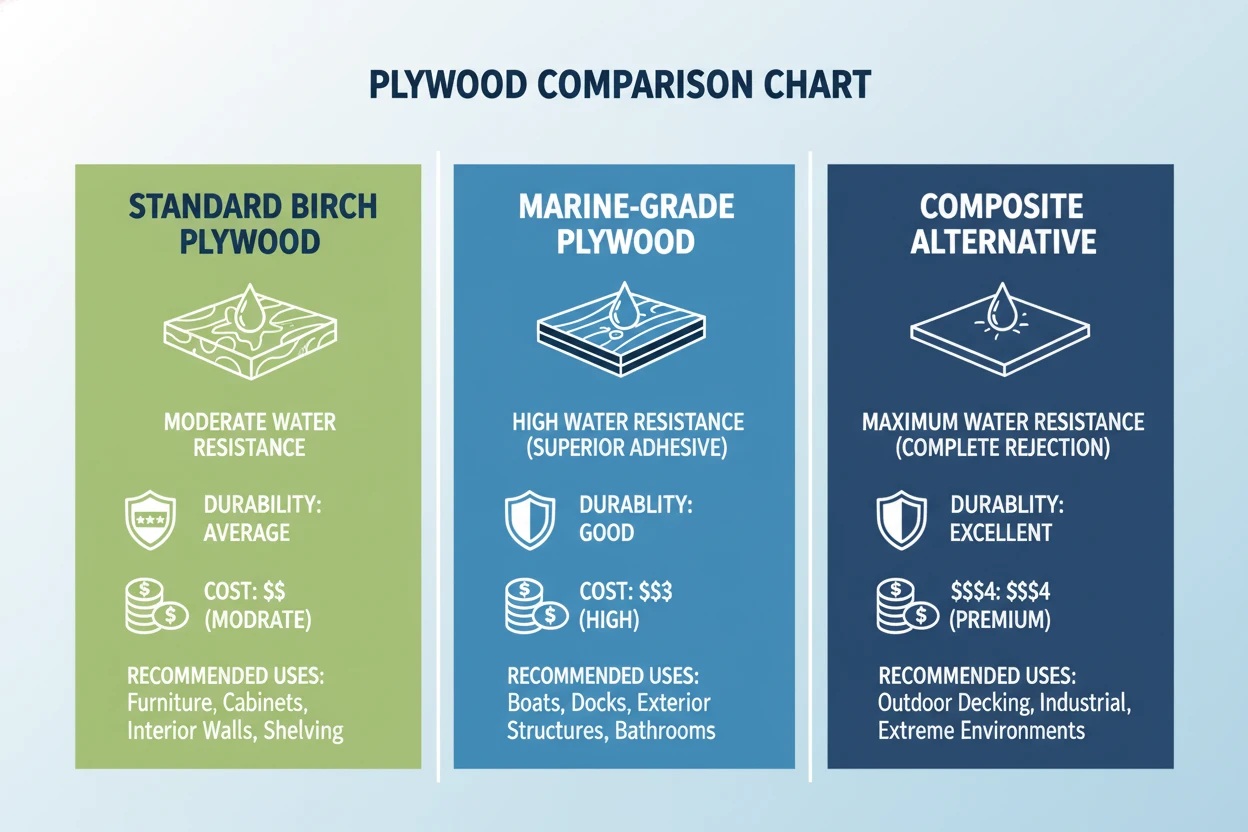
Marine plywood outperforms standard birch plywood dramatically in moisture resistance. Marine plywood uses phenolic or epoxy adhesives that resist water penetration, while standard birch uses urea-formaldehyde adhesives vulnerable to moisture.
Marine plywood costs significantly more than standard birch but provides inherent water resistance without supplemental sealants. For continuous water exposure applications, marine plywood proves more economical over the long term due to superior durability and reduced maintenance.
Birch Plywood vs. Treated Plywood
Chemically treated plywood receives pressure treatment with preservatives that resist rot and fungal growth. This differs from waterproofing, as treatment prevents biological degradation rather than blocking water entry. Treated plywood can still absorb water and warp.
Treated plywood is more suitable for construction applications where rot resistance matters more than water protection. For furniture and cabinetry, untreated birch plywood with waterproofing topcoats provides superior aesthetics.
Birch Plywood vs. Composite Alternatives
Modern composite decking and materials provide genuine waterproof solutions without the maintenance requirements of sealed wood products. These engineered alternatives resist water, UV, and rot completely without refinishing or resealing.
Composites cost more initially but eliminate waterproofing maintenance entirely. For outdoor applications, composites often prove more economical over 10+ year lifespans. For aesthetics where authentic wood appearance matters, waterproofed birch plywood remains preferable despite higher maintenance.
Birch Plywood Water Damage Repair
Minor water damage from brief exposure to moisture may be reversible if addressed promptly. Remove standing water, allow the plywood to dry completely, and inspect for swelling or warping. Light surface damage often disappears as the wood dries.
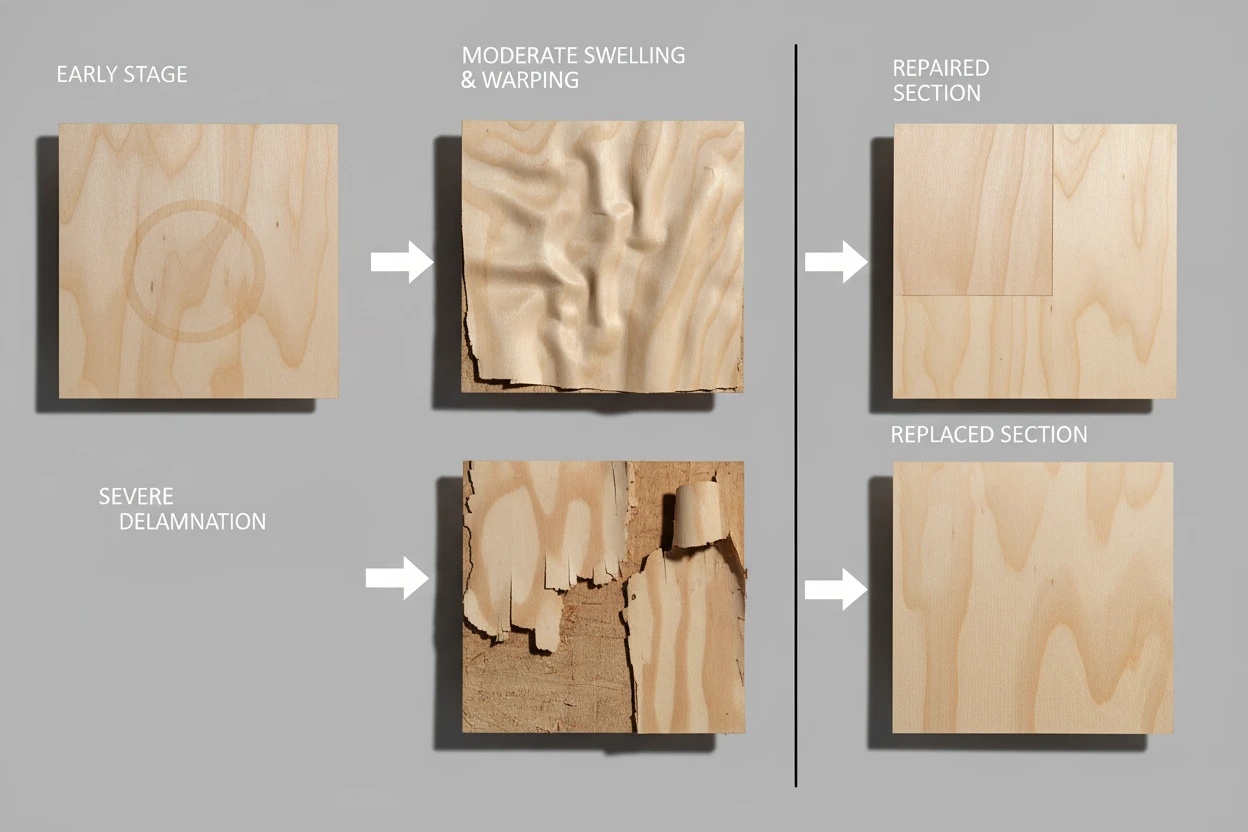
Moderate water damage involving visible swelling or warping typically requires replacement of affected panels. Damaged portions of the veneer may be patched, but structural integrity of the core material often remains compromised even after drying.
Severe water damage causing delamination or rot requires complete replacement. Water-saturated plywood cannot be salvaged and will continue deteriorating, risking structural failure. Prevention through proper waterproofing is far more economical than attempting repairs after damage occurs.
Birch Plywood Storage and Moisture Management
Proper storage prevents water damage before the plywood even reaches your project. Store birch plywood in a dry, climate-controlled environment with relative humidity between 30-50%. Extreme humidity or temperature fluctuations cause the material to absorb or release moisture, resulting in warping and dimensional instability.
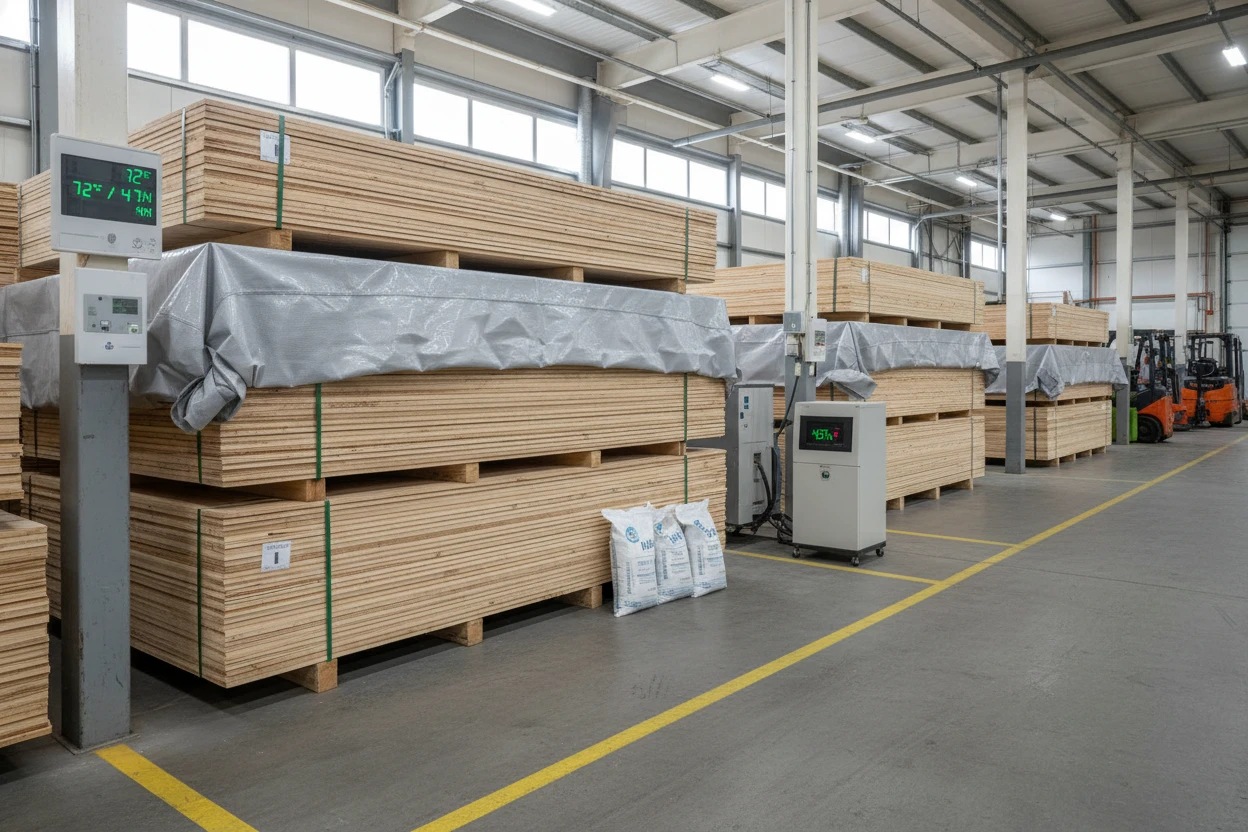
Protect stored plywood from direct contact with floors using pallets or strapping. Allow air circulation around all sides to prevent moisture accumulation. Keep storage areas away from water sources, including roofs that may leak or areas prone to flooding.
Inspect stored plywood regularly for signs of moisture damage. Cover stacks with breathable tarps that allow air circulation while preventing direct water contact. These storage practices ensure the material remains flat and stable when you’re ready for installation.
Is Birch Plywood Good Overall?
Birch plywood is an excellent material for many applications, particularly interior furniture, cabinetry, and shelving. Its combination of strength, workability, and appearance makes it a popular choice among professionals and DIY enthusiasts.
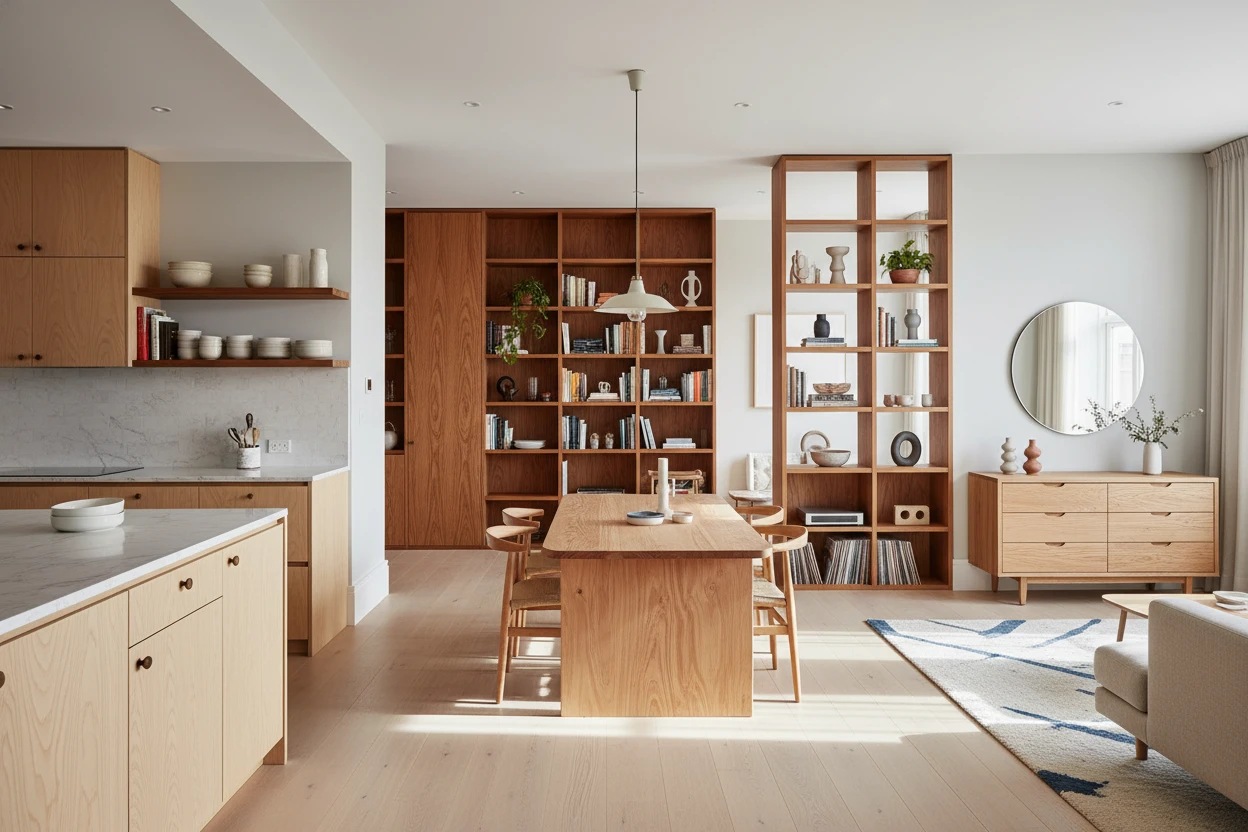
However, birch plywood’s limitations in moisture resistance prevent its use in wet environments without significant waterproofing. Understanding where birch plywood excels and where limitations exist ensures you select the right material for your specific application.
For indoor applications with controlled moisture, birch plywood offers outstanding value. For wet or outdoor environments, specialized alternatives provide better long-term performance. For design inspiration and furniture applications, explore our birch plywood furniture ideas.
Is Birch Plywood Toxic?
Standard birch plywood is not toxic when properly finished and used as intended. However, some formulations may contain formaldehyde in the adhesives used to bond veneers, which can off-gas over time.
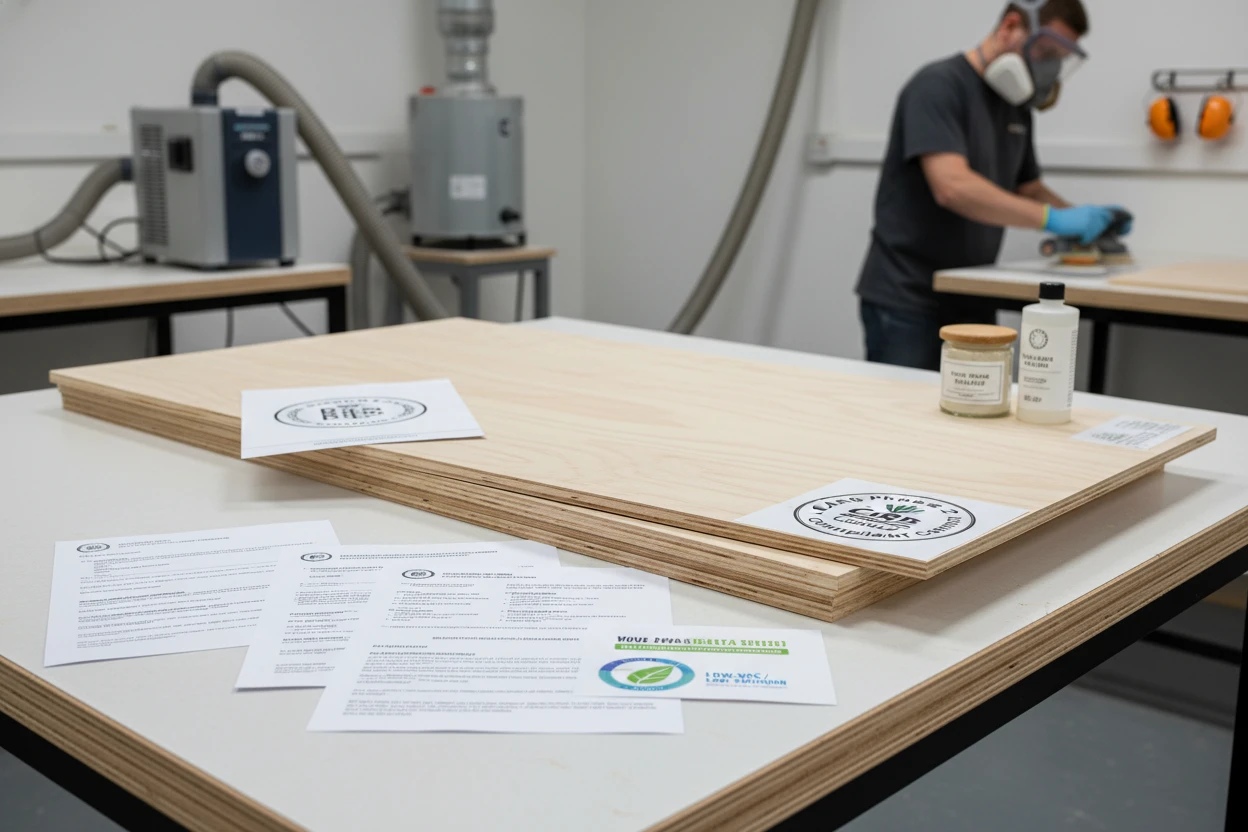
Look for CARB Phase 2 compliant or low-emitting certified birch plywood if formaldehyde concerns exist. These products meet stringent emission standards and are safe for residential use. Proper finishing also seals the surface, preventing any off-gassing.
For food-contact applications like cutting boards or kitchen islands, use food-grade sealers and finishes specifically formulated for eating surface contact. These products contain no toxic compounds and maintain their safety characteristics when properly applied and maintained.
Kosemex Birch Plywood for Water-Resistant Applications
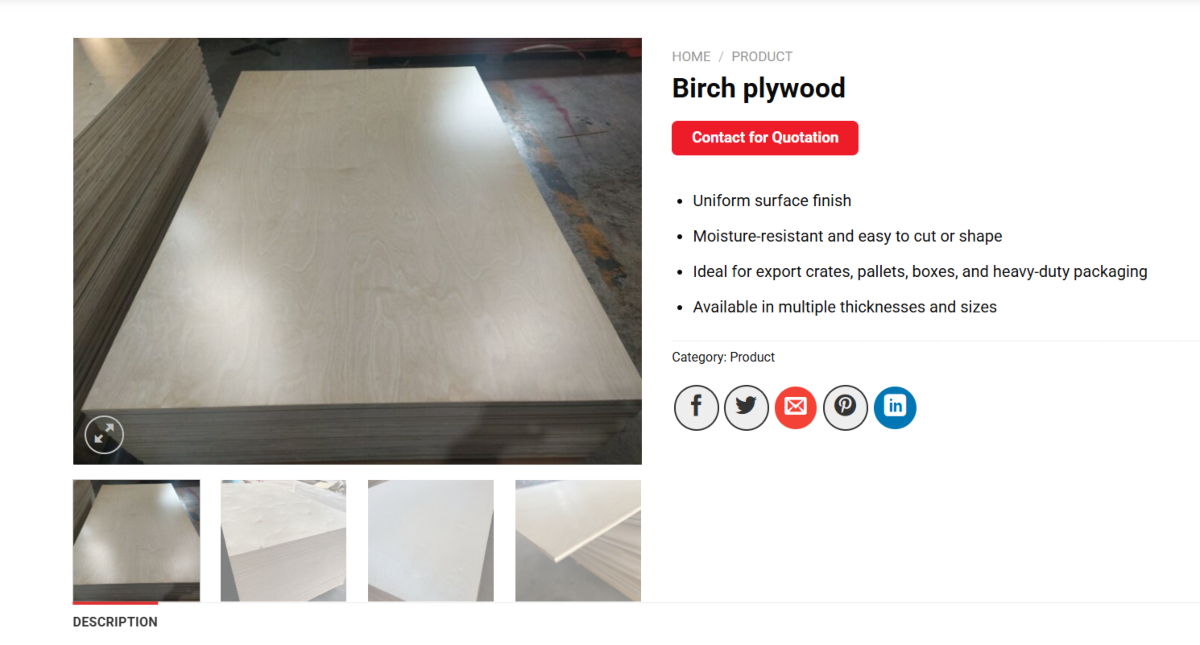
Kosemex birch plywood is manufactured in Vietnam using responsibly sourced materials and modern production technology. Available in multiple grades and thicknesses, Kosemex plywood meets international quality standards and offers reliable performance for diverse applications.
Kosemex birch plywood products are suitable for interior furniture, cabinetry, shelving, and semi-protected outdoor applications when properly waterproofed. The smooth surface and consistent quality facilitate waterproofing, as sealants apply evenly without surface imperfections causing coverage issues.
For projects requiring specific moisture resistance or waterproofing guidance, contact the Kosemex team to discuss your application requirements. Review certified test reports and quality certificates to verify compliance with international standards. Visit their product catalogue to explore available options and contact them for sourcing assistance.
Is Birch Plywood Waterproof? FAQs
How Long Can Birch Plywood Be Exposed to Water?
Brief exposure (minutes to hours) to splashes or light moisture causes minimal damage, especially if wiped away promptly. However, sustained exposure lasting hours or days allows water to penetrate the veneer and begin swelling the core. Continuous water submersion causes irreversible damage within days, including delamination and structural failure.
What is the Best Way to Waterproof Birch Plywood?
The most effective approach combines multiple protection layers: thoroughly sand the surface, apply edge sealer to all exposed edges first, apply 2-3 coats of marine-grade polyurethane topcoat, sand between coats, and allow adequate curing time. Reapply protective coatings annually in high-moisture environments. Epoxy resin provides maximum protection for critical marine applications.
Can You Use Birch Plywood in a Bathroom?
Yes, with proper waterproofing. Bathrooms present high-humidity but not continuous-water-contact environments. Waterproof birch plywood cabinetry, shelving, and flooring (not in direct shower spray zones) performs acceptably when sealed with marine-grade polyurethane. Annual inspection ensures protective coatings remain intact. For long-term durability, marine-grade or moisture-resistant plywood alternatives perform better.
Is Marine-Grade Birch Plywood Better Than Standard Birch?
Marine-grade is significantly superior for water exposure. Marine formulations use phenolic or epoxy adhesives that resist moisture penetration, while standard birch uses water-vulnerable urea-formaldehyde. Birch veneers may appear in marine-grade products, but the entire construction differs. True marine plywood costs more but provides inherent water resistance.
What’s the Difference Between Water-Resistant and Waterproof Birch Plywood?
Water-resistant materials tolerate brief moisture exposure without immediate damage. Standard birch plywood exhibits moderate water resistance, handling splashes and brief humidity without permanent damage. Waterproof materials prevent water penetration entirely. True waterproofing requires sealant application; no unfinished birch plywood is waterproof.
Can Waterproofed Birch Plywood Be Used Outdoors?
Waterproofed birch plywood works for covered outdoor spaces (porches, pavilions, pergolas) where it receives some weather protection. Direct sun exposure requires additional UV protection alongside waterproofing. Maintenance (resealing annually) is essential. For fully exposed outdoor applications, marine plywood or composite materials provide superior durability with less maintenance.
How Often Should You Reseal Waterproofed Birch Plywood?
Inspection frequency depends on environment. Interior applications may require resealing every 2-3 years, while high-humidity bathrooms need annual inspection. Covered outdoor applications require annual resealing. Signs of degradation (coating flaking, watermarks, swelling) indicate immediate resealing is needed. Regular maintenance extends plywood lifespan significantly.
Is Birch Plywood Suitable for Pool Decks or Wet Areas?
No, birch plywood is not recommended for pool decks or continuously wet areas. These applications involve saturation beyond birch plywood’s capability, even with waterproofing. The combination of constant moisture, chlorine (in pools), and foot traffic deteriorates waterproofing too quickly. Specialized pool decking materials or composite alternatives provide proper performance in these demanding environments.
Conclusion
Birch plywood is not naturally waterproof, but it can be effectively waterproofed using proper sealants and topcoats. Understanding this distinction is crucial for material selection and application planning.
For interior applications with controlled moisture, birch plywood delivers excellent performance and value. For moisture-exposed environments, waterproofing is essential but requires ongoing maintenance. For truly demanding wet or outdoor applications, specialized marine or composite alternatives provide superior durability.
The key to successful birch plywood use lies in matching the material and protection method to your specific application requirements. Interior furniture and cabinetry showcase birch plywood’s strengths perfectly. Semi-protected outdoor applications work acceptably with robust waterproofing. Continuously wet or fully exposed outdoor applications justify investment in purpose-built alternatives.
For comprehensive understanding of birch plywood properties, grades, and applications, explore our complete birch plywood guide and detailed grades explanation. For finishing and waterproofing techniques, see our how to finish birch plywood guide.
To source quality birch plywood suitable for your moisture requirements, visit Kosemex Group or explore their product selection.
Bình luận