


How to Finish Birch Plywood: Complete Guide to Staining, Painting, and Sealing
Proper finishing transforms birch plywood from a functional material into a beautiful, durable furniture component. Whether you are creating custom furniture, building cabinetry, or completing a DIY project, understanding the right finishing techniques ensures professional results and long-lasting protection.
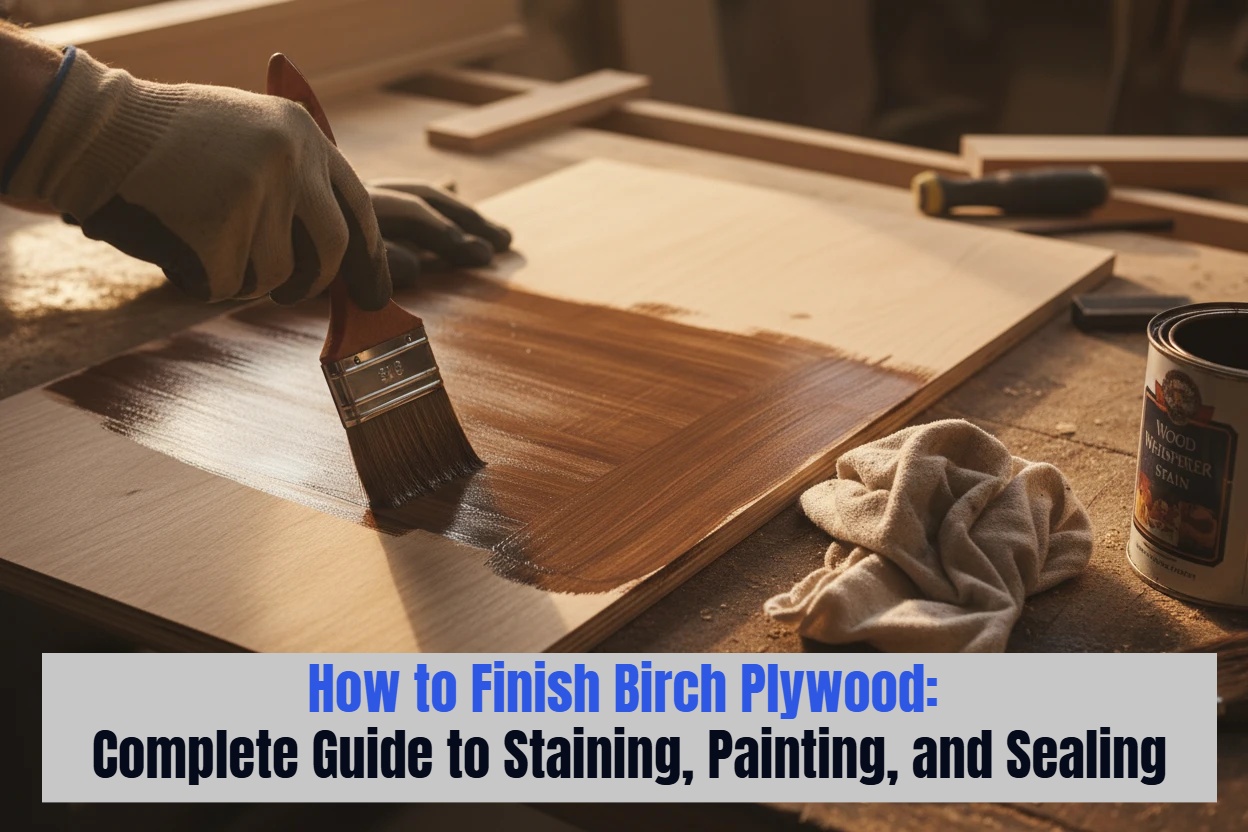
Birch plywood is an excellent choice for finishing projects because of its smooth surface and consistent grain pattern. However, achieving the best results requires knowledge of sanding, staining, painting, and sealing methods. This comprehensive guide walks you through every step of the finishing process, from initial surface preparation to final topcoat application.
Why Finishing Birch Plywood Matters
Finishing birch plywood serves multiple critical purposes. It protects the wood from moisture, prevents warping and delamination, and significantly extends the material’s lifespan. A quality finish also enhances aesthetic appeal, transforming plain plywood into elegant furniture that rivals solid wood alternatives.

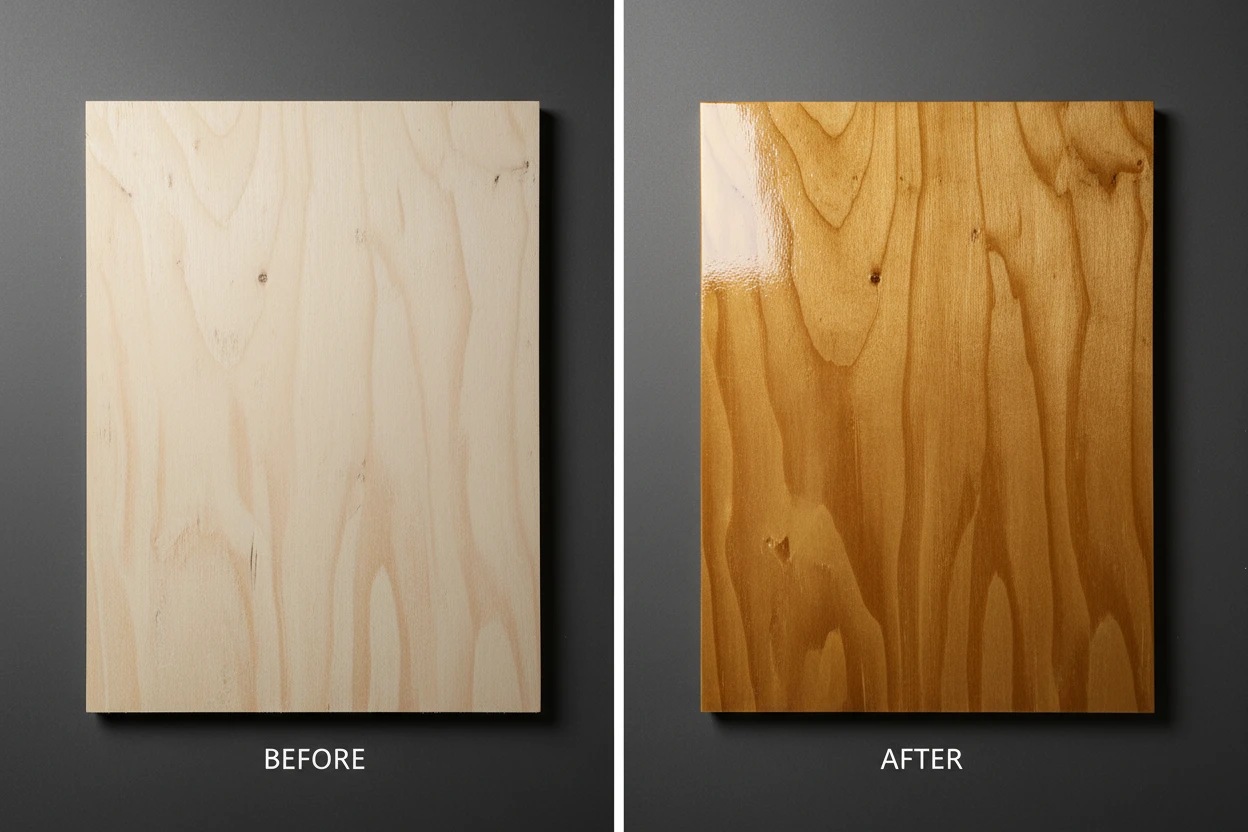
Without proper finishing, birch plywood edges remain vulnerable to moisture infiltration, which can cause the veneer to separate from the core. A protective topcoat prevents this damage while creating a professional appearance suitable for visible furniture surfaces, cabinetry, and interior applications.
For a broader understanding of birch plywood properties and applications, explore our complete birch plywood guide. You can also see practical finishing examples in our birch plywood furniture ideas article.
How to Sand Birch Plywood
Surface preparation is the foundation of any successful finishing project. Proper sanding removes dust, imperfections, and old finishes, creating a smooth surface that accepts stain and paint evenly.
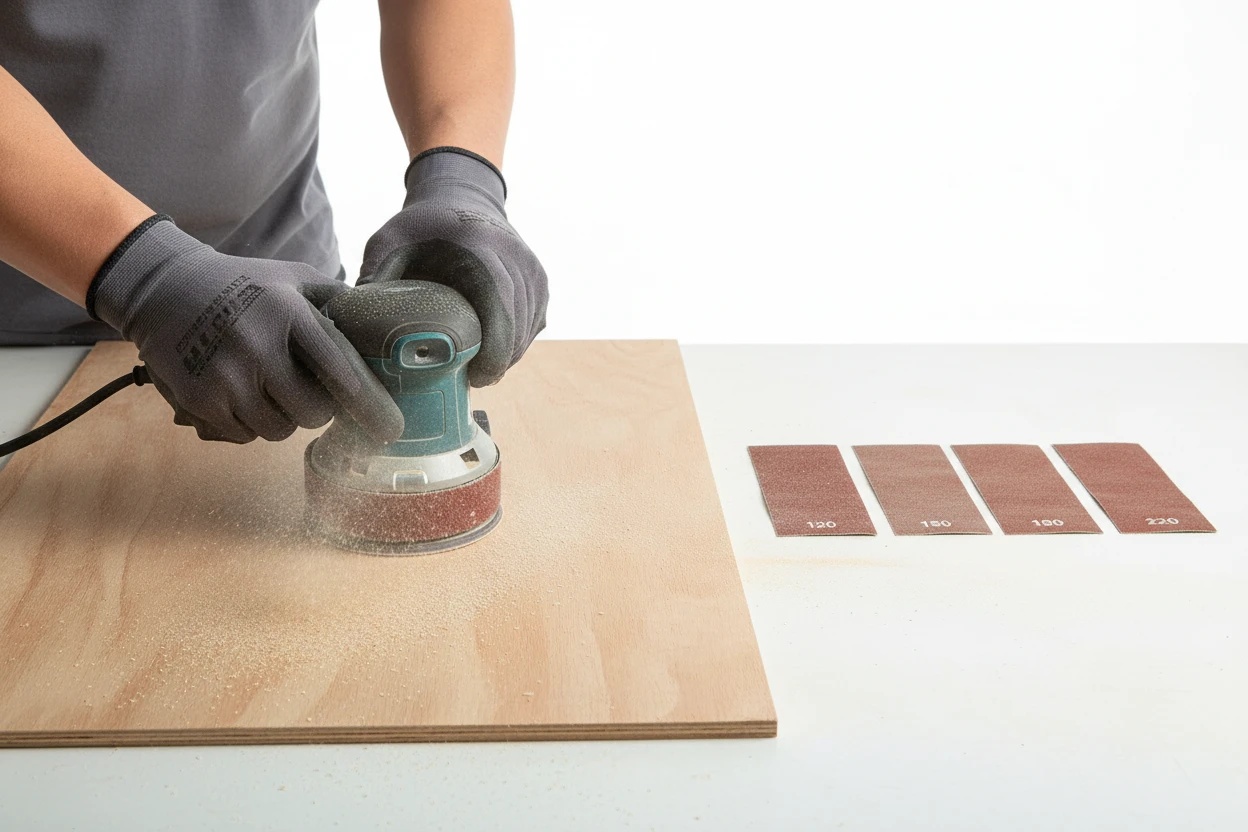
Start with 120-grit sandpaper for the initial sanding, progressing to 150-grit, then 180-grit for smoothing, and finally 220-grit for the final finish-ready surface. Use an orbital sander for flat surfaces and hand-sand edges and corners carefully to avoid over-sanding and creating divots.
Sand in the direction of the grain whenever possible, and always sand between coats of finish to improve adhesion. After sanding, remove all dust with a tack cloth before applying stain or paint to prevent particles from embedding in the finish.
How to Cut Birch Plywood Without Splintering
Splintering during cutting affects the final appearance of your finished project. Use fine-toothed saw blades with at least 60 teeth for circular saws and 80 teeth for table saws to minimize splintering on both sides of the cut.
Support the plywood properly during cutting to prevent vibration, which causes tearout. Make shallow cuts when possible and consider using painter’s tape along cut lines to protect edges. After cutting, lightly sand cut edges with 150-220 grit paper to remove splinters before applying finish.
How to Stain Birch Plywood
Staining is one of the most popular finishing methods for birch plywood because it enhances the wood’s natural grain while allowing the material to remain visible. Birch plywood accepts stain beautifully due to its smooth, uniform surface.
Prepare the surface thoroughly by sanding to 150-180 grit and removing all dust. Apply stain with a brush, rag, or sprayer, working in small sections to ensure even coverage. Allow the stain to penetrate for the recommended time (typically 5-15 minutes), then wipe away excess with a clean cloth. Multiple thin coats provide deeper color than single thick applications. After staining, allow the wood to dry completely before applying a protective topcoat.
Birch Plywood Stain Colors
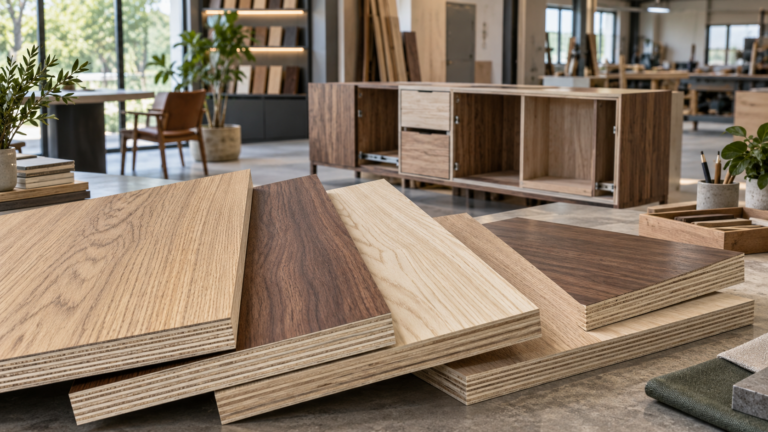
Popular stain colors for birch plywood include natural tones like golden oak and honey, medium shades like cherry and walnut, and dark finishes like espresso and ebony. Birch’s fine grain accepts all stain colors beautifully, and the light underlying color allows stains to display their true hue.
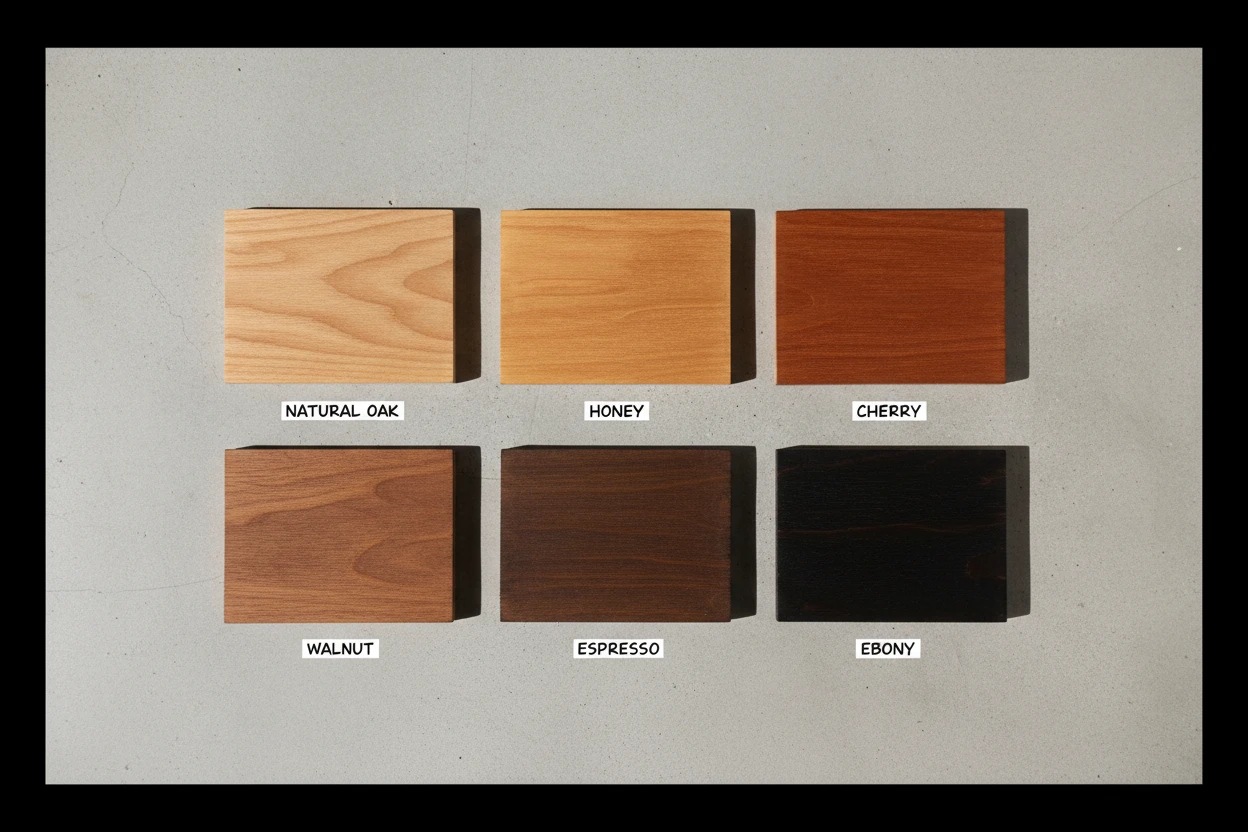
When selecting stain color, consider your existing interior design and furniture. Test stain samples on a scrap piece of birch plywood before committing to a full project, as stain color can appear different on various wood types. Light colors enhance the natural birch appearance, while darker stains create sophisticated, elegant pieces suitable for formal furniture.
Birch Plywood Stained Walnut
Walnut stain on birch plywood creates a rich, sophisticated appearance that rivals authentic walnut wood at a fraction of the cost. The warm brown tone of walnut stain complements birch’s light color beautifully, resulting in elegant furniture suitable for any interior style.
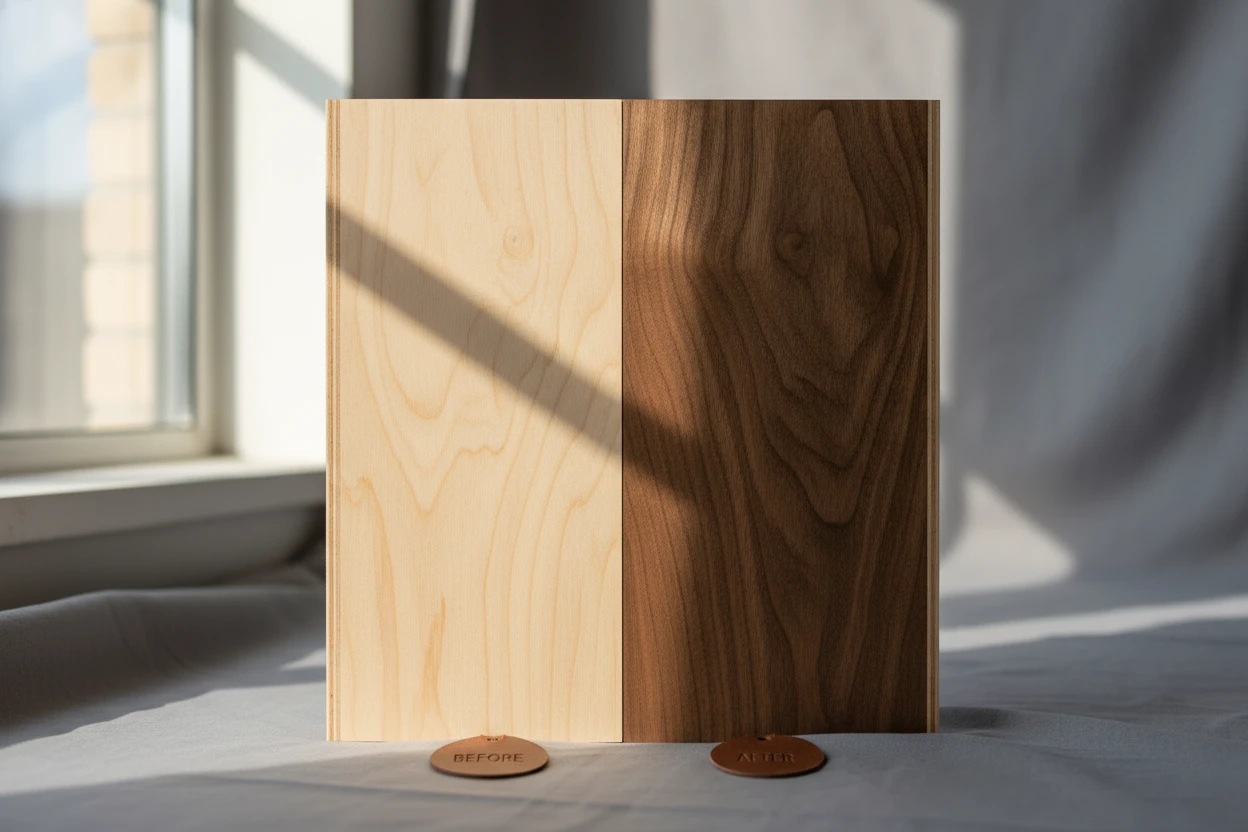
Apply walnut stain in thin, even coats, working methodically to avoid color variations. Two to three coats typically create the desired depth and richness. Walnut-stained birch plywood furniture pairs well with natural varnish topcoats that enhance the warm undertones and grain visibility.
How to Paint Birch Plywood
Painting birch plywood allows maximum creative freedom with color selection while providing excellent protection. The smooth surface of birch plywood accepts paint beautifully, creating a professional finish without visible grain or texture.
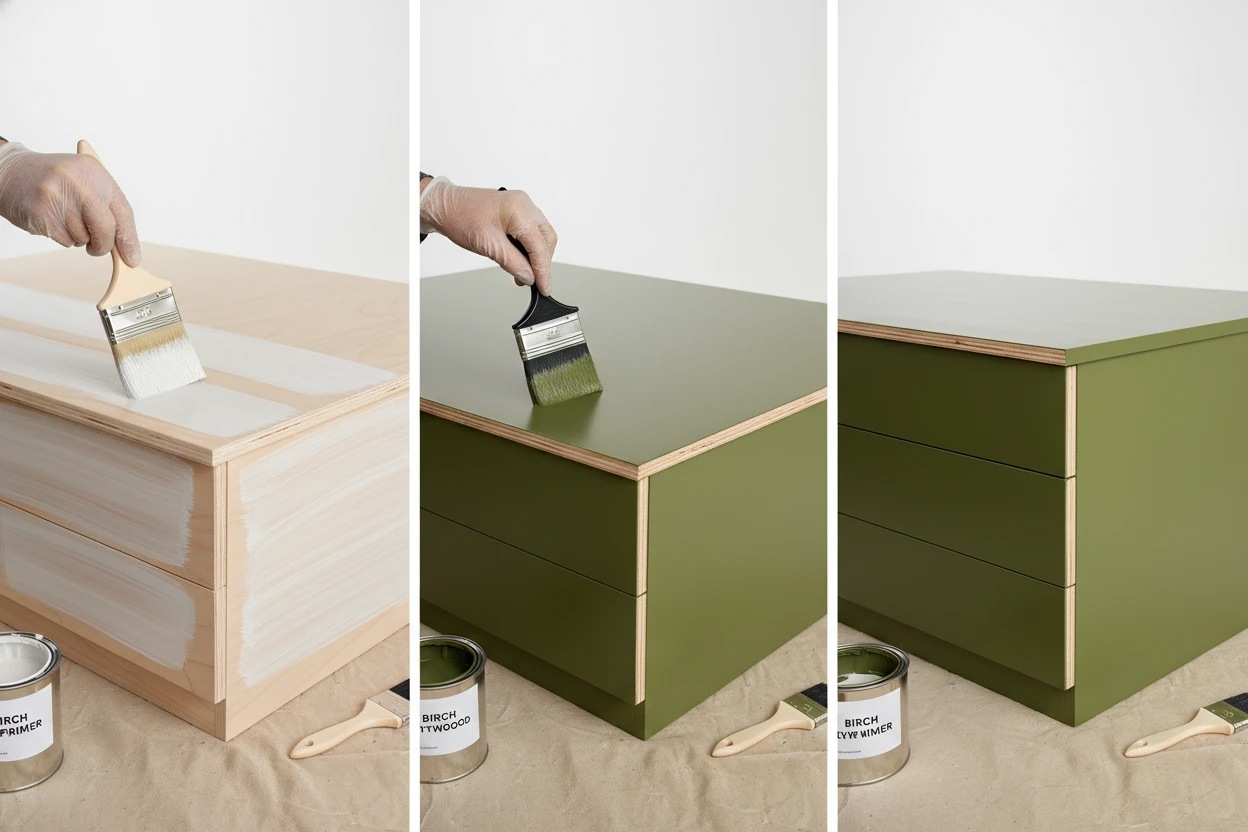
Prepare the surface by sanding to 150-grit and applying a quality primer designed for plywood. Primer ensures proper paint adhesion and prevents bleed-through of underlying stains. Apply paint in thin, even coats using a brush, roller, or sprayer, allowing adequate drying time between coats. Two to three paint coats typically provide complete coverage and durability for furniture applications.
How to Seal Birch Plywood
Sealing protects birch plywood from moisture, dust, and damage while enhancing its appearance. Polyurethane is the most popular sealant choice, available in water-based and oil-based formulations. Water-based polyurethane dries quickly and produces less odor, while oil-based polyurethane provides a warmer appearance and slightly greater durability.
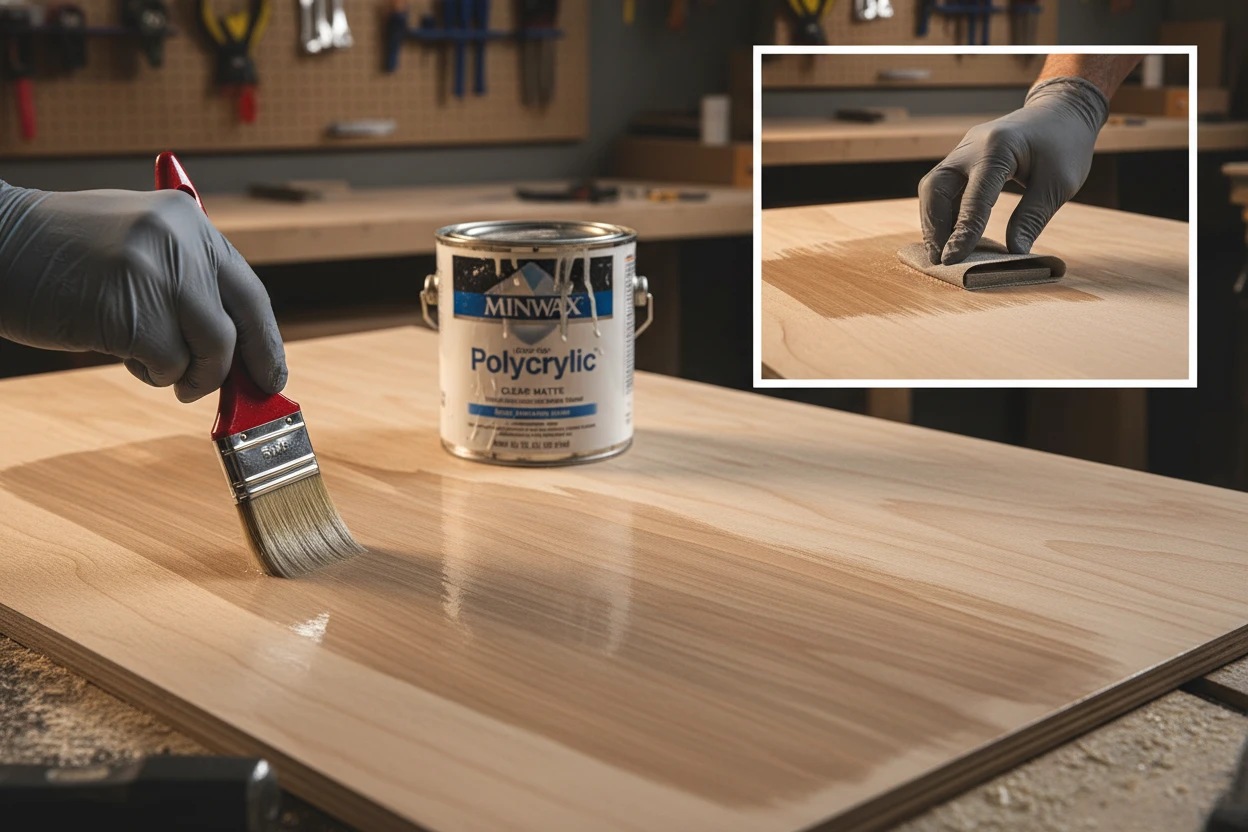
Apply polyurethane with a brush or sprayer, following manufacturer recommendations for drying time between coats. Sand lightly between coats with 220-grit paper to improve adhesion. Matte and satin finishes are popular for modern furniture, while gloss finishes create a more formal appearance. For food-contact surfaces like cutting boards or kitchen islands, use food-safe sealers specifically formulated for edible contact.
Prefinished and Finished Birch Plywood
Prefinished birch plywood offers significant advantages for time-sensitive projects. Factory-applied finishes provide consistent quality and eliminate onsite finishing work, allowing rapid project completion. Manufacturers offer prefinished plywood in various grades and colors, as detailed in our birch plywood grades guide.
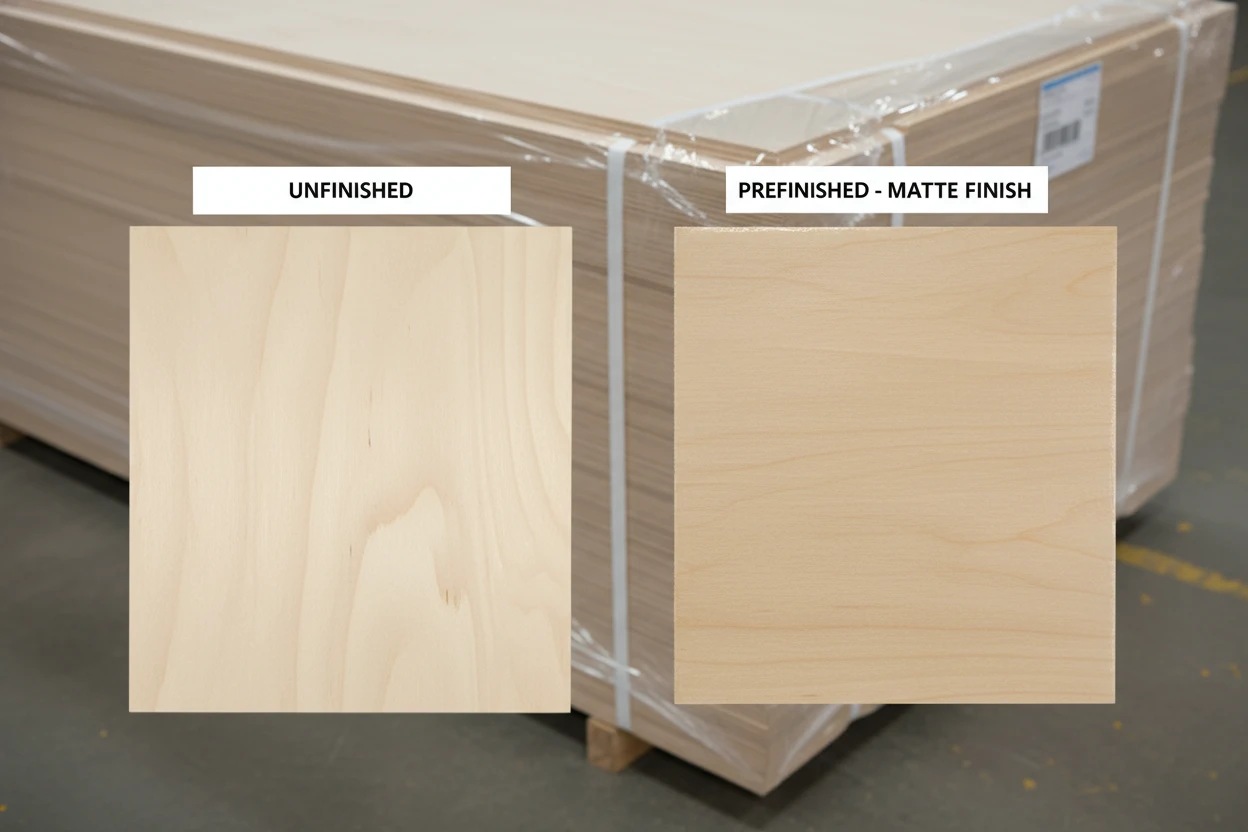
Unfinished birch plywood provides greater customization flexibility, allowing you to select specific stain colors and finish types. For custom furniture and specialized applications, unfinished plywood gives you complete control over the final appearance and protection level.
Birch Plywood Finishing Techniques
Professional finishing combines proper techniques with quality materials. Maintain adequate ventilation throughout the finishing process to remove fumes and prevent finish defects. Temperature and humidity significantly affect finish performance, so avoid finishing in cold or overly humid environments.
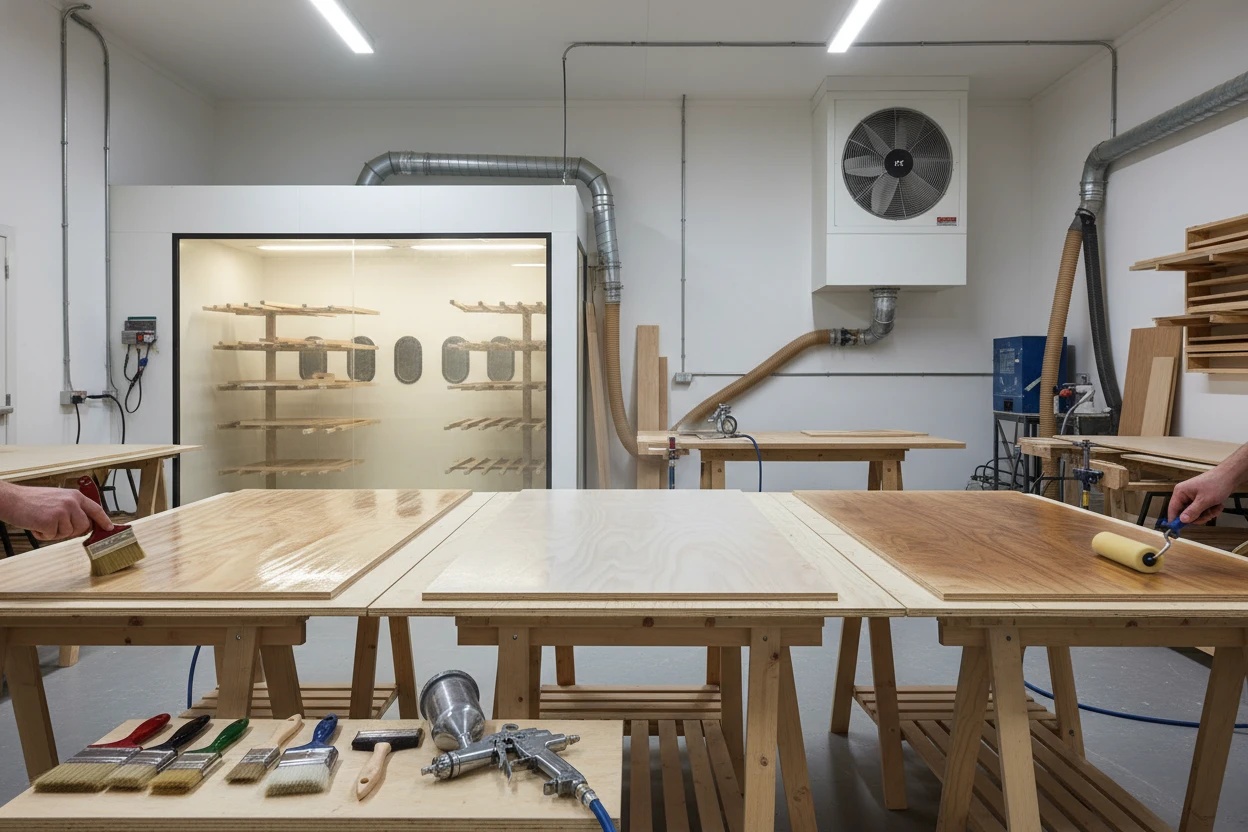
Invest in quality brushes and tools to prevent bristle loss and ensure smooth application. If spray-finishing, use a proper spray booth or well-ventilated area to minimize overspray and achieve professional results. Allow adequate drying and curing time between coats, as rushing this process compromises finish durability. Most polyurethane finishes cure to full hardness within 7-14 days.
Best Finishing Methods for Different Applications
Furniture finishing prioritizes durability and aesthetics. B/BB grade birch plywood accepts both stain and paint beautifully. Stained finishes showcase the wood’s natural character, while painted finishes offer limitless color possibilities. See our birch plywood furniture ideas for design inspiration and finishing examples.
Natural finishes enhance birch plywood’s inherent beauty by applying clear topcoats that allow the wood grain to remain visible. Matte lacquer or natural varnish both work well, creating a sophisticated Scandinavian or modern aesthetic. For readers planning a compact workstation or home office project, DeskFinds offers practical desk setup ideas and small-space workspace product guides that can complement birch plywood furniture designs.
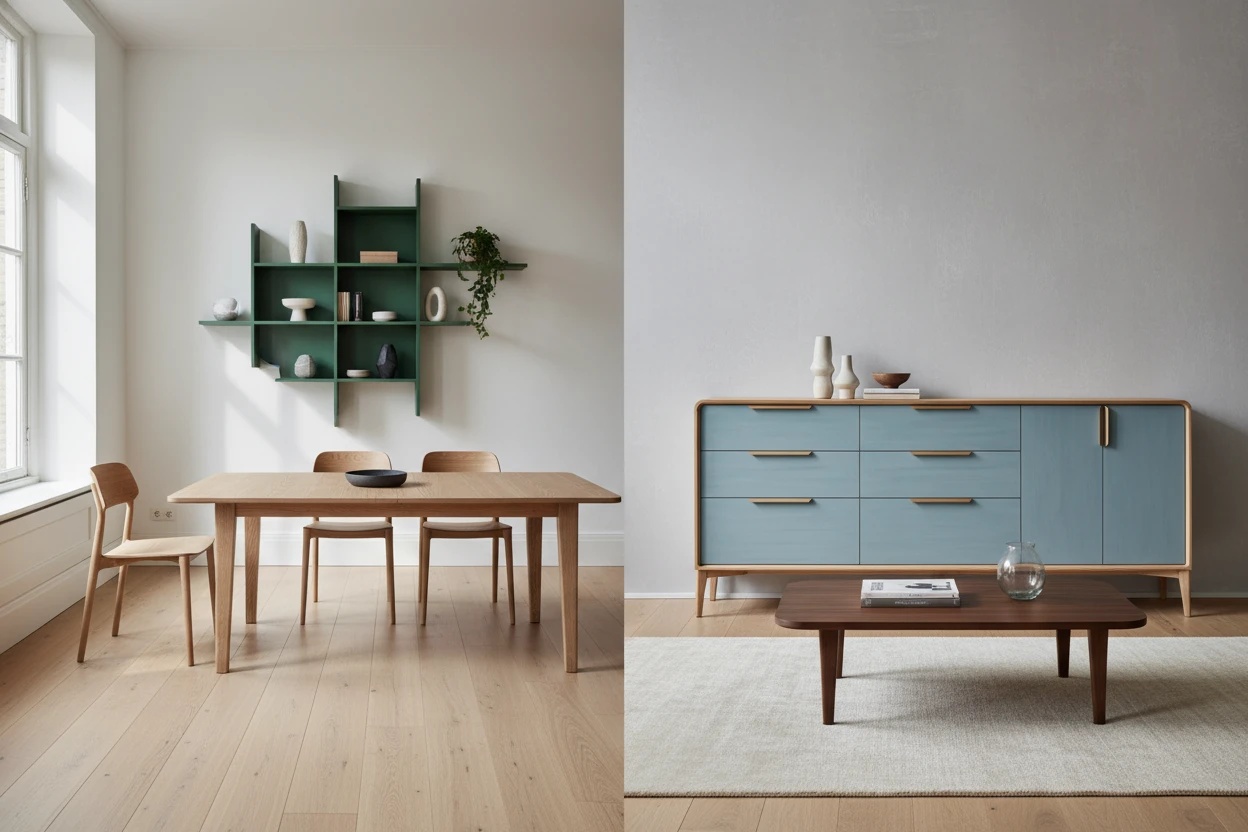
Cabinet finishing requires moisture-resistant topcoats in kitchen and bathroom applications. Polyurethane or lacquer finishes protect cabinetry from humidity and water splashes while maintaining a beautiful appearance. Once your custom cabinetry is finished and installed, WorthRated’s easy-to-use kitchen appliance guides can help you pick reliable, straightforward appliances to complete the space. Shelving applications prioritize surface durability to resist dust and impact. Matte or satin finishes work well for shelves, as they hide dust better than glossy finishes.
Natural finishes enhance birch plywood’s inherent beauty by applying clear topcoats that allow the wood grain to remain visible. Matte lacquer or natural varnish both work well, creating a sophisticated Scandinavian or modern aesthetic.
Common Finishing Problems and Solutions
Uneven stain color typically results from insufficient surface sanding or moisture variation in the wood. Sand more thoroughly before staining, ensure consistent stain application, and consider wood conditioner to equalize absorption.
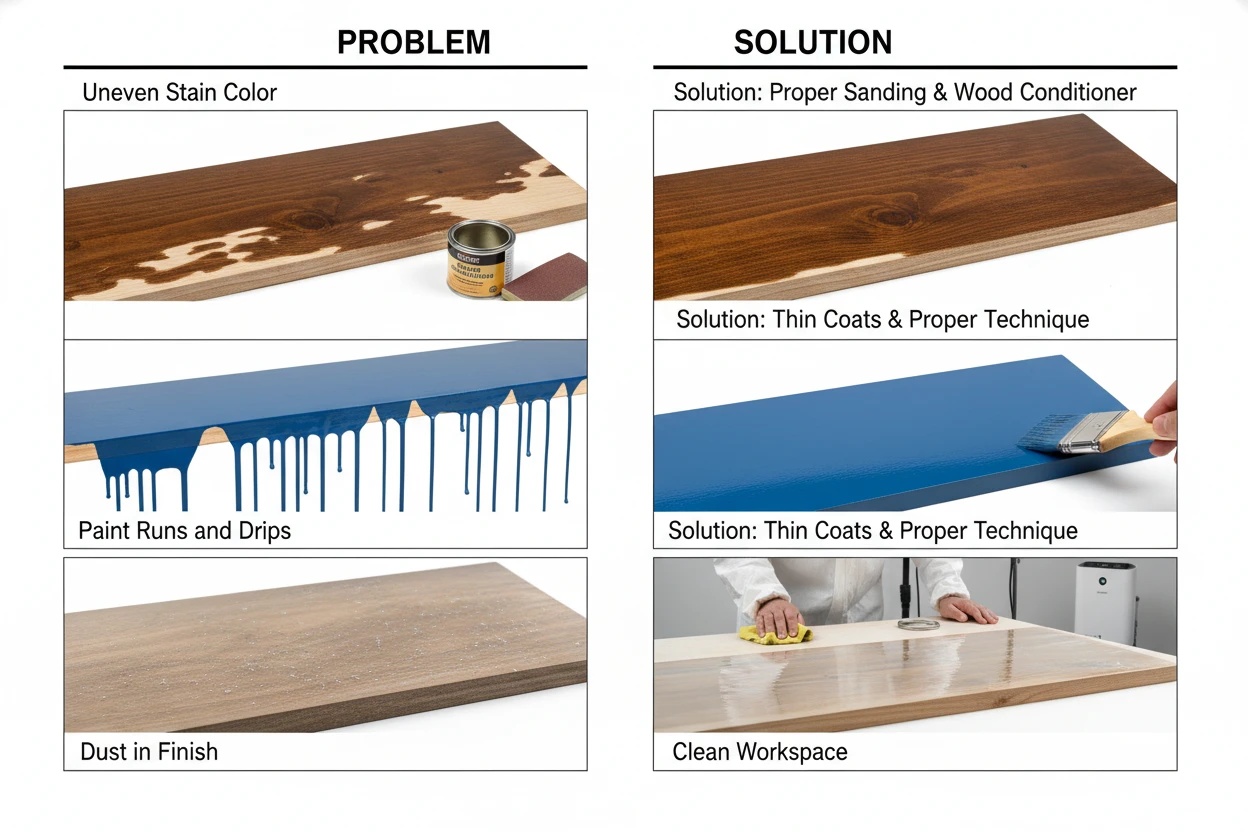
Paint runs and drips occur from applying paint too thickly. Use thin coats instead, which dry more evenly and create smoother surfaces. Dust in finish happens when finishing in dusty environments. Tack cloth the surface thoroughly and finish in clean, dust-free spaces.
Kosemex Birch Plywood for Finishing Projects
Kosemex birch plywood is manufactured in Vietnam using high-quality materials and strict quality control standards. The smooth, consistent surface of Kosemex plywood is ideal for finishing, accepting stain, paint, and topcoats beautifully without surface imperfections or defects.
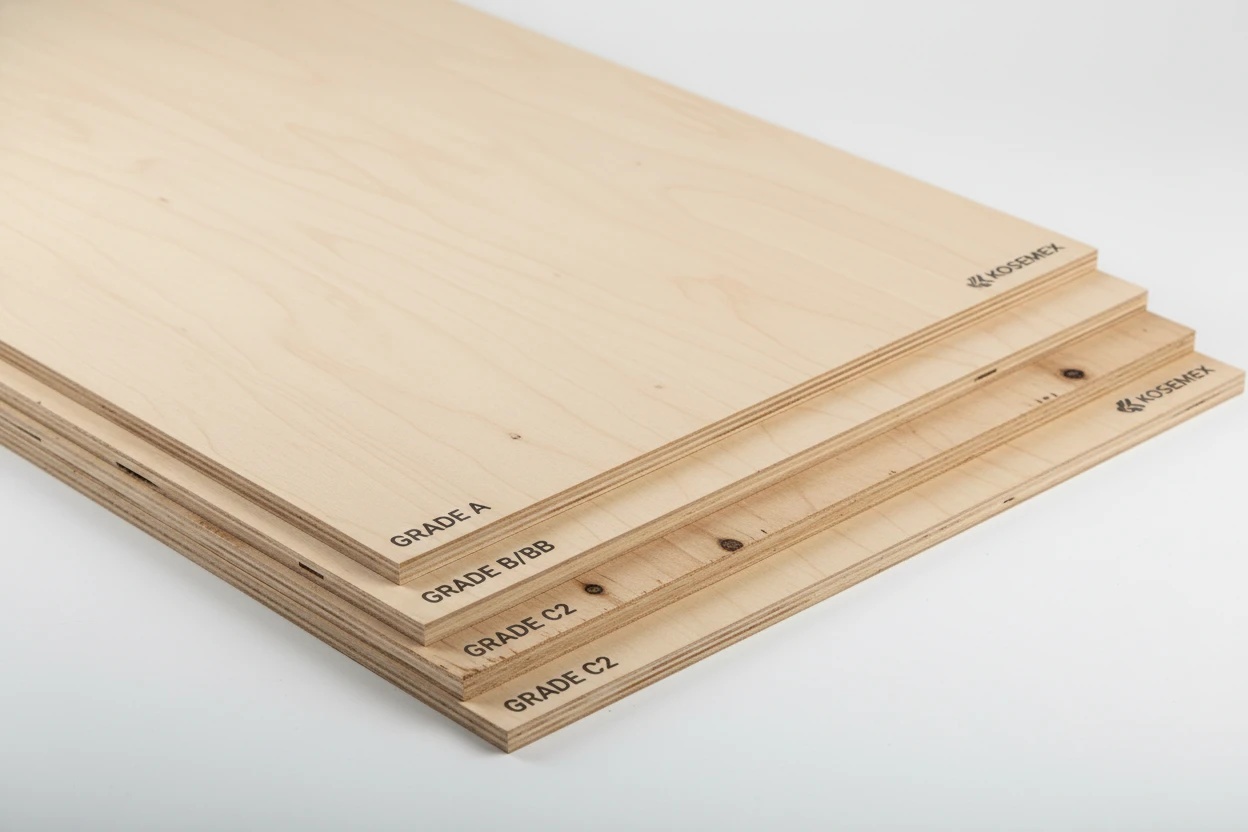
Available in multiple grades (A, B/BB, C2) with low formaldehyde emissions, Kosemex birch plywood provides reliable materials for professional and DIY finishing projects. Visit their product catalogue to explore available options, or contact their team to discuss your specific finishing requirements.
Birch Plywood Finishing FAQs
What is the Best Finish for Birch Plywood?
The best finish depends on your application. For visible furniture, combination of stain and polyurethane topcoat offers both beauty and protection. Natural varnish or matte lacquer enhances the wood’s character for modern designs. For cabinetry, semi-gloss or satin polyurethane provides durability and easy cleaning. Choose based on your aesthetic goals and use environment.
Can You Stain Birch Plywood Multiple Times?
Yes, you can restain birch plywood by sanding the existing finish and applying new stain. Sand thoroughly with 150-180 grit paper to remove the old finish completely. Stain darkens with each additional coat, so test samples before full application to achieve your desired color depth.
Is Water-Based or Oil-Based Stain Better?
Water-based stains dry faster (1-2 hours) and produce less odor, making them convenient for residential projects. Oil-based stains dry slower (4-8 hours) but provide richer color and slightly greater depth perception. Both perform well on birch plywood; choose based on your project timeline and preferences.
What Grit Sandpaper Should I Use?
For initial sanding, start with 120-grit, progress to 150-grit for smoothing, then 180-grit for detail work, and finish with 220-grit for a finish-ready surface. For between-coat sanding, use 220-grit or 240-grit. Never sand with coarse grit before finishing, as it creates visible scratches in the final topcoat.
Do You Need Primer Before Painting?
Yes, primer is essential for painting plywood. Plywood’s porous surface requires primer to ensure proper paint adhesion and prevent color variation. Quality primer seals the surface and creates a uniform base for paint coverage. Skipping primer typically results in poor paint performance and uneven appearance.
How Long Does Birch Plywood Finish Last?
Properly applied finishes last 5-10 years in normal residential use. Polyurethane and lacquer finishes are the most durable. Environmental factors like sunlight exposure, temperature fluctuations, and humidity impact finish longevity. Maintenance and occasional resealing extend finish lifespan significantly.
Conclusion
Finishing birch plywood properly transforms the material into beautiful, durable furniture that performs reliably for years. Whether staining to enhance grain, painting for creative color expression, or sealing for protection, the techniques outlined in this guide ensure professional results.
Success depends on thorough surface preparation, quality materials, proper technique, and adequate drying time between coats. Match your finishing method to your application and aesthetic goals, and invest in quality products from reliable suppliers like Kosemex.
For deeper understanding of birch plywood characteristics and grades, explore our complete birch plywood guide and grades explanation. For design inspiration and finishing examples, see birch plywood furniture ideas. To source quality materials for your next project, visit Kosemex Group today.
Bình luận