


Walnut Plywood vs Birch Plywood: Grain, Cost and When to Use Each
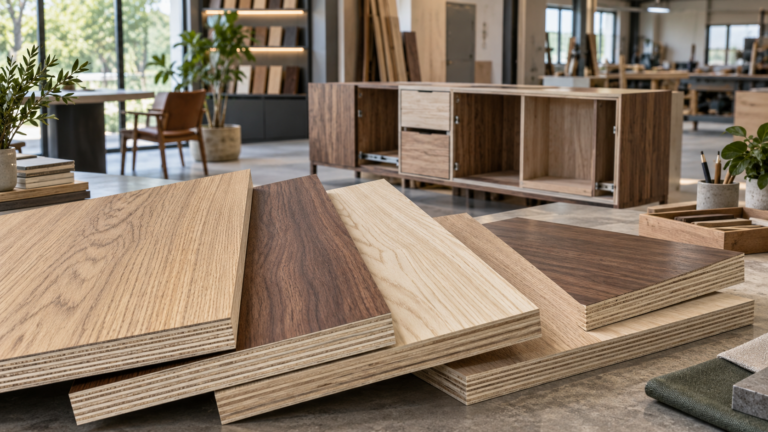
Walnut and birch are at opposite ends of the hardwood plywood aesthetic spectrum. Walnut is one of the most visually dramatic plywood species: deep brown with chocolate and purple undertones, open grain with sweeping figure. Birch is the opposite: pale blonde, fine grain, near-neutral surface character.
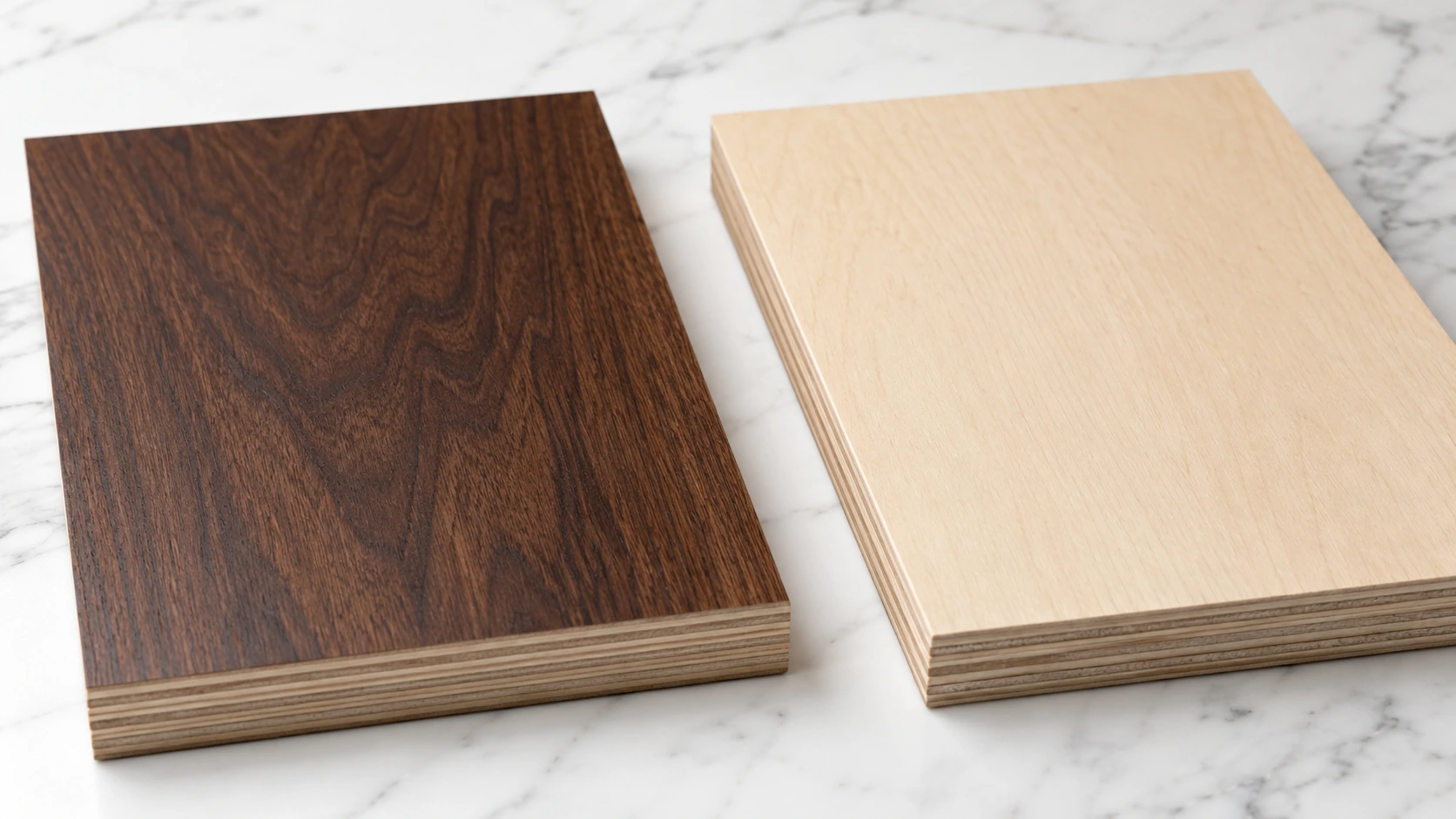
This aesthetic difference maps directly to where each species belongs in a project. Understanding when walnut earns its significant price premium, and when birch is the technically correct choice, is the practical decision this guide addresses.

Species Overview
Walnut Plywood
Walnut plywood uses veneer from black walnut (Juglans nigra, North American) or European walnut (Juglans regia). The face veneer is sliced (not rotary-peeled) in most premium grades, producing a flat-cut figure with visible grain patterning.
Characteristics:
- Density: 560 to 640 kg/m3 (solid black walnut)
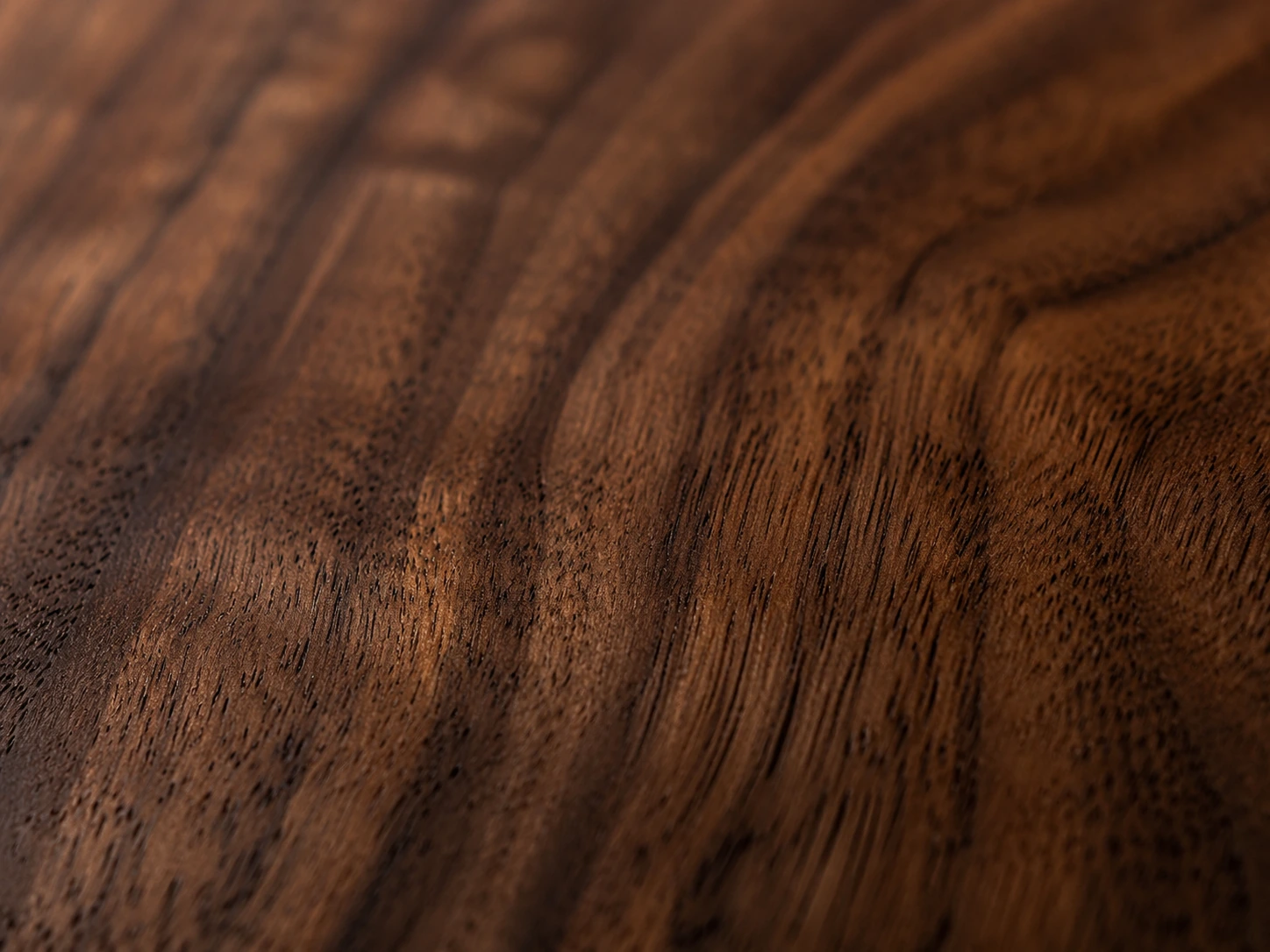
- Colour: deep chocolate brown to purple-grey, naturally darkening over time
- Grain: open, pronounced. Flat-sawn shows cathedral figure; rift/quarter-sawn shows linear grain.
- Tannins: present, reacts with iron, requires care with water-based finishes
- Veneer thickness: typically 0.6 to 0.9mm on commercial walnut-faced plywood
Core construction: Walnut-faced plywood is almost always a face-veneer product: walnut veneer applied to a poplar, MDF, or combi-core substrate. All-walnut core is extremely rare and not a commercial product. The substrate species determines the structural performance; the walnut face provides the aesthetic.
Birch Plywood
Birch plywood is available in two constructions:
- Combi core: birch face and back over poplar/eucalyptus inner layers, the commercial standard
- All-birch (Baltic birch): birch veneer throughout, 13 plies at 18mm, void-free, 5x5ft sheets
Birch face veneer has fine, tight grain with minimal figure: a near-neutral surface that takes paint, stain, and clear finish without pronounced character of its own. This neutrality is its primary advantage in painted and lacquered furniture applications.
Full grade breakdown: Birch Plywood Grades: A, B/BB, BB/BB, C2 Explained.
Head-to-Head Comparison
| Property | Walnut Plywood | Birch Plywood (combi) | Birch Plywood (all-birch) |
|---|---|---|---|
| Face species | Black or European walnut | Birch | Birch throughout |
| Core species | Poplar or MDF | Birch/poplar | All-birch |
| Density (panel) | 450 to 550 kg/m3 | 450 to 550 kg/m3 | 640 to 700 kg/m3 |
| Grain character | Strong, open, dark, dramatic | Fine, tight, neutral | Fine, tight, neutral |
| Colour | Deep brown to purple-grey | Pale blonde | Pale blonde |
| Paintability | Poor, grain and colour show through | Excellent | Excellent |
| Natural finish | Outstanding, feature material | Good, neutral base | Good, neutral base |
| Screw-holding (face) | High | High | High |
| Screw-holding (edge) | Moderate (core-dependent) | Moderate (combi) | High |
| Veneer thickness | 0.6 to 0.9mm | 0.6 to 1.0mm | 1.5mm per ply |
| Retail price (18mm 4×8) | $110 to $180 | $50 to $65 | $70 to $90 (5×5) |
| FOB Vietnam (B2B) | $450 to $600/CBM | $270 to $360/CBM | $380 to $450/CBM |
The Fundamental Choice: Aesthetic Feature vs Neutral Substrate
This is the decision framework for every walnut vs birch choice:
Choose walnut when:
- The wood grain is the primary design feature of the piece
- The finish is natural, oiled, or clear-lacquered
- The aesthetic intent is warmth, luxury, or contemporary Scandinavian/Japanese style
- The budget accommodates a 60 to 150% material premium over birch
Choose birch when:
- The finish is painted, lacquered, or colour-stained
- The piece requires a neutral base that does not compete with the surface finish
- The budget is constrained (birch is the professional baseline, not a compromise)
- Precision CNC work is required. All-birch’s void-free core machines more predictably than walnut-faced panels with poplar or MDF substrate.
The mistake to avoid: specifying walnut for painted furniture. Painting walnut plywood covers the veneer, the defining characteristic of the species, while the cost premium remains. For painted furniture, birch is the correct specification regardless of the project’s overall budget.
Finishing: Where Walnut Shines
Walnut’s colour and grain respond dramatically to oil and clear finishes:
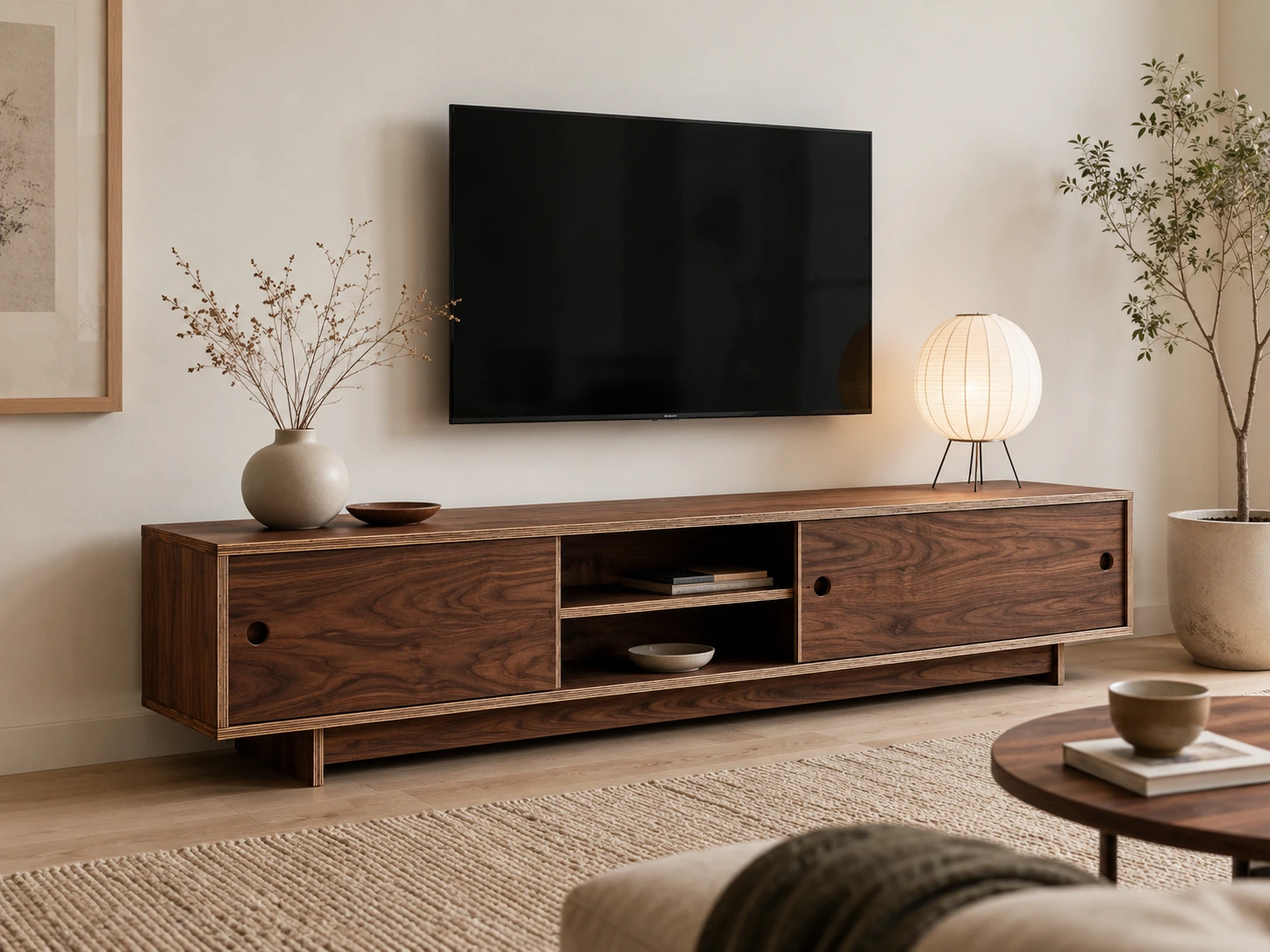
- Danish oil / penetrating oil: accentuates the chocolate-brown tones, raises the grain figure. The most popular finish for contemporary walnut furniture.
- Hard wax oil (Rubio Monocoat, Osmo): thin film, minimal build, natural feel. Protects without the plastic appearance of thick lacquer coats.
- Nitrocellulose lacquer: traditional cabinet finish, slight amber tone enhances walnut warmth
- Water-based clear lacquer: neutral finish that preserves walnut’s natural colour without yellowing
Walnut finishing cautions:
- Tannins in walnut react with iron (blue-black staining at fastener holes). Use stainless or brass fasteners, seal screw holes before finishing.
- Water-based stains can blotch on walnut. Use a pre-conditioner first, or switch to oil-based stain.
- Walnut darkens with UV exposure over years. This is characteristic, not defect, but design with it in mind.
For birch finishing techniques: How to Finish Birch Plywood: Staining, Painting and Sealing.
Application Guide
Living Room Furniture (TV Units, Bookcases, Display Shelving)
Walnut: the premium specification for visible furniture in living spaces where grain character is the design intent. Walnut TV units and display cabinets read as furniture rather than cabinetry.
Birch: correct for painted built-ins, lacquered furniture, or Shaker-style pieces where the grain is secondary to the colour and form.
Kitchen Cabinets
Walnut: appropriate for open shelving, island face panels, and visible door fronts in natural-finish kitchens. Not appropriate for cabinet box construction. Use birch for the box; walnut-faced panels for visible surfaces only.
Birch: the professional standard for painted kitchen cabinet boxes. BB/BB grade, 18mm, WBP glue. See Best Plywood for Kitchen Cabinets: Grade, Core and Thickness.
Bedroom Furniture
Walnut: wardrobes, bedside tables, and bed headboards in natural-finish contemporary furniture. The warm, dark tone contrasts well with linen and textiles.
Birch: painted wardrobes, white lacquered bedroom furniture. The dominant style in European bedrooms at the $3,000 to $10,000 fitted furniture range.
Drawer Boxes
Birch: always. Drawer boxes are structural components, not visible elements. Combi-core birch at 12mm is the standard drawer box specification. Walnut veneer on drawer box interiors adds cost with no functional or visual benefit.
Speaker Cabinets and Acoustic Enclosures
Birch (all-birch): the universal speaker cabinet specification. Void-free core, consistent density, acoustically inert. Walnut-faced panels do not meet these requirements. See Baltic Birch vs Birch Plywood.
Walnut Veneer Types: What You Are Actually Buying
| Cut type | Grain pattern | Cost | Best for |
|---|---|---|---|
| Flat/plain sawn | Cathedral figure, wide grain sweep | Standard | Traditional, characterful furniture |
| Quarter sawn | Linear, consistent grain, medullary rays visible | Higher | Contemporary, refined furniture |
| Rift sawn | Very linear, minimal figure | Highest | Minimal/Japanese aesthetic |
| Rotary peeled | Wide, busy figure | Lower | Utility panels, hidden surfaces |
For premium visible furniture, specify flat-sawn or quarter-sawn veneer. Confirm veneer cut type when ordering. “Walnut-faced plywood” without specifying cut type typically means rotary-peeled, which produces a busier, less refined figure.
Cost Analysis
| Specification | FOB Vietnam (B2B) | Premium over combi birch |
|---|---|---|
| Birch combi core, BB/BB, 18mm, WBP | $270 to $360/CBM | Baseline |
| Birch all-birch, B/BB, 18mm, WBP | $380 to $450/CBM | +40 to 60% |
| Oak-faced combi core, 18mm, WBP | $320 to $420/CBM | +20 to 40% |
| Walnut-faced combi core, 18mm, WBP | $450 to $600/CBM | +60 to 110% |
The walnut premium is only justified where the veneer is visible and the grain character is the design intent. For all structural and hidden components, birch is the correct specification even in a full-walnut furniture project.
FAQ
Is walnut plywood stronger than birch?
In panel applications, both have comparable structural performance. The structural properties are determined by the core (typically the same poplar or combi construction), not the face veneer species. All-birch Baltic birch has higher stiffness and screw-holding than walnut-faced combi-core panels. For furniture applications, neither is structurally superior in practical use.
Can you paint walnut plywood?
Technically yes, but it defeats the purpose. The walnut face veneer, the primary reason to specify and pay for walnut, is covered entirely by paint. For painted furniture, birch is the correct specification: better paint surface, lower cost, no tannin complications.
How do you finish walnut plywood for furniture?
Danish oil, penetrating oil, hard wax oil, or water-based clear lacquer. Avoid thick film finishes (polyurethane) that obscure the grain depth. Pre-treat with oil conditioner if using water-based stains to prevent blotching. Seal screw holes before finishing to prevent iron tannin staining.
Is walnut plywood available from Vietnam factories?
Yes. Walnut-faced plywood with combi core is available as an export product from Vietnamese manufacturers, typically with walnut face veneer sourced from North America or Europe. Confirm the veneer origin and cut type when ordering. For specifications and pricing: anna@kosmexgroup.com
What is the difference between black walnut and European walnut plywood?
Black walnut (Juglans nigra, North American) is slightly darker with more dramatic figure and purple-brown undertones. European walnut (Juglans regia) is lighter brown, more muted figure, and typically more expensive due to lower timber availability. Both are specified as “walnut plywood.” Clarify origin when ordering for colour-matched projects.
Summary: Walnut or Birch?
| Application | Walnut | Birch |
|---|---|---|
| Natural-finish visible furniture | Premium specification | Neutral alternative |
| Painted furniture | Covers the veneer, not recommended | Correct specification |
| Kitchen cabinet box | Hidden, cost waste | Industry standard |
| Open shelving / display | Grain is the feature | If painted or lacquered |
| Drawer boxes | Unnecessary premium | Standard spec |
| Speaker cabinets | Not standard | All-birch, void-free |
| Contemporary luxury furniture | Material tells the story | Too neutral |
| CNC precision work | Variable core | All-birch, consistent |
Related Reading
- Oak Plywood vs Birch Plywood: Strength, Cost and When to Use Each
- Maple vs Birch Plywood: Differences, Pros, Cons and Best Uses
- Birch Plywood Grades: A, B/BB, BB/BB, C2 Explained
- How to Finish Birch Plywood: Staining, Painting and Sealing
- Baltic Birch vs Birch Plywood: What’s Actually Different
- Plywood vs Solid Wood: Strength, Stability and Cost
Bình luận