


Factory quality can be lost between final inspection and fabrication. Thin panels need flat support, controlled moisture exposure, balanced packaging and a documented container plan. This guide connects factory release to arrival and warehouse use.
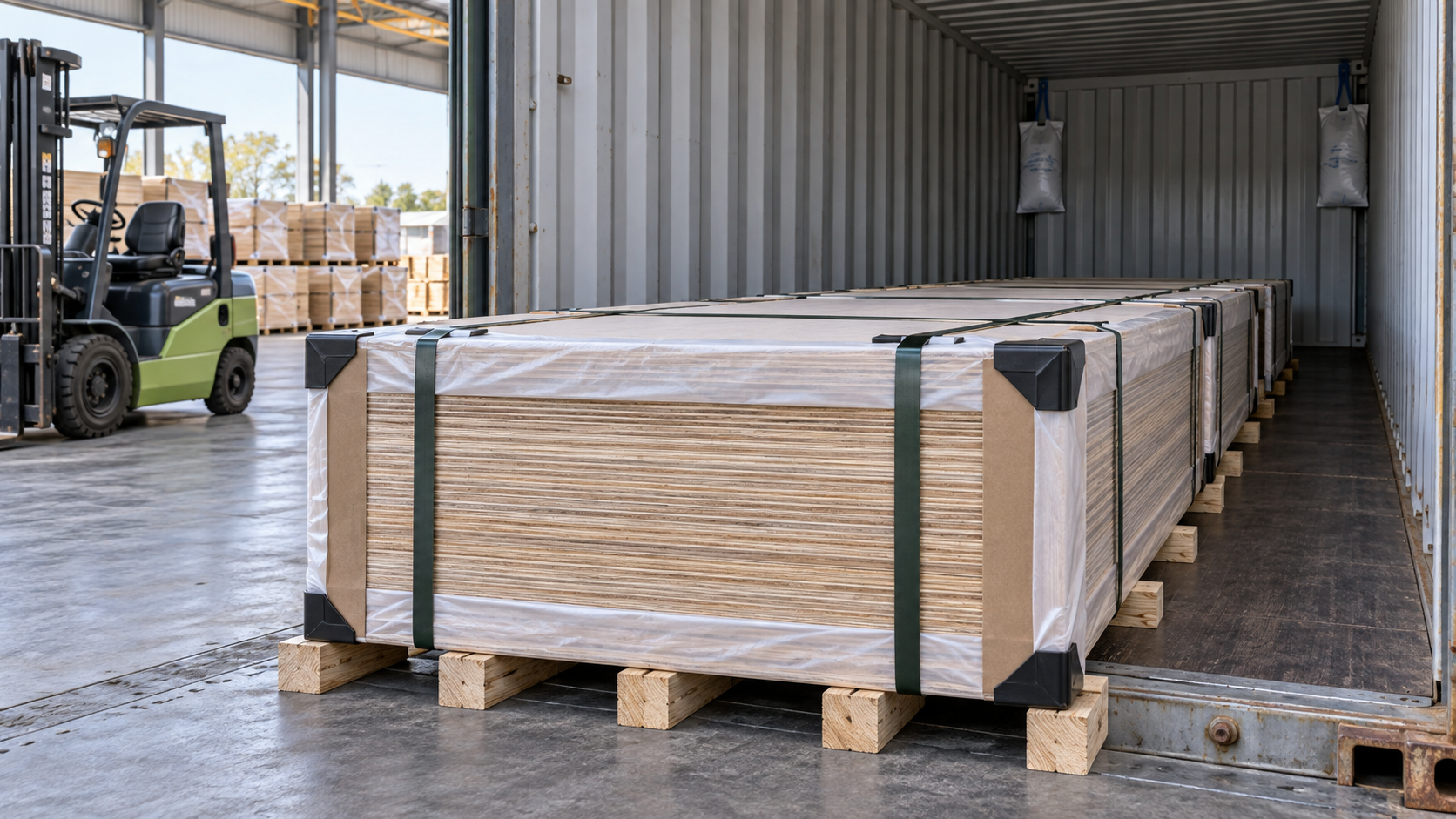
Why flat panels can arrive warped
Plywood is hygroscopic, so it exchanges moisture with surrounding air. It also carries mechanical loads from its own weight, bundles, straps and handling equipment. During a long route, temperature cycles can create condensation and change the moisture balance between faces and edges.
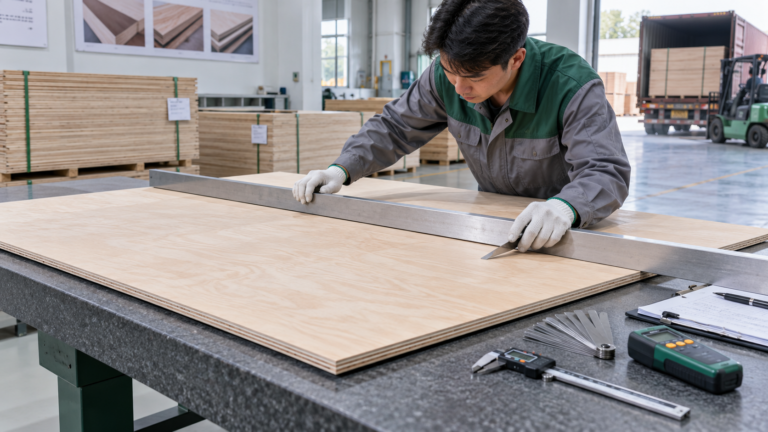
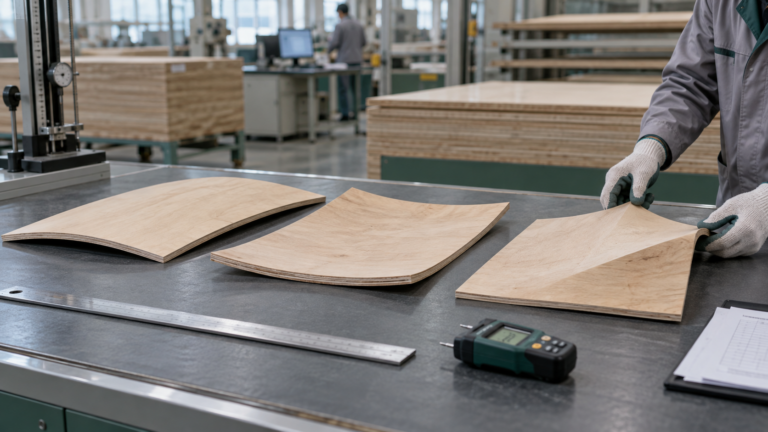
6mm, 8mm and 9mm panels are easier to deflect during lifting than thick panels. That does not mean they are defective. It means the logistics system must support the sheet and avoid forcing a permanent shape. The starting product should already meet the agreed requirements in Kosmex’s plywood flatness inspection method.
The goal is controlled exposure. Good packaging is not simply “more plastic” or “more straps.” It keeps a dry, accepted bundle clean and supported while limiting rapid or unequal moisture changes.

1. Release only dry, accepted panels
Do not pack a problem into a container. Before wrapping, verify product code, construction, quantity, moisture, dimensions, surface grade and flatness according to the sampling plan. Record nonconforming material and keep it outside the accepted bundle.
Allow hot-pressed or freshly finished panels to complete the approved conditioning period. Wrapping panels while they are unusually warm or before moisture equalises can trap a gradient. A useful release pack contains inspection results, bundle IDs and dated photos.
2. Build a level support system
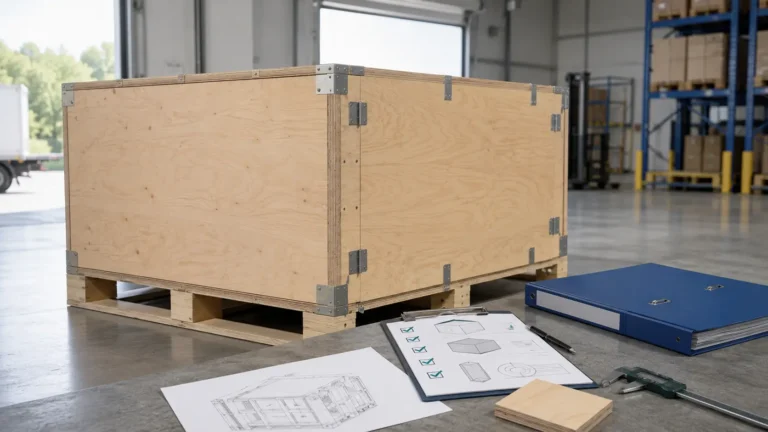
Use pallets, skids or bearers that are straight, dry, clean and strong enough for the load. Position supports on a level base. Bearer spacing should suit the sheet thickness, bundle weight and transport conditions. A universal spacing number would be misleading because constructions and loads differ.
Align bearers vertically when bundles are stacked. Misaligned supports transfer load through the panels and can create a bend. Avoid unsupported sheet overhang, especially at ends and corners. The top protection should also be flat so straps do not press high points into the bundle.
If forklift access is needed, design it into the pallet. Forks should not contact exposed panel edges. Mark lifting points and centre of gravity where the load could be handled incorrectly.
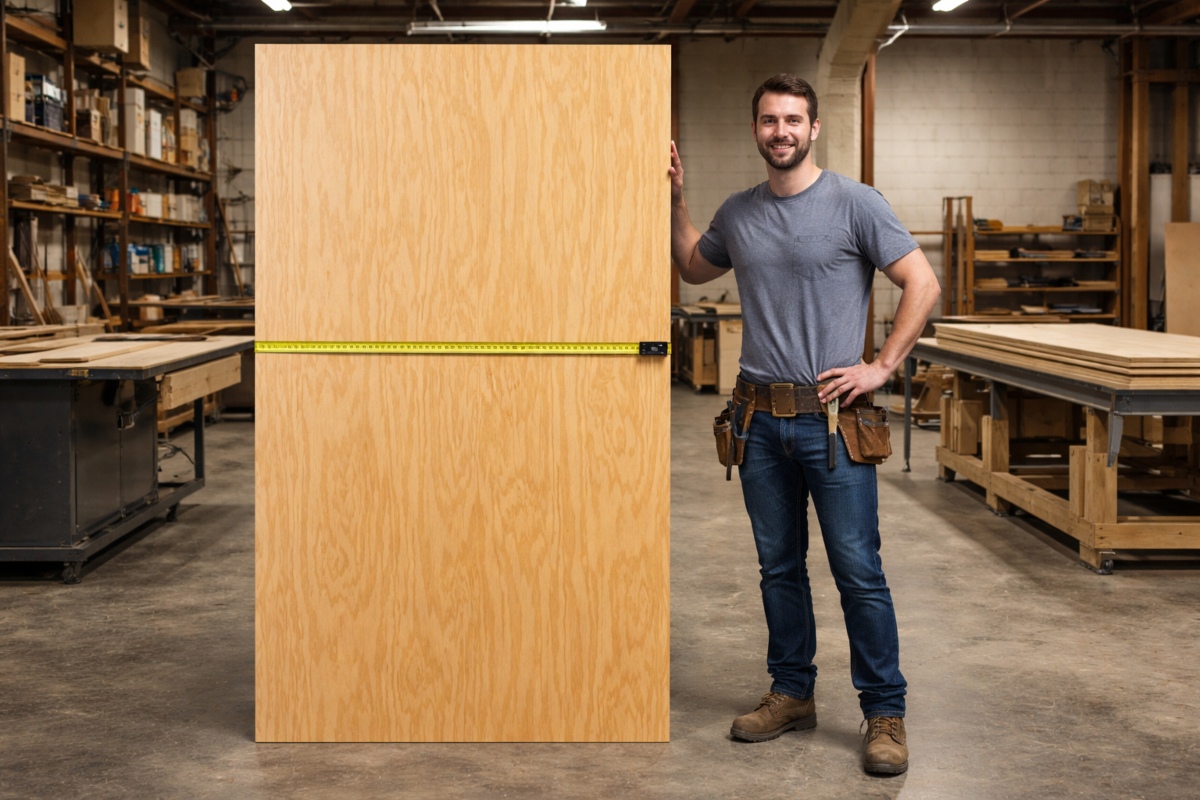
3. Protect faces, edges and corners
Use clean cover sheets or boards above and below the saleable panels. Add edge and corner protection where straps or handling could crush the product. For decorative or engineered veneer faces, use an interleaf or protective surface suitable for the finish.
Edge exposure is important because veneer ends can absorb moisture quickly. The packaging design may include moisture-resistant edge protection, but it should not introduce stains, adhesive transfer or trapped liquid. Any edge sealer must be compatible with the buyer’s machining and finishing process.
4. Choose wrapping for the route
External wrap should protect against rain, spray, dust and container contamination. Inner moisture barriers or liners may be appropriate for demanding routes. Packaging materials need sufficient tear and puncture resistance, and joints should shed water rather than collect it.
Before sealing, confirm that panels, timber and packaging are dry enough for the plan. Trapping free water inside an impermeable wrap can intensify staining, mould and moisture gradients. If ventilation is part of the design, it must be protected from direct water entry.
Document the approved packaging layers in a drawing or photo standard. This makes supplier comparisons and claim investigations more objective.
5. Place straps without bending the bundle
Straps secure the load, but excessive tension or poor placement can distort panels and crush edges. Use corner protectors and distribute strap pressure through rigid top protection. Place straps relative to supports so the bundle is not pulled over an unsupported span.
Strap count and tension depend on bundle mass, route and regulations. Inspect after handling because a settled bundle can loosen. Avoid mixing bundles of different footprint or uneven height without an engineered stacking plan.
6. Inspect the container before loading
Check that the container is structurally sound, weather tight, dry, clean and free from strong odours or residues. Inspect roof, walls, doors, seals and floor. Photograph the empty container and record its number before cargo enters.
Look for recent repairs or holes that admit light. A simple light check can help but should not replace a thorough inspection. Confirm that the floor is safe for the planned load and that blocking materials are dry and suitable for the destination.
Container rain occurs when water vapour condenses on cold surfaces and drips onto cargo. Risk depends on cargo moisture, ambient conditions, route and temperature cycles. Desiccants may help, but they do not compensate for wet cargo, leaks or inadequate wrapping.
7. Load and secure without creating point loads
Plan weight distribution and forklift movements before loading. Keep bundles level and avoid impacts. Use blocking, bracing and anti-slip measures appropriate to the route so cargo cannot slide or rack inside the container.
Do not wedge a bowed or uneven top load against the plywood. Maintain the designed support footprint. If bundles are stacked, align load paths through pallet blocks or bearers. Protect the wrap from door hardware, sharp edges and securing materials.
Photograph each loading stage, including bundle labels, support alignment, desiccant placement if used, bracing and the final view before door closure. Record seal number and loading date.
8. Manage warehouse storage at origin and destination
Store bundles indoors on a firm, level surface, raised from the floor and away from leaking roofs, open doors or wet walls. Avoid direct sunlight, heaters and strong airflow on one face. Keep supports aligned and do not exceed the pallet or floor capacity.
Use stock rotation and inspect long-held bundles. If partial bundles are returned to storage, restore flat top protection and moisture cover. Loose 6mm and 8mm sheets should not be left cantilevered from a rack or leaning against a wall.
For vertical panel racks, use a system designed for the sheet size with continuous or closely spaced support and safe restraint. Improvised leaning storage can create a set, edge damage and a serious handling hazard.
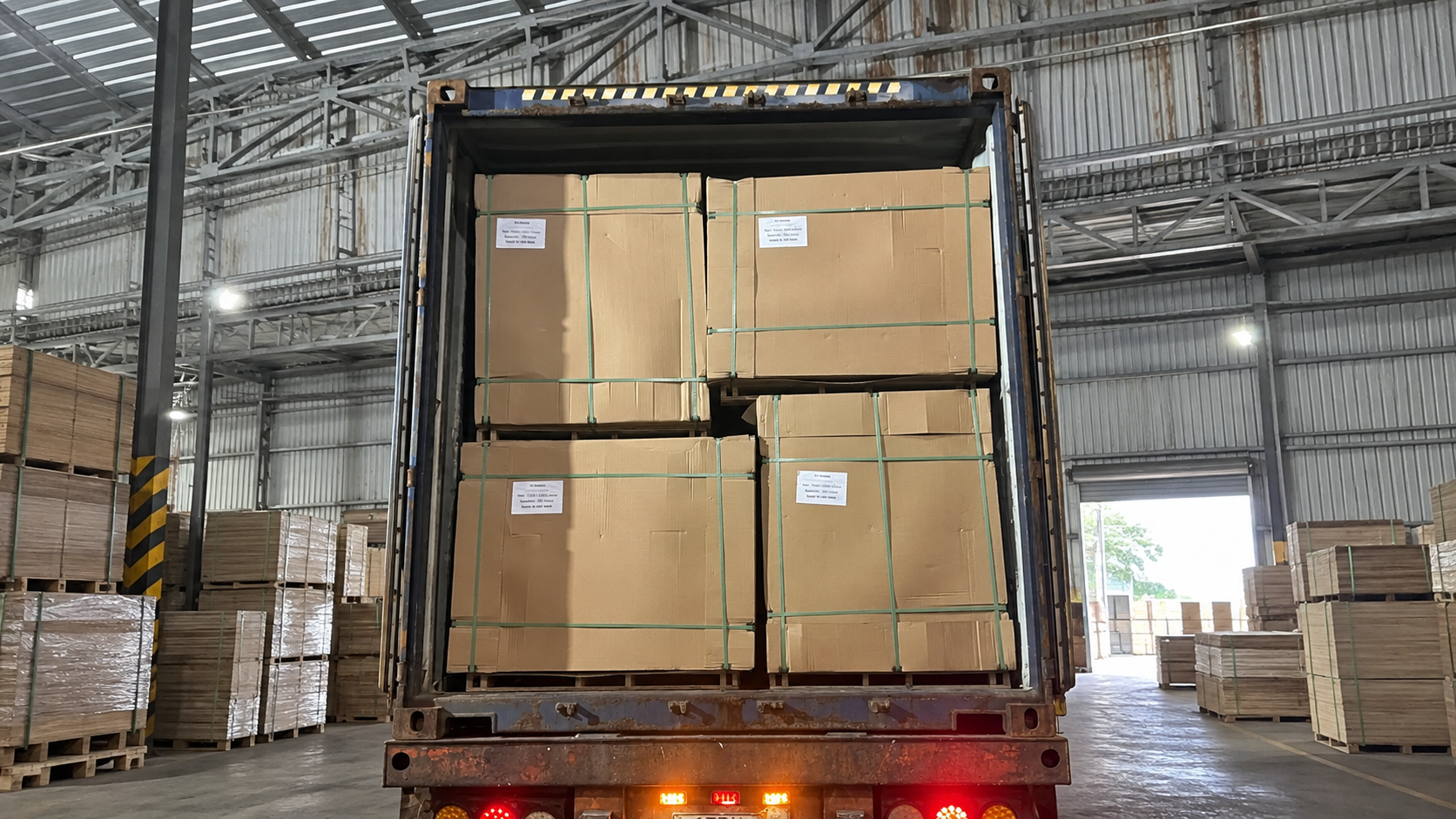
9. Inspect on arrival before opening
Photograph the sealed container, number, seal and external condition. On opening, note odour, visible condensation, water marks, shifted cargo and damaged packaging before moving anything. Use safe procedures because shifted loads can fall.
Check representative bundle surfaces and moisture indicators if included. Record wrap damage and wet zones. If a claim may exist, notify the relevant parties promptly and preserve evidence. Do not discard packaging or distribute all stock before sampling is agreed.
Measure selected panels using the same method used before shipment. Comparing like with like is far stronger than comparing a factory straightedge photo with an unsupported arrival photo.
10. Acclimate gradually and evenly
A cold bundle moved into a warm room can attract condensation. A dry panel exposed suddenly to high humidity can absorb moisture first at faces and edges. Keep the bundle supported and follow a planned opening sequence. Monitor room temperature, relative humidity and representative panel moisture.
There is no universal acclimation time. A thin, uncoated panel, a wrapped bundle and a UV-finished EV panel exchange moisture differently. The goal is a stable condition suitable for fabrication, not simply waiting a fixed number of hours.
If panels will be coated or laminated, keep both faces in similar conditions before processing. Test the full finishing sequence because one-face treatments can cause the movement explained in why plywood warps.
Route-specific packing checklist
| Stage | Minimum controls | Evidence |
|---|---|---|
| Factory release | Accepted flatness, moisture, quantity and construction | QC report and sample IDs |
| Pallet | Level base, aligned dry bearers, no overhang | Dimensioned packing spec and photos |
| Protection | Face, edge, corner and moisture protection | Approved packaging layers |
| Strapping | Distributed pressure and protected corners | Strap layout photo |
| Container | Dry, clean, sound, route-appropriate condensation plan | Empty-container checklist |
| Loading | Even load paths, blocking and wrap protection | Stage photos and seal record |
| Arrival | Condition recorded before unloading or opening bundles | Arrival inspection report |
Common failures and corrective action
- Uneven bearers: stop stacking, move bundles to a verified level support and inspect for set.
- Wet or torn wrap: photograph, isolate, inspect moisture patterns and prevent further exposure.
- Condensation in container: record distribution, container condition, desiccants and cargo temperature before disturbing evidence.
- Crushed strap lines: review tension, top protection, corner guards and support alignment.
- Warp after one-face finishing: review adhesive water, press conditions, reverse-face treatment and acclimation.
- Loose sheets leaning: return them to flat full support and assess before fabrication.
Severe moisture damage, mould, bond failure or persistent twist requires technical disposition. Do not assume forced flattening restores the original performance.
Connect logistics requirements to the purchase order
Specify bundle quantity, maximum bundle weight, pallet footprint, bearer arrangement, wrapping layers, edge protection, strap layout, labels and photo points. State container and destination constraints. If third-party inspection is required, define whether the inspector witnesses packing and loading.
Ask for the records in Kosmex’s supplier document guide, and use measured weight or an approved calculation for loading. The Kosmex guide to plywood sheet weight is a useful planning reference, but the actual construction and moisture condition govern the shipment.
A strong “warp-resistant” delivery is shared work. The factory controls construction and release. The packer controls support and protection. The carrier controls the transport environment. The buyer controls receipt, storage, acclimation and fabrication. Documenting each handoff protects both product and commercial relationship.
Frequently asked questions
Should plywood be stored flat or vertically?
Full sheets are normally safest stored flat on level, aligned supports. Vertical racks can work only when they are purpose designed to support the whole panel without leaning or edge damage.
Should plywood be completely sealed in plastic?
Wrapping should block rain and contamination while managing trapped moisture and condensation. A sealed wet bundle can be worse than a correctly protected dry one.
How long should plywood acclimate before use?
There is no universal number of hours. The plan depends on bundle temperature, initial moisture, local climate, wrapping and end use. Monitor conditions and allow gradual, even adjustment.
Do desiccants prevent all container moisture damage?
No. Desiccants are one part of a condensation plan that also includes dry cargo, sound packaging, leak checks, loading conditions and the expected route.

Bình luận