


Best Plywood for Deck: Subfloor Grade, Glue Type and What Fails Outdoors
Plywood used outdoors fails fast when it is the wrong specification. The two failure modes are familiar to anyone who has renovated a deck: delamination (layers separating as the adhesive breaks down in wet conditions) and rot (core veneer decay when moisture cycles repeatedly through the panel).
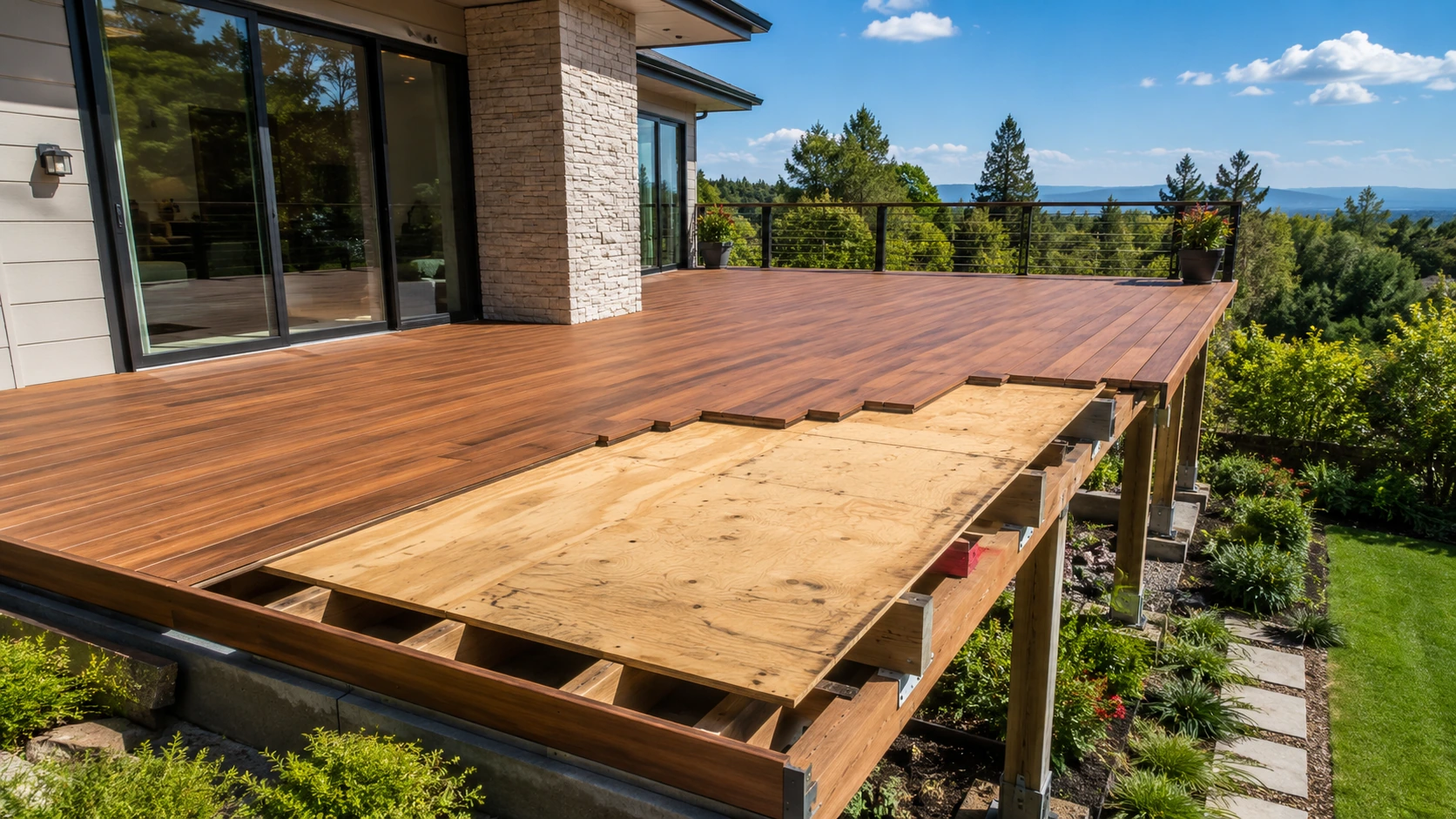
Both are preventable. The specification decision comes down to three variables: glue type, treatment, and application zone (subfloor vs surface vs structural framing). This guide covers all three.

The Core Specification: Glue Type for Outdoor Use
The most important decision in outdoor plywood is adhesive type, not species, not thickness.
MR Glue (Urea-formaldehyde, EN 314-2 Class 1)
- Interior use only
- Begins to delaminate when exposed to sustained moisture or humidity cycling
- Will fail within one to two wet seasons when used outdoors without complete enclosure
- Not suitable for any deck application
WBP Glue (Phenol-formaldehyde, EN 314-2 Class 3)
- Resists boiling water exposure in standard test conditions (EN 314-2 Class 3)
- Maintains laminate integrity through wet-dry cycling
- The minimum specification for all outdoor structural plywood
- Required for deck subfloor, structural framing, and any plywood exposed to weather
Marine Plywood (BS 1088 / EN 314-2 Class 3 plus void-free)
- All-hardwood core, no voids, WBP glue throughout
- Higher cost: FOB Vietnam $580 to $750/CBM vs $290 to $360/CBM for standard WBP
- Required for applications with sustained water immersion or maximum durability in marine environments
- For deck subfloor and structural framing: WBP commercial plywood is sufficient in most residential applications
Deck Application Zones
Not all parts of a deck have the same moisture exposure. Specifying correctly by zone reduces both cost and risk:
| Zone | Description | Moisture exposure | Required spec |
|---|---|---|---|
| Decking surface | Top walking surface | Direct rain, UV, standing water | Hardwood decking or composite. Plywood is NOT suitable as finished surface. |
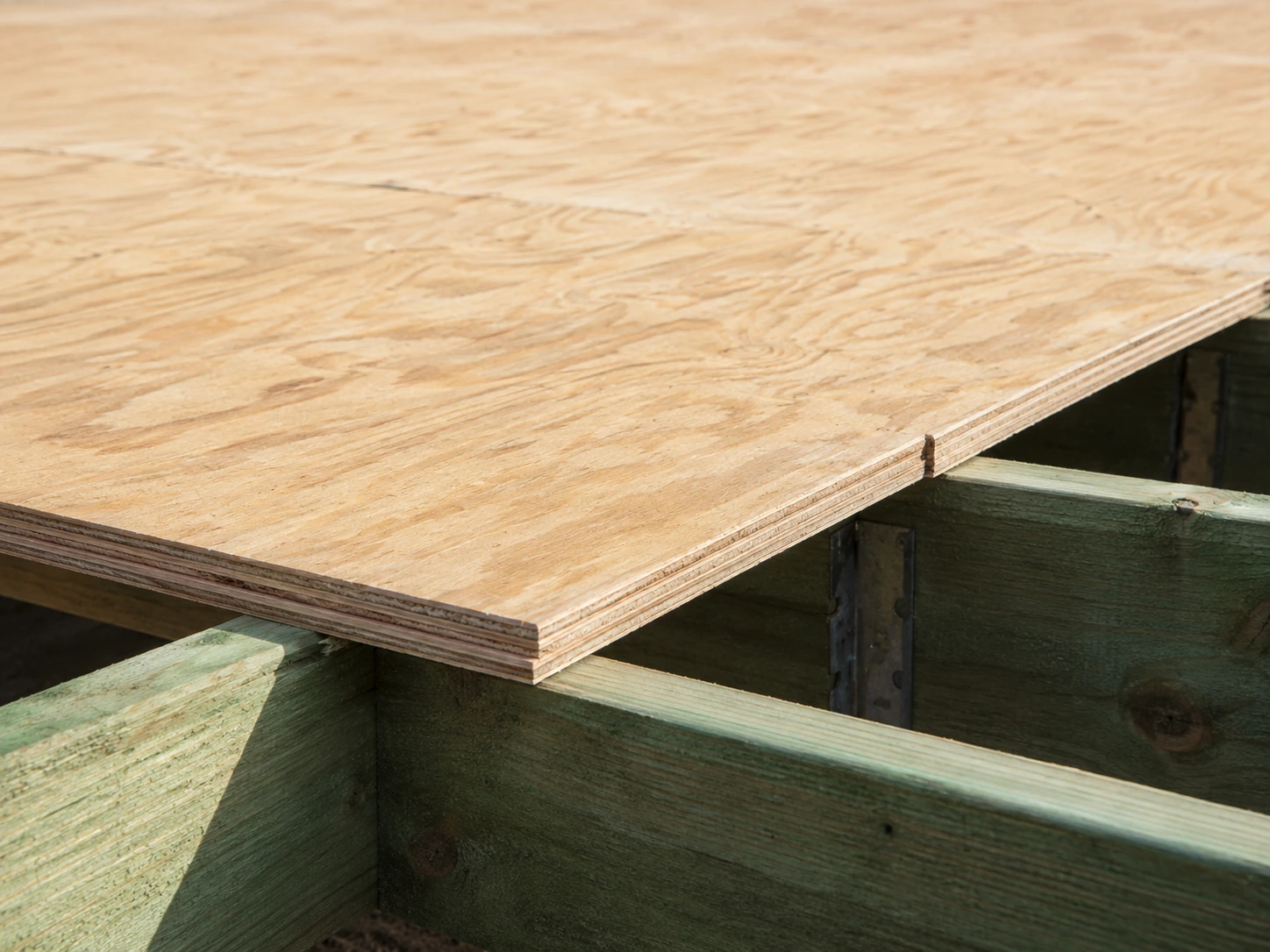
| Deck subfloor | Structural substrate under surface boards | High, rain penetrates through gaps | WBP structural plywood, 18 to 25mm |
| Joist framing | Timber framing members | High in exposed applications | Pressure-treated timber, not plywood |
| Fascia and skirting | Vertical perimeter panels | Moderate, rain splash and humidity | WBP plywood or hardwood boards |
| Under-deck storage | Covered but not enclosed | Moderate, condensation and humidity | WBP plywood minimum |
Critical note: Plywood is NOT suitable as a finished decking surface. Plywood exposed to foot traffic, rain, and UV will delaminate at face veneer within one to two seasons. For the walking surface, use hardwood decking boards, composite decking, or porcelain tile over a properly specified plywood substrate.
Best Plywood for Deck Subfloor
Specification: Structural plywood, WBP glue, EN 314-2 Class 3, 18 to 25mm
The deck subfloor sits between the timber joist framing and the finished deck surface. It provides structural rigidity to prevent surface board deflection, a flat substrate for tile or rubber flooring, and the base for waterproofing membrane in balcony and rooftop deck applications.
Recommended specification:
- Thickness: 18mm minimum for joists at 400mm centres; 25mm for joists at 600mm centres or under tile
- Glue: WBP phenolic, EN 314-2 Class 3, mandatory
- Grade: Structural or CDX-equivalent with exterior glue rating
- Species: Structural hardwood or pine, species matters less than glue type and void-free core
- Edge profile: T and G (tongue and groove) for panel-to-panel joints, eliminates differential deflection at seams
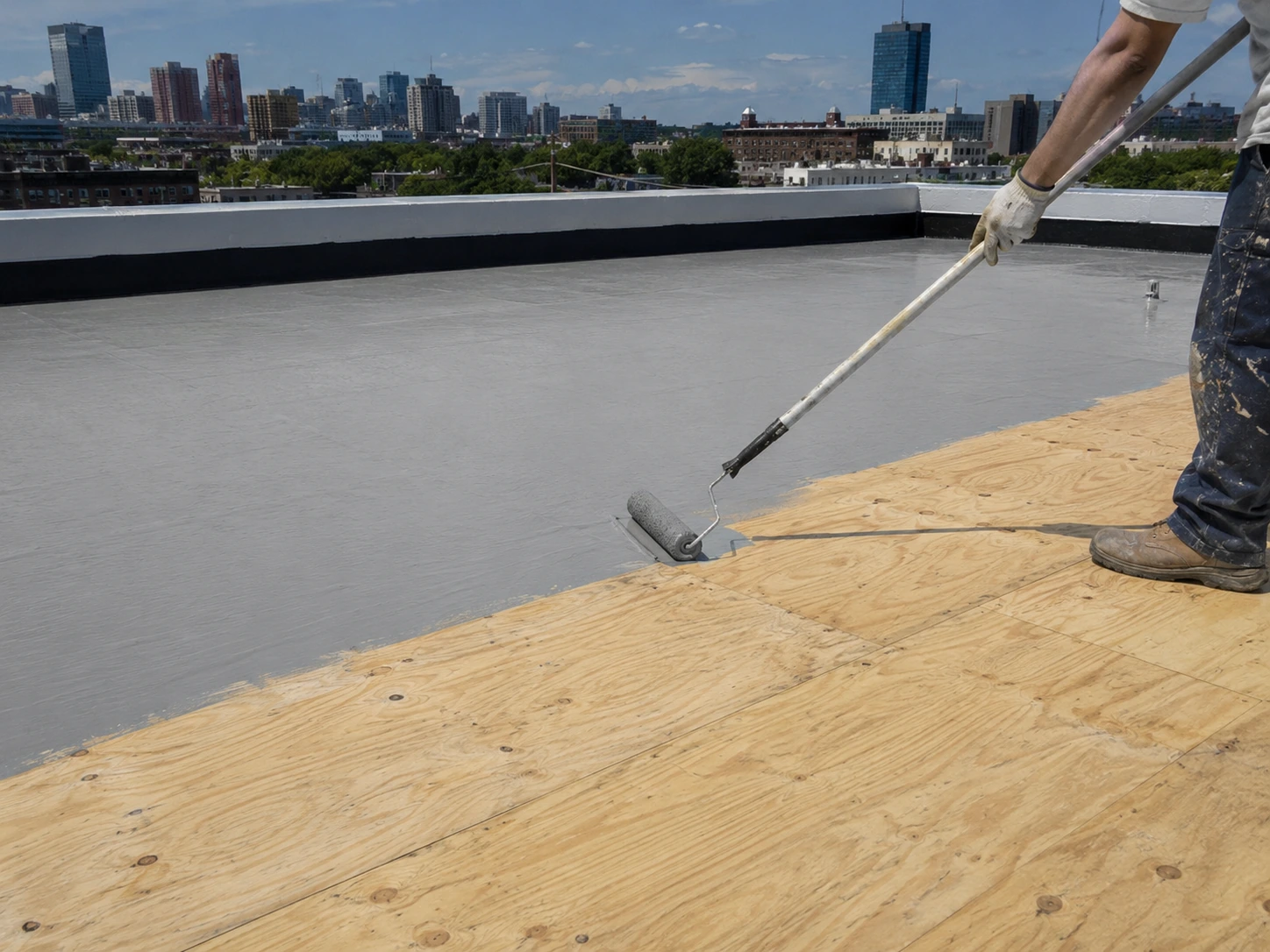
For balcony and rooftop decks under tile: the plywood subfloor requires a continuous waterproofing membrane applied over the full panel surface before tiling. The plywood provides structural rigidity; the membrane provides waterproofing. Without the membrane, water penetrates tile grout joints and reaches the plywood over time.
What to avoid:
- Standard hardware store interior plywood, most is MR-glued unless specifically labelled WBP or exterior
- OSB for deck subfloor, OSB edge swelling in wet conditions is significantly worse than plywood. See OSB vs Plywood for Subfloor
Best Plywood for Outdoor Deck Framing Panels
Specification: WBP structural plywood 12 to 18mm, pressure treatment if fully exposed
For vertical framing elements, fascia panels, skirting, and screen panels on decks:
- WBP phenolic glue is required. Direct or indirect rain exposure is sufficient to delaminate MR-glued panels within one season.
- Pressure-treated plywood (ACQ or copper azole treatment) is the highest specification for fully exposed structural panels. Treatment penetrates core veneers and provides rot resistance in addition to adhesive weather resistance.
- Phenolic-faced (film-faced) plywood is an alternative for panels that will be painted or clad. The phenolic surface provides excellent weather resistance and a paint-ready substrate. See Phenolic Plywood: What It Is and When to Specify It.
Pressure-Treated Plywood for Decks
Pressure-treated (PT) plywood is standard-grade structural plywood that has been treated with preservative chemicals (most commonly ACQ, alkaline copper quaternary, or copper azole) under vacuum pressure to penetrate the wood fibres.
When PT plywood is required:
- Ground contact or near-ground applications (less than 150mm clearance above grade)
- Applications where the plywood will be in contact with concrete, masonry, or soil
- Structural elements in high-humidity environments where the waterproofing cannot be guaranteed to remain intact
PT plywood limitations:
- ACQ treatment reacts with standard steel fasteners; use hot-dipped galvanised, stainless, or specifically approved fasteners with ACQ-treated lumber
- PT plywood has a greenish tint from the copper treatment, not suitable for applications where natural colour is required
- PT plywood must be allowed to dry after installation before painting or sealing
Marine Plywood for Decks: When It Is Worth It
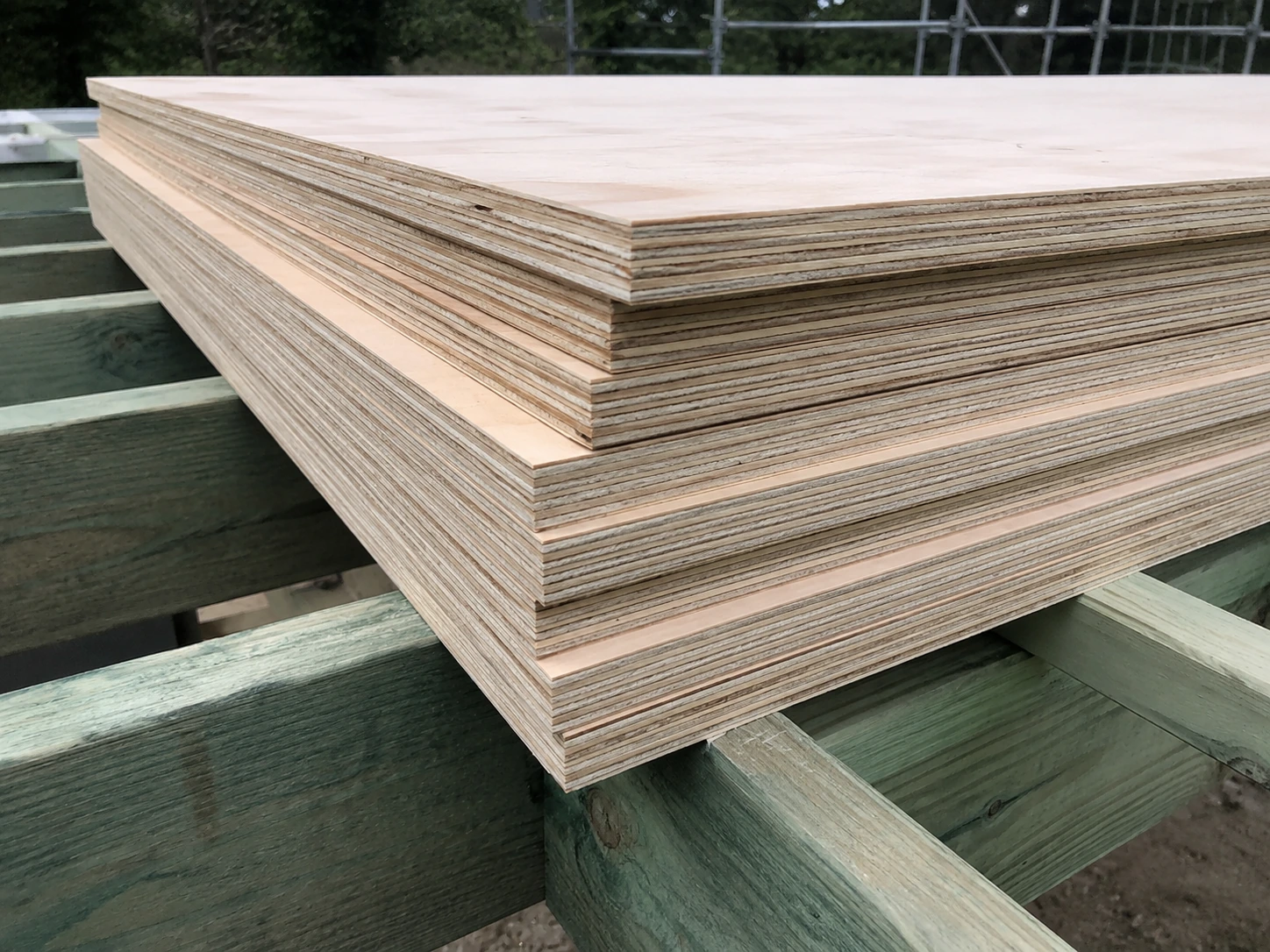
Marine plywood (BS 1088 certified) offers all-hardwood core species, no voids or gaps in any layer, WBP phenolic adhesive throughout, and face veneer grades to A/B minimum.
Marine plywood is worth specifying for decks when:
- Rooftop or floating deck with no joist airflow, where the plywood is continuously damp and cannot dry between events
- Boat dock decking where the subfloor is in contact with water
- Commercial or hospitality decks where 20+ year performance is required
- The deck incorporates a water feature such as a pool surround or water feature plinth
Marine plywood is NOT necessary for:
- Standard elevated residential decks with good drainage and airflow under the structure
- Deck subfloor with a waterproofing membrane applied above
- Any application where WBP structural plywood with proper drainage will perform
Cost reference: WBP commercial structural plywood FOB Vietnam $290 to $360/CBM vs BS 1088 marine $580 to $750/CBM. The 60 to 100% cost premium is only justified when the performance requirement genuinely demands the marine specification. See Commercial Plywood vs Marine Plywood: Glue, Grade and When to Pay the Premium.
Thickness Guide for Deck Applications
| Application | Thickness | Joist / support spacing | Notes |
|---|---|---|---|
| Deck subfloor under hardwood boards | 18mm | 400mm OC | Minimum, 25mm preferred |
| Deck subfloor under tile / stone | 22 to 25mm | 400mm OC | Tile requires rigid, zero-flex substrate |
| Rooftop deck subfloor under membrane | 18 to 22mm | 400mm OC | Must achieve L/360 deflection limit |
| Fascia panel | 12 to 18mm | N/A | 12mm adequate if adequately supported |
| Screen panel / skirting | 12mm | Framing at max 600mm | WBP glue, fully exposed |
| Under-deck storage floor | 18mm | 400mm OC | WBP, condensation and moisture from below |
Protecting Outdoor Plywood: Sealing and Finishing
Even WBP-glued plywood benefits from surface protection when used outdoors. WBP adhesive resists the glue lines failing; it does not make the face veneer impervious to water absorption.
Surface protection for outdoor plywood:
- Painted surface: two coats exterior primer, two coats exterior alkyd or latex topcoat. Recoat every 3 to 5 years. Seals the face veneer against water absorption and UV degradation.
- Phenolic-faced surface (film-faced plywood): the phenolic overlay is factory-applied and UV-resistant, no further painting required for panels not subject to direct sun. For UV-exposed applications, a UV-stable coating extends the phenolic life.
- Oil/stain treatment: penetrating oil stains protect without forming a surface film that can peel. Reapplication annually or biannually maintains protection. Suitable for hardwood-faced plywood panels used as skirting or screens.
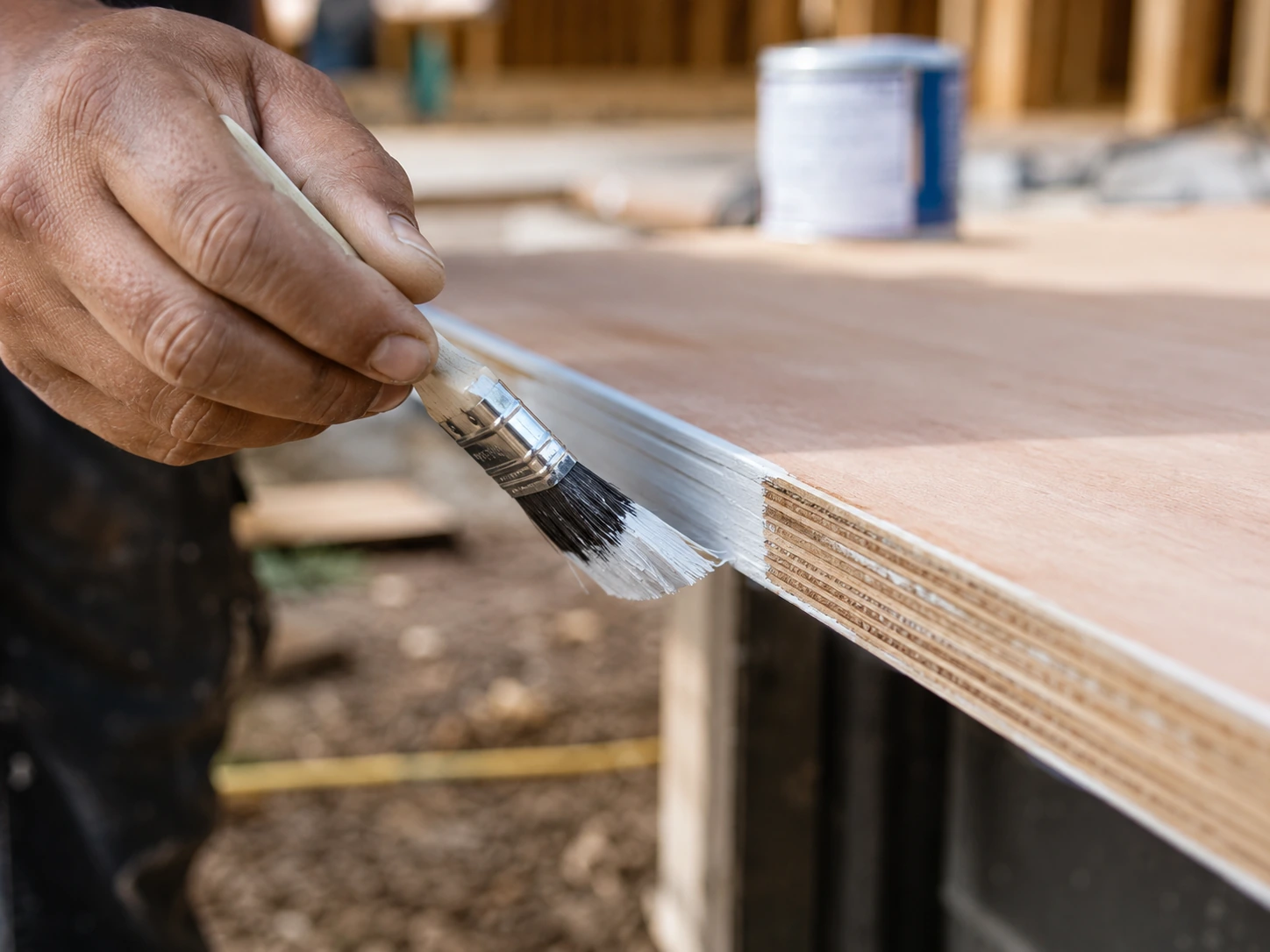
- All cut edges sealed: the most vulnerable point of any plywood panel outdoors is the cut edge. End grain absorbs water 10 to 15 times faster than face veneer. All edges must be sealed with primer, wood hardener, or exterior sealant before installation. This is the most commonly skipped step and a leading cause of premature plywood failure outdoors.
Common Mistakes in Outdoor Plywood Specification
1. Using interior MR-glued plywood. No visual difference from WBP plywood. Delamination is not visible until failure occurs. Always verify glue class on the panel stamp or technical data sheet.
2. Skipping edge sealing. Cut edges absorb moisture many times faster than face veneer. Unprotected edges are the primary failure point in outdoor plywood panels.
3. No drainage or airflow under plywood. Plywood installed flat with no drainage below cannot dry between wet events. Even WBP plywood will eventually fail in sustained water immersion without adequate drainage. Design for drainage and airflow.
4. Specifying marine plywood for standard residential deck subfloor. Marine plywood performance is not required for most residential deck applications. WBP structural plywood with correct surface protection provides 15 to 25 year performance at significantly lower cost.
Specification Summary
| Application | Thickness | Glue | Treatment | Notes |
|---|---|---|---|---|
| Deck subfloor (elevated) | 18 to 25mm | WBP Class 3 | Not required | T and G edge profile |
| Deck subfloor (ground level) | 18 to 25mm | WBP Class 3 | PT recommended | Ground proximity |
| Rooftop deck subfloor | 18 to 22mm | WBP Class 3 | Not required | Membrane above |
| Fascia / skirting panel | 12 to 18mm | WBP Class 3 | Optional | All edges sealed |
| Marine / dock application | 18 to 25mm | Marine BS1088 | Optional | All-hardwood core |
FAQ
What plywood is best for a deck subfloor?
Structural plywood with WBP (phenolic) glue, EN 314-2 Class 3, 18 to 25mm depending on joist spacing. The glue type is the critical specification. Interior MR-glued plywood will delaminate within one to two wet seasons. T and G edge profile is recommended for panel-to-panel joints.
Can you use regular plywood for outdoor decking?
Only if it is WBP-glued (exterior grade). Standard interior plywood from hardware stores is MR-glued and will fail outdoors. WBP or “exterior grade” plywood is the minimum specification for any outdoor structural application.
Is marine plywood necessary for a deck?
For most residential decks: no. WBP-glued structural plywood with proper drainage, edge sealing, and surface protection provides adequate performance. Marine plywood is specified for sustained water immersion, dock applications, and commercial projects requiring maximum durability.
Does plywood need to be pressure treated for decks?
For ground contact or near-ground applications (less than 150mm clearance): yes, pressure treatment is recommended. For elevated residential decks with adequate clearance and drainage: WBP-glued structural plywood without pressure treatment is typically adequate.
How thick should plywood be for a deck?
18mm minimum for joists at 400mm centres. 25mm for joists at 600mm centres, under tile, or under rooftop membrane applications. Do not undersize deck subfloor as deflection causes surface board movement, tile cracking, and membrane stress.
Order Specification
Application:     Deck subfloor / outdoor structural panel
Species:         Structural hardwood or pine
Core:            Solid veneer core, no voids
Thickness:       18 to 25mm T and G edge
Glue:            WBP phenolic, EN 314-2 Class 3 (MANDATORY)
Emission:        E1
Certification:   CE marked / APA rated
Kosmex produces CE-marked structural WBP plywood panels for subfloor and outdoor construction applications, available with T and G edge profile. For specifications and FOB pricing, contact our export team: anna@kosmexgroup.com
Related Reading
- Best Plywood for Outdoor Use: 5 Types Compared
- OSB vs Plywood for Subfloor: Strength, Moisture and Which to Choose
- Commercial Plywood vs Marine Plywood: Glue, Grade and When to Pay the Premium
- Phenolic Plywood: What It Is and When to Specify It
- Best Plywood for Bathroom: Moisture-Resistant Grades and What to Avoid
Bình luận