


BCX Plywood Meaning: What It Is, Uses, and How It Compares to CDX, ACX & RTD
Walk into any lumber yard and the grade stamps on plywood sheets can look like alphabet soup. BCX, CDX, ACX, RTD: each combination tells you something specific about the panel’s face quality, core, and adhesive rating.
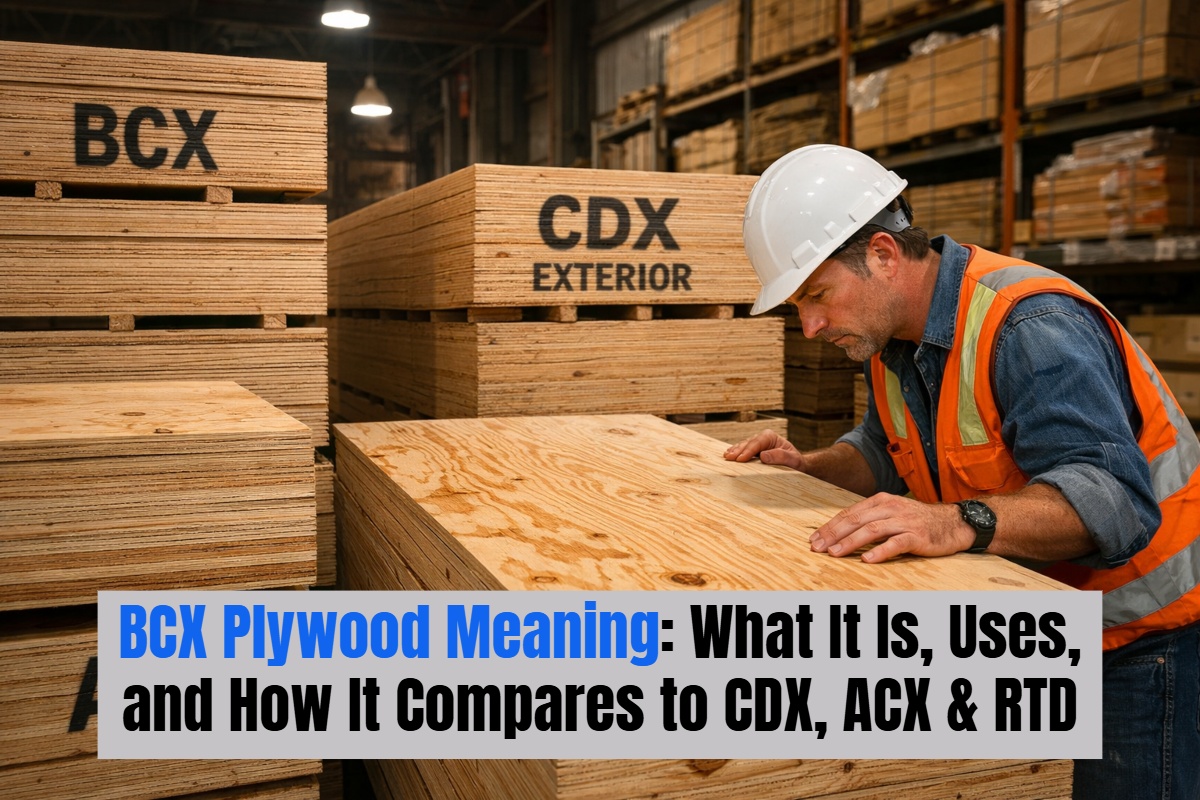
This guide decodes BCX plywood meaning from the ground up and explains exactly where it belongs in a project and where it does not.
BCX Plywood Meaning: Decoding Each Letter
The grade designation BCX is a three-part code that describes two specific things about the panel in a single stamp: the quality of the face veneer, the quality of the back veneer, and the adhesive system. Reading left to right:

B: The Face Veneer Grade
The “B” grade face is a sanded, smooth surface that permits only small, tight knots and neat round wood plugs used to repair minor defects. The face is sanded to a flat, consistent finish that accepts primer and paint without significant patching or additional preparation. A B-grade face is not quite as refined as an A-grade (which is nearly defect-free and suitable for clear staining), but it is a genuinely good-quality surface that produces professional painted results with standard preparation.
This is the face that should always be installed outward or visible in the finished project.
C: The Back Veneer Grade
The “C” grade back permits larger visible knots, patches, and some color variation across the surface. The C-grade back is unsanded and intended purely for structural use: it faces framing, subfloor structure, or any surface that will be concealed in the finished installation. The C-grade back is what makes BCX meaningfully less expensive than ACX, which has a higher-quality C-grade face relative to the D-grade in CDX, while keeping material cost below the two-good-face premium of BB or higher-grade panels.
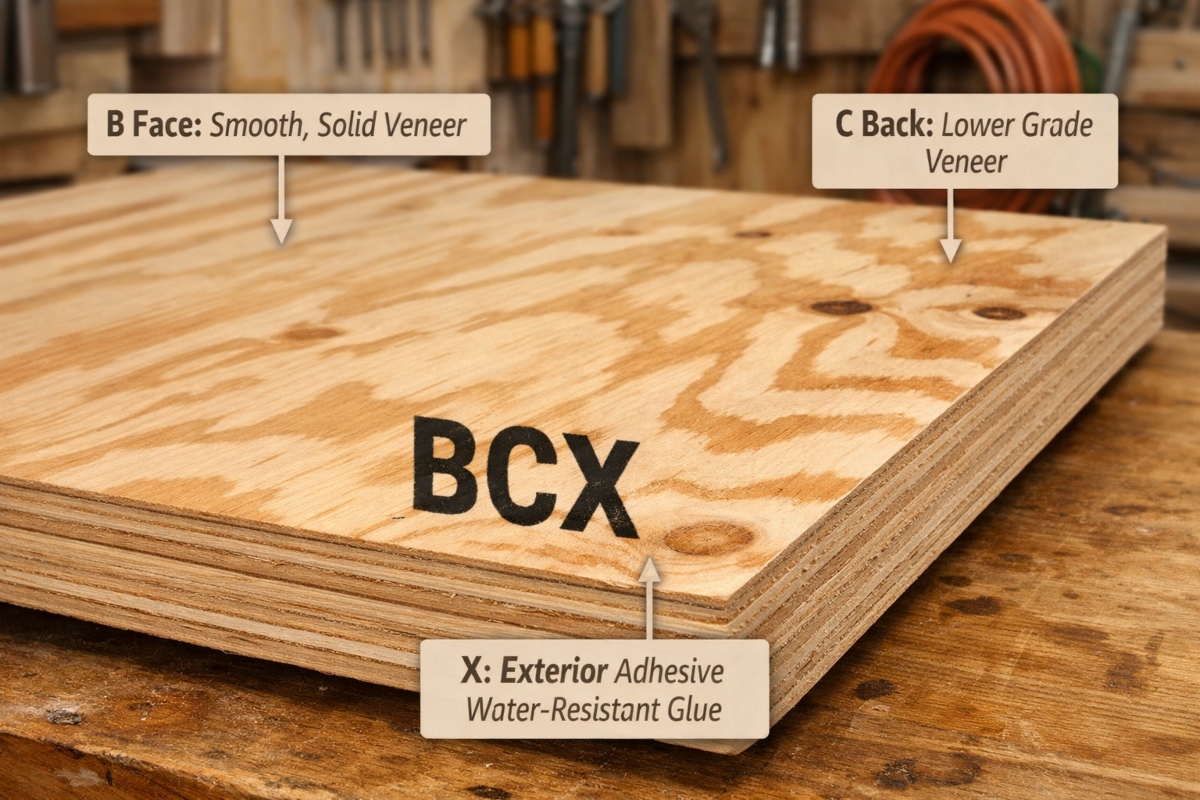
X: The Adhesive Rating
The “X” does not refer to the wood species or any structural property. It refers specifically to the adhesive system used to bond the veneer layers. X indicates Exposure 1 or exterior-rated adhesive, most commonly phenolic resin (WBP: Water Boiled Proof), which resists moisture and delamination under wet conditions.
Critically, the X rating describes the glue, not the wood. The adhesive will hold through rain, humidity, and wet-dry cycling without bond failure. The wood fiber itself is not waterproof: it will absorb moisture and is susceptible to rot and surface degradation without protective finishing. This distinction is the source of most misunderstanding about what exterior-rated plywood can and cannot do.
Key distinction: BCX plywood is moisture-resistant at the bond lines, not waterproof at the wood surface. Sealing all faces and edges with exterior primer and paint is required for any outdoor application.
For a broader overview of how plywood grades work across all panel types, our plywood grades complete guide provides the full grading framework.
How BCX Plywood Is Made
BCX plywood uses the same fundamental manufacturing process as all structural softwood plywood, but with tighter quality control on the face veneer and exterior-rated bonding throughout.
Logs, typically Douglas fir or Southern yellow pine, are peeled into thin veneers on a rotary lathe. These veneers are kiln-dried to reduce moisture content, then sorted and graded: the best veneers become the B-grade face, adequate veneers become the C-grade back and inner plies, and lower-quality material goes to other uses.
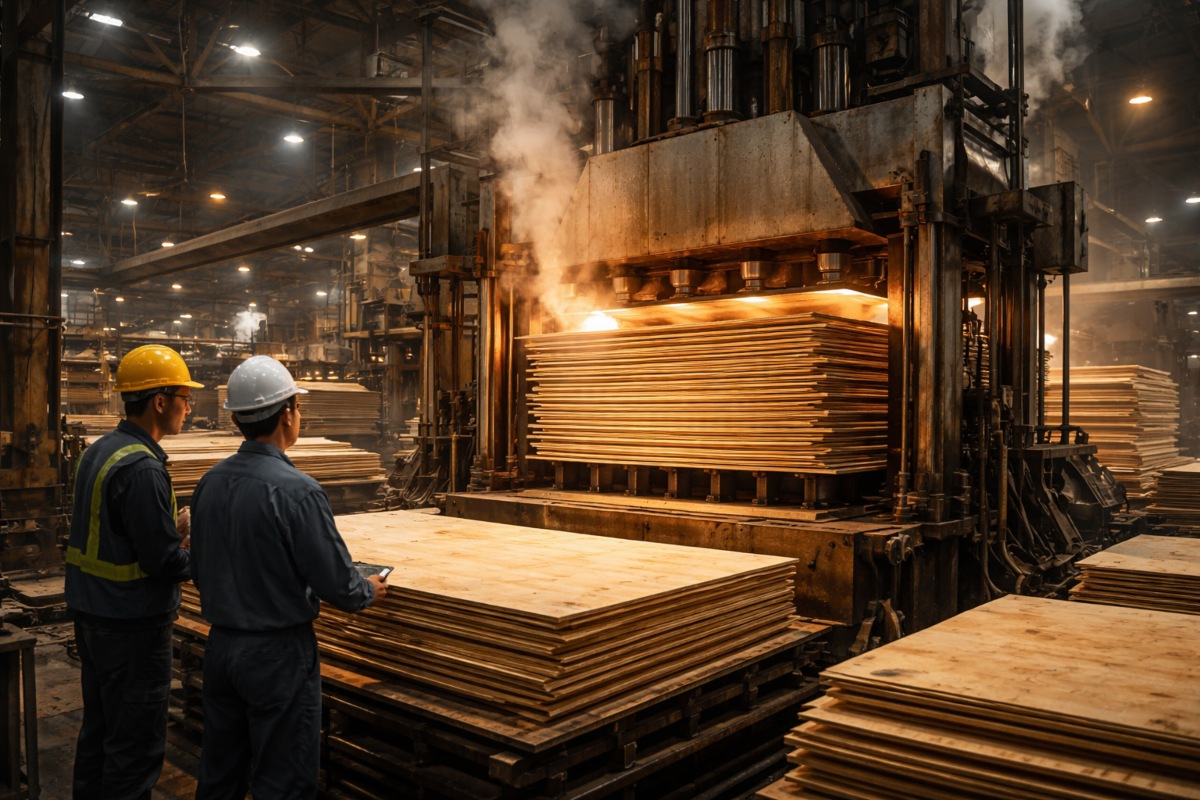
The graded veneers are stacked with each layer’s grain running perpendicular to the layer above and below (cross-lamination). This alternating grain direction is the structural foundation of all plywood: it distributes loads in multiple directions, resists warping, and gives the panel strength in both length and width.
Phenolic exterior adhesive is applied between each layer. The assembly is then hot-pressed under heat and pressure, permanently bonding all veneers into a single rigid panel. The B-face is sanded smooth as a finishing step; the C-back is left in its natural, unsanded state. Panels are trimmed to the standard 4 x 8 foot format and stamped with their grade, exposure rating, and span rating.
Key Properties of BCX Plywood
Structural Strength and Stability
BCX plywood’s cross-laminated softwood construction gives it strong bending strength in both panel directions and excellent resistance to racking (lateral distortion). It is stiff enough for subflooring, shelving, and wall sheathing applications and provides reliable load distribution across standard framing spans.
The cross-lamination also gives BCX better dimensional stability than solid wood of equivalent thickness: the alternating grain directions constrain each other, reducing seasonal movement from humidity changes and minimizing the risk of cupping or warping when properly stored and installed.
Moisture Resistance
BCX plywood’s Exposure 1 rated adhesive holds reliably through the moisture exposure typical of covered outdoor applications: construction weather exposure before cladding is installed, shed walls under siding, and soffits that may see condensation or rain splash without direct soaking. The glue will not fail from this level of moisture, and the panel will not delaminate at the bond lines.
However, sustained direct water contact without sealing will degrade the wood fiber regardless of adhesive quality. BCX is rated for temporary or intermittent moisture exposure, not permanent wet conditions. It is not appropriate for ground contact, planters, or any application where the panel remains continuously wet. For those applications, pressure-treated plywood or marine-grade panels are the correct specification.
Surface Quality
The sanded B-grade face is BCX’s primary distinguishing feature over CDX. It is flat enough to apply primer directly with minimal additional sanding, takes paint evenly, and produces a clean finished appearance for painted applications. Small knots and neat plugs may be visible before priming but are filled effectively with standard wood primer or a coat of filler primer.
The C-grade back is not a finishing surface and should not be treated as one. If both faces of a panel need to be visible or finished, step up to ACX or BCX-equivalent panels with a B/B grade designation.
BCX Plywood vs CDX, ACX, and RTD: Full Comparison
Understanding where BCX sits relative to other commonly available grades makes specification straightforward:
| Grade | Face | Back | Adhesive | Best For | Cost |
| BCX | B (sanded) | C | Exterior (X) | Painted visible surfaces, soffits, shelving | Moderate |
| CDX | C | D (rough) | Exterior (X) | Hidden structural sheathing, roof deck, shed framing | Budget |
| ACX | A (smooth) | C | Exterior (X) | Stained outdoor surfaces, decorative panels | Higher |
| RTD | C | C | Exterior | Roof decking with moisture resistance during construction | Budget |
| BC (interior) | B | C | Interior | Interior cabinets, indoor shelving | Moderate |
| Marine | A/B | A/B | WBP (void-free) | Boats, docks, constant moisture | Premium |
BCX vs CDX: Which to Choose?
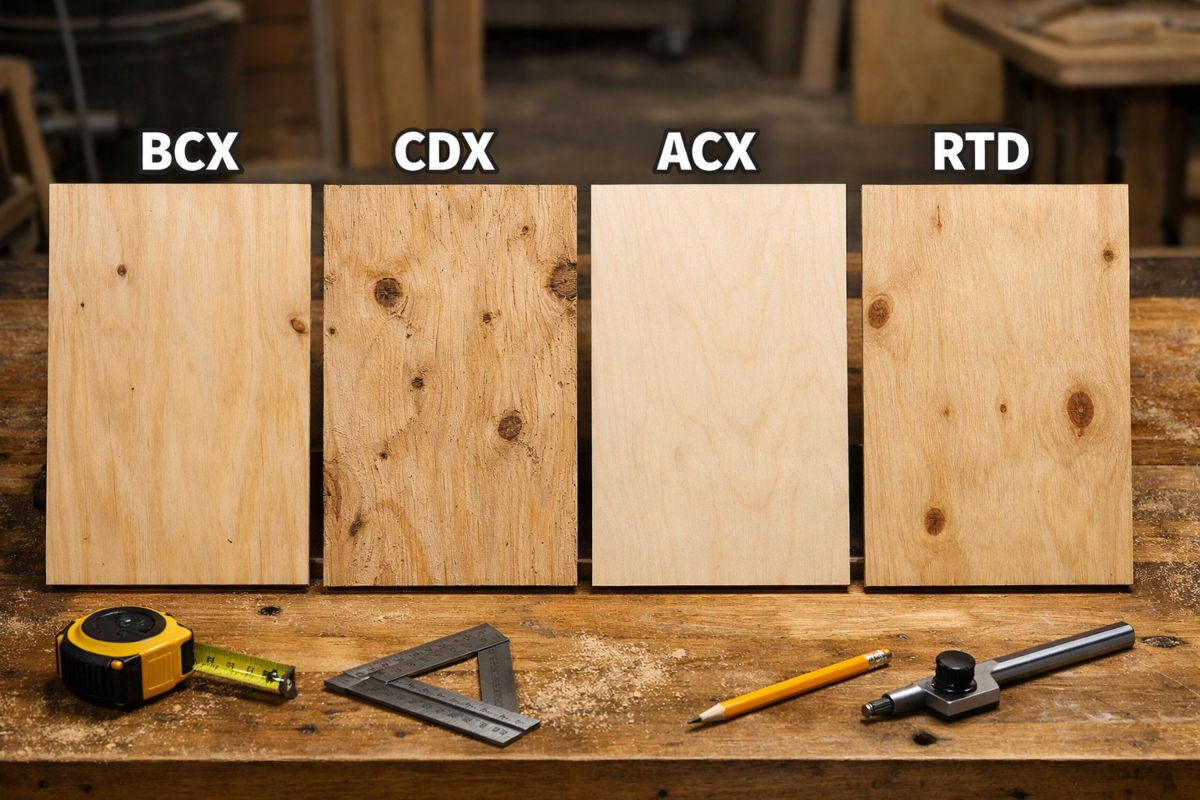
The difference between BCX and CDX comes down to face quality and visibility. Both use exterior-rated adhesive and perform similarly in structural applications. The decision is straightforward: if the panel will be covered by siding, shingles, or another finish material and will never be visible, CDX saves money with no practical trade-off. If one face will remain visible in the finished project, BCX’s sanded B-grade face delivers a paintable surface that CDX’s rough C-face cannot.
For construction budgeting, CDX should be the default for hidden sheathing applications; BCX should be specified only where the face quality is actually needed.
BCX vs ACX: When Does the Extra Grade Matter?
BCX and ACX share the same C-grade back and the same exterior adhesive. The only difference is the face grade: B versus A. An A-grade face is essentially defect-free, with no knots or plugs visible, making it suitable for stained clear-finish applications where any imperfection would be visible through the transparent finish coat.
For painted applications, this difference is largely irrelevant: primer fills the minor imperfections in a B-grade face, and the paint completely covers them. Paying for ACX for a painted project adds cost without a meaningful quality benefit visible in the finished result. ACX earns its premium for stained, varnished, or clear-finished applications where the face grain and texture will be on display. For most painted outdoor furniture and utility projects, BCX is the smarter specification.
BCX vs RTD Plywood: What Does RTD Mean?
RTD stands for Resin-Treated Dried, a specific surface treatment used primarily on roof decking plywood. RTD plywood has a resin-treated surface layer that significantly slows moisture absorption during the period between installation and when the roofing material is applied, protecting the structural integrity of the deck during construction weather exposure.
RTD panels typically have a C/C or C-grade face without a sanded finish surface. They are not intended for applications where the panel face will be visible or painted: their purpose is purely structural protection during the construction window. BCX, by contrast, has a smooth, paint-ready B-grade face designed for applications where one surface will remain visible.
The practical rule: specify RTD for roof decking where moisture protection during construction is the priority; specify BCX for shed walls, soffits, and any visible exterior panel where a paintable face is needed.
Is BCX Plywood Pressure Treated?
No. Standard BCX plywood is not pressure treated. Pressure treatment is a separate manufacturing process that impregnates the wood fiber with chemical preservatives, typically copper-based compounds, to resist rot, mold, and termite attack from within the wood itself. BCX uses exterior-rated adhesive (the X designation), which is an adhesive characteristic, not a wood treatment.
For applications involving ground contact, direct soil exposure, or sustained water contact, pressure-treated plywood is required. BCX in these applications will fail: the adhesive may hold, but the untreated wood fiber will rot. Never substitute BCX for pressure-treated plywood in ground-contact or permanently wet applications.
Is BCX Plywood Waterproof?
No. BCX plywood is moisture resistant at the bond lines, not waterproof. The WBP phenolic adhesive prevents delamination through repeated moisture exposure, but the wood fiber absorbs water and is susceptible to swelling, surface degradation, and rot if kept continuously wet without protective finishing.
BCX is suitable for intermittent or incidental moisture exposure in protected applications: covered exterior walls, soffits under eaves, shelving in humid workshops, and shed panels under cladding. It is not suitable for sustained direct rain exposure without a thorough exterior finish, marine environments, or ground contact.
What Is BCX Plywood Used For?
BCX plywood’s combination of a smooth B-grade face and exterior adhesive makes it the right specification for a defined range of applications that sit between rough construction sheathing and premium cabinet-grade panels.
Soffits and Porch Ceilings
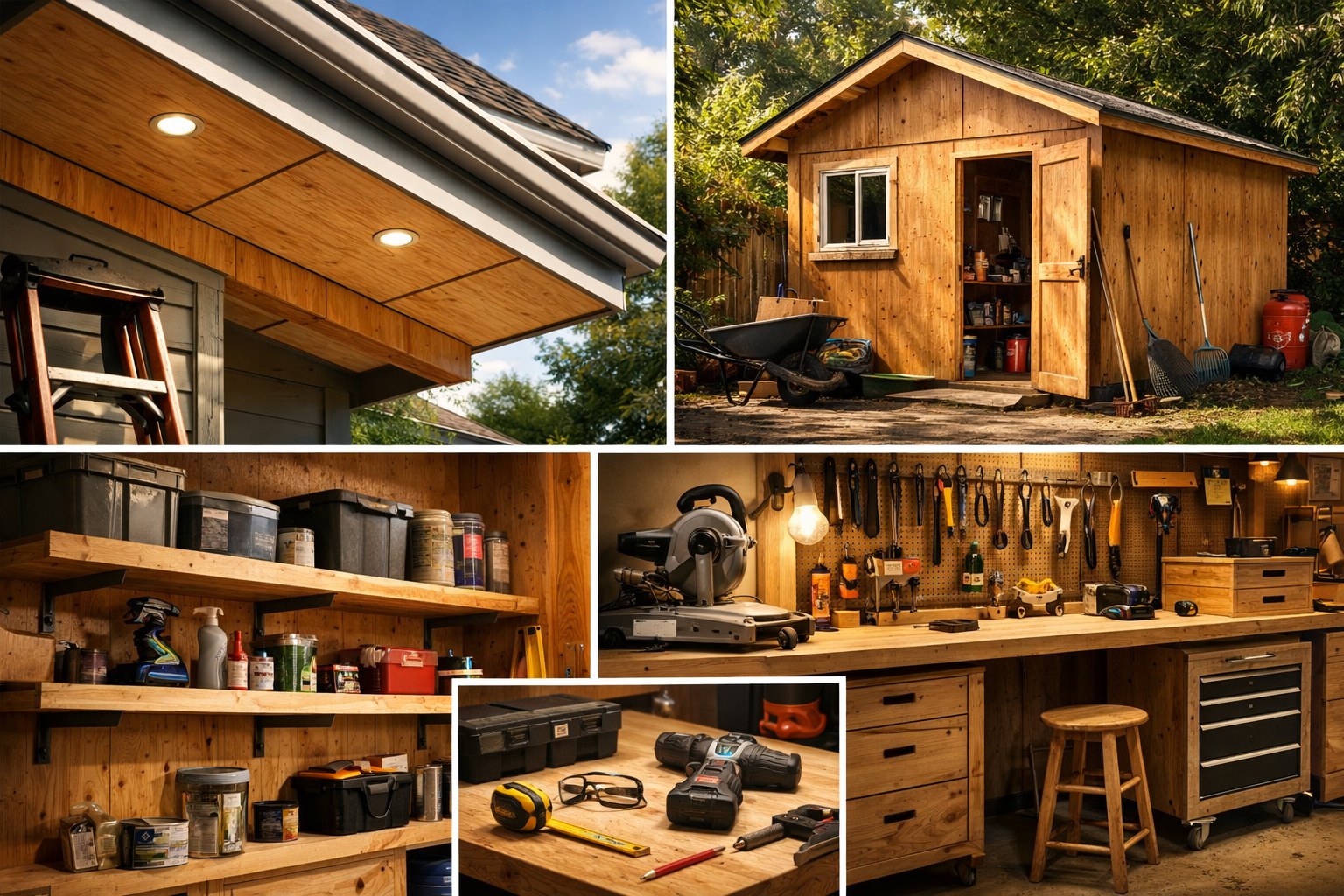
The most common application for BCX plywood is soffit panels: the horizontal panels that close the underside of roof overhangs. Soffits are exposed to the weather indirectly, seeing condensation, reflected moisture, and occasional rain splash, but are protected from direct rain by the overhanging roof above. The exterior-rated adhesive handles this moisture exposure reliably, and the sanded B-grade face paints cleanly to a smooth, professional appearance.
Porch ceilings share the same exposure conditions and use BCX for the same reasons.
Exterior Trim and Shed Siding
For shed wall panels and barn siding that will be covered by exterior cladding or paint, BCX is the specification that provides a paintable face without paying for the two-smooth-face premium of higher grades. The C-back faces the framing structure; the B-face provides the painted exterior.
For shed walls where no cladding will be applied (the plywood itself is the siding), BCX is the minimum grade that produces an acceptable painted result. CDX’s D-grade back would be used as the siding face in a lower-cost build, but BCX produces a meaningfully better painted finish.
Garage Shelving and Workshop Panels
In garages and workshops where humidity is a factor (unheated spaces with temperature fluctuations), BCX plywood provides a suitable material for shelving, workbench panels, and cabinet carcasses that need exterior adhesive without the cost of premium hardwood panels. The smooth face takes paint evenly for a clean workshop appearance, and the exterior glue prevents delamination in the damp conditions that can occur in unheated garages.
Subfloors and Underlayment
BCX plywood is appropriate for subfloor and underlayment applications in covered structures where some moisture exposure is anticipated during construction. The exterior adhesive protects the panel during the construction phase before the finished flooring is installed and the structure is weatherproofed. It is not appropriate for ground-contact subfloors, which require pressure-treated panels.
For subfloor specification guidance, see our subfloor plywood guide for detailed structural and moisture requirements.
Outdoor Furniture (Protected Applications)
BCX plywood is suitable for outdoor furniture that will be kept under cover: covered patio tables, storage benches with a roof over them, or garden storage boxes under a deck overhang. For fully exposed outdoor furniture that will face direct rain and UV without overhead protection, ACX or marine plywood with thorough sealing is a stronger specification. BCX in a fully exposed application will require more frequent maintenance than ACX to maintain moisture protection.
Concrete Formwork (Light Duty)
BCX plywood can be used for simple, light concrete forms where the smooth B-face produces a cleaner concrete surface finish than CDX’s rough face. For repetitive or heavy-duty formwork applications, film faced plywood with a phenolic resin surface is the standard industrial specification, offering far more reuse cycles and better release from concrete. Our film faced plywood product page covers formwork-grade panel specifications in detail.
Where Not to Use BCX Plywood
BCX plywood is not the right specification for every application that comes to mind for an exterior-rated panel. Knowing its limits prevents costly failures:
- Ground contact: BCX will rot in contact with soil. Use pressure-treated plywood only.
- Continuously wet applications: standing water, planters with soil, or any surface that remains wet will degrade BCX regardless of adhesive rating. Marine plywood or pressure-treated panels are required.
- Marine environments: BCX lacks the void-free core construction of marine-grade plywood and is not appropriate for boats, docks, or waterside applications with sustained moisture.
- High-end visible natural finishes: if the panel will be stained or clear-finished and the grain is part of the design, BCX’s B-grade face may show plugs and minor imperfections that are unacceptable. Specify ACX for stained exterior applications.
- Food-contact surfaces: BCX is not treated for food safety and is not appropriate for cutting surfaces, food prep areas, or kitchen countertops.
Practical Tips for Working with BCX Plywood
Installation: Always B-Face Out
Install BCX with the B-grade face facing outward or visible in all applications. The C-grade back should face framing, substrate, or any concealed surface. Mixing up the faces produces a rough, unpaintable visible surface that cannot be recovered without replacing the panel.
Sealing Edges Before Installation
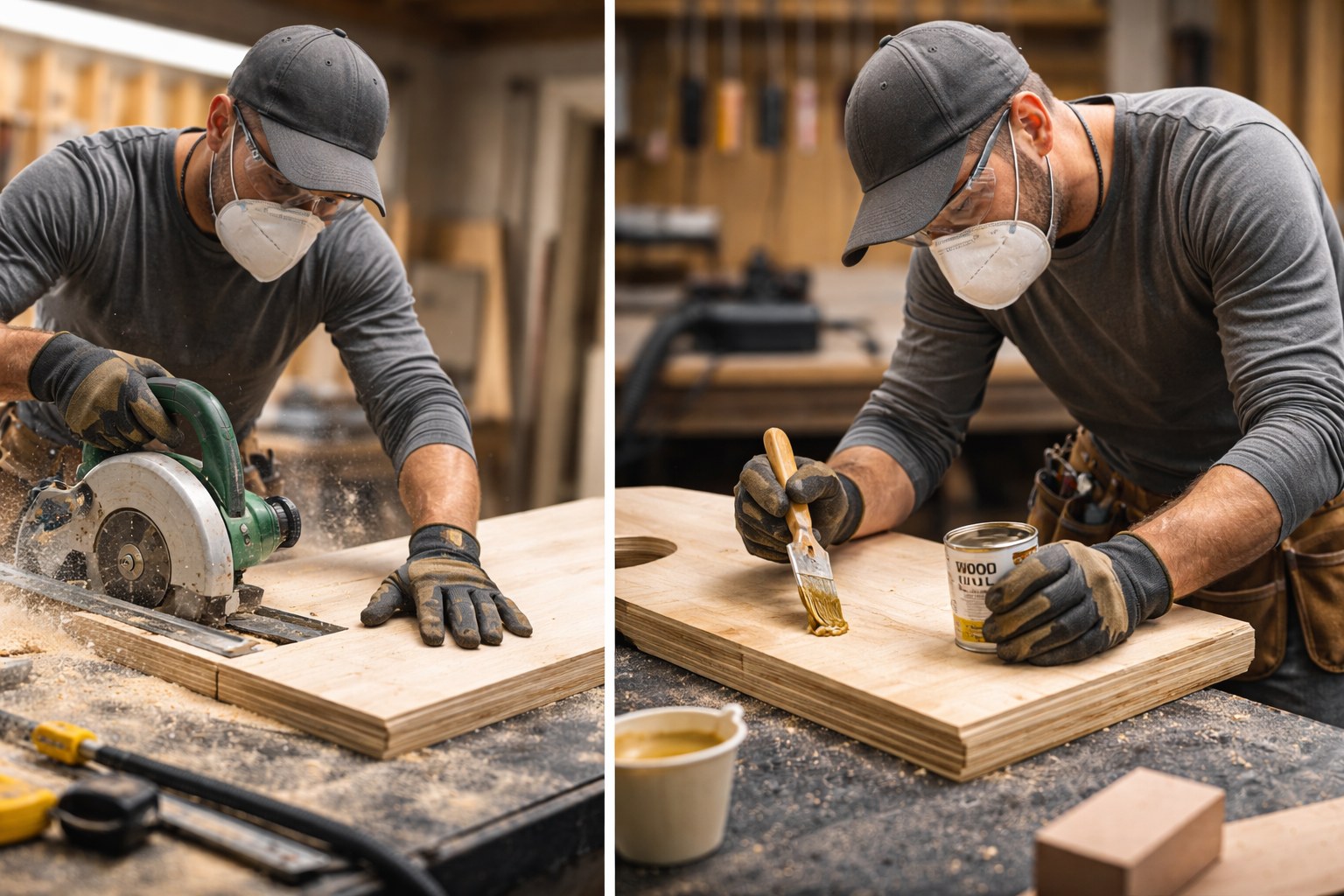
Seal all cut edges before installation with an oil-based primer, epoxy sealer, or purpose-made edge sealant. Cut edges expose the end grain of the veneer layers, which absorbs moisture many times faster than the face grain. Unsealed edges are the most common cause of premature plywood failure in exterior applications: moisture enters through the edge, causes the inner plies to swell, and initiates delamination from the inside even when the WBP adhesive keeps the bond lines intact.
Two coats of edge sealant, allowed to dry fully between applications, is the minimum for any exterior use.
Priming and Painting
Sand the B-face lightly with 120 to 150 grit to remove factory marks and smooth any plugged repairs. Apply exterior-grade primer to all faces and edges before the topcoat, not just the visible face. Priming the back face prevents moisture from entering through the concealed side, which is frequently neglected and is a meaningful failure point.
Apply a minimum of two coats of exterior topcoat, allowing each coat to dry fully. Choose a paint rated for exterior wood siding or trim for maximum UV and moisture resistance.
Storage Before Installation
Store BCX panels flat and off the ground in a dry, covered location. Stacking panels on edge or at angles causes warping that cannot always be reversed once the panel has taken a set. If panels must be stored at a construction site before installation, cover them with a weatherproof tarp and elevate them on timber bearers to allow air circulation beneath the stack.
BCX Plywood vs Hardwood Panels: When to Choose Which
BCX plywood is a softwood structural panel rather than a hardwood furniture-grade panel. Understanding where each category belongs prevents misapplication:
Choose BCX plywood when: the application is structural or semi-structural, the visible face will be painted, exterior moisture resistance is needed, and budget efficiency is a priority. Soffits, shed siding, garage shelving, and utility cabinetry are BCX territory.
Choose hardwood plywood when: surface quality, screw-holding performance, and structural consistency across the full panel depth matter more than cost. Kitchen cabinet carcasses, fitted furniture, and applications requiring a natural wood finish are better served by hardwood panels.
For hardwood panel options with WBP adhesive for moisture-prone applications, our commercial plywood product range covers available specifications.
Frequently Asked Questions
What does BCX mean in plywood?
BCX stands for B-grade face, C-grade back, and X (exterior-rated adhesive). The B-grade face is sanded smooth and suitable for paint; the C-grade back allows knots and patches and is intended for hidden structural use. The X indicates the panel uses exterior-rated phenolic adhesive (Exposure 1) that resists moisture delamination.
Is BCX plywood waterproof?
No. BCX plywood is moisture resistant at the bond lines, not waterproof. The exterior-rated adhesive prevents delamination through wet-dry cycling and intermittent moisture exposure, but the wood fiber absorbs water and will degrade without protective surface finishing. All faces and edges must be sealed with exterior primer and paint for outdoor applications.
What is BCX plywood used for?
BCX plywood is used for soffits and porch ceilings, shed and barn siding, exterior trim, garage shelving, subflooring in covered structures, outdoor furniture in protected locations, and light concrete formwork. It is the specification for applications needing one paintable face with exterior adhesive.
What is the difference between BCX and CDX plywood?
Both BCX and CDX use exterior-rated adhesive. The difference is face quality: BCX has a sanded B-grade face that accepts paint cleanly; CDX has a rougher C-grade face and D-grade back. CDX is less expensive and appropriate for hidden structural sheathing. BCX is the right choice when one face of the panel will remain visible and painted in the finished project.
What does RTD plywood mean?
RTD stands for Resin-Treated Dried. RTD panels have a resin-treated surface layer that slows moisture absorption during the construction window before roofing material is installed. RTD is primarily used for roof decking and has a C-grade or utility face unsuitable for painting. BCX has a smooth, sanded B-grade face and is specified where a visible painted surface is needed, not for hidden structural roof decking.
Is BCX plywood the same as pressure-treated plywood?
No. BCX plywood is not pressure treated. The X designation refers to the adhesive rating, not a wood preservative treatment. Pressure-treated plywood has chemical preservatives impregnated into the wood fiber for rot, mold, and insect resistance. BCX is not appropriate for ground-contact applications, which require properly rated pressure-treated panels.
Can I use BCX plywood outdoors?
Yes, for protected outdoor applications where the panel sees intermittent or indirect moisture rather than direct sustained rain exposure. Soffits, covered shed walls, and covered porch ceilings are appropriate BCX applications outdoors. For fully exposed applications such as open garden furniture or un-covered exterior walls, ACX with thorough sealing is a stronger specification. Seal all edges and faces with exterior primer and paint in any outdoor use.
Conclusion
BCX plywood fills a specific and practical position in the softwood panel range. Its sanded B-grade face gives it the paintable surface quality that CDX cannot match, at a lower cost than the near-perfect A-grade face of ACX. Its exterior-rated adhesive makes it suitable for the moisture conditions of covered outdoor applications where interior-grade panels would eventually fail at the bond lines.
Use BCX where one face needs to be visible and painted, where intermittent moisture exposure is a factor but sustained soaking is not, and where budget efficiency matters more than achieving the highest possible surface quality. Use CDX where the panel will be hidden and appearance is irrelevant. Use ACX where a stained or clear-finished exterior surface is required. Use pressure-treated panels for any ground-contact application.
For hardwood structural panels with superior screw-holding and surface consistency for interior cabinetry, explore our birch plywood and commercial plywood product ranges. For construction-grade formwork with phenolic surface protection, our film faced plywood and anti-slip film faced plywood cover the full range of heavy-duty panel specifications. Our types of plywood guide provides comprehensive context for comparing all panel categories before making a specification decision.

Bình luận