


Eucalyptus Plywood vs Birch Plywood: Pros, Cons & Which One You Should Choose
Choosing between eucalyptus plywood and birch plywood is not always straightforward. Birch has long been the industry standard for furniture and CNC work, but rising prices, supply disruptions, and growing sustainability concerns have pushed many buyers to consider alternatives.
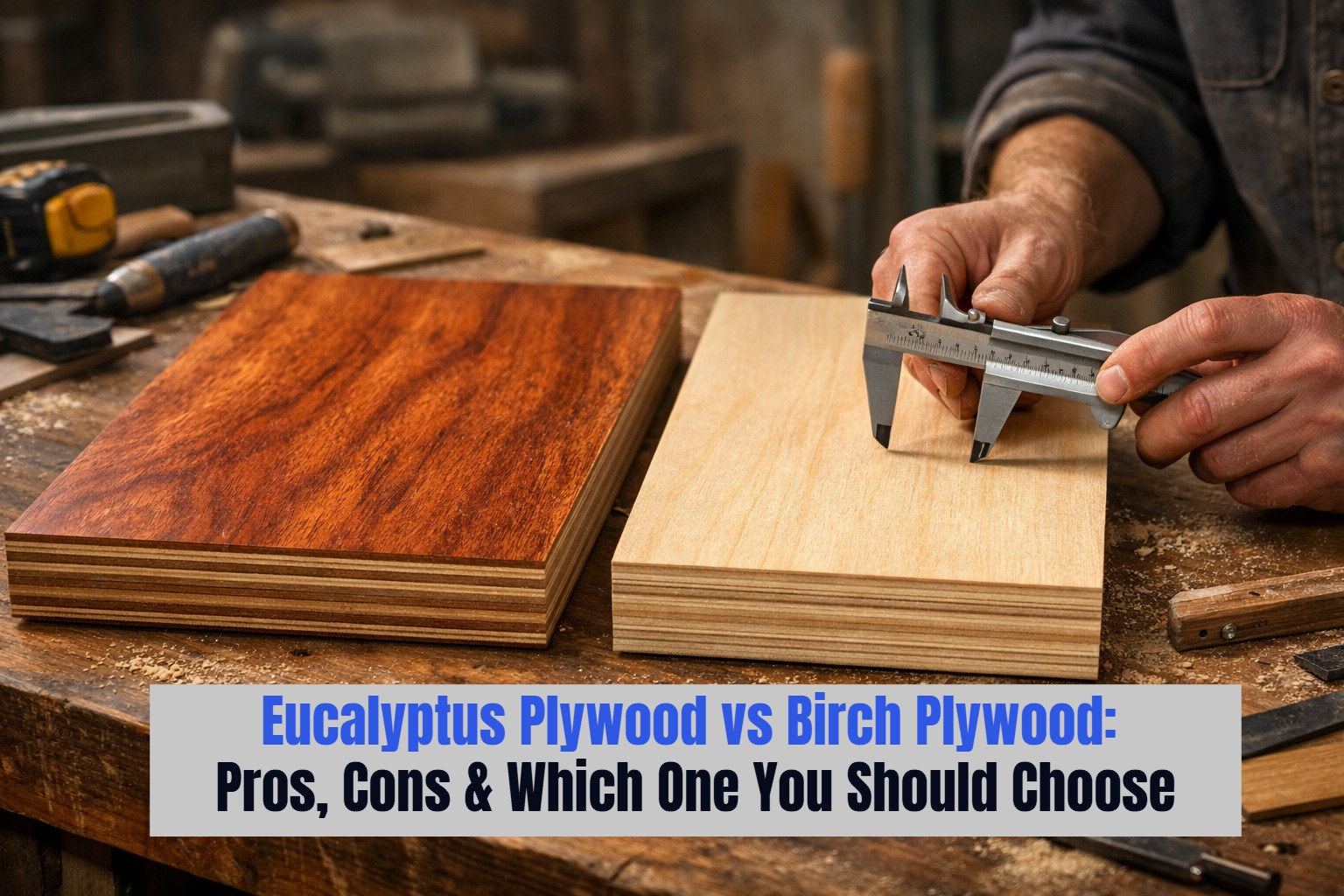
This detailed eucalyptus plywood vs birch plywood comparison breaks down the key differences in strength, moisture resistance, appearance, cost, and real-world applications so you can confidently select the right material for your project. For a dedicated overview of each material, see our eucalyptus plywood guide and birch plywood complete guide.
Eucalyptus Plywood vs Birch Plywood: Key Differences at a Glance
Before diving into the detailed comparison, here is a side-by-side summary of the most important specification differences between eucalyptus and birch plywood:

| Feature | Eucalyptus Plywood | Birch Plywood |
| Density | 550 to 620 kg/m3 (medium-high) | 650 to 700 kg/m3 (high) |
| Janka Hardness (solid timber) | ~1,125 lbf | ~1,260 to 1,470 lbf |
| Moisture Resistance | Excellent (natural oils) | Moderate; susceptible without treatment |
| Pest Resistance | Good (density and oils) | Lower; larger pores |
| Grain Appearance | Bold, reddish-brown, interlocking | Fine, pale golden-tan, subtle |
| Staining | Even, consistent absorption | Can be blotchy; conditioner recommended |
| Workability | Good; CNC and routing capable | Excellent; very consistent machining |
| Cost | 20 to 30% cheaper than birch | Higher; premium positioning |
| Sustainability | Fast-growing (5 to 7 years) | Slower-growing; managed forests |
| Availability | Growing; multi-region supply | Strong; some supply chain pressure |
| Best For | Humid areas, cabinetry, cost-sensitive builds | Fine furniture, CNC precision, clean finishes |
What Is Eucalyptus Plywood?
Eucalyptus plywood is a hardwood panel made from eucalyptus wood veneers, bonded with structural adhesive in a cross-laminated construction. Eucalyptus trees grow primarily in Australia, Southeast Asia, South America, and Africa, and are notable for reaching harvestable maturity in just 5 to 7 years, compared to several decades for most traditional hardwood species. This fast growth makes eucalyptus one of the most renewable commercial timber species available.
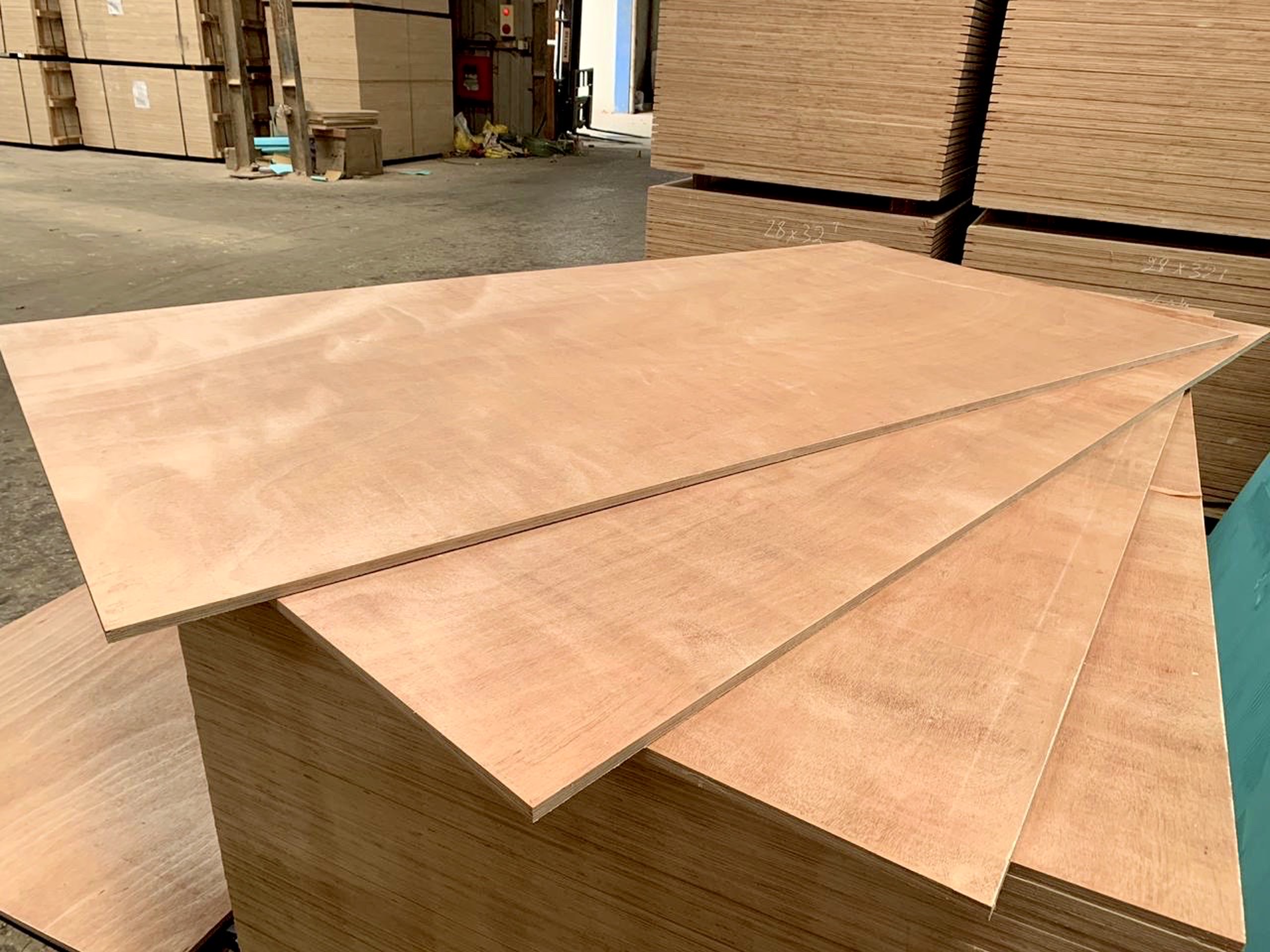
The finished plywood panel has a density of 550 to 620 kg/m3, a warm reddish-brown grain with straight to interlocking patterns, and natural oils that provide inherent moisture and pest resistance without requiring additional chemical treatment. It is available in thicknesses from 6 mm to 30 mm and in grades ranging from BB/BB furniture-grade to film-faced construction panels. For a full breakdown of material properties, specifications, and applications, see our complete eucalyptus plywood guide.
What Is Birch Plywood?
Birch plywood is a hardwood panel made from birch wood veneers, with Baltic birch, sourced primarily from Scandinavia, Finland, and Russia, being the most widely specified commercial variant. Baltic birch plywood uses all-birch-veneer construction throughout every ply, with no softwood filler layers, which gives it consistent density and structural performance from face to core.
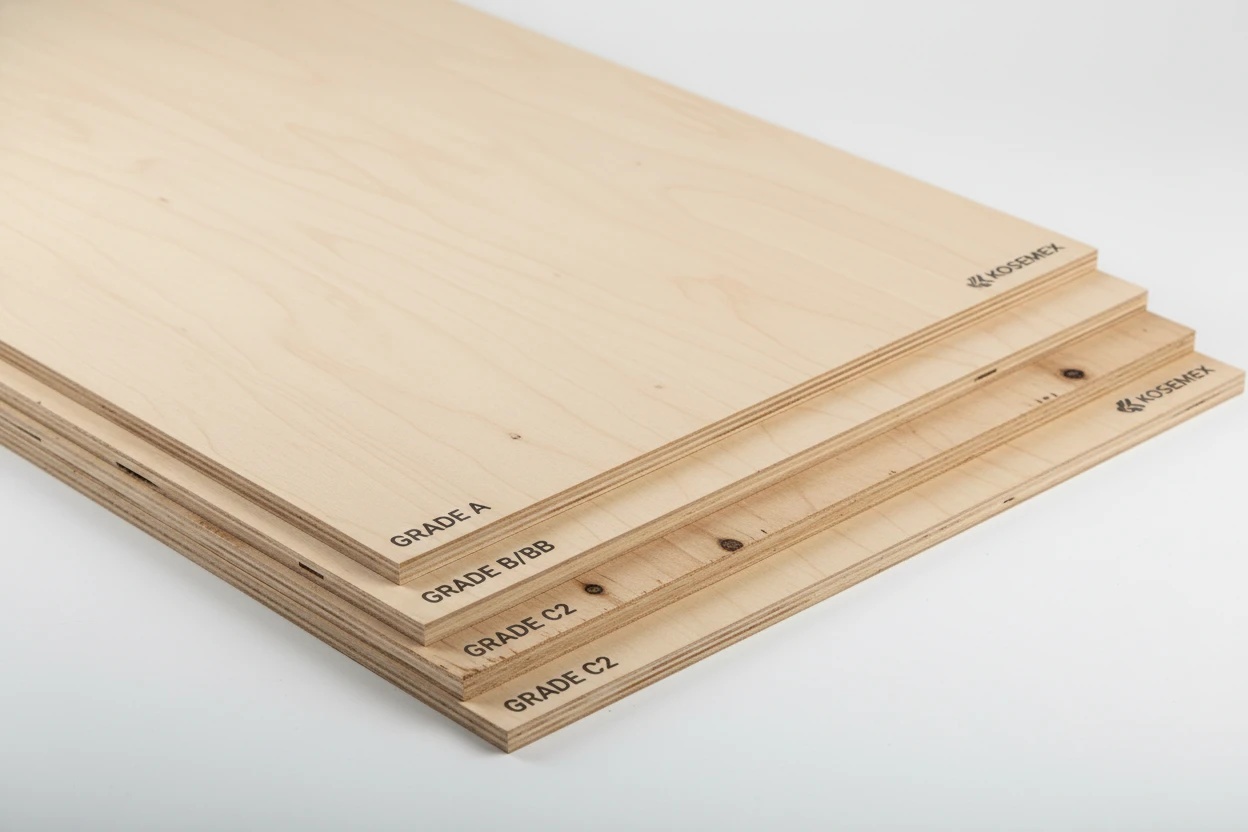
Birch plywood has a density of 650 to 700 kg/m3, a pale golden-tan color with fine, subtle grain, and a Janka hardness of approximately 1,260 to 1,470 lbf depending on the specific birch species. It is available in thicknesses from 3 mm to 30 mm and is the dominant specification for quality furniture manufacturing, fitted cabinetry, and CNC production work globally. Our birch plywood grades guide covers the grading system in detail.
Moisture Resistance: Eucalyptus vs Birch Plywood
Moisture resistance is the single most important area where eucalyptus plywood and birch plywood diverge, and it is the property that most reliably determines which material is the right choice for a given environment.
Eucalyptus Plywood Moisture Resistance
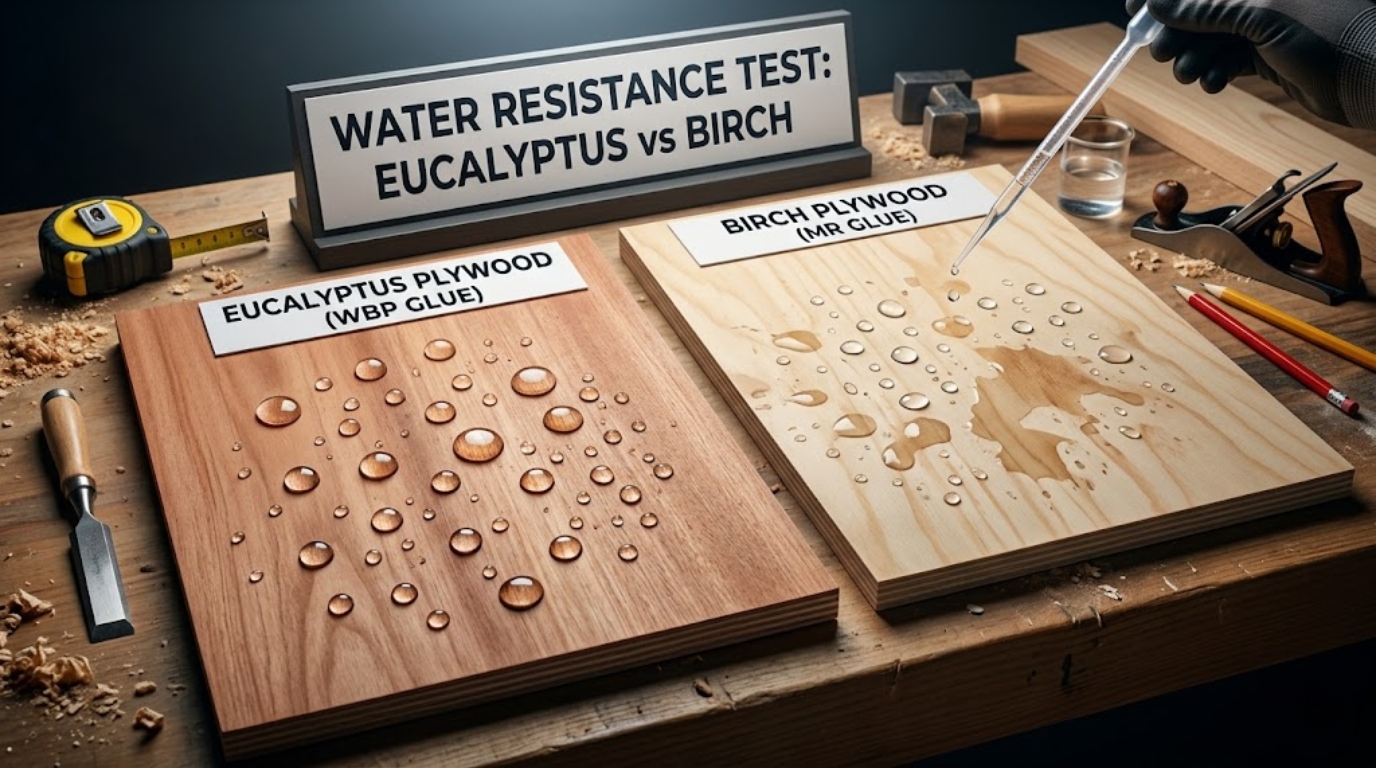
Eucalyptus wood contains natural oils that act as an inherent moisture barrier, slowing the absorption of water into the panel and reducing the risk of swelling, warping, and delamination in humid conditions. This characteristic is present in the timber itself and carries through into the plywood panel regardless of whether a WBP or MR adhesive is used.
In practice, eucalyptus plywood outperforms birch plywood in humid interior environments such as kitchens and bathrooms, in applications where the panel will face incidental water contact, and in settings where humidity levels fluctuate significantly. With WBP adhesive, eucalyptus plywood is suitable for applications that require genuine waterproof bonding throughout the panel.
Birch Plywood Moisture Resistance
Birch plywood’s moisture performance is more dependent on the adhesive and finish applied than on the timber’s intrinsic properties. Birch wood has relatively large pores that can absorb moisture unevenly, which leads to differential swelling across the panel face and increases the risk of warping in sustained humid conditions. Without adequate sealing, birch plywood used in kitchens or bathrooms will eventually show dimensional movement.
Baltic birch plywood bonded with WBP phenolic adhesive performs significantly better in wet conditions than MR-bonded birch, because the waterproof bond lines prevent delamination even if the veneer absorbs moisture. But the veneer itself remains more vulnerable to surface moisture than eucalyptus, making a well-sealed finish more critical for birch in any moisture-exposed application. For guidance on sealing and finishing birch plywood effectively, see our how to finish birch plywood guide.
Verdict: Eucalyptus plywood wins on moisture resistance. Its natural oil content provides built-in protection that birch requires additional treatment to match. For kitchens, bathrooms, humid climates, or outdoor-adjacent applications, eucalyptus is the more naturally resilient choice.
Strength and Hardness: Eucalyptus vs Birch Plywood
Density and Panel Stiffness
Birch plywood has a higher density than eucalyptus, typically 650 to 700 kg/m3 compared to eucalyptus at 550 to 620 kg/m3. This density advantage translates into greater panel stiffness and better resistance to surface denting under the same load conditions. For structural furniture components, shelving, and applications where the panel needs to carry sustained weight across unsupported spans, birch plywood’s higher density is a genuine structural advantage.
That said, eucalyptus plywood’s density is still solidly in the medium-high range for hardwood plywood and significantly higher than softwood panels. For most standard furniture and cabinetry applications, both materials provide more than adequate structural performance, and the density difference only becomes decisive in heavy-load or precision-critical applications.
Janka Hardness
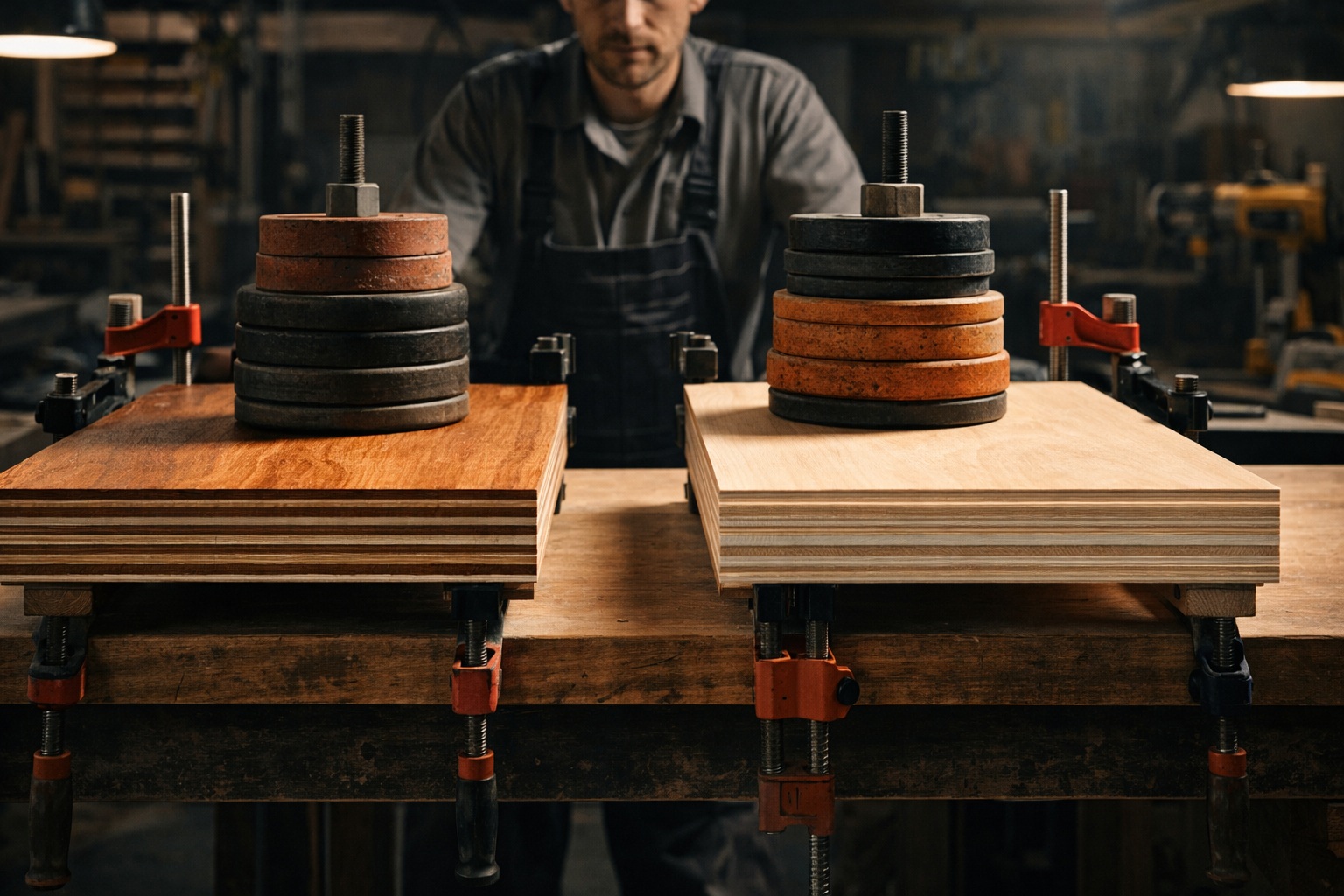
In terms of solid timber hardness, yellow birch rates at approximately 1,260 lbf on the Janka scale, while hard maple (the most common birch plywood comparison species) rates at approximately 1,470 lbf. Solid eucalyptus timber comes in at approximately 1,125 lbf. Birch plywood is therefore somewhat harder than eucalyptus at the solid timber level, which means birch plywood faces are marginally more resistant to surface scratching and denting.
In plywood form, the practical difference in surface hardness is smaller than the solid timber comparison suggests, because the cross-laminated construction distributes surface loads across multiple plies. Both materials are genuine hardwood panels that will outperform softwood plywood in surface hardness applications.
Screw-Holding and Fastener Performance
Both eucalyptus and birch plywood offer strong screw-holding performance due to their hardwood density. Birch plywood, with its slightly higher density and all-birch-veneer construction in Baltic birch panels, has a marginal edge in fastener holding per unit of panel material. However, eucalyptus plywood’s density is sufficient to provide reliable screw-holding across all standard furniture and cabinetry applications without issue.
Verdict: Birch plywood wins on hardness and density. It is the stronger specification for heavy-load structural applications, precision furniture, and situations where maximum screw-holding matters. For standard furniture and cabinetry use, eucalyptus plywood’s strength is fully adequate.
Appearance and Grain: Eucalyptus vs Birch Plywood
Eucalyptus Plywood Appearance
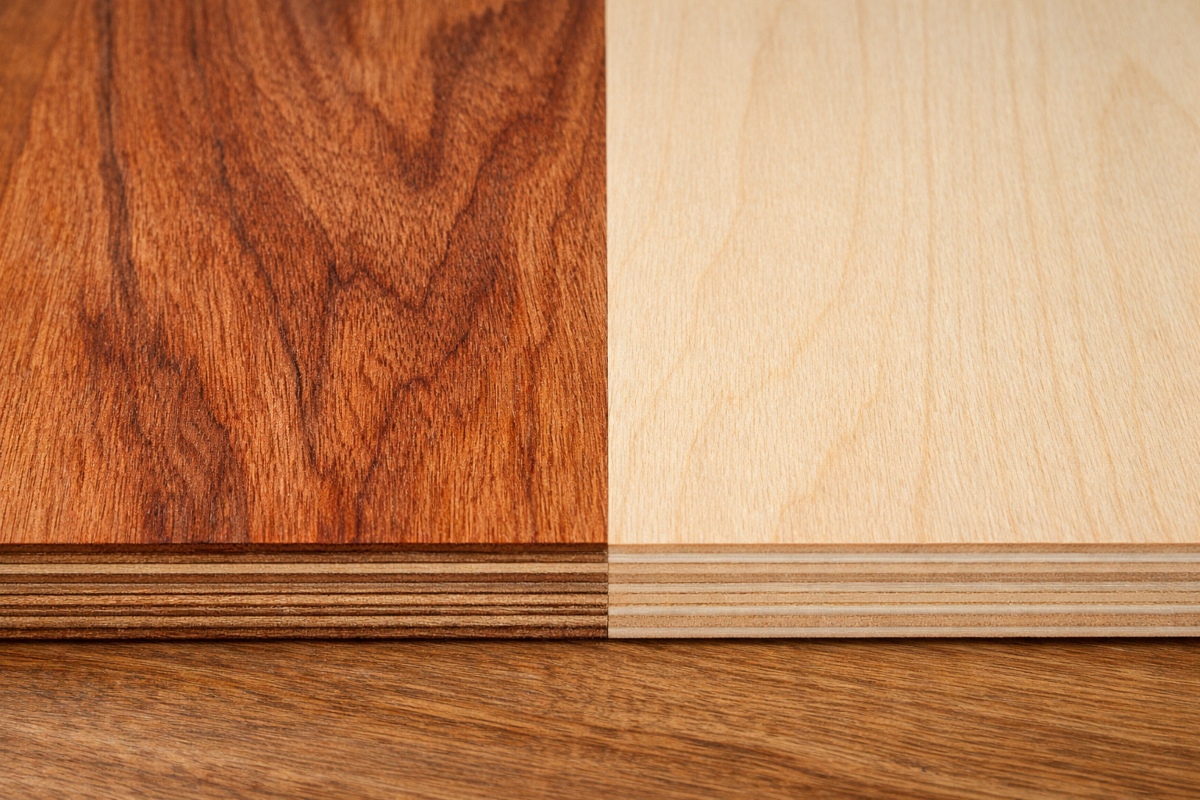
Eucalyptus plywood has a warm, visually distinctive appearance. The grain is pronounced, featuring straight to interlocking patterns with a reddish-brown base color that varies subtly across the panel. This makes eucalyptus plywood a strong design statement when used as a visible surface: it has a bold, natural wood character that suits rustic, tropical-modern, and warm contemporary interiors.
The more pronounced grain also means eucalyptus plywood is less suitable for applications requiring a neutral, background surface. In modern minimalist designs where the panel itself is not meant to draw attention, eucalyptus’s bold grain can be more visual presence than the design calls for.
Birch Plywood Appearance
Birch plywood’s appearance is defined by restraint. The grain is fine and subtle, the color is a pale golden tan that reads as almost neutral in many lighting conditions, and the overall surface character is clean and consistent. This makes birch plywood a versatile backdrop material: it works with a wide range of finishes and design styles without competing visually with other elements of the space.
Baltic birch plywood has developed a design identity of its own in Scandinavian and Nordic-influenced interior design, where the pale, honest wood surface is a deliberate aesthetic choice rather than something to be hidden under paint or laminate. The visible ply edges of Baltic birch have also become a design feature in furniture where a structural-looking, layered edge is part of the design language. For ideas on how birch plywood’s appearance is used in furniture design, see our birch plywood furniture ideas guide.
Verdict: Neither is objectively better. Eucalyptus suits bold, warm, natural aesthetics. Birch suits clean, neutral, and Scandinavian-influenced designs. The right choice depends entirely on the visual direction of the project.
Staining and Finishing: Eucalyptus vs Birch
Finishing Eucalyptus Plywood
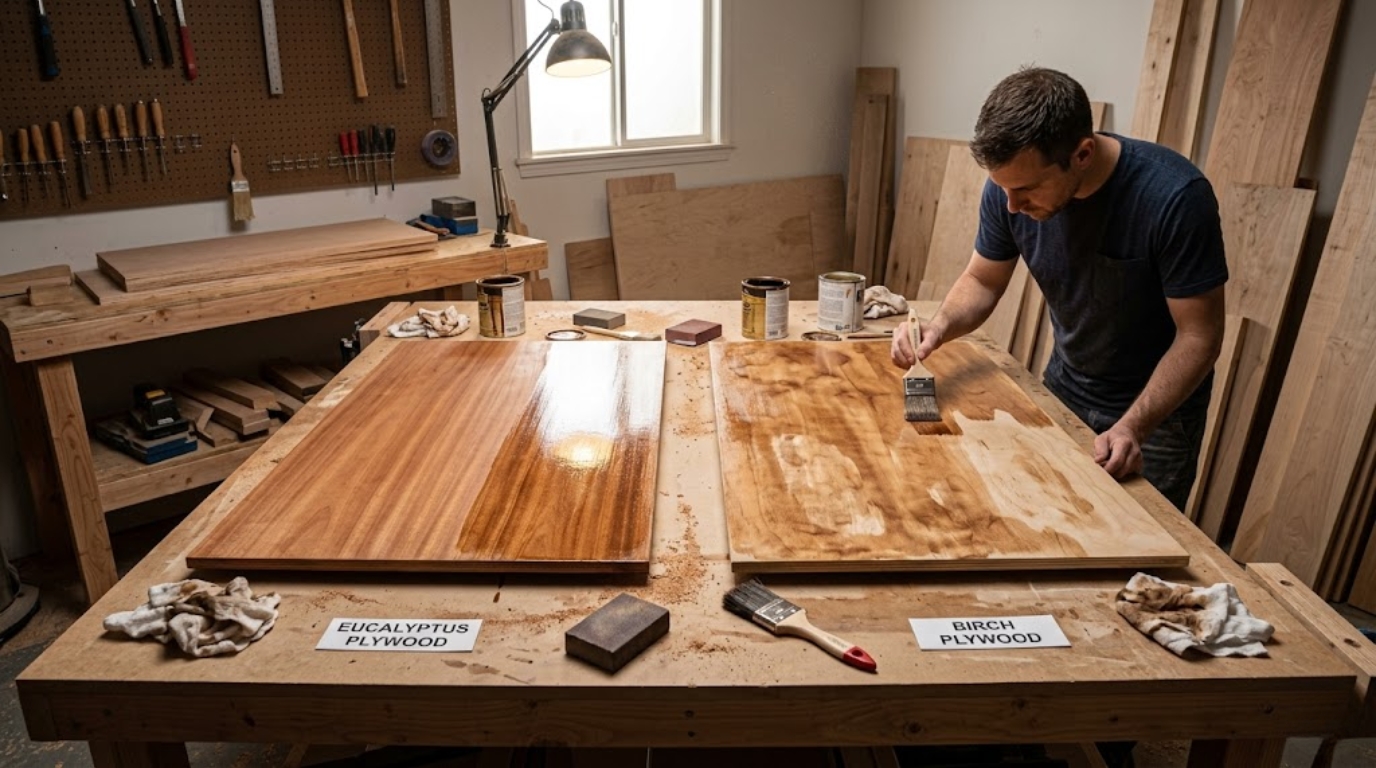
Eucalyptus plywood accepts stain evenly and consistently, which is one of its practical advantages over birch. The grain structure of eucalyptus absorbs finish with relatively uniform behavior across the panel face, making it easier to achieve a consistent stained result without extensive preparation. A pre-stain conditioner is still recommended for best results, but the risk of a badly blotched finish is lower than with birch under the same process.
The natural oils in eucalyptus that provide moisture resistance can sometimes interfere with adhesion of certain oil-based finishes and glues if the surface is not properly prepared. A light sanding before finishing removes the surface oil film and allows finishes to bond correctly. Water-based finishes generally adhere more reliably to eucalyptus without this preparation step.
Finishing Birch Plywood
Birch plywood’s finishing behavior is well-documented and requires careful management to achieve consistent results. The wood’s pore structure absorbs stain unevenly, which means that without a pre-stain wood conditioner, stained birch panels can appear blotchy or streaky. This is a common point of frustration for woodworkers new to the material.
For painted applications, birch plywood performs excellently. Its fine, tight grain produces a smooth, consistent paint surface that requires minimal filling or preparation. For clear-finished applications, birch’s pale tone and subtle grain produce a refined, clean result. The challenge is primarily in deep-penetrating stained finishes where the uneven absorption needs to be pre-treated. Our how to finish birch plywood guide walks through the specific techniques for achieving a quality stained finish on birch.
Verdict: Eucalyptus is more forgiving to stain. Birch produces a cleaner painted and clear-finished surface. For stained natural finishes, eucalyptus is the easier material to work with. For high-end painted results, birch has the edge.
Workability and Machining
Working with Eucalyptus Plywood
Eucalyptus plywood is a capable material for standard workshop operations including sawing, routing, sanding, and screwing. Its consistent density means it machines predictably, and its hardwood grain produces clean, relatively tearout-free cuts with sharp tooling. CNC routing and laser cutting work well on eucalyptus plywood, and its void-free structure ensures consistent cut quality across the full panel.
One consideration is that eucalyptus’s natural oils can accelerate wear on cutting edges slightly faster than softer woods, and some woodworkers report that the sawdust from certain eucalyptus species can cause skin or respiratory irritation in sensitive individuals. Appropriate dust extraction and personal protective equipment should be used when machining eucalyptus plywood, as with any hardwood panel. For CNC processing of eucalyptus plywood panels, our customized CNC cutting services process the material to precise tolerances.
Working with Birch Plywood
Birch plywood is widely regarded as one of the most workable hardwood panel materials available. It saws cleanly, routes predictably, holds fasteners reliably, and produces consistent results across large production runs. Baltic birch in particular is the preferred panel specification for CNC furniture production because of its dimensional consistency, void-free core, and predictable machining behavior.
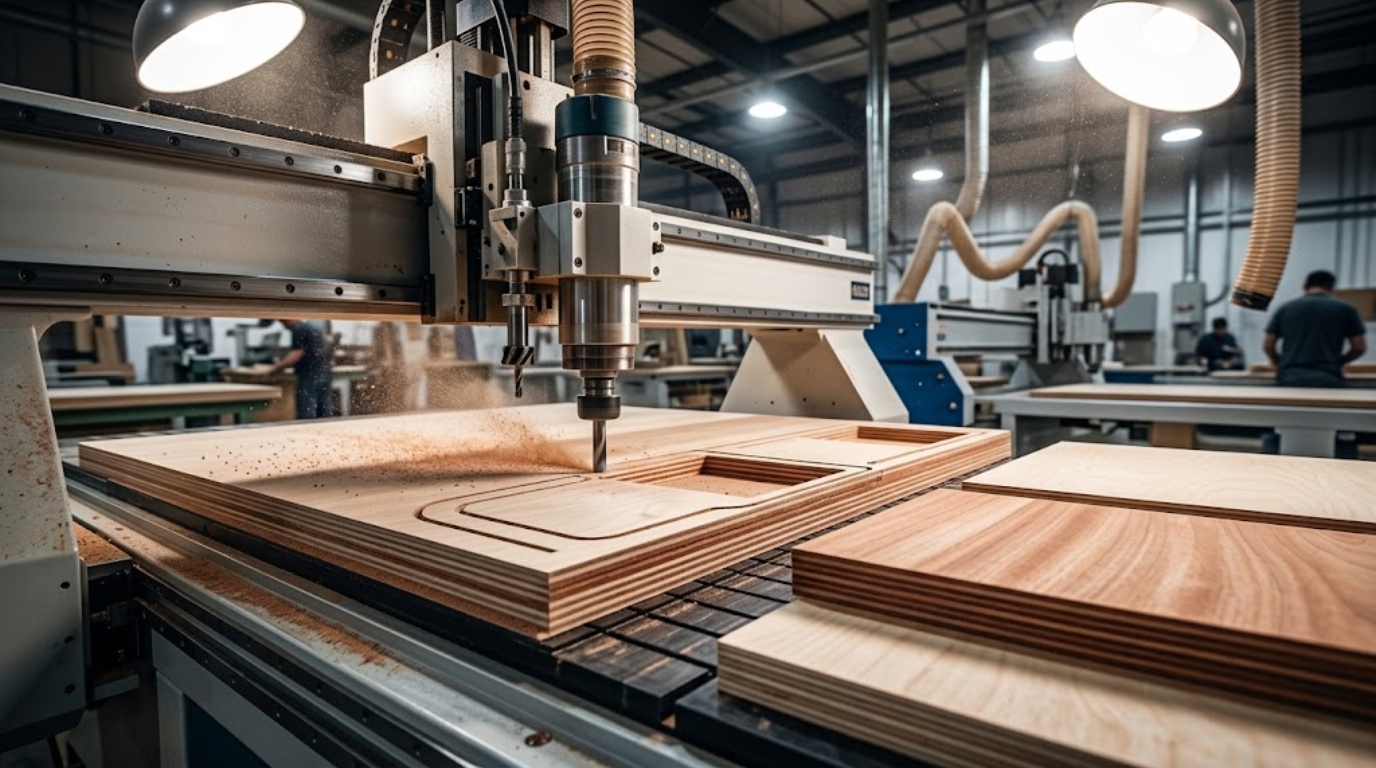
The slightly higher density of birch plywood compared to eucalyptus means marginally more cutting resistance and slightly higher tool wear per linear meter of cut, but the difference is minor in most production contexts. For high-volume operations where tooling cost is a significant line item, both materials perform comparably.
Verdict: Both are strong workshop performers. Birch has a slight edge in CNC precision work and production consistency. Eucalyptus is fully capable for standard woodworking operations, with the note that sawdust precautions are recommended for sensitive individuals.
Cost Comparison: Eucalyptus vs Birch Plywood
Cost is one of the clearest and most consistent differences between eucalyptus and birch plywood, and it has become more significant as Baltic birch supply has tightened due to geopolitical factors and sourcing restrictions from Russia, historically one of the largest Baltic birch suppliers.
Eucalyptus plywood is typically 20 to 30 percent cheaper than equivalent-grade birch plywood per sheet. This price advantage reflects eucalyptus’s faster growth cycle, its multi-region supply base across Southeast Asia, South America, and Africa, and its status as a plantation-grown species that has not faced the supply chain disruptions that affected Baltic birch in recent years.
For large-scale furniture manufacturing or cabinetry production where panel cost is a significant budget line, the 20 to 30 percent cost difference between eucalyptus and birch plywood is a meaningful factor. Eucalyptus plywood delivers a substantial portion of birch plywood’s structural and surface quality at a consistently lower price, which is why it is gaining market share as a practical substitute for many standard applications. For current product availability, explore our commercial plywood range.
Verdict: Eucalyptus plywood wins on cost. At 20 to 30 percent less per sheet than birch, it offers a meaningful budget advantage for production-scale projects without a proportional reduction in performance for most standard applications.
Sustainability: Eucalyptus vs Birch Plywood
Both eucalyptus and birch plywood can be sourced responsibly from certified forests, but their sustainability profiles differ in ways that may matter to buyers with environmental commitments.
Eucalyptus has a clear advantage in growth rate. Plantation-grown eucalyptus reaches harvestable maturity in 5 to 7 years, compared to several decades for birch. This means eucalyptus forests replenish faster after harvest, and plantation-based eucalyptus supply requires less land area to produce the same volume of timber as a slower-growing species. FSC-certified eucalyptus plywood is widely available from suppliers in Southeast Asia, South America, and Africa.
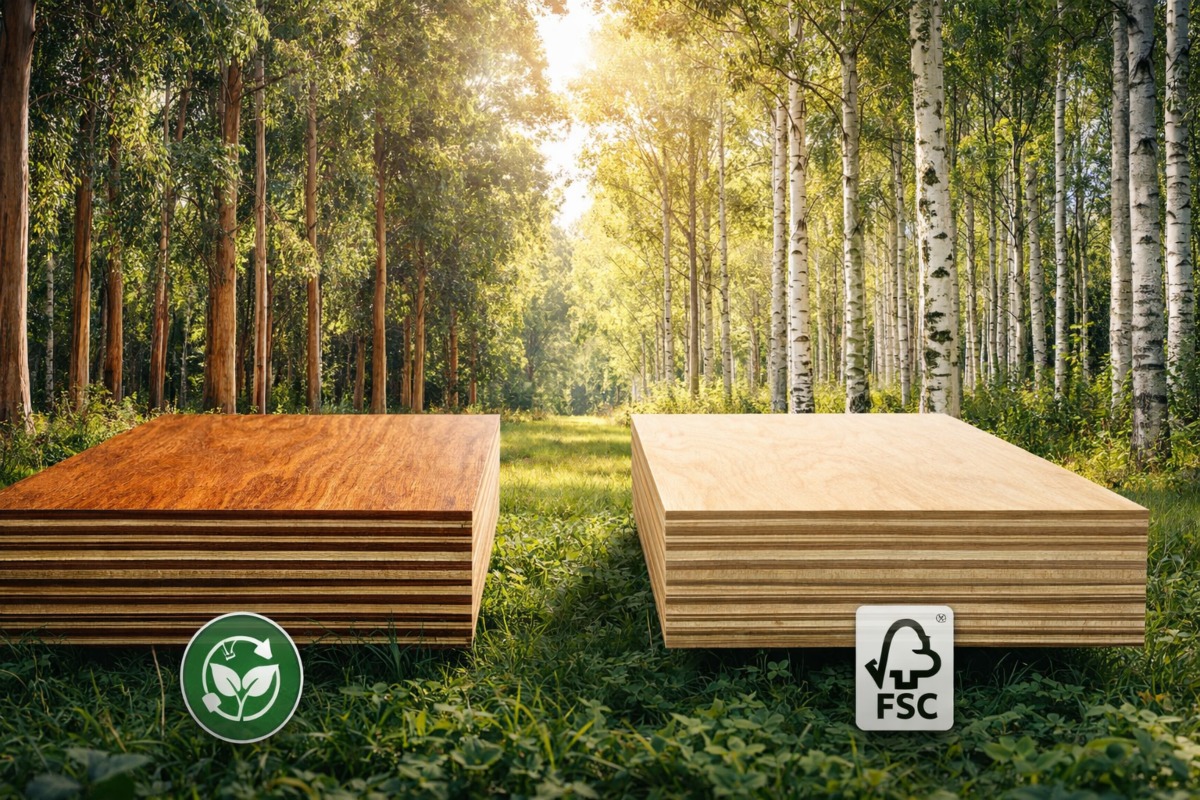
Birch plywood sourced from Nordic and Baltic managed forests has its own strong sustainability credentials. Scandinavian and Finnish forest management practices are among the most rigorous in the world, with high rates of FSC certification and carefully regulated harvest levels. The environmental concern around Baltic birch is less about forest management practices and more about the carbon footprint of shipping from distant northern European sources to global markets.
For buyers prioritizing the fastest resource replenishment cycle and the broadest geographic supply availability, eucalyptus has the stronger sustainability argument. For buyers prioritizing the established rigor of Nordic forest certification systems, birch from verified sources is also a responsible choice.
Eucalyptus Core Plywood with Birch Face: A Hybrid Alternative
A growing category in the hardwood plywood market is eucalyptus core plywood with a birch face veneer. This hybrid construction uses eucalyptus veneers for all core layers, providing the density and structural backbone, while the face and back layers are birch veneer, providing the pale, fine-grained surface appearance that birch is valued for.
This hybrid panel is specifically designed to address the Baltic birch supply and cost challenge: it delivers the birch surface appearance that designers and furniture makers specify, at a lower cost than full Baltic birch, by using the more economical and readily available eucalyptus core. For buyers who need the birch aesthetic for visible surfaces but do not require all-birch-veneer construction through the full panel depth, eucalyptus core with birch face is a well-balanced specification. See our types of eucalyptus plywood guide for a full breakdown of core composition options.
Note: Eucalyptus core with birch face panels are not the same as full Baltic birch plywood. The core density and void characteristics will differ from all-birch construction. Always confirm the core specification with your supplier when precision structural performance or void-free construction is required.
When to Choose Eucalyptus Plywood vs Birch Plywood
Choose Eucalyptus Plywood When:
- The application involves regular moisture exposure, such as kitchen cabinetry, bathroom joinery, or humid-climate furniture, where eucalyptus’s natural oil content provides a genuine performance advantage
- Budget is a significant constraint and the project can accept a 20 to 30 percent material cost saving without compromising on core structural or surface quality requirements
- Outdoor-adjacent applications such as covered terrace furniture, utility storage, or workshop flooring where moisture resistance matters but full marine-grade waterproofing is not required
- A bold, warm, reddish-brown natural wood aesthetic is a design goal rather than a limitation
- Sourcing flexibility and supply chain reliability are priorities, since eucalyptus plywood is available from multiple regions with fewer single-source dependencies than Baltic birch
Choose Birch Plywood When:
- Maximum panel density and hardness are required for heavy-load structural furniture, precision joinery, or applications where surface dent resistance is critical
- High-volume CNC production work where Baltic birch’s well-established consistency and predictable machining behavior across large panel quantities is a production advantage
- A clean, pale, neutral grain appearance is required, particularly for Scandinavian-style design, painted cabinet work, or high-end furniture where the birch aesthetic is specifically desired
- Edge-finish quality is critical: Baltic birch’s all-veneer construction produces consistently clean, layered ply edges that are a recognizable feature of quality furniture design
- The project warrants the higher material cost in exchange for the established performance credentials of Baltic birch in demanding furniture and cabinetry applications
Frequently Asked Questions
Is eucalyptus plywood better than birch plywood?
Neither is universally better. Eucalyptus plywood is better for moisture-exposed applications and offers a 20 to 30 percent cost advantage. Birch plywood is harder, denser, and produces cleaner painted finishes, making it the preferred choice for high-end furniture and precision CNC work. The right choice depends on the specific application, environment, and budget of the project.
Is eucalyptus plywood cheaper than birch?
Yes. Eucalyptus plywood is typically 20 to 30 percent less expensive than equivalent-grade birch plywood. This price difference reflects eucalyptus’s faster growth cycle, more diversified supply chain, and its status as a plantation species with lower sourcing costs than Baltic birch.
What is the density of eucalyptus plywood vs birch?
Eucalyptus plywood has a typical density of 550 to 620 kg/m3. Birch plywood (Baltic birch) typically ranges from 650 to 700 kg/m3. Birch is therefore the denser of the two, which contributes to its slightly higher hardness and screw-holding performance at equivalent panel thicknesses.
Is eucalyptus plywood waterproof?
Eucalyptus plywood is moisture resistant, not waterproof. Its natural oils provide substantially better moisture resistance than standard untreated birch plywood, but it requires WBP phenolic adhesive and an appropriate surface finish for applications involving direct or sustained water contact. For genuinely waterproof panel requirements, marine-grade eucalyptus plywood with WBP bonding and void-free construction is the correct specification.
Can eucalyptus plywood replace Baltic birch?
For many applications, yes. Eucalyptus plywood, particularly eucalyptus core panels with a birch face veneer, can replace Baltic birch in cabinet carcasses, furniture structural components, shelving, and general joinery at a lower cost. For applications where the specific properties of all-birch-veneer construction are essential, such as precision CNC components requiring void-free panel structure throughout or edge-finish furniture where the layered birch ply edge is part of the design, full Baltic birch remains the better specification.
Which is more sustainable: eucalyptus or birch plywood?
Eucalyptus has the faster renewable cycle: plantation-grown eucalyptus reaches harvestable maturity in 5 to 7 years, compared to several decades for birch. Both are available with FSC certification from responsibly managed sources. For buyers prioritizing the fastest resource replenishment rate, eucalyptus has the stronger sustainability argument.
Conclusion
Eucalyptus plywood and birch plywood are both high-quality hardwood panel materials, and the market’s growing interest in eucalyptus as a birch alternative is based on real performance characteristics rather than novelty. Its natural moisture resistance, competitive cost, and strong sustainability credentials make it a genuinely compelling specification for a wide range of furniture, cabinetry, and joinery applications.
Birch plywood retains its premium position on the strength of its higher density, superior surface hardness, and the established consistency of Baltic birch construction for precision manufacturing. For applications where these properties are the decisive factor, birch plywood earns its price premium.
For most standard cabinetry, furniture carcass, and structural panel applications, especially those in moisture-exposed environments or with budget constraints, eucalyptus plywood represents excellent value. Kosmex Group supplies birch plywood and commercial plywood across a full range of grades and thicknesses. Explore our plywood grades guide, types of plywood overview, and standard plywood sizes reference to complete your panel specification.
Bình luận