


Eucalyptus Plywood Thickness Guide: How to Choose 9mm, 12mm, 18mm or 25mm for Your Project
Choosing the wrong plywood thickness can lead to sagging shelves, weak cabinets, or unnecessary material costs. Many builders and furniture manufacturers struggle to decide between 9mm, 12mm, 18mm, or thicker panels.
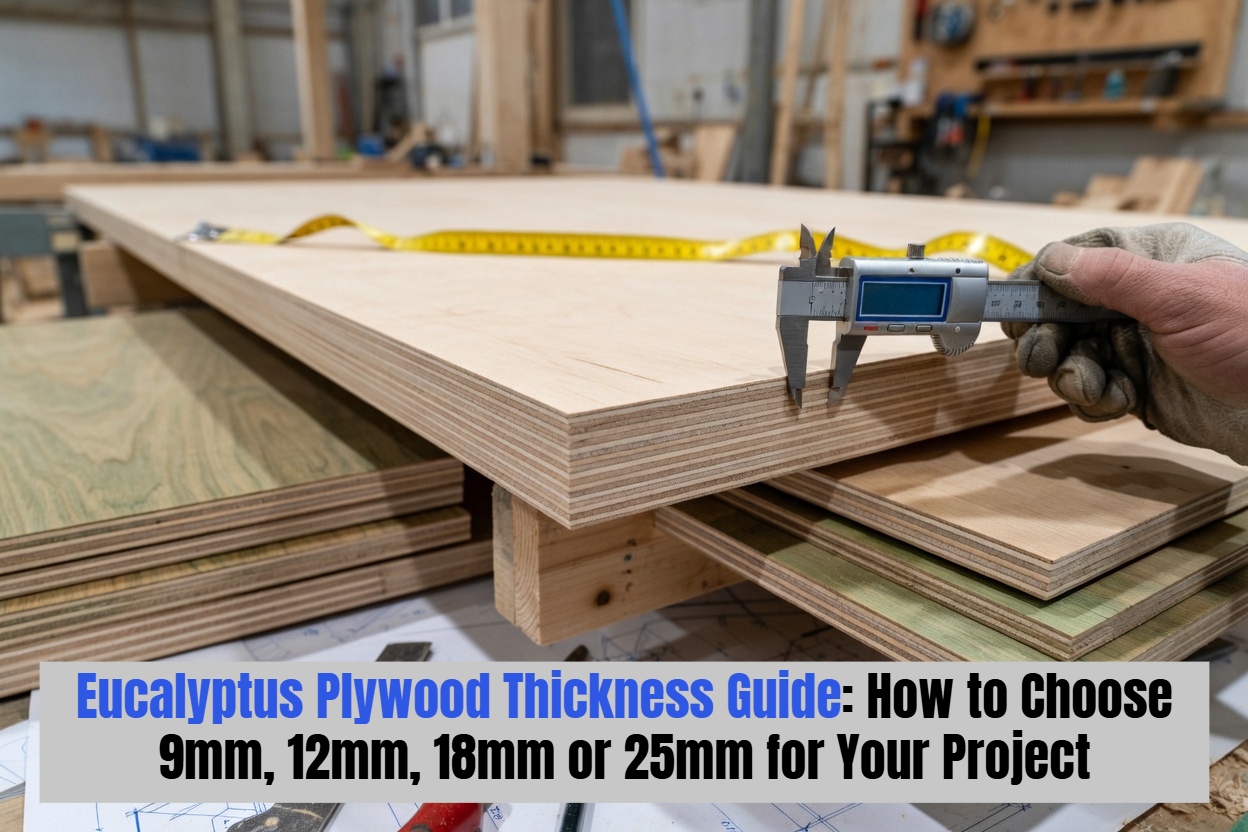
This guide explains every eucalyptus plywood thickness, when to use it, and how to select the right panel for furniture, cabinetry, flooring, and structural applications. For a broader overview of the material itself, see our guide on what is eucalyptus plywood.
Why Thickness Matters with Eucalyptus Plywood
Thickness Determines Load-Bearing Strength
Thickness directly affects how much weight a plywood panel can safely carry. Thicker eucalyptus plywood panels provide greater structural strength and resistance to bending, making them suitable for load-bearing applications such as cabinet carcasses, shelving, flooring substrates, and work surfaces.

Because eucalyptus is a high-density hardwood (typically 550–620 kg/m³), even relatively thin panels deliver strong structural performance compared with lower-density softwood plywood. This density allows eucalyptus plywood to maintain rigidity and stability under load while still keeping panel dimensions relatively compact.
Thickness Controls Span and Deflection
Another critical factor influenced by thickness is how far a plywood panel can span without support. When panels are used for shelving, flooring, or furniture components, insufficient thickness can lead to sagging or long-term deflection.
Selecting the correct thickness ensures that the panel can cover the required span between supports while maintaining structural stability. For example, thinner panels may work well when fully supported, while wider spans typically require thicker sheets to prevent bending over time.
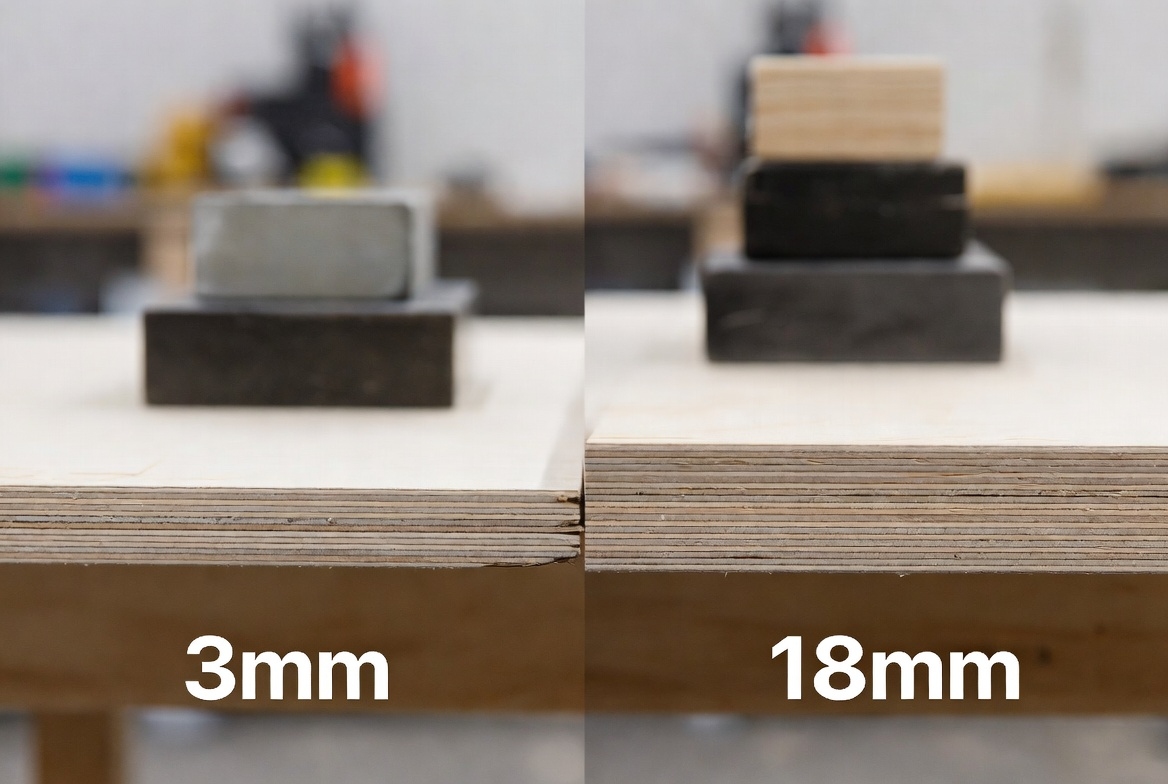
Thickness Affects Panel Weight and Material Cost
Thickness also has a direct impact on the overall weight and cost of the finished assembly. Thicker plywood panels contain more material, which increases both panel weight and material expense.
Choosing an unnecessarily thick panel can make furniture heavier, more difficult to handle during installation, and more expensive than necessary. Conversely, specifying a panel that is too thin may compromise durability and require costly repairs or replacement later.
Eucalyptus Density Improves Performance at Lower Thickness
Eucalyptus plywood behaves differently from many softwood plywood panels at the same thickness due to its higher density. The dense hardwood veneers provide greater stiffness, better screw-holding strength, and improved resistance to deformation even in thinner gauges.
This is one of the reasons eucalyptus plywood is widely used in furniture and cabinetry manufacturing. It allows manufacturers to achieve strong, rigid structures without always needing to step up to thicker and heavier panels.
Eucalyptus Plywood: Full Thickness Range
Eucalyptus plywood is manufactured in the following standard metric thicknesses:
- 6 mm
- 9 mm
- 12 mm
- 15 mm
- 18 mm
- 21 mm
- 25 mm
- 30 mm
Imperial equivalents for markets using inch-based measurement systems are:
| Metric | Imperial | Common Name | Typical Use |
| 6 mm | 1/4″ | Quarter inch | Drawer bases, backing panels, decorative facing |
| 9 mm | 3/8″ | Three-eighths inch | Cabinet backs, light shelving, partitions |
| 12 mm | 1/2″ | Half inch | Shelving, furniture panels, light flooring |
| 15 mm | ~5/8″ | Five-eighths inch | Cabinet carcasses, wall paneling, furniture |
| 18 mm | 3/4″ | Three-quarter inch | Cabinet boxes, worktops, structural furniture |
| 21 mm | ~13/16″ | Thirteen-sixteenths inch | Heavy shelving, flooring, structural panels |
| 25 mm | 1″ | One inch | Workbenches, heavy structural furniture, flooring |
| 30 mm | 1-1/4″ | One-and-a-quarter inch | Heavy construction, structural flooring |
Note: Thickness tolerances for eucalyptus plywood are typically +/- 0.5 mm for thinner sheets and +/- 1 mm for thicker panels. Always confirm tolerances with your supplier when close-tolerance joinery or machine fitting is required. For standard plywood size specifications across all panel types, see our standard plywood sizes guide.
Eucalyptus Plywood Thickness Breakdown by Application
6 mm Eucalyptus Plywood (1/4 inch)
At 6 mm, eucalyptus plywood is at its thinnest standard gauge and is used primarily for non-structural applications where weight, material cost, and panel flexibility matter. Common applications include drawer bases and bottoms in furniture carcasses, backing panels for cabinets and bookcases, thin decorative wall facing, and lightweight interior linings.
Even at 6 mm, eucalyptus plywood’s density gives it more rigidity than a comparable softwood panel of the same thickness. It will not carry structural loads or span unsupported distances without flexing, but for its intended applications as a supported backing or base panel, it performs reliably and with good surface quality for visible finishes.
Best for: Drawer bases, cabinet backing panels, thin decorative facing, lightweight interior lining applications.
9 mm Eucalyptus Plywood (3/8 inch)
The 9 mm thickness represents a step up to panels that can carry light loads over modest spans without excessive deflection. It is commonly specified for cabinet backs where some structural contribution is expected, light shelving over short spans, internal partitions within furniture carcasses, and secondary structural elements that need to be thin but rigid.
At 9 mm, eucalyptus plywood begins to show its density advantage meaningfully. A 9 mm eucalyptus panel is noticeably stiffer than a 9 mm panel in lower-density species, which allows it to be used in applications where softer wood panels would need to step up to 12 mm. This performance at a thinner gauge is part of what makes eucalyptus plywood a cost-efficient choice for well-specified furniture and cabinet projects.
Best for: Cabinet backs, light shelving over short spans, internal furniture partitions, lightweight structural components.
12 mm Eucalyptus Plywood (1/2 inch)
The 12 mm thickness is one of the most versatile mid-range options in the eucalyptus plywood range. It is suitable for shelving over medium spans, furniture side panels, door panels, wall paneling, light flooring applications, and smaller cabinet carcasses. It strikes a balance between weight management and structural contribution that suits a wide variety of furniture and joinery applications.
For cabinetry in kitchens and bathrooms, 12 mm eucalyptus plywood is often used for internal shelves, door panels, and secondary structural components within a carcass built primarily from 18 mm panels. Its moisture resistance at this thickness makes it a practical choice for internal kitchen and bathroom shelving that needs to be stable in humid conditions.
Best for: Shelving, furniture panels, door panels, wall paneling, light flooring, secondary cabinet components.
15 mm Eucalyptus Plywood (approximately 5/8 inch)
The 15 mm thickness occupies a useful position between the lightweight versatility of 12 mm and the structural benchmark of 18 mm. It is suitable for cabinet carcasses in lighter-duty applications, wall paneling where some structural contribution is needed, furniture components subject to moderate loads, and flooring in areas without heavy traffic.
In markets where 5/8 inch plywood is a common specification, 15 mm eucalyptus serves as the metric equivalent. It is also sometimes specified as an intermediate thickness for staircase components, seating platforms, and built-in furniture where 12 mm is too light but the full weight of 18 mm is not warranted.
Best for: Medium-duty cabinet carcasses, wall paneling, staircase components, built-in furniture, moderate-load flooring.
18 mm Eucalyptus Plywood (3/4 inch)
The 18 mm thickness is the single most widely specified gauge in the eucalyptus plywood range, and for good reason. It represents the standard structural benchmark for furniture carcasses, kitchen cabinet boxes, wardrobe systems, and fitted joinery across most professional applications. At 18 mm, eucalyptus plywood carries meaningful structural loads, spans cabinet widths without deflection, holds screws and hardware securely, and provides the rigidity that assembled furniture and cabinetry requires to stay square and stable over time.
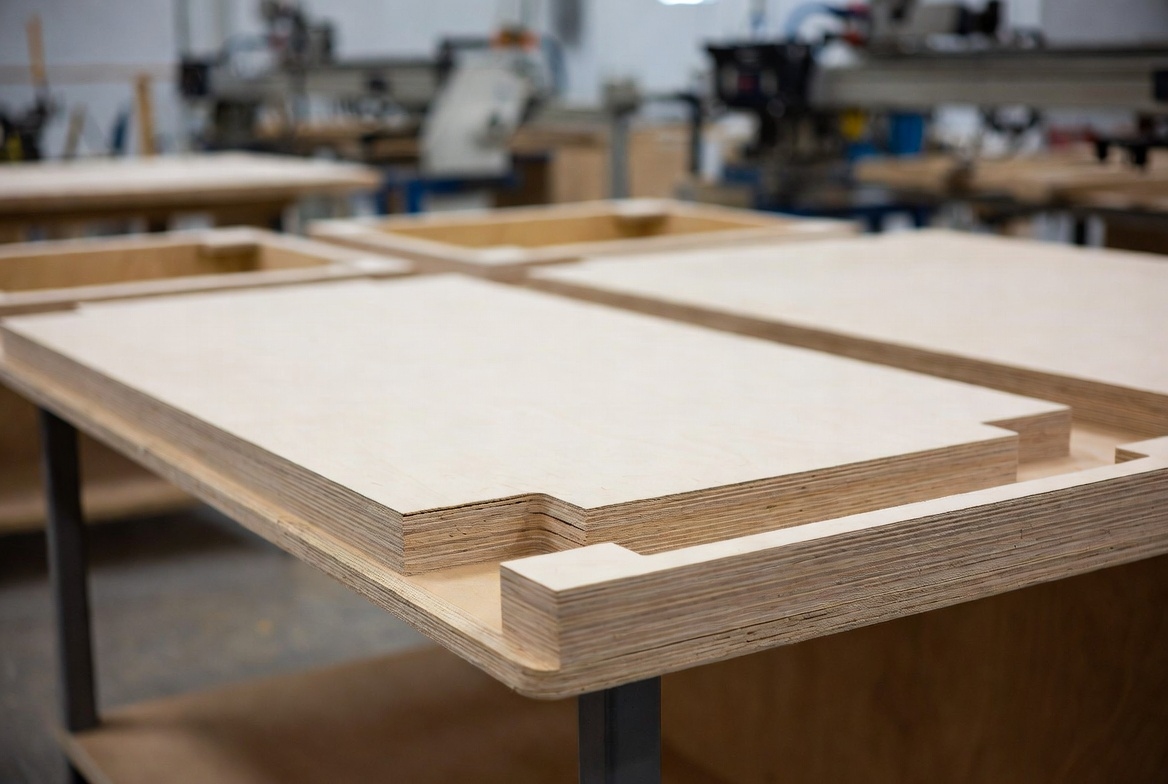
In imperial terms, 18 mm corresponds to the three-quarter inch (3/4″) specification that is the default cabinet plywood thickness in North American construction and furniture making. For buyers specifying eucalyptus plywood 3/4, 18 mm is the metric equivalent to look for. Its combination of structural performance, manageable weight, and the moisture resistance characteristic of eucalyptus makes it the natural choice for kitchen cabinet applications where rigidity and dimensional stability in humid conditions both matter.
When processed through CNC cutting services, 18 mm eucalyptus plywood machines cleanly and holds tolerances well, making it a reliable choice for precision cabinet components, kitchen installations, and shopfitting systems where panel dimensions need to be exact.
Best for: Kitchen cabinet carcasses, wardrobe boxes, structural furniture, fitted joinery, worktop substrates, shopfitting systems. The standard professional specification for cabinet-grade plywood.
21 mm Eucalyptus Plywood (approximately 13/16 inch)
The 21 mm thickness is less commonly stocked than 18 mm or 25 mm but fills a useful role for applications that require more structural depth than 18 mm provides without stepping all the way up to 25 mm. Common applications include heavy shelving for book storage or tool display, flooring panels in higher-traffic areas, and structural furniture components subject to sustained loads.
In staircase construction and platform seating applications, 21 mm eucalyptus plywood provides a structural margin that 18 mm does not, while remaining lighter and more manageable than 25 mm sheets. Availability varies by market, so it is worth confirming stock levels with your supplier before specifying 21 mm if the project timeline is tight.
Best for: Heavy shelving, higher-traffic flooring, staircase treads, platform seating, structural furniture under sustained loads.
25 mm Eucalyptus Plywood (1 inch)
At 25 mm, eucalyptus plywood enters the heavy structural range. This thickness is specified for applications where the panel must carry significant loads, resist deflection over longer spans, or provide a robust working surface. Workbenches, heavy-duty shelving systems, structural flooring in workshops and utility spaces, and thick-panel furniture design are the primary applications for 25 mm eucalyptus plywood.
The one-inch equivalent is a meaningful benchmark in construction and furniture specifications: it signals a panel designed for genuine structural duty rather than cabinet or furniture carcass work. At 25 mm, eucalyptus plywood’s high density delivers exceptional rigidity and hardness, and the panel’s screw-holding performance is among the best available in standard plywood formats.
For structural panel applications where multiple thickness options might be considered, it is worth reviewing our plywood grades guide alongside this thickness reference to ensure both the grade and the dimension are correctly matched to the application.
Best for: Workbenches, heavy-duty shelving, structural workshop flooring, thick-panel furniture, high-load structural applications.
30 mm Eucalyptus Plywood (1-1/4 inch)
The 30 mm thickness is at the upper end of the standard eucalyptus plywood range and is used in heavy construction and structural applications where maximum panel thickness and rigidity are required. Applications include heavy structural flooring, load-bearing platforms, thick formwork components, and specialized structural assemblies.
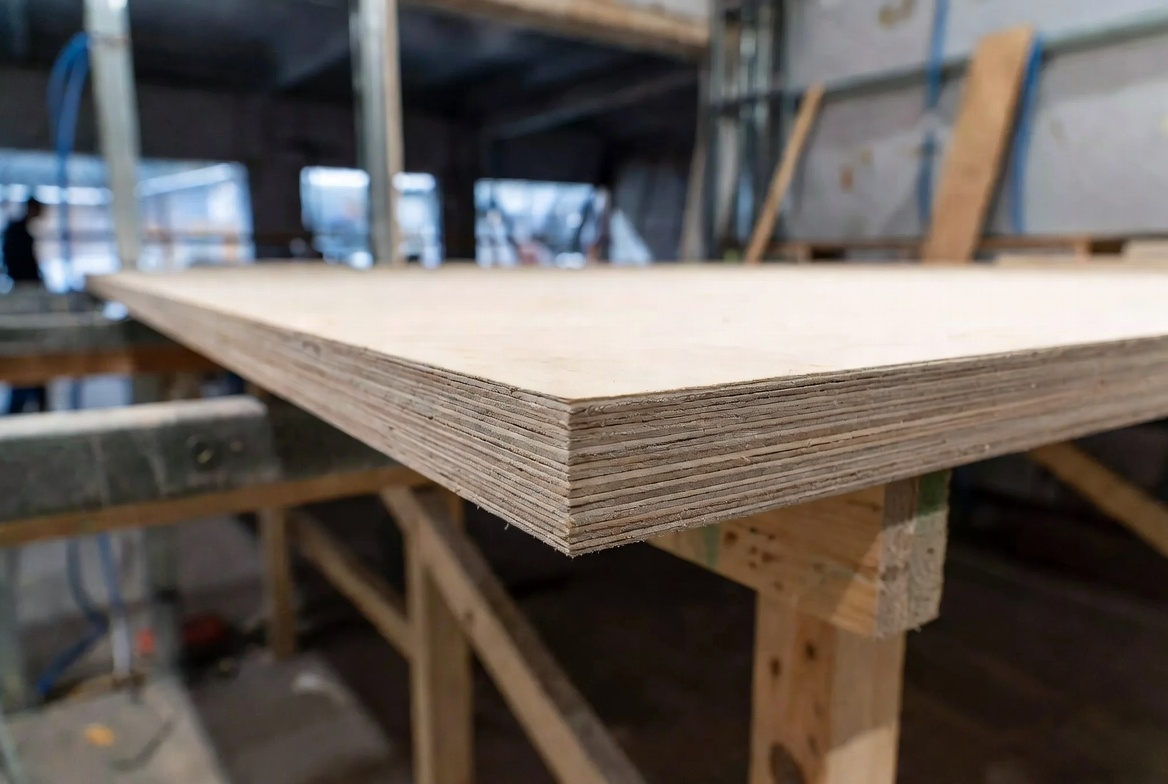
At this thickness, eucalyptus plywood is a genuinely heavy panel, and handling requires appropriate equipment and crew. It is less commonly specified for standard furniture and cabinetry and is primarily a construction and structural product. Availability at this thickness may be more limited than for the standard furniture-range thicknesses, and lead times may be longer for orders.
Best for: Structural flooring, load-bearing platforms, heavy construction components, specialized structural assemblies.
How to Choose the Right Eucalyptus Plywood Thickness
Selecting the correct thickness for a eucalyptus plywood application involves matching three variables: the structural demand of the application, the span the panel needs to cover, and the weight tolerance of the finished assembly.
For Furniture and Cabinetry
The majority of furniture and cabinetry work falls into a clear thickness range. Cabinet carcasses and box construction almost universally specify 18 mm as the primary structural sheet, with 12 mm used for shelves, internal dividers, and door panels within the same assembly. Drawer bases typically use 6 mm or 9 mm backed by the carcass structure.
For premium furniture where panel thickness contributes to the visual weight and perceived quality of the piece, 18 mm and 25 mm are the standard choices for tabletops, shelving units, and bench seats. Eucalyptus plywood’s density means these panels have a solid, substantial feel that lower-density species cannot replicate at the same thickness.
For furniture-specific application ideas, see our birch plywood furniture ideas guide for reference on how similar hardwood panels are specified in furniture design.
For Flooring
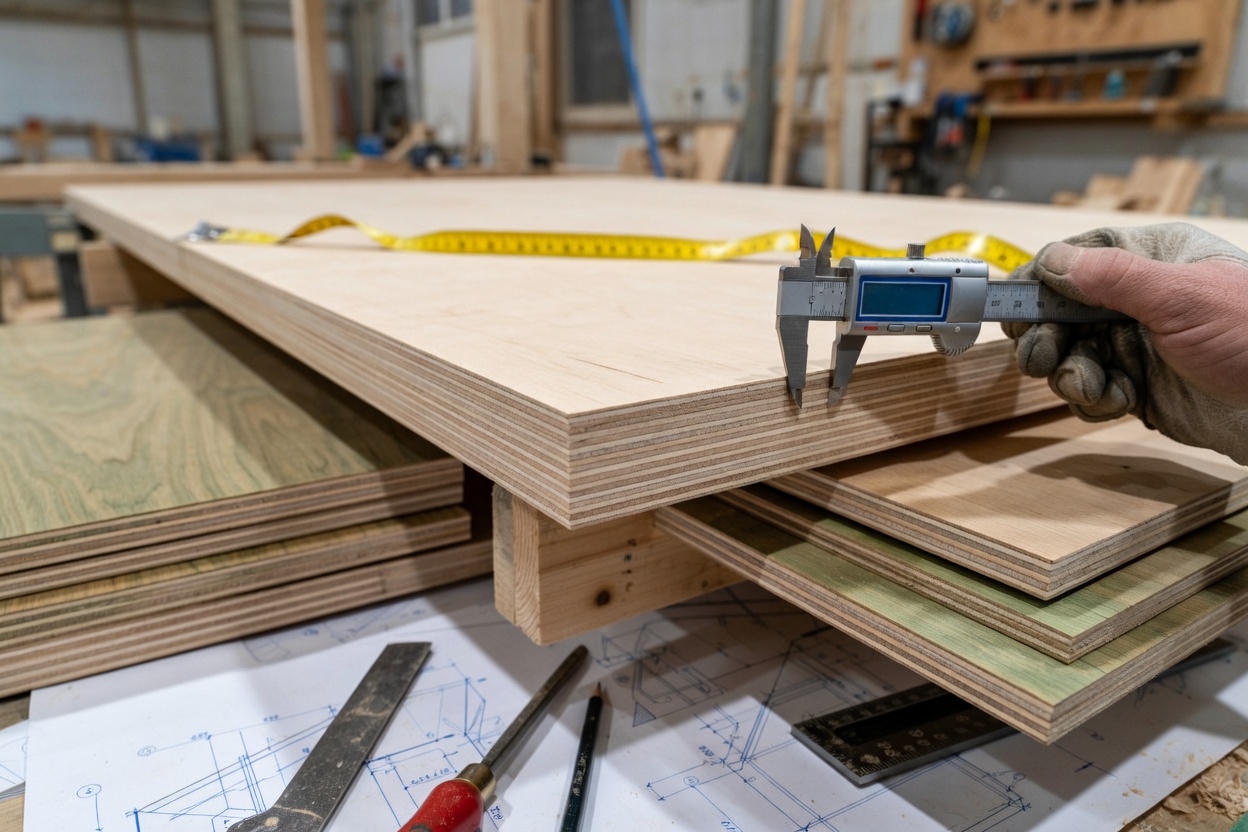
For flooring applications, the minimum practical thickness depends on the joist or support spacing beneath the panel. As a general reference: 12 mm panels are suitable for closely spaced support (up to approximately 300 mm joist centers), 15 mm to 18 mm for standard joist spacing, and 21 mm to 25 mm for wider spans or heavier traffic areas.
In all cases, eucalyptus plywood’s high density means it performs structurally at the lower end of thickness ranges where a lower-density panel would need to step up.
For Wall Paneling
Wall paneling applications typically use 9 mm to 15 mm eucalyptus plywood, depending on whether the panel is purely decorative or needs to contribute structurally to the wall assembly. For visible feature walls where grain appearance matters, 12 mm or 15 mm gives enough thickness for solid edge finishing while keeping weight manageable.
For Structural and Construction Applications
For structural applications including sheathing, flooring substrates, and formwork components, 18 mm to 30 mm covers the practical range. When comparing eucalyptus plywood to other structural panel options for construction use, it is worth reviewing film faced plywood and commercial plywood specifications, as these products are specifically engineered for construction-grade structural duty and may offer better value for high-volume structural applications.
Eucalyptus Plywood Thickness Quick Reference
The table below summarizes the full thickness range with typical applications and structural suitability at a glance:
| Thickness | Imperial | Primary Applications | Structural Notes |
| 6 mm | 1/4″ | Drawer bases, cabinet backs, decorative facing | Non-structural; requires continuous support |
| 9 mm | 3/8″ | Cabinet backs, light shelving, partitions | Light structural; short unsupported spans |
| 12 mm | 1/2″ | Shelving, door panels, wall paneling, light flooring | Moderate structural; medium spans |
| 15 mm | ~5/8″ | Cabinet carcasses (light), wall panels, furniture | Good structural; standard furniture spans |
| 18 mm | 3/4″ | Cabinet carcasses, kitchen units, structural furniture, fitted joinery | Standard structural benchmark for cabinetry |
| 21 mm | ~13/16″ | Heavy shelving, flooring, stair components | Heavy structural; longer spans, higher loads |
| 25 mm | 1″ | Workbenches, structural flooring, thick furniture | Heavy structural; high-load applications |
| 30 mm | 1-1/4″ | Heavy construction, load-bearing platforms, formwork | Maximum standard thickness; construction grade |
Core Structure: Full Eucalyptus vs Eucalyptus-Pine Mix
Eucalyptus plywood panels are available with two main core configurations. Understanding the difference helps in matching panel specification to application requirements. For a full overview of the material properties behind these structural options, our complete eucalyptus plywood guide covers density, moisture resistance, and grain characteristics in detail.
100% Eucalyptus Core
Panels with a full eucalyptus core use eucalyptus veneer throughout all plies, from face to back. This configuration delivers the highest and most consistent density across the full panel thickness, the best screw-holding performance, and the most predictable moisture resistance. A full eucalyptus core is the preferred specification for premium furniture, high-quality cabinetry, and applications where maximum structural performance from the panel is required.
The trade-off is cost and weight: full eucalyptus panels are heavier and more expensive than mixed-core alternatives of the same thickness.
Eucalyptus and Pine Mix Core
Eucalyptus-pine mix panels use eucalyptus veneers for the face and back plies, with pine or another softwood species for the inner core plies. This reduces panel weight and cost while retaining the surface quality and face hardness of eucalyptus. The structural performance of a mixed core is lower than a full eucalyptus core, particularly in terms of screw-holding at the core layers and overall stiffness.
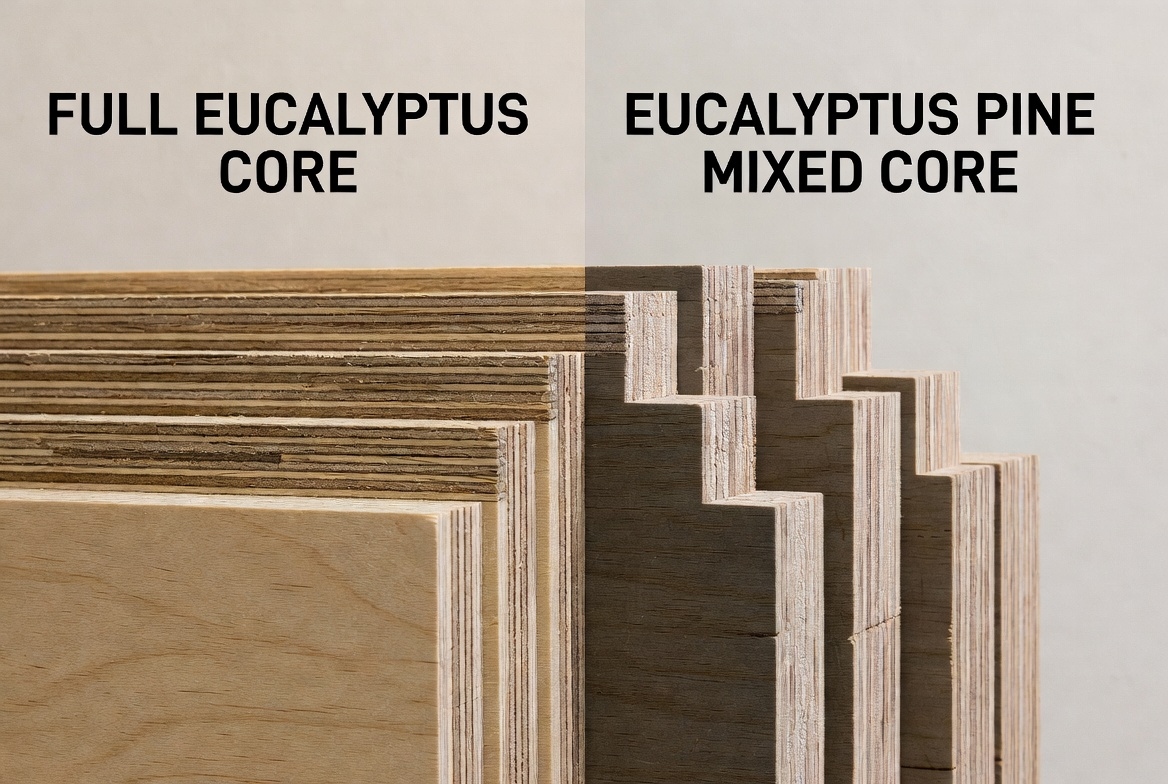
Mixed-core panels are a practical choice for applications where the visible surface quality of eucalyptus is valued but the full structural premium is not required, such as shelving backs, lightweight interior paneling, and decorative applications where the panel is mostly supported.
Specification tip: Always confirm the core composition with your supplier when structural performance is a key specification. For furniture and cabinet carcasses, a full eucalyptus core is generally the better specification even at a slight cost premium.
Thickness and Plywood Grades: What to Specify Together
Thickness and grade are the two primary specification axes for eucalyptus plywood. Thickness determines structural performance; grade determines surface quality. Specifying one without the other is incomplete. Our plywood grades guide covers the grading system in full, but here is how thickness and grade typically intersect for eucalyptus plywood applications:
- Grade B at 18 mm: The standard premium specification for visible furniture carcasses and kitchen cabinet boxes. Smooth face, structural thickness, suitable for clear or stained finishes.
- Grade B at 12 mm: For shelving and door panels where the face will be visible and finished to a high standard.
- Grade C+ at 18 mm: A practical mid-range specification for cabinet interiors and built-in furniture where the face surface will be painted or laminated rather than finished clear.
- Grade C at 18 mm or 25 mm: For structural applications where surface appearance is secondary and panel performance is the primary requirement.
- Grade B at 6 mm or 9 mm: For visible drawer bases and cabinet backs where a clean surface is required but thickness can be minimized.
Frequently Asked Questions
What is the most common eucalyptus plywood thickness?
The most commonly specified thickness for eucalyptus plywood is 18 mm (3/4 inch), which is the standard benchmark for furniture carcasses, kitchen cabinet boxes, and structural joinery. After 18 mm, 12 mm and 9 mm are the next most frequently used thicknesses for shelving, door panels, and secondary cabinet components.
What is eucalyptus plywood 3/4 in metric?
Three-quarter inch (3/4″) plywood in metric is 18 mm. This is the standard cabinet plywood thickness in both imperial and metric specification systems, and is the most widely available and specified thickness across all plywood species including eucalyptus.
Is 12 mm eucalyptus plywood strong enough for shelving?
Yes, for most standard shelving applications over typical spans. Eucalyptus plywood’s high density means 12 mm panels are stiffer than 12 mm panels in lower-density species, making them suitable for bookshelves, display shelving, and kitchen interior shelves over standard spans. For heavy loads or longer unsupported spans, stepping up to 15 mm or 18 mm is advisable.
What is 25 mm eucalyptus plywood used for?
25 mm eucalyptus plywood is used for heavy-duty structural applications including workbenches, structural workshop flooring, thick tabletops, load-bearing platforms, and heavy furniture construction. At one inch thick, it provides the structural depth and rigidity needed for applications that 18 mm panels cannot adequately support.
What is the standard thickness of plywood generally?
Plywood is available in standard thicknesses from 3 mm to 30 mm and above, with 12 mm, 15 mm, and 18 mm being the most common thicknesses in general use across furniture, construction, and structural applications. Our standard plywood sizes guide covers standard dimensions across all plywood types in detail.
Which is thicker: 1/4 inch or 3/4 inch plywood?
Three-quarter inch (3/4″) plywood is thicker. One-quarter inch (1/4″) plywood is 6 mm, while three-quarter inch (3/4″) is 18 mm, making it three times the thickness of a 1/4-inch panel. The 3/4-inch specification is the standard structural thickness for cabinet and furniture work; 1/4-inch is used for lightweight backing panels, drawer bases, and decorative applications.
Is eucalyptus plywood stronger than standard plywood at the same thickness?
Yes, in most practical terms. Eucalyptus plywood’s high density (550 to 620 kg/m3) means it delivers greater stiffness, surface hardness, and screw-holding performance per millimeter than standard softwood plywood and many lower-density hardwood panels. This is one of the primary reasons it is specified for quality furniture and cabinetry applications. For a full breakdown of the material’s structural properties, see our eucalyptus plywood properties guide.
Conclusion
Eucalyptus plywood’s thickness range covers every standard application from lightweight decorative backing at 6 mm through to heavy structural panels at 30 mm, with 18 mm standing out as the dominant specification for most furniture and cabinetry work. The material’s high density means it performs at the upper end of structural expectations within each thickness category, making it a particularly efficient choice for projects where strength and weight need to be carefully balanced.
When specifying eucalyptus plywood, thickness and grade should always be considered together. Getting both right for the application ensures structural performance, surface quality, and value are all optimized. Our plywood grades guide and eucalyptus plywood overview are useful companion references for completing a full panel specification.
For projects requiring panels cut to precise dimensions, Kosmex Group offers customized CNC and cutting services to process eucalyptus plywood to exact tolerances. Our birch plywood and commercial plywood product ranges are also available for applications where alternative panel specifications are required.
Bình luận