



What Is Poplar Core Plywood?
Poplar core plywood uses poplar (Populus spp.) veneer for the inner core layers, with a different species – typically birch, eucalyptus, or hardwood – as the face and back veneer.
Poplar is a fast-growing, widely farmed species with a low density (350-450 kg/m³ compared to birch’s 640-700 kg/m³). This makes it significantly lighter than all-birch panels at the same thickness, and considerably cheaper to produce – poplar veneer costs roughly 30-50% less than birch veneer at equivalent grade.
The term combi core (short for “combination core”) is used interchangeably with poplar core in most trade contexts, though technically a combi core can include any mix of species in the inner layers – eucalyptus, pine, or poplar – as long as the face remains a premium species.
How it’s built
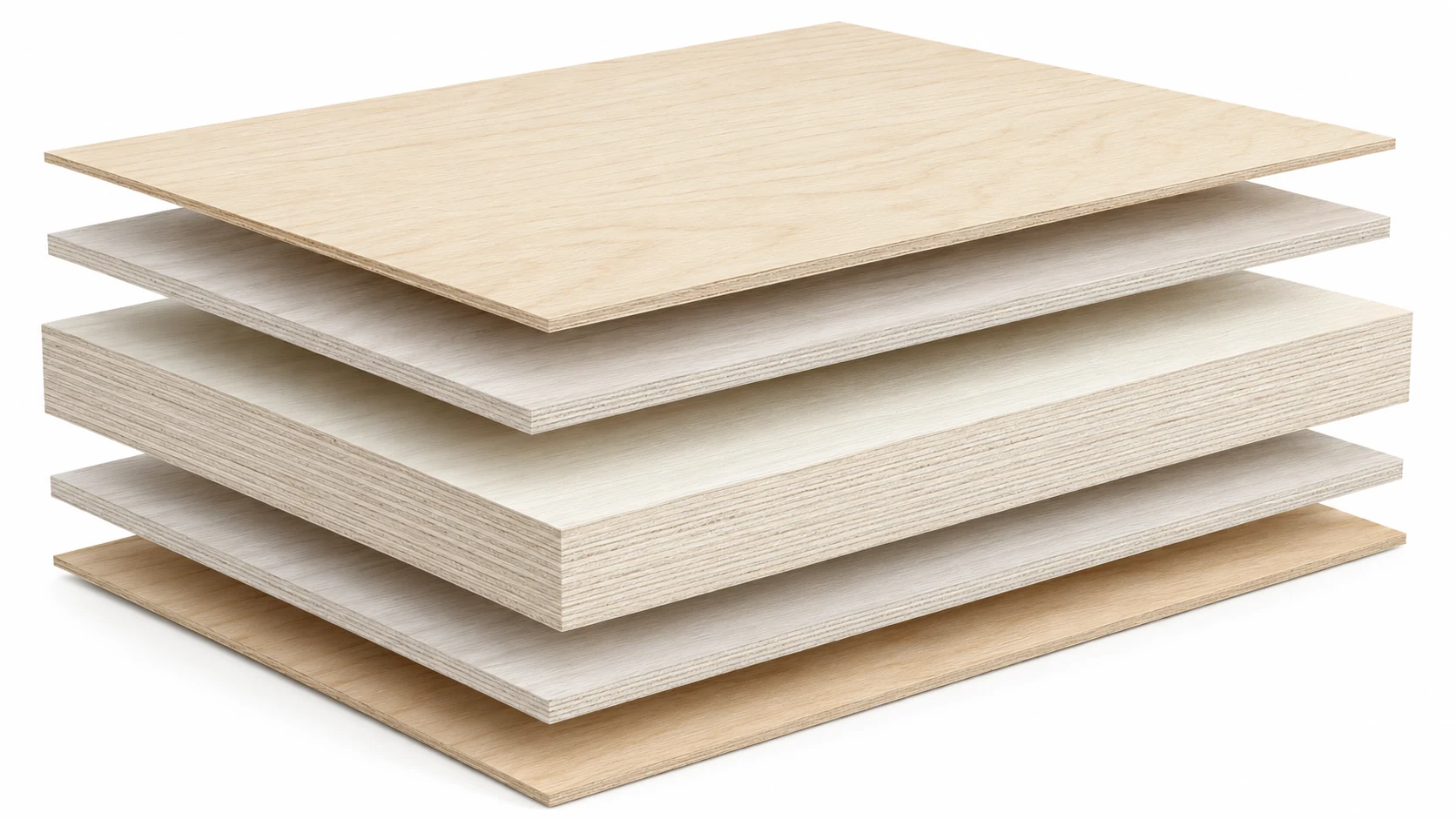
A typical 18mm birch-faced poplar core panel is constructed as follows:
| Layer | Species | Thickness (approx.) |
|---|---|---|
| Face veneer | Birch (B or BB grade) | 0.6-1.5 mm |
| Cross-band | Poplar | 1.5-2.5 mm |
| Core | Poplar | 6-8 mm |
| Cross-band | Poplar | 1.5-2.5 mm |
| Back veneer | Birch (BB or WG grade) | 0.6-1.5 mm |
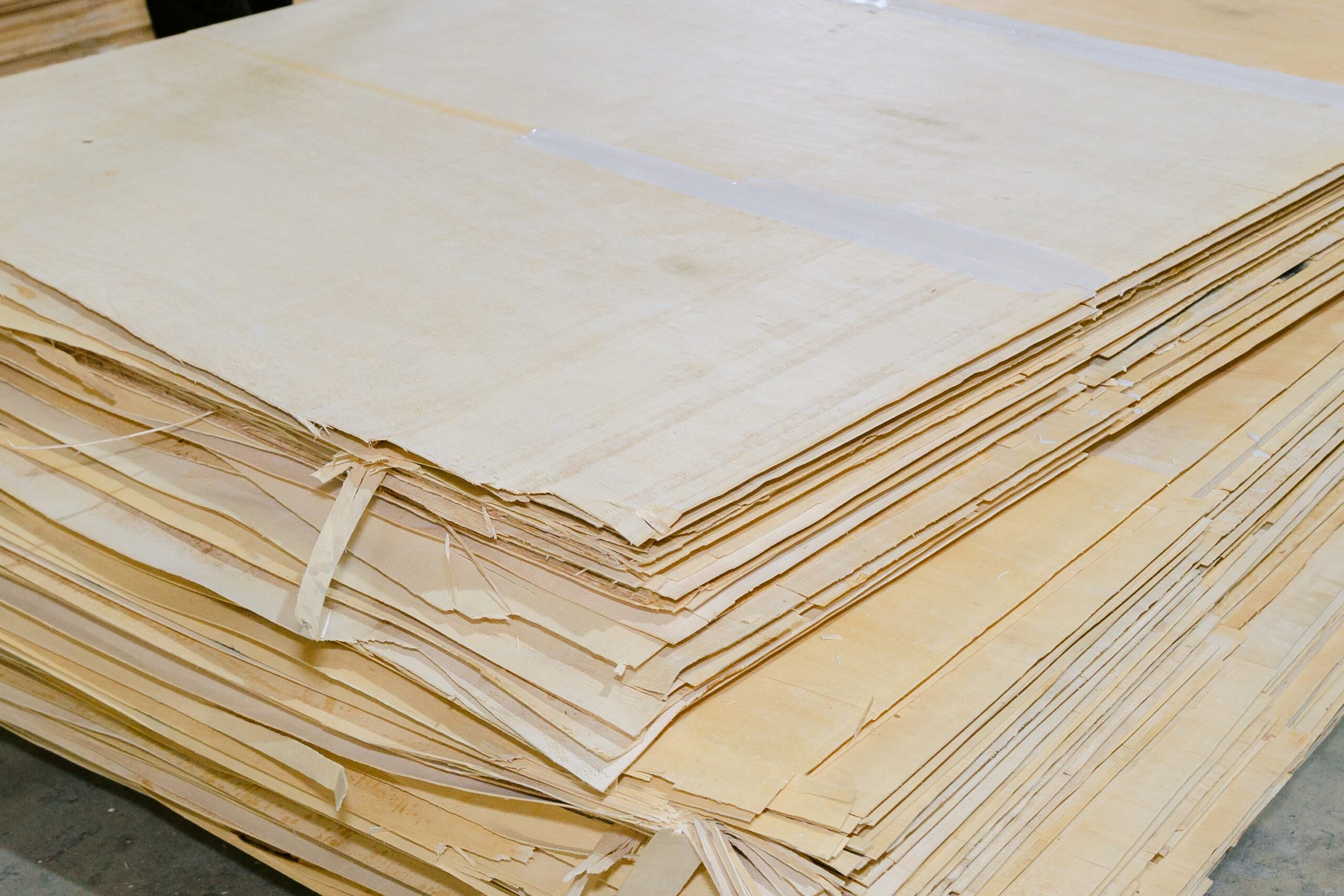
The face and back veneers are what the buyer sees – and what determines the panel’s sanding quality and surface finish. The core is where weight, cost, and structural performance diverge from all-birch construction.
For detailed face grade terminology (B, BB, C2, WG), see Birch Plywood Grades Explained.
Poplar Core vs All-Birch Core: Key Differences
This is the comparison that matters most for specifiers and importers. Neither is universally better – the right choice depends on application.
| Property | All-Birch Core | Poplar Core (Combi) |
|---|---|---|
| Density | 640-700 kg/m³ | 450-550 kg/m³ |
| Weight (18mm 4×8 sheet) | ~36-40 kg | ~25-30 kg |
| Bending strength (MOR) | 40-55 N/mm² | 28-40 N/mm² |
| Screw-holding (face) | High | High (face = birch) |
| Screw-holding (edge) | High | Moderate (poplar core softer) |
| Stiffness (MOE) | 8,000-10,000 N/mm² | 5,500-7,500 N/mm² |
| Surface finish | Excellent | Excellent (birch face) |
| Moisture resistance | Depends on glue (MR or WBP) | Depends on glue (MR or WBP) |
| FOB Vietnam price | $380-450/CBM | $290-360/CBM |
| Best for | Structural, heavy-duty, CNC precision | Cabinetry, furniture panels, light structure |
Key takeaway: The face behaviour is almost identical – if you’re routing, painting, or veneering a birch face, you won’t see a difference in surface quality between all-birch and combi core. The difference shows up in edge screw-holding, panel stiffness over long spans, and weight.
When Poplar Core Performs Well
Kitchen Cabinets and Furniture Carcassing
For cabinet box construction – sides, tops, bottoms, and shelves – poplar core performs at the same level as all-birch in most residential and light commercial applications. Face screws hold well (birch face veneer is unchanged), edge banding covers the poplar core, and the lighter weight makes installation easier.
See: Best Plywood for Kitchen Cabinets: Grade, Core & Thickness
A typical 18mm poplar core panel carries a maximum recommended shelf span of 800-900mm without centre support before visible deflection occurs. For spans over 900mm or heavy loads (book storage, kitchen upper cabinets with heavy content), all-birch or MDF-core is the more reliable spec.
Drawer Boxes
12mm poplar core birch-faced plywood is widely used for drawer box sides and bottoms. The weight saving is a genuine benefit in soft-close drawer systems where mechanism load matters.
Painted Furniture
Poplar core takes paint extremely well – the birch face veneer is smooth, consistent, and sands to a near-MDF finish. For painted kitchen doors, furniture panels, and built-in cabinetry, poplar core is the cost-efficient specification without a visible quality penalty.
For finishing guidance, see How to Finish Birch Plywood.
Export Packaging and Light Structural Use
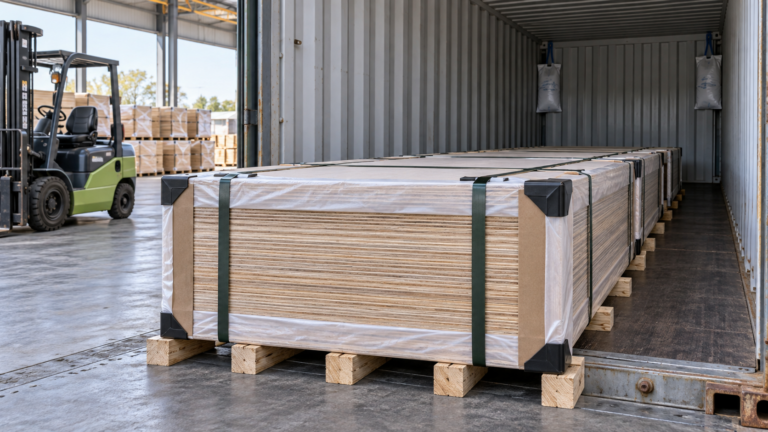
In packaging applications – crating, pallets, lightweight structural panels – the lower density of poplar core reduces freight cost per unit. At 25-30 kg per 18mm sheet vs 36-40 kg for all-birch, a full container of poplar core panels is meaningfully lighter.
When All-Birch Core Is the Better Specification
CNC Routing and Precision Joinery
All-birch panels machine more consistently – the uniform density means routing and CNC operations don’t deflect or tear-out at core layer boundaries. For precision joinery, jig-making, or furniture with exposed internal edges, all-birch is worth the premium.
Long Unsupported Spans
Shelving, worktop substrates, or structural panels spanning more than 900mm without support benefit from all-birch stiffness. The higher MOE (8,000-10,000 vs 5,500-7,500 N/mm²) meaningfully reduces deflection under load.
Edge-Screw-Intensive Applications
Where screws are driven into the panel edge – face frame attachment, knock-down hardware, shelf pin holes – the denser birch core holds threads more reliably. Poplar’s lower density means edge-screws can strip more easily, particularly after repeated assembly and disassembly.
Marine and High-Humidity Environments
While the moisture resistance of a plywood panel depends primarily on glue type (MR vs WBP – see Phenolic vs Melamine Glue in Plywood), all-birch panels are inherently more stable in humidity cycling because birch veneer swells and shrinks less than poplar. For boat interiors, bathroom cabinetry, or humid climates, all-birch WBP is the more conservative specification.
Poplar Core vs MDF Core
A third option – MDF core plywood – uses an MDF slab as the inner core with hardwood or birch face veneers bonded to both sides. This is common in flat-pack furniture and lower-cost cabinetry.
| Property | Poplar Core | MDF Core |
|---|---|---|
| Weight | Light | Heavy (MDF ~750 kg/m³) |
| Screw-holding (edge) | Moderate | Poor – MDF edge crumbles under repeated assembly |
| Moisture resistance | Moderate-high (WBP option) | Low – MDF swells significantly when wet |
| Surface flatness | Very good | Excellent |
| Machinability | Good | Good but dusty; blunts bits faster |
| Cost | Mid | Low-mid |
| Best for | Cabinets, furniture, general construction | Furniture interiors in dry environments only |
For more on this comparison: Birch Plywood vs MDF: Strength, Moisture & Cost.
Glue Type: MR vs WBP in Poplar Core Panels
The moisture resistance of a poplar core panel is determined by the adhesive between layers, not by the species itself. Two options:
- MR glue (urea-formaldehyde) – EN 314-2 Class 1. For dry interior use only. Fails if exposed to sustained humidity. Standard in most commercial furniture-grade panels.
- WBP glue (phenol-formaldehyde) – EN 314-2 Class 3. Resists boiling water in test conditions. Required for kitchens, bathrooms, and any application with moisture risk.
Most poplar core commercial plywood from Vietnam is produced with MR glue by default. If WBP is required, specify it explicitly on the purchase order – it adds approximately $15-25/CBM to FOB cost.
How to Specify Poplar Core Plywood When Ordering
Ordering “birch plywood 18mm” from a Vietnam factory without further specification will typically result in poplar core combi construction – that is the default commercial grade. To get what you intend, specify completely:
Face species:       Birch (B/BB grade)
Core construction:  Combi core - poplar inner layers
                    OR All-birch core [if required]
Thickness:          18mm (±0.5mm)
Sheet size:         1220×2440mm or 1250×2500mm
Core adhesive:      MR (EN 314-2 Class 1) / WBP (EN 314-2 Class 3)
Emission class:     E1 (≤8 mg/100g formaldehyde)
Certification:      CE marked / FSC [if required]
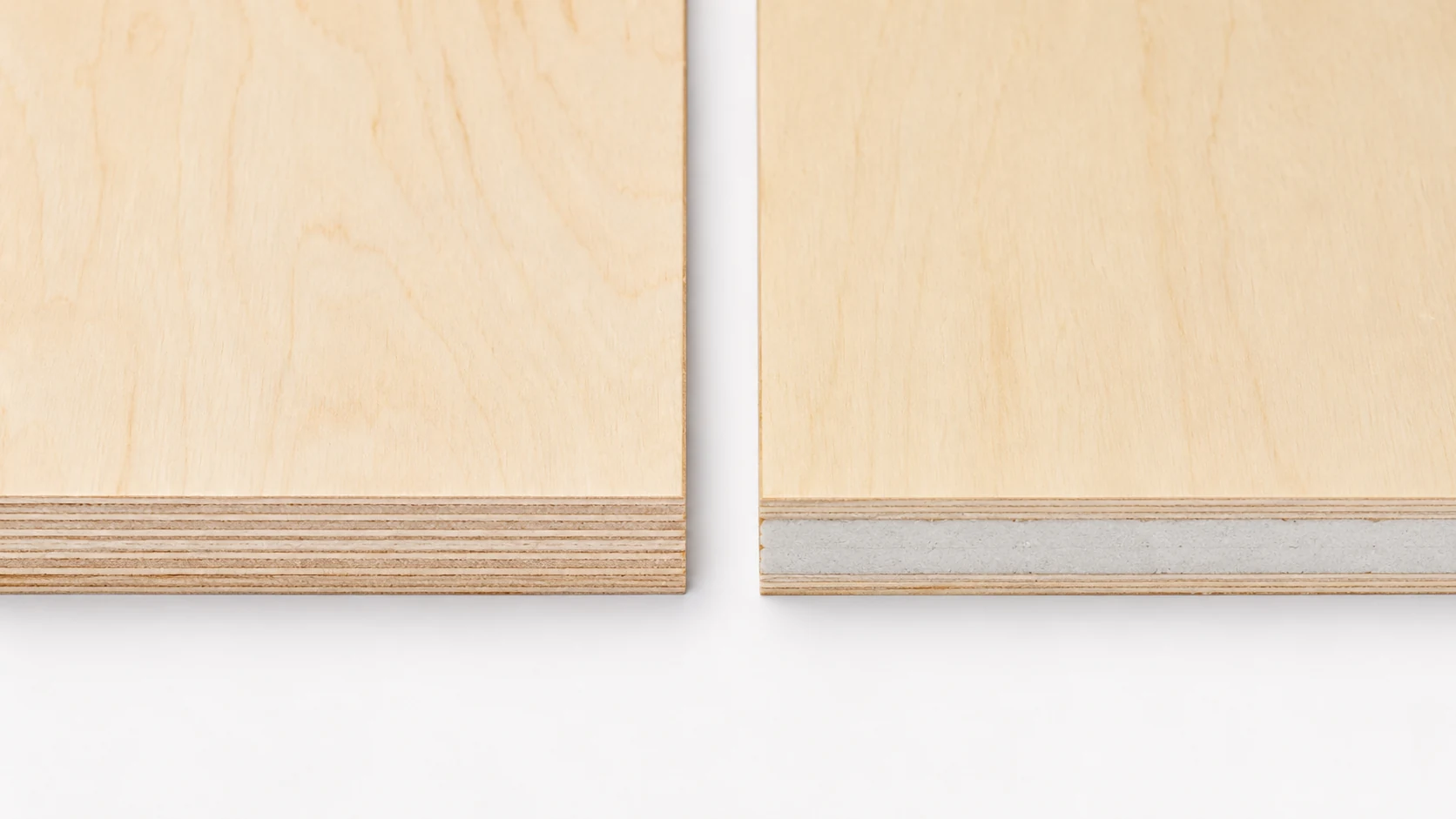
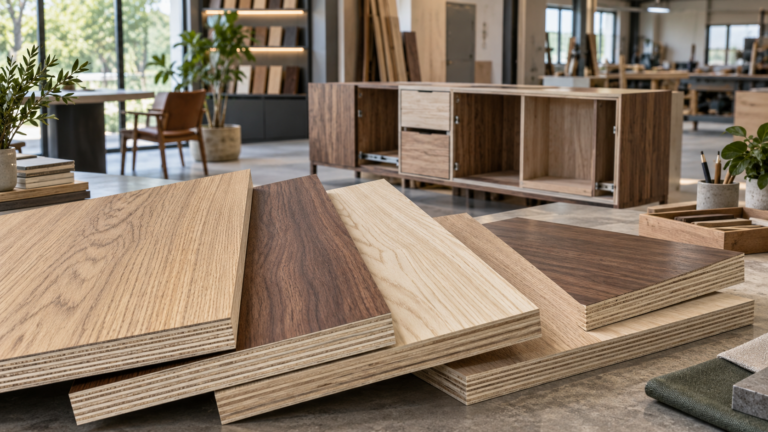
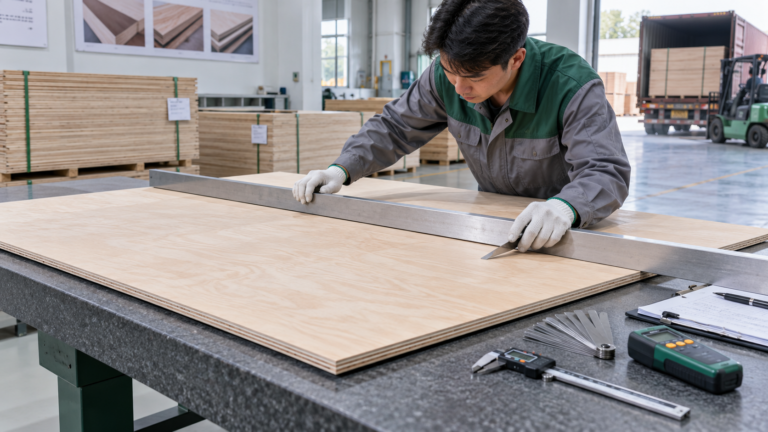
Request a cross-section photo before confirming your order. The panel edge reveals core species, void presence, and number of plies – the three most common quality variables between Vietnam factories. See What Documents to Request from a Vietnam Plywood Supplier.
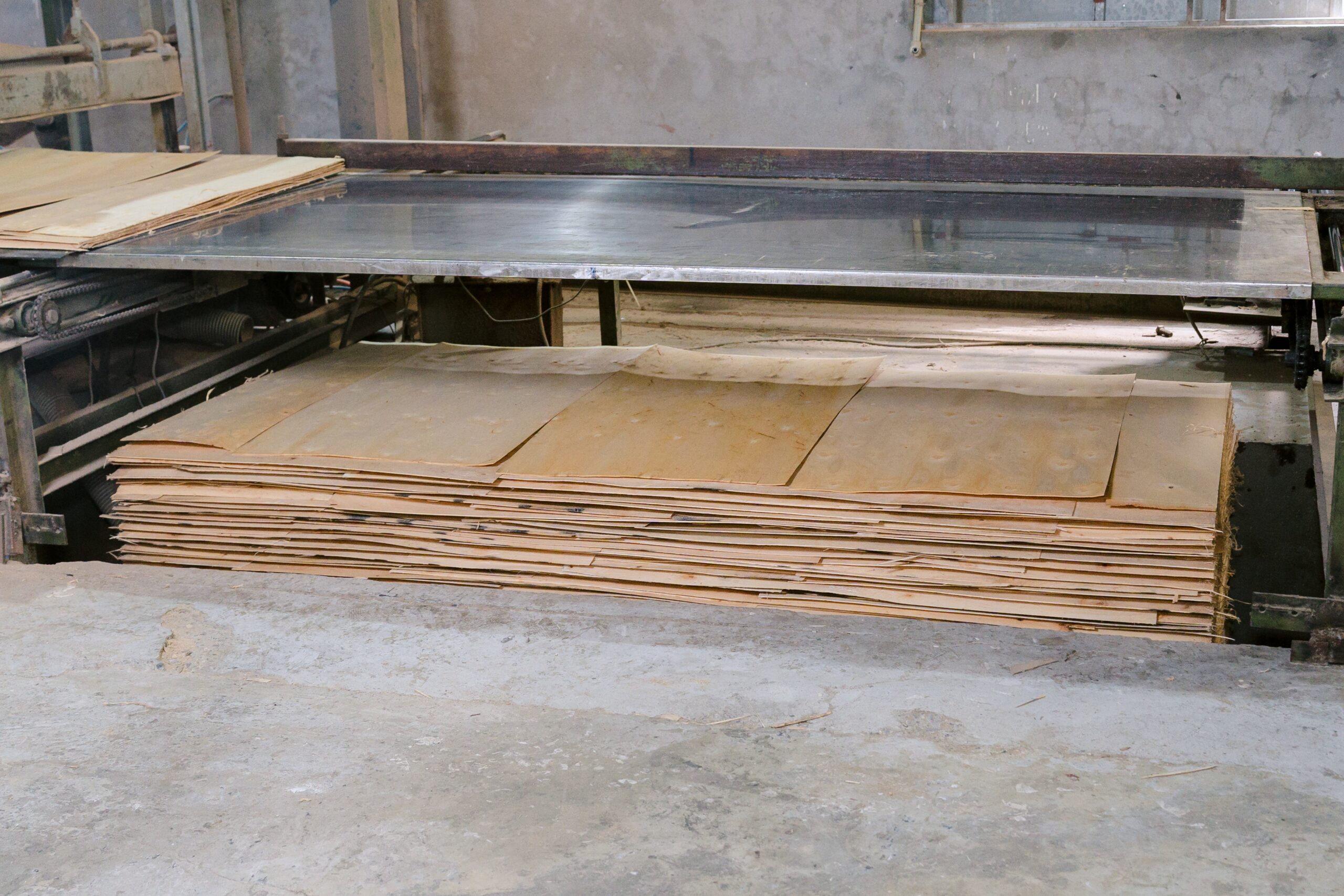
Kosmex produces both all-birch and combi core (birch face / poplar core) panels, CE marked, with FSC on request. Request specifications and FOB pricing →
FOB Vietnam Price Reference (2026)
| Specification | FOB Vietnam |
|---|---|
| All-birch, 18mm, B/BB, MR glue | $350-400/CBM |
| All-birch, 18mm, B/BB, WBP glue | $380-430/CBM |
| Combi core (birch/poplar), 18mm, B/BB, MR glue | $270-320/CBM |
| Combi core (birch/poplar), 18mm, B/BB, WBP glue | $295-345/CBM |
| Combi core, 18mm, BB/BB, MR glue | $240-290/CBM |
FOB Ho Chi Minh City / Hai Phong. Freight, duty, and local charges additional.
FAQ
Is poplar core plywood good quality?
Yes – for the applications it’s designed for. Cabinet carcassing, furniture panels, drawer boxes, and painted interior millwork are all well within poplar core’s capability. It’s not the right specification for structural long spans, high-load shelving, or marine environments, but it’s not a budget compromise for appropriate applications.
What is the difference between poplar core and combi core plywood?
In practice, the terms are used interchangeably. Combi core technically means a combination of species in the core – most commonly poplar, though eucalyptus or pine sometimes appear. A panel sold as “combi core” from a Vietnam factory will almost always have poplar inner layers with a birch or hardwood face.
Is poplar plywood lighter than birch?
Yes, significantly. At 18mm, a poplar core panel weighs approximately 25-30 kg per 4×8 sheet vs 36-40 kg for all-birch. For shipping-cost-sensitive applications or furniture assembly ease, this is a meaningful practical advantage.
Can poplar core plywood be used for kitchen cabinets?
Yes – it is one of the most common specifications for kitchen cabinet boxes globally. Face screws hold well (the birch face veneer is unchanged), the surface finishes and paints cleanly, and the weight saving simplifies installation. Specify WBP glue if the kitchen environment involves steam or humidity.
What is red-faced poplar core plywood?
Panels marketed as “red faced poplar core” typically use a eucalyptus or meranti face veneer (which has a reddish tone) over a poplar core. The face species provides a harder surface than birch but with a visible grain difference. Common in Asian markets and for some EU construction applications.
How do I know if the panel I received is all-birch or poplar core?
Check the panel edge. All-birch cores show consistent pale yellow-white veneer layers throughout. Poplar core panels show a distinctly lighter (almost white or pale grey-green) inner core compared to the face veneers. If in doubt, request a cross-section photo before shipment confirmation.
Summary
| Application | Recommended core |
|---|---|
| Kitchen cabinet boxes | Poplar core (combi) – MR or WBP |
| Painted furniture panels | Poplar core (combi) – MR glue |
| Drawer boxes | Poplar core (combi) – 12mm |
| Shelving ≤900mm span | Poplar core (combi) – acceptable |
| Shelving >900mm span / heavy load | All-birch |
| CNC routing / precision joinery | All-birch |
| Marine / high-humidity structural | All-birch WBP |
| Budget interior carcassing | Poplar core (combi) – BB/BB grade |
Bình luận