


What Is a CE Certificate? Everything You Need to Know
A CE certificate is a document that supports the mandatory CE marking for products sold in the EU and overall CE mark compliance, showing they meet safety, health, and environmental standards. However, it is not the same as the CE mark itself. Only the manufacturer’s EU Declaration of Conformity plus the CE marking on the product legally allow access to the EU/EEA market.
What Is a CE Certificate?
A CE Certificate of Conformity is a document, usually issued by an independent testing or certification body, confirming that a product complies with specific EU directives and standards, including the Construction Products Regulation (CPR) for construction products. It normally includes the manufacturer’s details, product model, applied standards and the main test results. However, this certificate is usually voluntary and does not replace the legal requirement for an EU Declaration of Conformity.
For most products, the manufacturer only needs to carry out the necessary assessments and sign this Declaration; a separate CE certificate is not mandatory. Third-party certificates are only compulsory for certain high-risk products, such as some machinery or medical devices. In all cases, CE marking on the product is based on the manufacturer’s Declaration of Conformity, which other documents cannot substitute.
Why Is a CE Certificate Important for Plywood Exporters?
CE Certificate and the related certification process based on EN standards for plywood are critical for plywood producers and exporters targeting the EU market, especially in countries like Vietnam.
- Legal requirement for construction plywood in the EU
Plywood used in construction (formwork, flooring, roofing, structural panels, sheathing, etc.) is covered by the EU Construction Products Regulation (CPR). For these products:
- CE marking is mandatory if the plywood is placed on the EU market.
- The CE mark and Declaration of Performance show that the panel has been tested and classified according to harmonized standards (mechanical properties, stiffness, durability, reaction to fire, etc.).
- Without correct CE documentation, plywood shipments can be stopped at customs or withdrawn from the market.
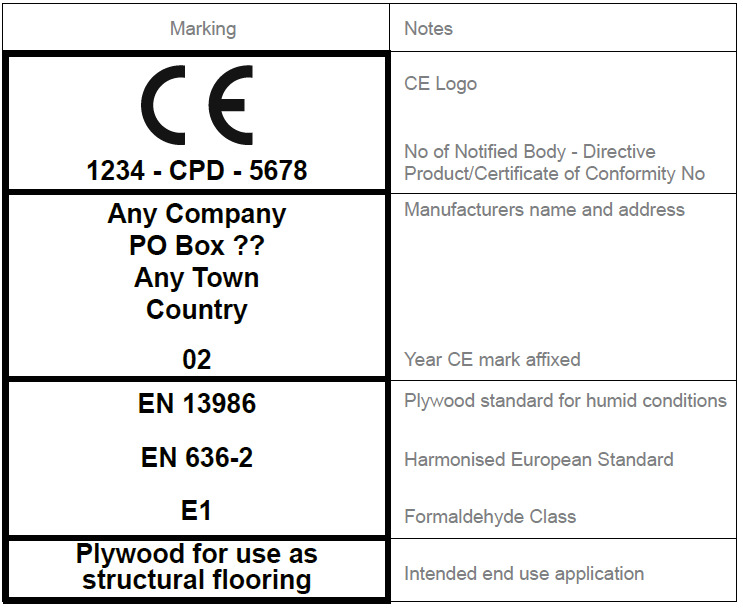
For Vietnamese plywood factories and traders, CE is effectively the “entry ticket” for supplying construction-grade plywood to EU buyers. In practice, a clear Vietnam plywood CE certification pathway helps them avoid customs delays and market rejection.
- Ensures safety, performance, and regulatory compliance
Through testing and conformity assessment, CE certification helps ensure plywood:
- Meets required strength and stiffness for its intended use (e.g. load-bearing vs non-load-bearing).
- Has controlled formaldehyde emissions (e.g. E1 class).
- Complies with durability and moisture resistance requirements (e.g. for external or humid conditions).
- Meets reaction-to-fire classifications where required.
This reduces the risk of structural failure, health concerns, customer complaints, and costly claims or recalls.
- Builds trust with European importers and distributors
European buyers, especially in construction, DIY retail, or furniture supply chains, increasingly demand:
- Verified CE marking and up-to-date Declarations of Performance.
- Test reports and certificates from reputable labs or Notified Bodies.
Having a clear CE certificate and proper documentation makes Vietnamese plywood suppliers look more professional, reliable, and easier to integrate into EU supply chains.
- Strategic advantage for long-term export business
For key plywood segments – construction, structural, formwork, and even some furniture applications – CE compliance is not just paperwork:
- Non-compliant plywood can be rejected, leading to financial loss and damaged reputation.
- Compliant plywood can be sold more easily across different EU countries without needing separate national approvals.
For plywood mills that want stable, long-term business with European customers, investing in CE conformity (testing, FPC, documentation) is a strategic requirement.
Who Issues the CE Certificate for Plywood?
Under EU rules, the manufacturer (or the importer placing the plywood on the EU market) is legally responsible for:
- Ensuring the plywood meets all applicable requirements
- Implementing factory production control
- Preparing and signing the Declaration of Performance/Conformity
- Affixing the CE mark
However, for many plywood products used in construction, a Notified Body (NB) may be involved.
Notified Bodies for plywood and construction products
A Notified Body is an independent organization designated by an EU member state to carry out conformity assessment for specific regulations and product types. For plywood, this can include:
- Initial type testing and performance assessment
- Audit of the factory production control system
- Ongoing surveillance and periodic inspections
Well-known international testing firms (SGS, TÜV, Bureau Veritas, Intertek, etc.) and specialized European labs may act as Notified Bodies for wood-based panels and construction products.
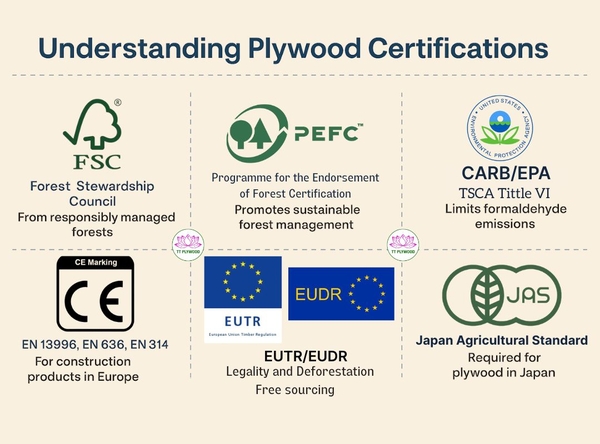
When a Notified Body is involved:
- The NB issues a CE-related certificate (e.g. about product type or FPC system).
- The NB’s 4-digit identification number may appear next to the CE mark on the plywood or packaging.
- The certificate confirms that the plywood meets essential requirements, but the manufacturer still has to issue the Declaration and apply the CE mark.
If third-party assessment is not required for a particular plywood product, the manufacturer can self-declare based on internal and/or external test data – but is still fully responsible for compliance.
How Long Is a CE Certificate for Plywood Valid?
The CE marking itself does not have a fixed expiry date. It remains valid as long as:
- The plywood product and its production process remain unchanged, and
- It continues to comply with the relevant EU rules and standards.
However, CE-related certificates from Notified Bodies generally have practical validity limits and conditions:
- Validity period: Many CE certificates for construction products are issued for a defined period (commonly 3–5 years).
- Surveillance audits: During this period, the Notified Body usually performs annual or periodic audits of the factory production control and may request new tests.
- Product or process changes: If the plywood design, glue system, raw materials, thickness range, or production line changes significantly, the certificate may no longer be valid. The product must be reassessed.
- New standards or regulations: When harmonized standards are updated or EU rules change, certificates and Declarations often need updating to the new references.
In short, while the CE Certificate mark on plywood doesn’t “expire” in a formal way, the underlying CE certificates and technical documentation must be kept up to date. Plywood manufacturers should plan for periodic renewals, surveillance audits, and re-testing when products or standards change.
How Long Is a CE Certificate for Plywood Valid?
Verifying CE Certificate compliance is crucial to avoid fakes and ensure safety. Here are key steps and tips:
- Check the Notified Body ID in NANDO: If an NB was involved, the CE marking on the product (or certificate) should include the NB’s four-digit identification number (e.g. “CE 0123”). You can look up this number on the EU’s NANDO database to confirm the body’s legitimacy and scope. For example, one guide advises: “Cross-check the four-digit identification number of the notified body… via the EU’s NANDO database”. The NANDO entry will tell you if that NB is authorized for your product type.
- Review certificate details: A valid CE certificate should clearly list the manufacturer’s name, product model/code, the directives or standards applied, and the NB’s signature or stamp. It should match the actual product. If any of these are missing, suspect a bogus document. Legitimate certificates also have unique certificate numbers and issue dates.
- Use official EU databases: The EU Commission maintains public tools (like NANDO, and directive-specific databases) to check conformity. For certain products there are online registers (e.g., for machinery or medical devices) of certified products or notified body decisions. Consumers and authorities can query these databases to see if a given product or NB certificate is registered.
- Beware of fake or “voluntary” certificates: The EU explicitly warns against fraud. Only a notified-body issued certificate (in its competence area) should be used for CE marking. “Voluntary certificates” from non-notified entities are not valid for CE – they are outside the law. In fact, the EU cautions: “don’t confuse [voluntary certificates] with conformity assessment certification by notified bodies. It is not acceptable for voluntary certificates to bear a CE marking”.
- Watch out for counterfeit CE marks: There’s a known fake “China Export” logo that looks like “CE” but stands for “China Export.” Also, genuine CE logos have precise proportions (a poorly shaped or mis-spaced CE is suspect). Fraudulent products may misuse CE symbols without any real testing. One investigation found that unbranded chargers bearing a CE mark were often unsafe, whereas legitimate branded ones passed safety tests. If a product’s CE mark looks “off,” or the certificate looks generic, that’s a warning.
- Contact authorities or NB if unsure: If in doubt, you can ask the notified body directly (if listed) to confirm whether they issued a certificate for that product or company. National market surveillance authorities can also verify a product’s declaration or technical file if needed. Never rely on informal “certificates” from sellers; always go through official channels.
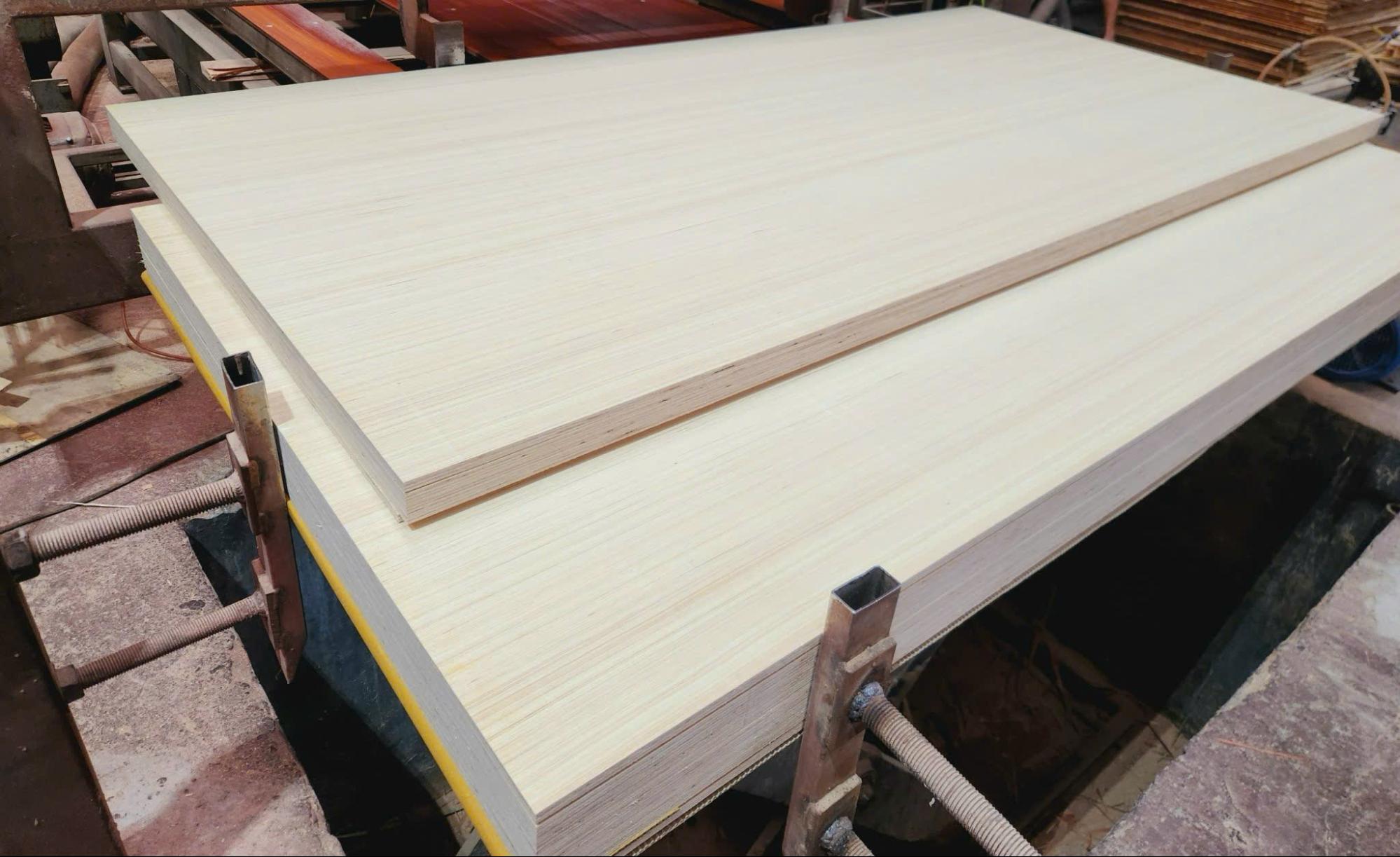
In essence, verifying a CE certificate means confirming the notifier is genuine (via NANDO), the documentation is detailed and consistent, and that no red flags (like “voluntary” claims or copycat logos) are present. Following these steps ensures you can trust the CE marking you see.
How to Verify a CE Certificate for Plywood Is Genuine
For plywood buyers, agents, and European importers, checking CE documentation is essential.
Check the Notified Body (if involved)
- If the CE marking includes a 4-digit number (e.g. CE 1234), look up this number in the EU’s NANDO database.
- Confirm that the NB is authorized for construction products/wood-based panels and that its scope matches plywood.
Review the certificate and Declaration carefully
Legitimate documentation CE Certificate should:
- Clearly identify the plywood manufacturer and factory address.
- Describe the product (type, grade, thickness range, intended use – structural/non-structural).
- Refer to the correct EU regulation and harmonized standard(s).
- Include performance values (e.g. bending strength, modulus of elasticity, formaldehyde class).
- Show certificate number, issue date, and NB name/signature (if applicable).
The Declaration of Performance should match what is printed on labels, packaging, and CE mark.
Be cautious with “generic” or voluntary certificates
- CE Certificates from non-notified organizations that are not recognized under EU rules may be only “informative” and not valid for CE marking.
- A document that looks like a certificate but does not refer to the Construction Products Regulation, has no link to harmonized standards, or has vague product descriptions is a red flag.
Check the CE mark itself
- The CE logo should follow official proportions and be clearly visible on the product, label, or packaging.
- Watch out for distorted logos, strange spacing, or marks that look like “China Export” instead of the genuine CE symbol.
Contact the Notified Body or authorities if in doubt
- You can ask the listed NB to confirm whether they have actually certified that specific plywood product or manufacturer.
- National market surveillance authorities in the EU can also check Declarations and technical files.
For importers, taking these steps helps avoid unsafe or non-compliant plywood and protects against legal and financial risks.
Kosmex: CE-Certified Plywood Supplier from Vietnam
For buyers who prefer working directly with Vietnamese factories that already meet EU standards, Kosmex is a practical example. Kosmex operates integrated plywood production lines in Vietnam, supplying furniture panels, film-faced plywood and other value-added boards to export markets including the EU. Its production system is designed around international standards such as EN and CE, with tightly controlled thickness, bonding strength and surface quality.
Importantly, Kosmex plywood is both FSC and CE certified, meaning its products are engineered not only for mechanical performance but also to meet European health, safety and environmental requirements. Marketing materials for Kosmex’s high bending strength furniture plywood highlight that 12 mm panels can reach bending strength comparable to premium birch, while carrying FSC/CE certifications that support compliance for EU-bound furniture and interior applications.
For European importers and OEM manufacturers, working with a supplier like Kosmex that already holds CE certification for plywood brings several advantages:
- Easier due diligence, because CE and FSC paperwork are available alongside test data and origin documents.
- Reduced risk of customs delays or compliance disputes when placing plywood on the EU market.
- Faster integration into supply chains that require documented structural performance, controlled emissions and traceable sourcing.
In short, Kosmex shows how a Vietnamese plywood manufacturer can combine CE-certified plywood, FSC certification and modern EN/CE-based production lines to support long-term, compliant business with EU buyers.
FAQ about CE certificate
Is CE certificate mandatory for plywood?
Yes, CE certification (and CE marking) is mandatory for plywood sold as a construction product in the EU/EEA. If your plywood is used for building, flooring, roofing or other structural uses, it must comply with EN 13986 (or related standards) and have CE marking plus an EU Declaration of Performance to be legally placed on the EU market.
How much does CE certification cost for plywood?
The cost of CE certification for plywood is not fixed, but usually ranges from a few thousand euros upwards. The total price depends on your product range, the number of tests required, factory size and the notified body, and it typically includes lab testing, the initial factory audit and annual surveillance fees.
What documents are required
To get CE certification for plywood, manufacturers normally need: a technical file (product specs, thickness, glue type, density), test reports from accredited labs, Factory Production Control (FPC) procedures and records, quality logs and calibration records, labeling/packaging samples, and an EU Declaration of Performance that links the plywood to the relevant EN standards.
Conclusion
In summary, for Vietnamese plywood exporters, a CE certificate is not just a paper for customs but the key to entering and staying in the EU market. It proves your plywood meets EU safety and performance standards, supports CE marking and DoP/DoC, and builds trust with European buyers—making long-term export contracts and higher-value orders more achievable.



Bình luận